

 Shop
ShopThe Chevrolet Corvette is the longest-running continuously produced sports car in the world – and across the C6, C7, and C8 generations, it evolved from a front-engine LS V8 grand tourer into a mid-engine supercar producing over 1,000 hp. Scopione carries 15 carbon fiber parts for the Corvette C6 and C7, covering exterior aerodynamics (diffusers, fender vents, hood vents, lip spoilers, tail light bezels, roof panel, brake scoops), interior trim (door panel), and engine bay dress-up (LS3 and LT1 engine covers) – all in hand-laid 2×2 3K twill-weave carbon fiber with UV-resistant clear coat.
Introduction: America’s Sports Car
The Corvette has carried one fundamental promise since 1953: supercar performance at a price that undercuts European competition by half. Three recent generations – C6 (2005–2013), C7 (2014–2019), and C8 (2020–present) – trace an engineering arc from front-engine pushrod V8 tradition to mid-engine supercar architecture, with carbon fiber adoption expanding at every step.
In 2005, the C6 launched with a hydroformed-steel frame, an LS2 V8 producing 400 hp, and a rear-mounted transaxle connected through a torque tube. The C6 Z06 introduced factory carbon fiber fenders and floor panels in 2006, and by 2009, the ZR1 expanded CF to the roof, hood, splitter, and rocker moldings alongside a supercharged LS9 making 638 hp. That set the trajectory. The C7 made a carbon fiber roof panel and hood standard on every coupe, and the C8 abandoned the front-engine layout altogether. The current C8 ZR1 produces 1,064 hp from a twin-turbocharged flat-plane-crank V8 and reaches 233 mph.
Combined C6-C7-C8 production approaches 600,000 units. Carbon fiber – from factory aero packages to aftermarket engine bay and exterior upgrades – has become inseparable from how owners present and personalize their Corvettes.
C5 Corvette (1997–2004)
The fifth-generation Corvette arrived for 1997 as a clean-sheet car, and it is the generation that set the structural template every Corvette since has followed. A hydroformed box frame replaced the old welded-up structure, and the transmission moved to the back of the car as a rear-mounted transaxle driven through a torque tube – an architecture that delivered near 50/50 weight distribution and survives, in principle, into the mid-engine C8. The wheelbase measured 104.5 inches, and production ran from October 1996 to July 2004 for a generation total of 248,715 cars.
Engine Lineup: LS1, LS6
The C5 introduced the Gen III small-block, an all-aluminium 5.7-litre V8 that would go on to define GM performance for two decades. Two versions were offered across the generation:
- LS1 (5.7L, 345–350 hp) – the base engine from 1997, rated at 345 hp and raised to 350 hp for 2001 through the end of the run.
- LS6 (5.7L, 385–405 hp) – exclusive to the Z06. It launched at 385 hp for 2001, then moved to 405 hp and 400 lb-ft at 4,800 rpm for 2002–2004, making it the most powerful naturally aspirated small-block Chevrolet had built to that point.
C5 Variants and Production
The body-style range filled out over three years: the coupe launched alone for 1997, the convertible returned for 1998, and a fixed-roof hardtop joined for 1999. That hardtop mattered more than its short two-year run suggests – it was the stiffest shell in the range, and it became the exclusive basis for the Z06 when the badge returned in 2001 after a 38-year absence.
| Variant | Years | Engine | HP | Production | Base MSRP (launch) |
|---|---|---|---|---|---|
| Base Coupe | 1997–2004 | LS1 | 345–350 | 124,596 | $37,495 |
| Convertible | 1998–2004 | LS1 | 345–350 | 89,610 | $44,425 |
| Hardtop (FRC) | 1999–2000 | LS1 | 345 | 6,121 | $38,777 |
| Z06 | 2001–2004 | LS6 | 385–405 | 28,388 | $48,055 |
At 3,118 lb the Z06 was the lightest car in the range, and the recipe was addition by subtraction – thinner glass, a titanium exhaust, lighter wheels and a stiffer suspension rather than more displacement. It is the C5 that collectors now chase, and the one whose parts catalogue overlaps most closely with the C6 that followed.
C6 Corvette (2005–2013)
The sixth-generation Corvette debuted at the 2004 Detroit Auto Show as a 2005 model. It introduced fixed headlights for the first time since the C1, a longer wheelbase (105.7 inches, up 1.2 over the C5), and an exposed targa roof panel on all coupes. The structural foundation – a hydroformed steel perimeter frame with a rear-mounted transaxle connected via torque tube – delivered near 50/50 weight distribution. And it carried the Corvette Racing C6.R to four class victories at Le Mans (2005, 2006, 2009, 2011).
Engine Lineup: LS2, LS3, LS7, LS9
Four engines. All pushrod OHV V8s. All aluminum blocks. The hierarchy runs from 400 to 638 hp.
- LS2 (6.0L, 400 hp) – Base engine from 2005 to 2007. 10.9:1 compression, 4.00-inch bore. Adequate. But the LS3 replaced it for good reason.
- LS3 (6.2L, 430 hp / 436 with performance exhaust) – Replaced the LS2 in 2008. High-flow rectangular-port cylinder heads and Z06-spec 47-lb fuel injectors lifted output by 30 hp. Base and Grand Sport engine through 2013.
- LS7 (7.0L / 427 ci, 505 hp) – Hand-built at GM’s Performance Build Center in Wixom, Michigan. Titanium connecting rods, forged steel crankshaft, and 4.125 x 4.00-inch bore and stroke made this the largest-displacement small-block V8 GM ever produced. Z06 only.
- LS9 (6.2L supercharged, 638 hp / 604 lb-ft) – An Eaton four-lobe Roots-type supercharger strapped to a 9.1:1-compression block with titanium rods and intercooling. The ZR1’s engine, and the pinnacle of the LS family.
C6 Variants and Production
Chevrolet built approximately 215,000 C6 Corvettes over nine model years. The lineup stratified into four tiers:
| Variant | Years | Engine | HP | Production | Base MSRP (launch) |
|---|---|---|---|---|---|
| Base Coupe/Convertible | 2005–2013 | LS2, then LS3 | 400–436 | ~182,000 | $44,245 |
| Z06 | 2006–2013 | LS7 7.0L | 505 | 27,995 | $65,800 |
| ZR1 | 2009–2013 | LS9 supercharged | 638 | 4,684 | $103,970 |
| Grand Sport | 2010–2013 | LS3 6.2L | 430 | – | $55,000 |
The Z06 brought an aluminum frame that weighed 392 lbs – 110 lbs lighter than the standard steel unit and 50% stiffer in both torsion and bending. Manual transmission only. 3,130 lbs curb weight. On track, a naturally aspirated 505-hp Corvette posted lap times matching or exceeding the Ferrari F430 – at less than half the price.
The ZR1 went further. Carbon fiber roof, hood, fenders, splitter, and rocker panels sat on that same aluminum frame. A polycarbonate window in the hood exposed the LS9’s intercooler beneath. Carbon-ceramic brakes handled 205-mph stopping loads. At $103,970, the ZR1 cost less than half the price of a comparable Ferrari or Lamborghini – and it turned faster lap times than both at most circuits.
C7 Corvette (2014–2019)
The seventh generation revived the “Stingray” name for the first time since 1976 and took 2014 North American Car of the Year honors. The platform shift was significant: an all-aluminum frame replaced the steel unit across every trim level (not just Z06/ZR1), and GM’s new Gen V LT engine family introduced direct injection and continuously variable valve timing to the pushrod V8 formula. Carbon fiber became standard equipment – every C7 coupe shipped with a carbon fiber hood and removable roof panel from the factory.
Gen V LT Engines: LT1, LT4, LT5
Three engines. All 6.2 liters. All pushrod OHV V8. The output range stretched from 455 to 755 hp across three levels of forced induction.
- LT1 (6.2L, 455 hp / 460 with performance exhaust) – The Stingray and Grand Sport engine. Direct fuel injection, Active Fuel Management (cylinder deactivation on highway cruising), and continuously variable valve timing. A 25-hp jump over the C6’s LS3 with measurably better fuel efficiency.
- LT4 (6.2L supercharged, 650 hp / 650 lb-ft) – Z06 power. A 1.7-liter Eaton R1740 TVS supercharger with direct injection and dry-sump oiling. 0–60 in 2.95 seconds with the 8-speed automatic – the first Corvette into the sub-3-second range.
- LT5 (6.2L supercharged, 755 hp / 715 lb-ft) – ZR1 only, 2019 only. The supercharger grew to 2.65 liters – 52% larger than the Z06’s – and a dual-stage fuel system combined port and direct injection to feed the airflow demands. Thirteen heat exchangers kept temperatures managed at 212 mph.
C7 Variants
Approximately 189,500 C7 Corvettes were built over six model years. The Stingray anchored production, but the Z06 and ZR1 defined the C7’s legacy:
| Variant | Years | Engine | HP | Production | Base MSRP |
|---|---|---|---|---|---|
| Stingray | 2014–2019 | LT1 6.2L | 455 | – | $51,995 |
| Grand Sport | 2017–2019 | LT1 6.2L | 455 | – | $65,450 |
| Z06 | 2015–2019 | LT4 supercharged | 650 | ~39,940 | $78,995 |
| ZR1 | 2019 | LT5 supercharged | 755 | 2,953 | $118,900 |
The C7 ZR1 holds a unique position in Corvette history. One model year. 2,953 units. The last front-engine ZR1. The last Corvette ZR1 with a manual transmission. And 755 hp from a supercharged pushrod V8 – an engine architecture that the C8 generation would abandon entirely. Those facts have not been lost on collectors: desirable C7 ZR1 configurations – manual transmission, ZTK package, low mileage – now trade above $200,000, with top examples reaching $330,000 at auction.
The Grand Sport filled the gap between Stingray and Z06 – the Z06’s wider body, suspension, and braking hardware with the naturally aspirated LT1 engine. For track-day regulars who wanted the chassis without the supercharger’s heat management demands, the Grand Sport was arguably the smartest C7 in the lineup.
Every C7 model offered the 7-speed manual (with Active Rev Match) and an automatic – a 6-speed for 2014, replaced by the 8-speed 8L90 from 2015 onward. That choice disappeared with the C8. The C7 is the last Corvette generation to offer a manual gearbox.
C8 Corvette (2020–Present)
In July 2019, Chevrolet revealed what Corvette engineers had pursued since the 1960s: a mid-engine layout. The engine sits behind the cabin, ahead of the rear axle, driving through a TREMEC 8-speed dual-clutch transmission. No manual option. The transverse leaf springs that defined seven generations of Corvette suspension gave way to coil springs. Weight distribution shifted to 40/60 front-rear. And a front trunk – a frunk – replaced the engine bay that had housed a V8 since 1955.
The C8 took 2020 North American Car of the Year and started at $59,995. A mid-engine sports car under $60,000. That value-proposition positioning – Corvette’s calling card since the beginning – remained intact even as the architecture transformed.
Engine Architecture: From Pushrod to DOHC to Twin-Turbo
The C8 introduced the widest engine technology range in Corvette history. It spans three distinct V8 architectures across four models:
- LT2 (6.2L pushrod V8, 490 hp / 495 with sport exhaust) – Stingray and E-Ray. Gen V Small Block carried over from the LT1 with 40 additional hp, 11.5:1 compression, and dry-sump oiling. Cross-plane crankshaft. The familiar pushrod formula, repositioned behind the driver.
- LT6 (5.5L DOHC flat-plane-crank V8, 670 hp) – Z06 engine. Not a pushrod. Not derived from any previous LS or LT block. Entirely new DOHC architecture with a flat-plane crankshaft, 8,600-rpm redline, titanium intake valves, and sodium-filled exhaust valves. Its crankshaft weighs 33% less than the LT2’s. The result: 670 naturally aspirated hp – the highest-output NA V8 in any production car.
- LT7 (5.5L twin-turbo DOHC flat-plane-crank V8, 1,064 hp) – ZR1. Twin 76mm turbochargers bolted to the LT6’s flat-plane block, pushing up to 24 psi of boost. 828 lb-ft of torque at 6,000 rpm. Hand-assembled at GM’s Bowling Green Performance Build Center. The first turbocharged production Corvette.
The E-Ray (2024+) added a fourth dimension: a 160-hp electric motor on the front axle, making the Corvette AWD for the first time. Combined system output: 655 hp. A 1.9 kWh lithium-ion battery provides short-range all-electric Stealth Mode driving up to 45 mph – enough to crawl through a neighborhood without the V8.
C8 Variants and Performance
| Variant | Engine | HP | 0–60 | Top Speed | Base MSRP |
|---|---|---|---|---|---|
| Stingray | LT2 6.2L | 490 | 3.0 sec | 194 mph | $59,995 (2020) |
| Z06 | LT6 5.5L flat-plane | 670 | 2.6 sec | 195 mph | $106,395 (2023) |
| E-Ray | LT2 + electric motor | 655 | 2.5 sec | 183 mph | $104,295 (2024) |
| ZR1 | LT7 5.5L twin-turbo | 1,064 | 2.3 sec (ZTK) | 233 mph | $174,995 (2025) |
The ZR1’s performance figures place it alongside European hypercars costing three to five times as much. The available ZTK Track Performance Package – with a carbon fiber high wing, dive planes, and underbody strakes – generates over 1,200 lbs of downforce. At Barrett-Jackson Scottsdale in January 2025, C8 ZR1 VIN 001 sold for $3.7 million in a charity auction.
Carbon Fiber and the Corvette
Corvettes have always been composite cars – fiberglass body panels since 1953, when no other American manufacturer would touch the material at volume. Carbon fiber first appeared on the 2004 C5 Z06 Commemorative Edition’s factory CF hood – the first painted Class A carbon fiber body panel on any North American production car – and each generation since has expanded factory CF adoption.
C5: The First Painted Carbon Fiber Body Panel
The 2004 Z06 Commemorative Edition carried a carbon fiber hood developed by MacLean Vehicle Systems with General Motors and Toray Composites (America) – the first time carbon fiber was used as original equipment for a painted exterior panel on a North American production car. It weighed 20.5 lb, some 10.6 lb less than the moulded fiberglass hood it replaced, and its Class-A painted skin was just 1.2 mm thick. Between roughly 2,000 and 3,000 cars were built with it, which is why a Commemorative Edition hood is the single most recognisable piece of factory carbon on any C5.
C6: Carbon Fiber Expands from Z06 to ZR1
The C6 Z06 (2006–2013) carried factory carbon fiber front fenders, front wheel houses, and floor panels as standard – reducing weight on the aluminum-framed chassis. The ZR1 (2009–2013) expanded CF further: roof panel, hood (with polycarbonate intercooler window), front splitter, and rocker moldings were all carbon fiber, saving additional weight while allowing the visual drama of exposed intercooler hardware beneath the hood. The 2013 427 Convertible Collector Edition added a carbon-fiber raised hood borrowed from the Z06 Carbon Edition. The base C6 Corvette, however, used traditional fiberglass composite panels exclusively.
C7: Carbon Fiber Goes Standard
The C7 changed the equation. Every coupe – from the base Stingray to the ZR1 – shipped with a carbon fiber hood and a carbon fiber removable roof panel as standard equipment. Buyers could option the visible carbon fiber roof panel ($1,995) to expose the weave pattern, or select a transparent roof panel ($995). Ground effects packages offered carbon-fiber splitters, rockers, and spoilers in either Carbon Flash paint ($2,995) or exposed visible-weave carbon fiber ($3,995). The Z06’s Z07 Performance Package bundled carbon-fiber aero with carbon-ceramic brakes and Cup 2 tires. And the 2019 ZR1 carried extensive CF aero, including its adjustable high or low rear wing.
C8: Comprehensive Carbon Fiber Aero
The C8 continued the C7’s standard carbon fiber roof on coupes and extended CF into aero-functional territory. The Z06 offers full carbon-fiber aero packages – in either Carbon Flash (T0F) or visible carbon fiber (T0G) – covering splitter, side rockers, dive planes, underbody strakes, and high wing. Optional carbon fiber wheels reduce unsprung mass further. The ZR1 includes carbon fiber aero as standard, and its ZTK package deploys a massive CF high wing and dive planes for over 1,200 lbs of downforce.
The aftermarket carbon-fiber culture surrounding the Corvette is equally deep. C6 and C7 owners regularly replace or overlay factory components – fender vents, diffusers, hood vents, tail light bezels, and roof panels – with hand-laid CF pieces. The C7 generation, with its combination of angular body lines and strong aftermarket support, is particularly well-suited to carbon-fiber exterior upgrades. A CF diffuser or fender vent set adds both visual texture and a motorsport-adjacent aesthetic that aligns with the Corvette’s track-ready engineering.
Scopione: Carbon Fiber Parts for the Corvette C6 & C7
Scopione’s Chevrolet Corvette catalog contains 15 carbon fiber products covering the C6 (2005–2013) and C7 (2014–2019) generations. The C7 is the primary platform, with 13 of the 15 products engineered for that generation. Every part uses hand-laid 2×2 3K twill-weave carbon fiber with a UV-resistant clear coat, backed by Scopione’s 12-month limited warranty against delamination. Browse the full catalog at the Scopione Chevrolet carbon fiber parts page.
What Scopione Offers for the Corvette
| Part | Generation | Price | Fitment Notes |
|---|---|---|---|
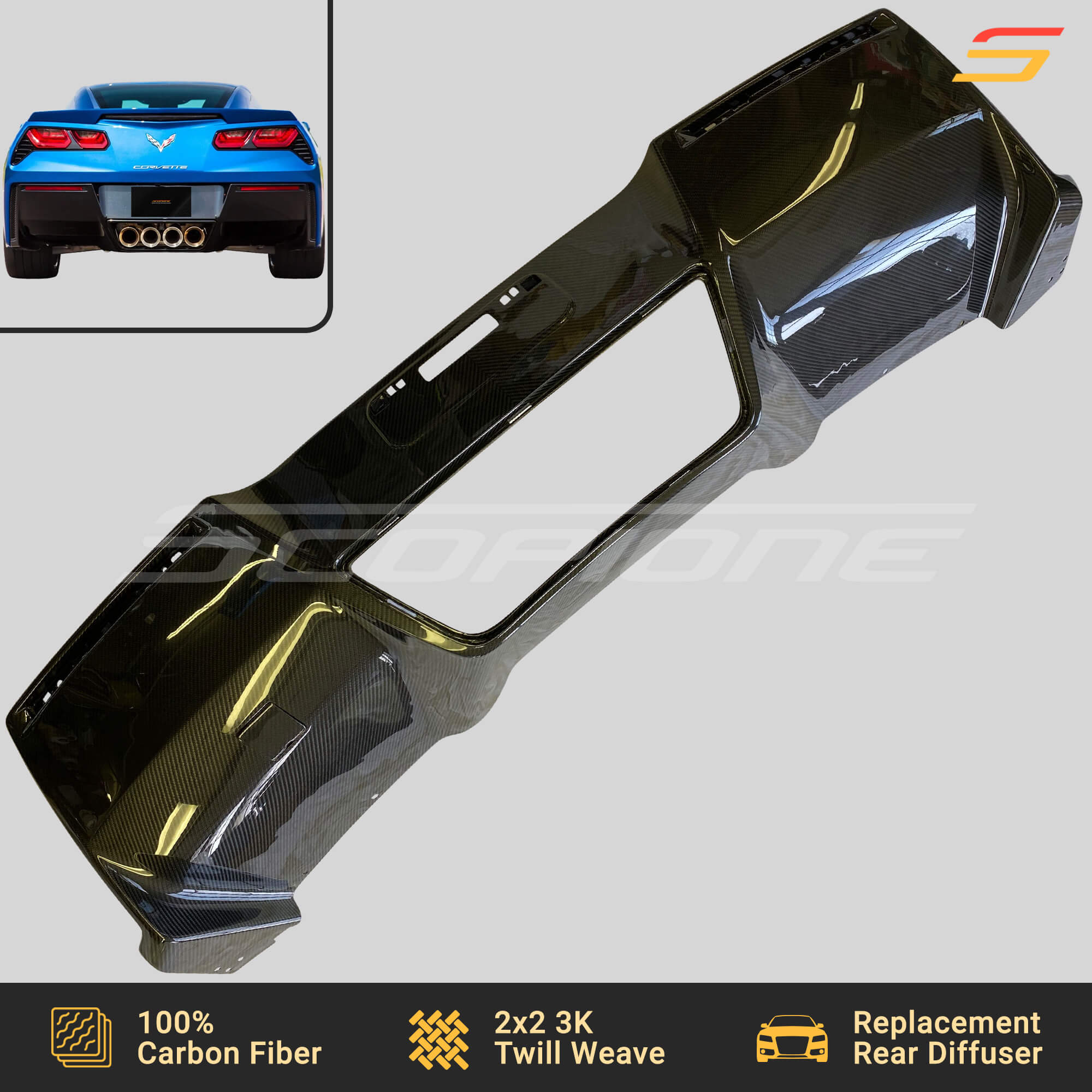
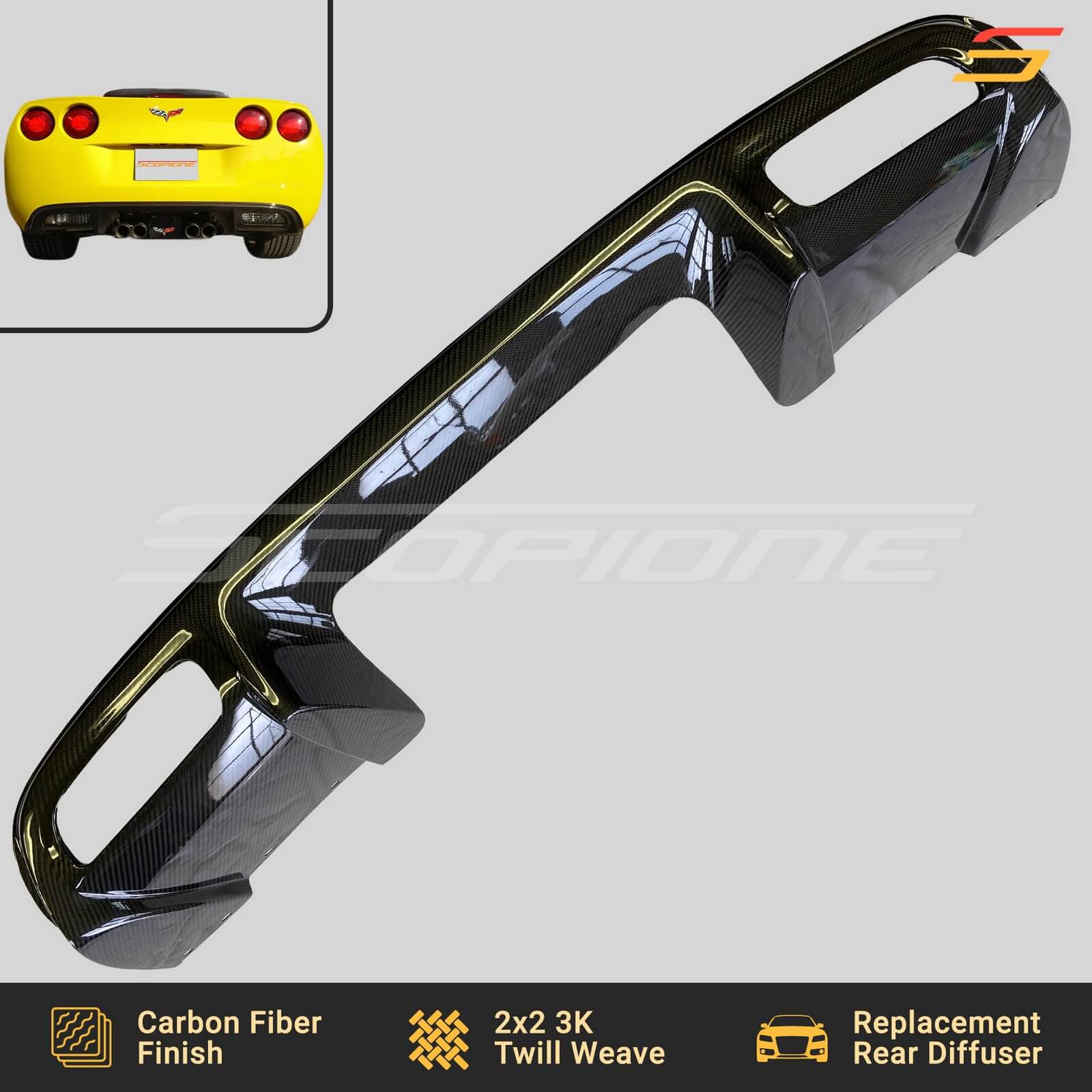
| Rear Bumper Diffuser | C6 | $900 | All C6 models |
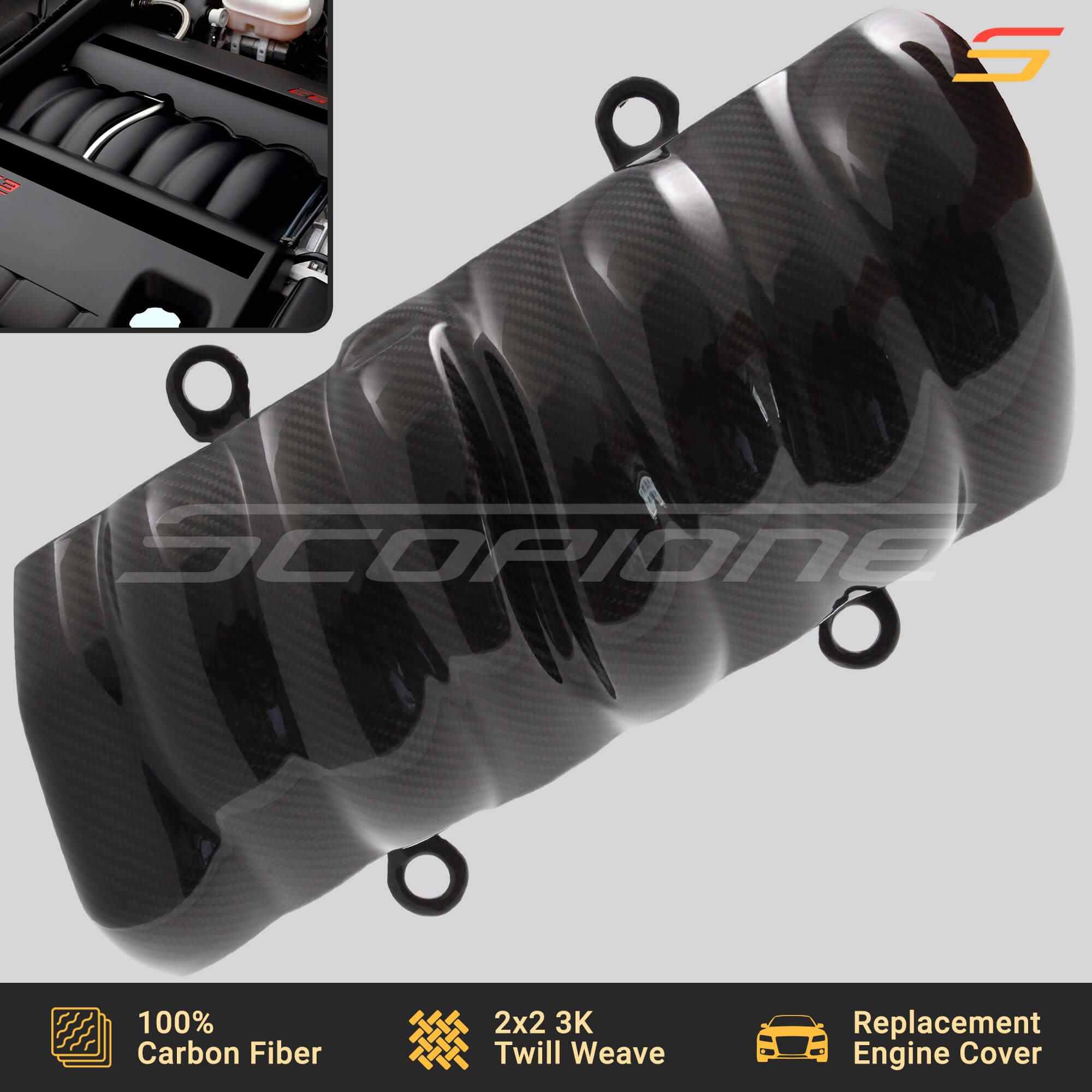
| LS3 Engine Cover | C6 | $370 | LS3/L76 engines; also fits 2010–2015 Camaro SS, Pontiac G8 |
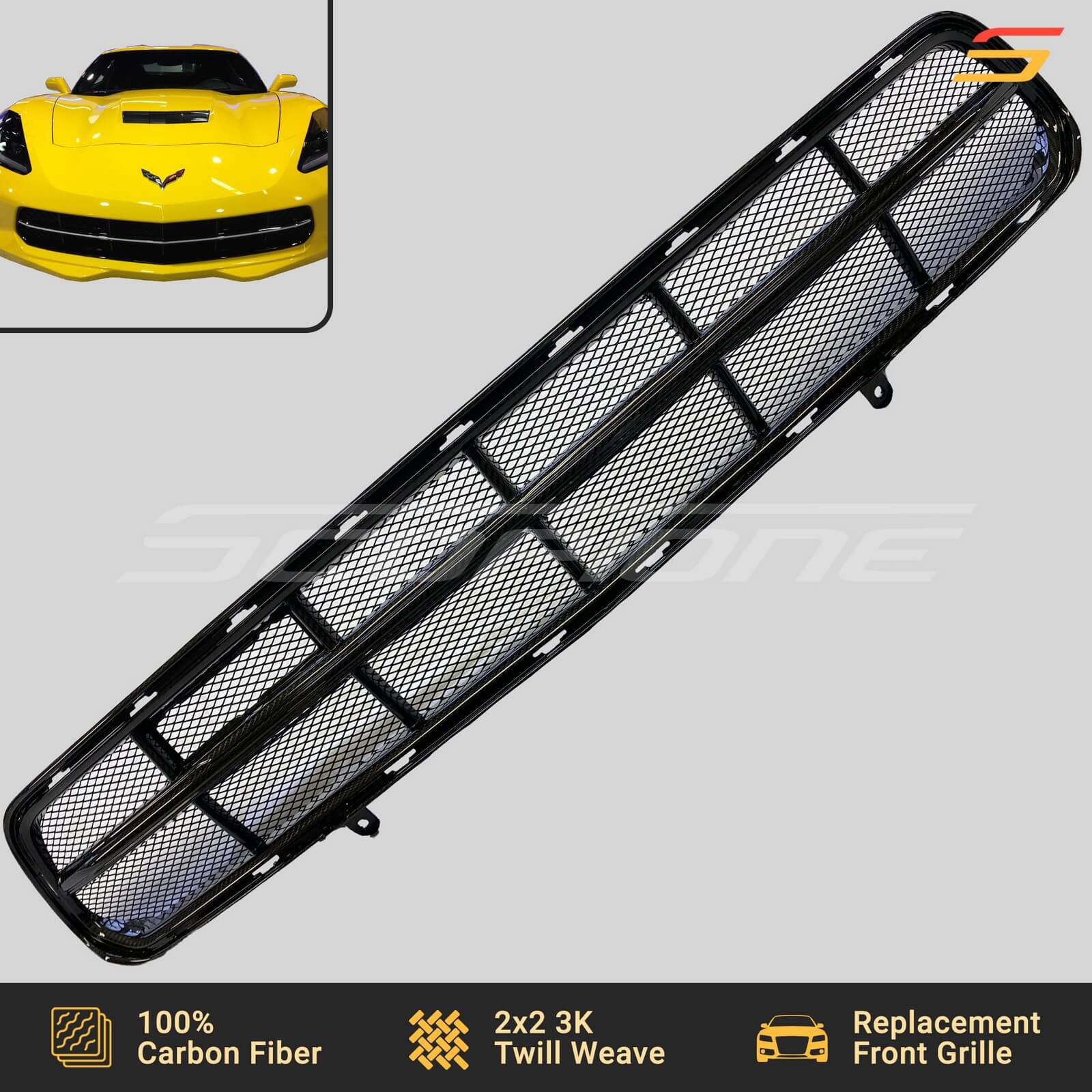
| Front Bumper Grille | C7 | $850 | Stingray only; does not fit ZR1 |
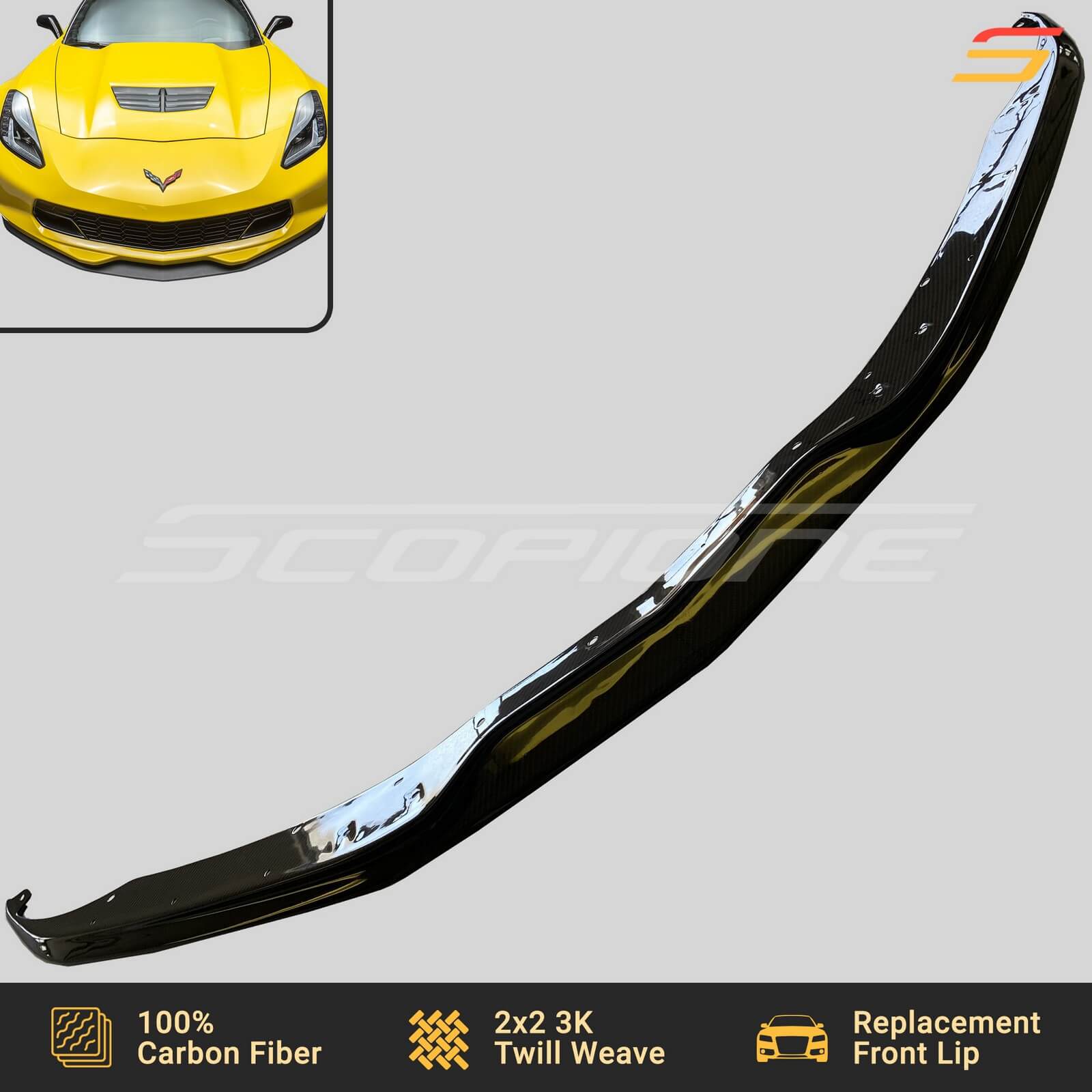
| Front Bumper Lip Spoiler | C7 | $650 | Stingray; does not fit ZR1 |
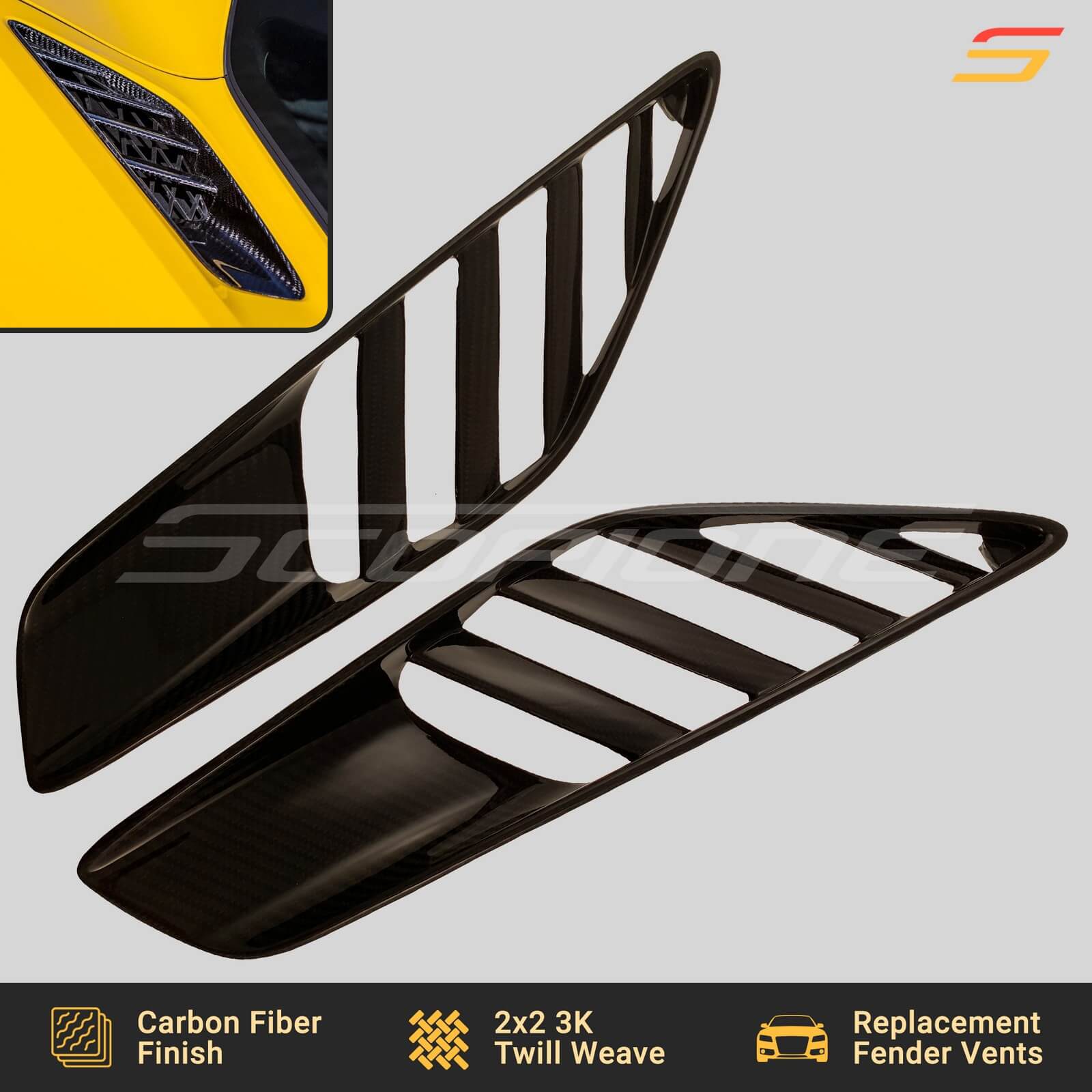
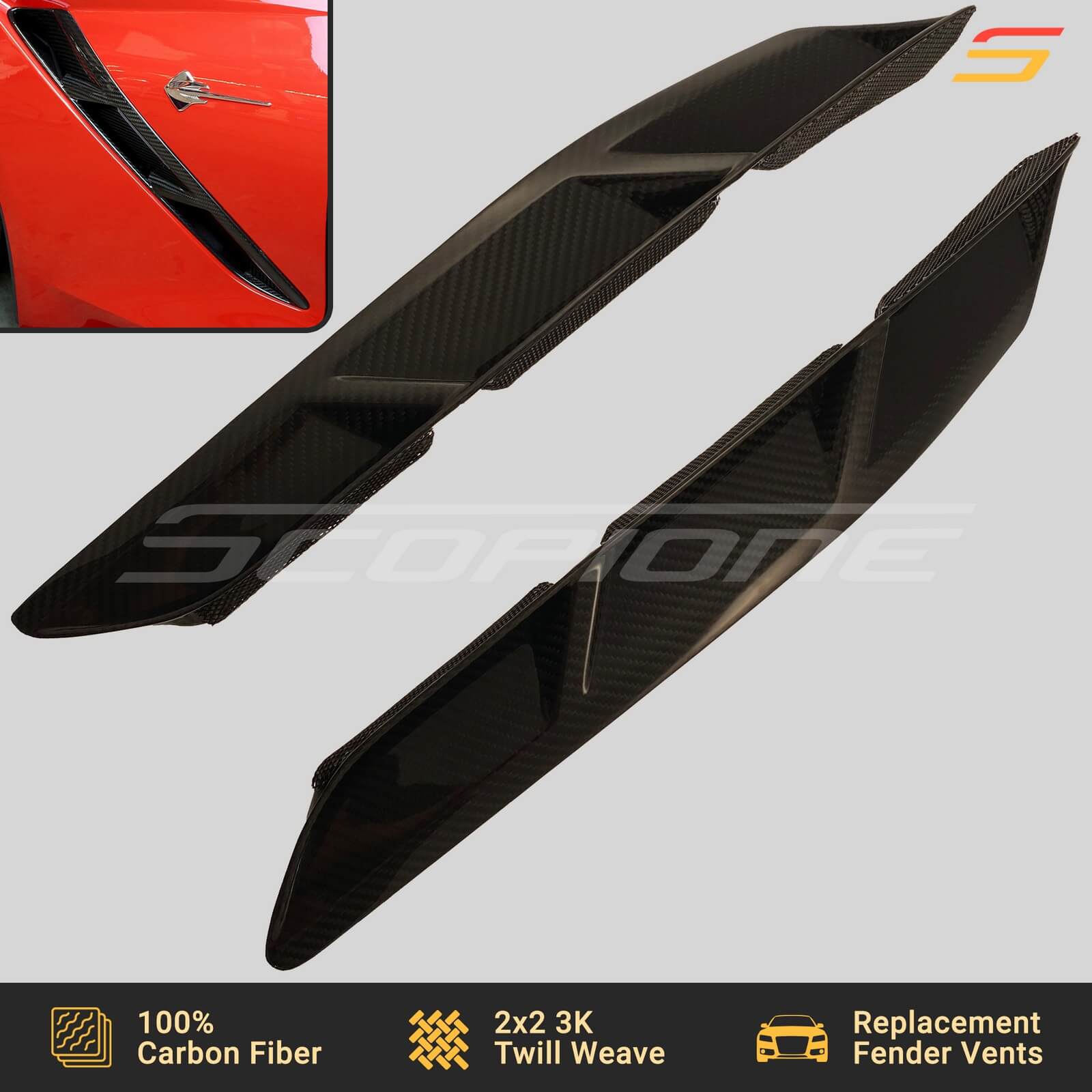
| Front Fender Air Vents (Z06/GS) | C7 | $400 | Z06 and Grand Sport only; pair |
| Front Fender Air Vents (Stingray/ZR1) | C7 | $400 | Stingray and ZR1; does not fit Z06/GS; pair |
| Rear Bumper Diffuser | C7 | $1,200 | All C7 variants |
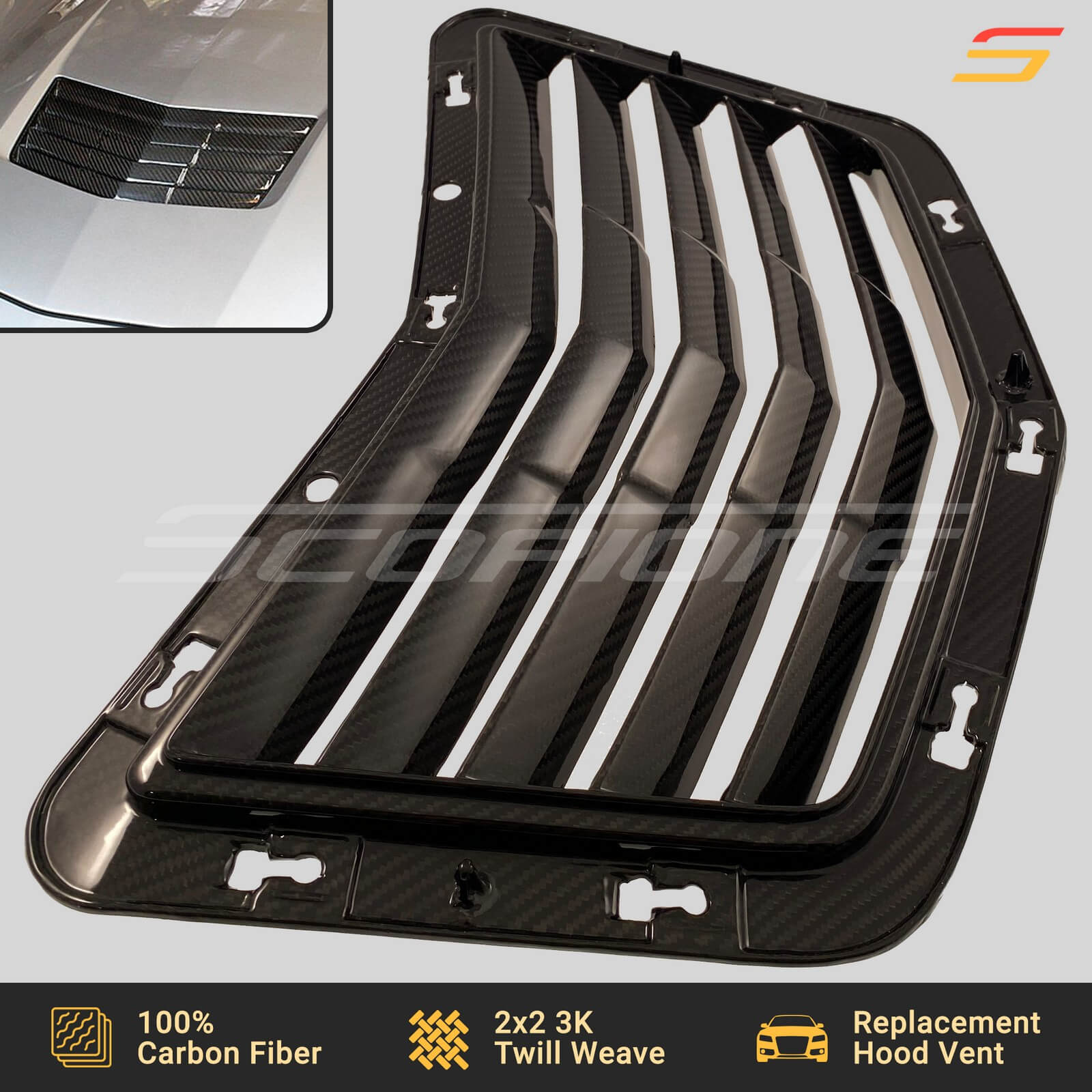
| Front Hood Air Vent | C7 | $400 | Stingray, Z51, Grand Sport; does not fit Z06/ZR1 hoods |
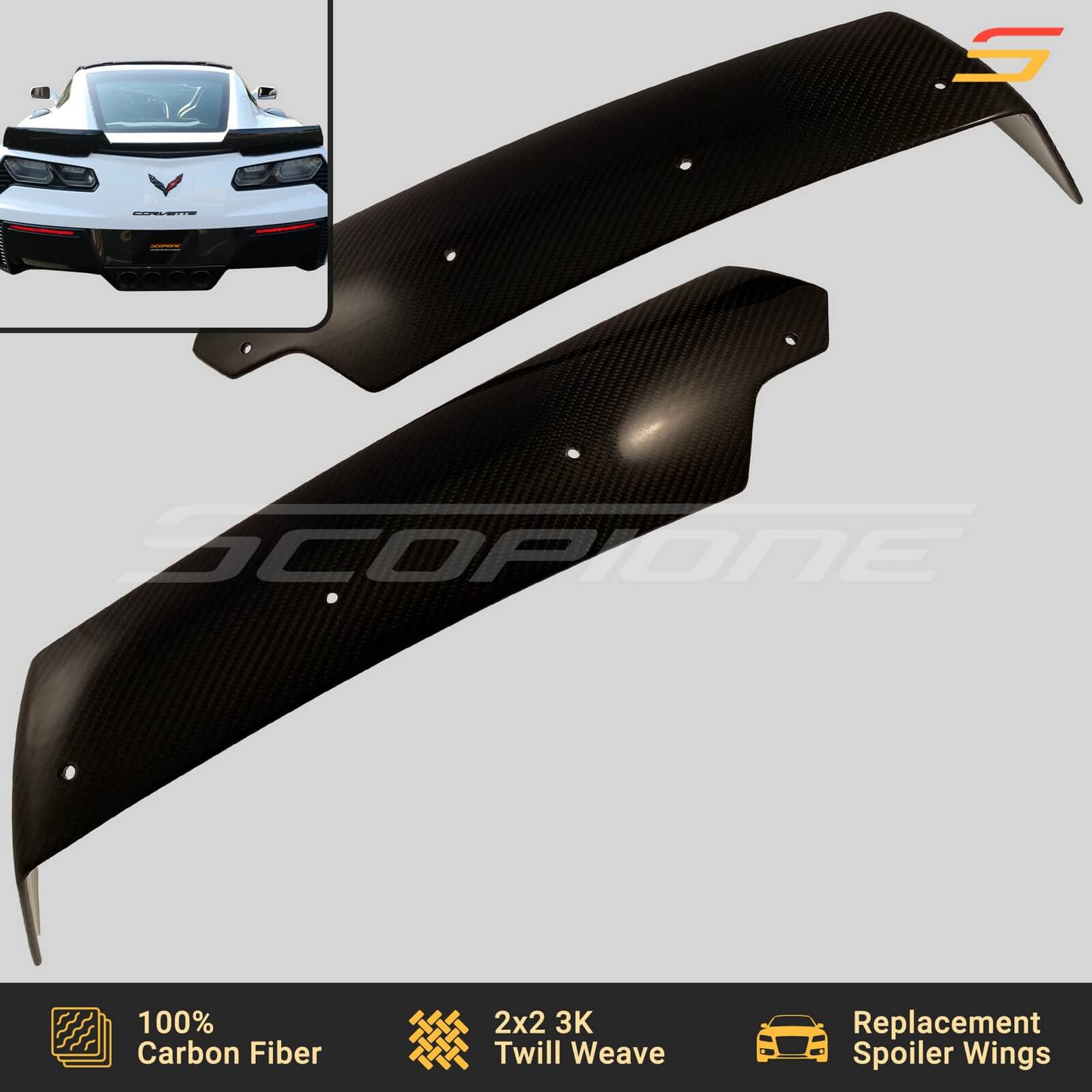
| Rear Trunk Spoiler Winglets | C7 | $320 | Requires OEM Z06 Stage 1/2 spoiler; pair |
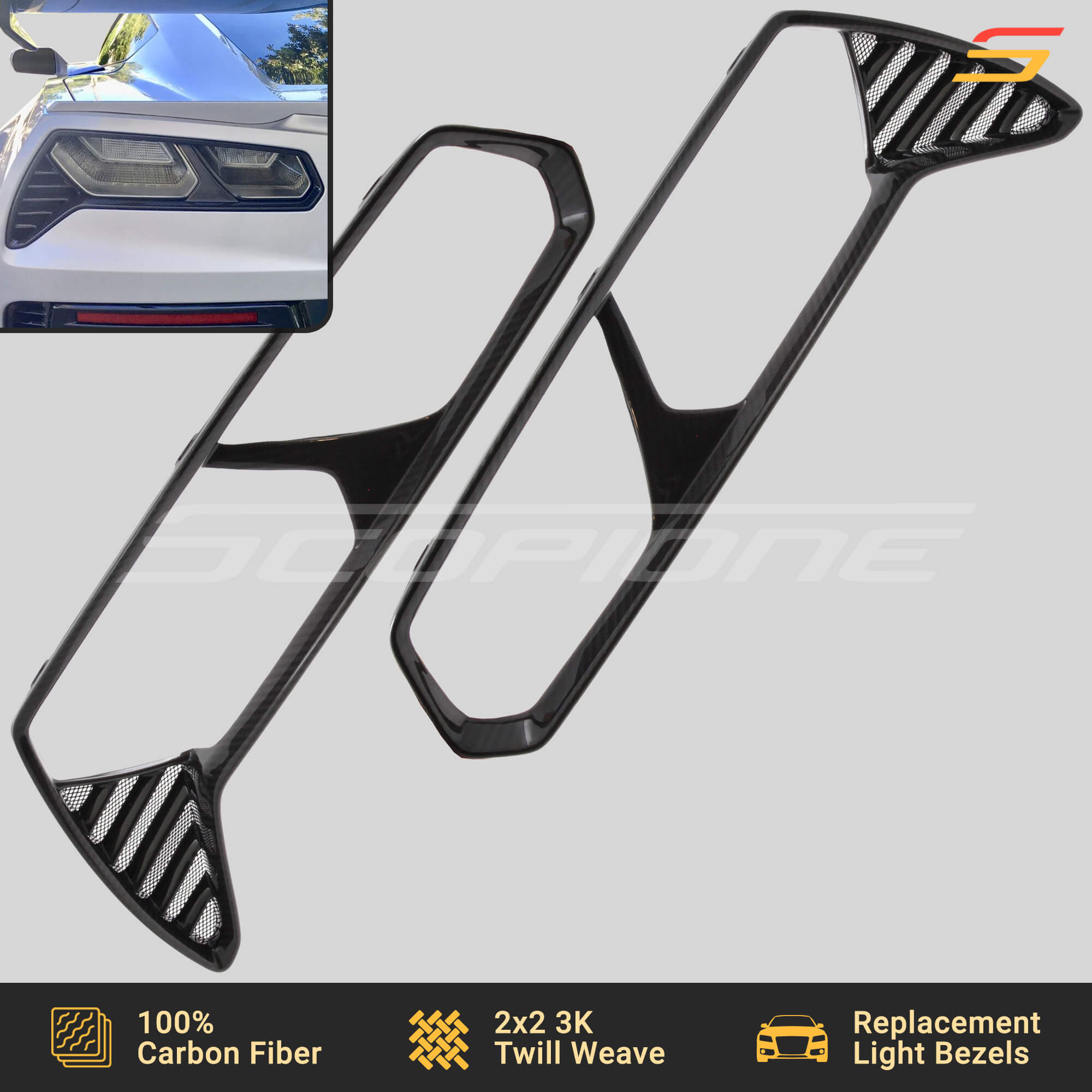
| Tail Light Trim Bezels | C7 | $400 | All C7 variants; pair |
| Rear Quarter Fender Air Vents | C7 | $400 | All C7 variants; pair |
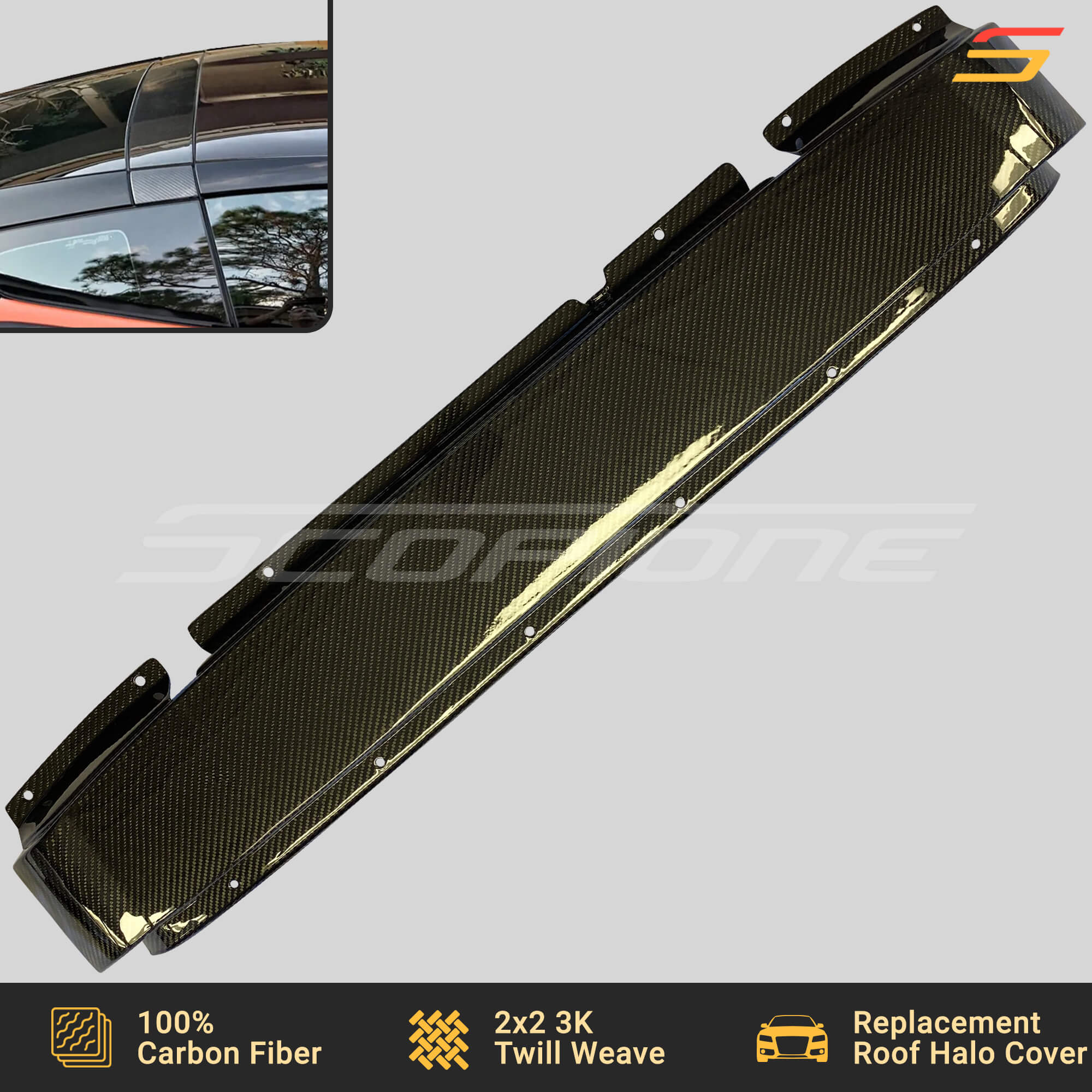
| Roof Halo Targa Bar Panel | C7 | $700 | All C7 variants; OEM P/N 23316884 |
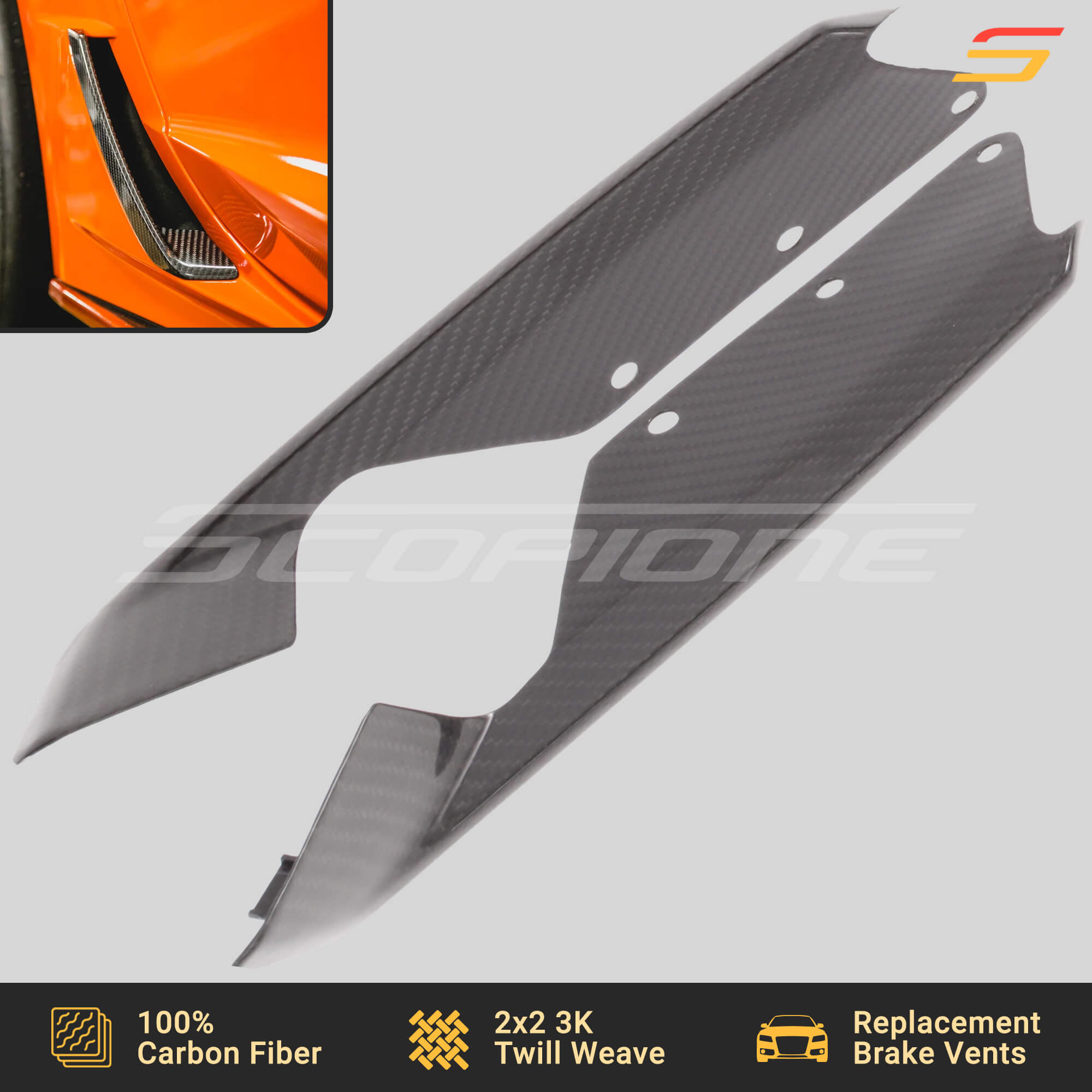
| Side Skirt Brake Scoop Vents | C7 | $300 | Grand Sport, Z06, ZR1 only; pair |
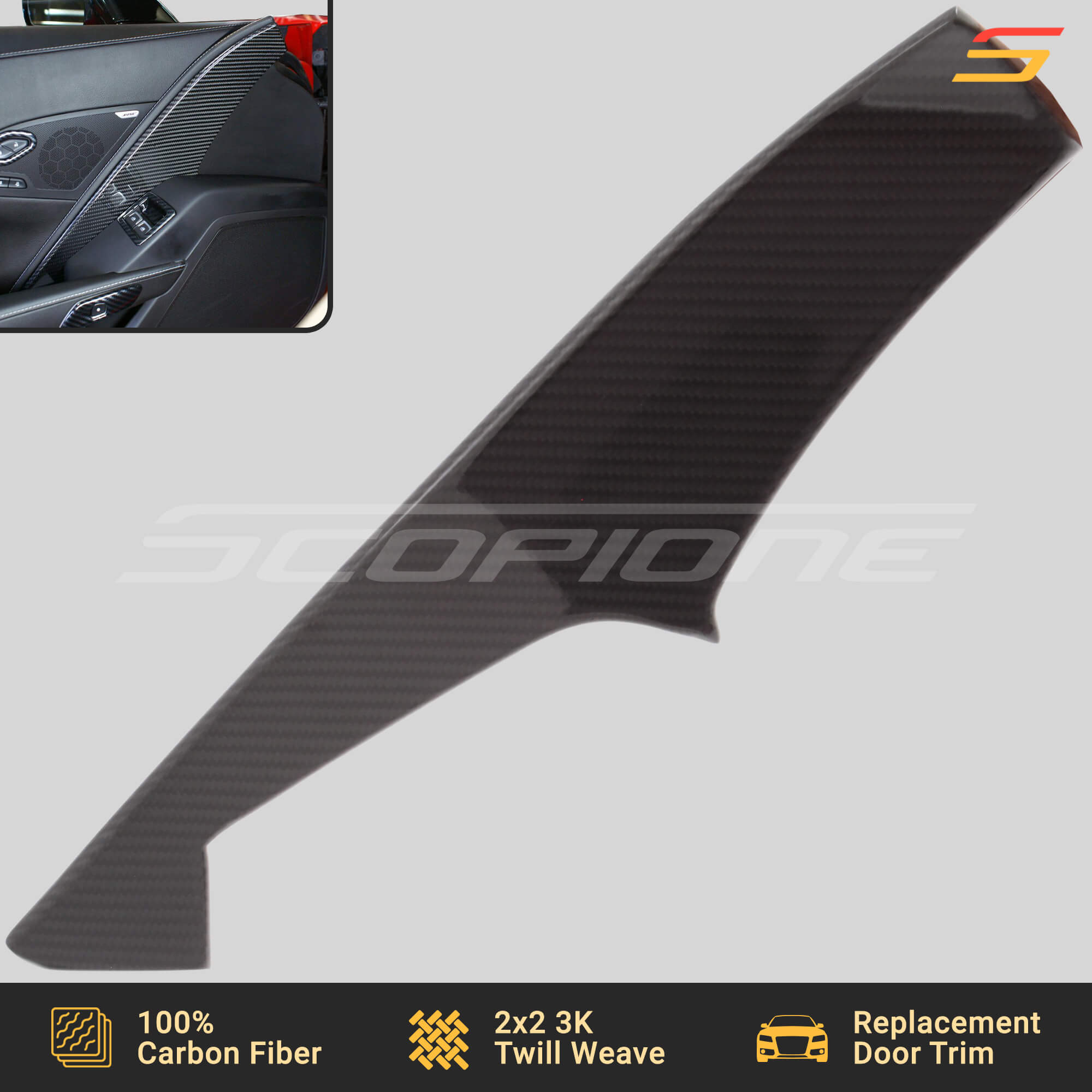
| Interior Door Panel Trim | C7 | $350 | All C7 variants; LHD models only |
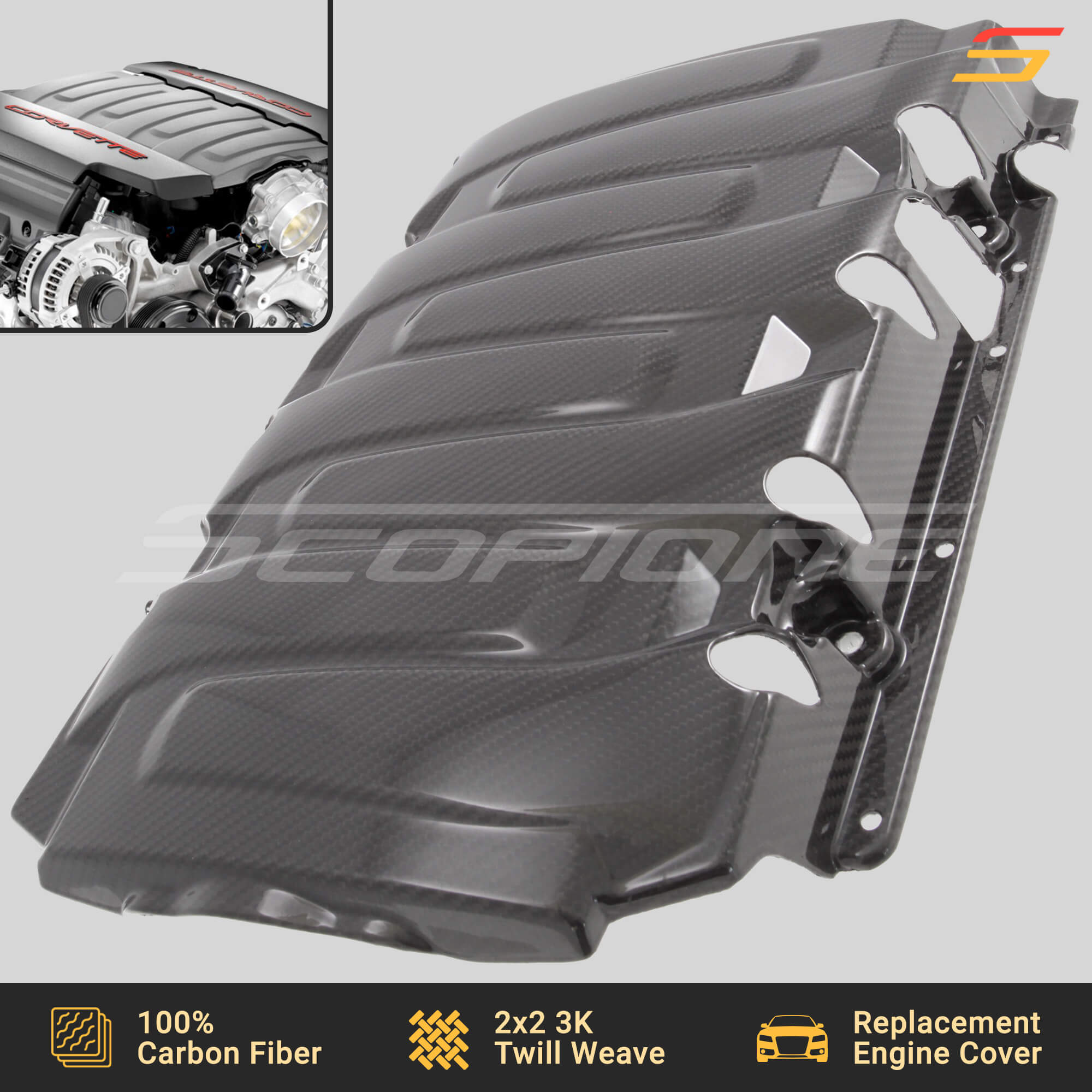
| LT1 Engine Cover | C7 | $450 | Stingray, GS, Z51 (LT1 only); also fits 2016–2024 Camaro SS |

Variant-Specific Fitment Guide
The C7 Corvette’s four main variants – Stingray, Grand Sport, Z06, and ZR1 – use different body panels in key areas. Scopione’s catalog reflects this with variant-specific products:
- Front fender vents come in two sets – The Z06 and Grand Sport share wider fenders with a specific vent shape. The Stingray and ZR1 share a different, narrower vent profile. The two sets are not interchangeable.
- Hood air vent fits Stingray, Z51, and Grand Sport – The Z06 and ZR1 use different hood designs with their own integrated vents. Scopione’s hood vent does not fit Z06 or ZR1 hoods.
- Side skirt brake scoops fit Grand Sport, Z06, and ZR1 – these three variants include factory brake duct openings in the side skirts. The base Stingray does not.
- Spoiler winglets require a factory Z06 spoiler – They extend the existing OEM Z06 Stage 1 or Stage 2 rear spoiler. Without that factory spoiler, the winglets have no mounting surface.
- Six products fit every C7 variant: rear bumper diffuser, tail light bezels, rear quarter fender vents, roof halo targa panel, interior door panel trim, and the front bumper grille (all except ZR1 for the grille).
Cross-Compatibility with Camaro and Pontiac G8
Two Scopione engine covers serve vehicles beyond the Corvette:
- LS3 engine cover – Fits the 2008–2013 C6 Corvette, the 2010–2015 fifth-generation Camaro SS (LS3/L76 engines), and the 2008–2009 Pontiac G8 sedan. A direct bolt-on across all three platforms.
- LT1 engine cover – Fits the C7 Corvette Stingray and Grand Sport (LT1 6.2L) and the 2016–2024 sixth-generation Camaro SS. The Camaro installation requires minor modifications (drilling for tube holders, one corner trimmed).
GM’s shared V8 architecture puts the same LS3 or LT1 in different chassis – which means the same carbon-fiber engine cover works across platforms, including LS3/LT1 swap builds. Explore the full catalog for carbon-fiber Corvette and Camaro engine covers.
Corvette Market Pricing & Carbon Fiber Investment
The Corvette market stratifies sharply by variant. Base models follow normal depreciation curves. But ZR1 production – limited to 4,684 units (C6) and 2,953 units (C7) – creates scarcity that collectors now price in aggressively.
| Model | Original MSRP | Current Market Range |
|---|---|---|
| C6 Base/Grand Sport | $44,245–$60,000 | $25,000–$55,000 |
| C6 Z06 (LS7) | $65,800–$75,600 | $35,000–$80,000 |
| C6 ZR1 (LS9) | $103,970–$112,000 | $56,000–$215,000 |
| C7 Stingray | $51,995–$55,495 | $40,000–$65,000 |
| C7 Z06 (LT4) | $78,995–$79,495 | $60,000–$122,000 |
| C7 ZR1 (LT5) | $118,900 | $120,000–$410,000 |
| C8 Stingray | $59,995–$70,000 | $55,000–$85,000 |
| C8 Z06 (LT6) | $106,395–$117,700 | $100,000–$140,000 |
The C6 Z06 made Hagerty’s 2026 Bull Market List – recognition that its manual-only, naturally aspirated 7.0-liter V8 represents an analog driving experience GM will never build again. C7 ZR1 values have surged accordingly: a ZTK-equipped example with 1,240 miles sold for $330,000 at Mecum Indy in May 2025, and the last C7 ZR1 built (16 miles on the odometer) brought $410,000 at Mecum Dallas in 2024. Carbon-fiber aero packages – whether factory Z07/ZTK or aftermarket Scopione pieces – add both visual distinction and documented value at resale. Browse all available carbon-fiber parts at the Scopione Corvette carbon fiber catalog.
Pricing Factors That Affect Corvette Values
- Manual transmission (C6/C7) – Manual Z06 and ZR1 examples command consistent premiums. The C7 ZR1 is the last Corvette ZR1 ever offered with a manual gearbox – a fact that anchors its collector appeal.
- Z06/ZR1 vs. Stingray – Performance variants hold value disproportionately. ZR1 models, with their limited production runs, appreciate while base Stingrays depreciate.
- Factory carbon fiber options – C7 visible carbon fiber roof panels, Z07 aero packages, and C8 visible CF packages add measurable resale value. Documented RPO codes matter at auction.
- Color and competition packages – Torch Red, Arctic White, and Black are the classic Corvette trio. Rare colors (Admiral Blue, Watkins Glen Gray) carry premiums. Competition packages (Z07, ZTK) add 10–20% over identically equipped non-package cars.
- Track mileage and maintenance records – Corvettes with documented dealer maintenance and no track event history command the highest prices. For Z06 and ZR1 models, however, a comprehensive HPDE log with proper maintenance can signal careful ownership rather than abuse.
Ownership Costs
Routine annual maintenance on C6 and C7 Corvettes runs $400–$700 depending on dealer versus independent shop. Key costs beyond routine service: differential service ($150–$300), clutch replacement ($2,500–$3,500 installed for manual cars), water pump ($400–$1,200), and performance tire replacement ($800–$1,500). C8 service costs run $700–$970 per year due to DCT fluid changes (~$500 every three years), DCT filter service (~$700), and mid-engine access complexity. Carbon-ceramic brakes on Z06/ZR1/E-Ray: $6,000–$10,000 per axle.
Frequently Asked Questions
What carbon fiber parts does Scopione offer for the Chevrolet Corvette?
Scopione carries 15 carbon fiber products for the Corvette: 2 for the C6 (2005–2013) and 13 for the C7 (2014–2019). The C7 range covers exterior aero (grille, lip spoiler, two fender vent sets, diffuser, hood vent, spoiler winglets, tail light bezels, rear quarter vents, roof halo panel, brake scoops), interior trim, and an LT1 engine cover. All parts use hand-laid 2×2 3K twill-weave carbon fiber. View the full catalog at the Scopione Corvette carbon fiber page.
Do Scopione Corvette parts fit all C7 variants?
Fitment varies by C7 variant because the Stingray, Grand Sport, Z06, and ZR1 use different body panels in certain areas. Front fender vents come in two sets – one for Z06/Grand Sport and another for Stingray/ZR1. The hood air vent fits Stingray, Z51, and Grand Sport hoods but not Z06 or ZR1. Side skirt brake scoops fit Grand Sport, Z06, and ZR1 only. Six products – including the rear bumper diffuser, tail light bezels, rear quarter vents, and roof halo panel – fit every C7 variant.
Does Scopione make carbon fiber parts for the C8 Corvette?
Scopione does not currently offer carbon fiber parts for the C8 Corvette (2020 and newer). The catalog covers the C6 (2005–2013) and C7 (2014–2019) generations. The C8’s mid-engine architecture and restyled bodywork require entirely different tooling from the front-engine C6 and C7 platforms.
Are Scopione Corvette engine covers cross-compatible with other GM vehicles?
Yes. The LS3 engine cover fits the 2008–2013 Corvette C6, the 2010–2015 Camaro SS (LS3/L76 engines), and the 2008–2009 Pontiac G8. The LT1 engine cover fits the C7 Corvette Stingray and Grand Sport as well as the 2016–2024 Camaro SS (with minor modifications for the Camaro installation). Both covers mount using factory engine cover attachment points, making them compatible with LS3/LT1 engine swaps in other GM chassis.
More Scopione Picture Galleries
- Ferrari: 458 Italia & Spider • 488 GTB & Spider • F8 Tributo & Spider • F12 & 812 Superfast • SF90
- Lamborghini: Gallardo • Huracan • Aventador • Urus
- McLaren: MP4-12C & 650S • 720S & 765LT • Sports Series
- Porsche: 911, Boxster & Cayman
- BMW: M3, M4, M5 & More
- Audi: R8
- Nissan: GT-R R35 • 350Z, 370Z & Z
- Aston Martin: Vantage, DB9 & DBS
- Bentley: Continental GT & GTC
- Maserati: GranTurismo & GranCabrio
- Toyota: Supra
- Subaru: WRX STI
- Mitsubishi: Lancer Evolution
- Chevrolet: Camaro
- Dodge: Viper
Experience the elegance and performance of the Chevrolet Corvette with Scopione. Browse our gallery and get inspired to elevate your supercar with our top-of-the-line carbon fiber upgrades.
Shop now for premium ScopioneCarbon carbon fiber upgrades and experience the ultimate in performance and aesthetics for your Chevrolet Corvette!