

 Shop
ShopThe Mitsubishi Lancer Evolution put rally-car hardware in a four-door economy body – a 2.0L turbocharged 4G63 and full-time all-wheel drive that carried Tommi Makinen to four consecutive WRC drivers’ championships from 1996 to 1999. Scopione carries 7 carbon fiber parts for the Lancer Evolution, covering engine bay dress-up for the Evo 4–9 and Evo X plus exterior components including mirror caps, a shark fin roof spoiler, and Evo X bumper aero – all in hand-laid 2×2 3K twill-weave carbon fiber with UV-resistant clear coat.
Introduction: The Rally Homologation Icon
Mitsubishi launched the Lancer Evolution in Japan in October 1992 with a straightforward brief: homologate a winning Group A rally car. The recipe took the 4G63 2.0L turbocharged four and full-time all-wheel drive from the larger Galant VR-4 and installed them in the lighter, shorter Lancer sedan. That formula – iron-block turbo four, driven wheels at both ends, aggressive cooling – stayed intact through ten generations and 24 years of production.
The competition record justified the badge. Tommi Makinen won four consecutive WRC drivers’ championships in Evolution models from 1996 through 1999, and Mitsubishi took the constructors’ title in 1998 – results earned in Group A machinery closely related to the showroom car while rivals moved to purpose-built World Rally Cars. Homologation rules meant the road cars carried real hardware: twin-scroll turbochargers, active differentials, and vented aluminum panels arrived on street Evos because the rally program needed them.
America waited a decade for its first official Evolution. The Evo VIII landed in 2003, answered the Subaru WRX’s arrival, and gave US buyers supercar-baiting pace for around $29,000. Production ended in 2016 with the Evolution X Final Edition. No successor followed. The used market has responded the way it always does when a formula dies – clean examples are appreciating, and the Evolution is now tracing the collector curve that Japanese performance icons before it established.
Evolution I–III (1992–1996): Homologation Origins
The first three Evolutions (chassis codes CD9A and CE9A) were built on the fourth-generation Lancer and sold in Japan only. The Evolution I produced 250 PS from its Galant-derived 4G63T. Demand outran the plan – the initial homologation allocation sold out almost immediately, and Mitsubishi kept building.
From the start, every Evolution came in two flavors. The GSR carried street equipment: air conditioning, power windows, ABS. The RS stripped all of that out – steel wheels, no ABS, minimal sound deadening – as a lighter, cheaper base for rally and circuit preparation. That two-trim structure survived across the model’s entire life, and it is why unmodified GSR examples and genuine RS shells occupy different corners of today’s collector market.
- Evolution I (1992–1994) – 250 PS, 5-speed manual, viscous-coupling AWD. The template.
- Evolution II (1994–1995) – 260 PS, longer wheelbase stance via revised suspension, wider tires, and stiffer body mounting.
- Evolution III (1995–1996) – 270 PS through a higher-compression head and larger compressor, plus the deep front air dam and tall rear wing that fixed the Evo silhouette in the public eye.
The Evolution III is the one history remembers. Makinen drove it to his first drivers’ championship in the 1996 season, beating factory efforts from Subaru, Ford, and Toyota. JDM road cars of this era ran the 180 km/h speed limiter and curb weights between roughly 2,580 and 2,780 lbs – light by any modern measure. Values for clean early cars have climbed steadily as 25-year import eligibility brought them to American soil.
Evolution IV–VI (1996–2001): The Championship Years
The 1996 platform change to the fifth-generation Lancer (CN9A, later CP9A) brought a fundamental engineering revision: Mitsubishi rotated the 4G63 180 degrees to improve weight distribution and drivetrain geometry, added a twin-scroll turbocharger, and reached Japan’s 280 PS self-imposed industry ceiling – a figure every subsequent JDM Evolution officially matched while chassis capability kept climbing.
The Evolution IV also introduced AYC – Active Yaw Control – on GSR trims. Rather than simply locking torque front-to-rear, AYC’s rear differential actively shuffled torque between the rear wheels to rotate the car into corners. It was the beginning of the electronically managed cornering intelligence that became the Evo’s dynamic signature.
- Evolution IV (1996–1998) – Twin-scroll turbo, AYC debut, 280 PS. New platform, new aggression.
- Evolution V (1998) – Widened bodywork, 17-inch wheels, Brembo brakes, and an adjustable rear wing. The 1998 WRC constructors’ championship came in this car’s season.
- Evolution VI (1999–2001) – Repositioned foglights and a twin-element rear wing improved cooling and aero efficiency for competition regulations.
The era closed with the Evolution VI Tommi Makinen Edition of 1999–2001 – the championship commemorative. The TME wore a revised front bumper, sat lower, steered quicker, and fitted a titanium-turbine turbocharger on GSR versions for sharper spool. The red-and-black Recaro interior and optional Passion Red paint echoed Makinen’s WRC livery. It has become the single most sought-after street Evolution, and eligible examples are now entering the US under the 25-year rule.
Evolution VII–IX (2001–2007): America Gets Its Evo
The CT9A generation moved the Evolution onto the larger Lancer Cedia platform in 2001. The Evolution VII added ACD – an Active Center Differential with driver-selectable tarmac, gravel, and snow maps – working alongside AYC on JDM GSR trims. A Japan-market GT-A variant – also officially sold in Australia – even offered a 5-speed automatic, the first Evo without three pedals.
The market-defining moment came in 2003. Mitsubishi finally shipped the Evolution VIII to the United States, rating it at 271 hp with a 5-speed manual, Brembo brakes, and an aluminum hood and front fenders. Sticker price: $28,987. The 2005 Evo VIII MR added an aluminum roof panel, a 6-speed manual, Bilstein dampers, forged BBS wheels, and the vortex generator – the row of small fins at the roof’s trailing edge that managed airflow onto the rear wing.
Then came the Evolution IX. For 2005–2007, the 4G63 gained MIVEC variable intake cam timing, lifting US output to 286 hp and filling in the midrange. It was the final form of the iron-block engine, offered in Standard, RS, SE, and MR trims. Collectors chase the IX hardest of any US Evolution – last-of-the-line status attached to the engine that built the badge.
| US Model | Power | Original MSRP | Inflation-Adjusted |
|---|---|---|---|
| 2003 Evolution VIII | 271 hp | $28,987 | ~$51,000 |
| 2005 Evolution VIII MR | 276 hp | $34,699 | ~$57,000 |
| 2006 Evolution IX MR | 286 hp | $35,189 | ~$56,000 |
Period US testing put the Evo VIII and IX at roughly 4.7–5.3 seconds to 60 mph depending on trim at a curb weight near 3,263 lbs – numbers that embarrassed sports cars costing twice as much on a back road, which was always the point.
Evolution X (2007–2016): The Final Chapter
The tenth Evolution (CZ4A) retired the 4G63 after 15 years. Its replacement, the 4B11T, used an all-aluminum block that cut engine weight by roughly 27 lbs and revved with a different character – less old-school turbo lag, more linear delivery. US output was 291 hp and 300 lb-ft. The UK-market FQ-400 – a 35-unit special – pushed the same engine to 403 hp, the wildest factory tune the platform ever received.
Drivetrain intelligence peaked here. S-AWC – Super All Wheel Control – integrated the Active Center Differential, torque-vectoring AYC rear differential, active stability control, and sport ABS into one supervising system. Two transmissions split the range: a 5-speed manual in the GSR, and the TC-SST 6-speed dual-clutch in the MR, which paired with Bilstein dampers, Eibach springs, and BBS wheels for a grand-touring flavor.
| US Model | Power | Transmission | Original MSRP |
|---|---|---|---|
| 2008 Evolution X GSR | 291 hp | 5-speed manual | $32,990 |
| 2008–2015 Evolution X MR | 291 hp | 6-speed TC-SST | $38,290–~$41,000 |
| 2015 Final Edition | 303 hp | 5-speed manual | $37,995 |
The end came with the 2015 Final Edition: 1,600 numbered US cars with 303 hp via sodium-filled exhaust valves and revised tuning, manual only, black roof, dark chrome wheels. Japan’s own 1,000-unit Final Edition closed out production at the Mizushima plant in spring 2016, and Mitsubishi walked away from the segment entirely. At 3,514–3,594 lbs the X was the heaviest Evolution, but it was also the fastest of the line – and the Final Edition’s numbered plaques signaled that Mitsubishi knew exactly what it was ending.
Carbon Fiber and the Lancer Evolution
Mitsubishi’s factory lightweighting strategy leaned on aluminum, not carbon fiber. The US Evo VIII carried an aluminum hood and front fenders; the VIII MR added an aluminum roof; the Evolution X used aluminum for its roof, hood, front fenders, and rear spoiler frame. Functional aero – the vortex generator, the adjustable wings – came in stamped metal and molded plastic. Street Evolutions never shipped with structural carbon fiber panels.
The aftermarket treated that as an invitation. The Evo became one of the defining platforms of the time attack scene, where carbon-fiber hoods, canards, splitters, and swan-neck GT wings are standard equipment on cars chasing lap records. Vented CF hoods address a real Evo need – the 4G63 and 4B11T both generate serious underhood heat – while cutting weight over even the factory aluminum piece. Replica vortex generators and roof spoilers in carbon fiber turned an obscure aerodynamic device into a JDM styling signature.
Engine bay presentation matters just as much in this community. Evo engine bays get photographed – at meets, in sale listings, on forums – and carbon-fiber engine covers and timing belt covers replace scratched, faded factory plastic with a material that reads as intentional. Scopione’s parts follow this philosophy: hand-laid 2×2 3K twill-weave CF with a UV-resistant clear coat, built as direct replacements or add-ons for specific chassis generations rather than universal-fit pieces.
Legacy: The Rally Sedan That Outlived Its Maker’s Interest
The Evolution’s rivalry with Subaru’s WRX STI defined an entire category – the affordable rally homologation sedan – that no longer exists. Both cars sold performance credibility earned on real WRC stages; the Evo’s four straight drivers’ titles gave it the sharper competition résumé. Gran Turismo, Initial D, and 2000s street culture then carried the badge to an audience that had never watched a rally.
Since production ended in 2016, the Evolution has joined the appreciation wave lifting Japanese performance cars. The pattern mirrors the Toyota Supra A80: most examples were modified, clean stock cars became scarce, and scarcity repriced the survivors. A 461-mile 2006 Evo IX MR sold for $161,000 on Bring a Trailer in December 2024 – not a typo – and the cleanest low-mileage Final Edition Evo X cars have traded above their original sticker. Meanwhile the Nissan GT-R R35 took the AWD-performance mantle upmarket after 2007, leaving the Evo’s territory – giant-killing pace under $40,000 – permanently vacant.
Mitsubishi has reused the Evolution name only on a crossover concept. The enthusiast market has rendered its verdict on that decision: the sedans keep appreciating.
Scopione: Carbon Fiber Parts for the Lancer Evolution
Scopione’s Lancer Evolution catalog contains 7 carbon fiber products spanning three fitment groups: the 4G63 cars of 1996–2005 (Evo 4–8), the CT9A-era Evo 7/8/9, and the CZ4A Evolution X. Every part uses hand-laid 2×2 3K twill-weave carbon fiber with a UV-resistant clear coat and carries Scopione’s 12-month limited warranty against delamination. Browse the full lineup on the Scopione Mitsubishi Evo carbon fiber page.
What Scopione Offers for the Evolution
| Part | Fitment | Years | Type | Price |
|---|---|---|---|---|
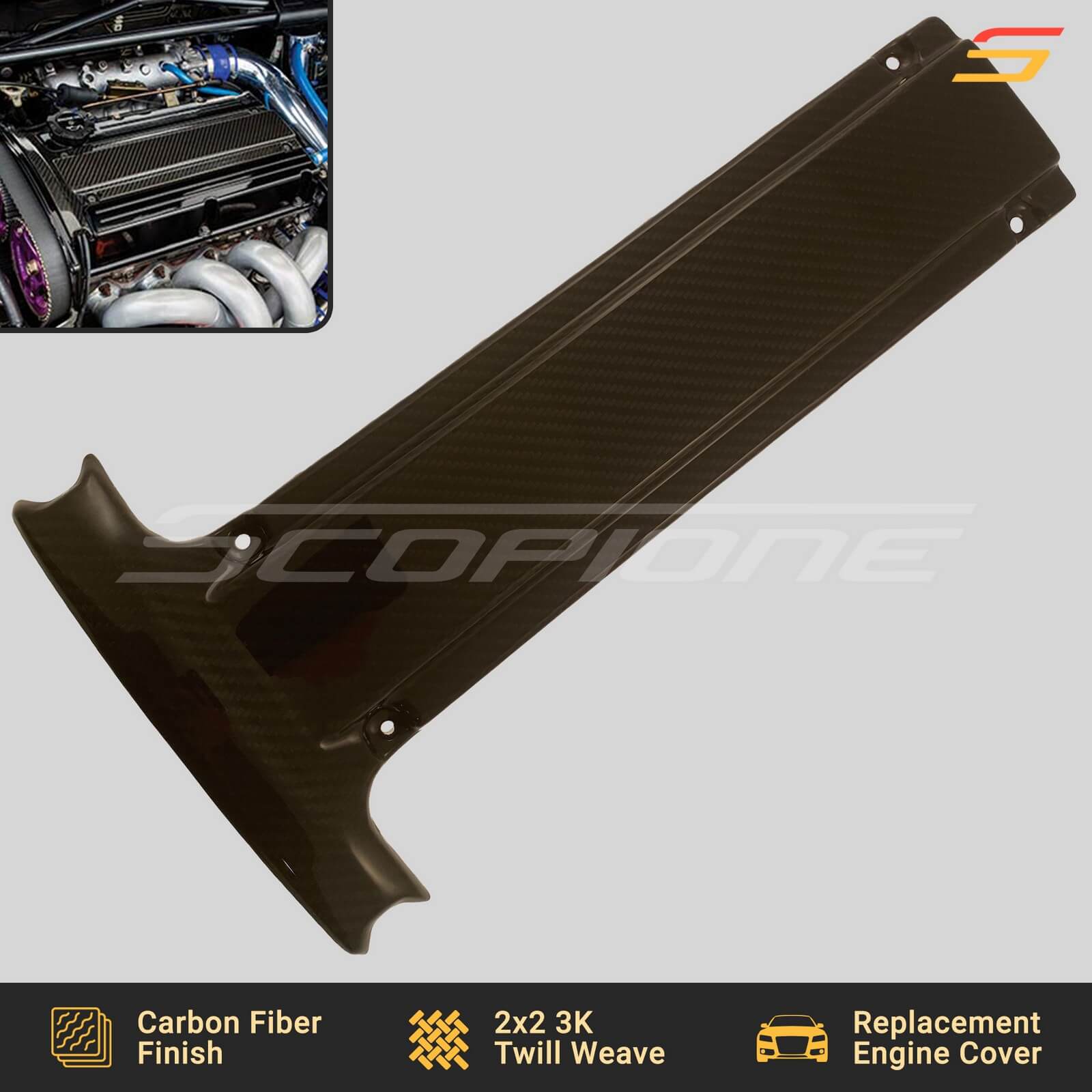
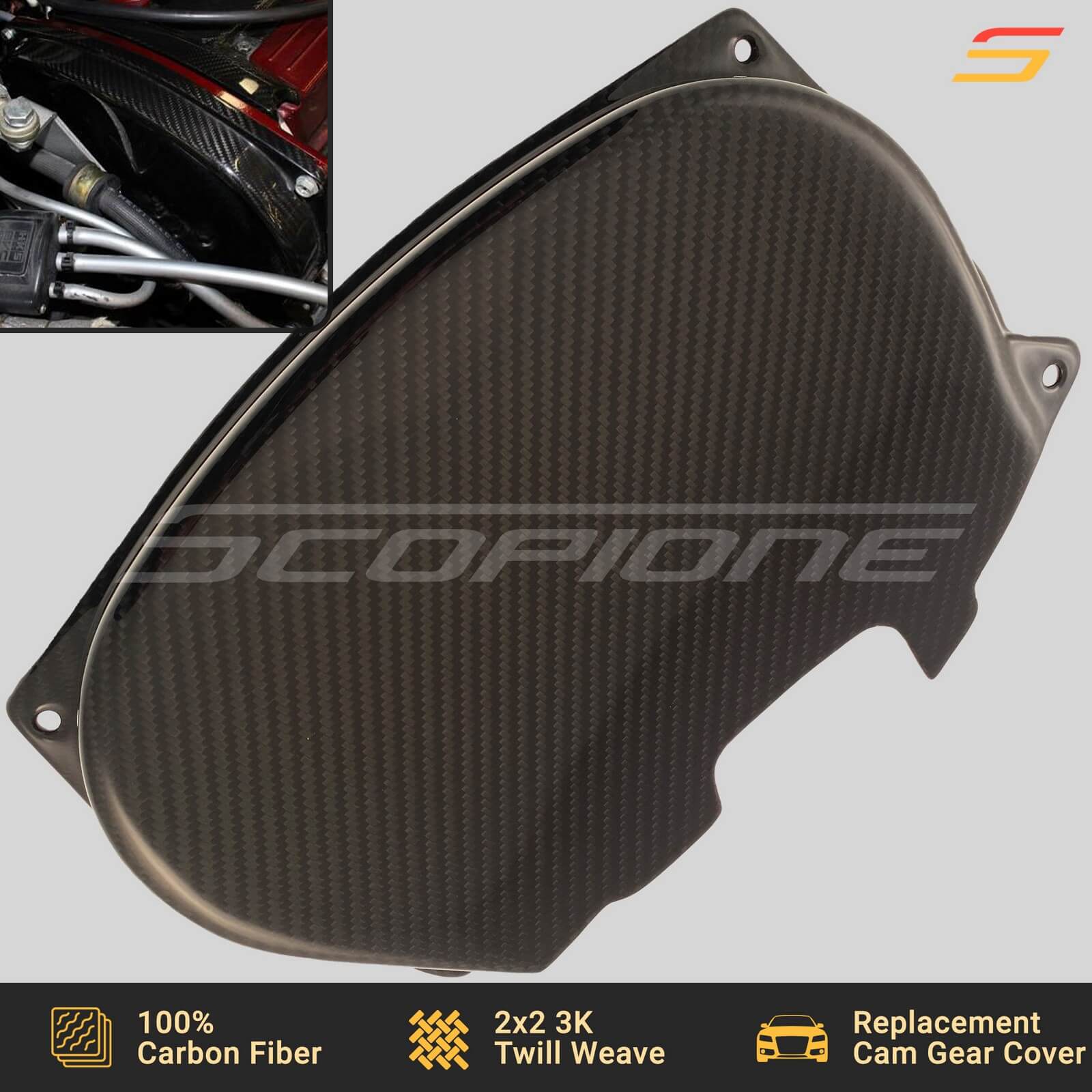
| Engine Cam Gear Timing Belt Cover | Evo 4, 5, 6, 7, 8 | 08/1996–03/2005 | Direct replacement | $200 |
| Engine Cover | Evo 7, 8, 9 | 08/2001–01/2007 | Direct replacement | $160 |
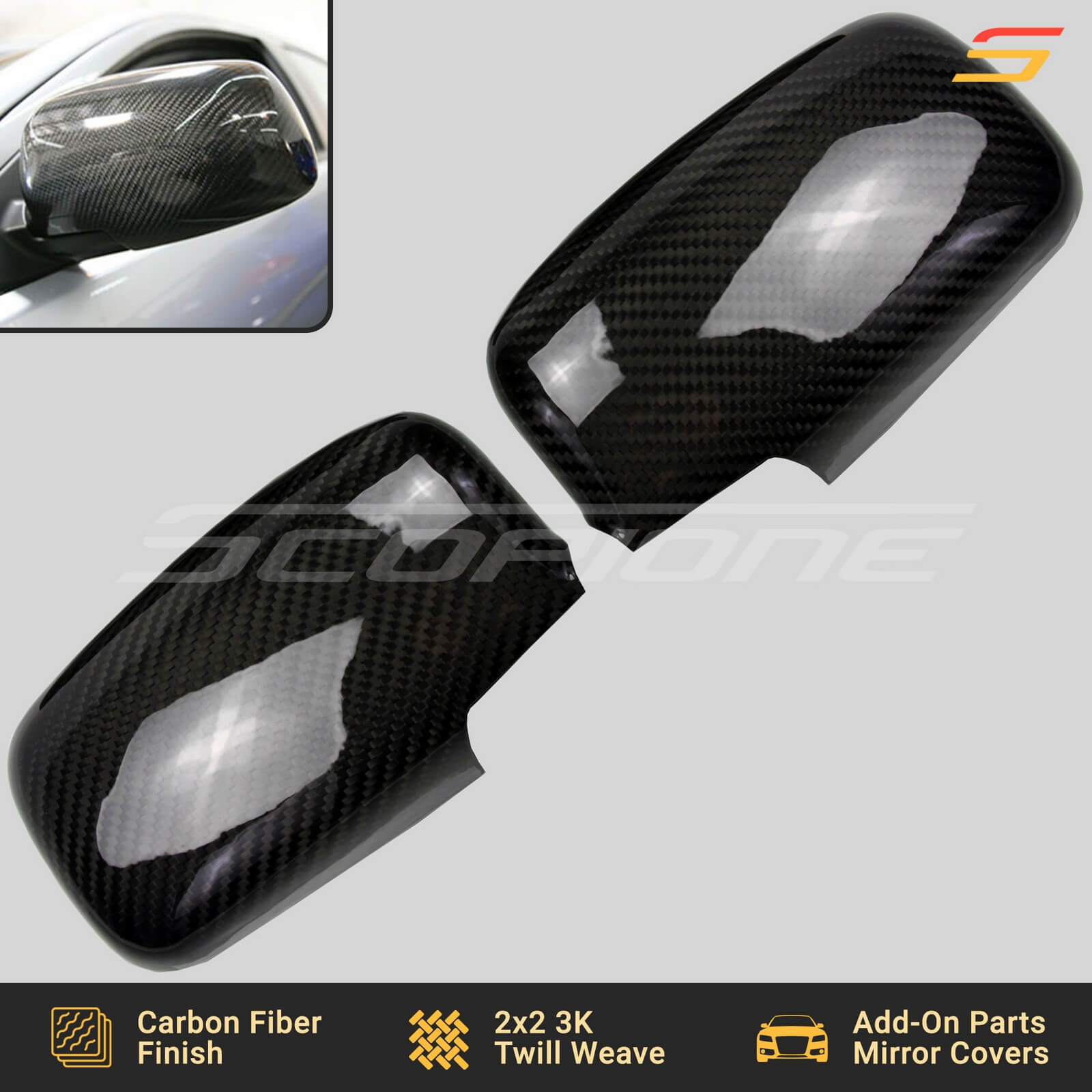
| Mirror Covers Caps | Evo 7, 8, 9 | 08/2001–01/2007 | Add-on | $210 |
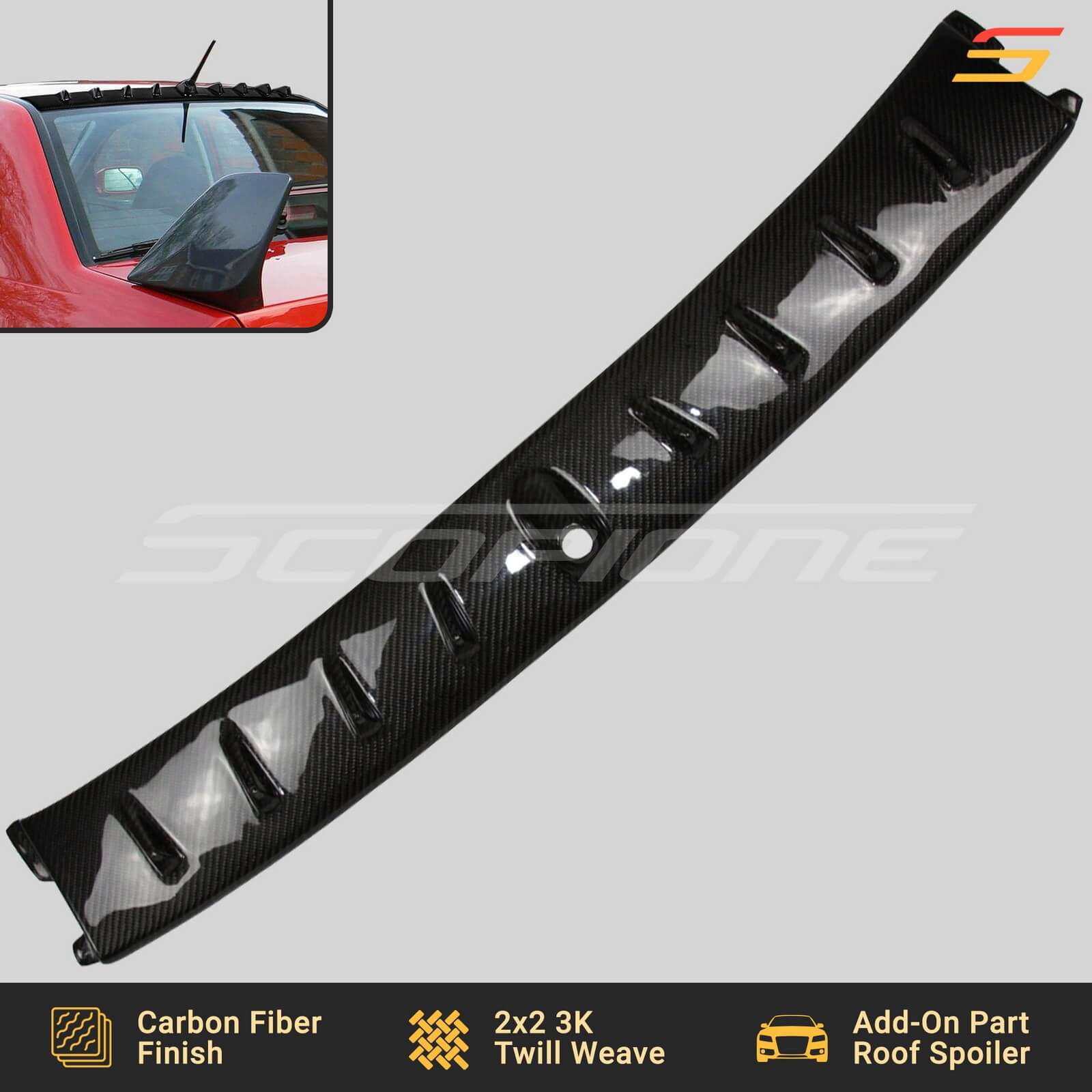
| Shark Fin Roof Spoiler (sedans) | Evo 7, 8, 9 | 08/2001–01/2007 | Add-on | $270 |
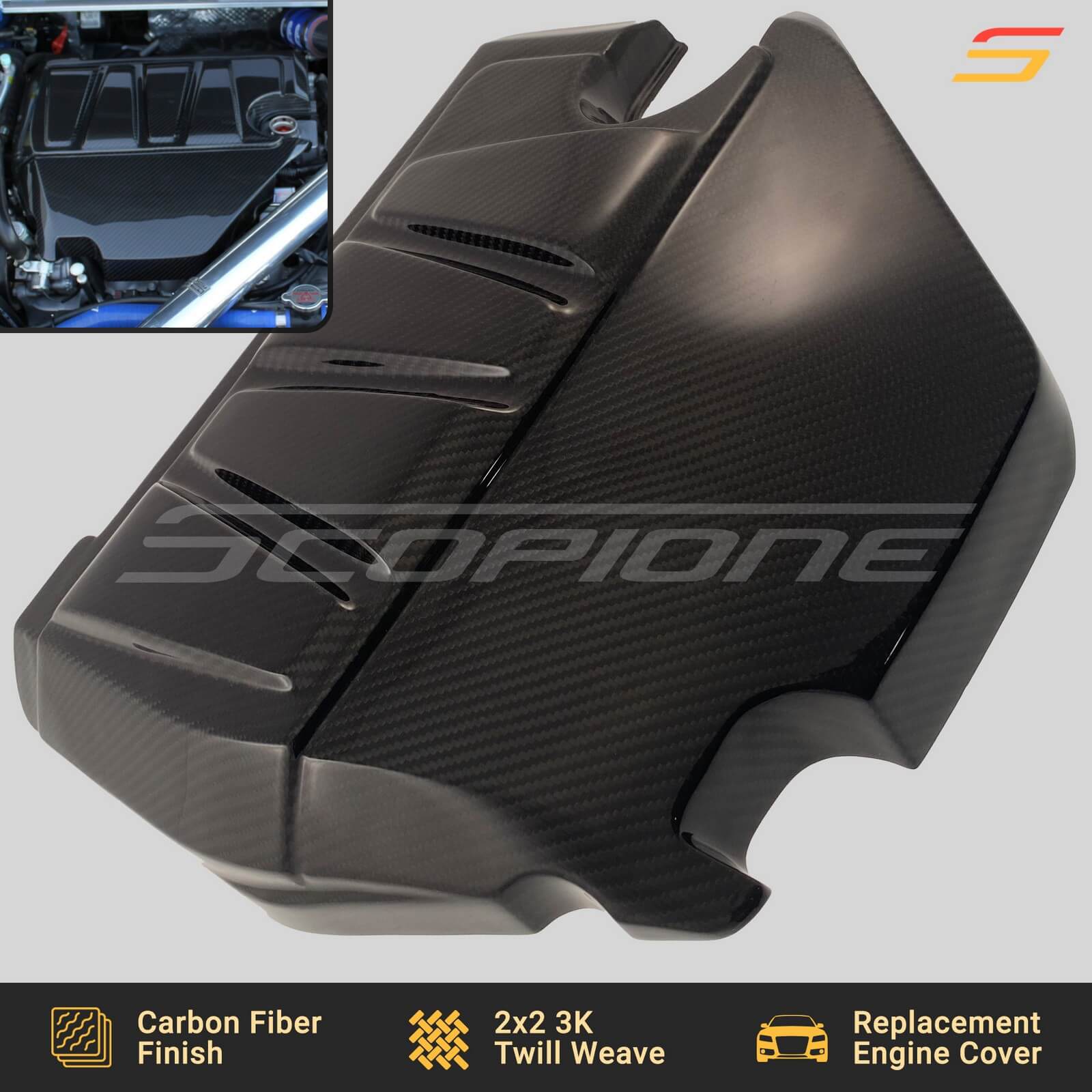
| Engine Cover | Evo X | 2008–2015 | Direct replacement | $230 |
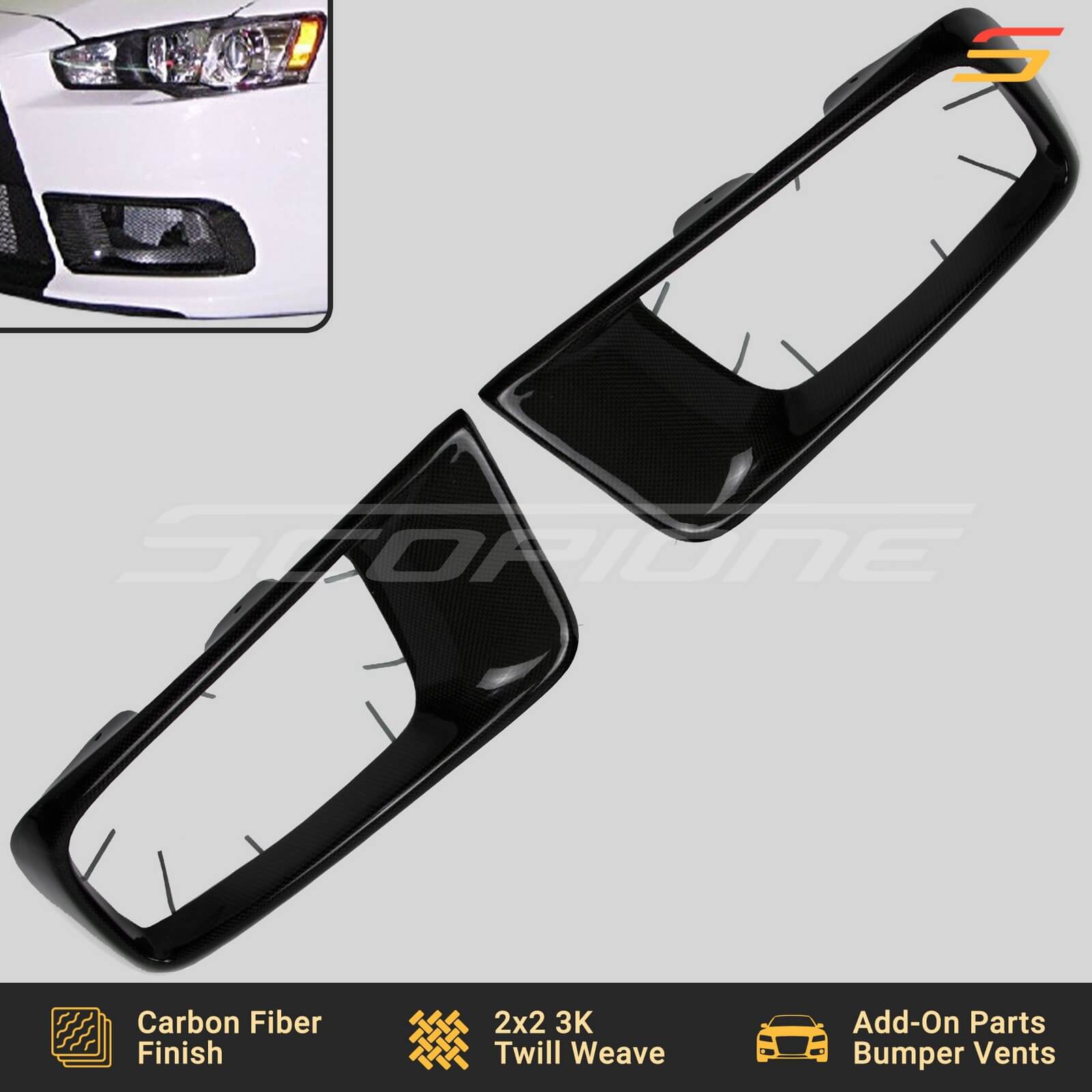
| Front Bumper Air Intake Vents | Evo X | 2008–2015 | Add-on | $300 |
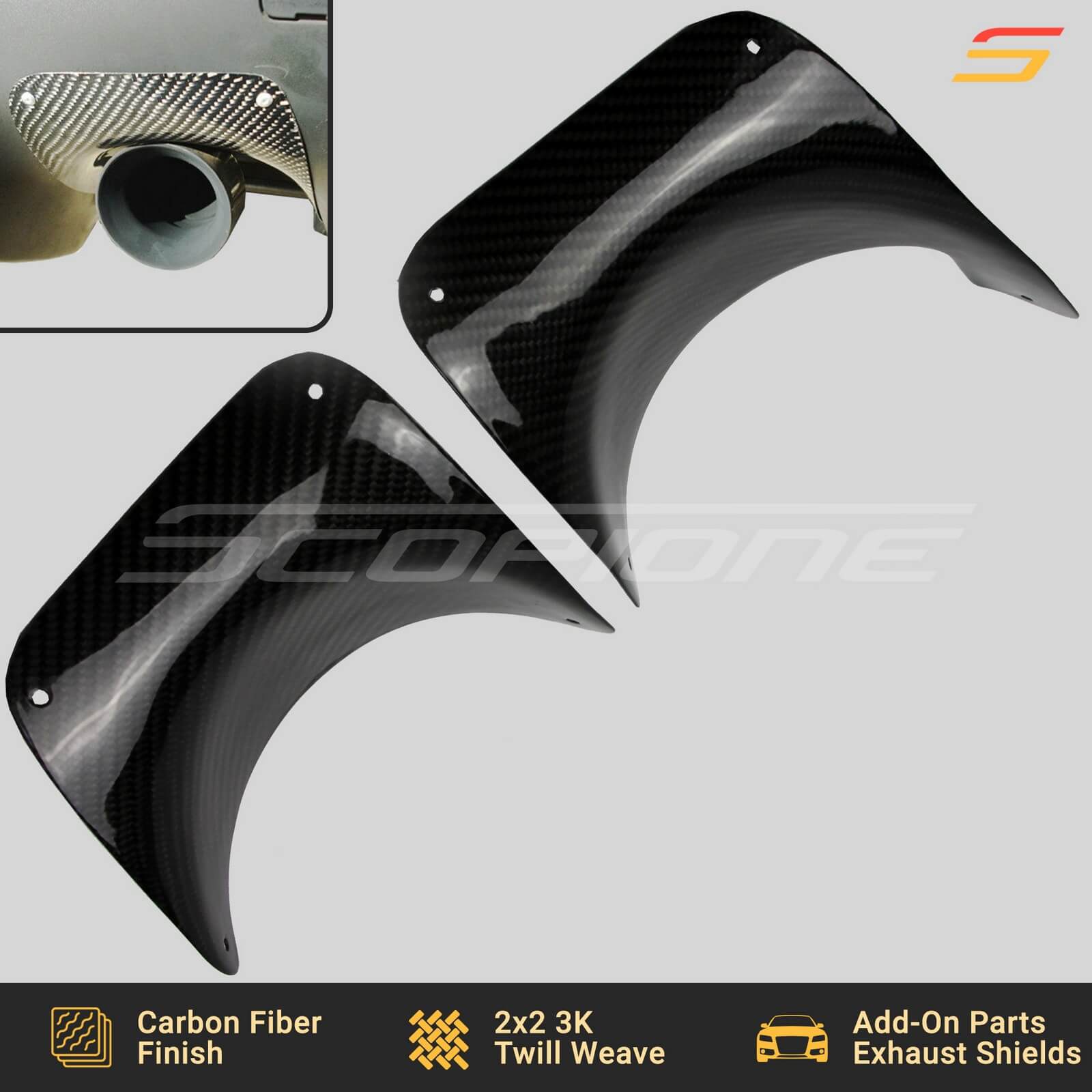
| Rear Bumper Exhaust Shields | Evo X | 2008–2015 | Add-on | $160 |
Fitment by Generation
Fitment splits cleanly along chassis lines, and the engine parts carry one firm restriction: 2.0L turbo engines only. None of the engine covers fit naturally aspirated Lancers.
- Evo 4–8 (08/1996–03/2005) – The cam gear timing belt cover spans five generations of 4G63 cars, from the CN9A through the US-market Evo VIII.
- Evo 7/8/9 (08/2001–01/2007) – Three parts for the CT9A chassis: the engine cover, mirror caps, and the sedan-only shark fin roof spoiler that echoes the factory vortex generator look.
- Evo X (2008–2015) – Three parts for the CZ4A: a 4B11T engine cover plus front bumper intake vents and rear bumper exhaust shields, both shaped for the Evo X bumpers specifically. They will not mount to standard Lancer bumpers.
Two gaps are worth stating plainly. Scopione does not currently list interior carbon fiber for the Evolution, and the catalog starts at the Evo 4 – owners of Evolution I–III homologation cars are limited to the shared 4G63 architecture where applicable. Model-specific fitment details, dimensions, and installation notes appear on each listing in the Evo catalog.
Evolution Market Pricing & Carbon Fiber Investment
The Evolution market now has a clear hierarchy: the Evo IX at the top of the US cars, the Final Edition leading the X range, and fresh JDM imports building a separate tier. Carbon-fiber engine bay parts serve the presentation-focused end of that market – cars photographed for sale listings and shows – while the exterior pieces suit driver-grade builds.
| Variant | Original MSRP | Current Market Range | Top Upgrade |
|---|---|---|---|
| Evolution VIII (2003–2005) | $28,987–$34,699 | $25,000–$45,000 | Engine cover ($160) |
| Evolution IX (2005–2007) | $28,679–$35,189 | $35,000–$65,000 | Engine cover ($160) |
| Evolution IX MR (low miles) | $35,189 | $50,000–$100,000+ | Mirror caps ($210) |
| Evolution X GSR/MR | ~$33,000–$41,000 | $22,000–$40,000 | Engine cover ($230) |
| Evolution X Final Edition | $37,995 | $24,000–$46,000 | Intake vents ($300) |
| JDM Evo IV–VI / TME imports | JDM market | $25,000–$60,000+ | Cam gear cover ($200) |
The auction record frames the ceiling. Beyond the $161,000 Evo IX MR, the best low-mileage Final Editions have brought the mid-$40,000s at auction – dealers ask $55,000–$70,000 for sub-1,000-mile cars – and Tommi Makinen Edition imports typically trade at $40,000–$60,000, with exceptional examples reaching six figures as 25-year eligibility expands supply. For price-bracket context, Evo IX money now overlaps used Chevrolet Corvette C6 and C7 territory – a measure of how far the rally sedan has climbed.
Pricing Factors That Affect Evolution Values
- Modification status – Most Evos were modified and driven as intended. Unmodified stock cars are the scarcest configuration and set the price records.
- Generation and trim – The IX commands a premium as the last 4G63 car; MR trim stacks a further margin on both the IX and the VIII.
- Accident and rust history – hard launches, winter duty, and 20 years of ownership mean clean underbodies genuinely separate the market’s tiers.
- TC-SST service records – an Evo X MR’s value rides on documented dual-clutch maintenance; an unserviced gearbox is a $4,000–$8,000 liability.
- Import provenance – JDM Evo IV–VI cars with verified auction sheets and honest mileage command clear premiums over undocumented imports.
Ownership Costs
Budget $1,000–$2,500 annually for a healthy example. The 4G63 cars need a timing belt every 60,000 miles ($700–$1,200), clutches run $1,000–$2,000, and the ACD pump is a known rebuild item. The Evo X’s 4B11T switched to a timing chain – no belt service, though chain stretch is a monitored item – making a manual GSR the cheapest Evolution to keep, while a neglected TC-SST carries the largest single repair risk in the lineup. Rust inspection at the rear quarters, strut towers, and rear subframe applies to every generation.
Frequently Asked Questions
What carbon fiber parts does Scopione offer for the Mitsubishi Lancer Evolution?
Scopione carries 7 carbon fiber parts for the Lancer Evolution: engine covers for the Evo 7/8/9 ($160) and Evo X ($230), a cam gear timing belt cover for the Evo 4–8 ($200), mirror covers ($210) and a shark fin roof spoiler ($270) for the Evo 7/8/9, and front bumper air intake vents ($300) plus rear bumper exhaust shields ($160) for the Evo X. All parts are hand-laid 2×2 3K twill-weave CF. View the full selection on the Scopione Evo parts page.
Which Lancer Evolution generations do Scopione parts fit?
Fitment follows the chassis: the cam gear timing belt cover fits Evo 4–8 (08/1996–03/2005), three parts fit the CT9A Evo 7/8/9 (08/2001–01/2007), and three parts fit the CZ4A Evo X (2008–2015). Engine parts require the 2.0L turbo – they will not fit non-turbo Lancers – and the Evo X bumper pieces will not mount to standard Lancer bumpers. Each listing states its exact fitment window.
Is the Mitsubishi Lancer Evolution a good investment?
The trajectory points up. Clean Evo IX examples lead the US market at $35,000–$65,000, low-mile IX MRs reach and exceed six figures, and a 461-mile 2006 Evo IX MR brought $161,000 at auction in December 2024. The cleanest low-mileage Final Edition Evo X cars now exceed their original $37,995 MSRP, while driver-condition examples remain below it. With production ended since 2016, no successor, and the bulk of surviving cars modified, unmodified examples keep appreciating – the same supply dynamic that repriced the A80 Supra.
What are common Lancer Evolution maintenance issues and costs?
On 4G63 cars (through the Evo IX): timing belt service every 60,000 miles at $700–$1,200, clutch replacement at $1,000–$2,000, and ACD pump rebuilds as a known item. On the Evo X: no timing belt to service, but TC-SST dual-clutch repairs on neglected MR cars run $4,000–$8,000 at specialists – dealer replacement quotes can exceed $10,000 – which makes service history decisive. Expect $1,000–$2,500 in annual upkeep for a sorted car, and inspect any candidate for rust at the rear quarters, strut towers, and rear subframe.
More Scopione Picture Galleries
- Ferrari: 458 Italia & Spider • 488 GTB & Spider • F8 Tributo & Spider • F12 & 812 Superfast • SF90
- Lamborghini: Gallardo • Huracan • Aventador • Urus
- McLaren: MP4-12C & 650S • 720S & 765LT • Sports Series
- Porsche: 911, Boxster & Cayman
- BMW: M3, M4, M5 & More
- Audi: R8
- Nissan: GT-R R35 • 350Z, 370Z & Z
- Aston Martin: Vantage, DB9 & DBS
- Bentley: Continental GT & GTC
- Maserati: GranTurismo & GranCabrio
- Toyota: Supra
- Subaru: WRX STI
- Chevrolet: Corvette • Camaro
- Dodge: Viper
Experience the elegance and performance of the Lancer Evolution with Scopione. Browse our gallery and get inspired to elevate your supercar with our top-of-the-line carbon fiber upgrades.
Shop now for premium ScopioneCarbon carbon fiber upgrades and experience the ultimate in performance and aesthetics for your Lancer Evolution!