

 Shop
ShopThe Aston Martin Vantage, DB9 & DBS represent three model lines built on the same VH bonded aluminum platform that defined British grand touring from 2004 through 2017. The V8 and V12 Vantage delivered sports car proportions with a rear-mounted transaxle. The DB9 served as Aston Martin’s highest-volume V12 grand tourer for 12 years. And the DBS – introduced as James Bond’s car in Casino Royale – carried factory carbon-fiber body panels as a performance flagship. Scopione stocks carbon fiber exterior and interior components for the Aston Martin range – front splitters, rear diffusers, hood scoops, mirror covers, gauge cluster hoods, door handles, and console trim panels – precision-fitted for 2005–2019 VH-platform models.
Introduction: The Aston Martin Vantage, DB9 & DBS
The DB9 debuted at the 2003 Frankfurt Motor Show as the first car developed at Aston Martin’s new Gaydon headquarters in Warwickshire – a facility that replaced the cramped Newport Pagnell works where the marque had built cars since 1955. The VH (Vertical/Horizontal) bonded aluminum platform underneath represented a fundamental engineering shift: extruded aluminum sections bonded and riveted into a lightweight monocoque, replacing the heavy steel-tube chassis of previous generations. Ford’s Premier Automotive Group funded the transition – investing heavily in the Gaydon site, the VH platform engineering, and a dedicated engine assembly facility. That investment lifted Aston Martin from roughly 1,500 cars per year under Newport Pagnell to over 4,000 annually by the end of the decade. Two years after the DB9, the V8 Vantage arrived on a shortened version of the same platform. The DBS followed in 2007 as the range-topping performance model, adding factory carbon fiber body panels to the VH architecture.
Three designers shaped the VH era. Ian Callum penned the DB9 exterior and the original Vantage concept. Henrik Fisker refined the V8 Vantage for production and created the DB9 interior. Marek Reichman took over as chief creative officer in 2005 and guided both the DBS and mid-cycle updates through the end of production. Their combined work created a visual family that still reads as distinctly Aston Martin – long hood, set-back cabin, muscular rear haunches.
The Maserati GranTurismo shared the same segment and era – an Italian grand tourer with a similarly long production run on a single platform. Both marques prioritized character over outright specification, building cars that aged more gracefully than their German competitors from the same period.
Scopione’s Aston Martin carbon fiber catalog covers front splitters, rear diffusers, mirror covers, interior trim, and door handles across the full VH-platform range.


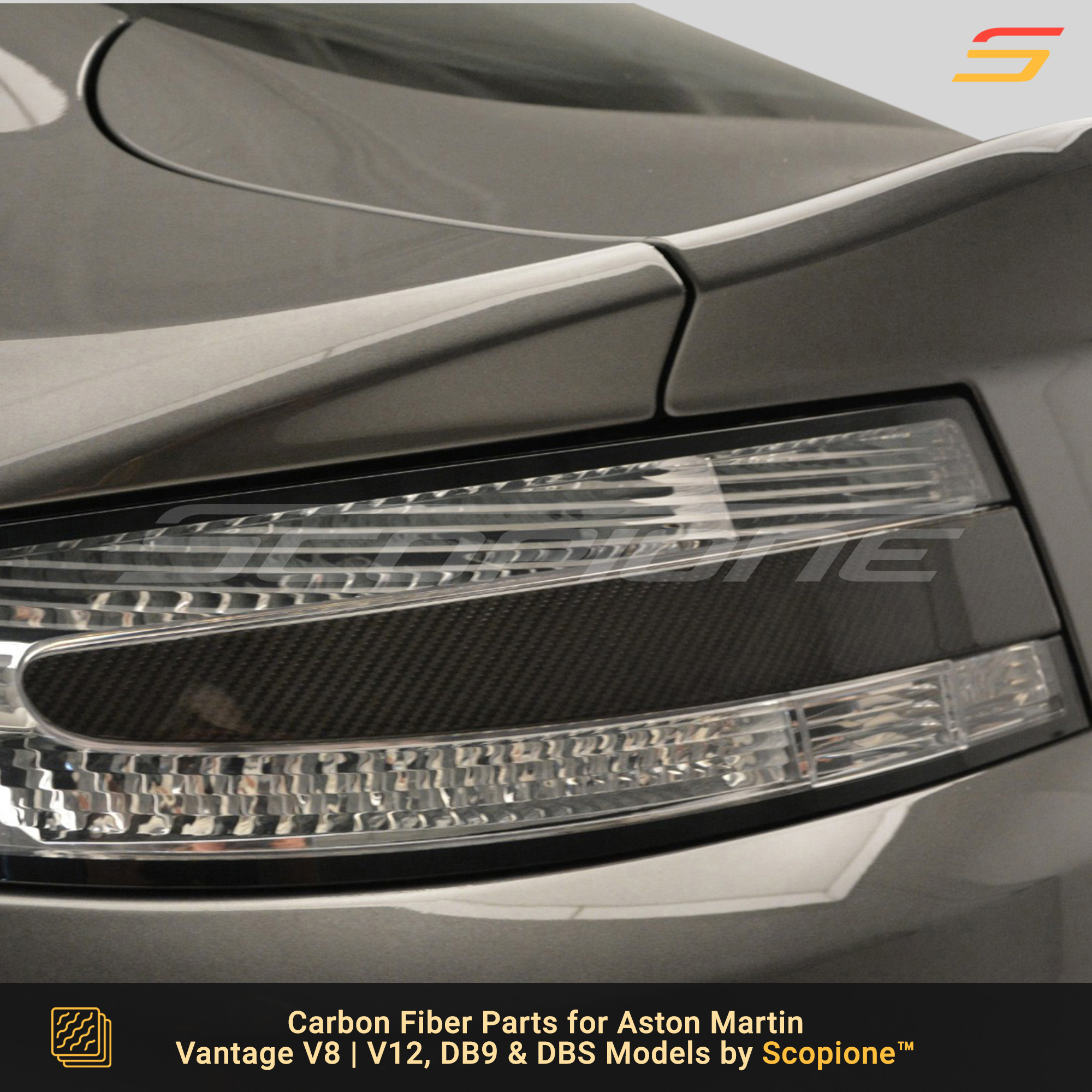
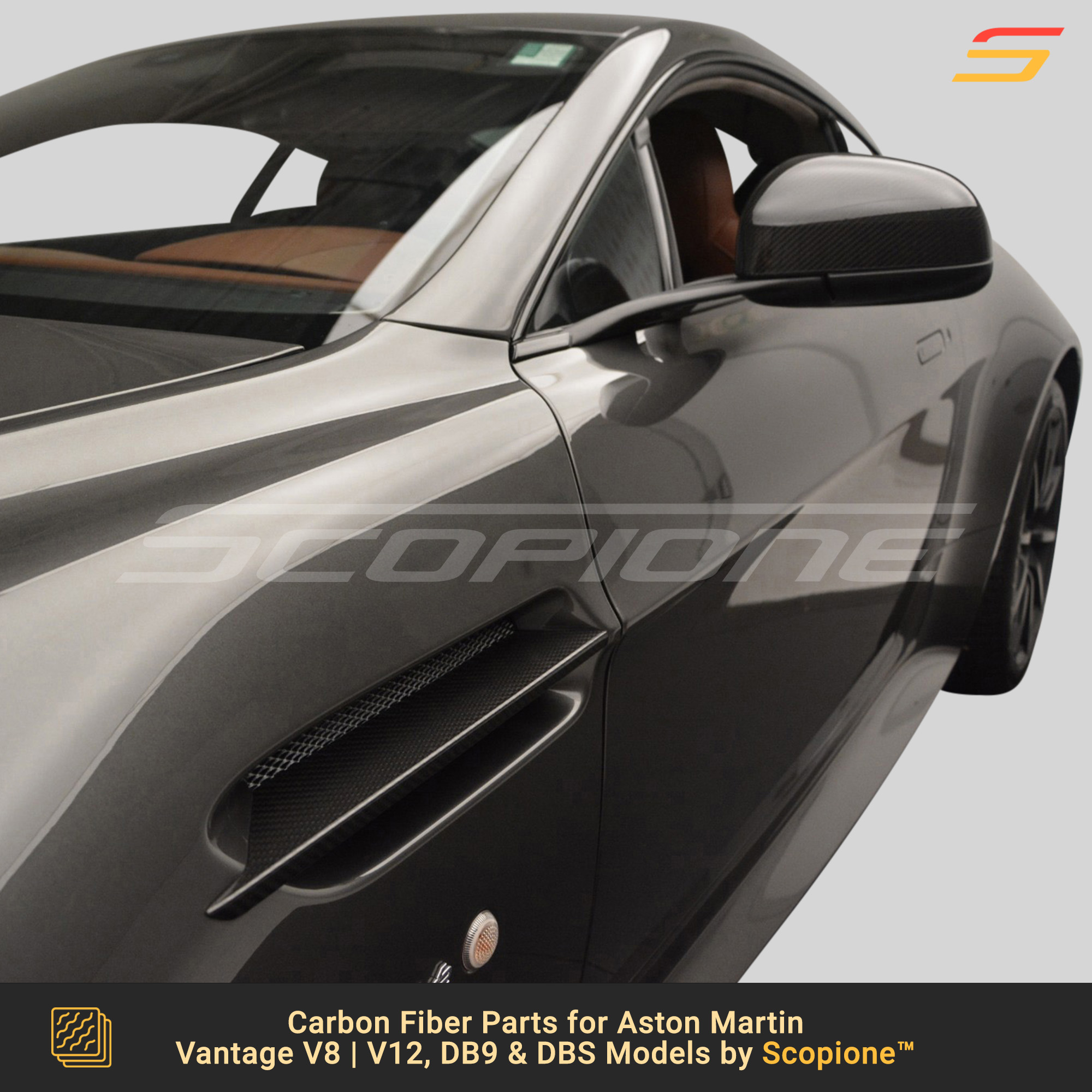
V8 & V12 Vantage (2005–2017): The Sports Car Line
The V8 Vantage launched in 2005 as the entry-level Aston Martin – a compact, rear-drive sports car with a rear-mounted transaxle gearbox that delivered 49:51 weight distribution. The initial 4.3-liter V8 produced 380 hp; a 4.7-liter upgrade in 2008 raised output to 420 hp (430 hp in the Vantage S). Both engines traced their lineage to the Jaguar AJ-V8 family but were substantially re-engineered at Aston Martin with dry-sump lubrication and revised cylinder heads.
Gearbox choice defined the Vantage ownership experience. The 6-speed manual (Graziano-sourced) paired with the rev-happy V8 is the combination that created the car’s reputation. The Sportshift automated manual offered convenience but introduced the primary reliability concern on early Vantages: hydraulic actuator failure, running $3,000–$5,000 to rebuild. By 2011, the Sportshift II improved refinement, but manual-equipped cars sell for roughly 30–40% more than equivalent automated cars, more on low-mileage examples.
In 2009, Aston Martin fitted the full-size 6.0-liter V12 into the Vantage platform – a packaging feat that required widened front wheel arches and an enlarged grille for cooling. The V12 Vantage produced 510 hp (1,199 units built), rising to 565 hp in the V12 Vantage S. That S model offered a 7-speed dog-leg manual – one of the final manual V12 GT cars ever produced. The range peaked with two track-focused limited editions: the GT12 (100 units, 600 hp, extensive carbon-fiber bodywork) and the GT8 (150 units, 436 hp V8, fixed rear wing).
Both derived from Aston Martin’s factory racing programs. The Vantage GT3 debuted in the 2012 FIA World Endurance Championship and Blancpain GT Series, campaigned by factory-backed teams including Aston Martin Racing. The race car stripped the Vantage to rear-wheel drive with the 6.0L V12 producing over 600 hp in race trim. Lessons from GT3 and GT4 competition – aerodynamic loadings, cooling requirements, weight reduction strategies – fed directly into the GT12 and GT8 road cars. The GT12’s front splitter, rear wing, and underbody diffuser replicated the race car’s aero philosophy in road-legal form.
The technology-driven Nissan GT-R R35 overlapped the V12 Vantage’s performance envelope from a fundamentally different philosophy – twin-turbo, all-wheel drive, dual-clutch automatic. The V12 Vantage answered with naturally aspirated displacement, rear-wheel drive, and an available manual gearbox.
Aston Martin Vantage MSRP (2006–2016)
| Model | Base MSRP (USD) | Inflation-Adjusted (2026) |
|---|---|---|
| V8 Vantage (2006) | $110,000 | ~$184,000 |
| V8 Vantage S (2012) | $136,700 | ~$201,000 |
| V12 Vantage (2010) | $180,000 | ~$278,000 |
| V12 Vantage S (2015) | $185,000 | ~$263,000 |
| Vantage GT12 (2015) | £250,000 (about $385,000)* | ~$547,000 |
| Vantage GT8 (2016) | £165,000 (about $234,000)* | ~$329,000 |
Browse carbon-fiber front splitters and rear diffusers for the V8 and V12 Vantage
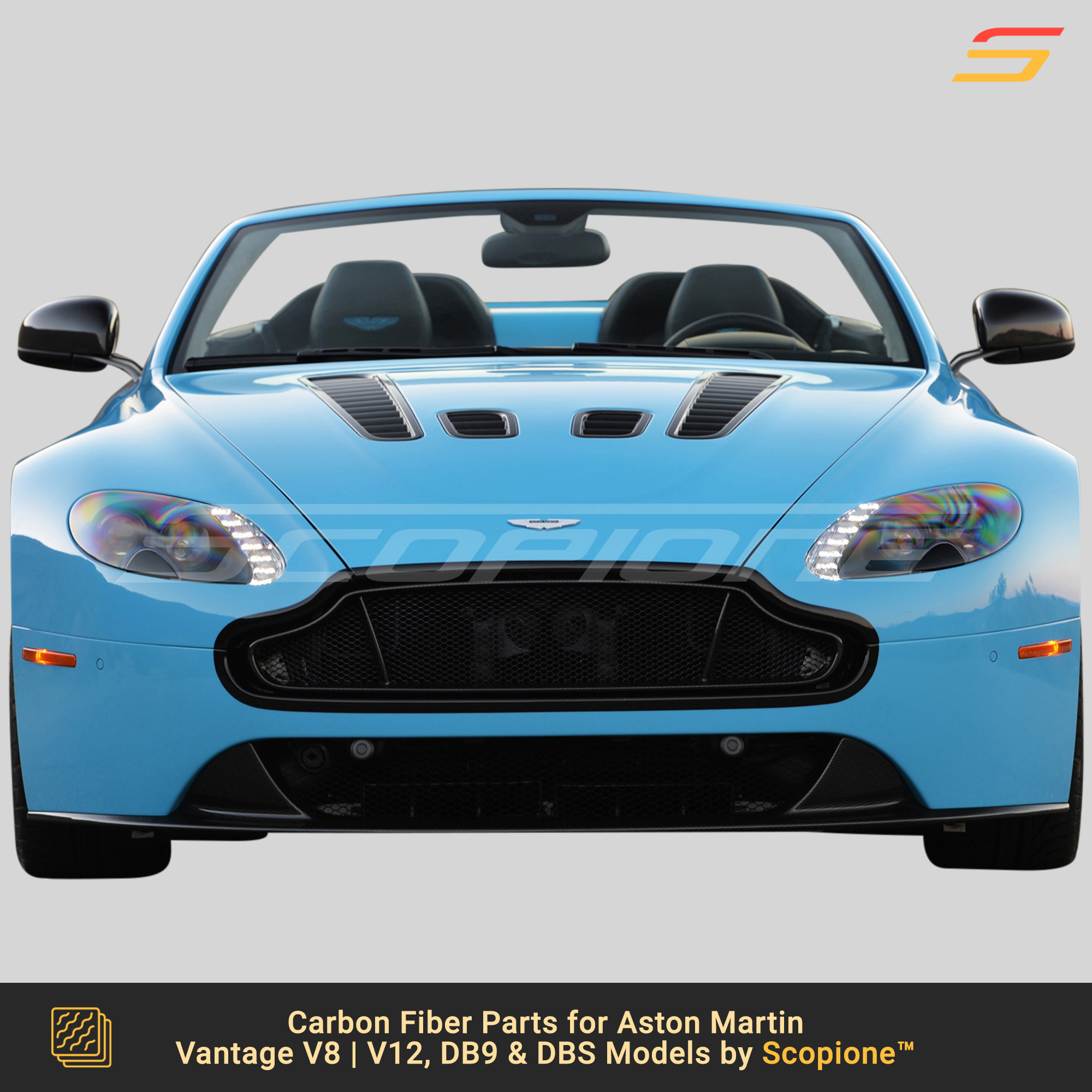
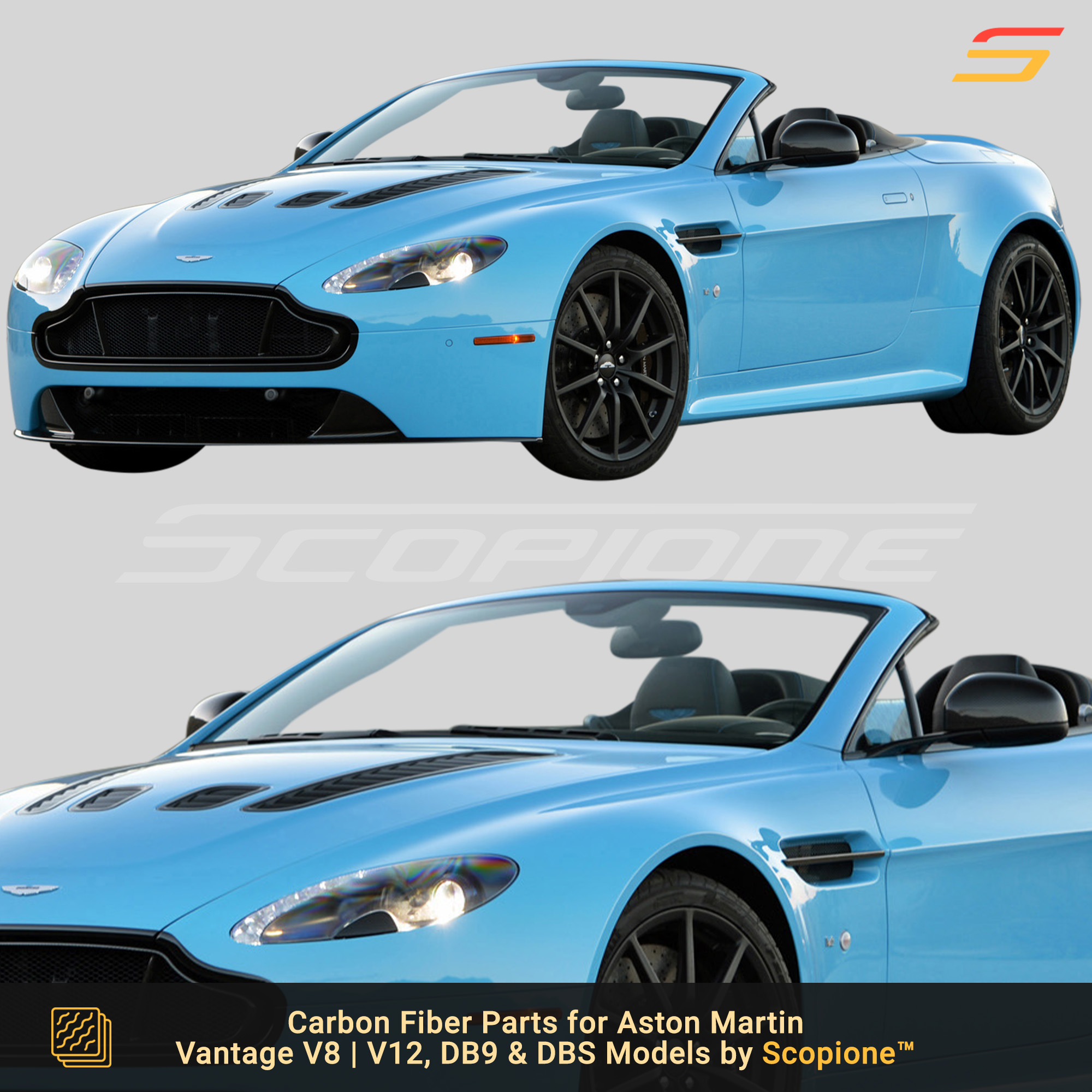



DB9 & DBS (2004–2016): Grand Tourer & Performance Flagship
The DB9 carried Aston Martin’s grand touring flagship role for 12 years on the full-length VH platform. A 5.9-liter (later 6.0L) V12 produced 450 hp at launch, climbing through incremental upgrades to 540 hp in the final DB9 GT of 2015–2016. Approximately 16,500 DB9s left the Gaydon factory across all variants – Aston Martin’s highest-volume V12 model to date. Available as a coupe and Volante convertible, the DB9 paired its twelve-cylinder engine with a ZF 6-speed Touchtronic automatic. A manual gearbox was technically available on early models but almost never specified.
The DBS arrived in 2007 as the performance flagship – introduced to the public as James Bond’s car in Casino Royale before its official launch. With 510 hp from a higher-output V12 and factory carbon-fiber body panels (bonnet, boot lid, front splitter, rear diffuser, mirror caps), the DBS was the first Aston Martin to use extensive CF construction in a production model. Carbon-ceramic brakes came as standard equipment. Approximately 3,400 units were built before production ended in 2012, with a Volante convertible joining the range in 2009.
The Bentley Continental GT occupied the same luxury GT space during this period – both cars offered V12 power, handcrafted interiors, and six-figure price tags. Where the Bentley prioritized all-weather AWD capability and effortless low-rpm torque, the DB9 and DBS offered lighter weight, rear-drive balance, and a more driver-focused character.
Aston Martin DB9 & DBS MSRP (2005–2016)
| Model | Base MSRP (USD) | Inflation-Adjusted (2026) |
|---|---|---|
| DB9 (2005) | $160,000 (manual $155,000) | ~$276,000 |
| DB9 Volante (2005) | $173,000 | ~$298,000 |
| DB9 GT (2016) | $198,250 | ~$278,000 |
| DBS (2008) | $265,000 | ~$415,000 |
| DBS Volante (2010) | $283,900 | ~$439,000 |
Explore CF interior and exterior upgrades for the DB9 and DBS

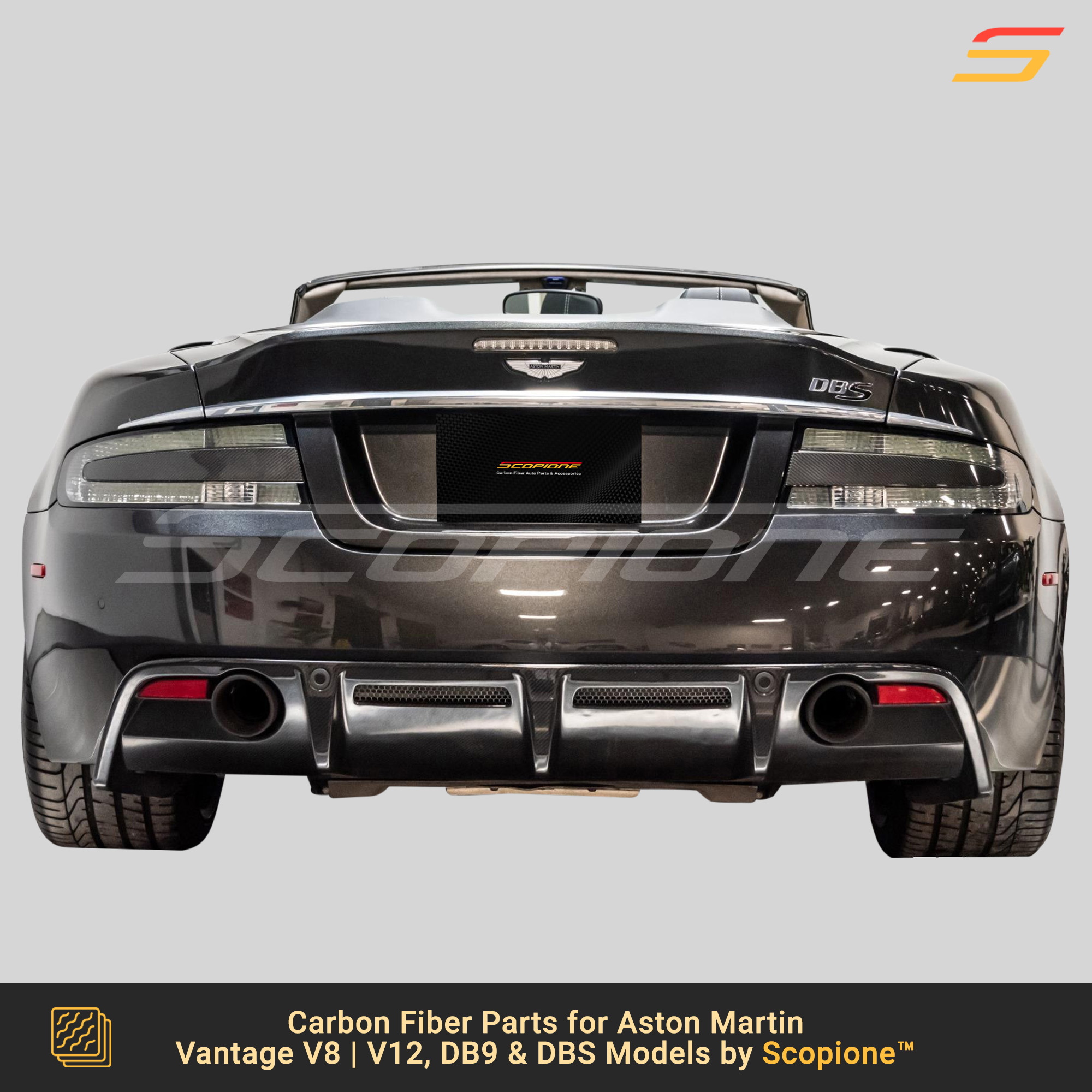

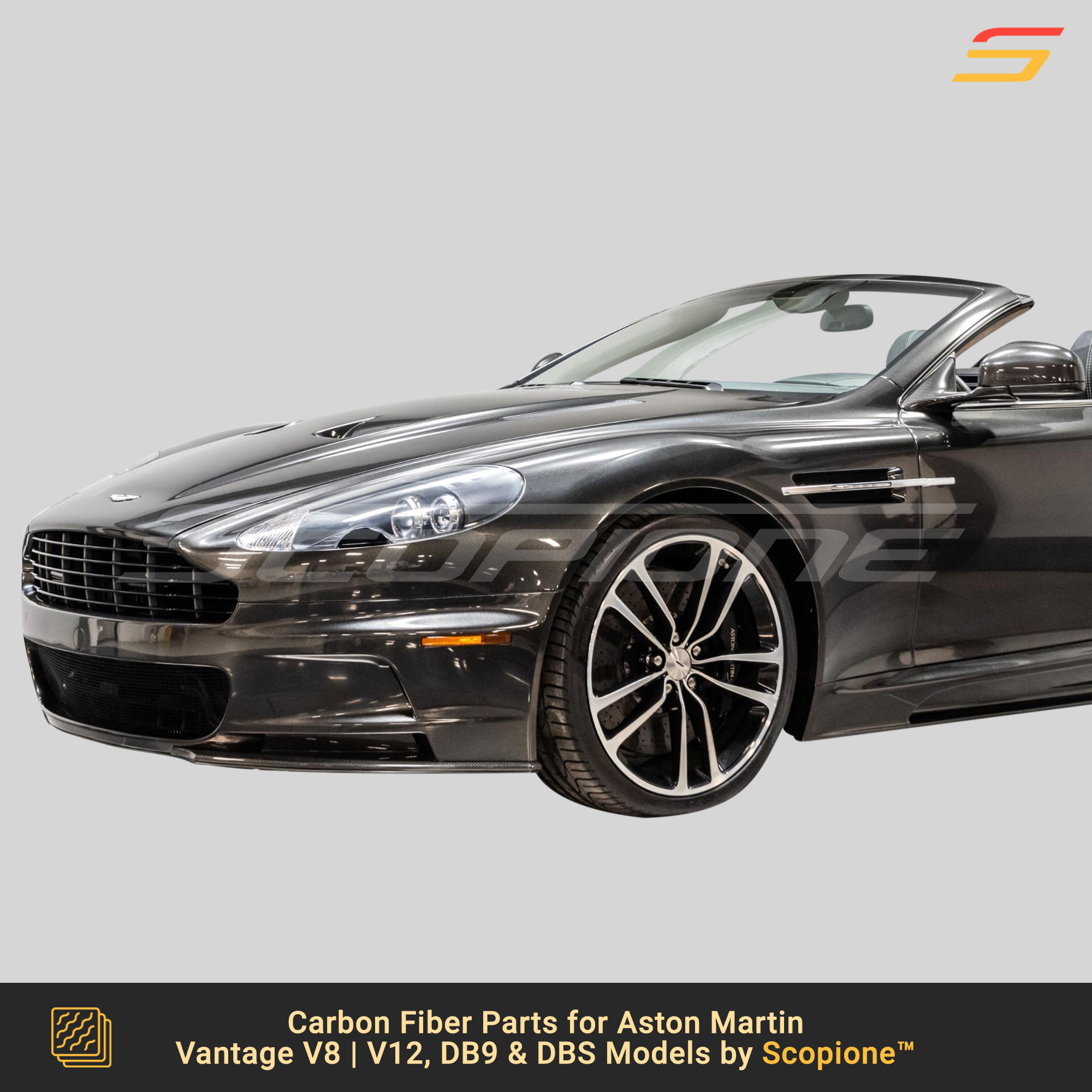

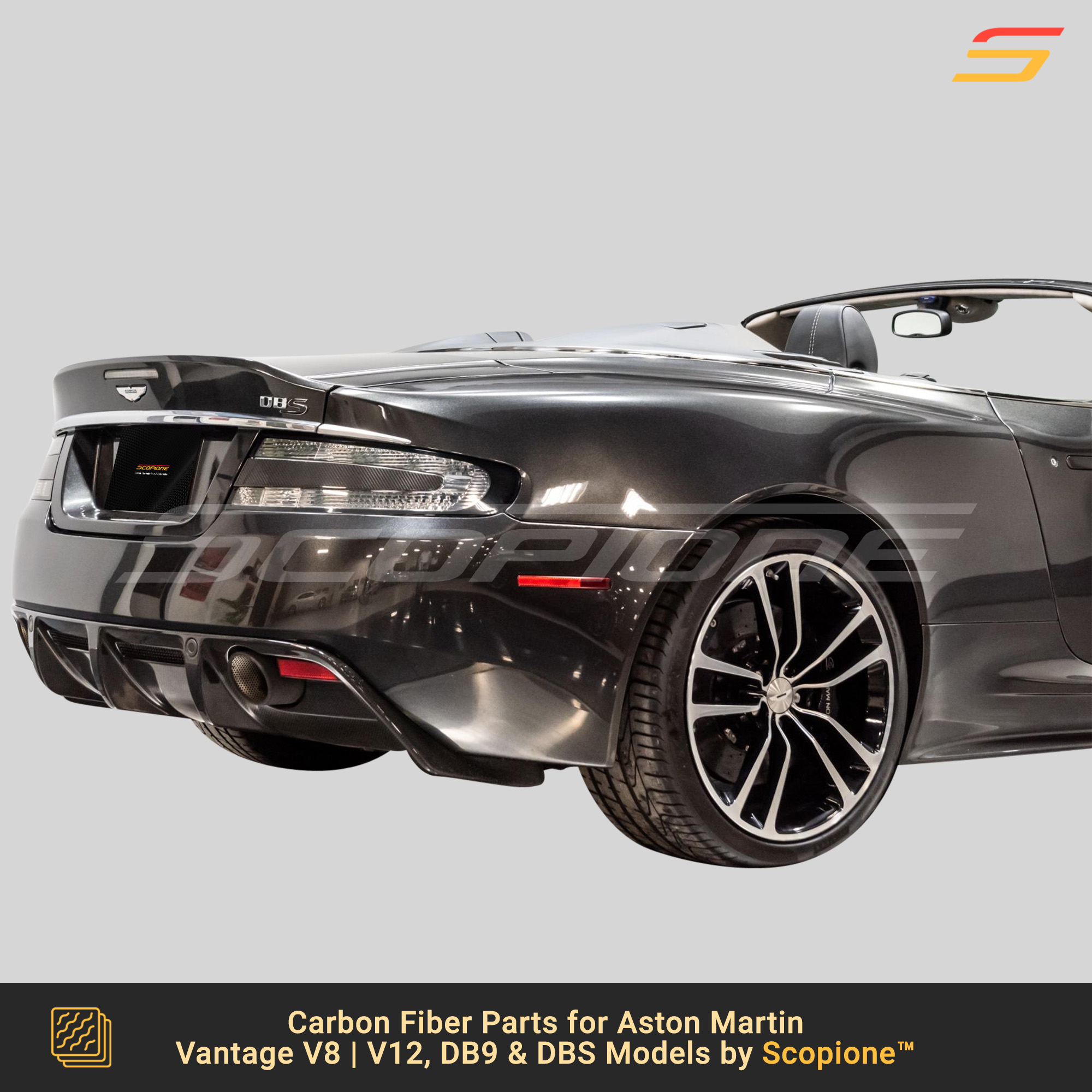
Carbon Fiber on the Vantage, DB9 & DBS
Aston Martin’s factory use of carbon fiber on the VH platform peaked with the DBS. That car’s CF bonnet, boot lid, front splitter, rear diffuser, and mirror caps saved approximately 30 kg versus equivalent aluminum panels – a meaningful reduction on a 1,695 kg grand tourer. The GT12 pushed factory carbon-fiber further: front splitter, hood vents, roof panel, rear wing, and full underbody diffuser, all in exposed or painted CF. Combined with a magnesium intake manifold, the GT12 shed roughly 100 kg from the V12 Vantage S.
Aftermarket carbon fiber on the Vantage, DB9, and DBS follows the DBS’s factory precedent. A carbon-fiber front splitter, side strakes, and mirror covers on a V8 Vantage reference the direction Aston Martin established on the DBS – extending that visual language down the model range. Interior CF trim (gauge cluster hood, console panels, door handles) replaces the factory wood, aluminum, or piano black surfaces that Aston Martin offered as standard fitment.
Panel alignment requires attention on VH-platform cars. Aston Martin’s bonded aluminum body achieves tight factory gaps, and any aftermarket component needs to match that standard. Professional installation is worth the labor cost. The Lamborghini Aventador, built around a full carbon-fiber monocoque, represents the extreme end of CF construction in Italian supercars. On the VH-platform Aston Martins, carbon fiber serves a more targeted role – selective weight reduction and visual contrast against the aluminum body.
View Scopione’s full Aston Martin carbon fiber selection
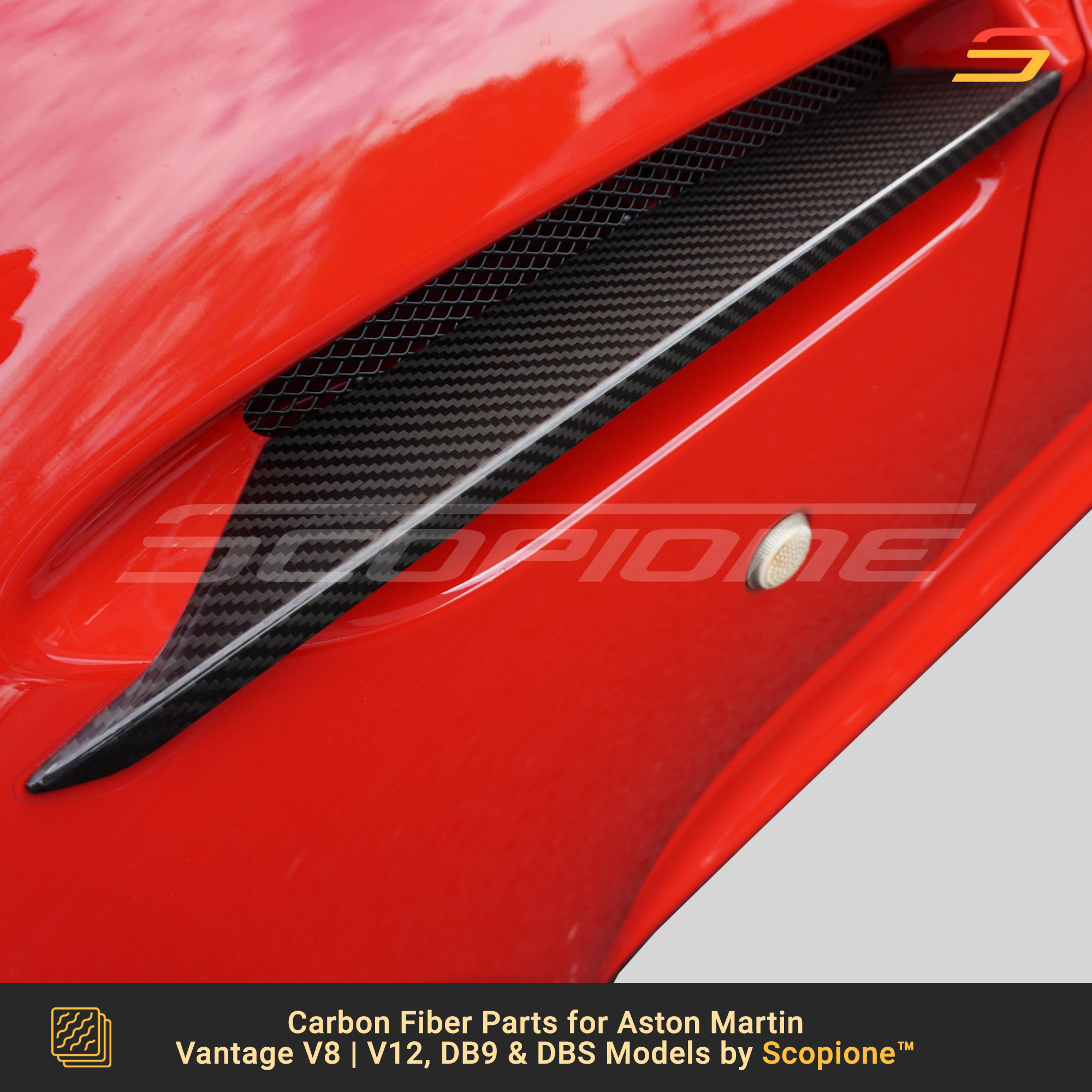
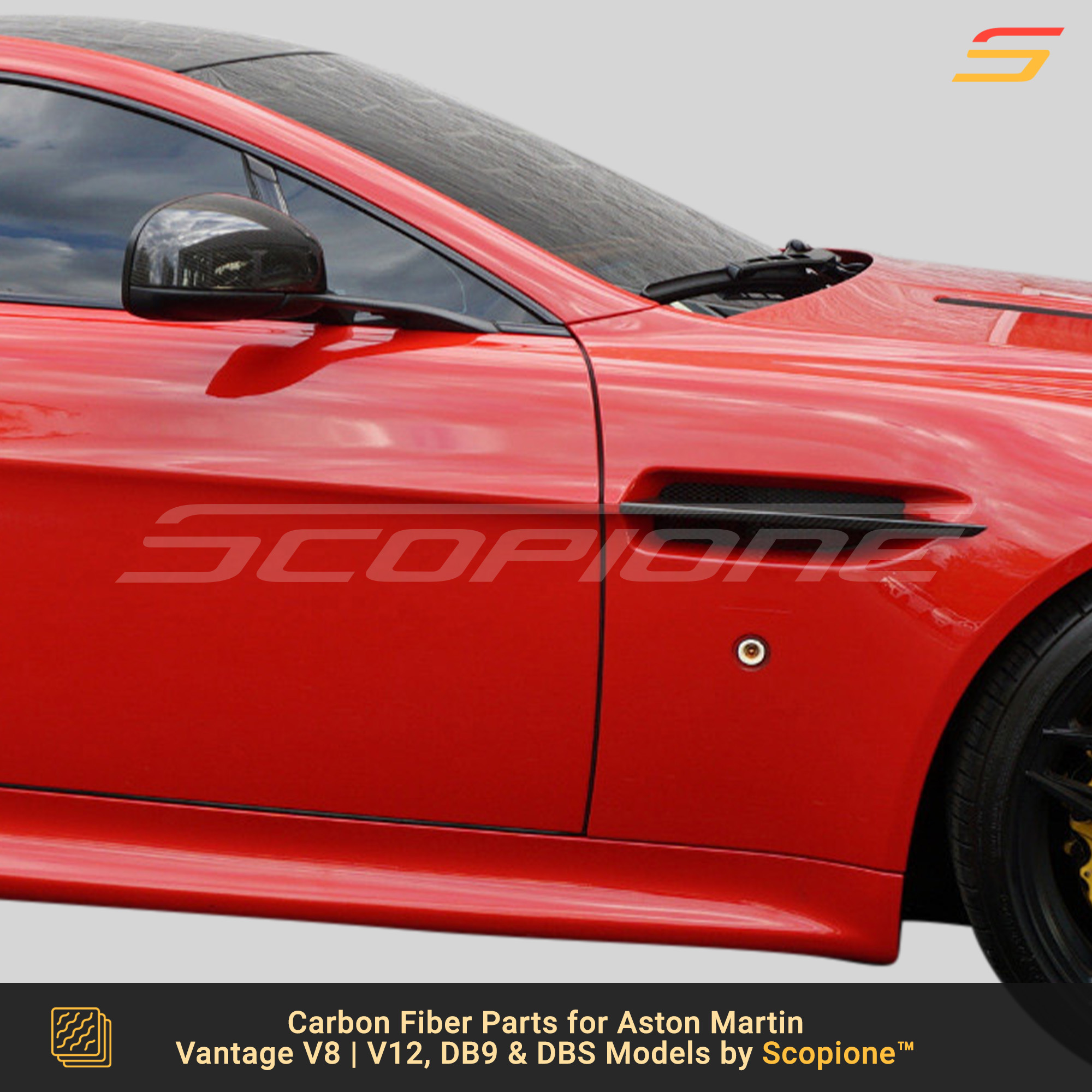
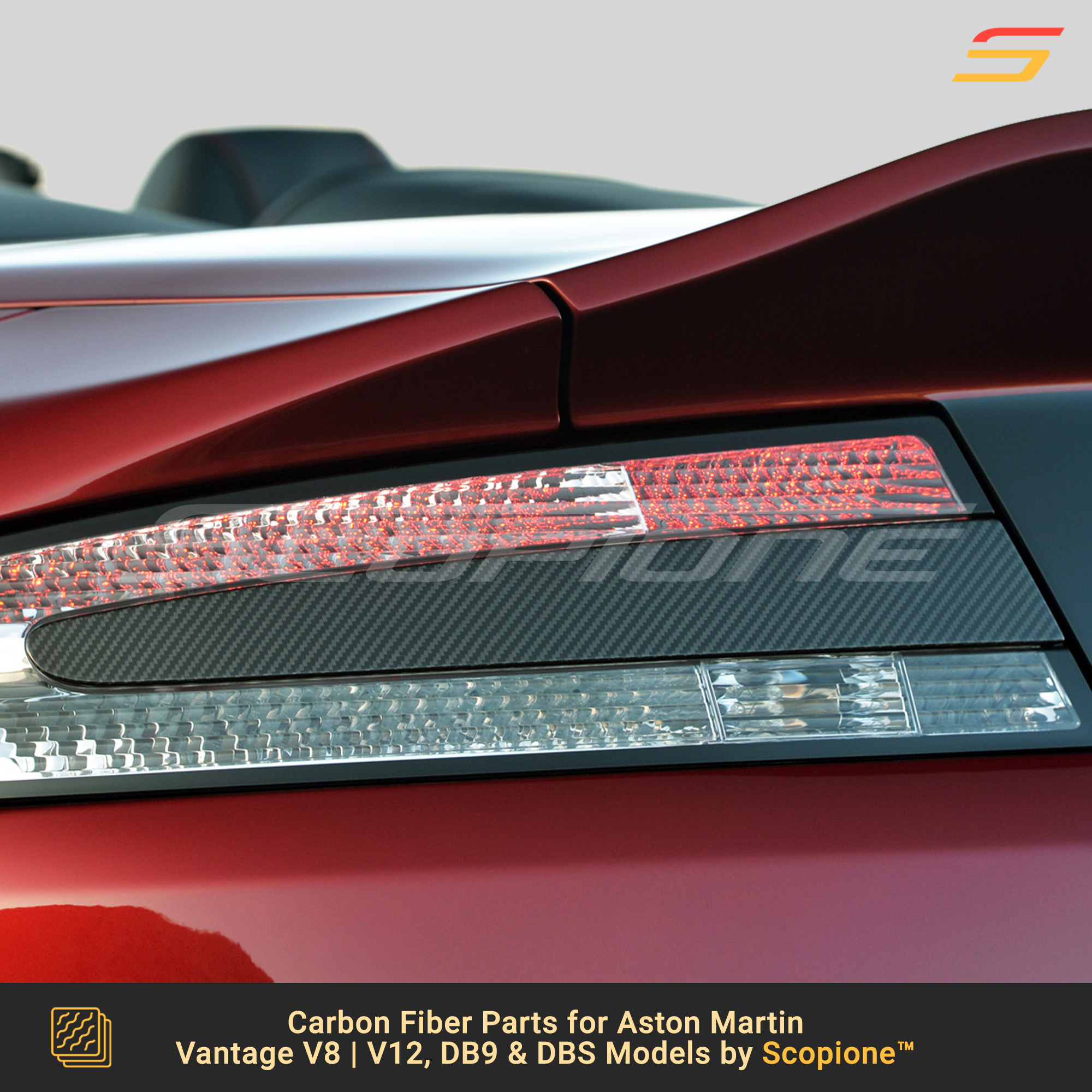
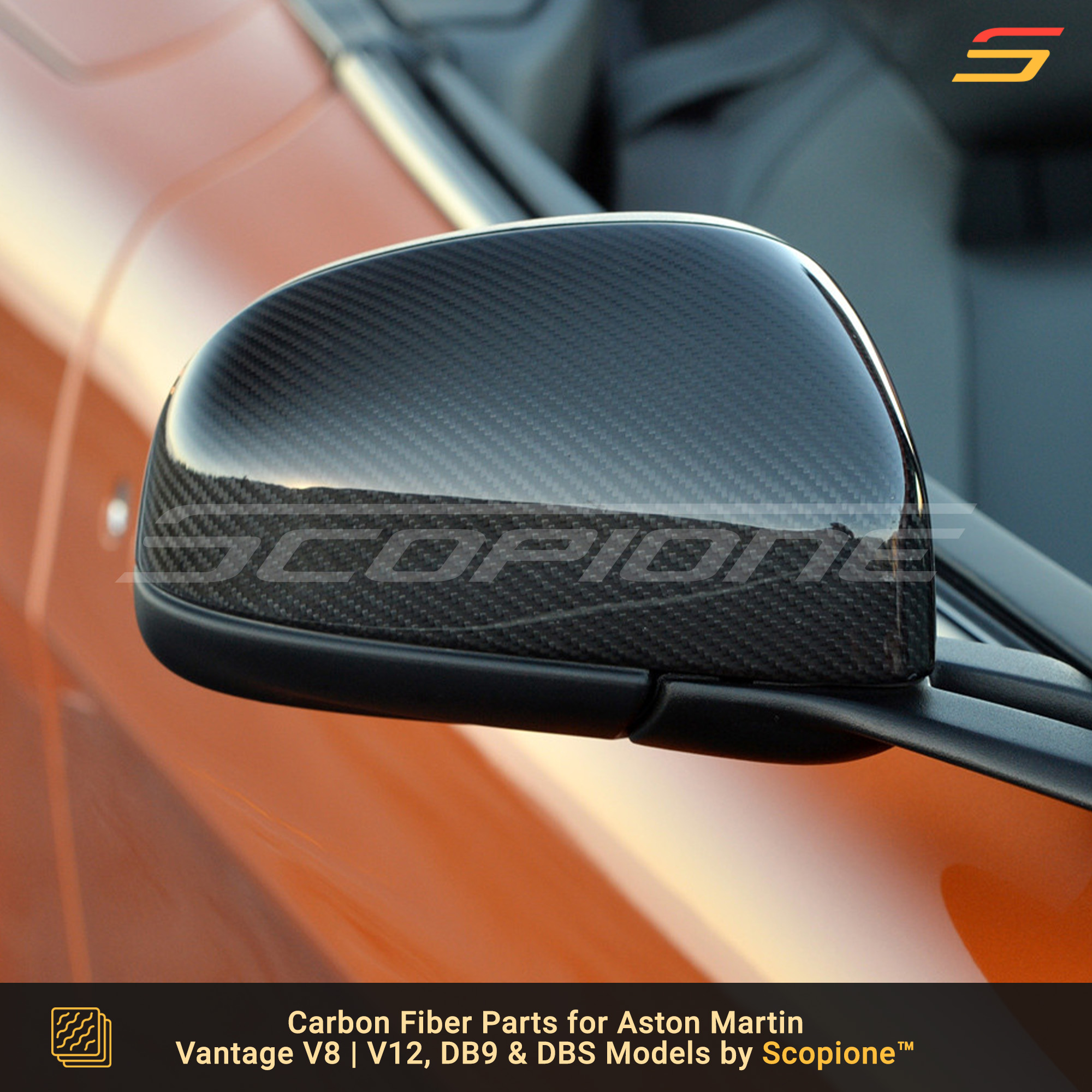
Scopione: Carbon Fiber Upgrades for the Aston Martin Vantage, DB9 & DBS
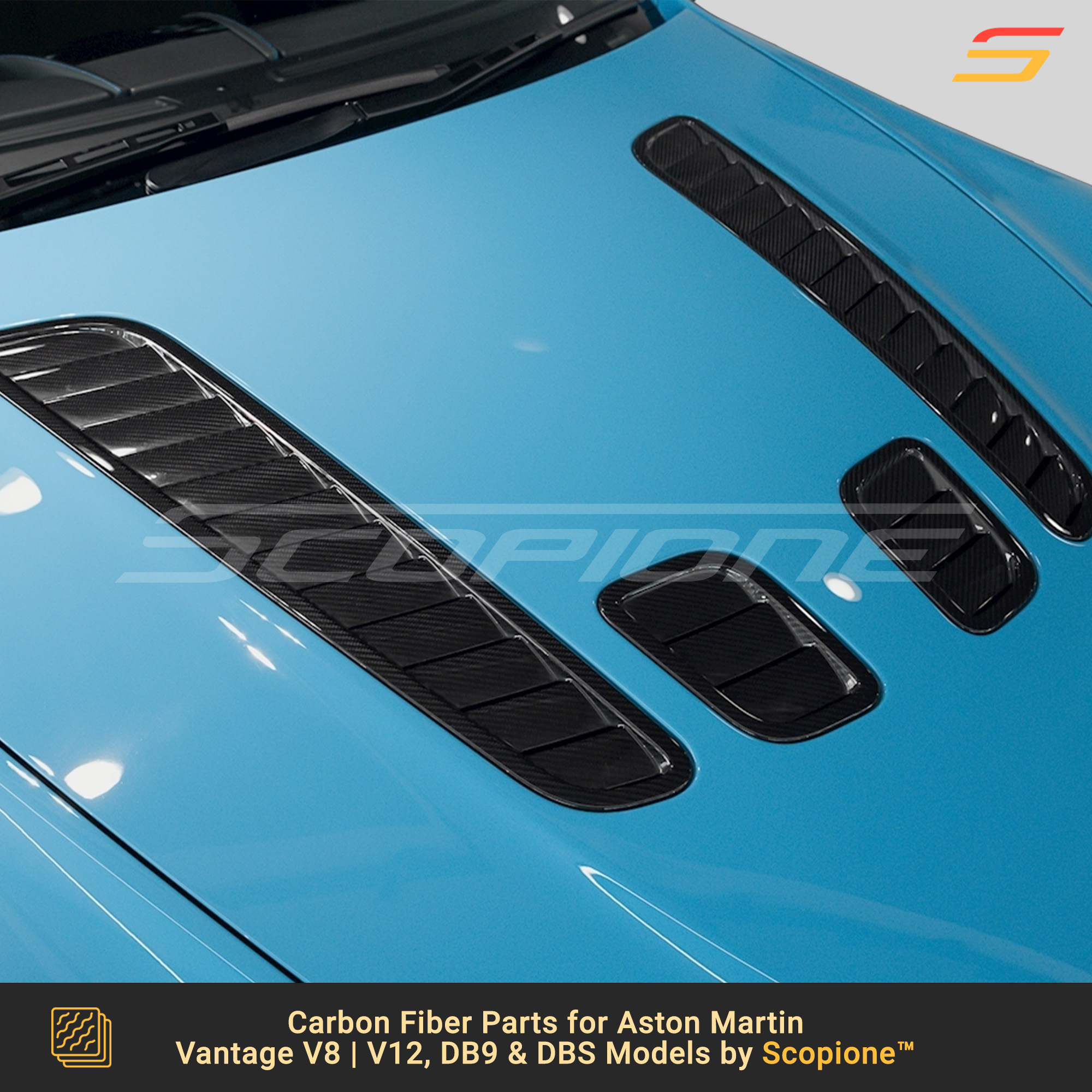
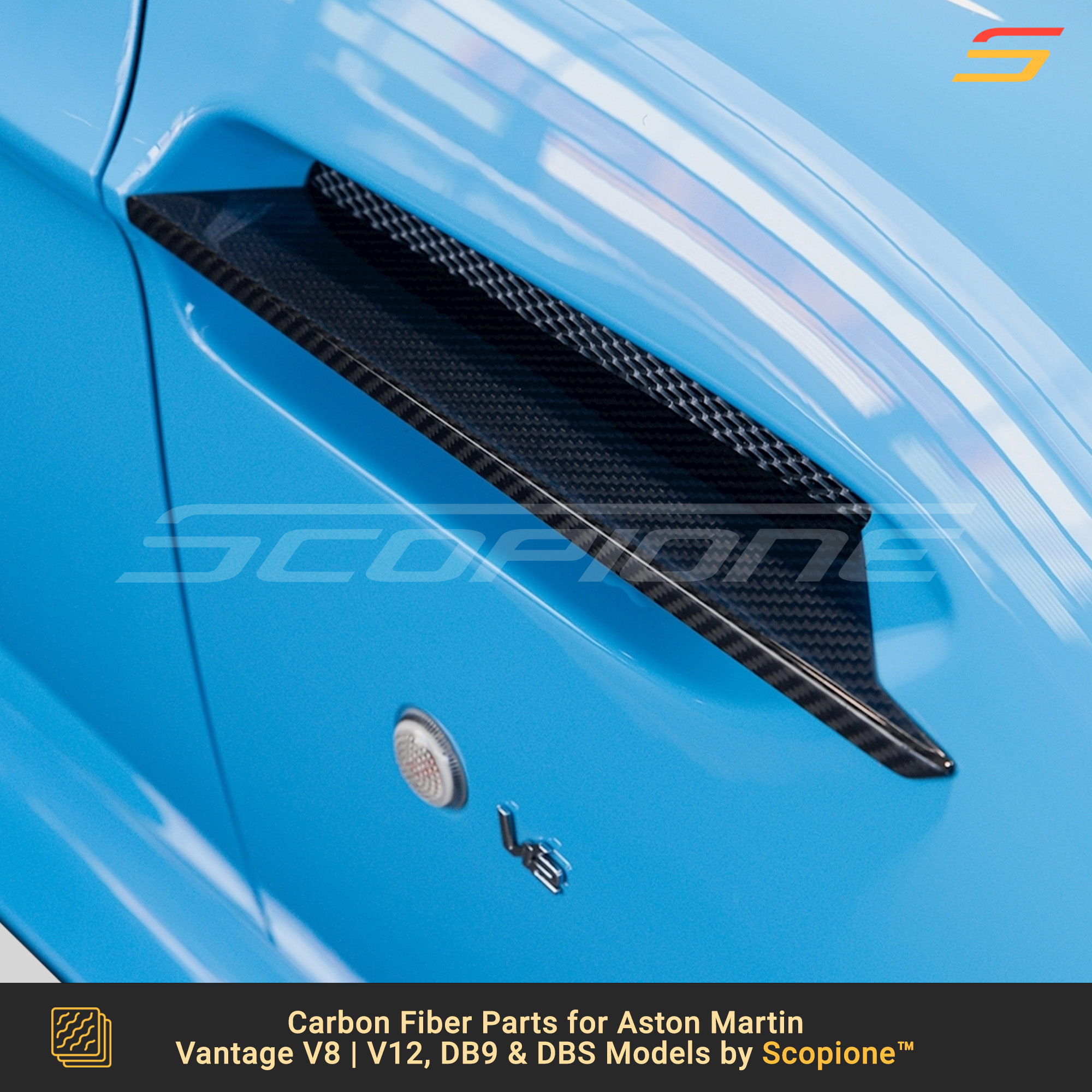
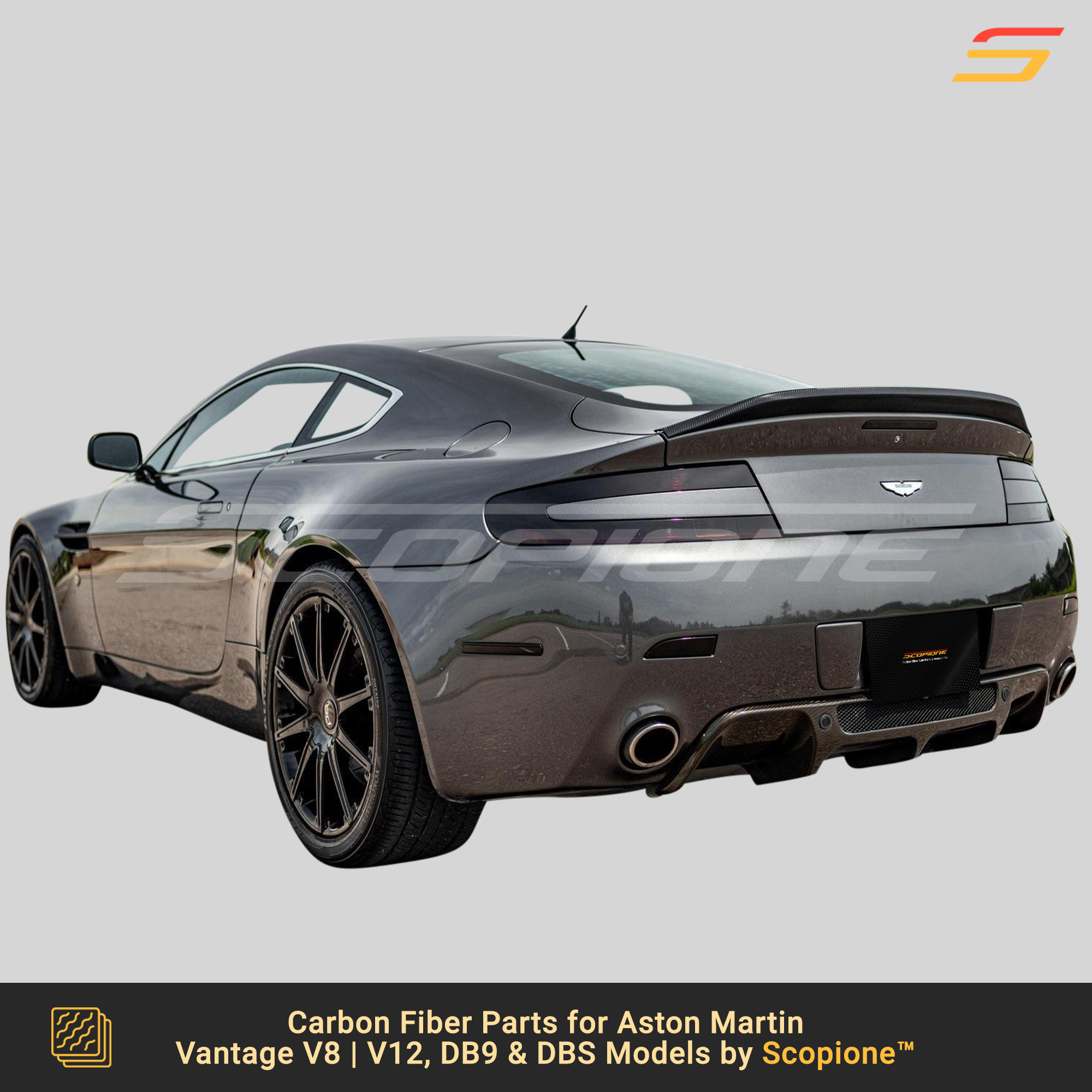
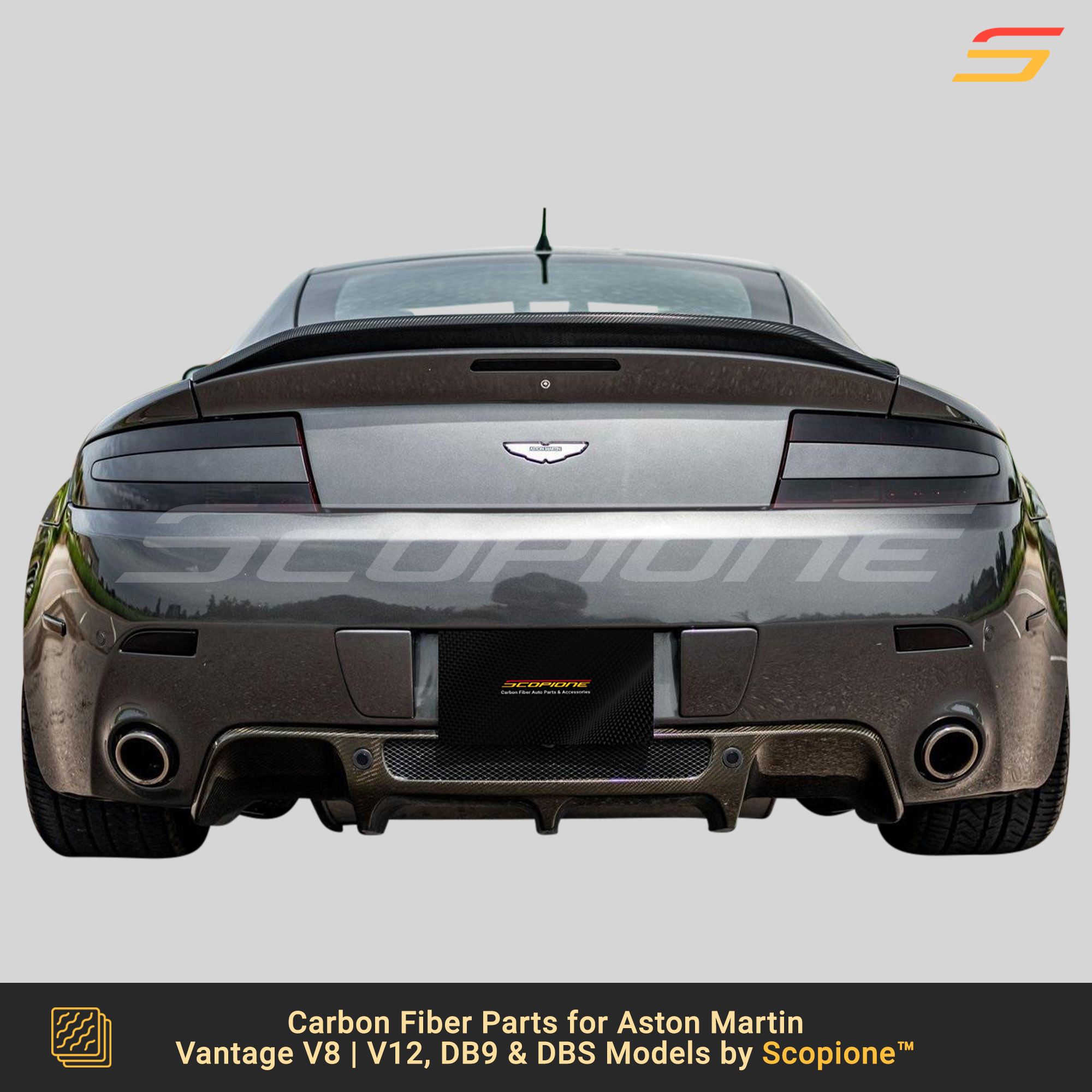
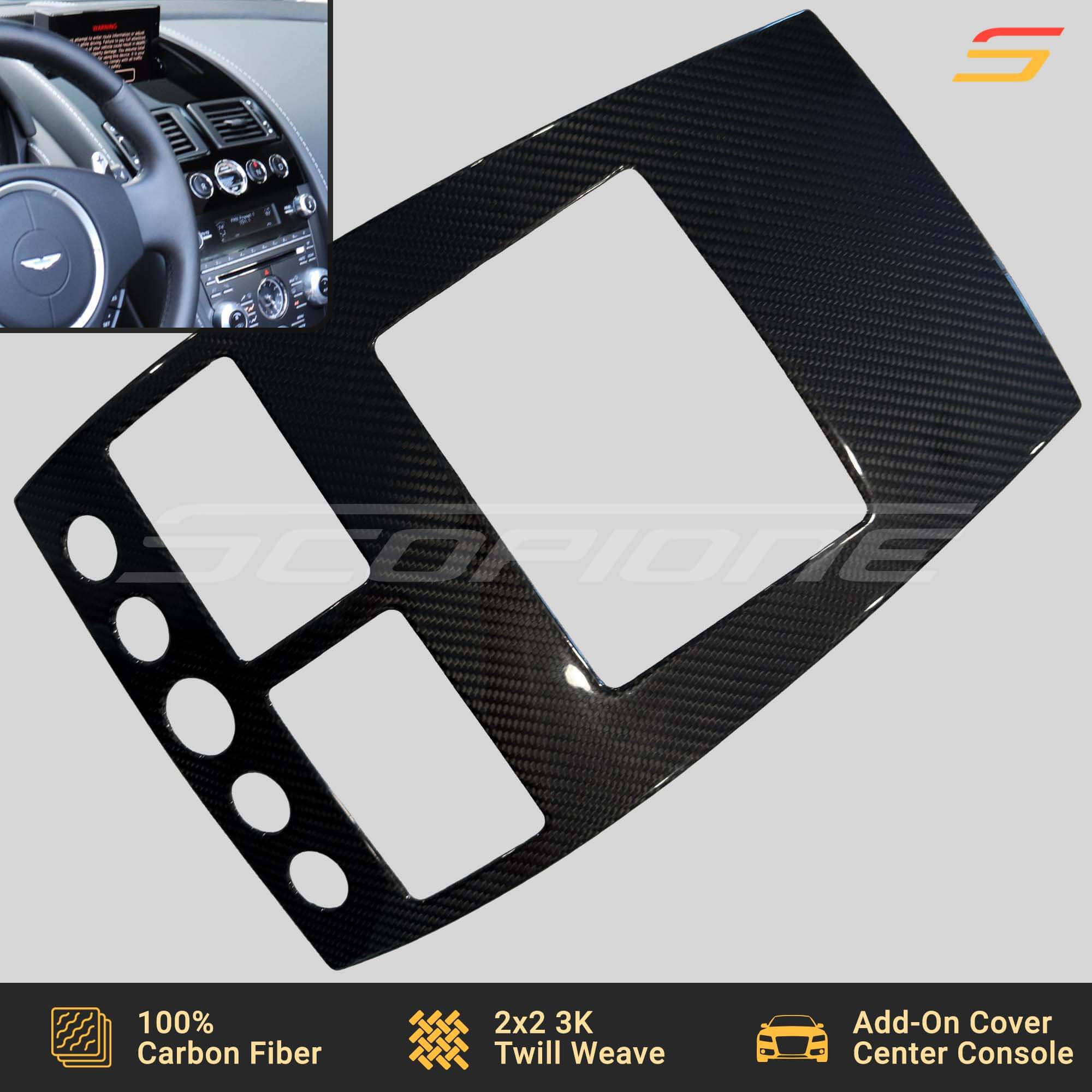
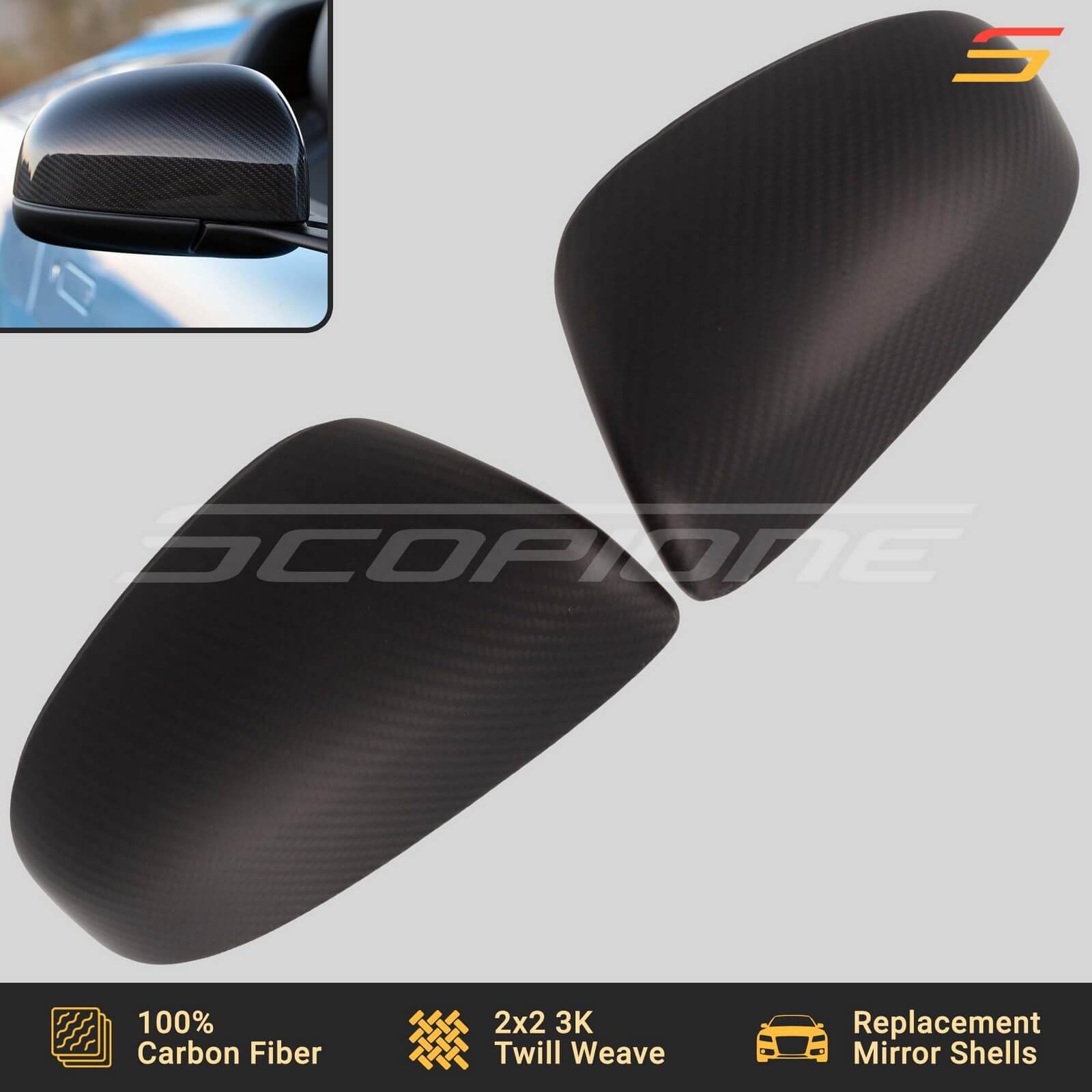
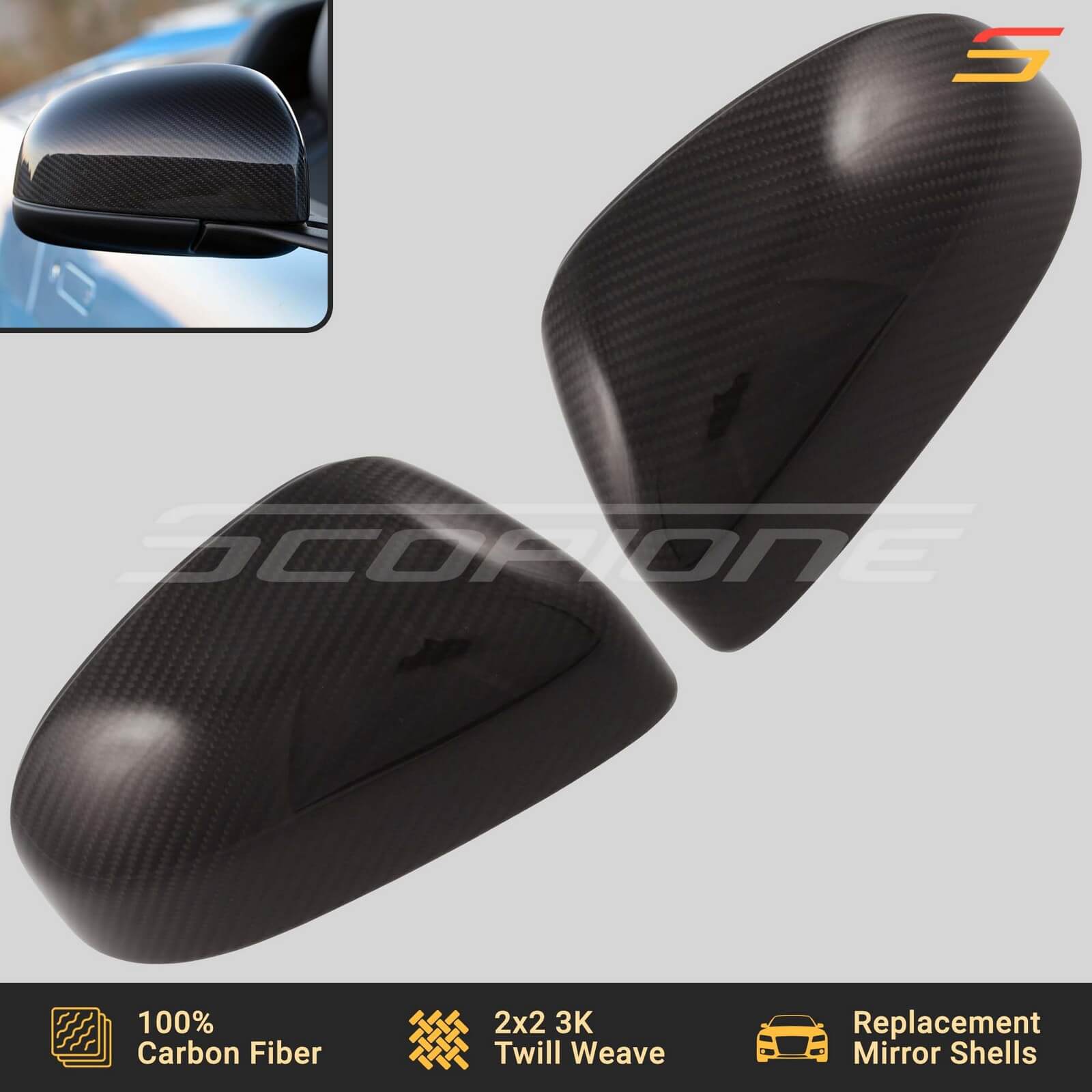
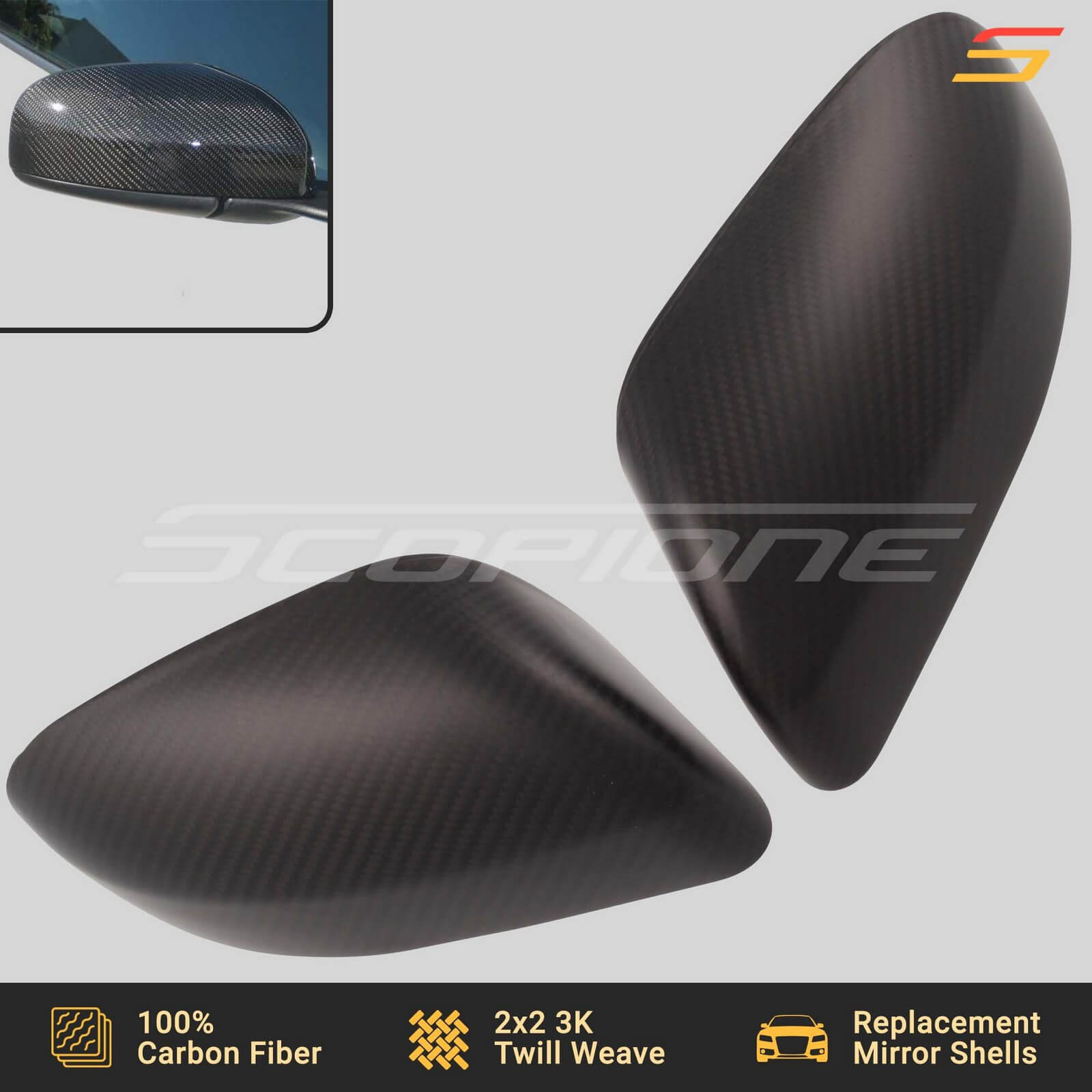
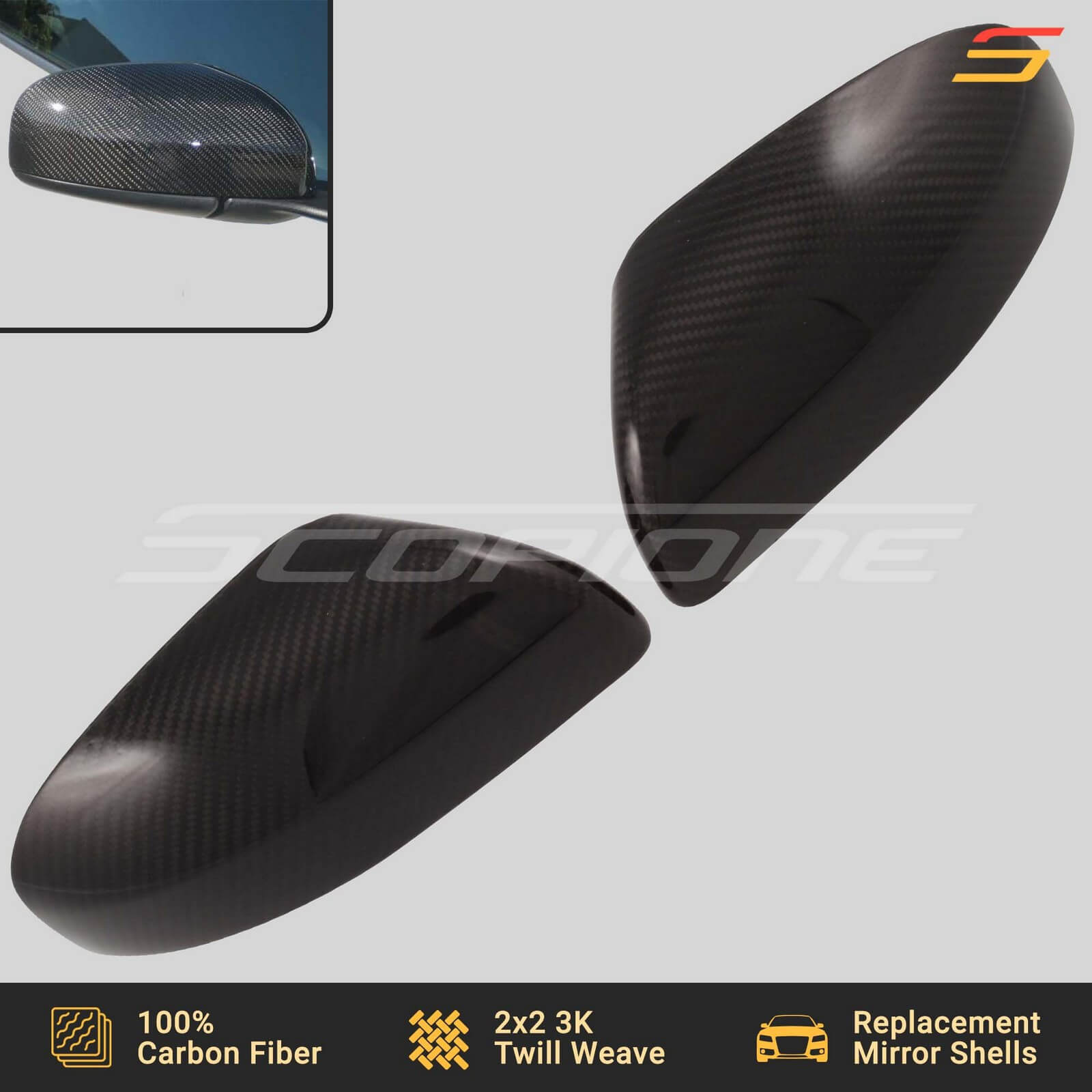
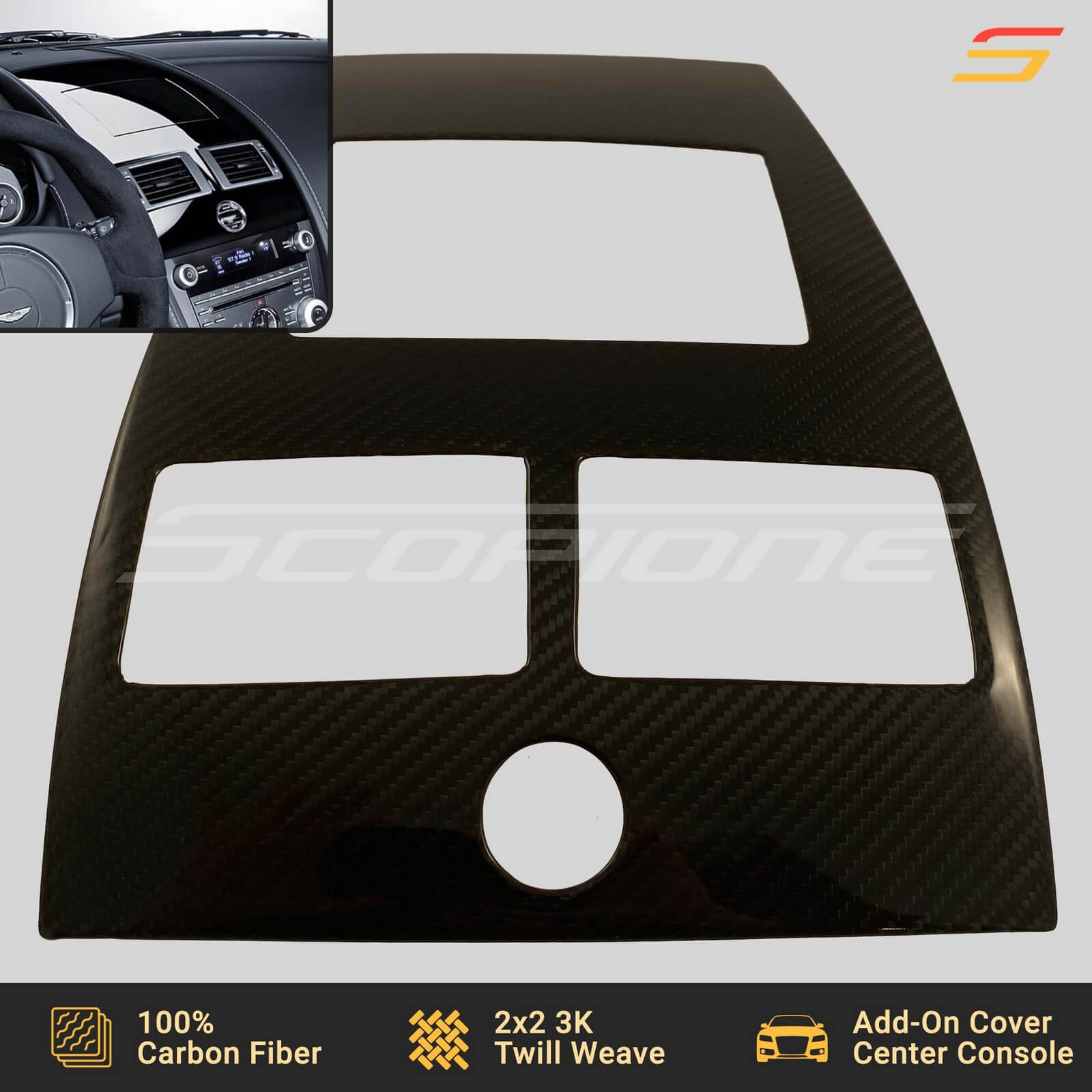
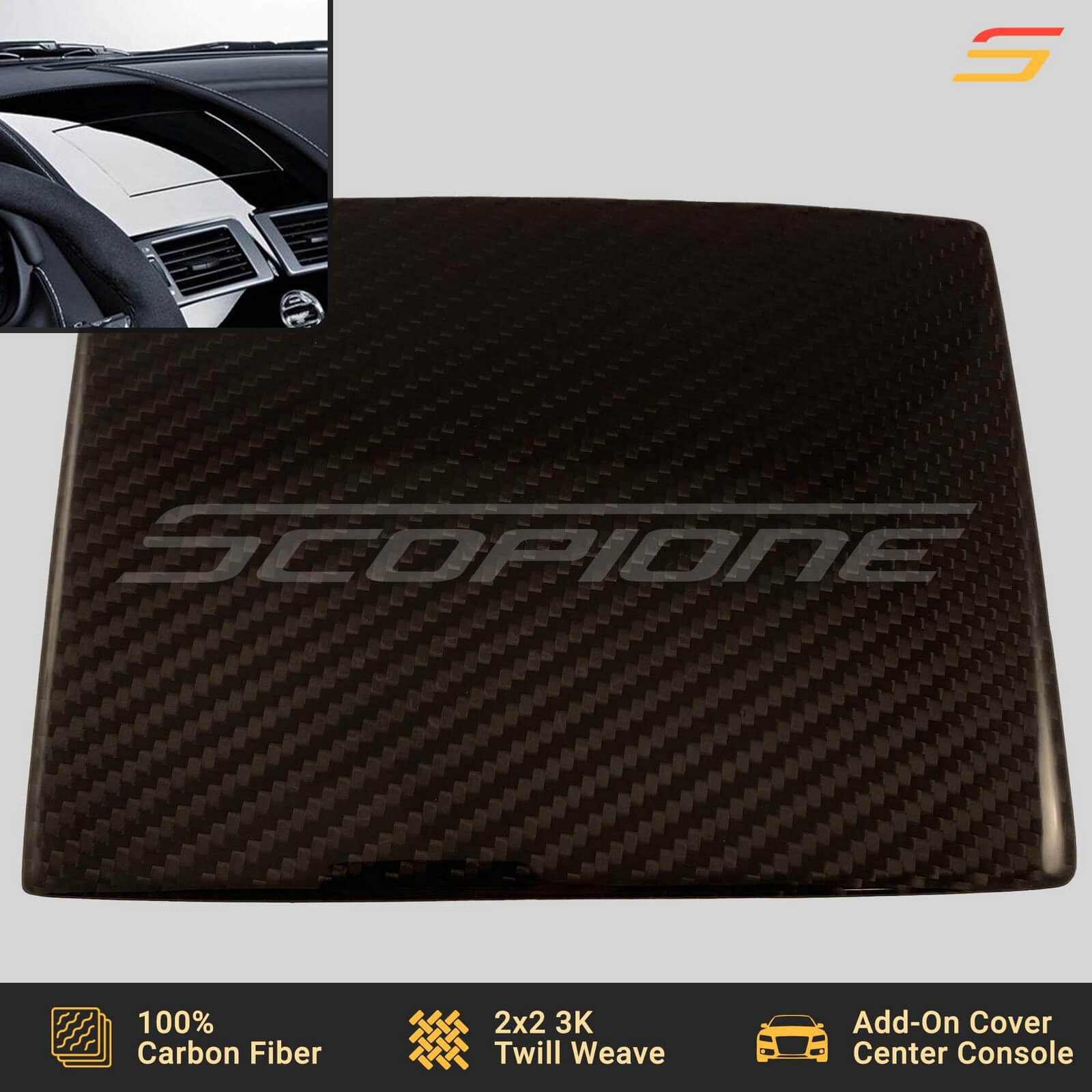
Scopione’s Aston Martin catalog spans exterior aerodynamic components and interior trim across the full VH-platform range (2005–2019). Exterior parts include front splitters and lips (model-specific for the Vantage and DBS), rear diffusers, hood vents, fender side strakes, mirror covers and add-on tail light inserts. Interior components cover the gauge cluster hood, interior door handles, upper door trim panels, door sill scuff plates, the SC console dash trims and the navigation screen lid. All parts are hand-laid from 2×2 twill-weave carbon fiber with a UV-resistant clear coat, mounting to factory body points without drilling.
Exterior Carbon Fiber Upgrade Costs: Aston Martin VH Platform
Carbon-fiber exterior aero and accent components for the Vantage, DB9, and DBS:
| Carbon Fiber Part | Part Cost (USD) | Installation Est. (USD) | Total Est. (USD) |
|---|---|---|---|
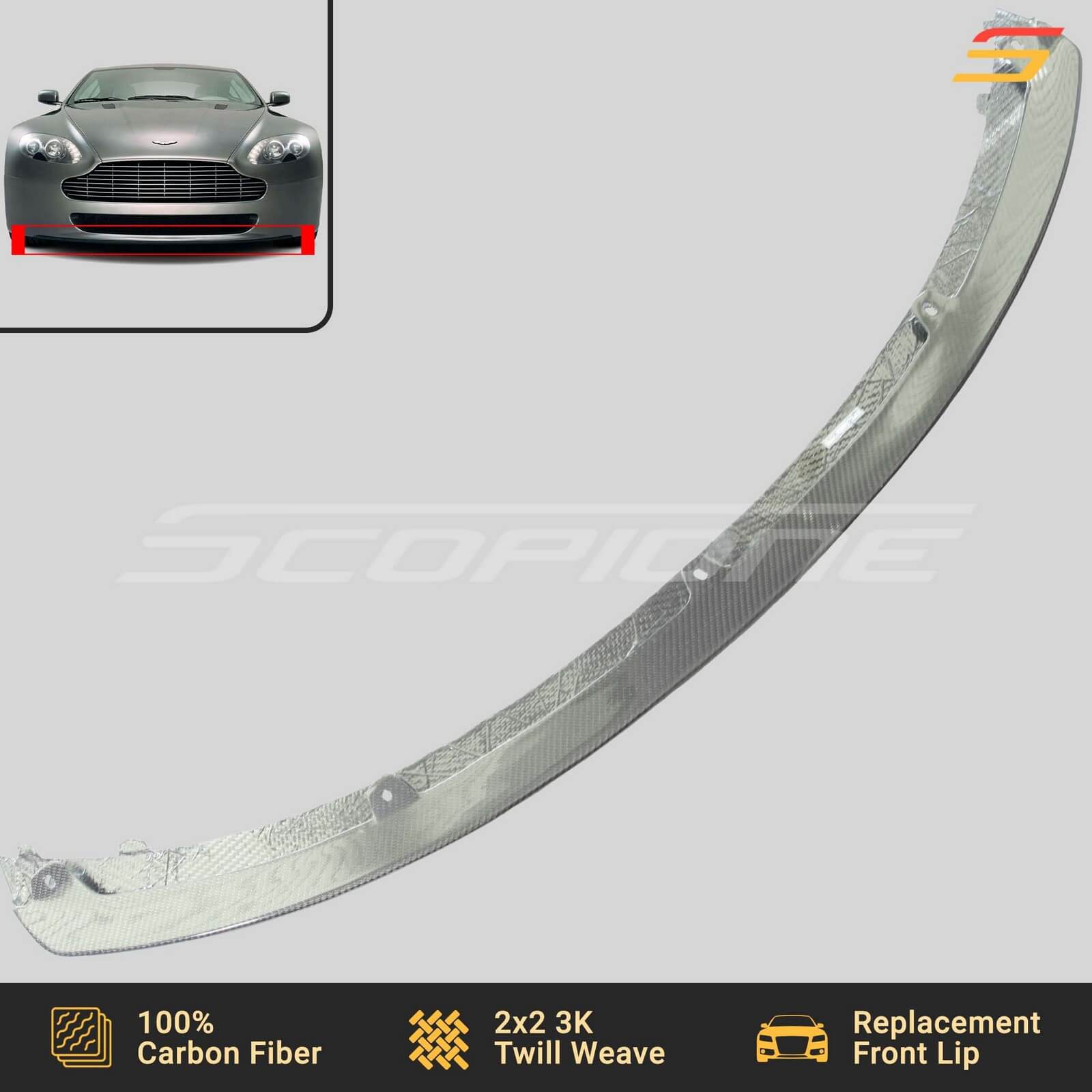
| Front Lip Splitter (V8 Vantage, 2 designs) | $1,150 – $1,400 | $300 – $500 | $1,450 – $1,900 |
| Front Bumper Splitters (DBS) | $1,250 | $300 – $500 | $1,550 – $1,750 |
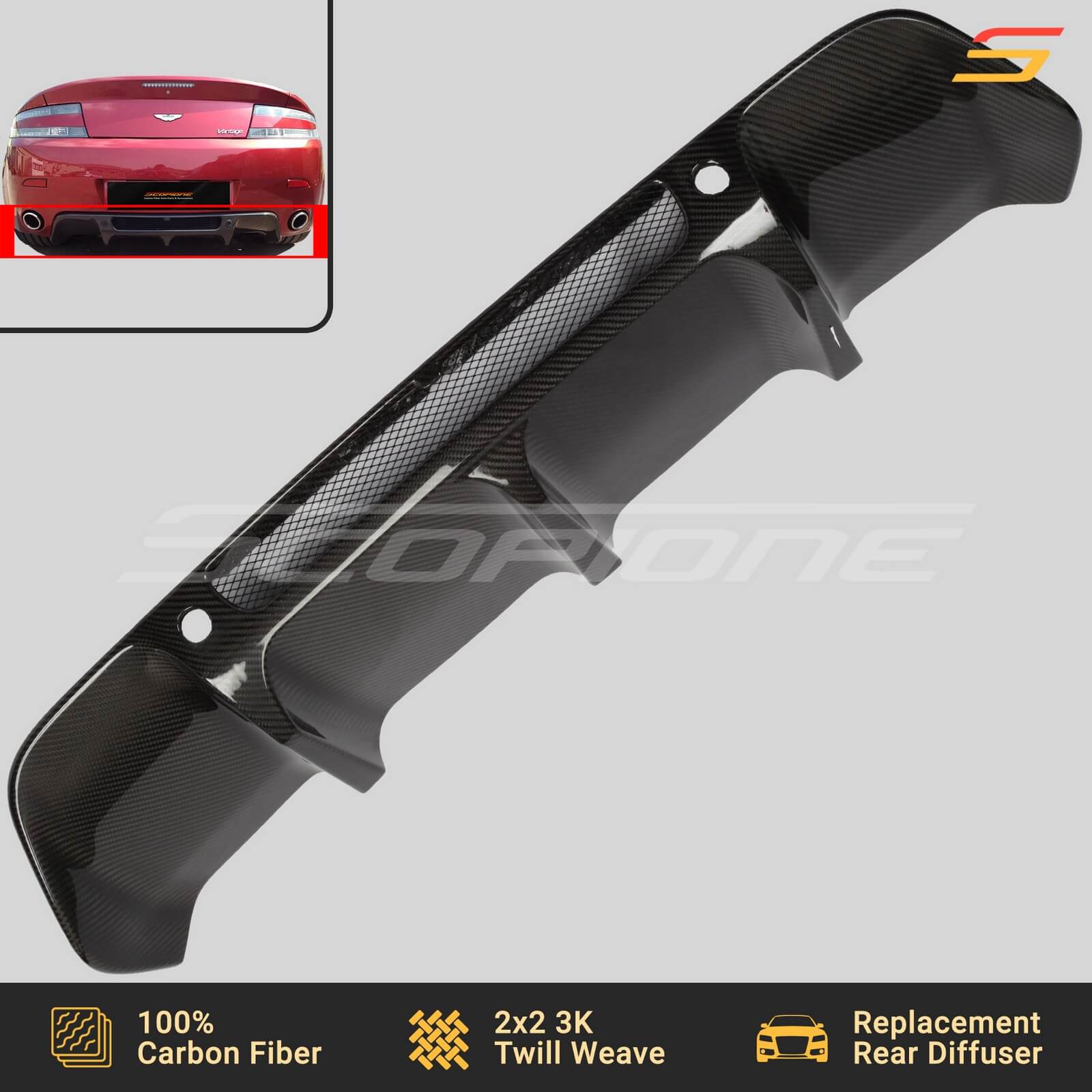
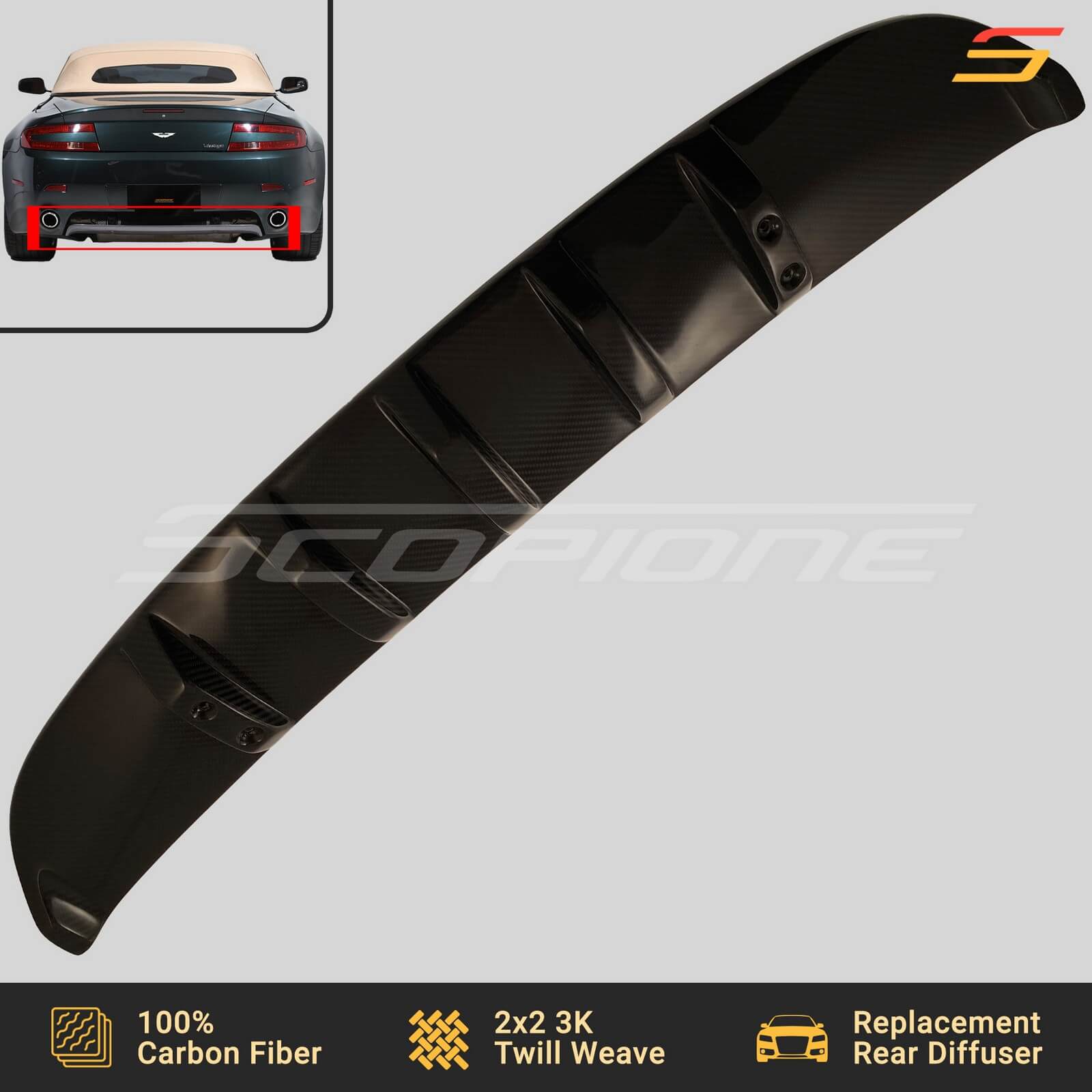
| Rear Diffuser (V8 Vantage, finned SC2) | $1,400 | $400 – $700 | $1,800 – $2,100 |
| Rear Diffuser (V8 Vantage, factory carbon shape) | $1,550 | $400 – $700 | $1,950 – $2,250 |
| Rear Diffuser (DBS; Virage and 2013–2016 DB9 with a modification) | $3,000 | $400 – $700 | $3,400 – $3,700 |
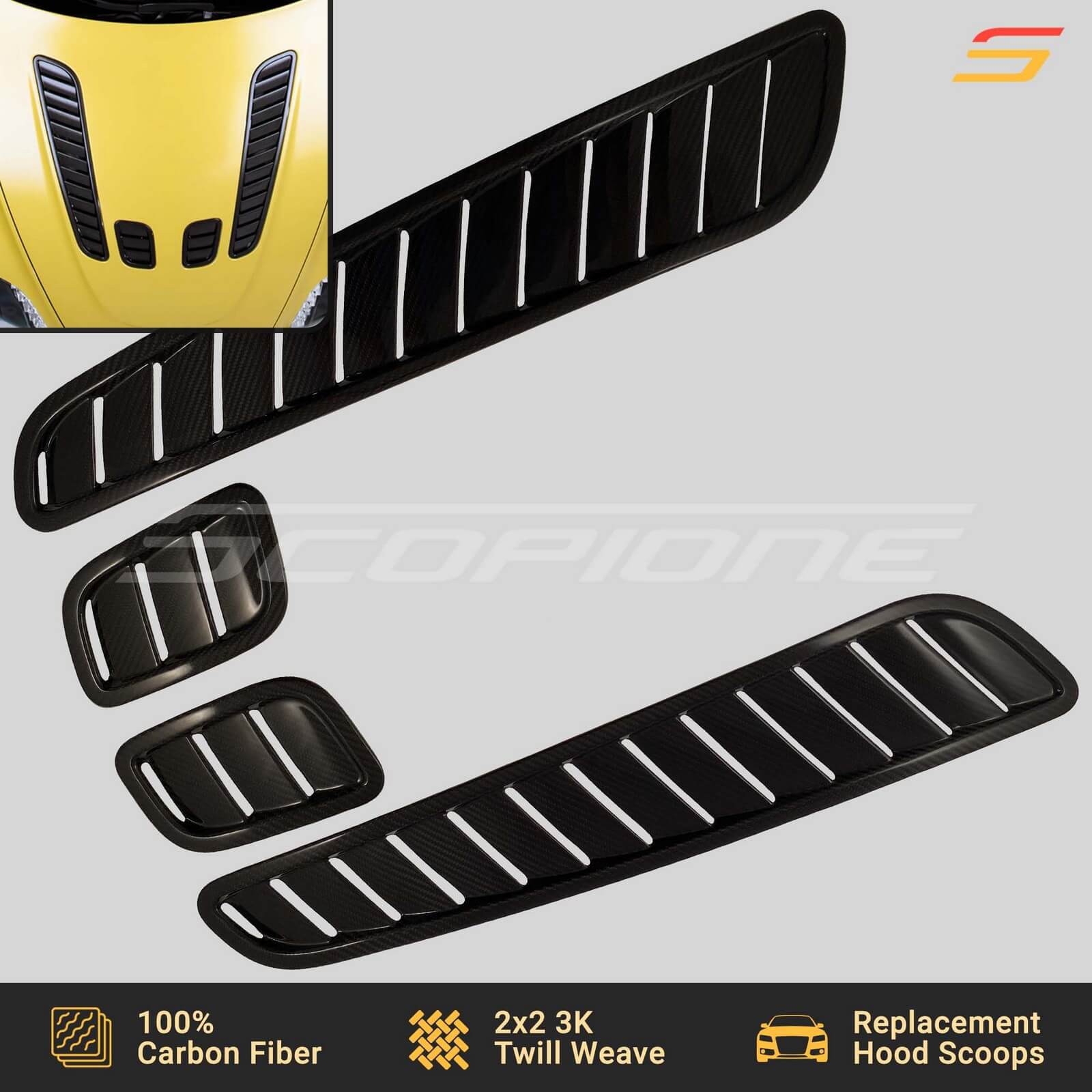
| Hood Vents (V12 Vantage) | $1,300 | $200 – $400 | $1,500 – $1,700 |
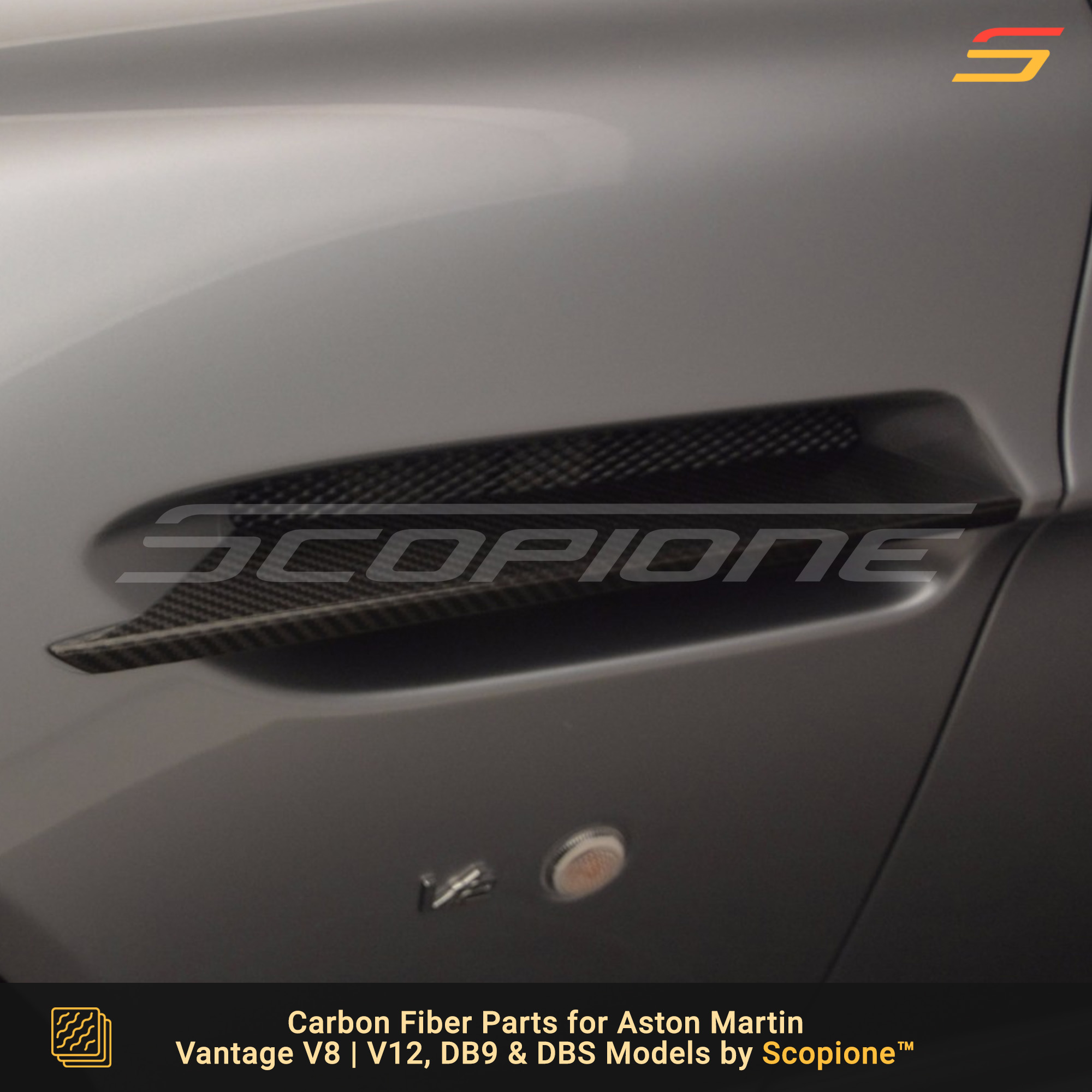
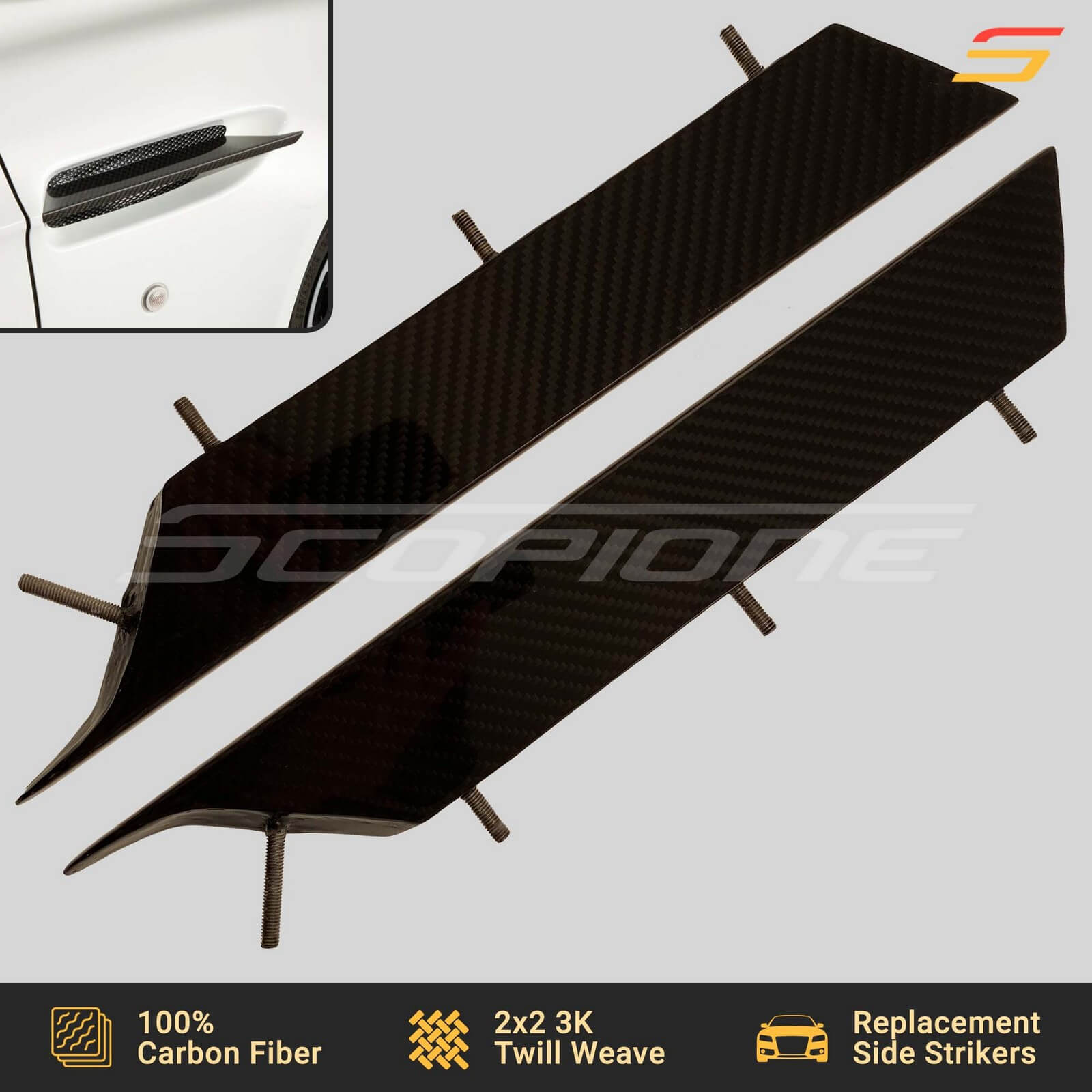
| Fender Side Strakes (V8 and V12 Vantage) | $900 | $150 – $300 | $1,050 – $1,200 |
| Mirror Covers (2005–2019, gloss or matte) | $700 | $100 – $200 | $800 – $900 |
| Tail Light Inserts (add-on) | $330 | $100 – $150 | $430 – $480 |
Full exterior package on a V8 Vantage (front lip, rear diffuser, mirror covers, fender strakes, tail light inserts): A comprehensive exterior CF upgrade totals approximately $5,550–$6,750 installed.
Interior Carbon Fiber Upgrade Costs: Aston Martin VH Platform
Carbon-fiber interior trim replacements for the Vantage, DB9, and DBS (2005–2019):
| Carbon Fiber Part | Part Cost (USD) | Installation Est. (USD) | Total Est. (USD) |
|---|---|---|---|
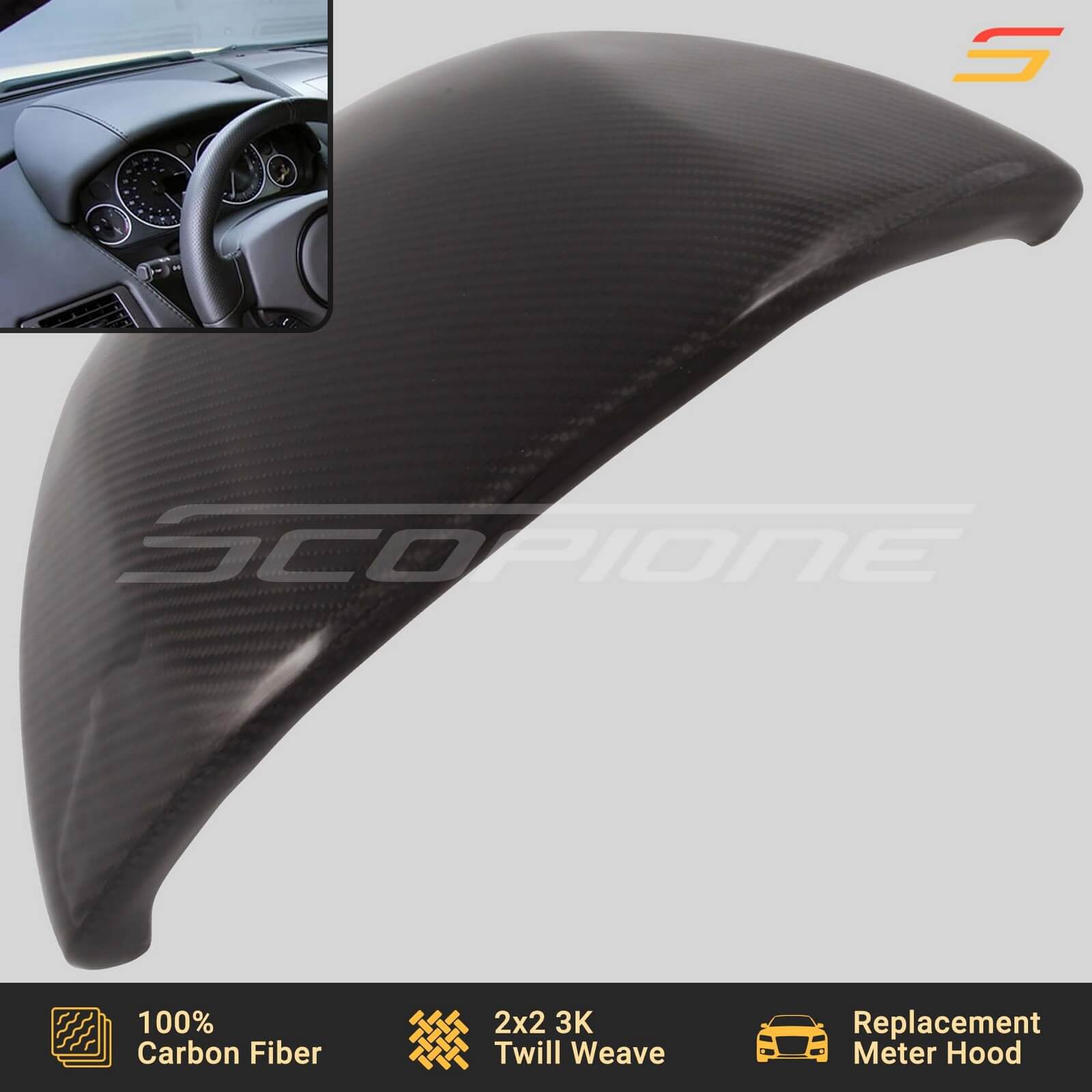
| Gauge Cluster Hood | $850 | $200 – $400 | $1,050 – $1,250 |
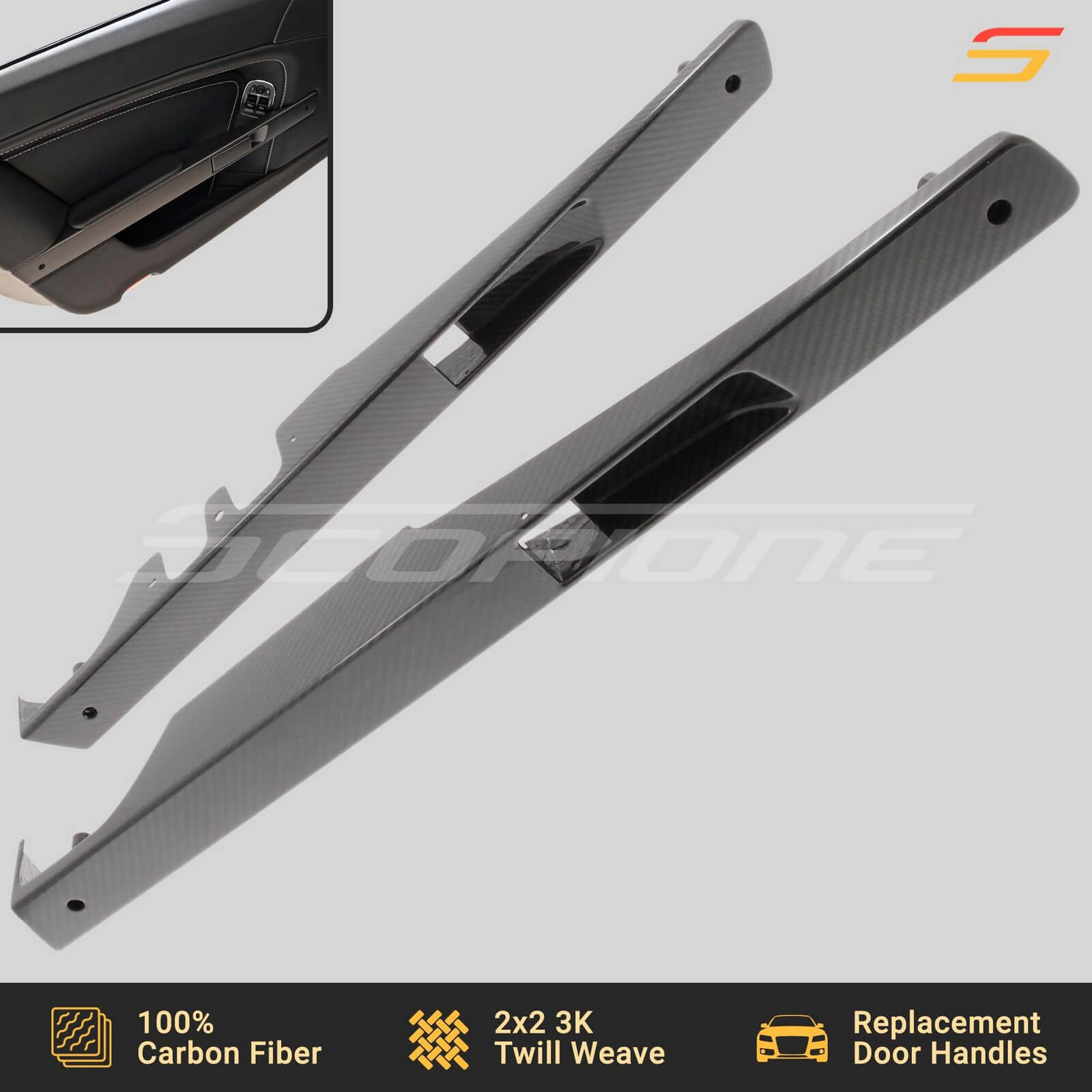
| Interior Door Handles (pair) | $2,200 | $200 – $400 | $2,400 – $2,600 |
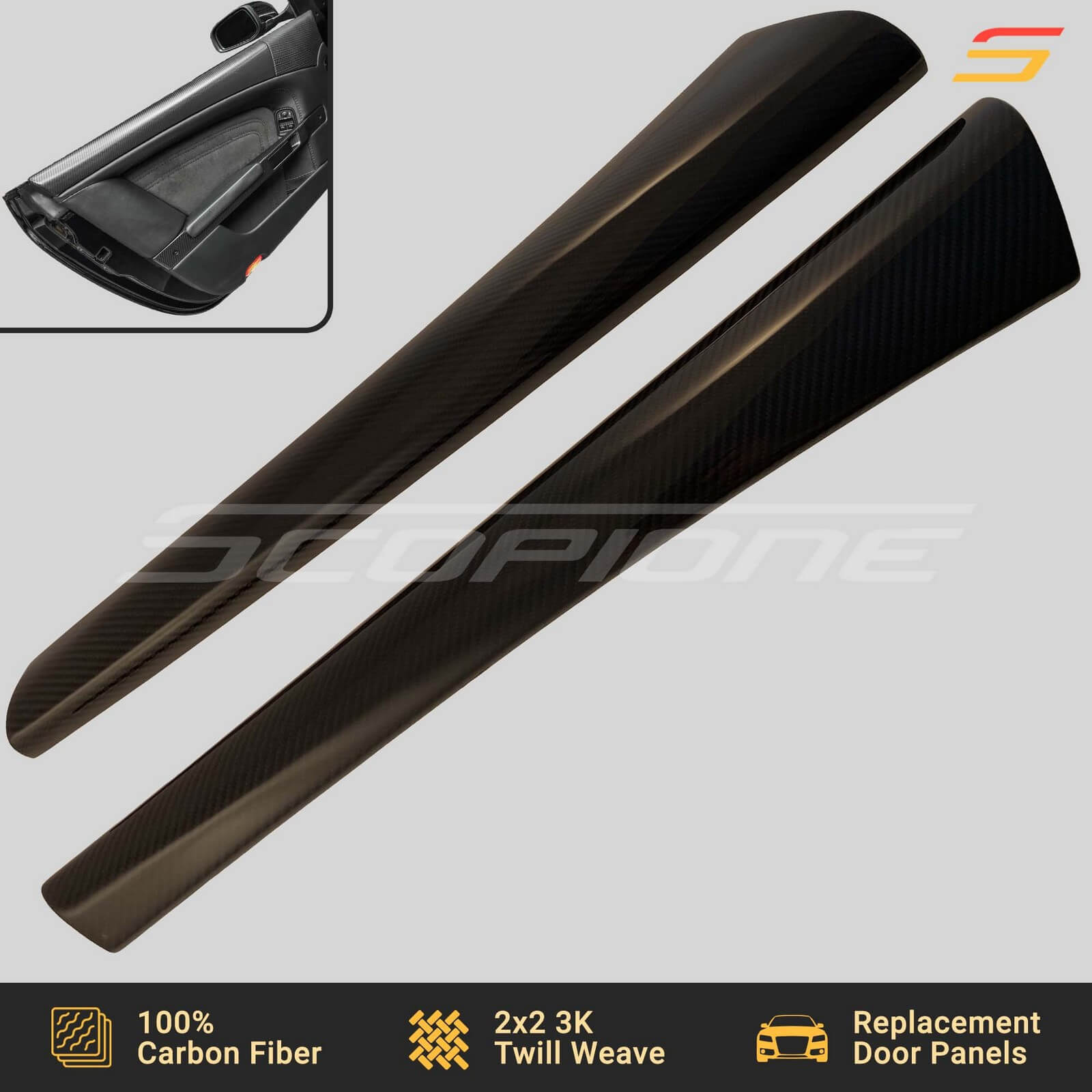
| Upper Door Trim Panels (DB9, DBS and Virage) | $1,300 | $300 – $500 | $1,600 – $1,800 |
| Door Sill Scuff Plates (pair) | $1,200 | $200 – $300 | $1,400 – $1,500 |
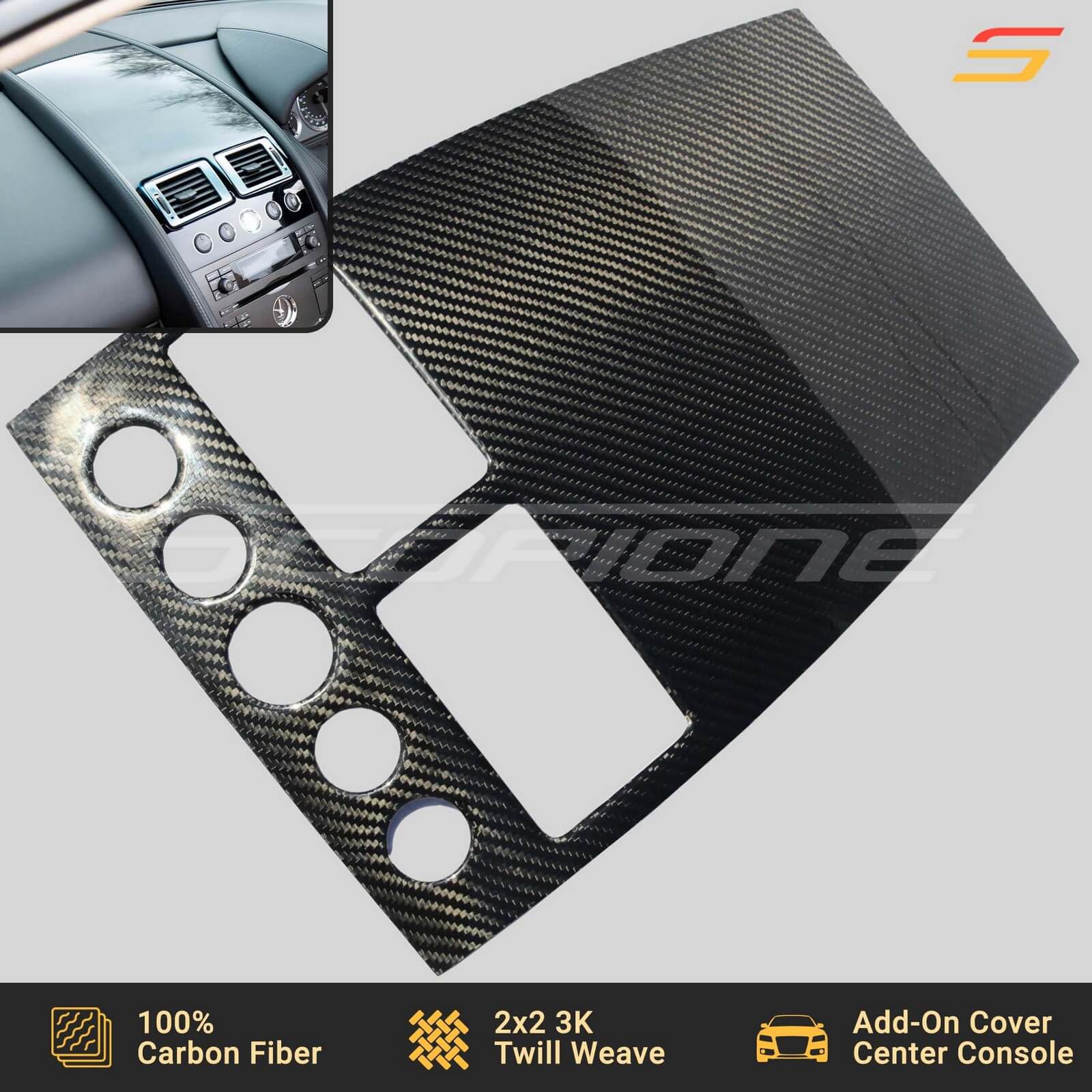
| Console Dash Trim (add-on; one per car – SC1, SC2, SC3 or SC4 by layout) | $700 – $800 | $200 – $400 | $900 – $1,200 |
| Navigation Screen Lid Trim (add-on, cars with navigation) | $210 | $100 – $200 | $310 – $410 |
Full interior package (gauge cluster hood, door handles, door sills, the SC console trim for the car’s layout and the navigation lid): A complete carbon-fiber interior on a Vantage runs approximately $6,050–$6,950 installed. On the DB9, DBS and Virage, where the upper door trim panels also apply, the total rises to approximately $7,650–$8,750.
Browse the Complete Scopione Aston Martin Catalog
Used Aston Martin Vantage, DB9 & DBS Market (2026)
Approximate U.S. market ranges for VH-platform Aston Martins, based on sold results over the 12 months to October 2026 (auction and dealer sales compiled by classic.com, mostly Bring a Trailer, Cars & Bids and Mecum):
- V8 Vantage 4.3L (2006–2008): $30,000 – $60,000 (the best manual cars to about $70,000)
- V8 Vantage 4.7L (2009–2017): $30,000 – $70,000
- V8 Vantage S (2012–2017): $40,000 – $90,000 (low-mileage manual cars at the top)
- V12 Vantage (2010–2013): $110,000 – $205,000
- V12 Vantage S, Sportshift III (2014–2017): $80,000 – $155,000
- V12 Vantage S, 7-speed manual (2017): $225,000 – $380,000
- Vantage GT12 (2015–2016, 100 units, not sold in North America): about $230,000 – $320,000
- DB9 (2005–2016): $25,000 – $100,000 (2013–2016 cars mostly $45,000 – $85,000)
- DB9 GT (2016): about $70,000 – $110,000 (Bond Edition up to about $175,000)
- DBS (2008–2012): $60,000 – $120,000 automatic; $140,000 – $230,000 manual
Shop Carbon Fiber Upgrades for the Aston Martin Vantage, DB9 & DBS
What Carbon Fiber Body Panels Does the Aston Martin DBS Have from Factory?
The 2007–2012 DBS was the first Aston Martin with extensive factory carbon-fiber construction. Its CF body panels included the bonnet (hood), boot lid, front splitter, rear diffuser, and mirror caps. Combined, these panels saved approximately 30 kg versus aluminum equivalents – a meaningful reduction that contributed to the DBS weighing 65 kg less than the DB9 despite carrying additional performance hardware.
Factory CF replacement costs reflect the panels’ complexity: a carbon-fiber bonnet from Aston Martin Parts runs $15,000–$25,000. Many DBS owners with damaged factory CF opt for aftermarket replacements from documented sources rather than OEM pricing.
Practical advice: Retain all original OEM components in storage when fitting aftermarket carbon fiber – especially on the DBS where factory CF panels carry provenance value. Use parts from documented sources like Scopione, and keep installation receipts with the vehicle’s service file. On the Vantage and DB9, aftermarket CF that follows factory body lines reads as considered modification rather than aftermarket excess – the difference matters at resale.
Should I Buy a Manual or Sportshift Aston Martin Vantage?
Manual-equipped V8 Vantages sell for roughly 30–40% more than equivalent Sportshift cars in the current market, more on low-mileage examples. The 6-speed manual (Graziano-sourced) rewards rev-matching and delivers the direct mechanical engagement that defines the Vantage character. Sportshift I (2005–2010) suffers from documented hydraulic actuator failures – $3,000–$5,000 for a rebuild, and the leading repair item on early Vantages. Sportshift II and III improved significantly but still trade at discounts to manual cars.
For driving engagement and long-term resale, the manual gearbox is the stronger purchase. The V12 Vantage S offered a 7-speed dog-leg manual – among the final manual V12 GT cars produced by any manufacturer – and those cars now sell for roughly two to three times the price of equivalent Sportshift cars.
Is the Aston Martin V12 Vantage a Good Investment?
The V12 Vantage S with 7-speed dog-leg manual is already appreciating. As one of the last manual V12 GT cars produced, it occupies a niche that no new car fills. The GT12 (100 units, 600 hp, extensive carbon-fiber bodywork) was never sold in North America; recent sales in Europe and the Middle East run about $230,000–$315,000, below its £250,000 launch price. Standard V12 Vantage models with manual transmission also show upward pricing trends as the broader market recognizes the car’s significance.
The AMR-era Vantage (2018+) switched to a Mercedes-AMG twin-turbo V8. This means the VH-era V12 Vantage range represents the final naturally aspirated, in-house V12 in a compact Aston Martin platform – a distinction that carries increasing weight in the collector market.
What Are Common Aston Martin VH Platform Maintenance Costs?
Annual routine maintenance on VH-platform Aston Martins runs $3,000–$6,000. Independent Aston Martin specialists can reduce labor rates by 30–50% versus authorized dealer pricing. Key cost items:
- V12 major service (valve clearance): $5,000 – $10,000 at Aston Martin dealer. Required every 20,000 miles on the V12.
- Sportshift I actuator rebuild: $3,000 – $5,000. The leading repeat repair on early V8 Vantages.
- Manual clutch replacement: $3,000 – $5,000 including rear-mounted transaxle labor.
- Brake rotors and pads: $2,000 – $4,000 per axle (standard iron).
- Carbon-ceramic brakes (DBS standard): $15,000 – $25,000 for a full set.
Common issues across the range: Sportshift actuator wear (early models), lower front wishbone bushings, power steering pump failures (Vantage), thermostat housing leaks, and alternator failures on V12 models. Gaydon Parts continues to supply the majority of VH-era mechanical and trim components.
Notable Auction Results for VH-Platform Aston Martins (2025–2026)
| Model | Sale Price | Sold |
|---|---|---|
| 2017 V12 Vantage S coupe (7-speed manual, 13k mi) | $343,000 | Bring a Trailer, Sep 2026 |
| 2016 Vantage GT12 (1 of 100, 232 mi) | $275,000 | RM Sotheby’s Abu Dhabi, Dec 2025 |
| 2009 DBS coupe (6-speed manual, about 6k mi) | $200,000 | Bring a Trailer, Jun 2026 |
| 2014 V8 Vantage S Roadster (manual, 6k mi) | $92,000 | Bring a Trailer, Apr 2026 |
| 2016 DB9 GT coupe (automatic, 29k mi) | $70,000 | Bring a Trailer, Aug 2026 |
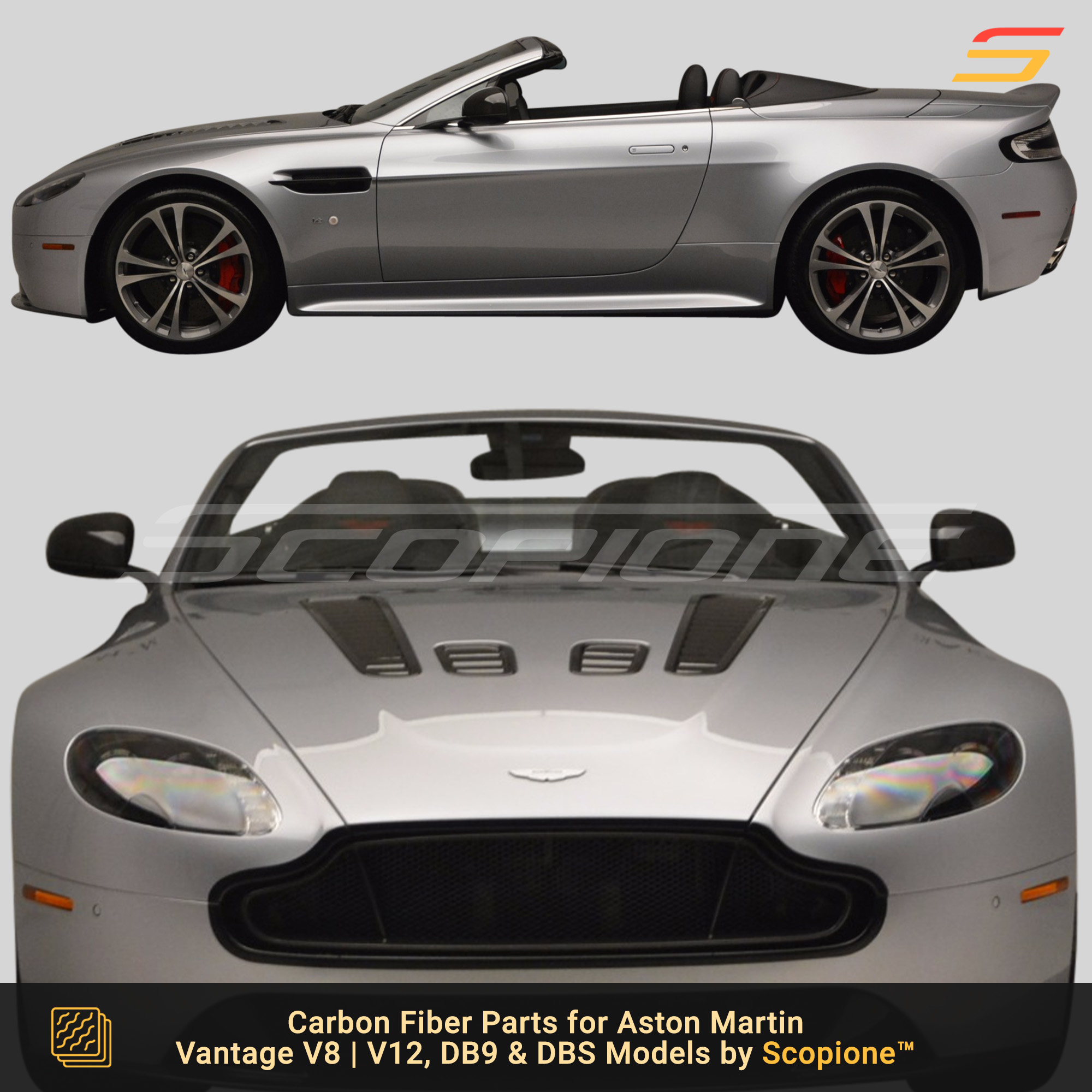
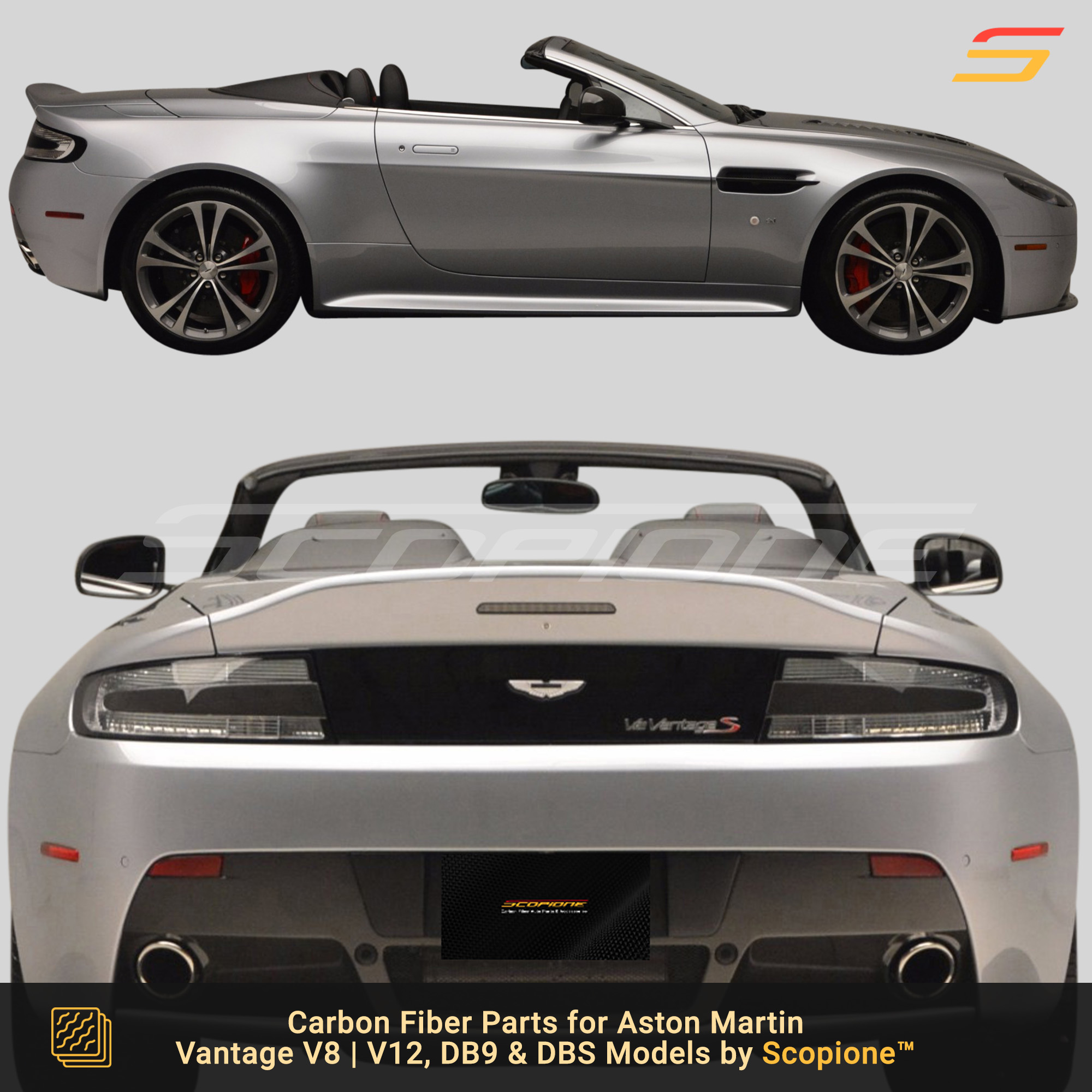
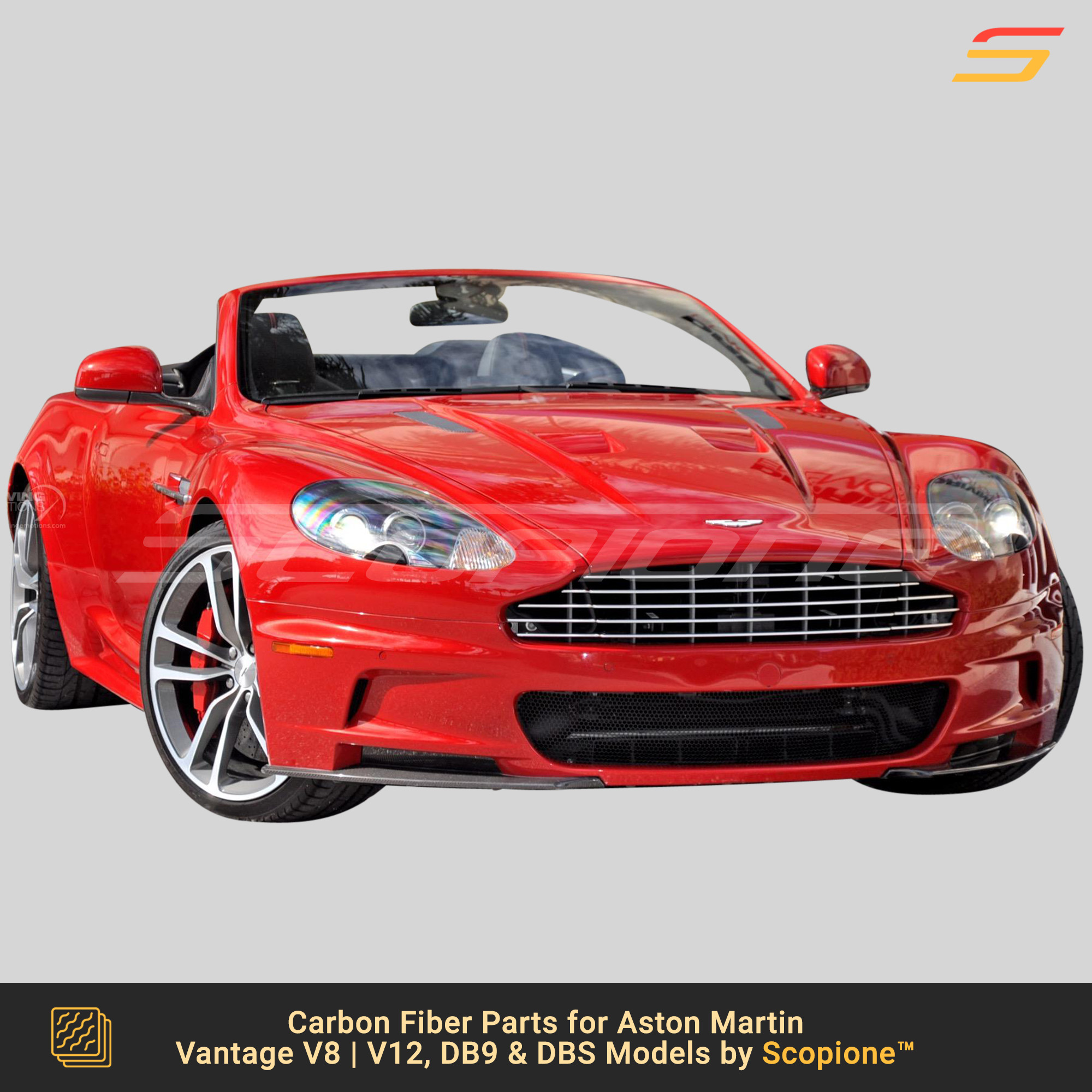
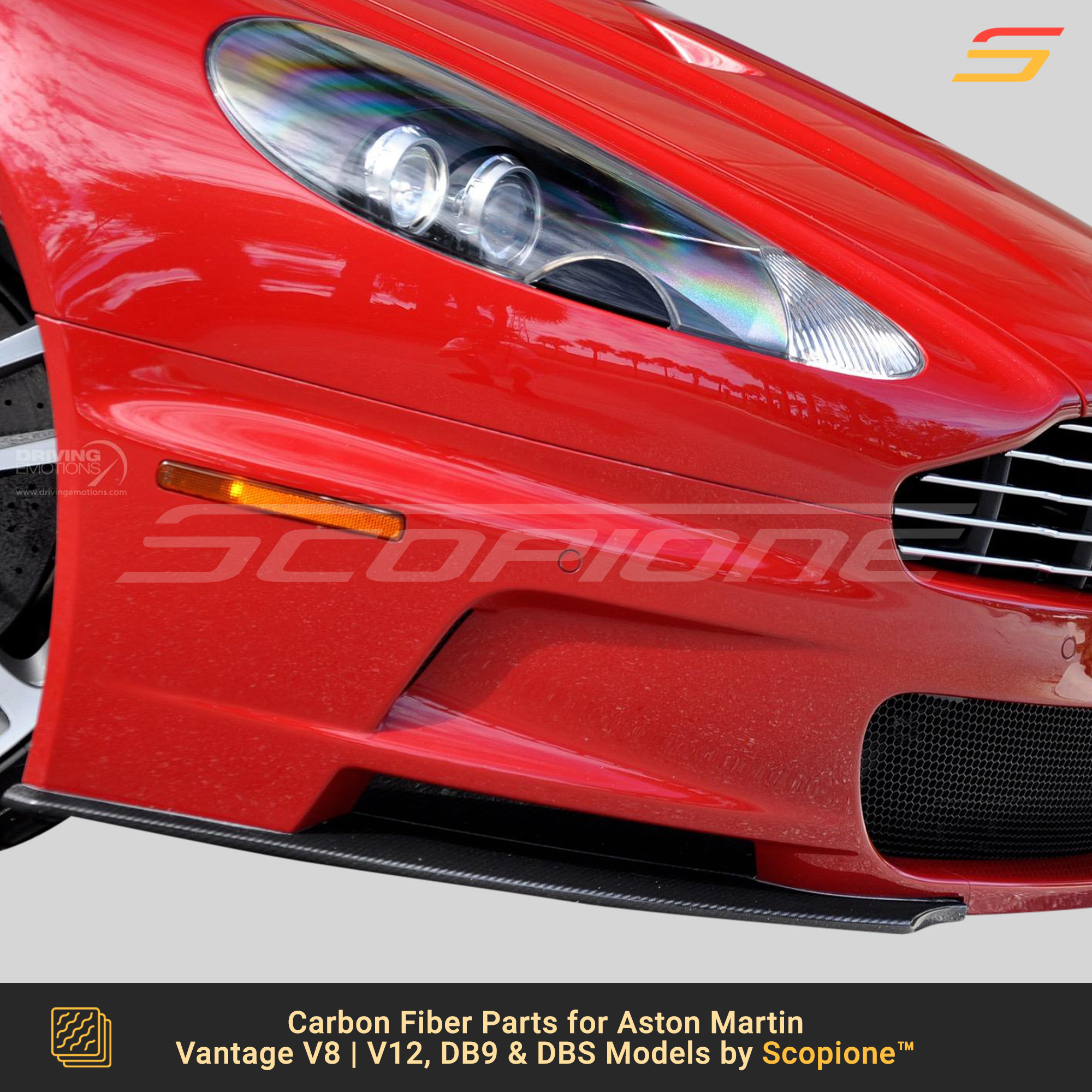
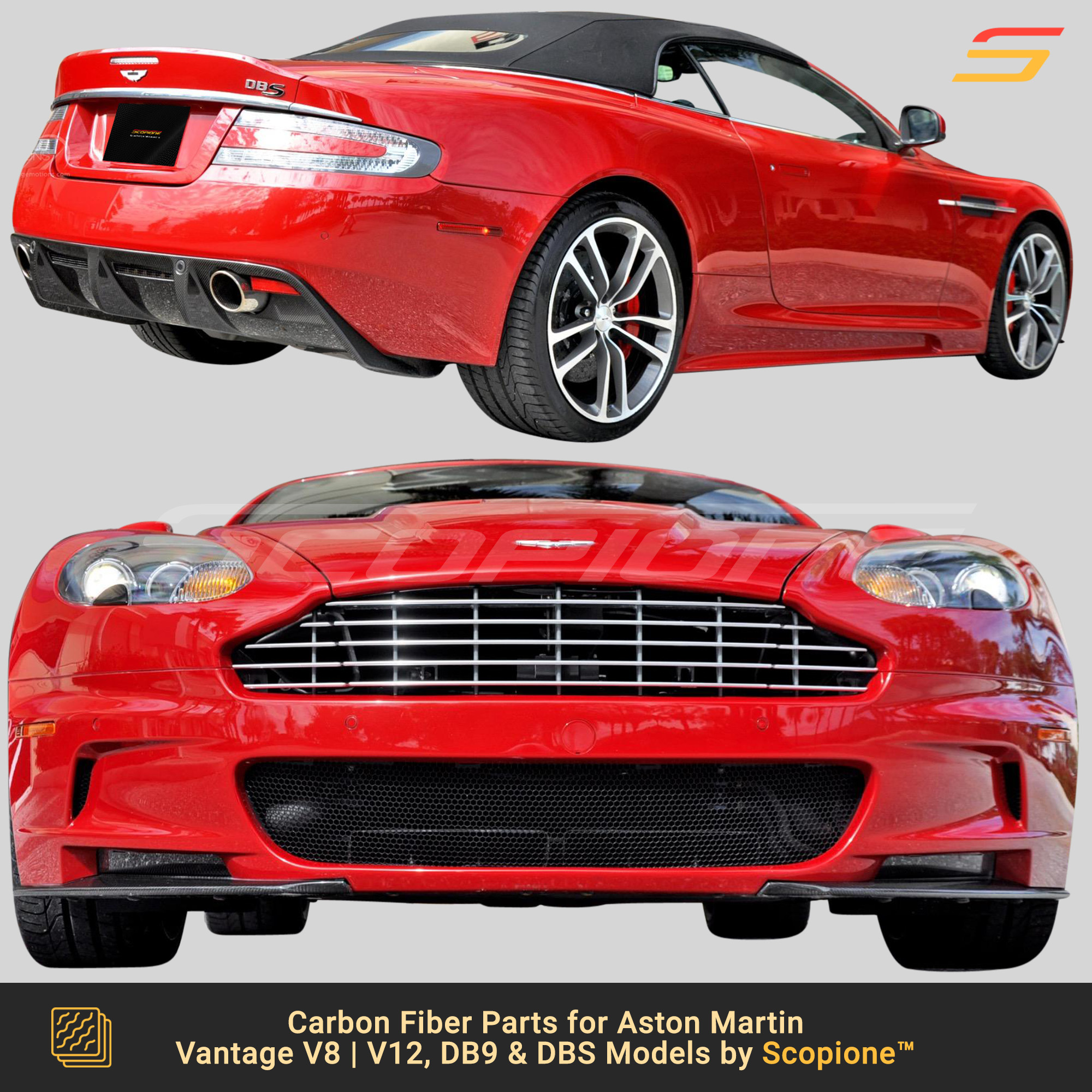
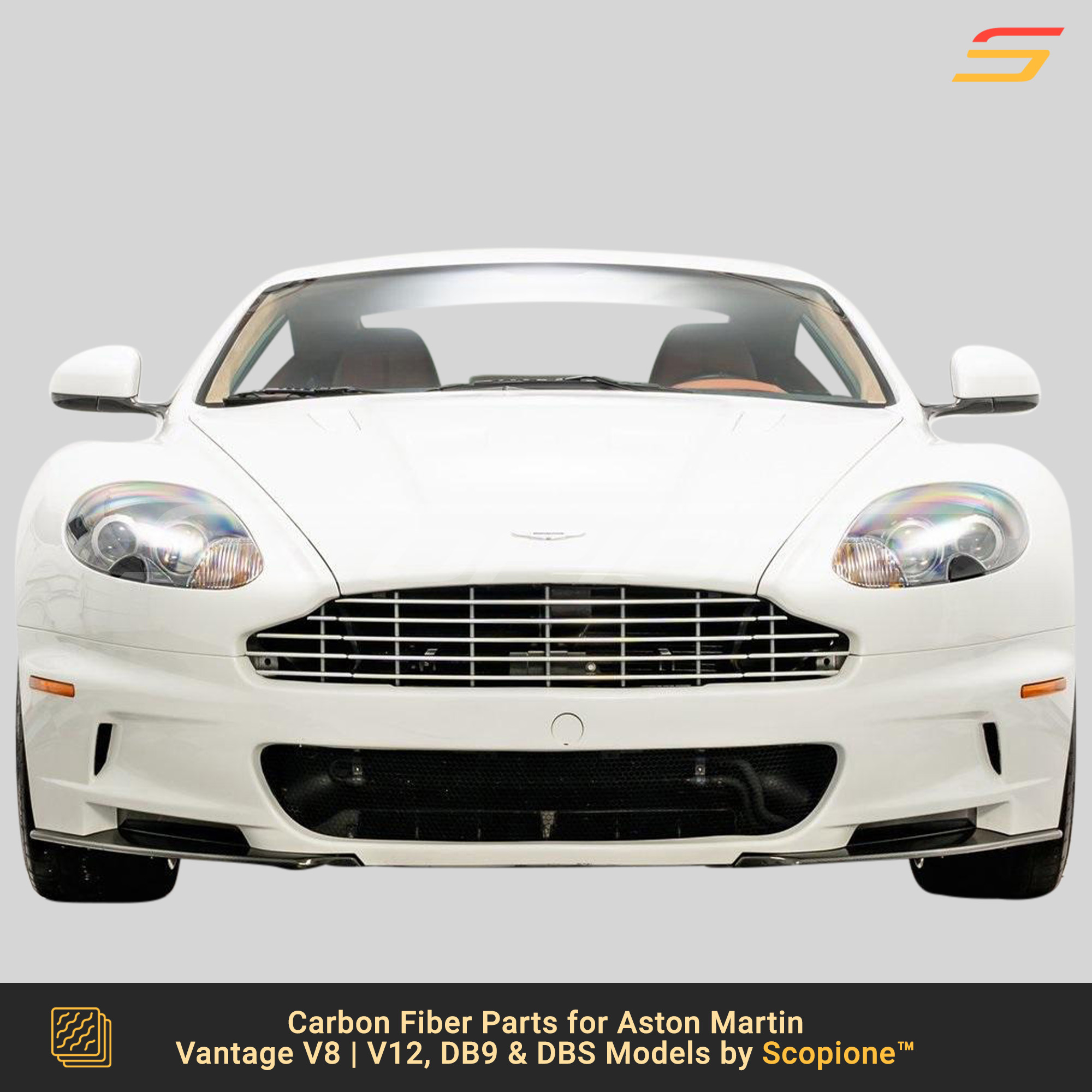
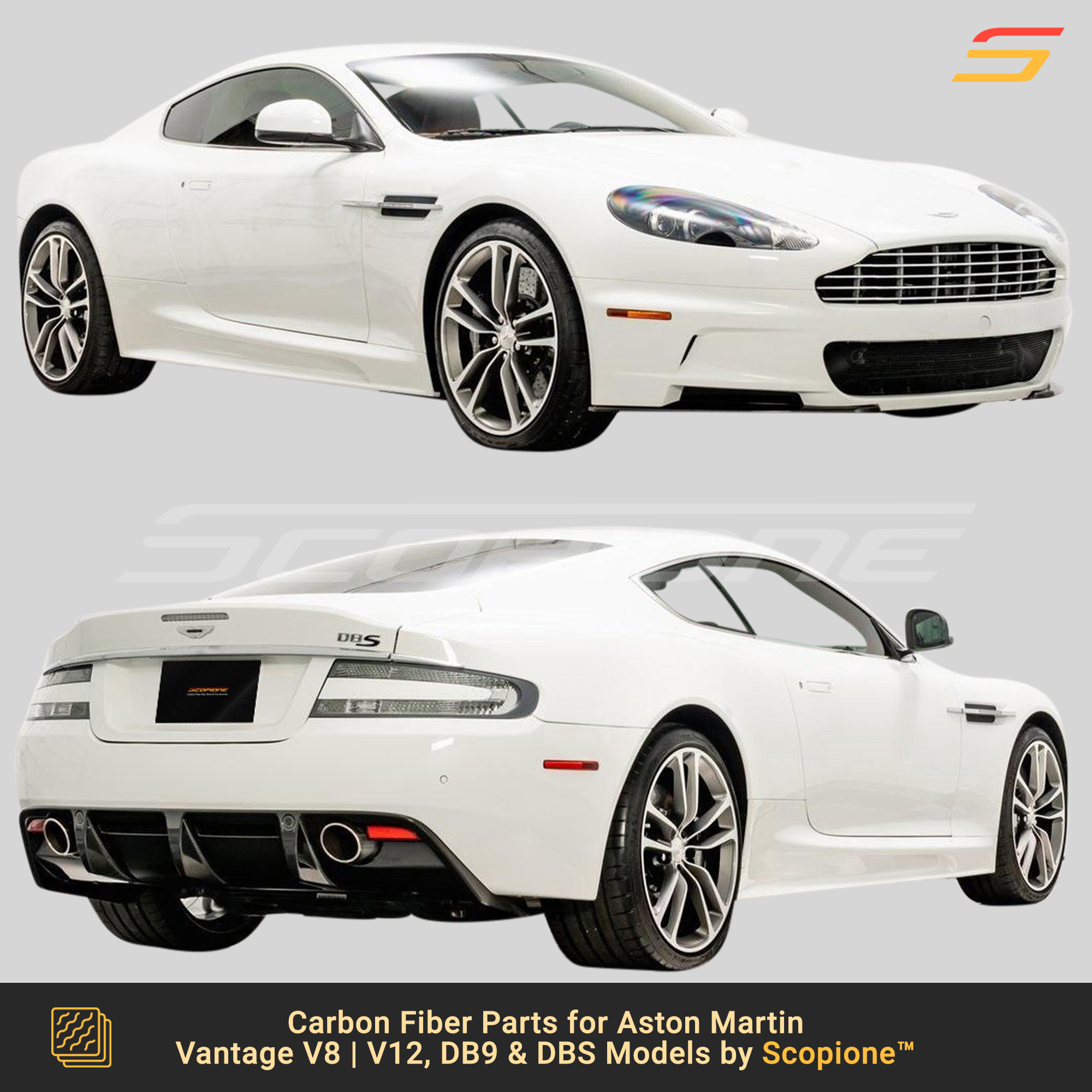
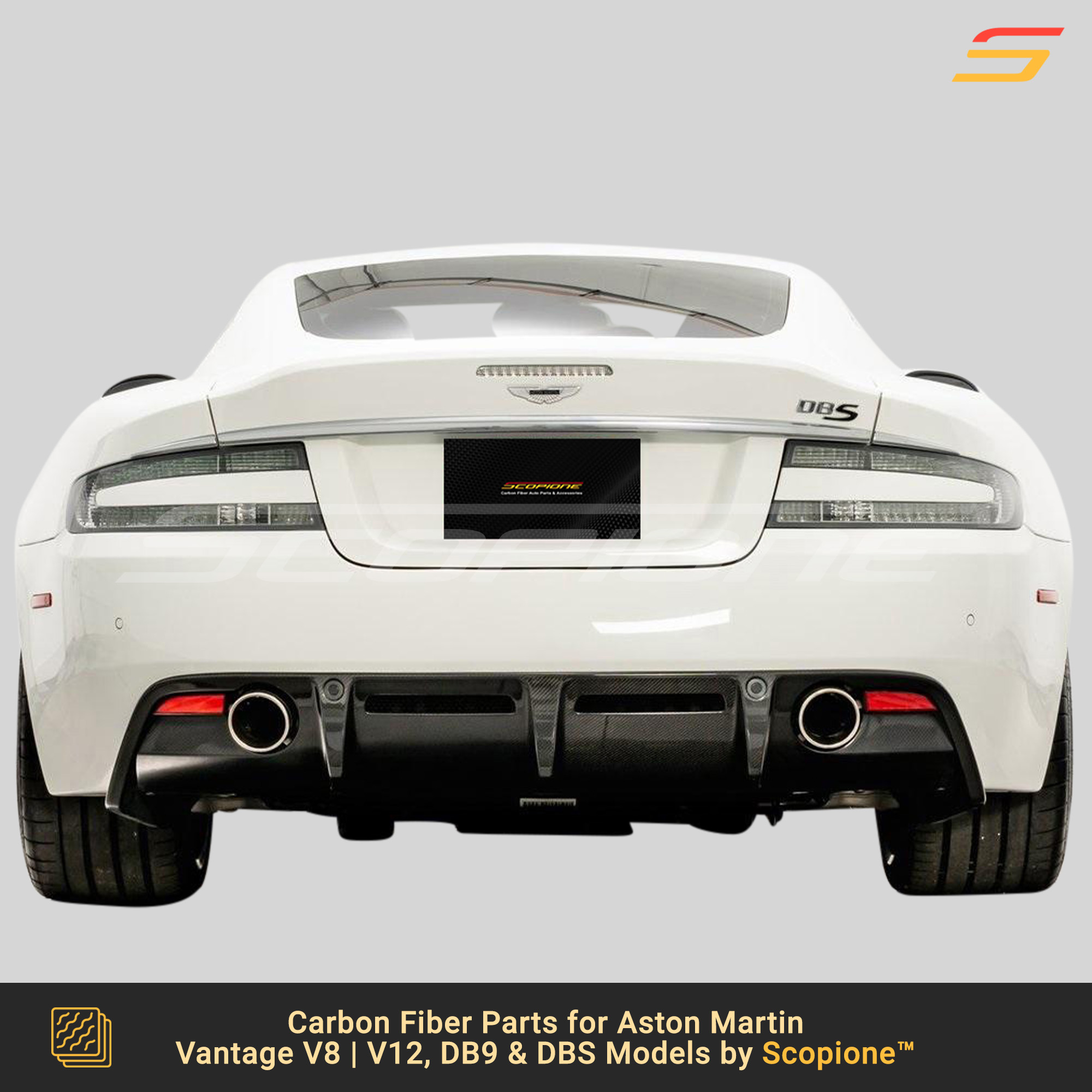
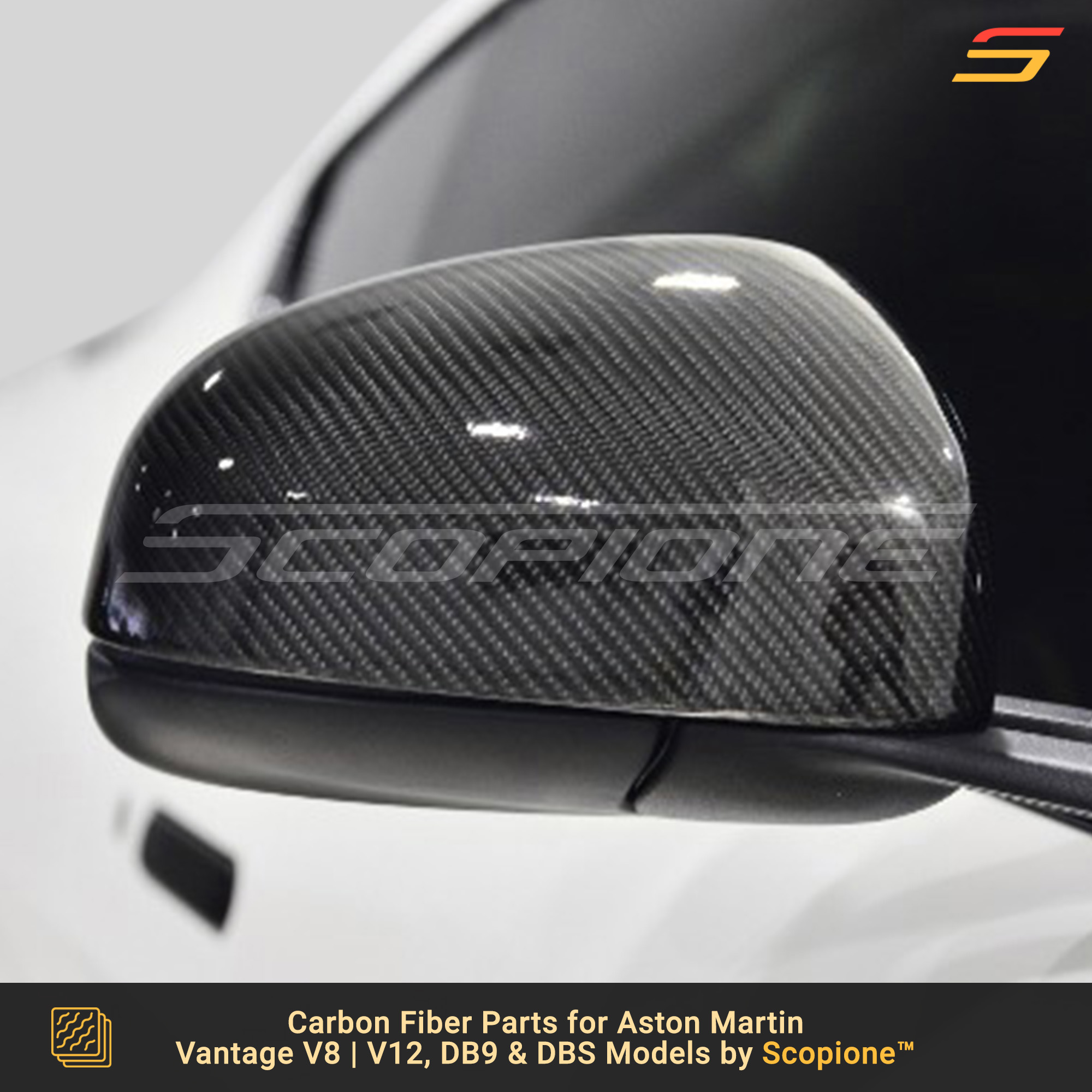
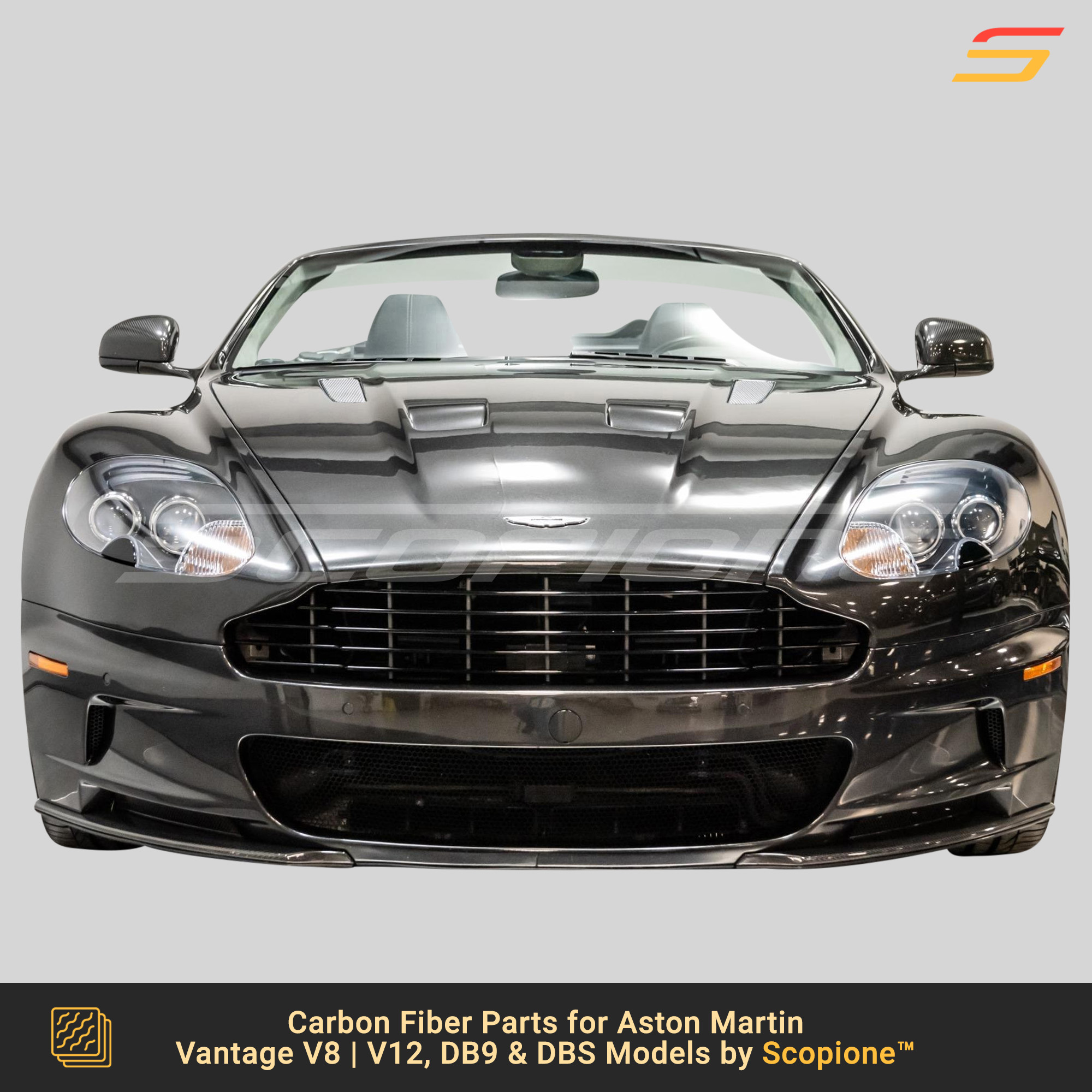
The Scopione Aston Martin Vantage, DB9 & DBS Picture Gallery features photographs of VH-platform Aston Martins fitted with Scopione carbon-fiber components – front splitters, mirror covers, interior trim, and console panels. Each image shows how the exposed twill-weave pattern integrates with Aston Martin’s factory paint finishes and aluminum body lines.
Vantage, DB9, and DBS owners evaluating upgrades can use these real-world installations as reference for fitment, visual impact, and style direction across models.
Explore carbon-fiber upgrades by model year on the Scopione Aston Martin page
Customer Aston Martin Photo Gallery
More customer V12 Vantages wearing Scopione carbon fiber – browse the collection:
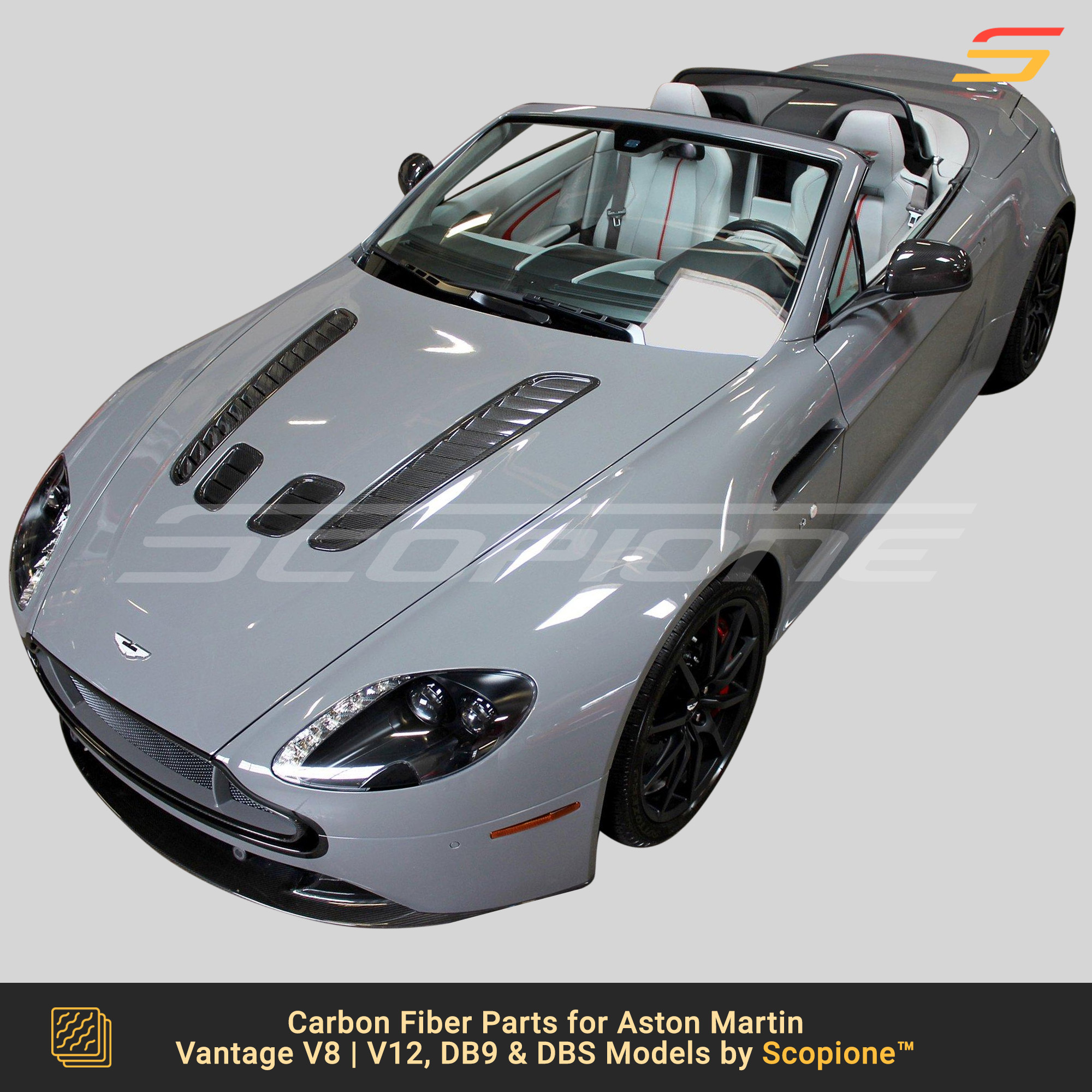
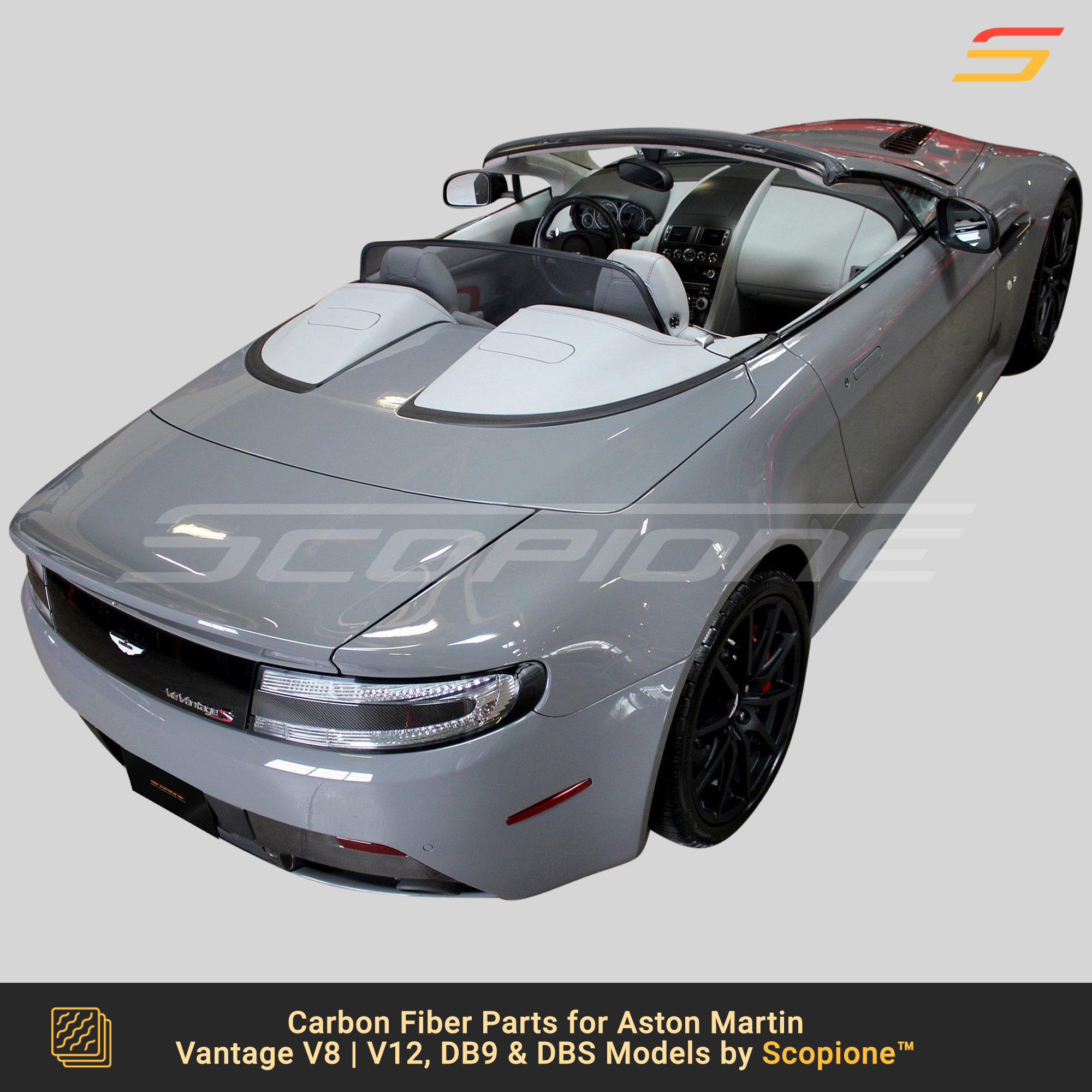
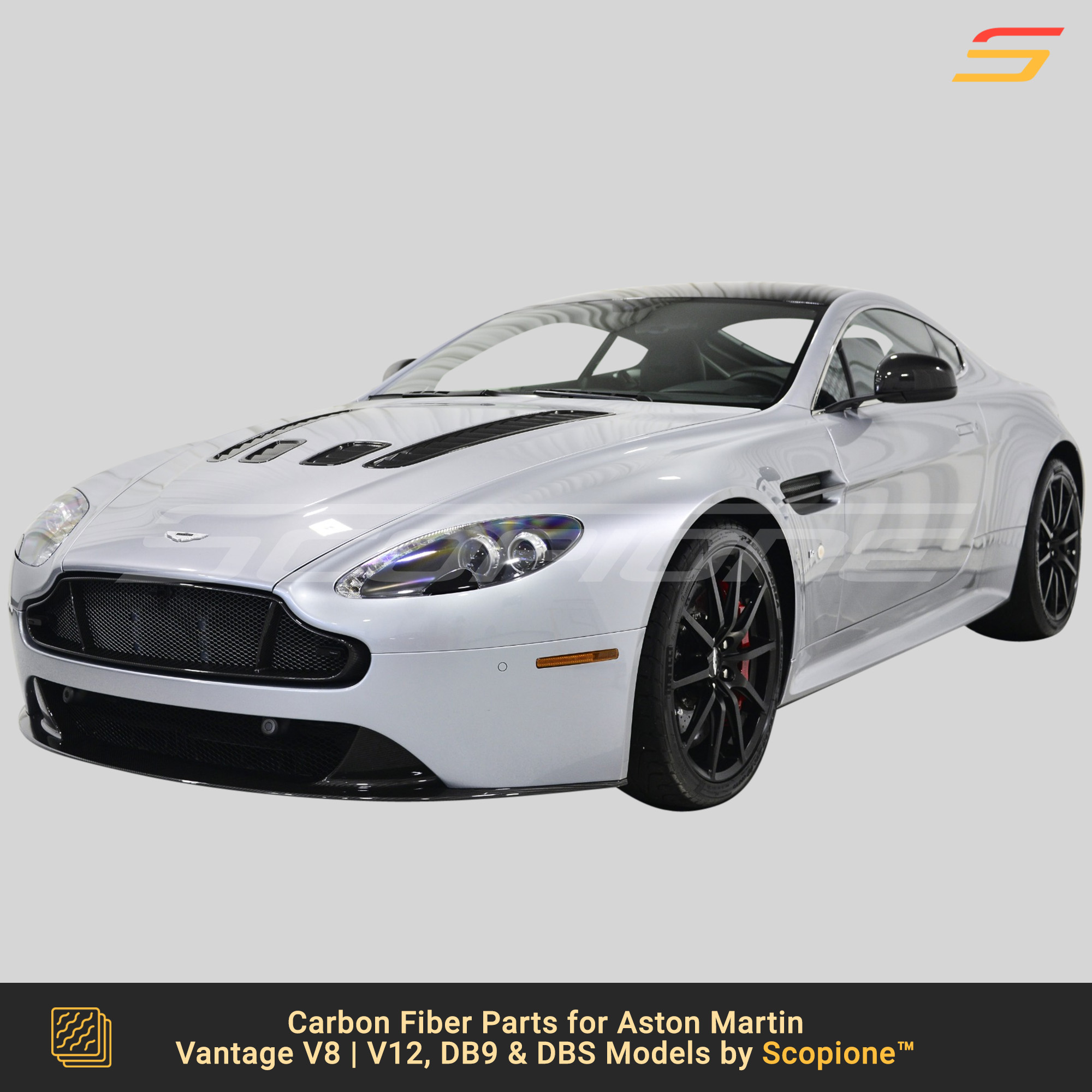
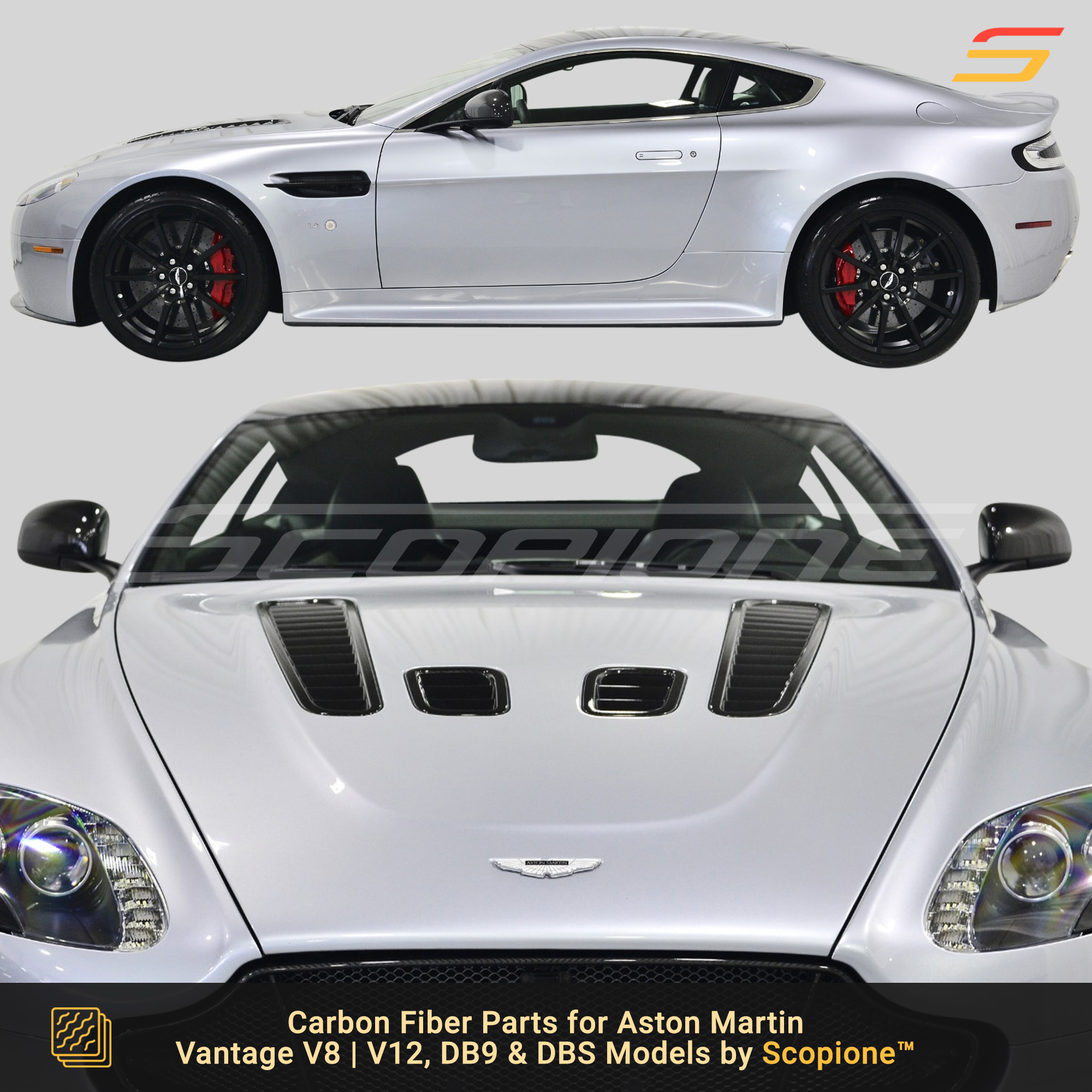

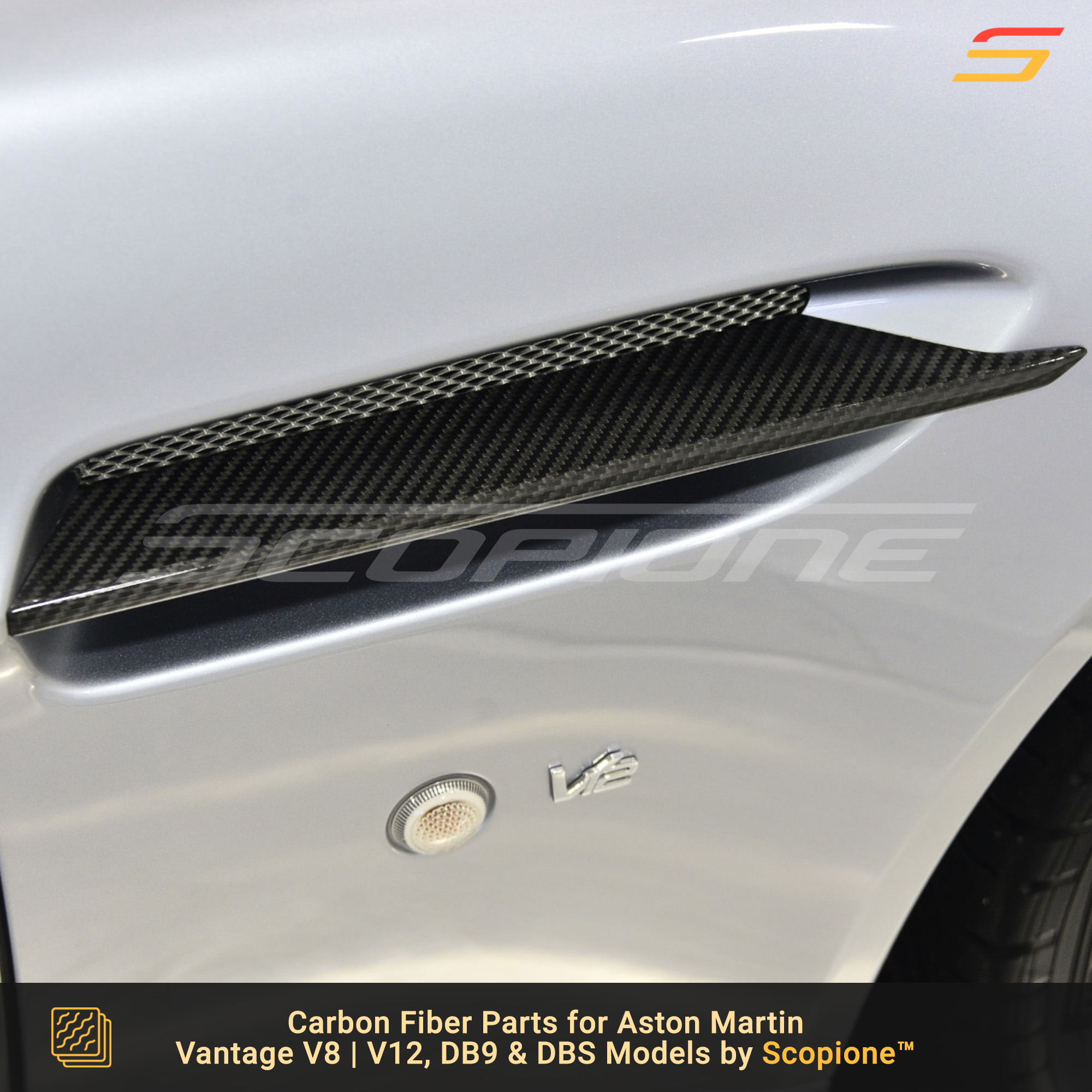
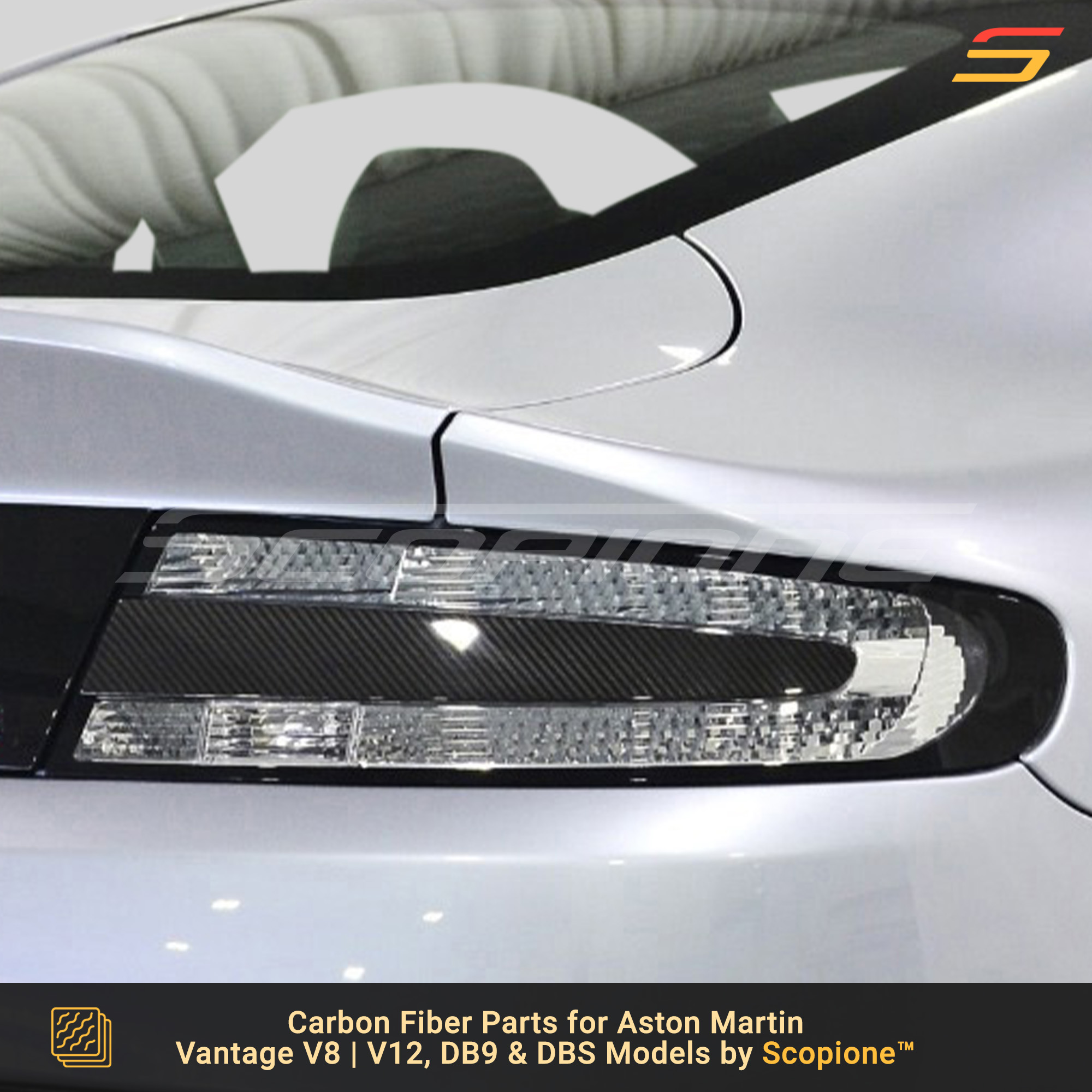
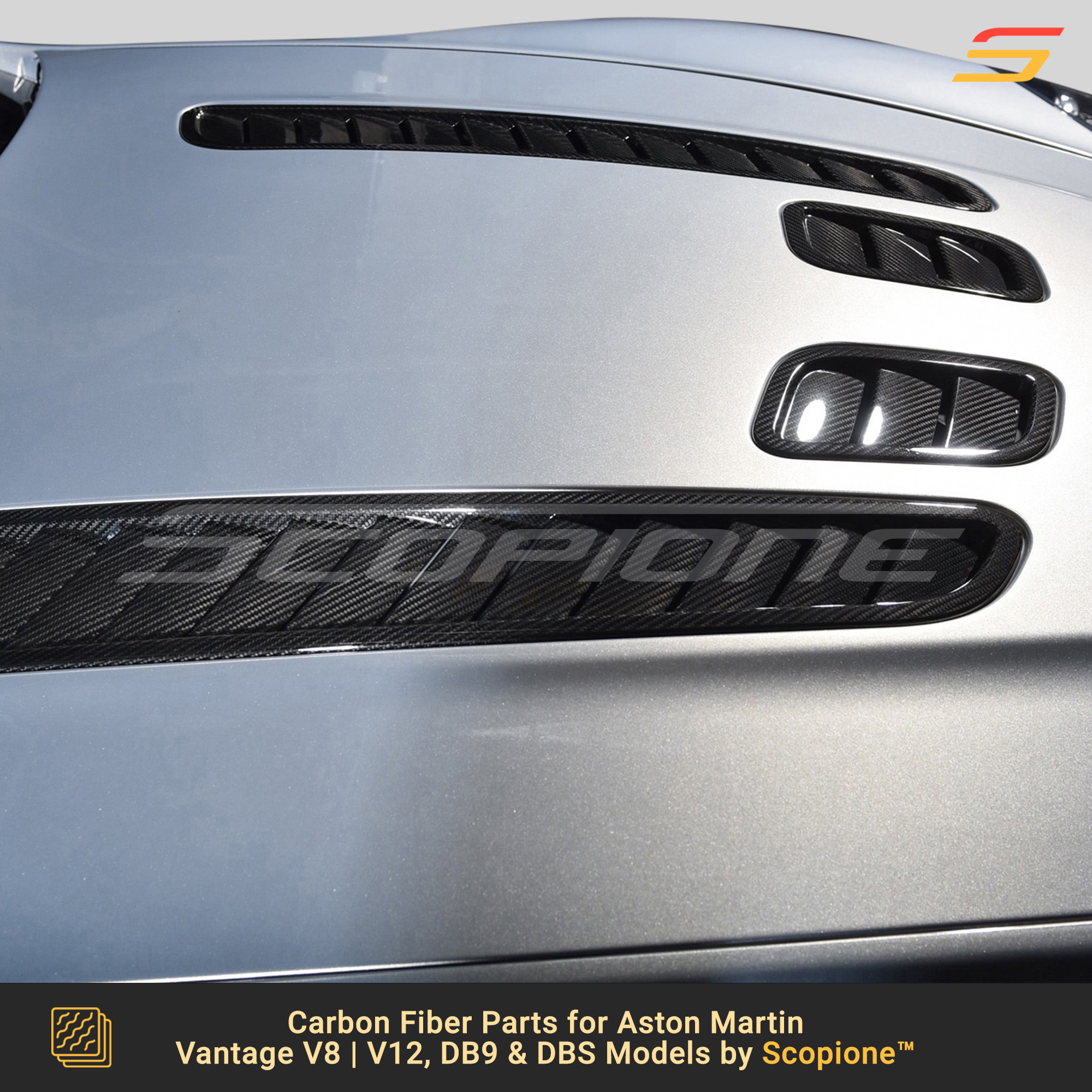
Carbon Fiber Parts for the Aston Martin Vantage, DB9 and DBS
The 22 carbon fiber parts Scopione currently lists for the Aston Martin Vantage, DB9 and DBS. Each image links to its product page.






More Scopione Picture Galleries
Scopione’s carbon fiber catalog covers a wide range of performance and luxury vehicles. Browse galleries for related makes and models:
- Ferrari: 458 Italia & Spider • 488 GTB & Spider • F8 Tributo & Spider • F12 & 812 Superfast • SF90
- Lamborghini: Gallardo • Huracan • Aventador • Urus
- McLaren: MP4-12C & 650S • 720S & 765LT • Sports Series
- Porsche: 911, Boxster & Cayman
- BMW: M3, M4, M5 & More
- Audi: R8
- Nissan: GT-R R35 • 350Z, 370Z & Z
- Bentley: Continental GT & GTC
- Maserati: GranTurismo & GranCabrio
- Toyota: Supra
- Subaru: WRX STI
- Mitsubishi: Lancer Evolution
- Chevrolet: Corvette • Camaro
- Dodge: Viper
See Scopione carbon fiber on the Aston Martin Vantage, DB9 and DBS. The photos above show customer cars fitted with Scopione parts – a reference for finish, fitment and style before choosing an upgrade.
Shop Scopione carbon fiber for the Aston Martin Vantage, DB9 and DBS – hand-laid parts made for the factory mounting points.