

 Shop
ShopThe McLaren 720S, 765LT & 750S form McLaren’s second-generation Super Series – three models built on the Monocage II full-carbon chassis with the M840T 4.0-liter twin-turbo V8 producing 710 to 755 hp. Scopione carries carbon fiber diffusers, spoilers, aero bridge panels, engine covers, mirror shells, door sills, and shift paddles for the McLaren 720S, 765LT, and 750S – twenty-one components covering exterior aerodynamics, engine bay presentation, and cockpit accents for the Super Series platform (2017–present).
Introduction: McLaren’s Second-Generation Super Series
When McLaren revealed the 720S at the 2017 Geneva Motor Show, it was not simply updating the 650S. It was rethinking how a mid-engine supercar’s carbon structure should work. The previous generation used a MonoCell chassis: a carbon tub with aluminum A-pillars and windscreen surround bolted to it. The 720S introduced the Monocage II, which integrated the roof structure, A-pillars, and windscreen surround directly into the carbon fiber tub. One piece. The result was the thinnest A-pillars in the supercar segment – a visibility advantage that reviewers consistently singled out as a defining characteristic of the driving experience.
Rob Melville’s design team shaped every body surface around aerodynamic function. The ‘eye socket’ headlight channels feed the radiators, and the double-skinned dihedral doors route air to the engine bay without conventional side intakes. The Lamborghini Huracan Performante and STO pursued the same mid-engine performance bracket with a naturally aspirated V10, but McLaren’s engineering direction remained committed to forced induction, hydraulic suspension, and structural carbon fiber from the ground up.
Under the engine cover sits the M840T 4.0-liter twin-turbo V8 – a clean-sheet redesign with 41% new components versus the M838T 3.8-liter that powered the MP4-12C and 650S. Larger displacement, higher-flow cylinder heads, revised turbochargers. Three states of tune across the lineup: 710 hp in the 720S, 755 hp in the limited-production 765LT Longtail, and 740 hp in the 750S that replaced the 720S from 2023 as McLaren’s final ICE-only Super Series car.
Scopione stocks twenty-one carbon-fiber components for the 720S, 765LT, and 750S Super Series – exterior aero panels, engine bay covers, and cockpit accents. Browse the full catalog on the Scopione McLaren page.

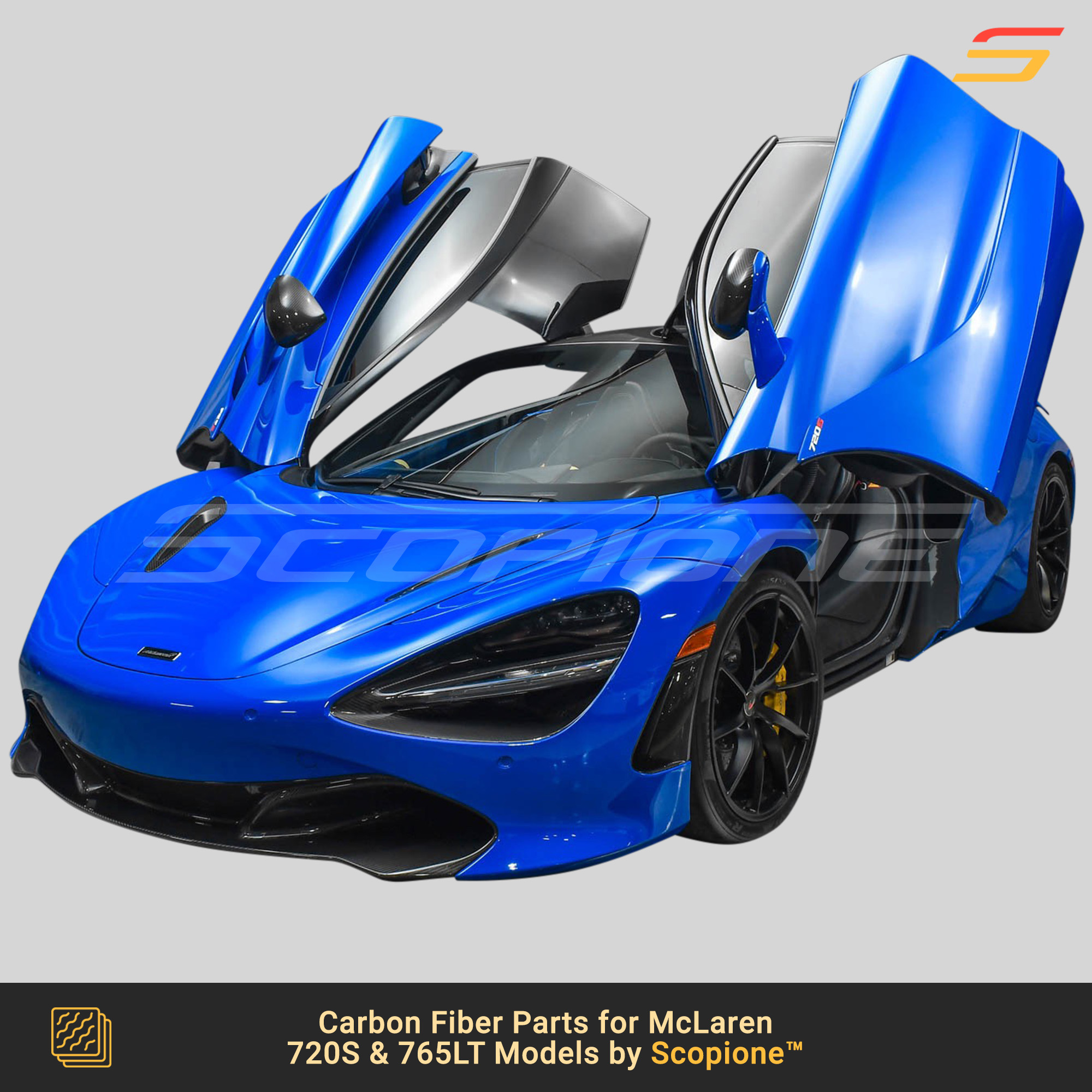
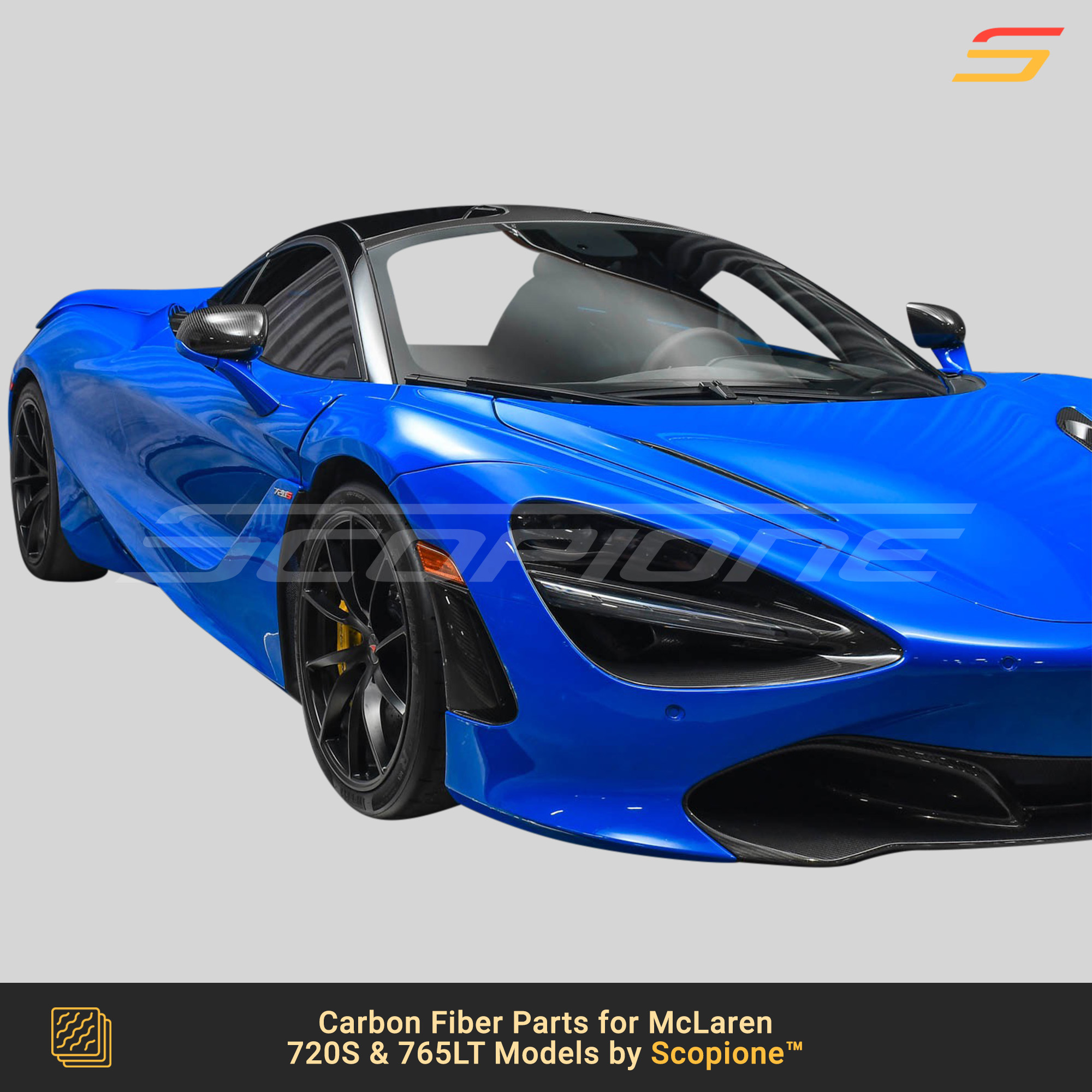
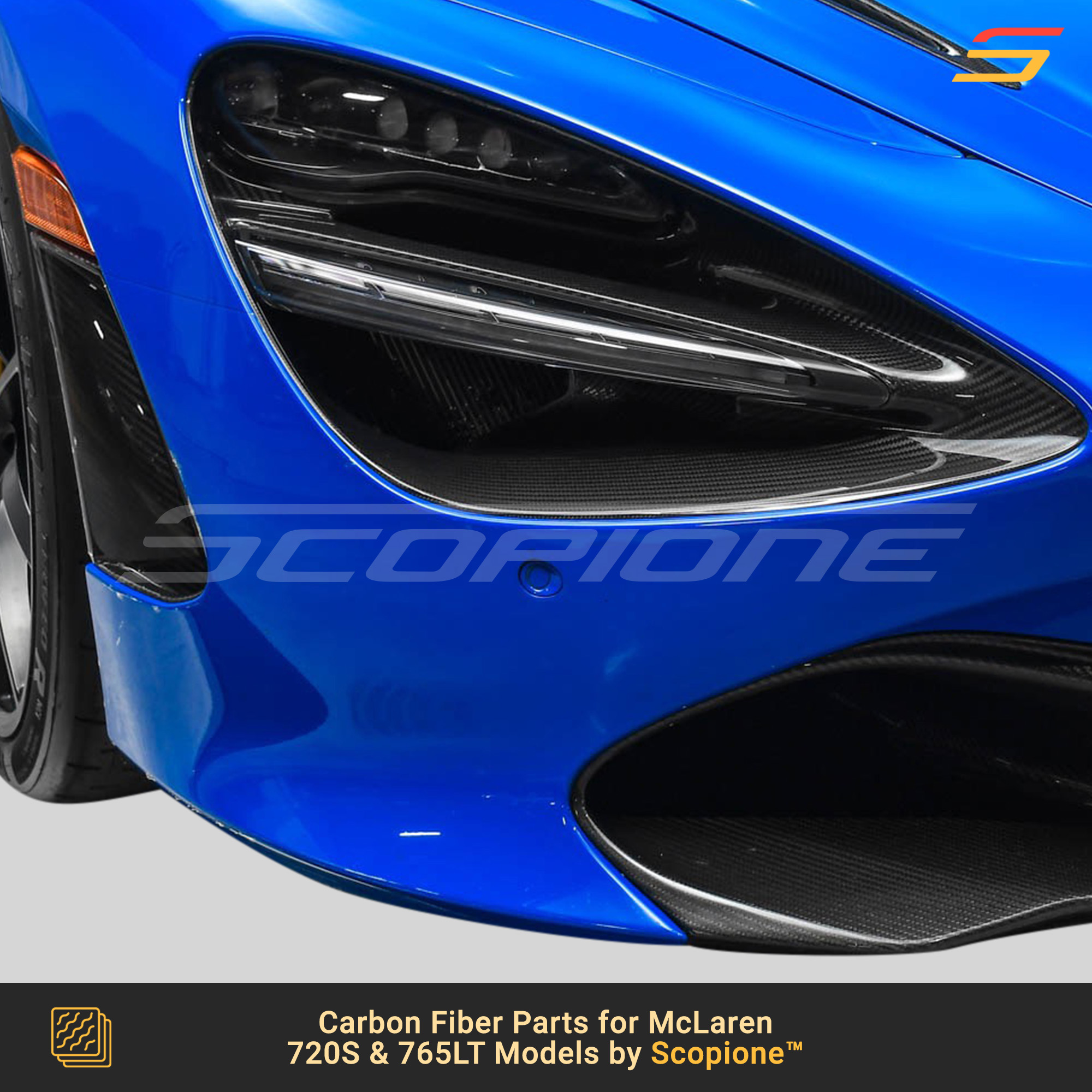

McLaren 720S (2017–2022)
The 720S launched with the M840T producing 710 hp (720 PS) at 7,250 rpm and 568 lb-ft across a 5,500 rpm torque peak. McLaren paired it with the 7-speed SSG dual-clutch and rear-wheel drive. Dry weight: 1,283 kg for the coupe. 0–62 mph in 2.8 seconds, and a 10.3-second quarter mile that matched the Porsche 918 Spyder hypercar at roughly a third of the price. Top speed reached 341 km/h (212 mph). The Proactive Chassis Control II hydraulic suspension replaced conventional anti-roll bars entirely, managing body control through interconnected hydraulic actuators at each corner. In Normal mode, the ride was compliant enough for daily use. In Track mode, body control tightened without the harshness of conventional spring setups.
McLaren’s folding driver display was a signature feature. The instrument cluster pivots in Track mode, collapsing to a narrow strip showing only speed, gear, and rpm. No distractions. The gesture anticipated where the driver’s attention belongs at ten-tenths and physically removed everything else from view.
The 720S Spider arrived in 2019 on the Monocage II-S – a modified tub requiring no additional bracing for the open-top configuration. Roof fold time: 11 seconds at speeds up to 50 km/h, with an electrochromic glass panel. The Spider weighed 1,332 kg dry and matched the coupe’s straight-line performance within a tenth of a second. McLaren estimated total 720S production at roughly 6,500–8,000 units across all model years, though the company has not confirmed an exact figure. A Le Mans Special Edition (50 units, 2020) celebrated the 25th anniversary of the F1 GTR’s 1-3-4-5 Le Mans finish, offered in McLaren Orange or Sarthe Grey – each with Ueno Grey lower bodywork.
Three variants defined the 720S range:
- 720S Coupe (2017–2022) – M840T 4.0L twin-turbo producing 710 hp. Monocage II carbon fiber chassis with glass-bonded roof. Folding driver display, PCC II hydraulic suspension. 0–62 in 2.8 seconds, 212 mph. Estimated 6,500–8,000 total production across all years.
- 720S Spider (2019–2022) – Retractable hardtop on the Monocage II-S at 1,332 kg dry. Electrochromic glass roof panel, 11-second fold cycle at up to 50 km/h. Full 710 hp output with no structural reinforcement.
- 720S Le Mans (2020, 50 built) – McLaren Orange or Sarthe Grey with Ueno Grey lower bodywork. Exposed carbon-fiber roof panel, Le Mans-specific MSO interior trim. Celebrates the F1 GTR’s 1995 Le Mans 1-3-4-5 finish.
McLaren 720S MSRP
| Model | Base MSRP (USD) | Inflation-Adjusted (2024) |
|---|---|---|
| 720S Coupe (2018) | $284,745 | ~$365,000 |
| 720S Coupe (2022) | $299,000 | ~$340,000 |
| 720S Spider (2019) | $315,000 | ~$395,000 |
| 720S Spider (2022) | $321,000 | ~$365,000 |
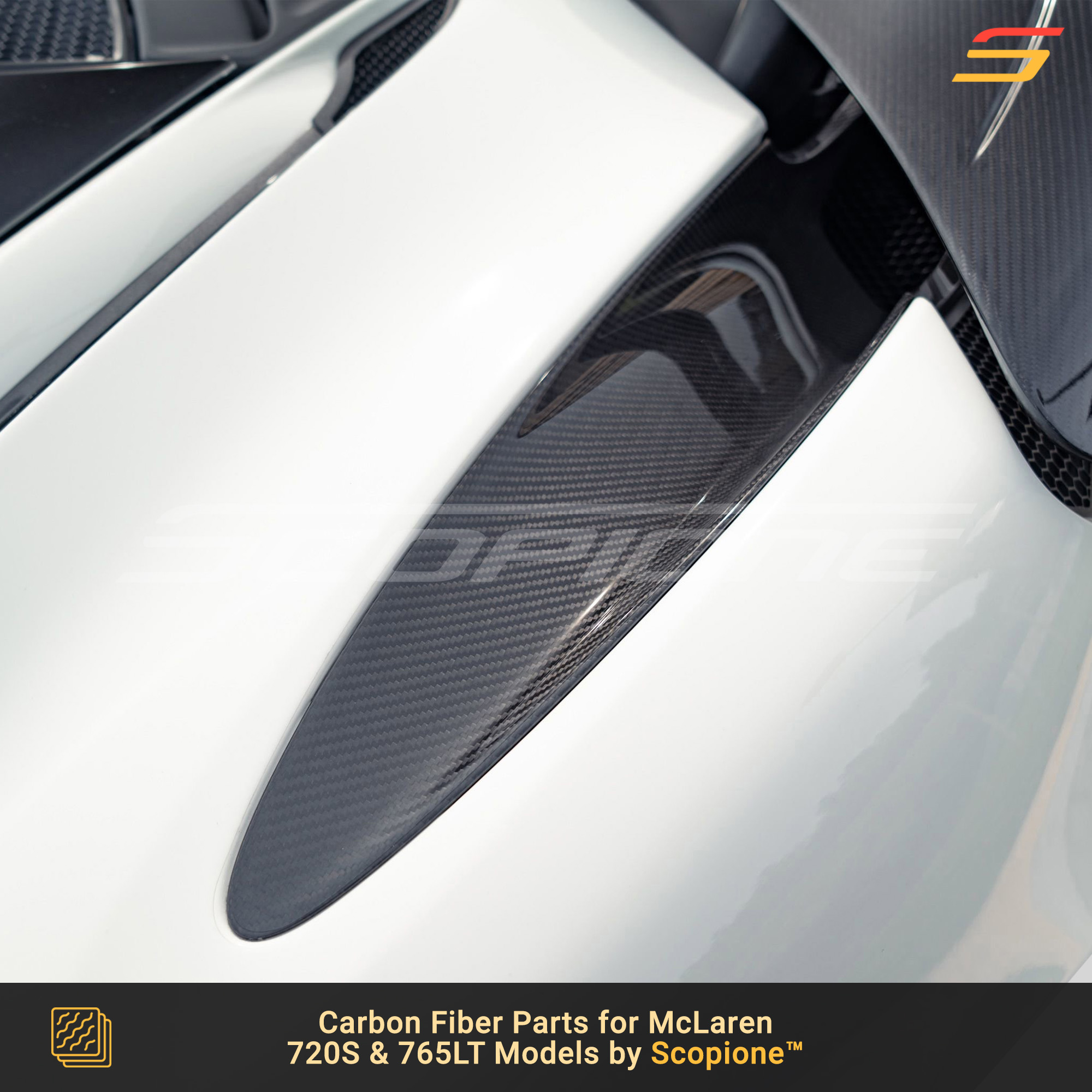
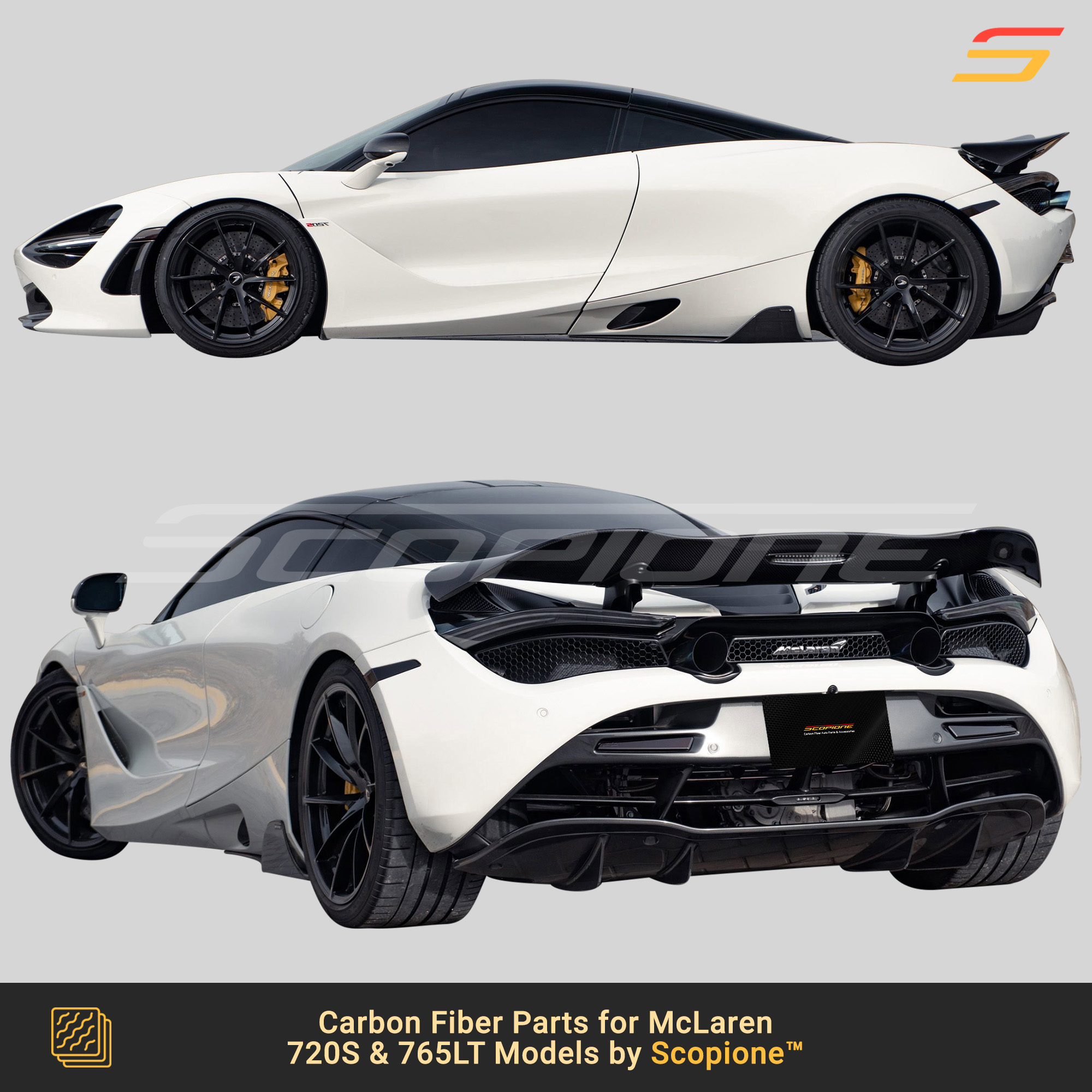
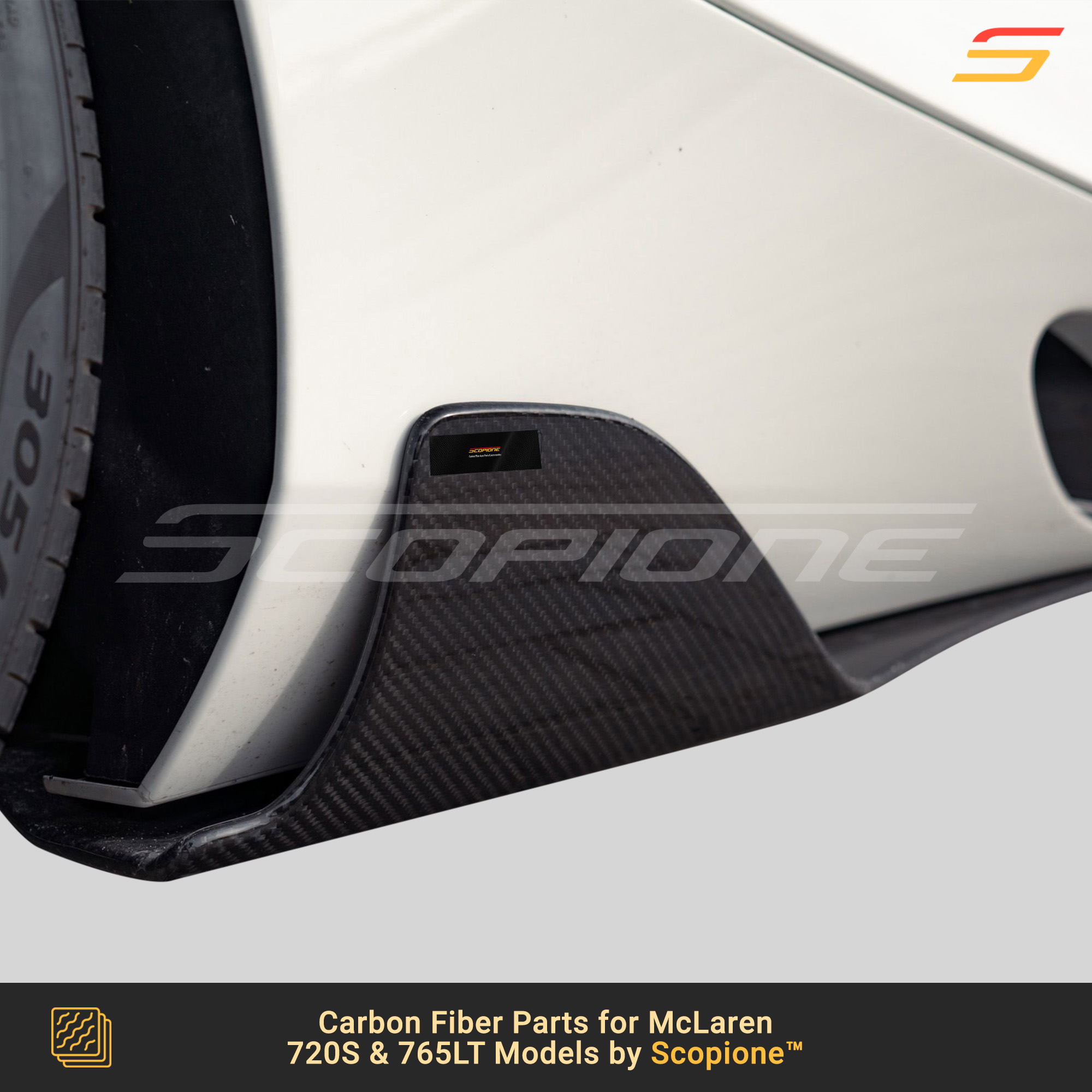
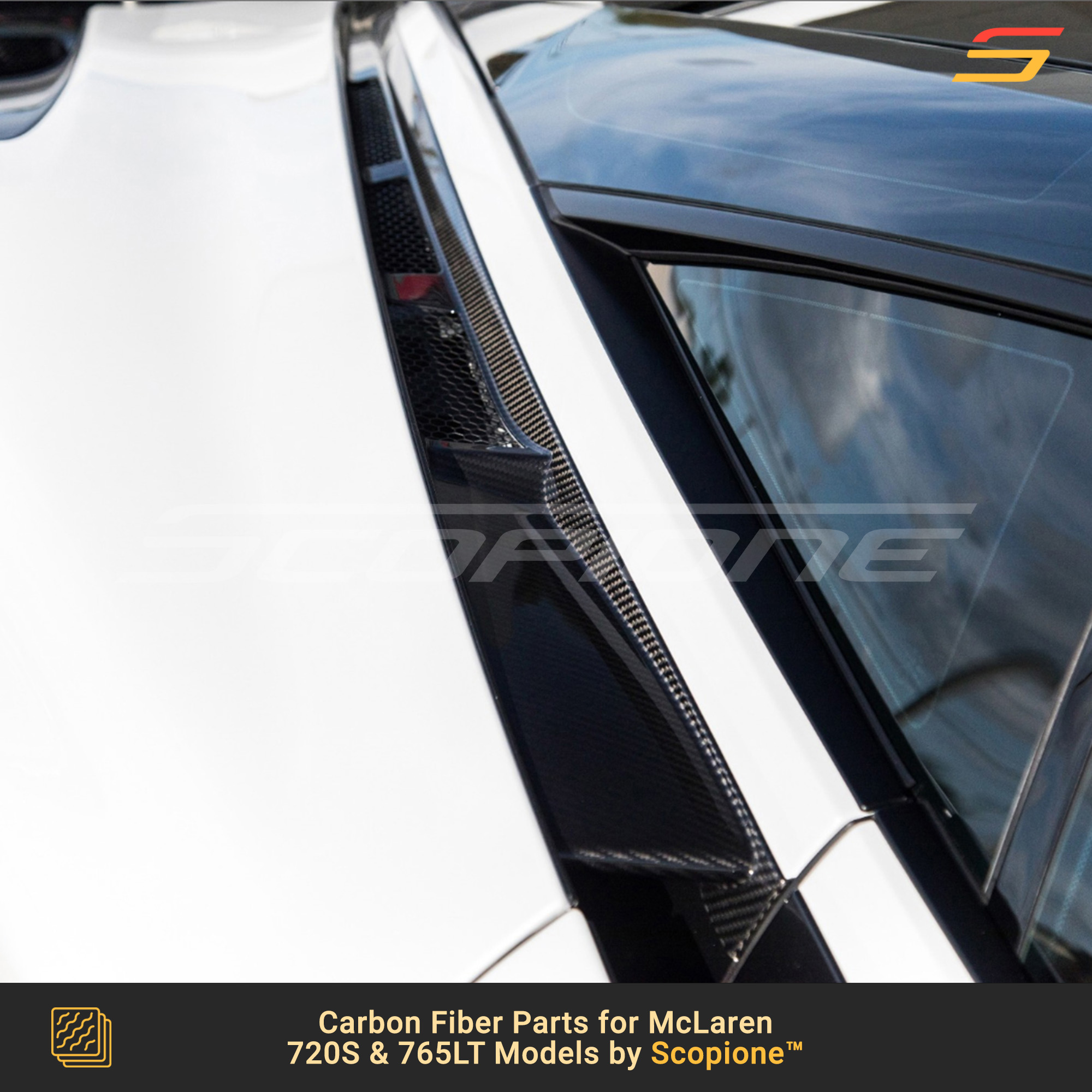
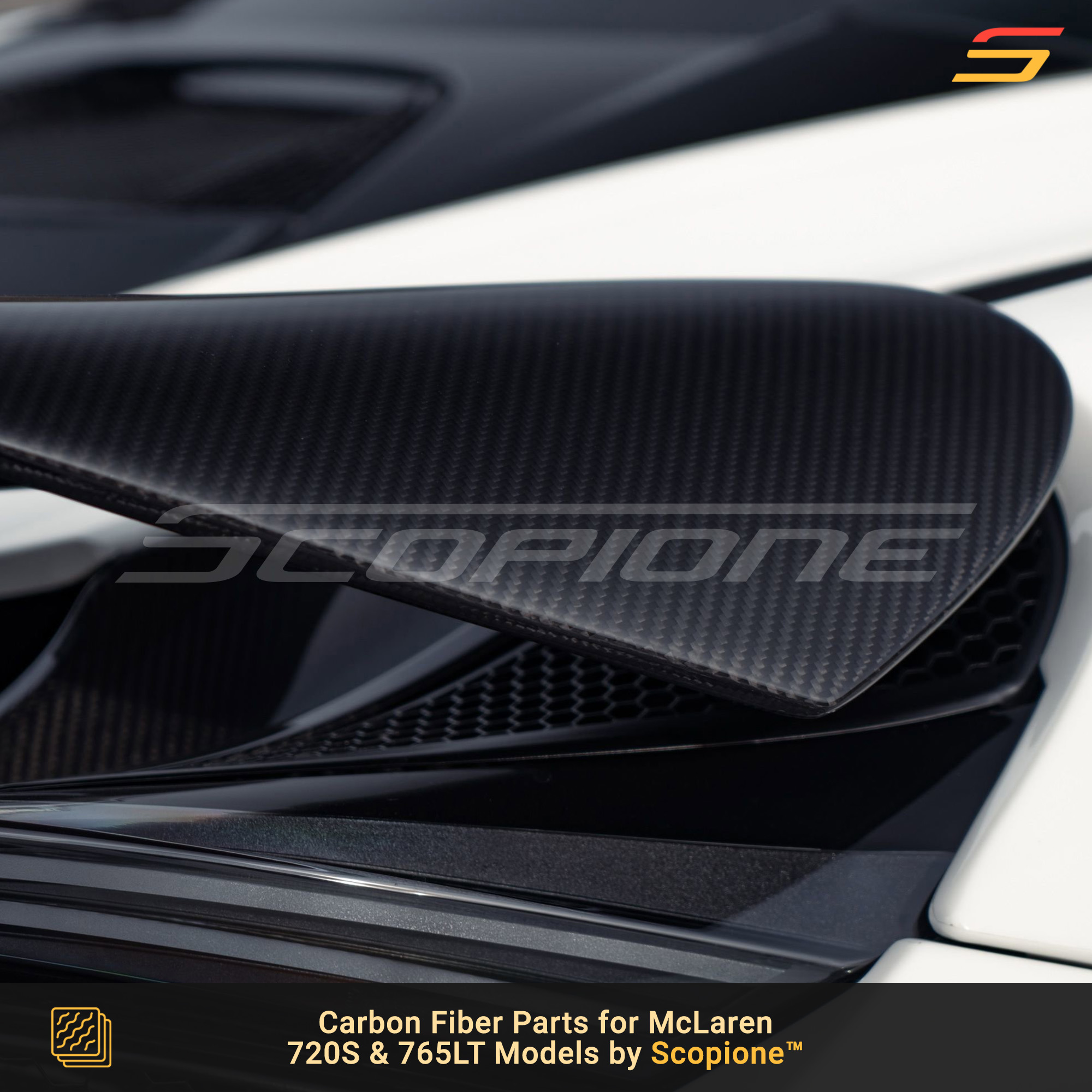
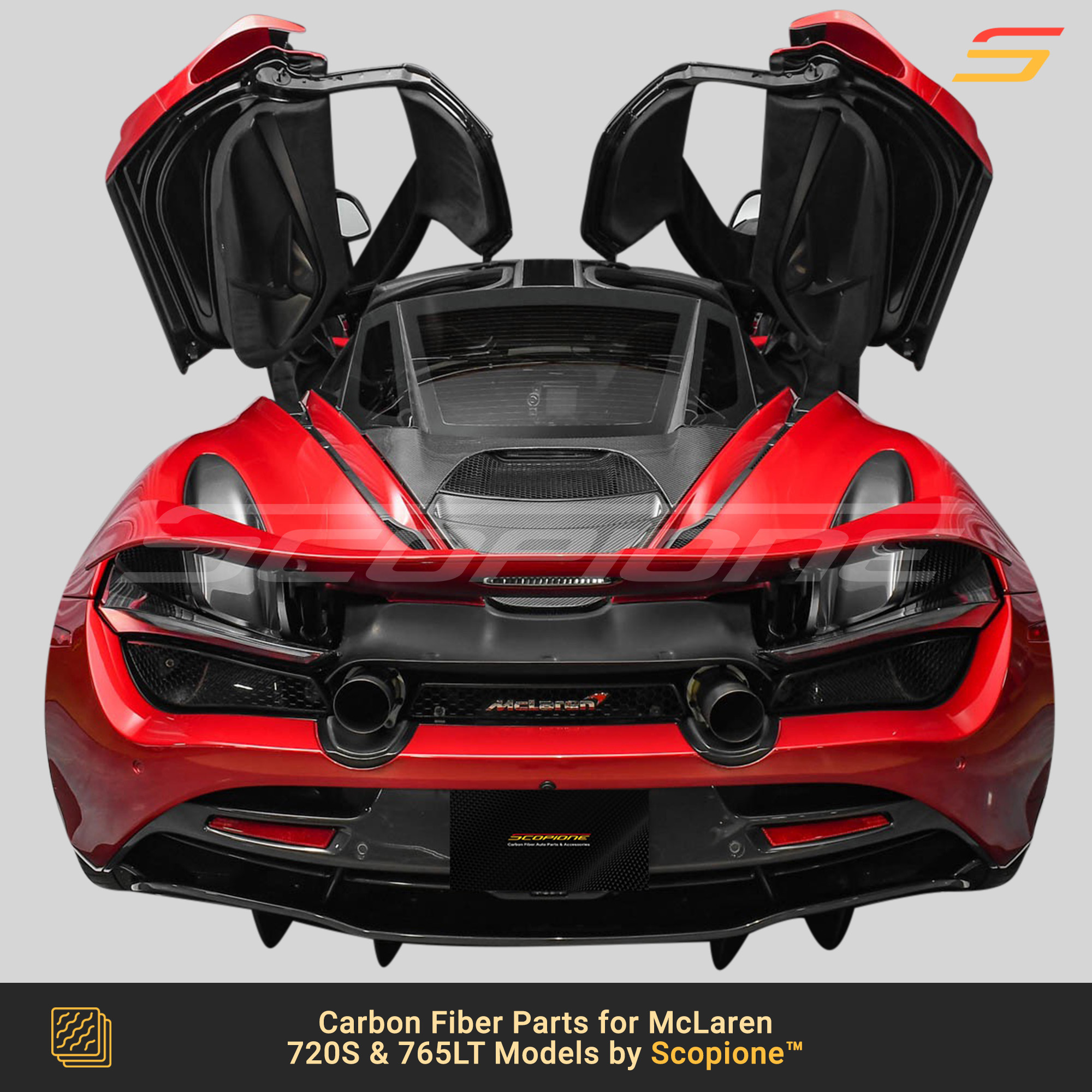
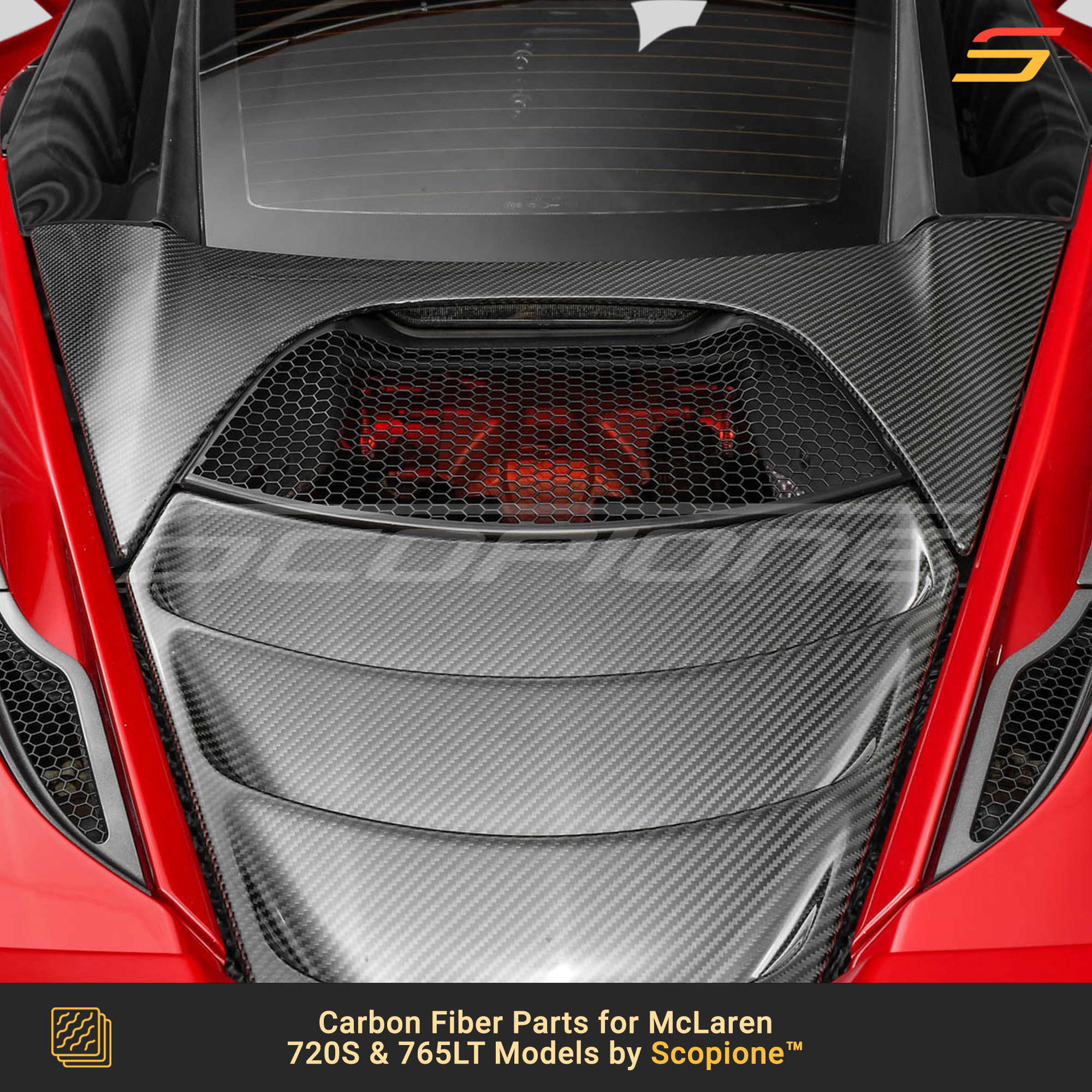
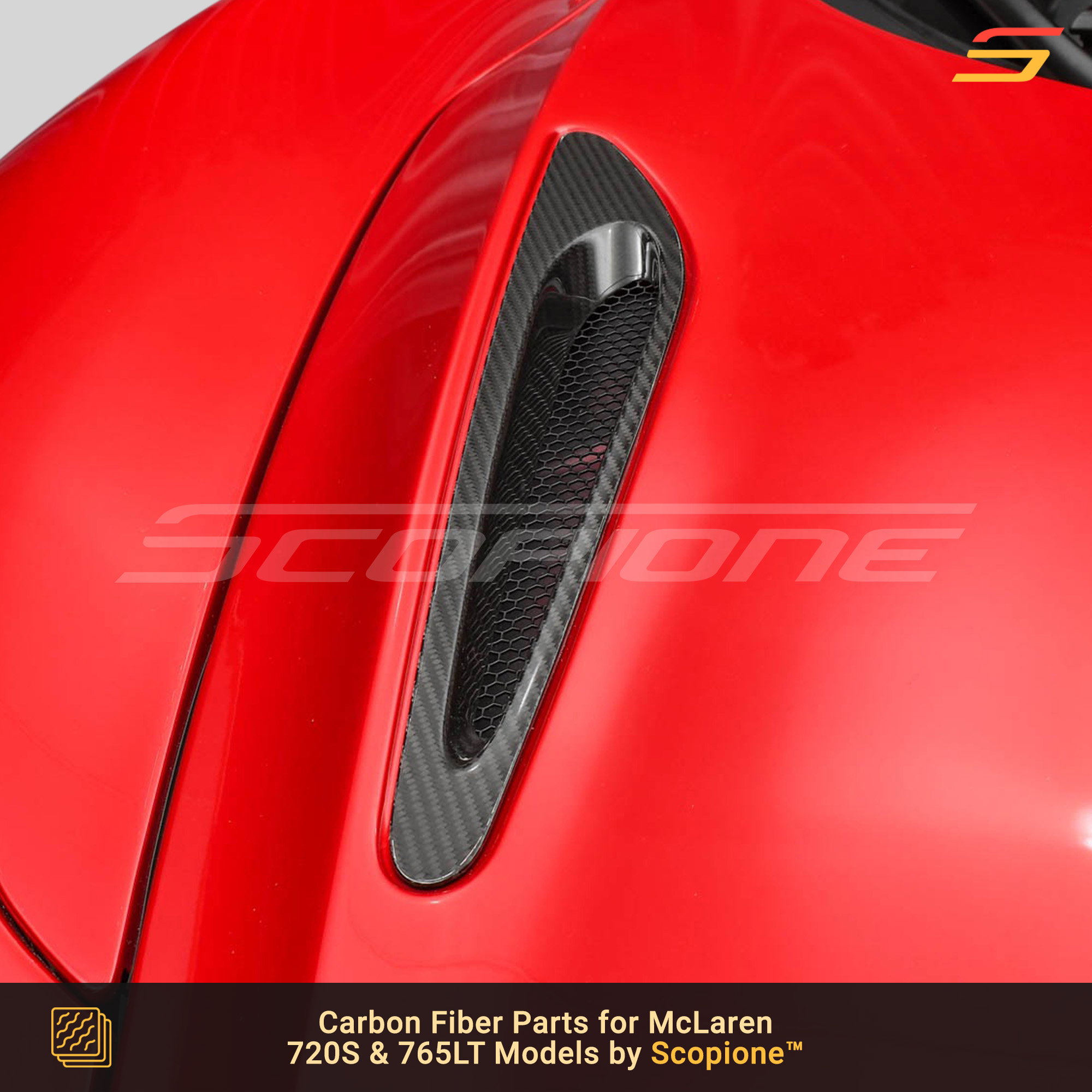
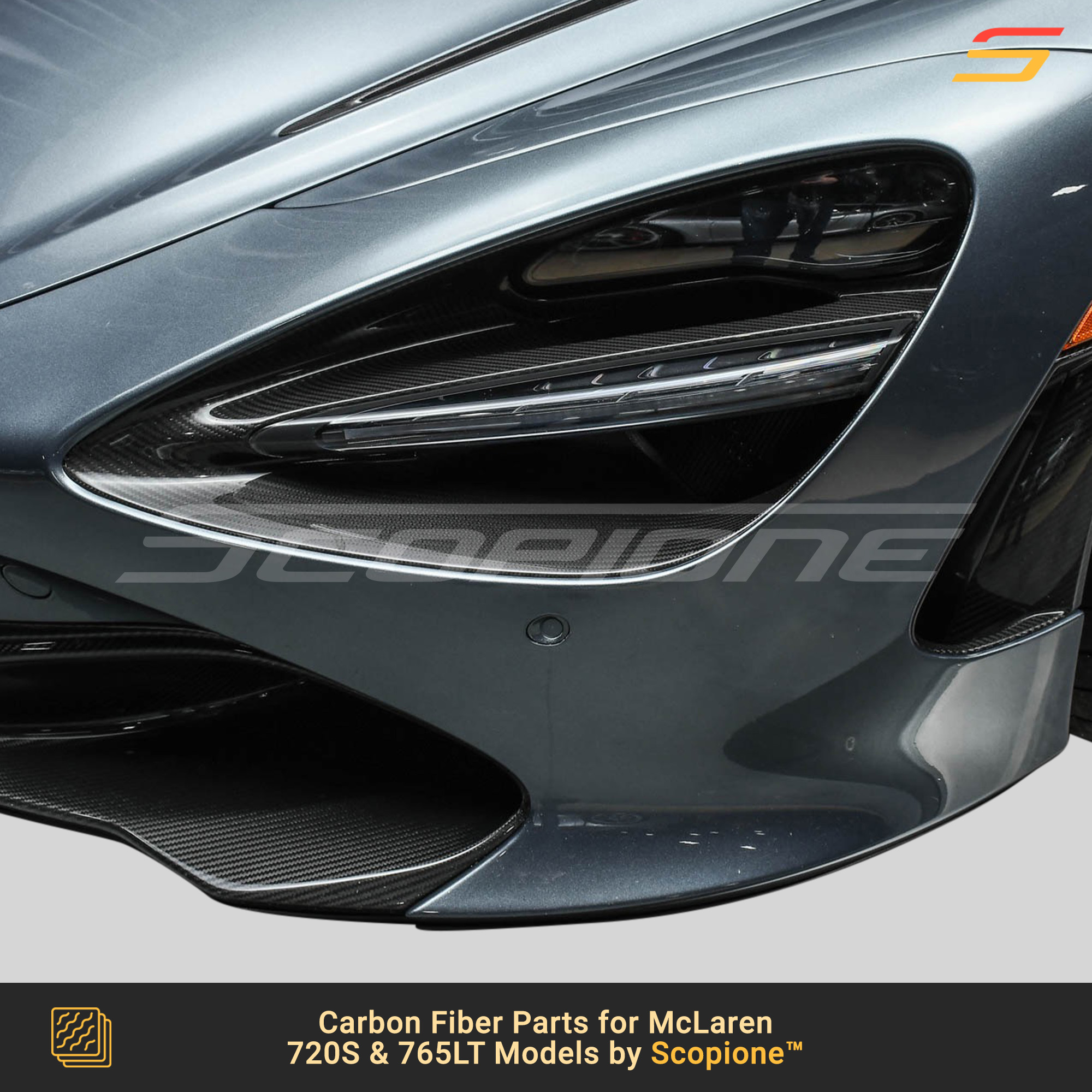
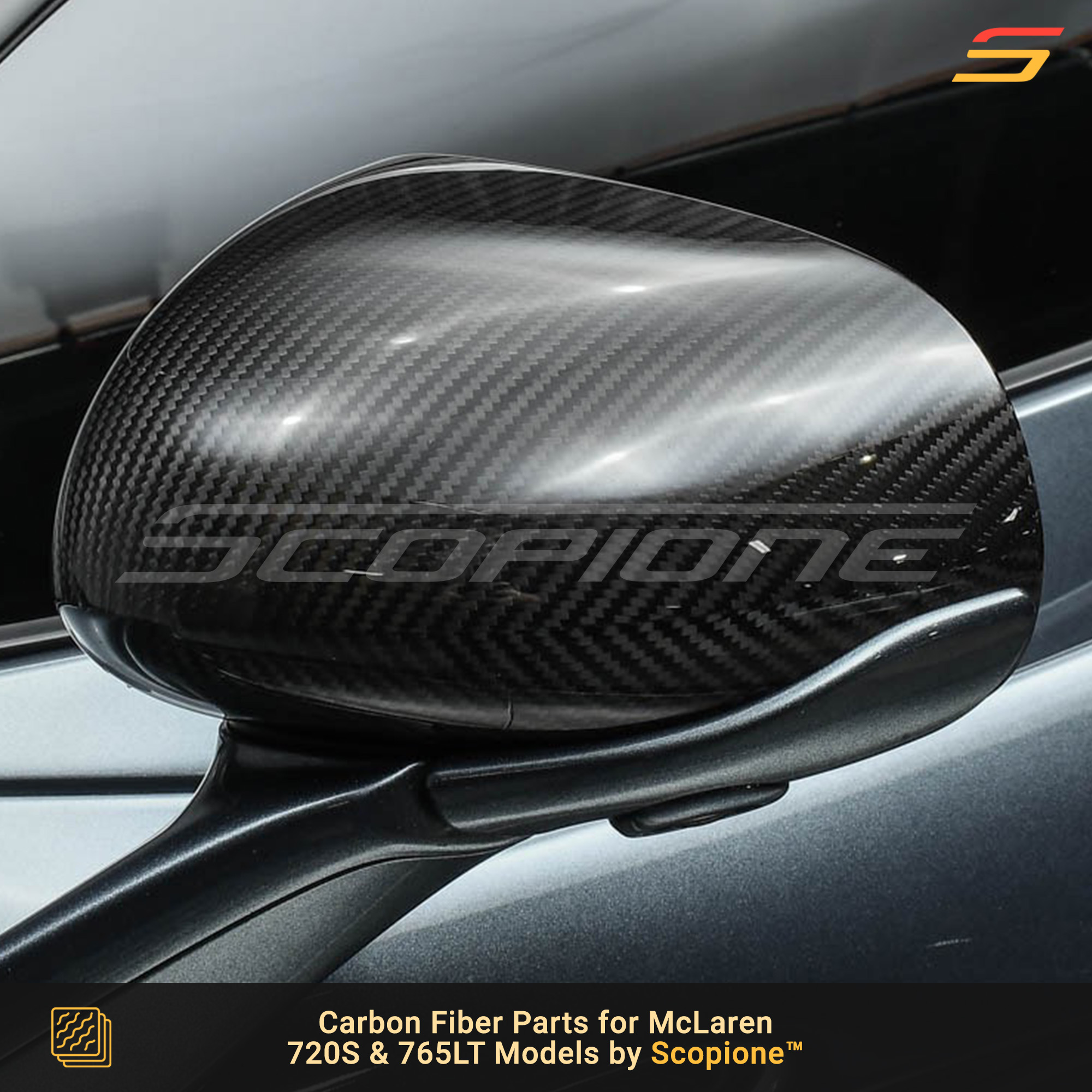
720S owners can find CF diffusers, spoiler wings, aero bridge panels, engine covers, and mirror shells on the Scopione McLaren carbon fiber catalog.
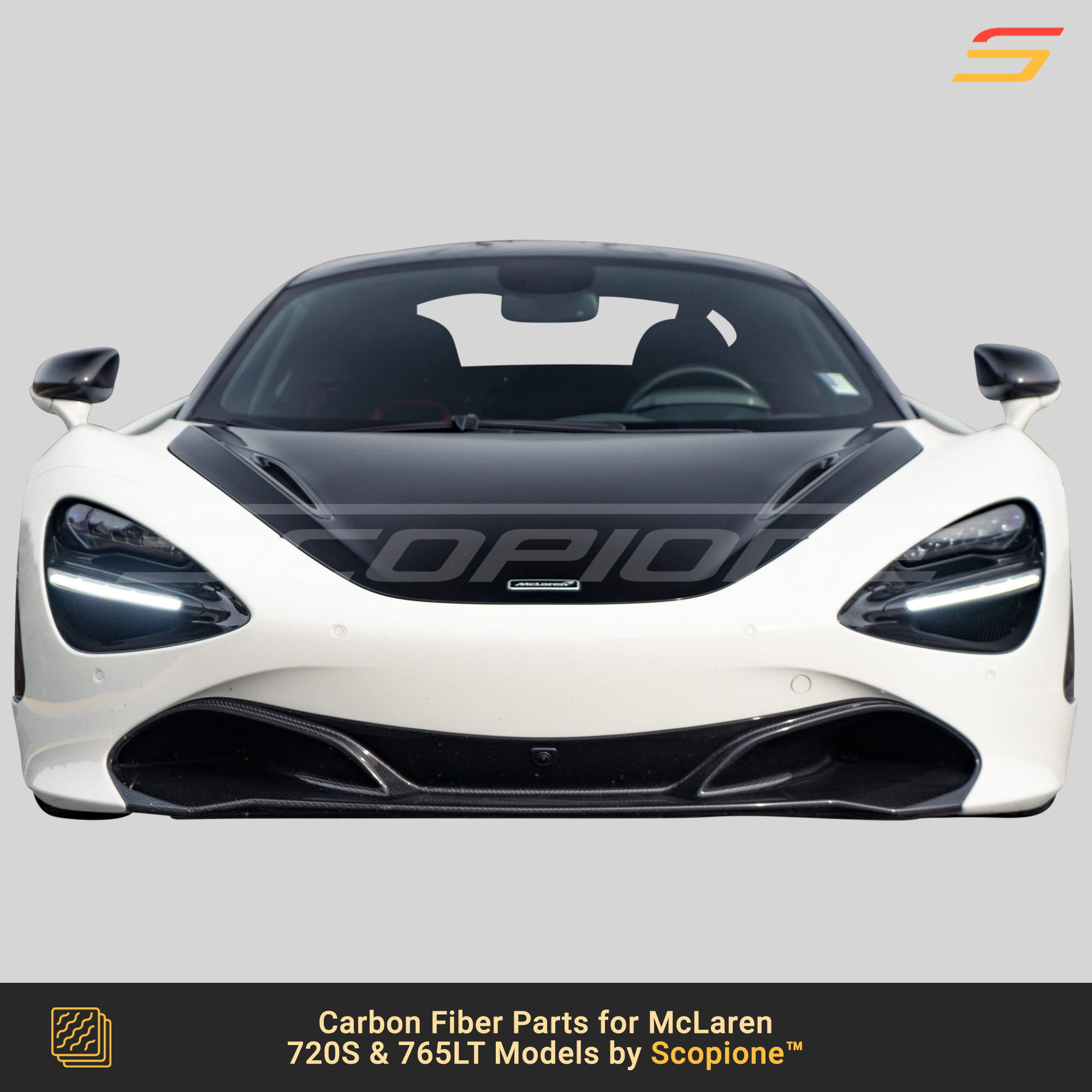
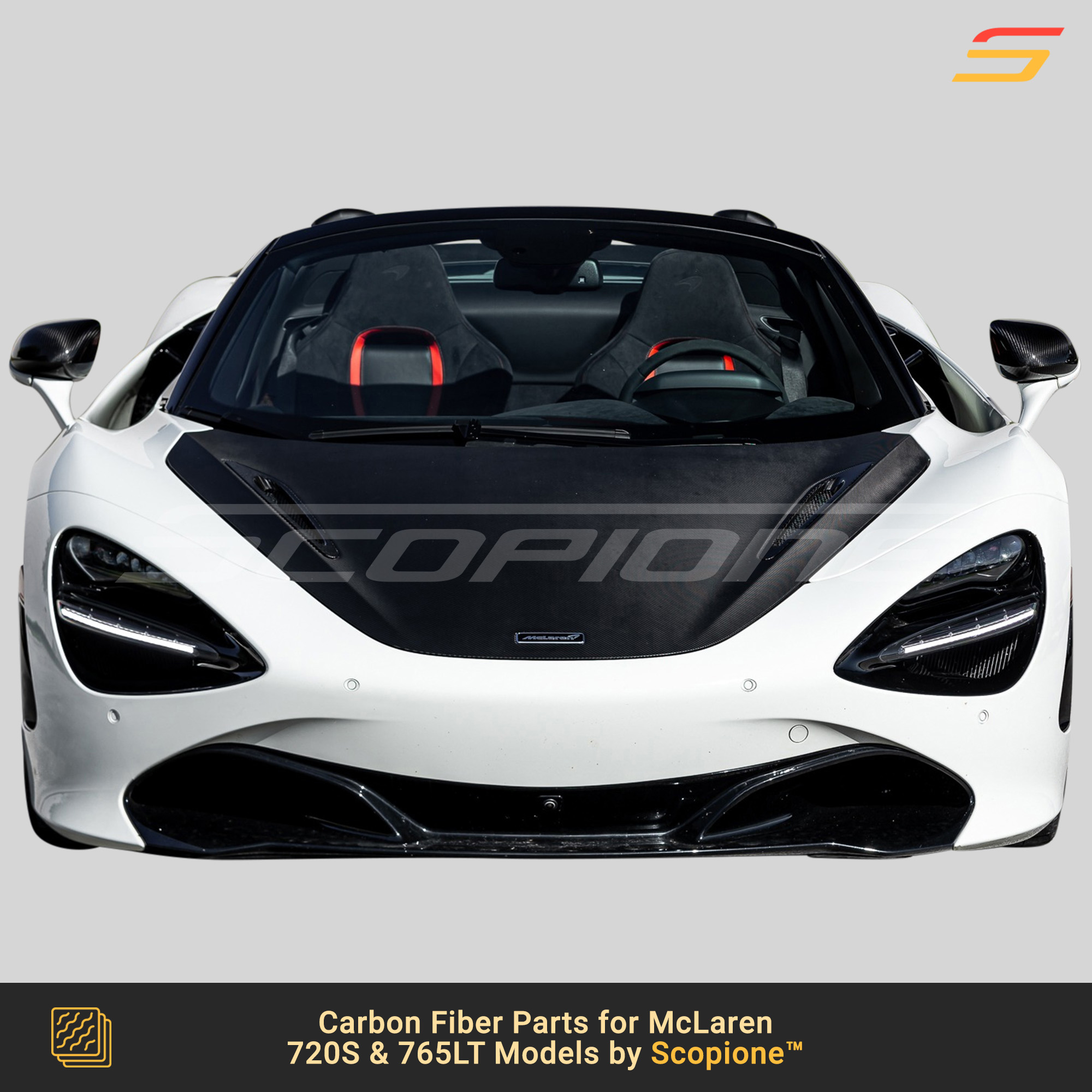







McLaren 765LT (2020–2022)
McLaren limited the 765LT to exactly 765 coupes and 765 spiders – 1,530 units total. Every allocation was pre-sold before production started. The M840T received revised turbocharger specifications, higher boost pressure, and recalibrated fueling to produce 755 hp (765 PS) at 7,500 rpm and 590 lb-ft. A quad-exit titanium exhaust system – 40% lighter than the 720S’s steel unit – reduced backpressure and contributed to the power increase. The three-layer carbon-fiber engine cover incorporated titanium heat shielding underneath.
Weight reduction was systematic. CF body panels replaced painted items across the car: front fenders, bumper, side skirts, rear bumper, extended rear deck, and active rear wing. Polycarbonate replaced the glass rear window. Carbon racing seats came standard. The result: 1,229 kg dry for the coupe. McLaren cites an 80 kg saving over a comparably equipped 720S – the gap narrows when both cars are in their lightest specifications, but the LT still strips meaningful mass through material substitution alone. Track-focused spring rates stiffened by 5% at the front and 20% at the rear. Front track widened 6 mm. Pirelli P Zero Trofeo R tires from the factory. 0–60 in 2.7 seconds, 330 km/h (205 mph) top speed.
The 765LT Spider followed in 2021 on the Monocage II-S, carrying the same Longtail bodywork, titanium exhaust, and 755 hp specification. It weighed 1,269 kg dry – 40 kg heavier than the coupe – with the retractable hardtop and a CF tonneau cover behind the seats. And where the Lamborghini Aventador SVJ targeted the same limited-production collector bracket with naturally aspirated V12 theatrics, the 765LT answered with engineering density: more power from fewer cylinders at significantly lower curb weight.
- 765LT Coupe (2020–2021, 765 built) – 755 hp M840T, 1,229 kg dry. Quad-exit titanium exhaust, CF body panels, polycarbonate rear window, carbon racing seats. Longtail rear bodywork with active wing. 2.7 seconds to 60 mph, 205 mph top speed.
- 765LT Spider (2021–2022, 765 built) – Convertible Longtail at 1,269 kg dry with a CF tonneau cover behind the seats. Full 755 hp LT specification, quad-exit titanium exhaust, identical bodywork to the coupe. 0–62 in 2.8 seconds, 0–124 in 7.2 seconds.
McLaren 765LT MSRP
| Model | Base MSRP (USD) | Inflation-Adjusted (2024) |
|---|---|---|
| 765LT Coupe (2021) | $358,000 | ~$430,000 |
| 765LT Spider (2022) | $382,500 | ~$435,000 |
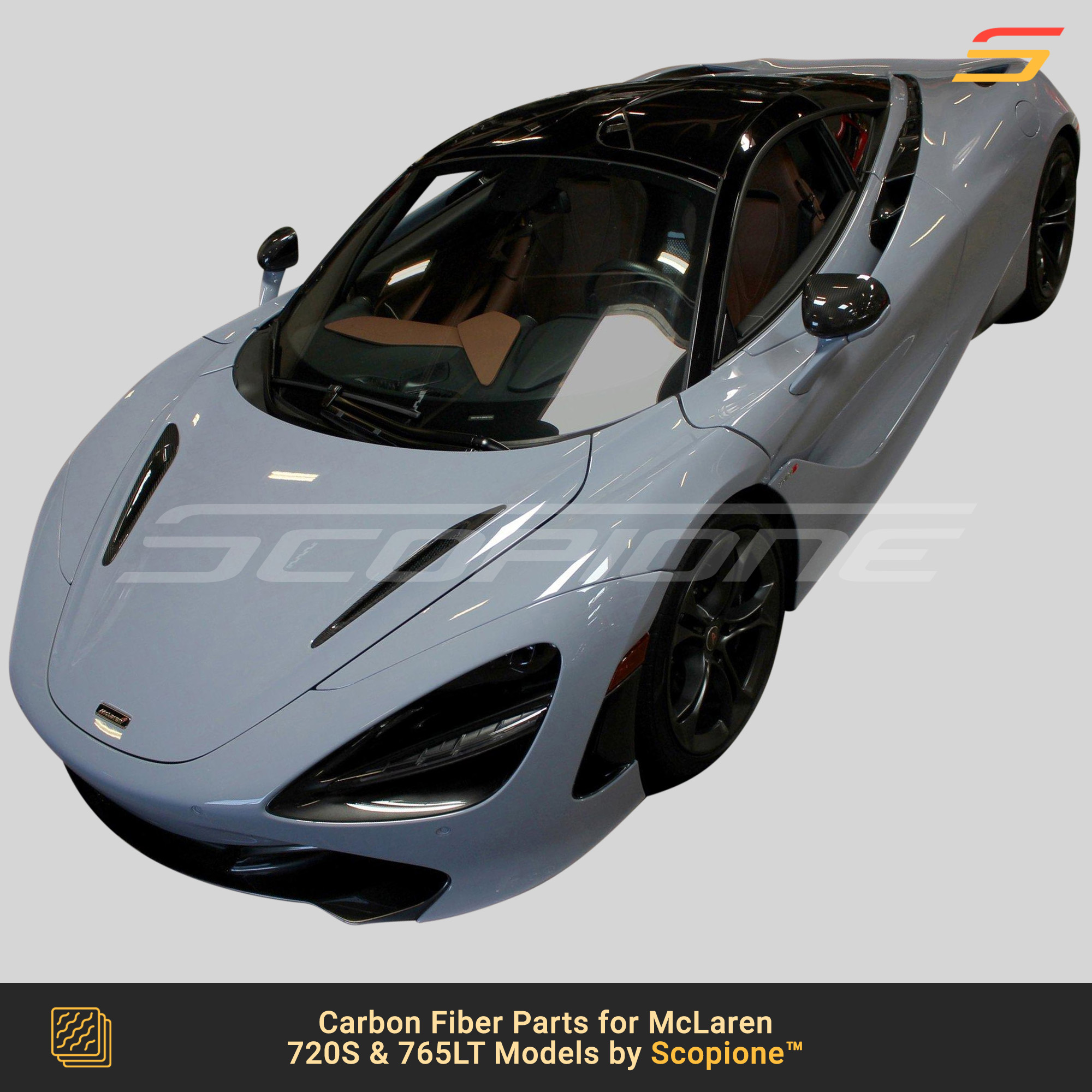
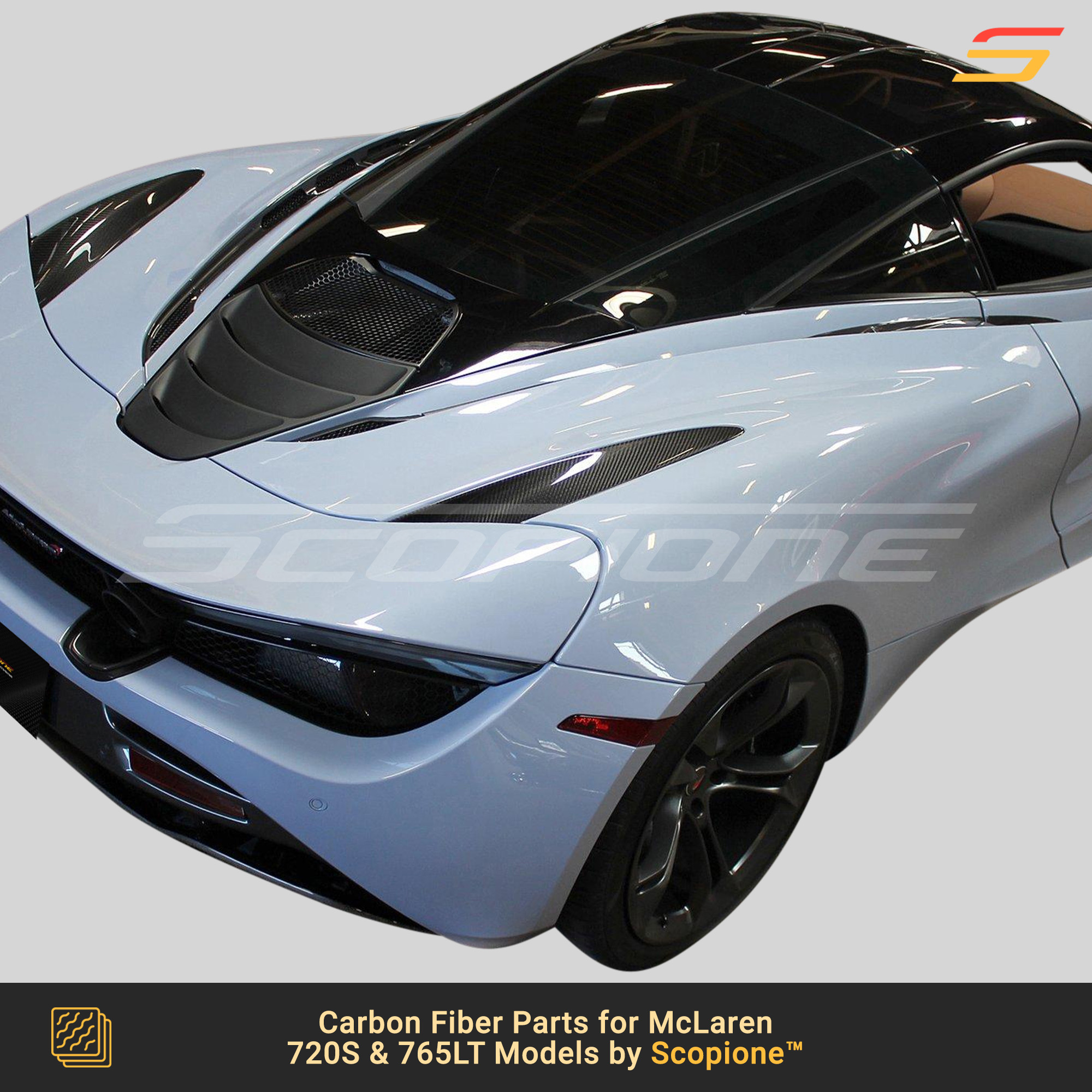
Scopione lists diffusers, door sills, aero bridge components, and engine bay covers that fit both the 720S and 765LT – browse 720S and 765LT carbon-fiber parts on the Scopione McLaren shop.



McLaren 750S (2023–Present)
The 750S replaced the 720S in 2023 as McLaren’s final non-hybrid Super Series car. The M840T received further calibration refinements: 740 hp (750 PS) at 7,500 rpm, 590 lb-ft, a lighter flywheel for sharper throttle response. McLaren positions the 750S as 30 hp more and up to 30 kg less than the 720S in comparable trim. Dry weight sits at 1,277 kg for the lightest coupe, 1,326 kg for the Spider.
Visual changes drew from the 765LT. A longer front splitter, a 20% larger carbon-fiber active rear wing, new rear wheel-arch vents, and a P1-tribute center-exit exhaust distinguished it from the 720S, with a revised rear diffuser refining the aerodynamic profile. The updated PCC II suspension calibration incorporated lessons from the 765LT’s track-focused tuning. Performance figures: 2.7 seconds to 60 mph, 332 km/h (206 mph) top speed. But the 750S’s broader significance sits beyond its spec sheet – as the last McLaren Super Series without hybrid assistance, it closes a chapter that began with the MP4-12C in 2011.
- 750S Coupe (2023–present) – 740 hp, 1,277 kg dry. Longer splitter, 20% larger rear wing, center-exit exhaust, updated PCC II calibration. McLaren’s last ICE-only Super Series model.
- 750S Spider (2023–present) – Retractable hardtop at 1,326 kg dry. Carries the 740 hp output and updated styling elements from the coupe, with the proven Monocage II-S open-top architecture.
McLaren 750S MSRP
| Model | Base MSRP (USD) | Inflation-Adjusted (2024) |
|---|---|---|
| 750S Coupe (2024) | $329,500 | ~$350,000 |
| 750S Spider (2024) | $350,500 | ~$372,000 |
Scopione’s McLaren catalog includes parts that fit the 750S alongside the 720S and 765LT – find model-specific carbon fiber parts on the Scopione McLaren page.
Carbon Fiber on the 720S, 765LT & 750S
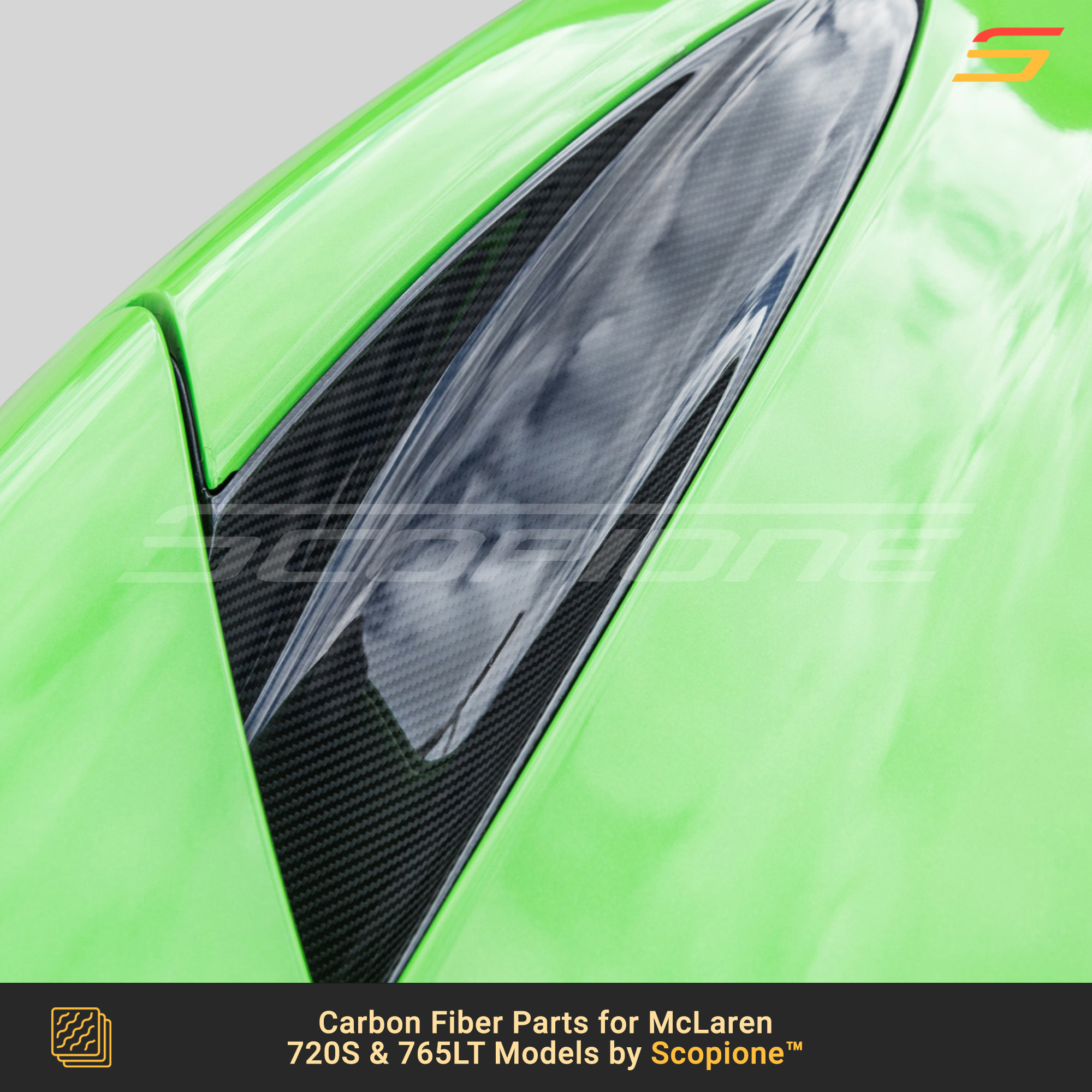
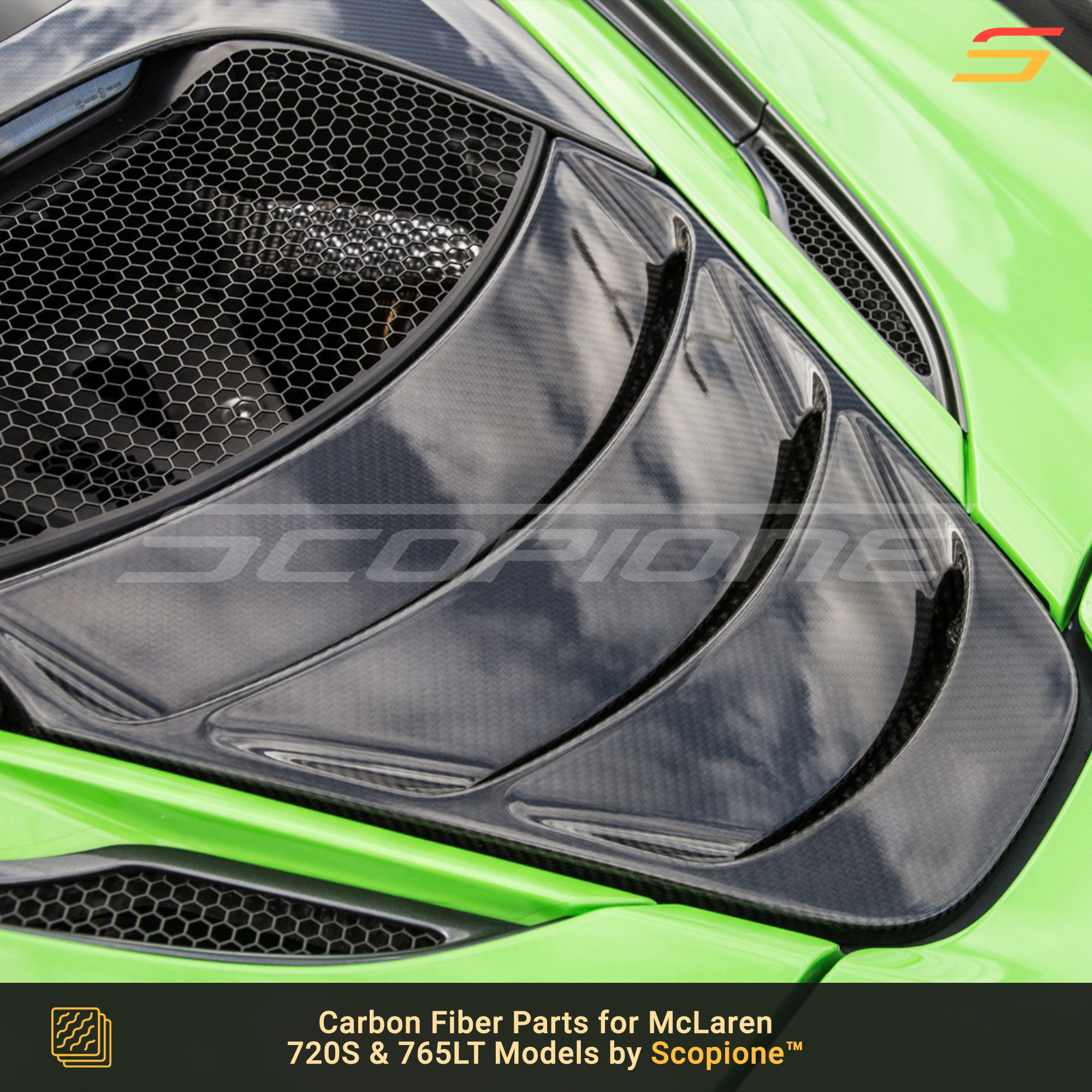
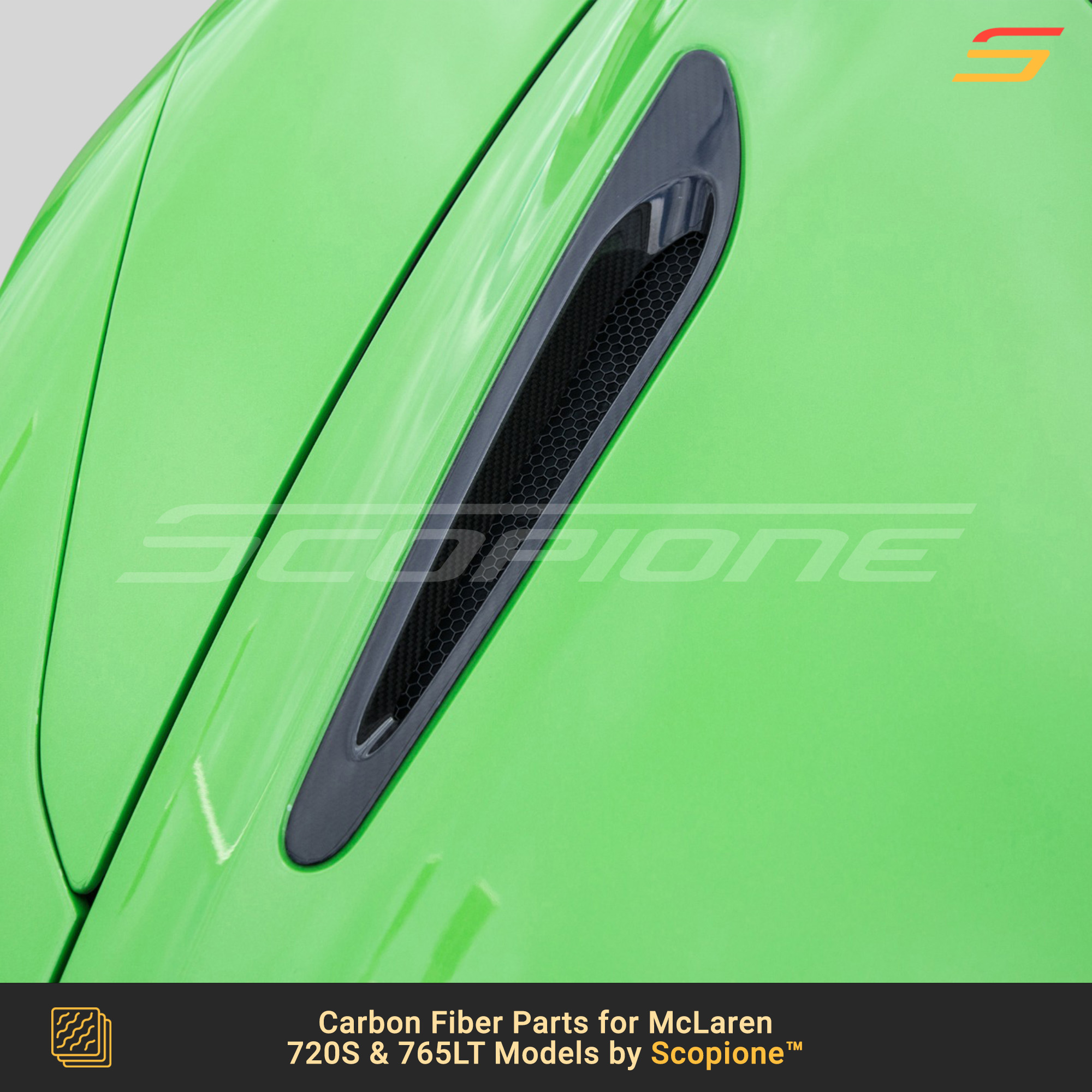
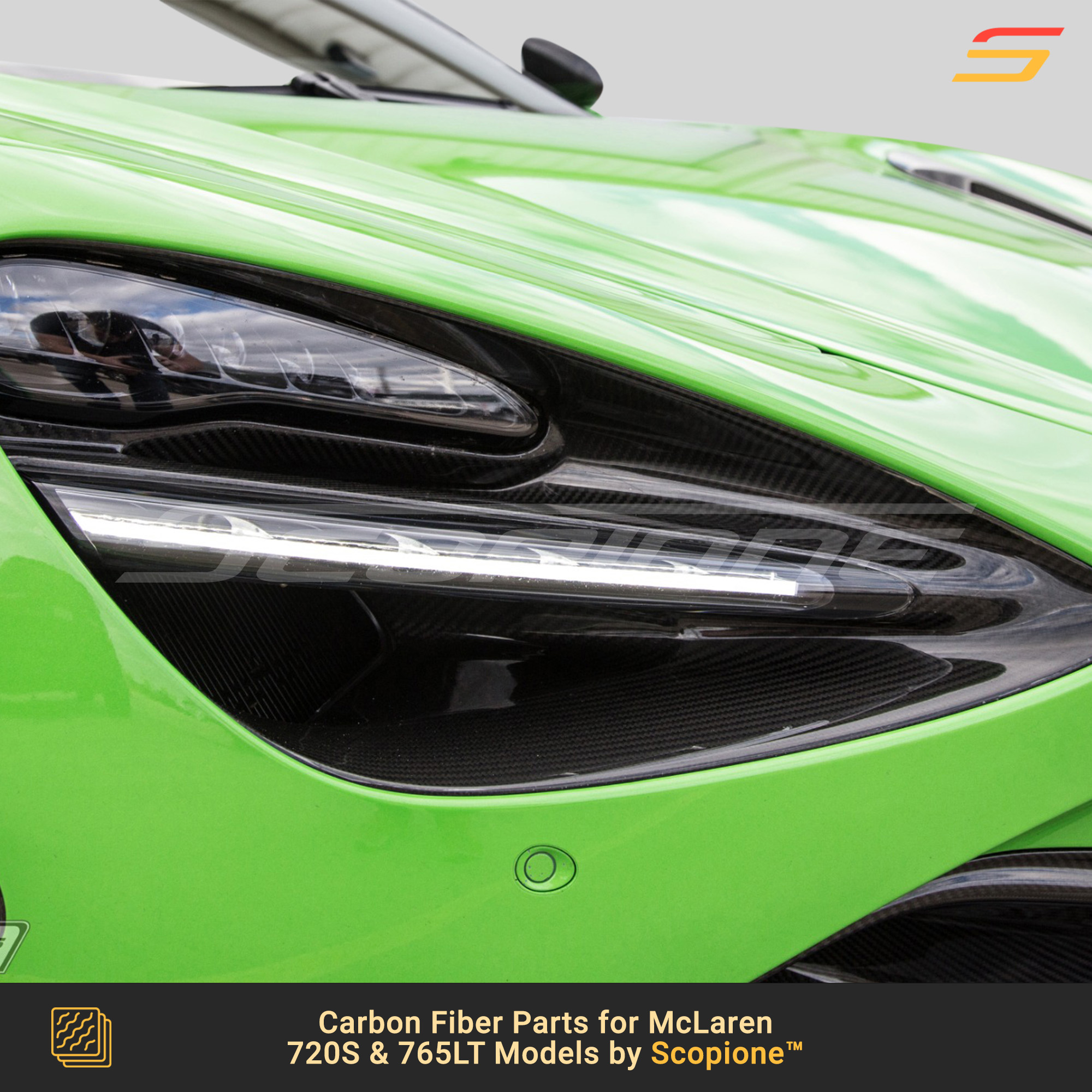
The Monocage II chassis means every 720S, 765LT, and 750S is a carbon fiber car at its structural core. The tub, roof, A-pillars, windscreen surround, and floor structure are all carbon composite – produced as a single piece rather than bonded from separate panels. On the 765LT, McLaren extended CF further: front fenders, bumper, side skirts, rear deck extension, active wing, and polycarbonate rear glazing. These cars do not need aftermarket carbon fiber for structural benefit. They already have it where it counts. Aftermarket CF on the 720S platform addresses two purposes: visual presentation of exposed twill-weave surfaces and weight reduction on specific bolt-on panels that the factory finishes in paint.
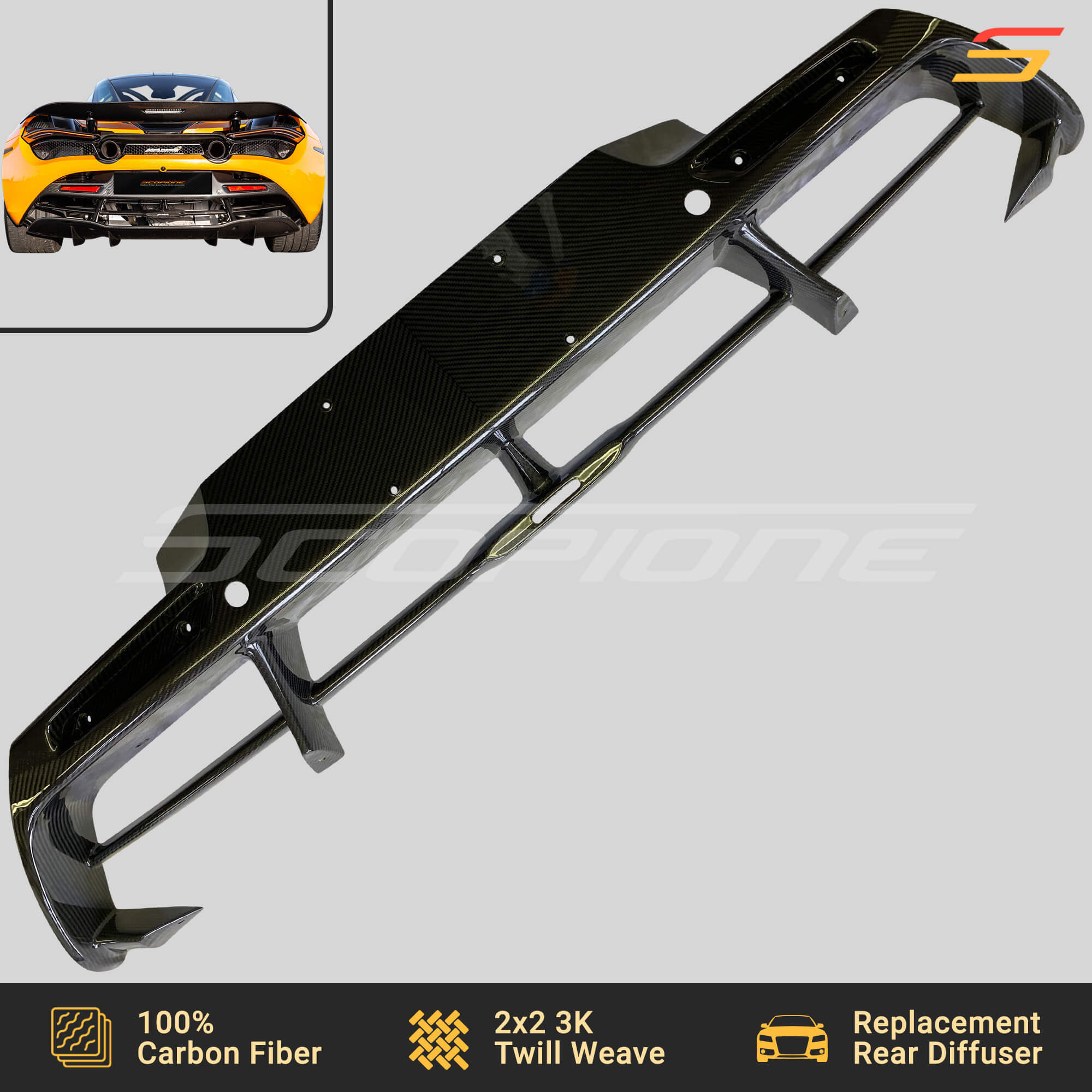
The 720S offers more distinct carbon-fiber mounting surfaces than any previous McLaren road car. The aero bridge – a pair of channels running from roof-mounted snorkel intakes to the engine bay – provides two visible panels sitting above the engine cover line. Door sills catch light every time the dihedral doors rise. And the rear end provides the largest canvas: a lower diffuser spanning the full bumper width, an upper diffuser section above the exhaust outlets, and the rear spoiler wing. The McLaren Sports Series (540C/570S/570GT/600LT) shares the dihedral door design and CF modification philosophy, but Super Series and Sports Series panels are not interchangeable – the Monocage II’s wider body and different aerodynamic surfaces require dedicated tooling for each platform.
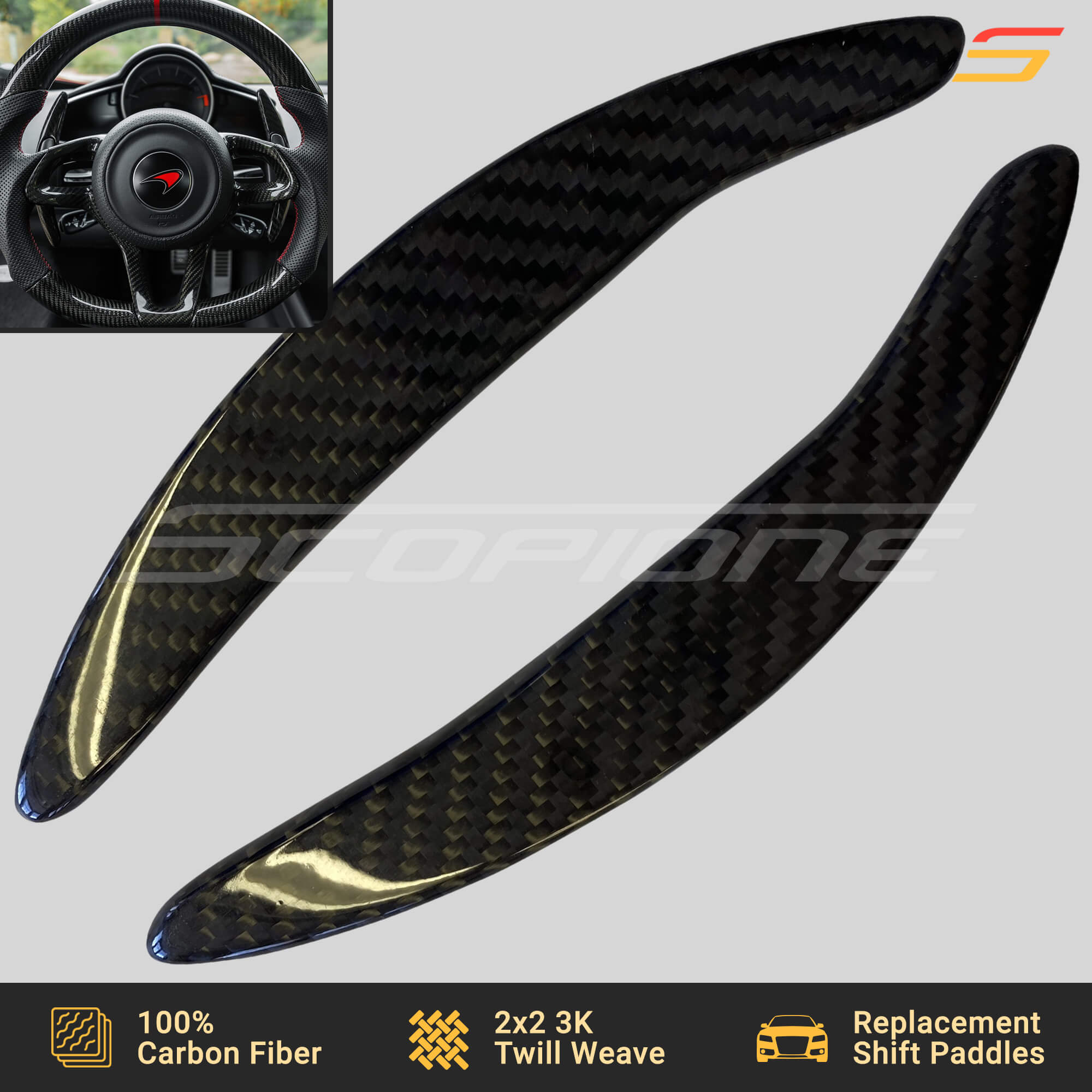
Installation complexity varies by component. Mirror shells and shift paddles are direct swaps – under an hour total. Engine covers and deck panels require careful removal of the rear clamshell following McLaren’s fastener-specific disassembly sequence. Diffuser panels and side skirts are bolt-on replacements at factory mounting points. The full twenty-one-piece catalog represents approximately 15–20 hours of shop time across all components, depending on the installer’s familiarity with McLaren rear body removal.
Scopione’s carbon-fiber lineup for the 720S, 765LT, and 750S includes seventeen exterior aero panels, three engine bay components, and one cockpit accent – view available parts by model fitment.

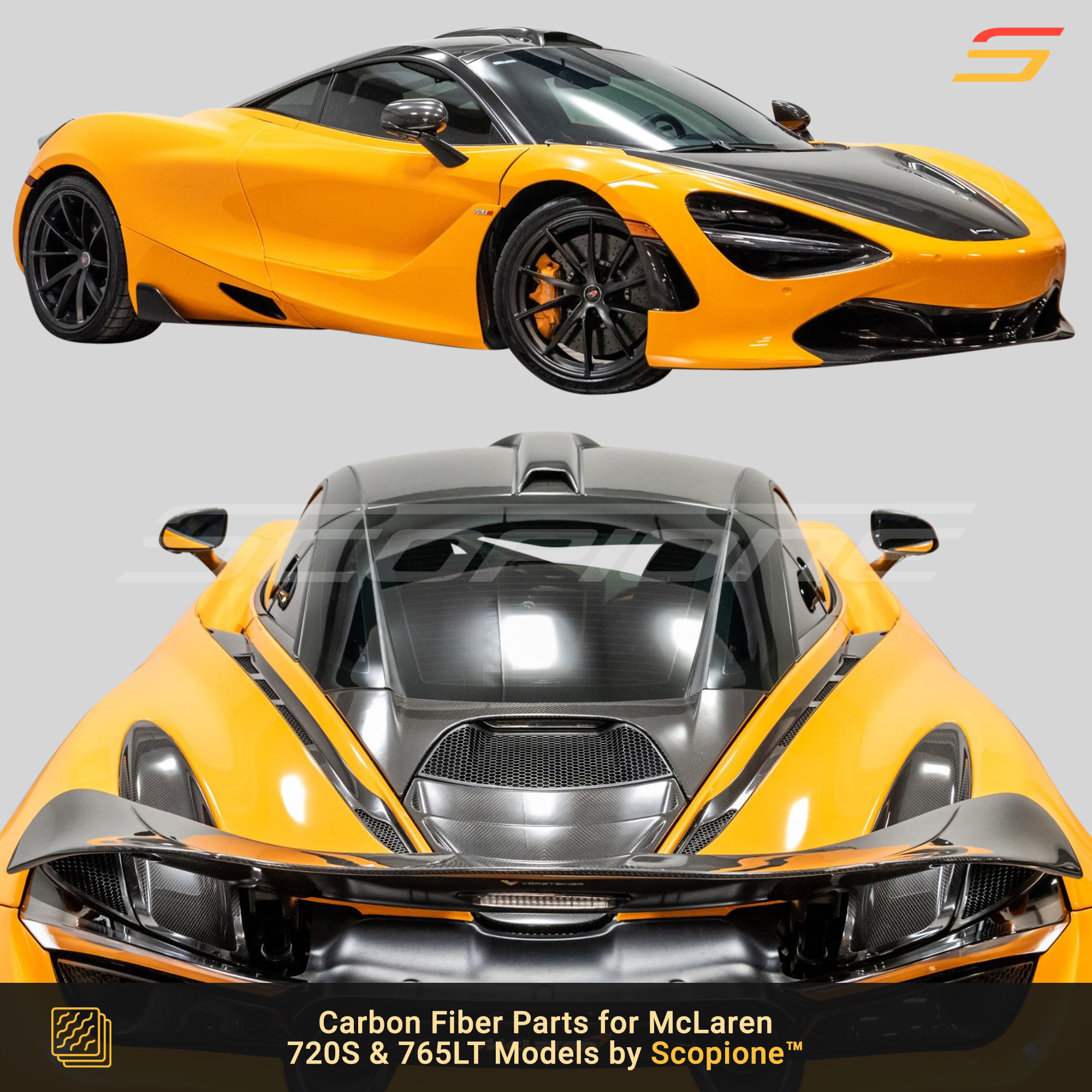
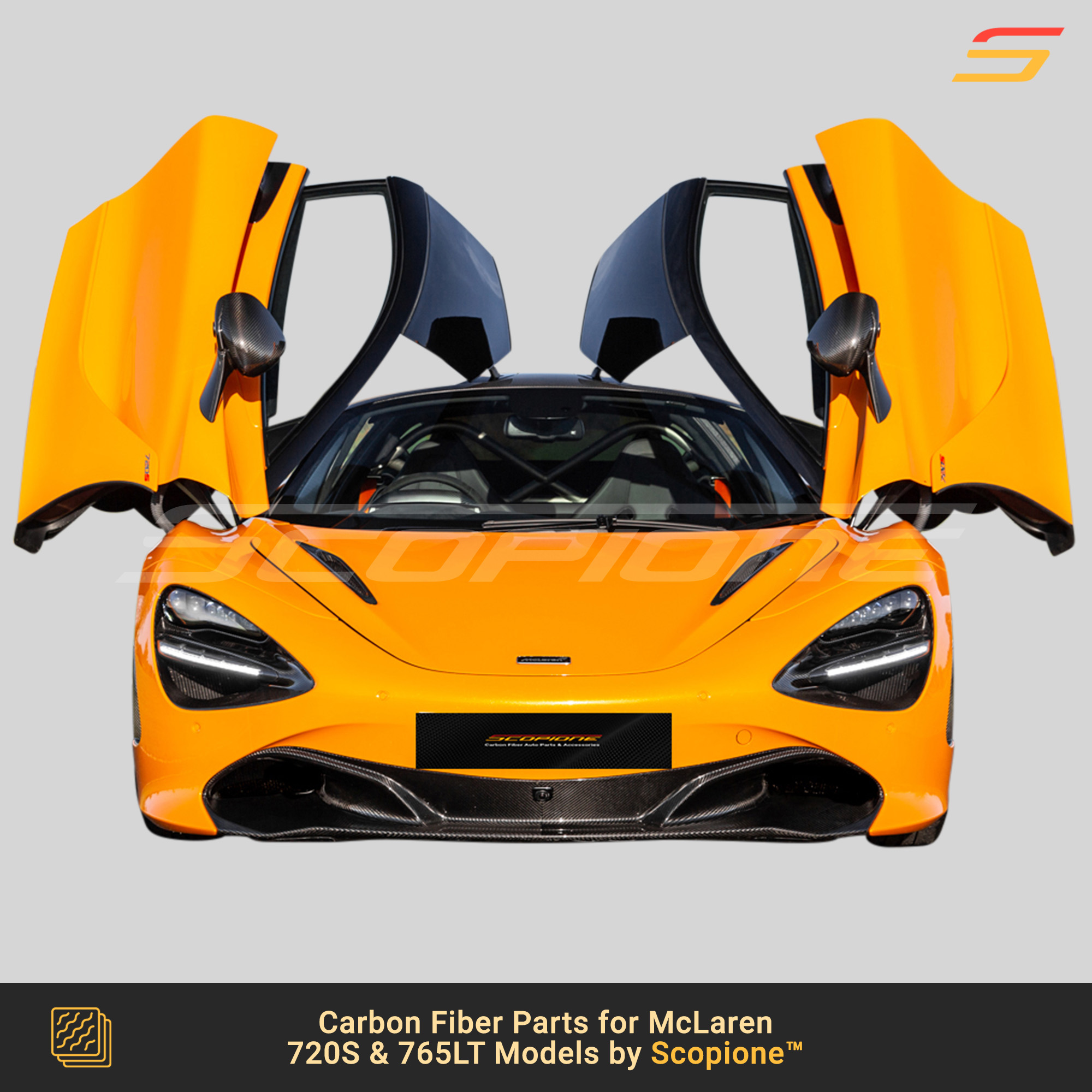
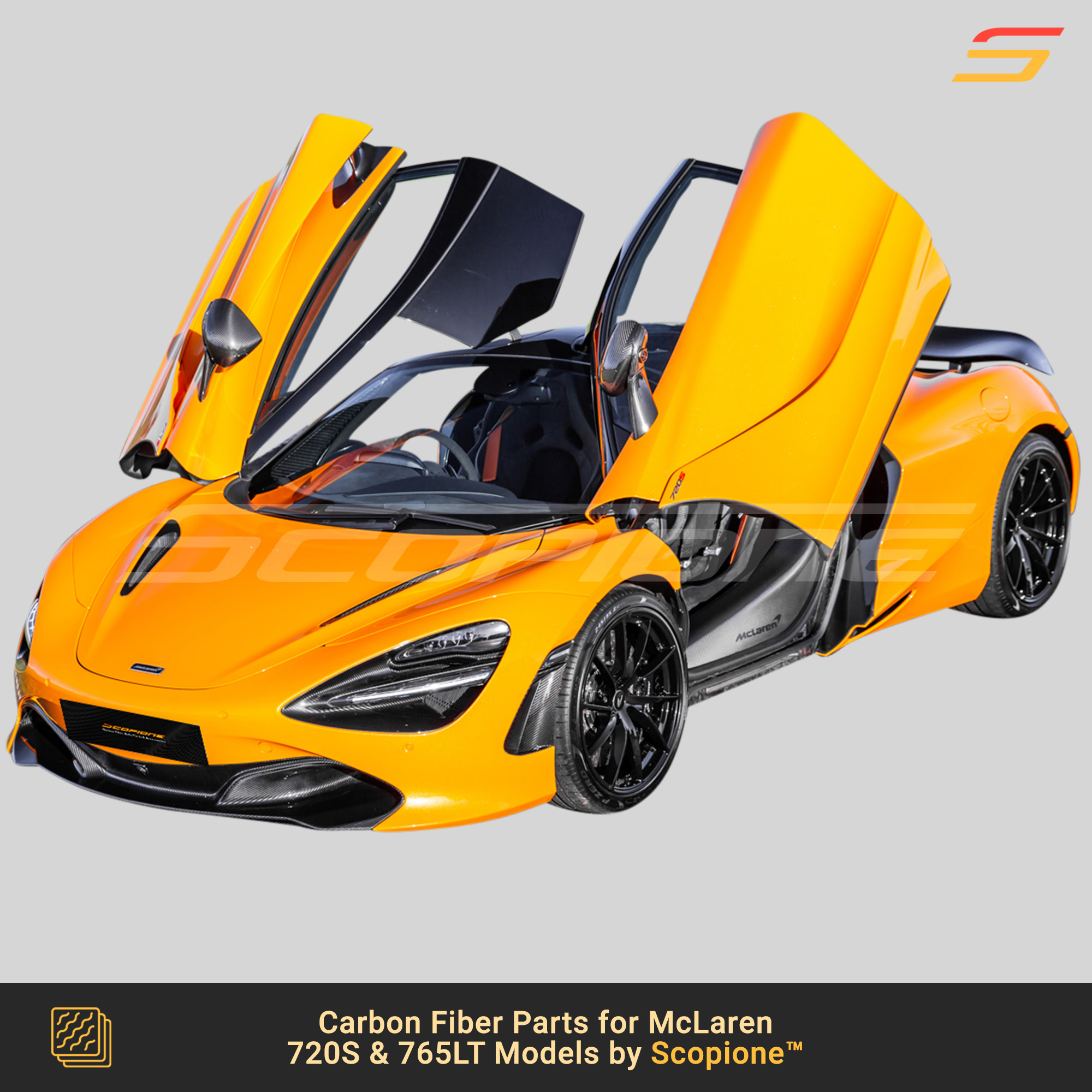
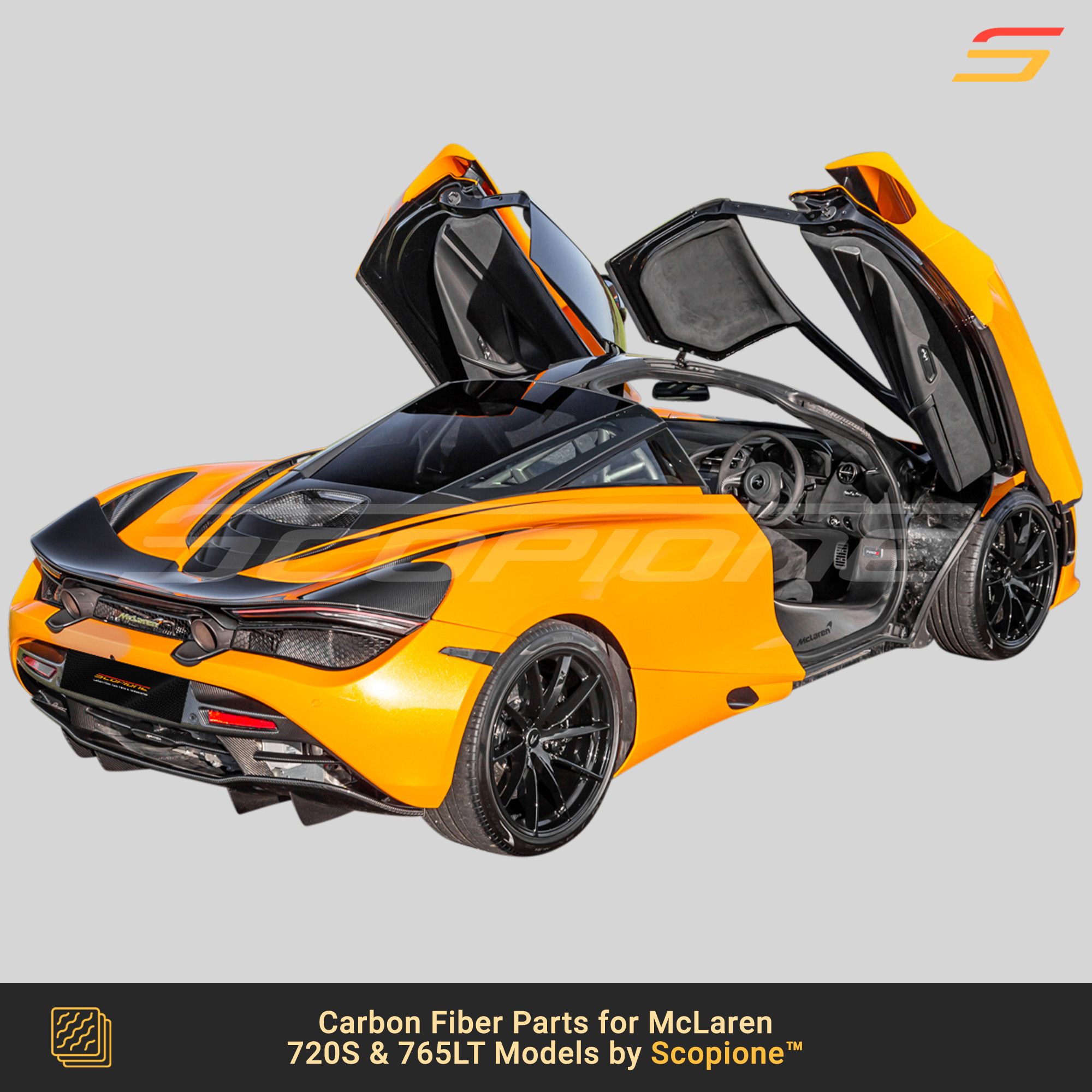
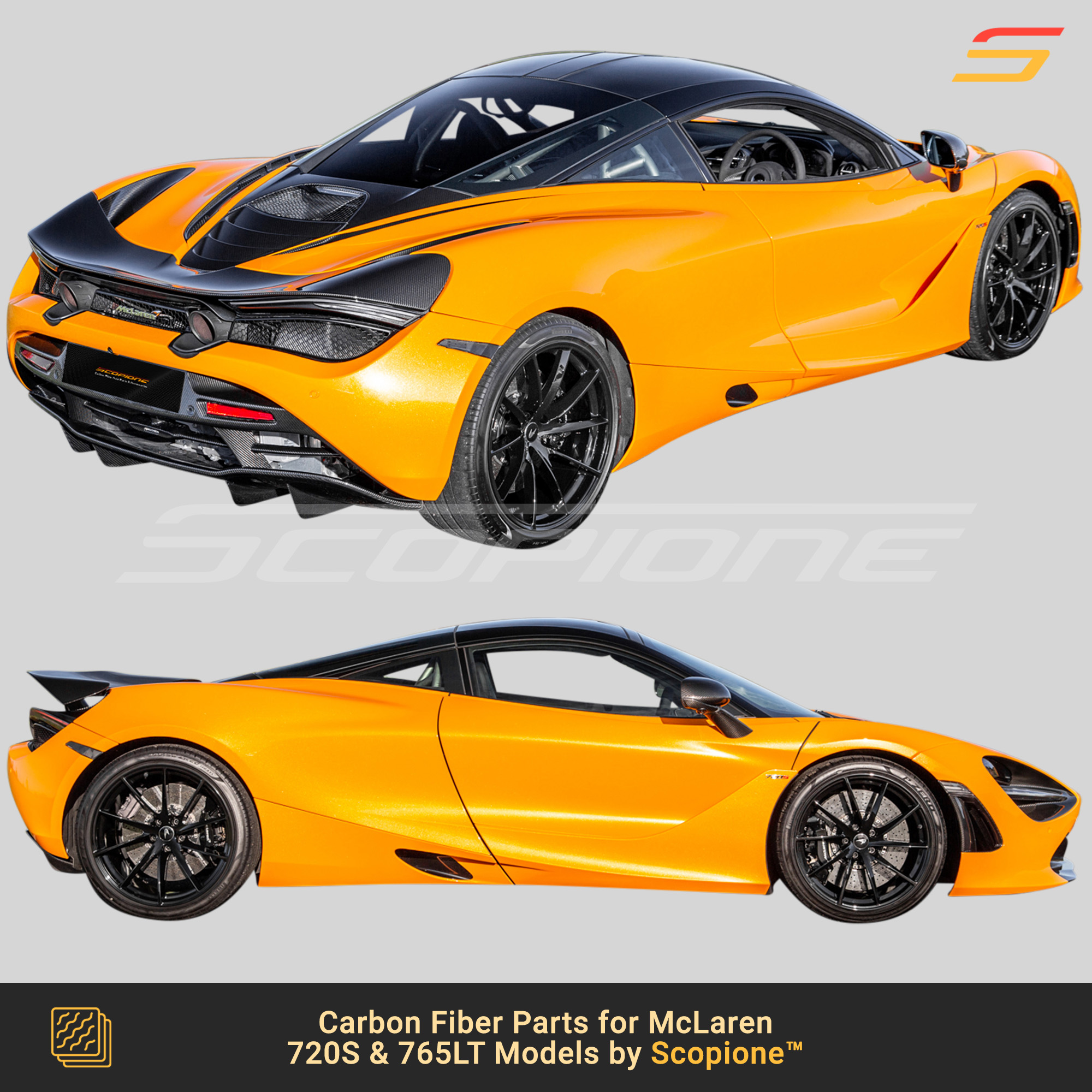
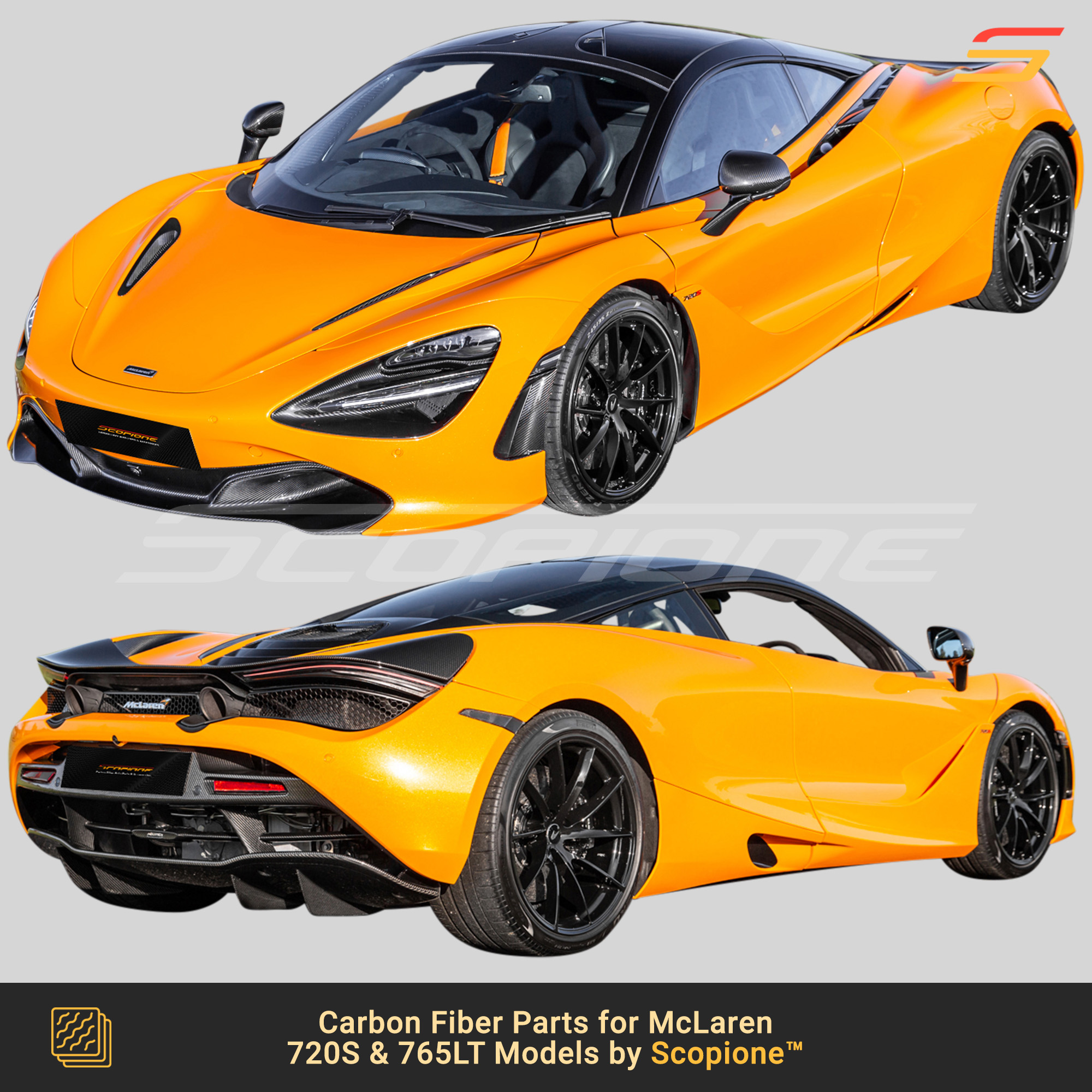
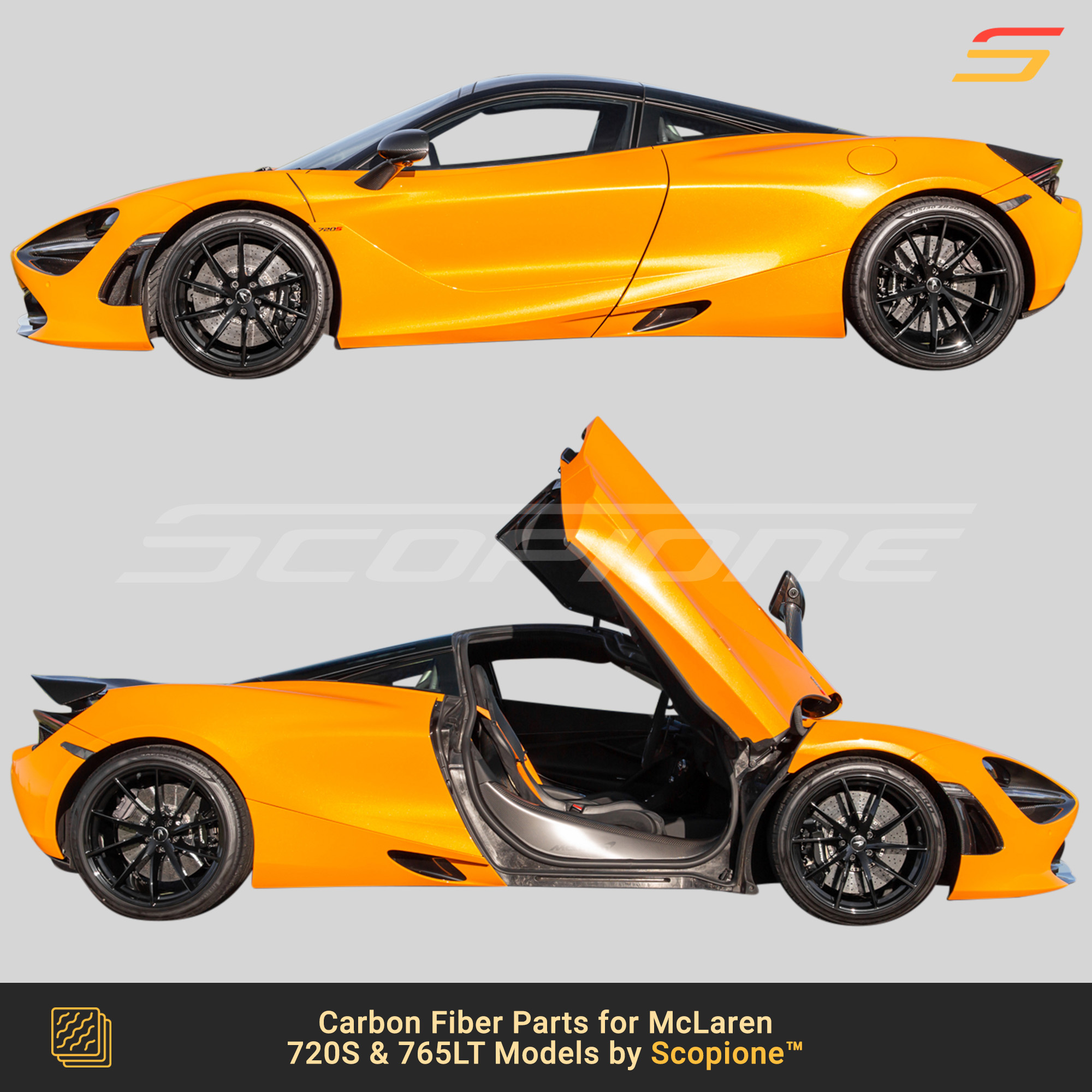
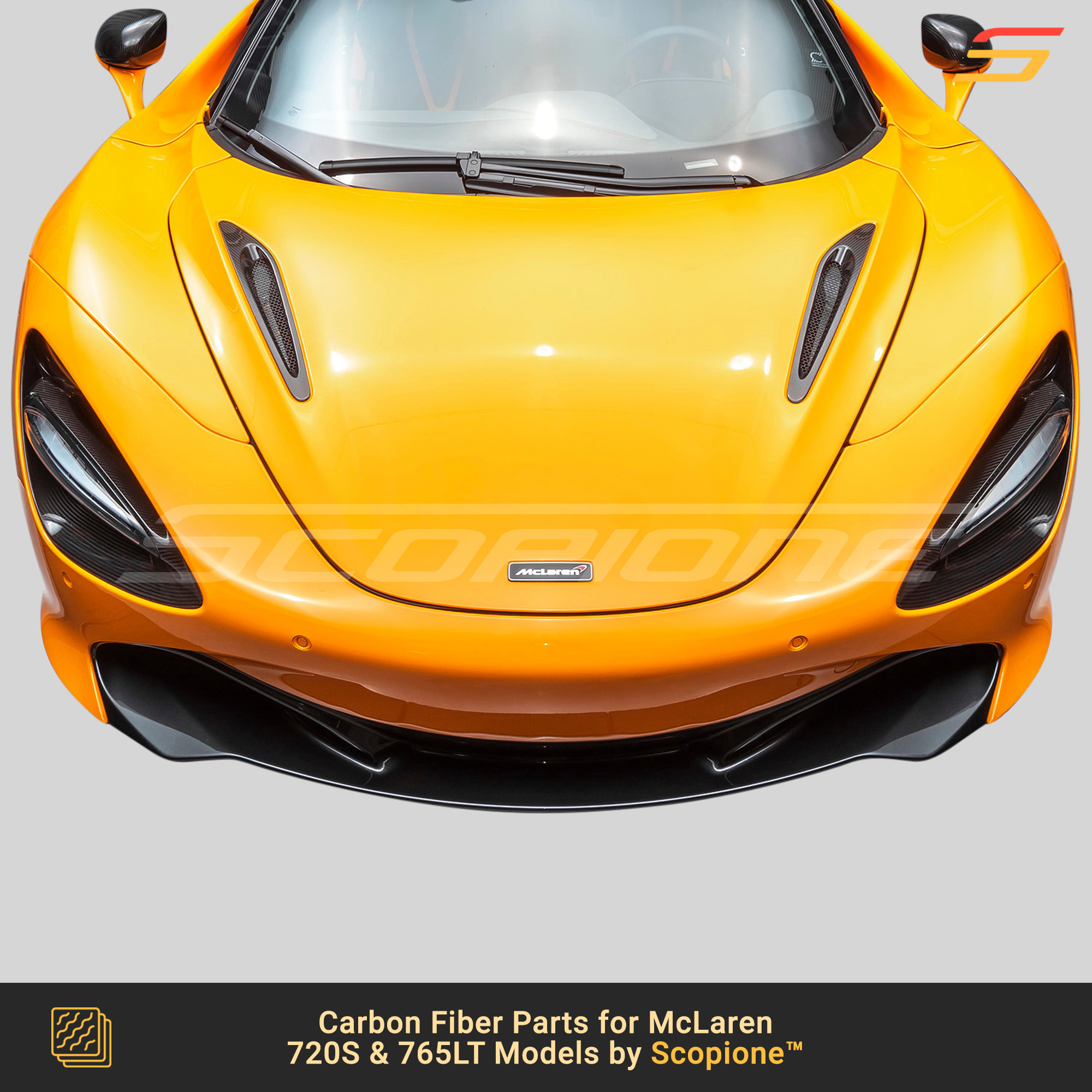

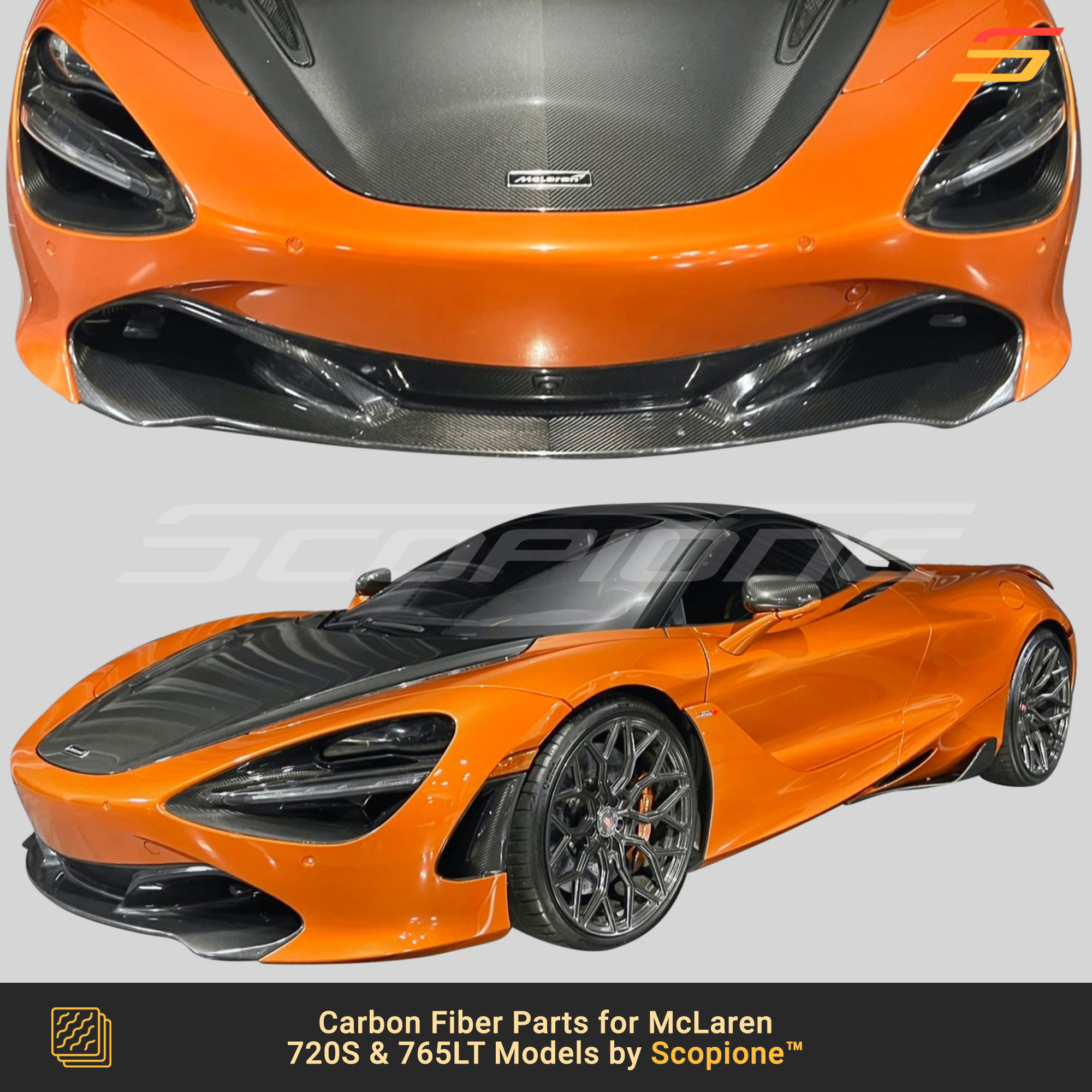
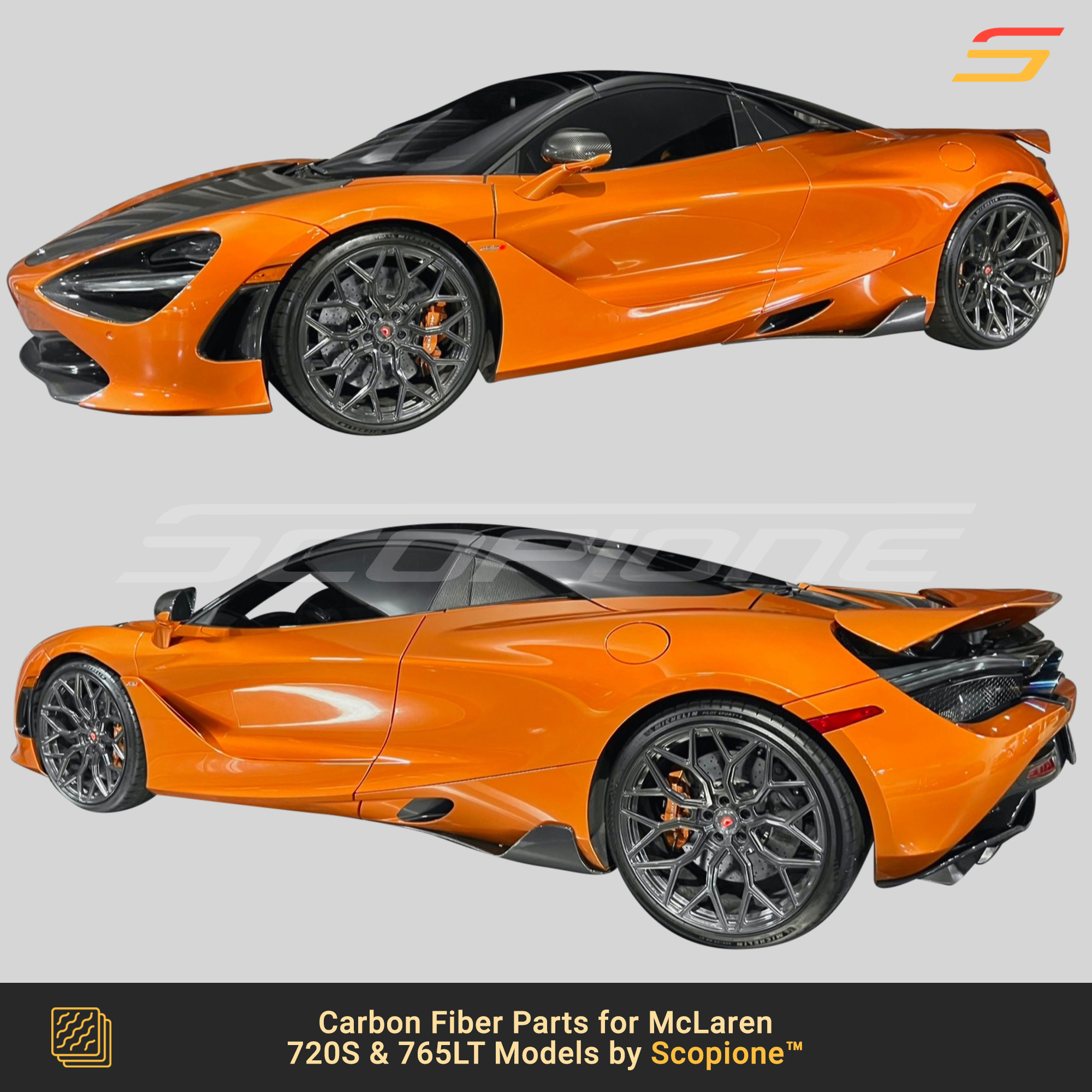
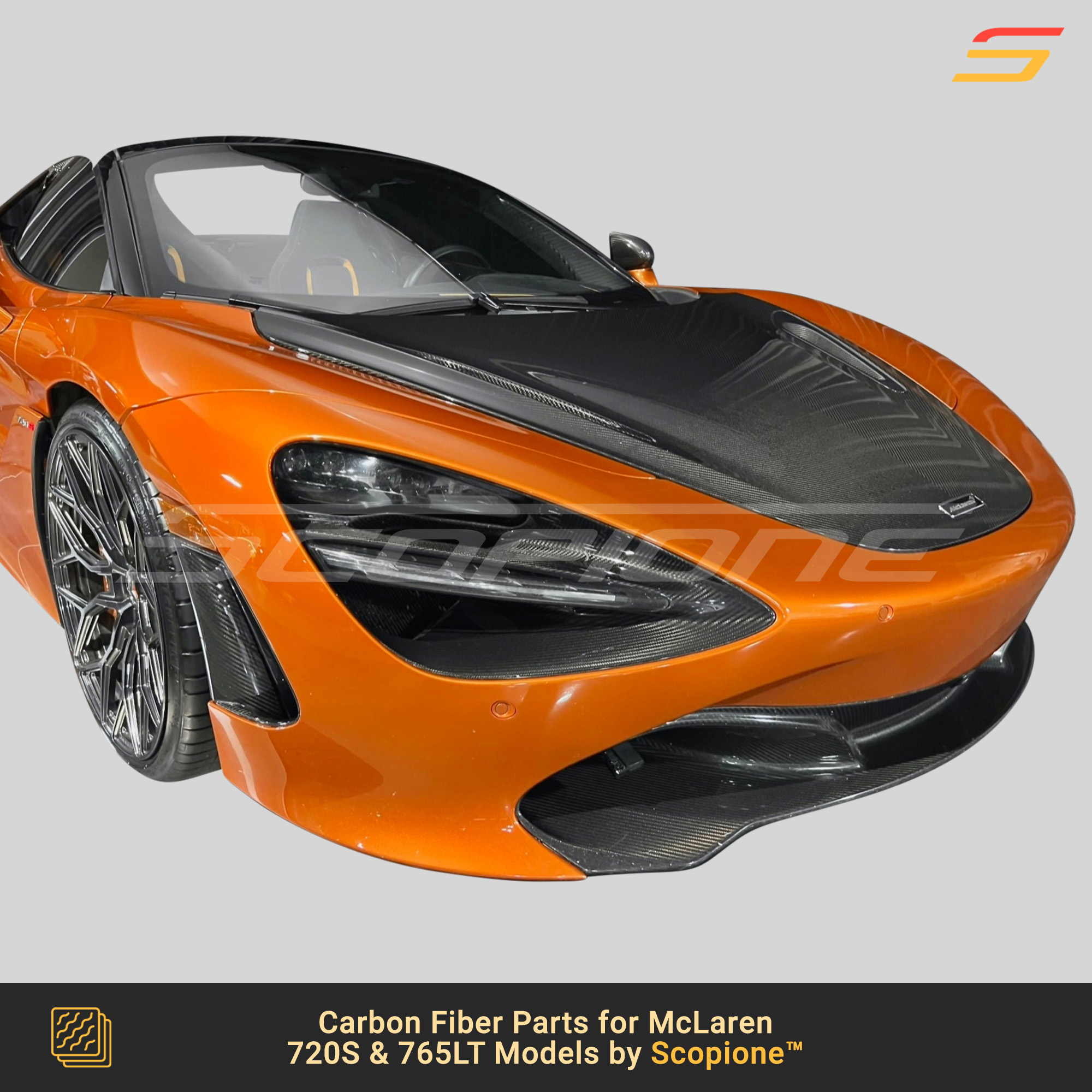
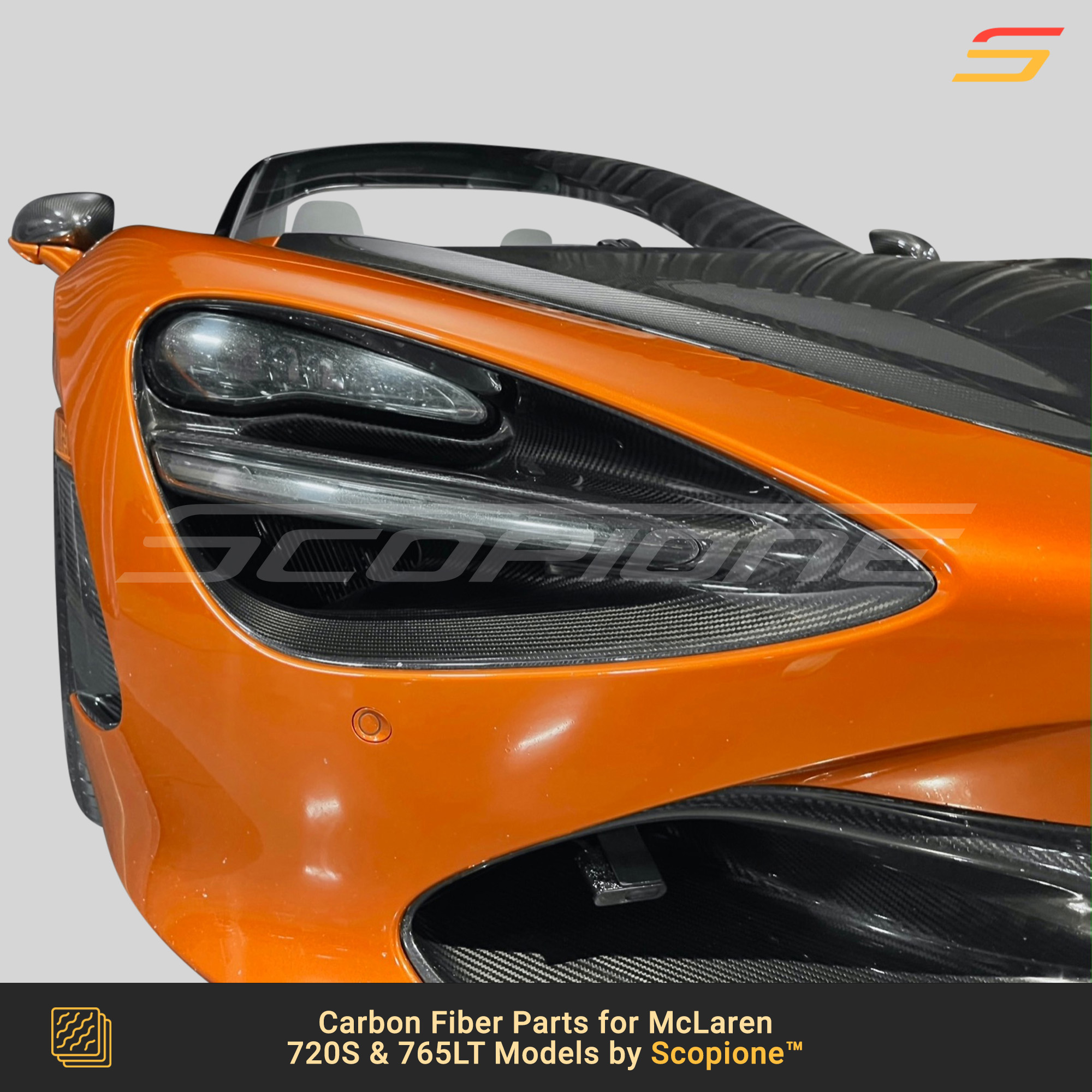
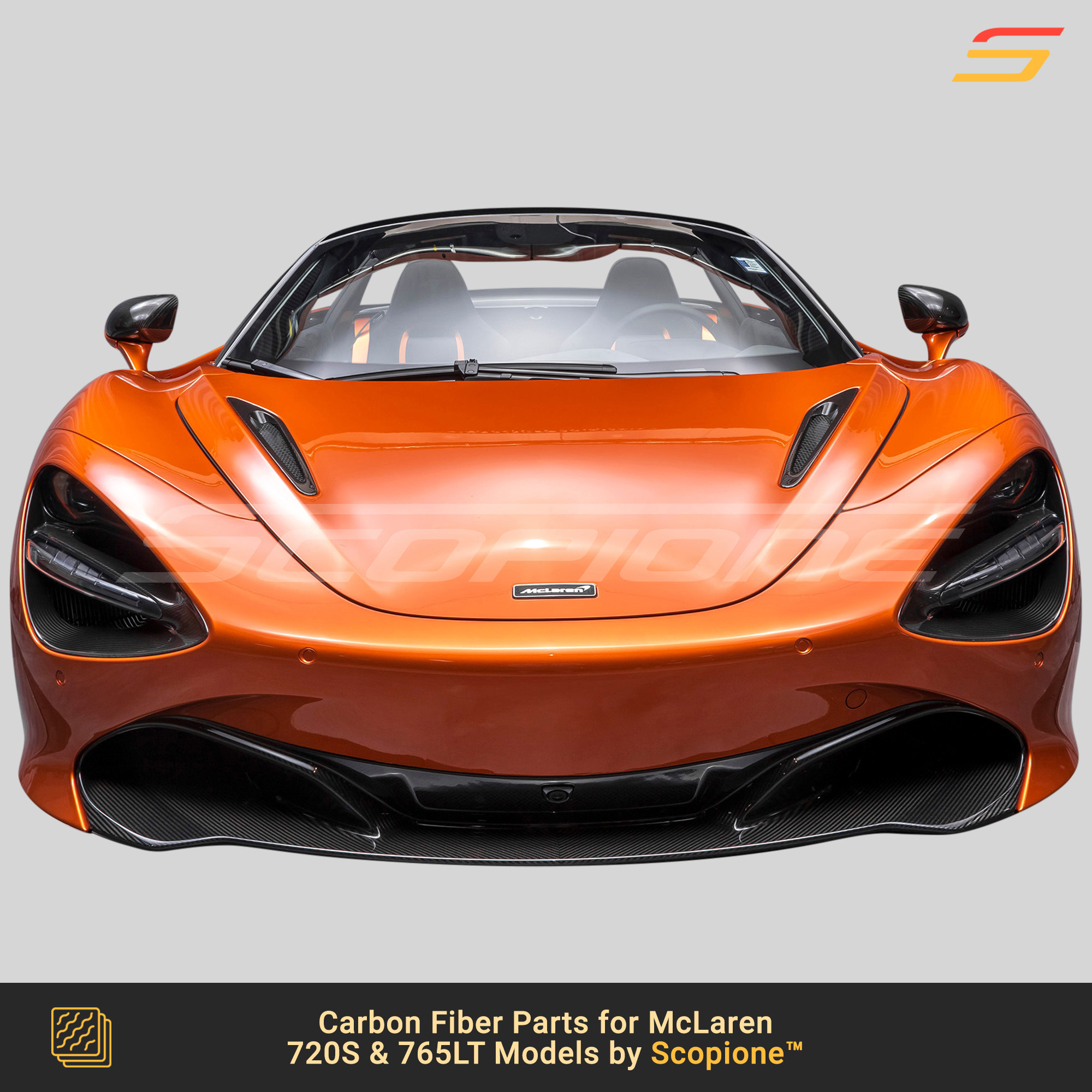
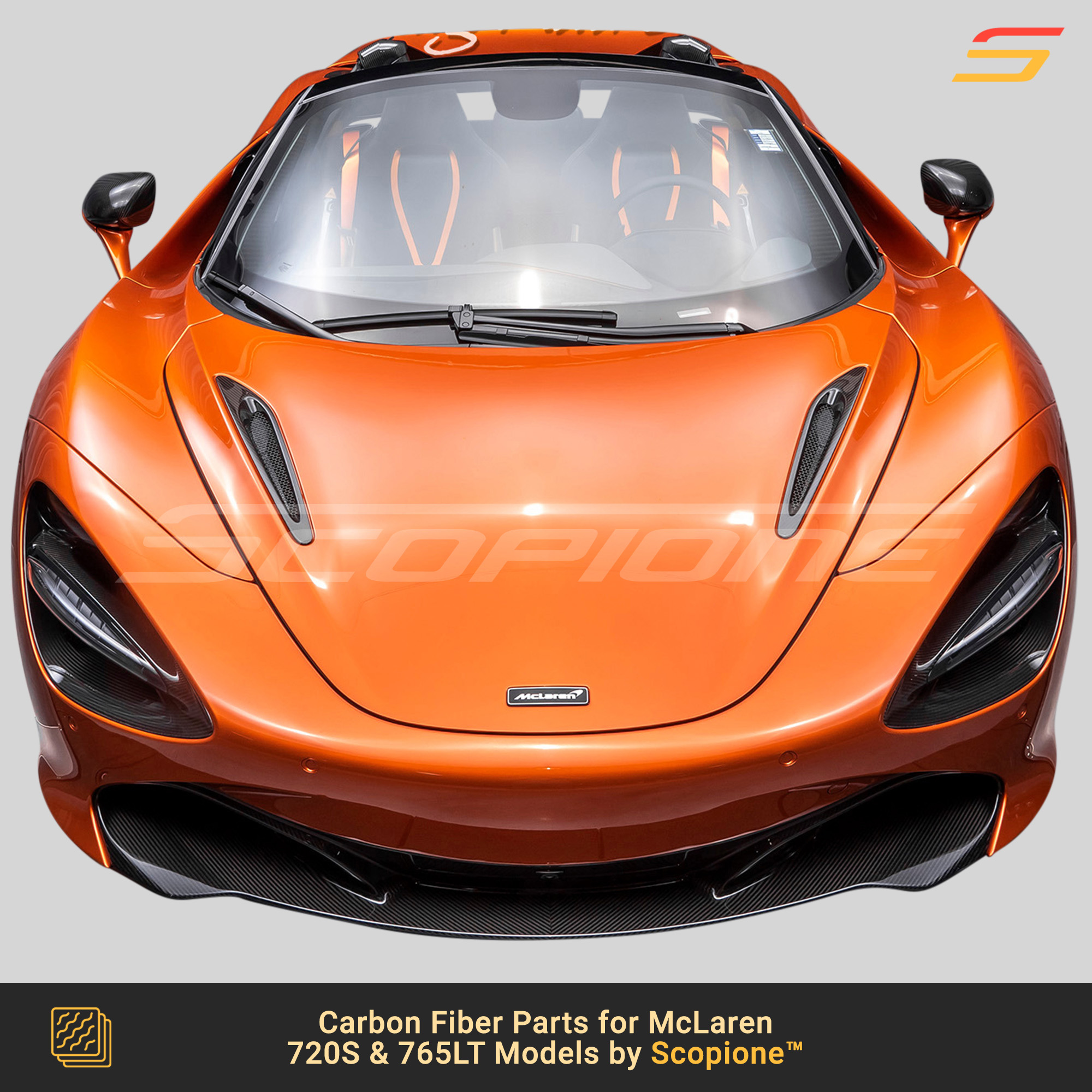
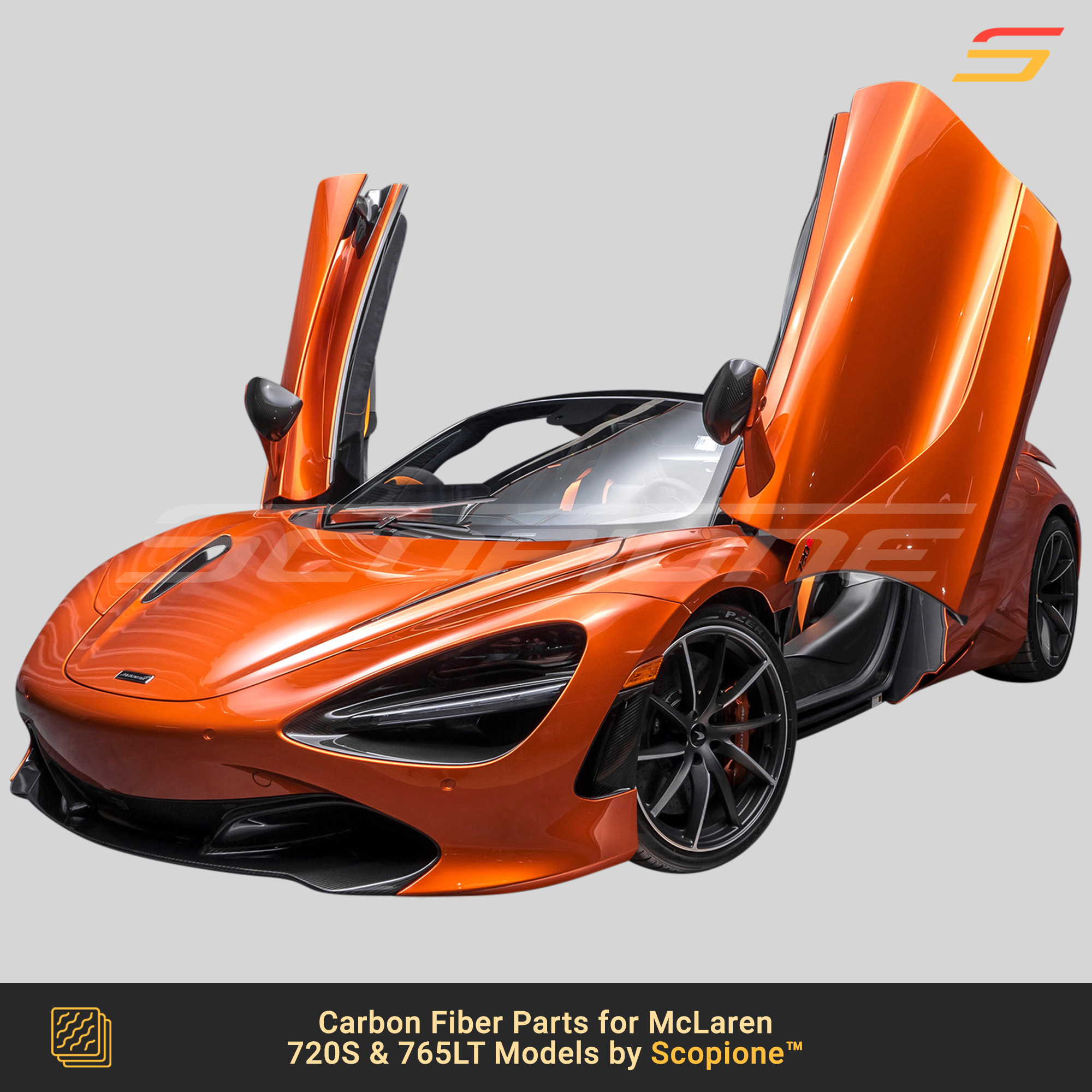
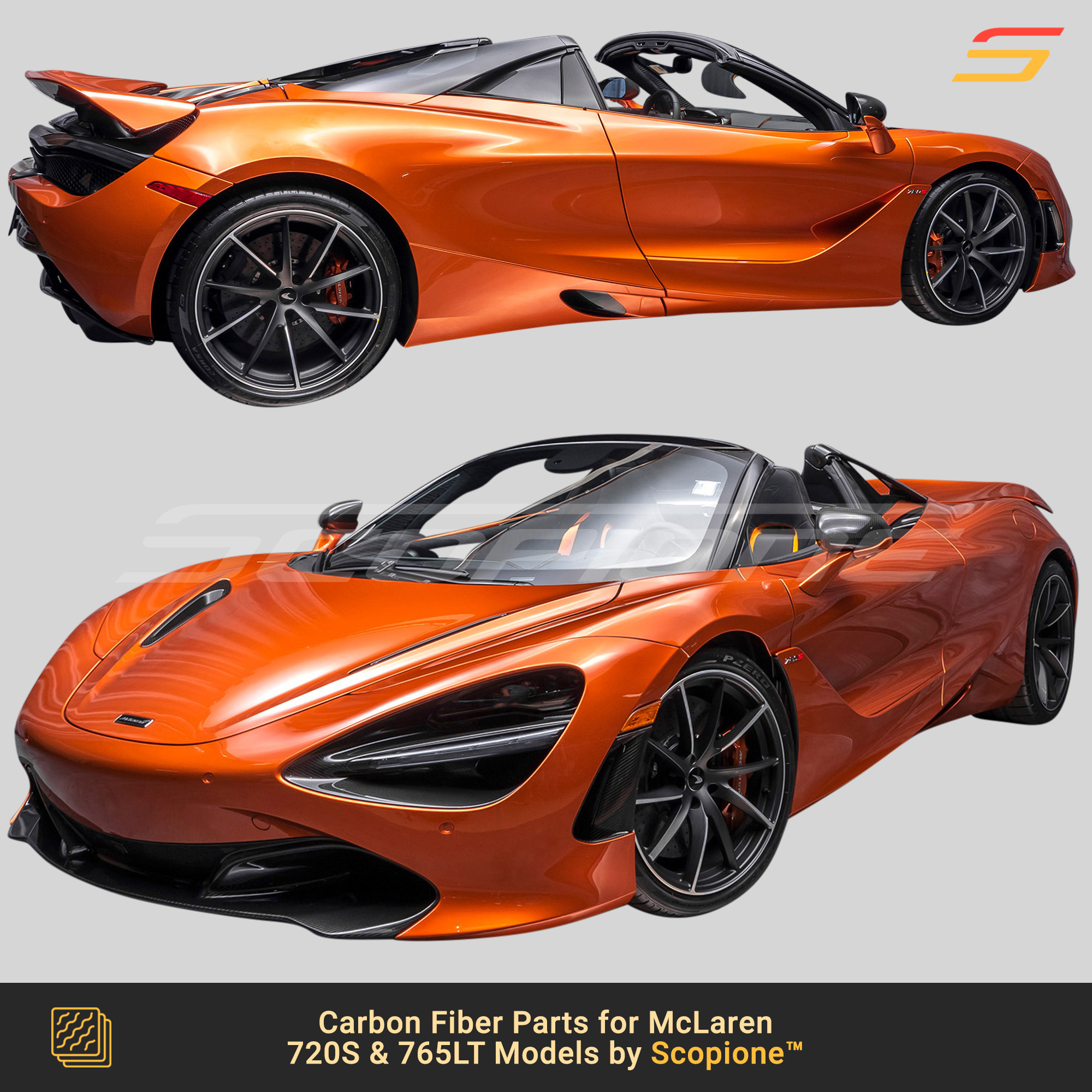
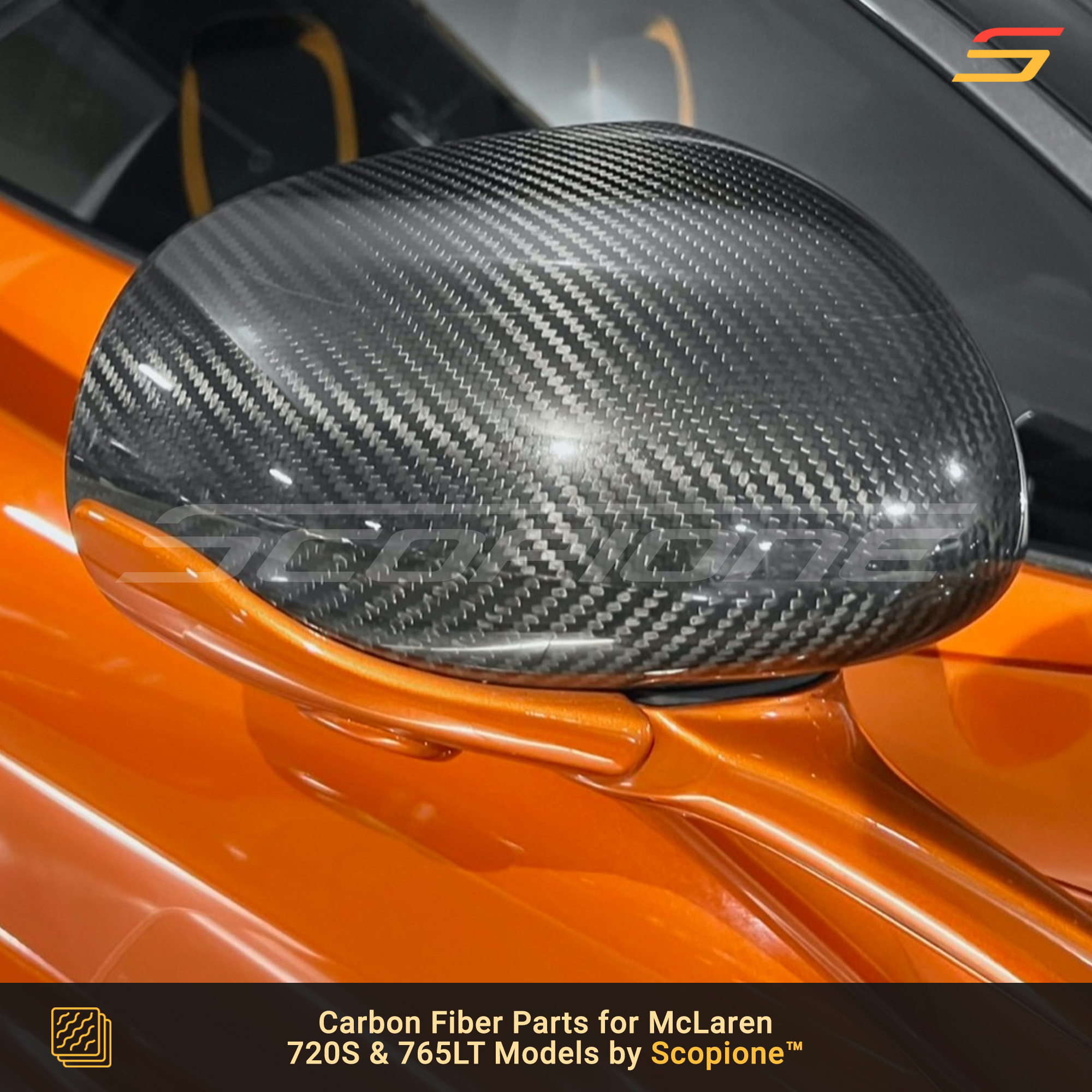
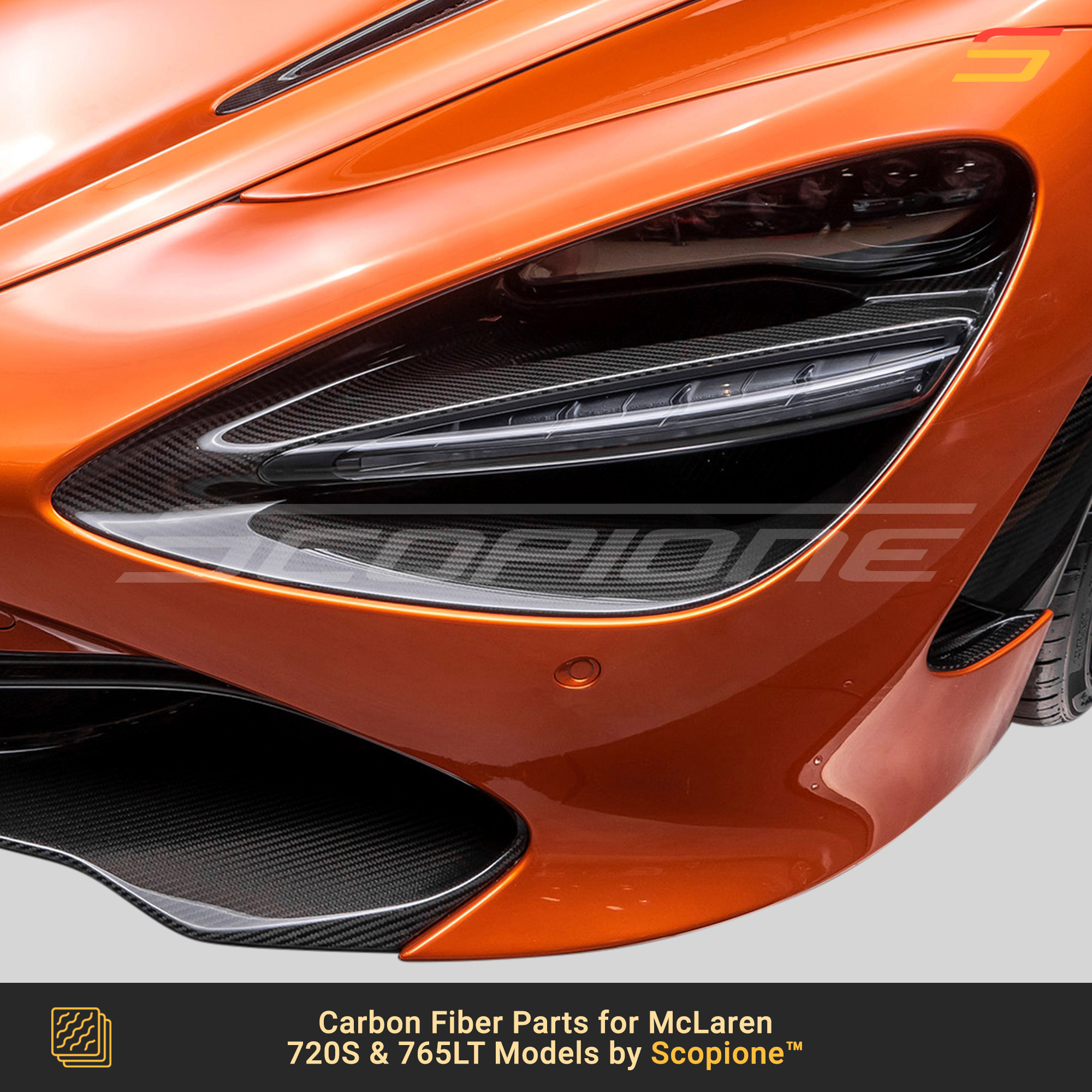
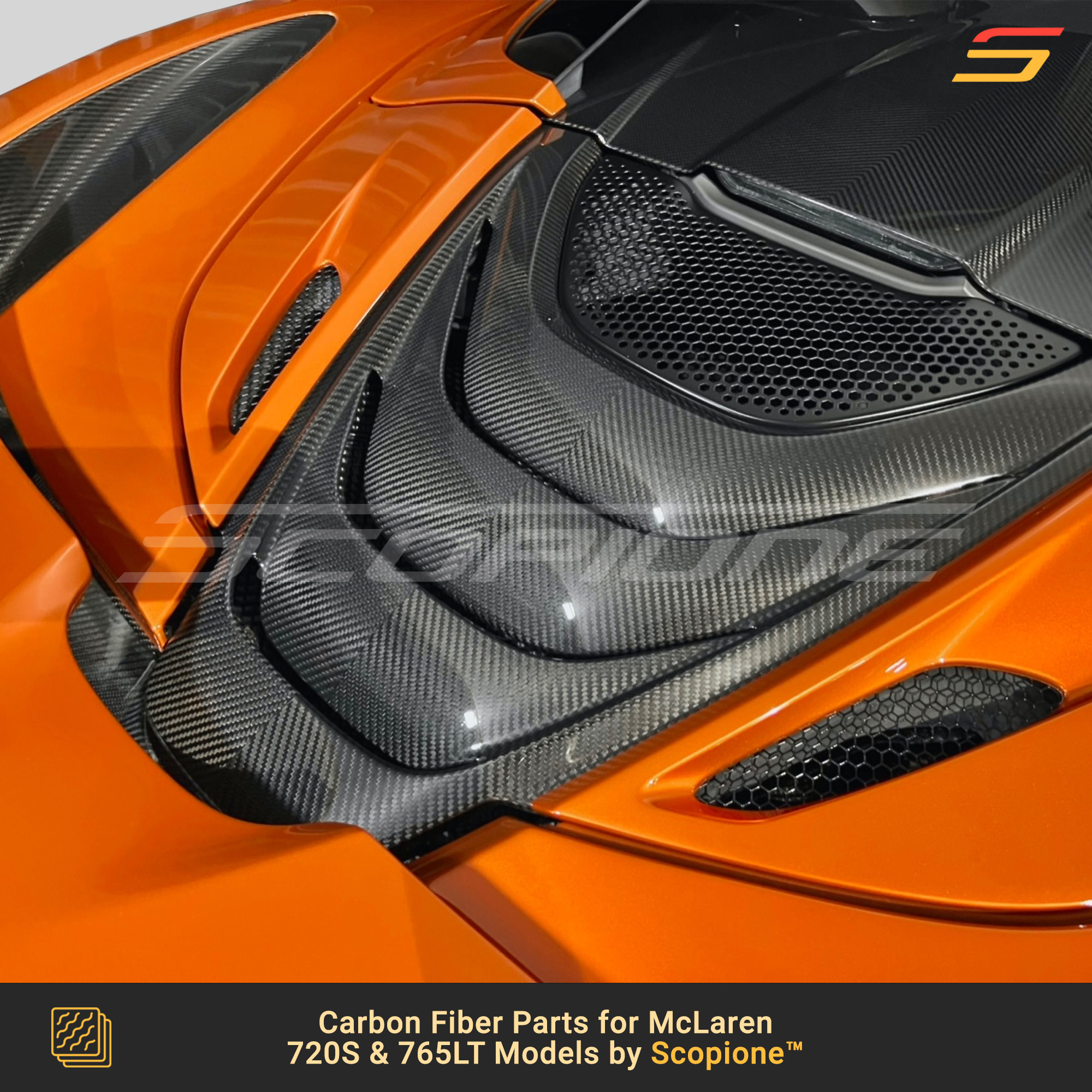
Scopione: Carbon Fiber Upgrades for the McLaren 720S, 765LT & 750S
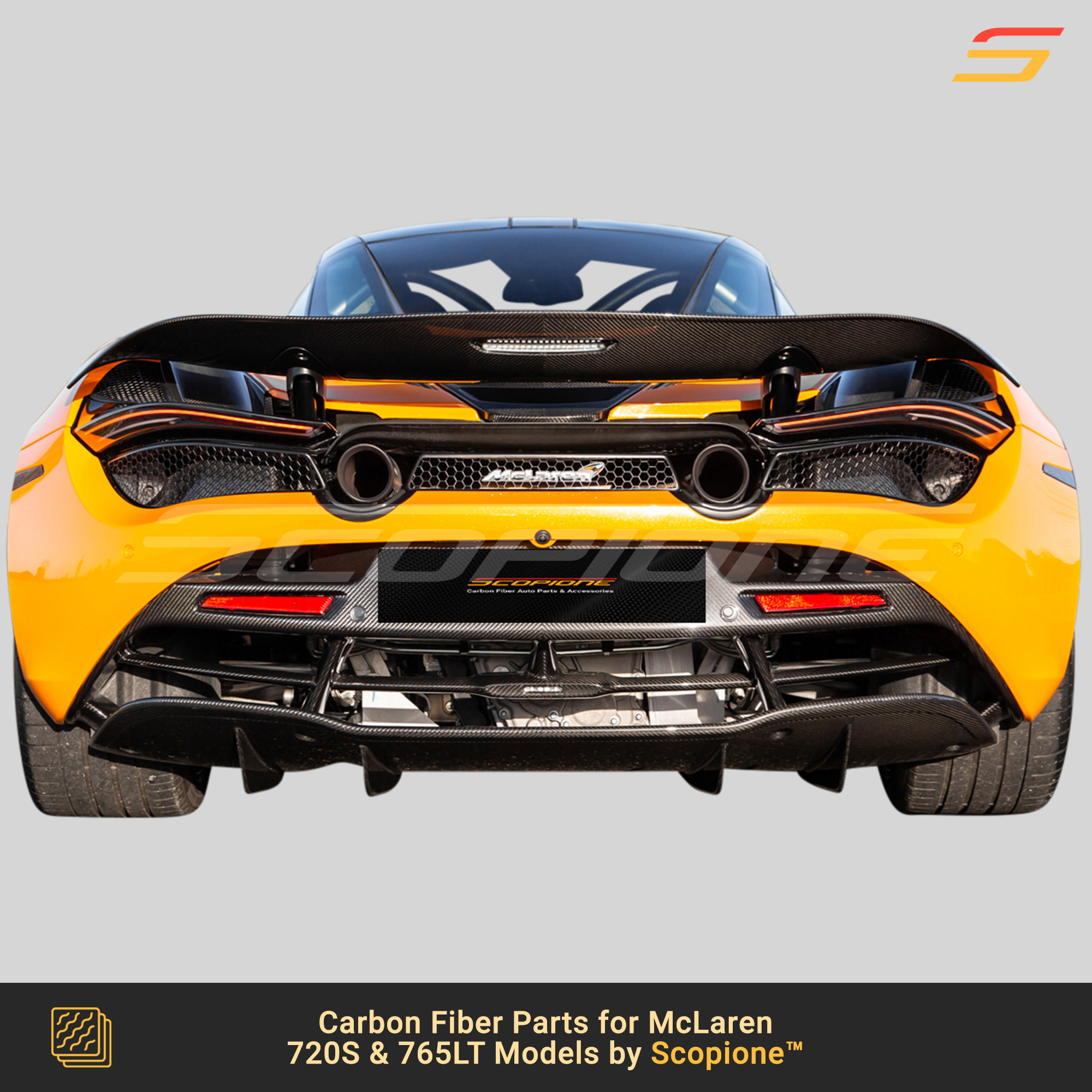
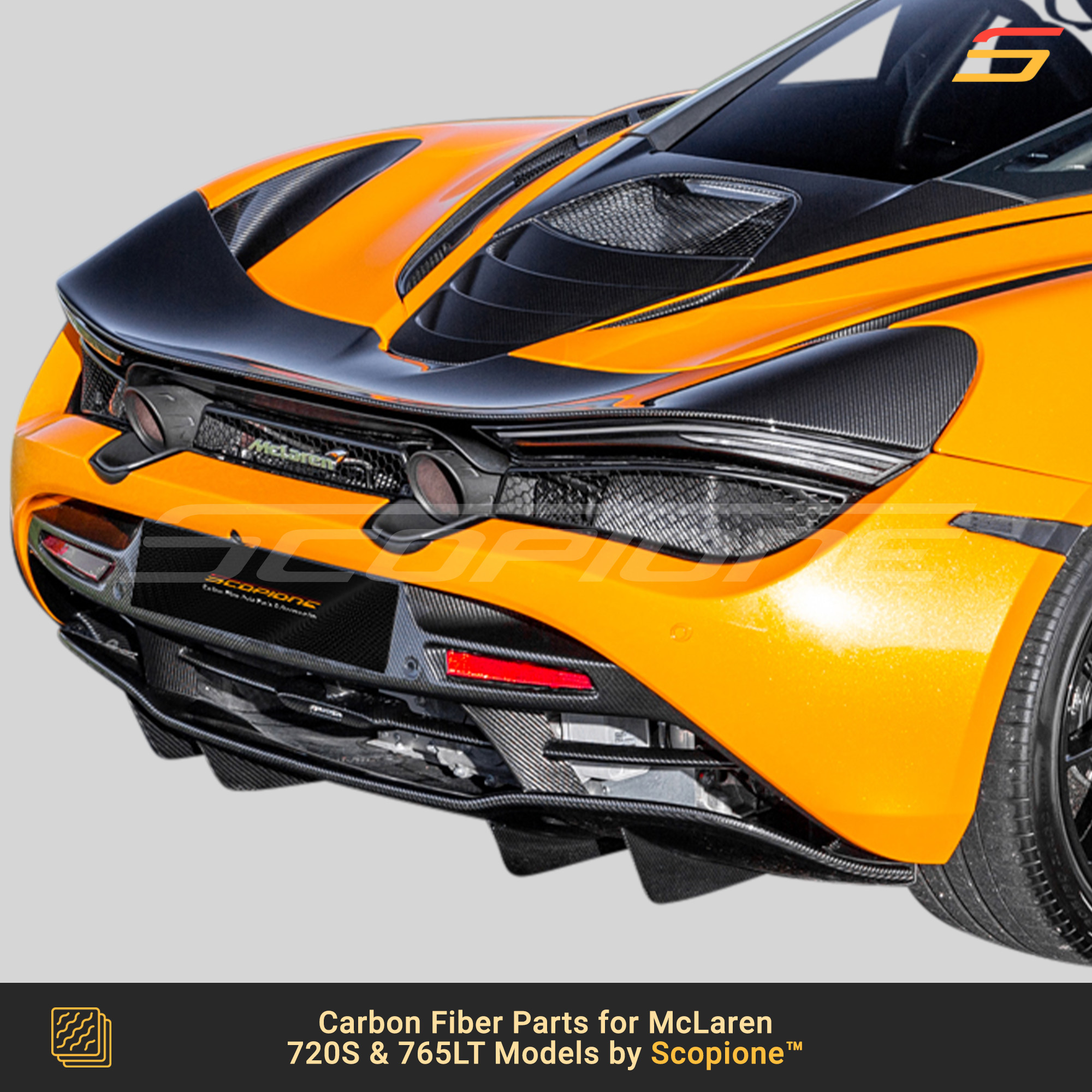
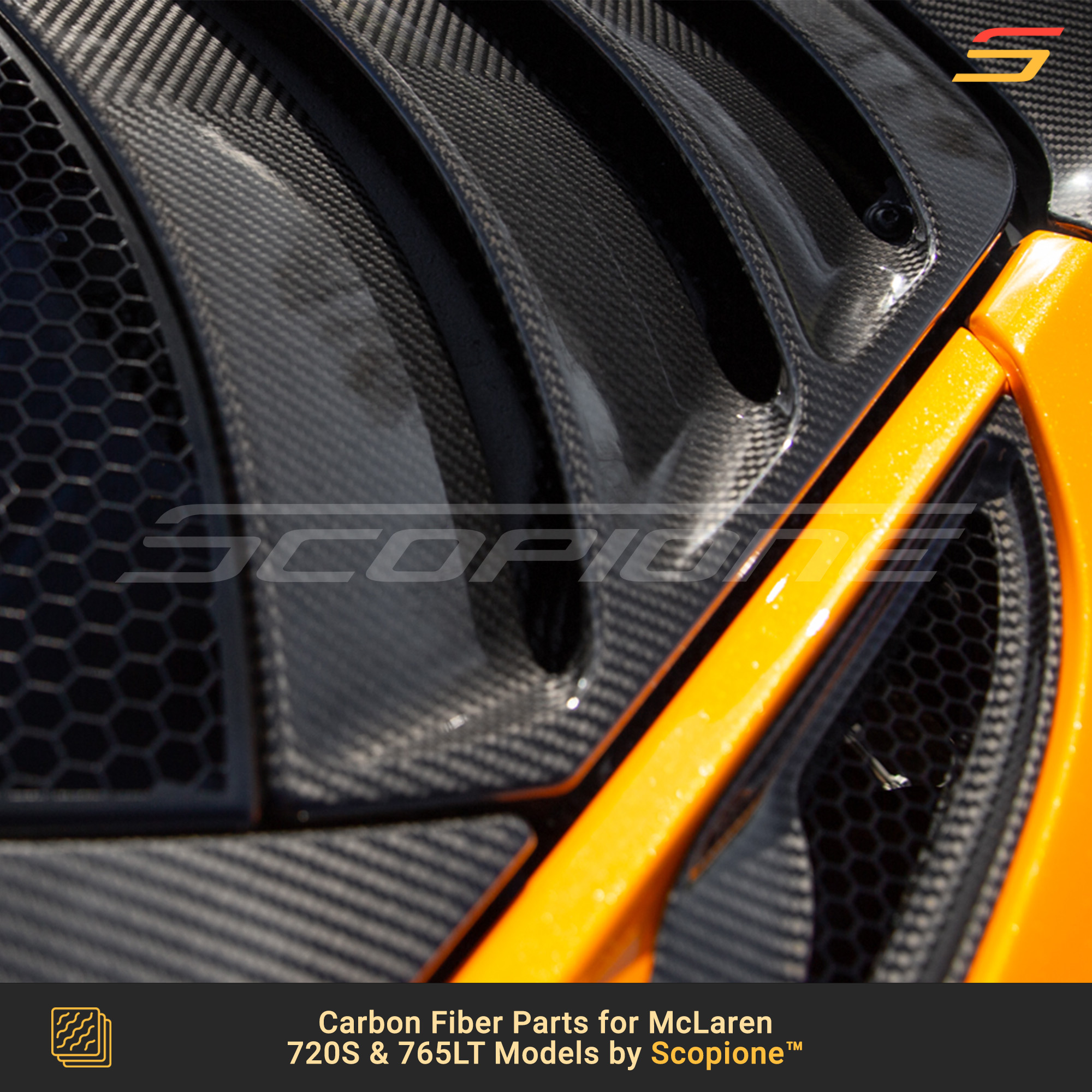
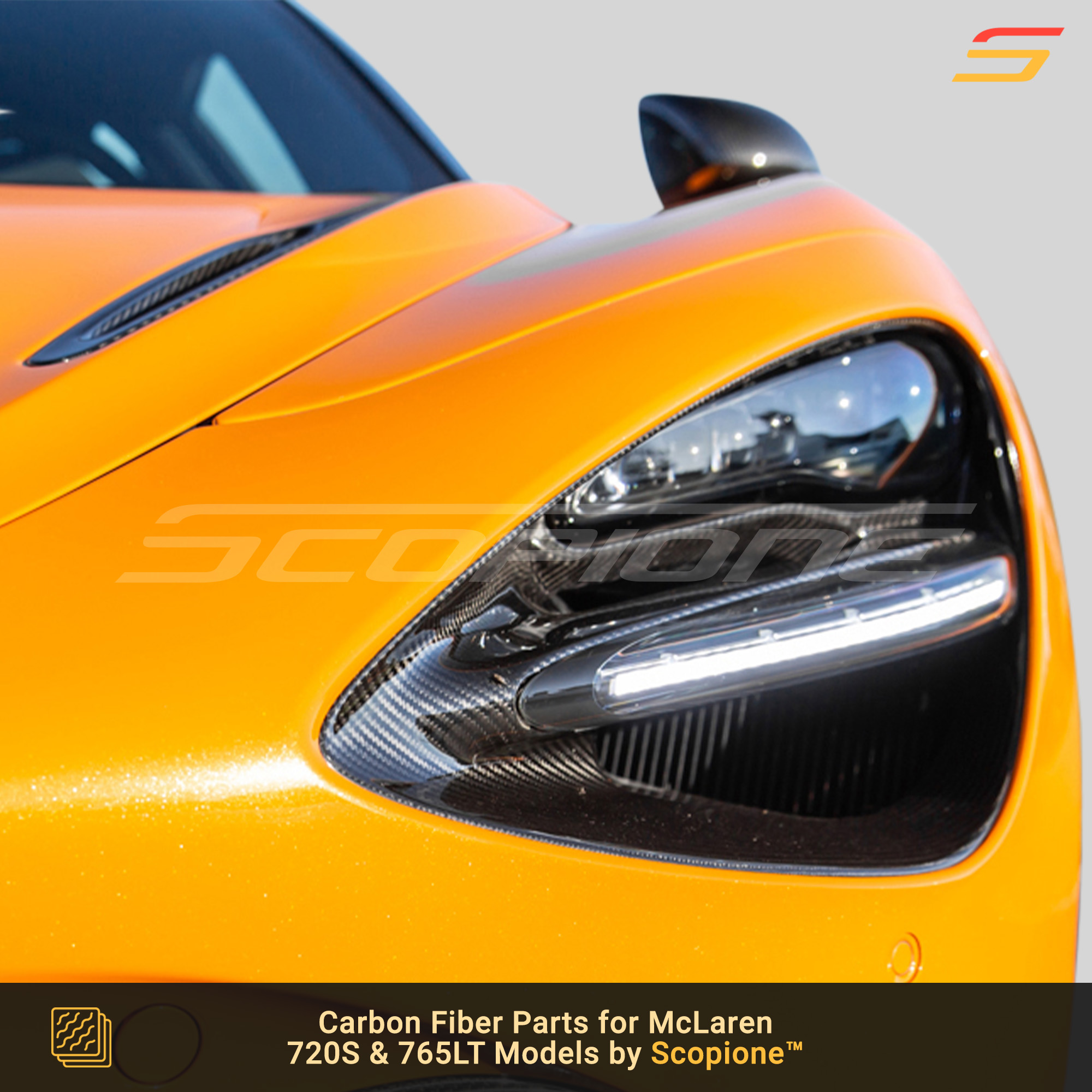
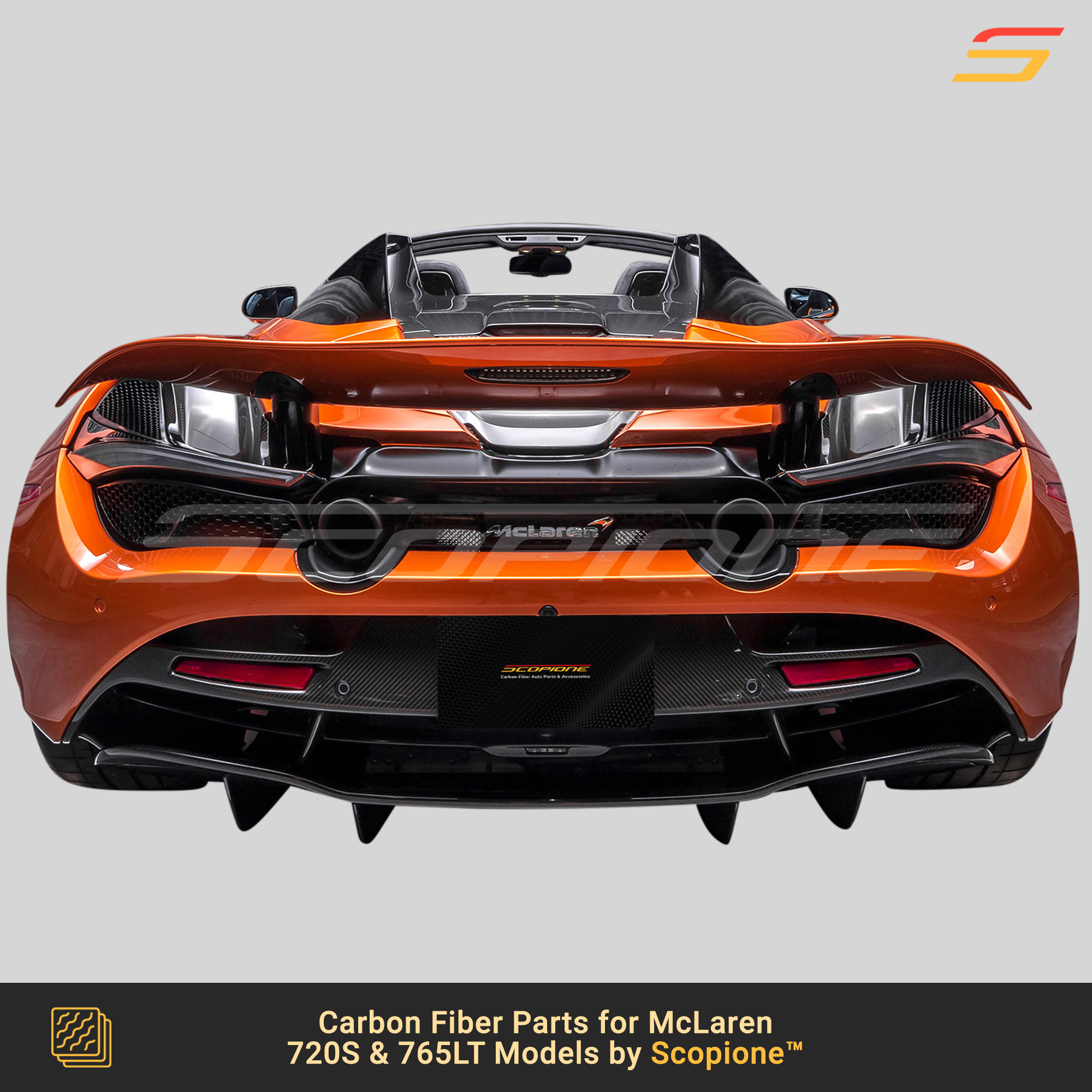
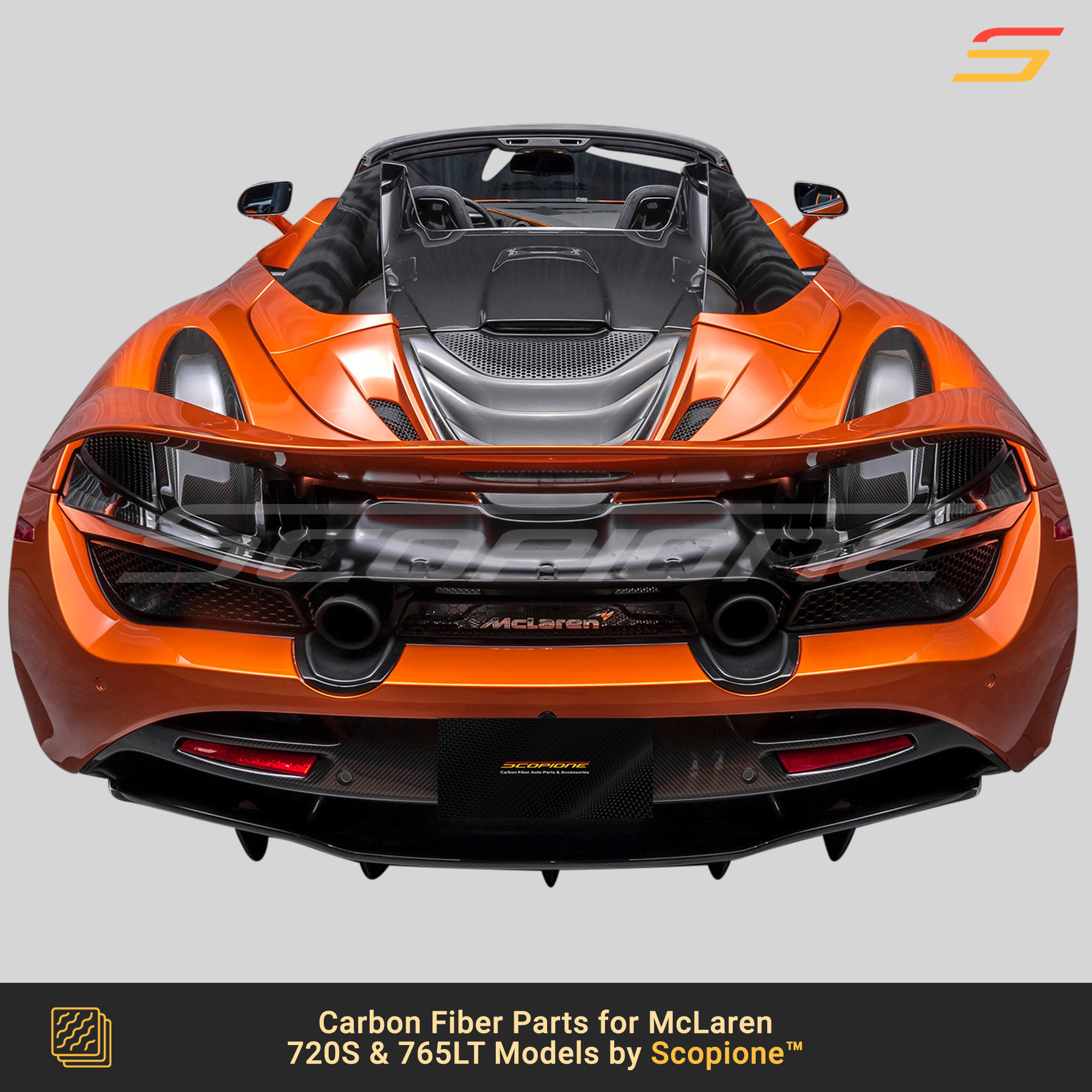
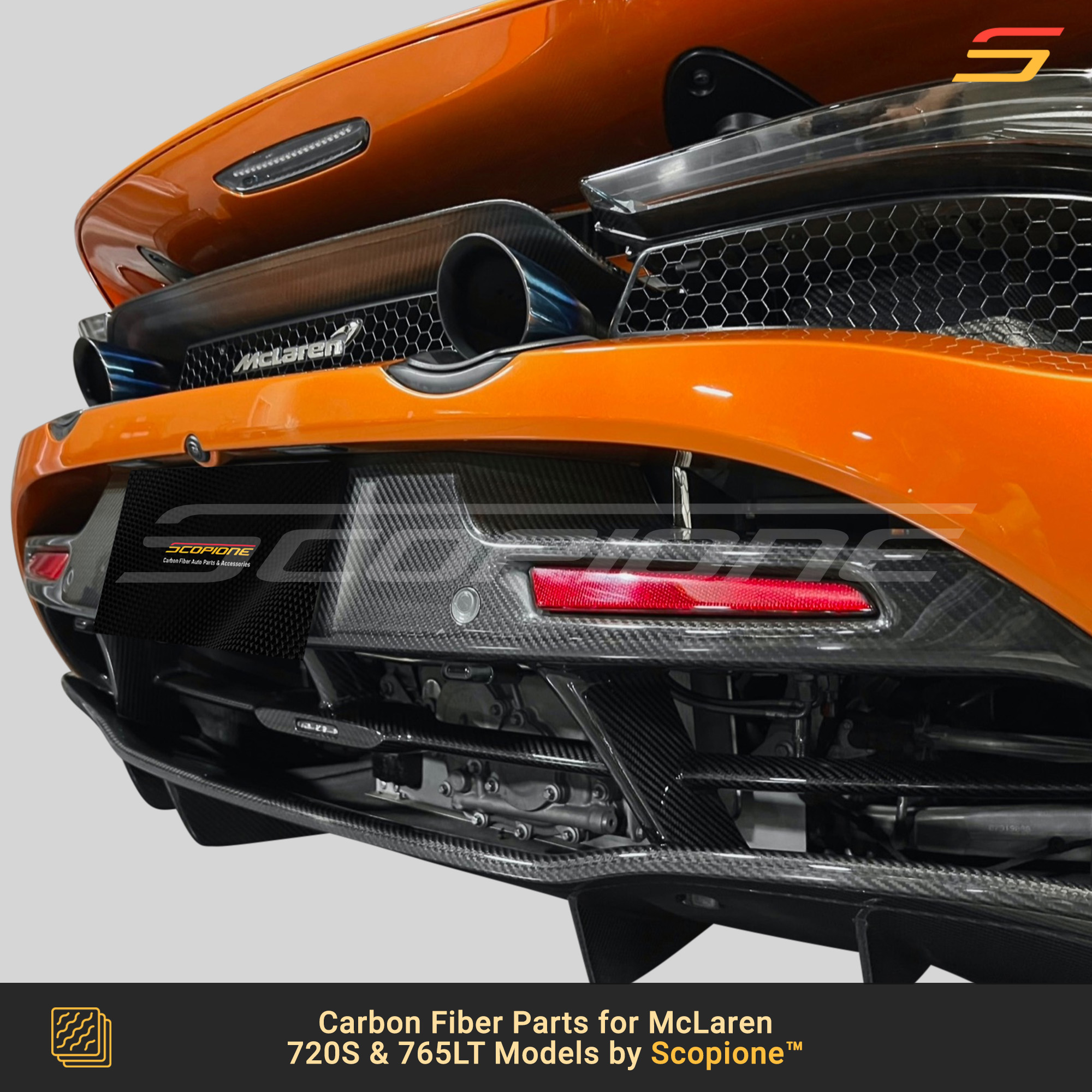
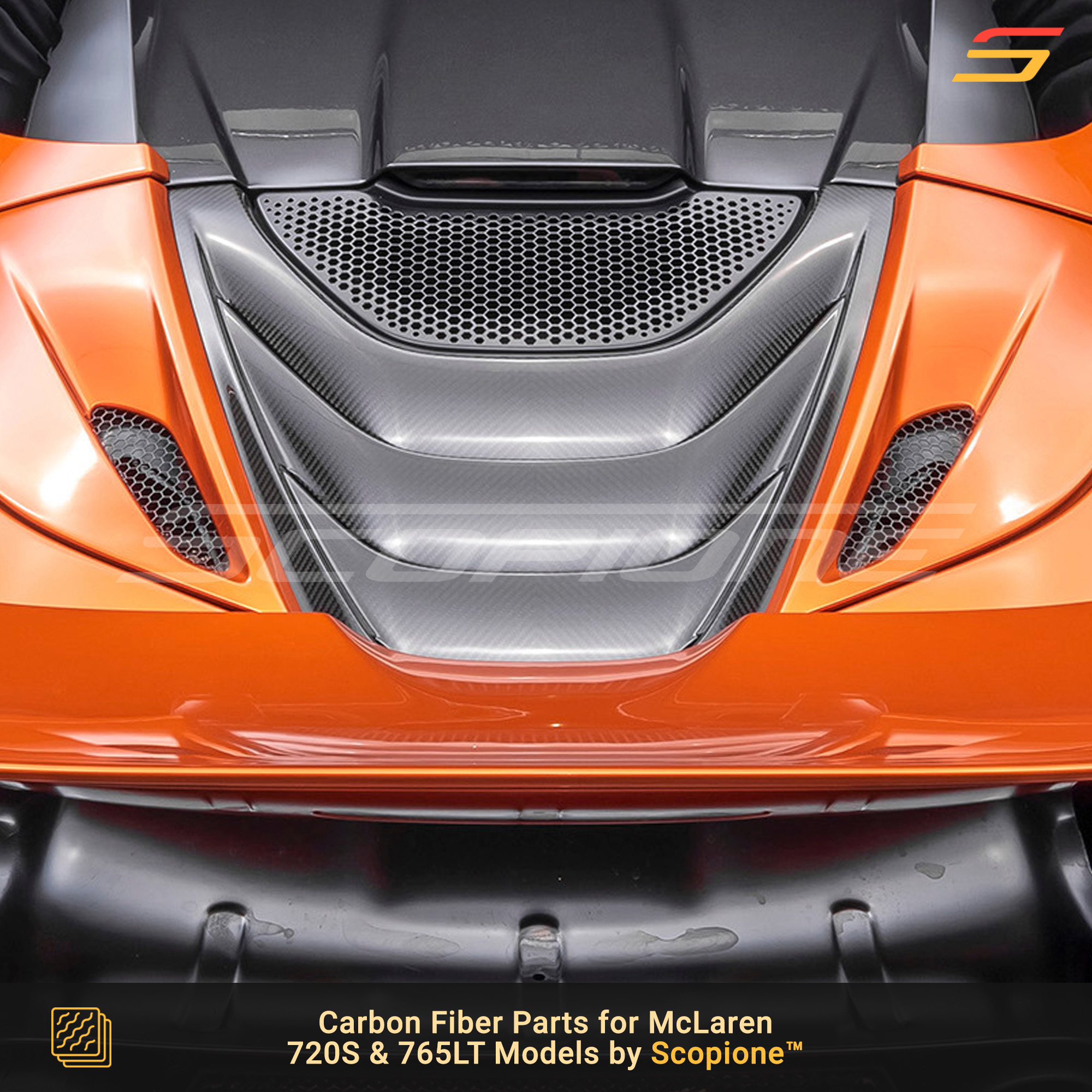
Scopione’s McLaren catalog includes twenty-one carbon-fiber components for the 720S, 765LT, and 750S – seventeen exterior aero panels, three engine bay components, and one interior accent. All parts are hand-laid from 2×2 3K twill-weave carbon fiber with a UV-resistant clear coat, backed by a 12-month limited warranty against delamination.
Carbon Fiber Upgrade Costs: McLaren 720S, 765LT & 750S
CF components for the McLaren Super Series, organized by fitment category. Model compatibility noted for each part:
| Carbon Fiber Part | Part Cost (USD) | Installation Est. (USD) | Total Est. (USD) |
|---|---|---|---|
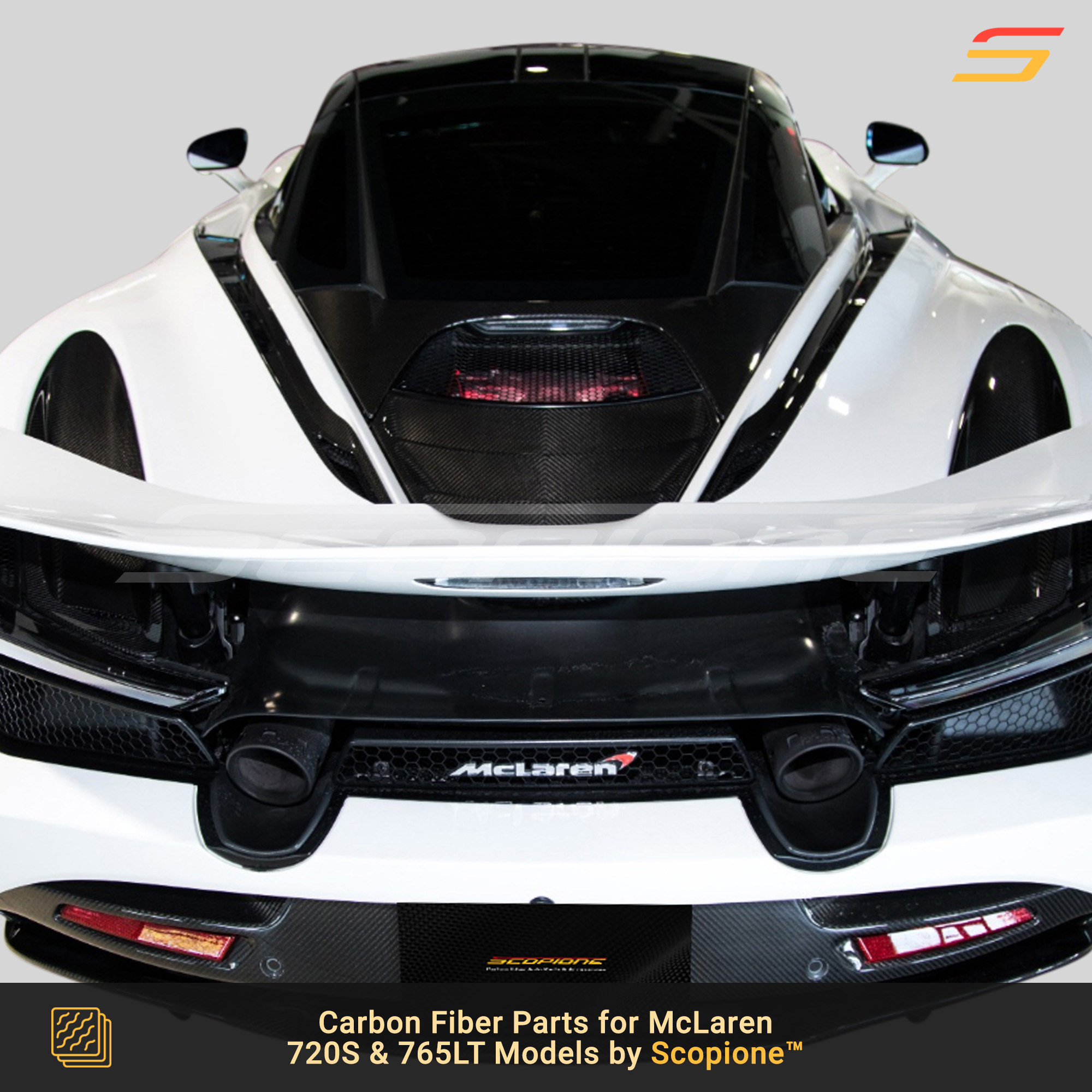
| Rear Lower Diffuser (720S / 750S) | $3,700 | $400 – $800 | $4,100 – $4,500 |
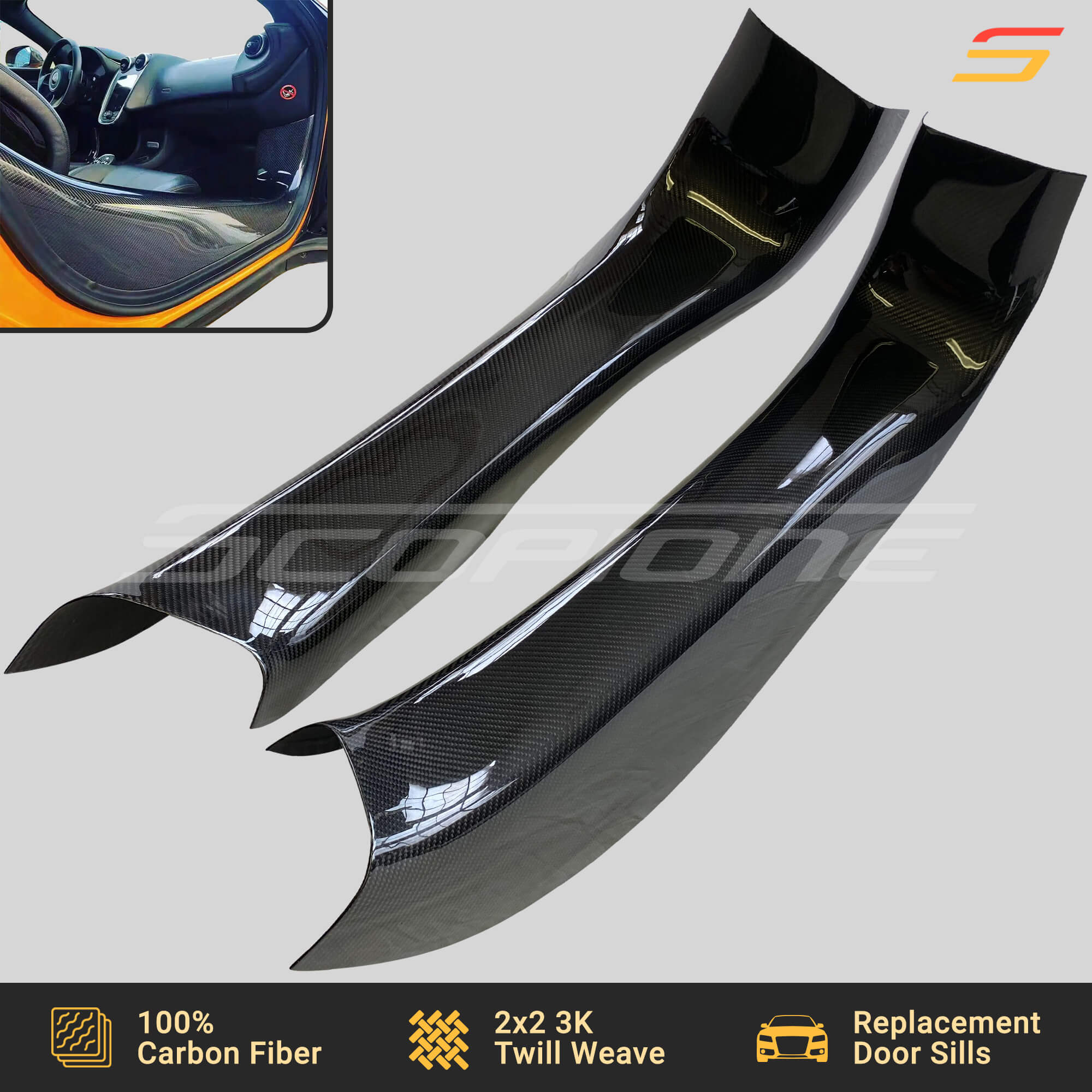
| Door Sills (720S / 750S / 765LT) | $3,100 | $200 – $400 | $3,300 – $3,500 |
| Add-On Front Bumper Splitter (720S) | $3,000 | $300 – $600 | $3,300 – $3,600 |
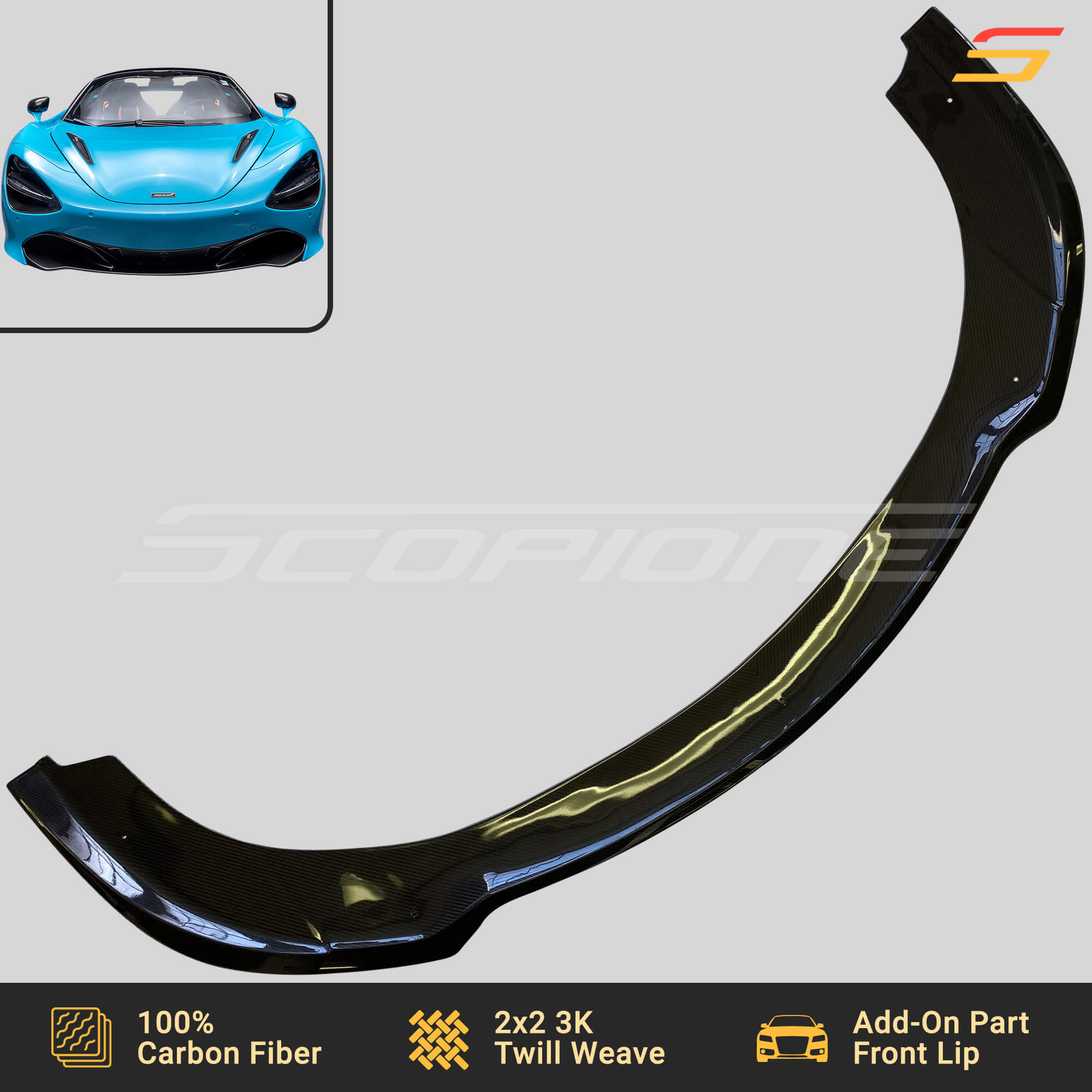
| Front Bumper Spoiler Lip (720S) | $2,800 | $300 – $600 | $3,100 – $3,400 |
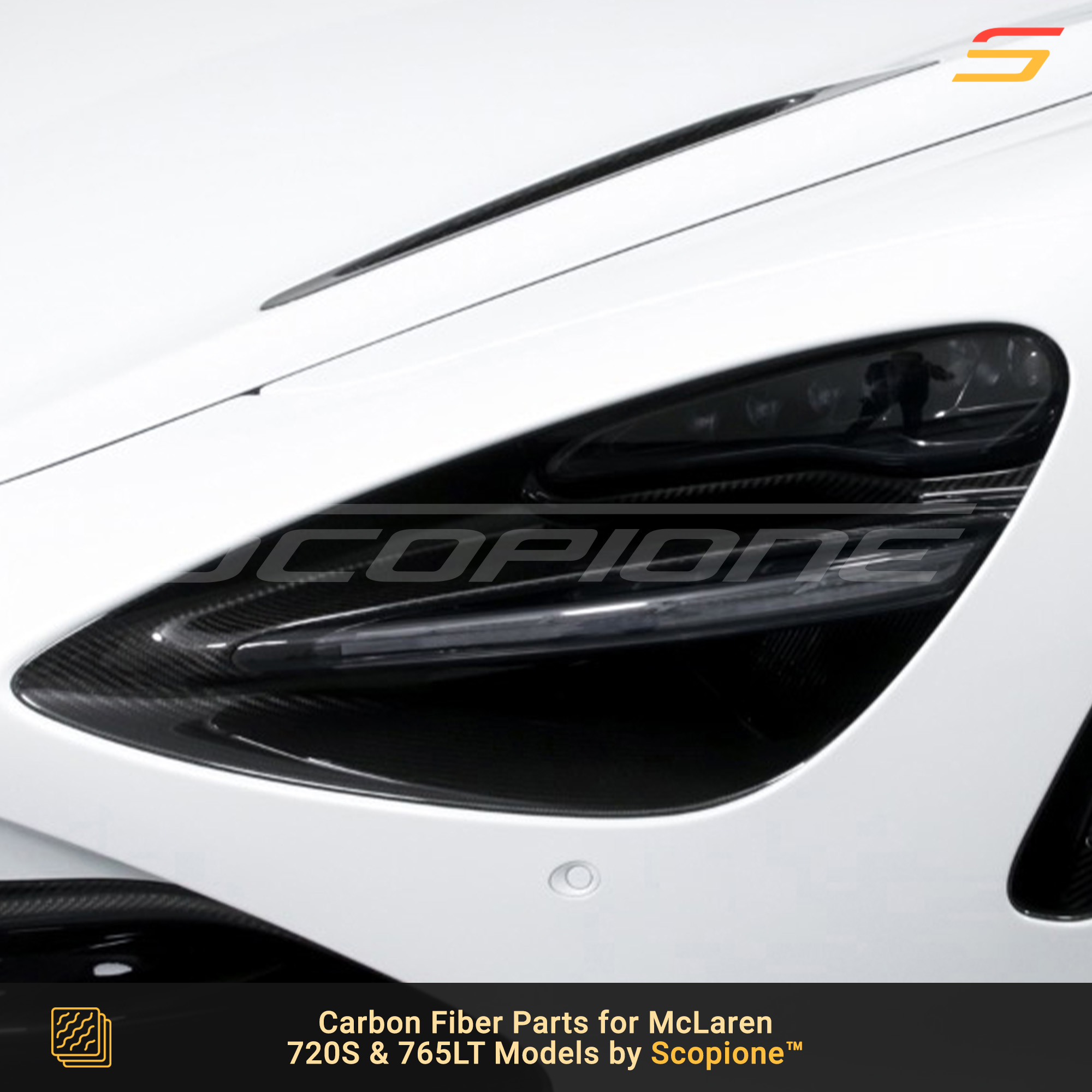
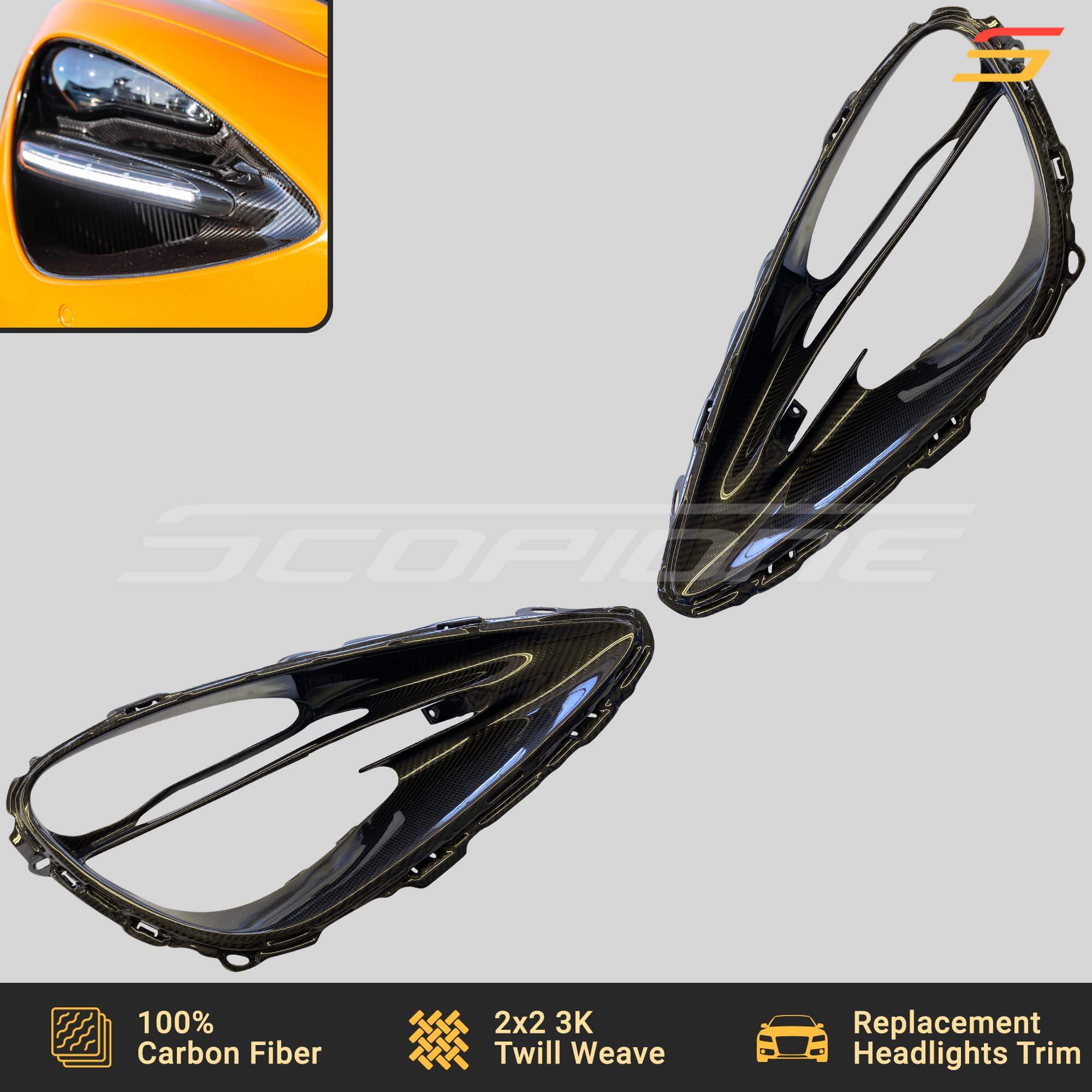
| Headlights Trim Bezels (720S / 765LT) | $2,800 | $200 – $400 | $3,000 – $3,200 |
| Rear Upper Diffuser (720S) | $2,800 | $400 – $800 | $3,200 – $3,600 |
| Rear Spoiler Wing (720S) | $2,800 | $300 – $600 | $3,100 – $3,400 |
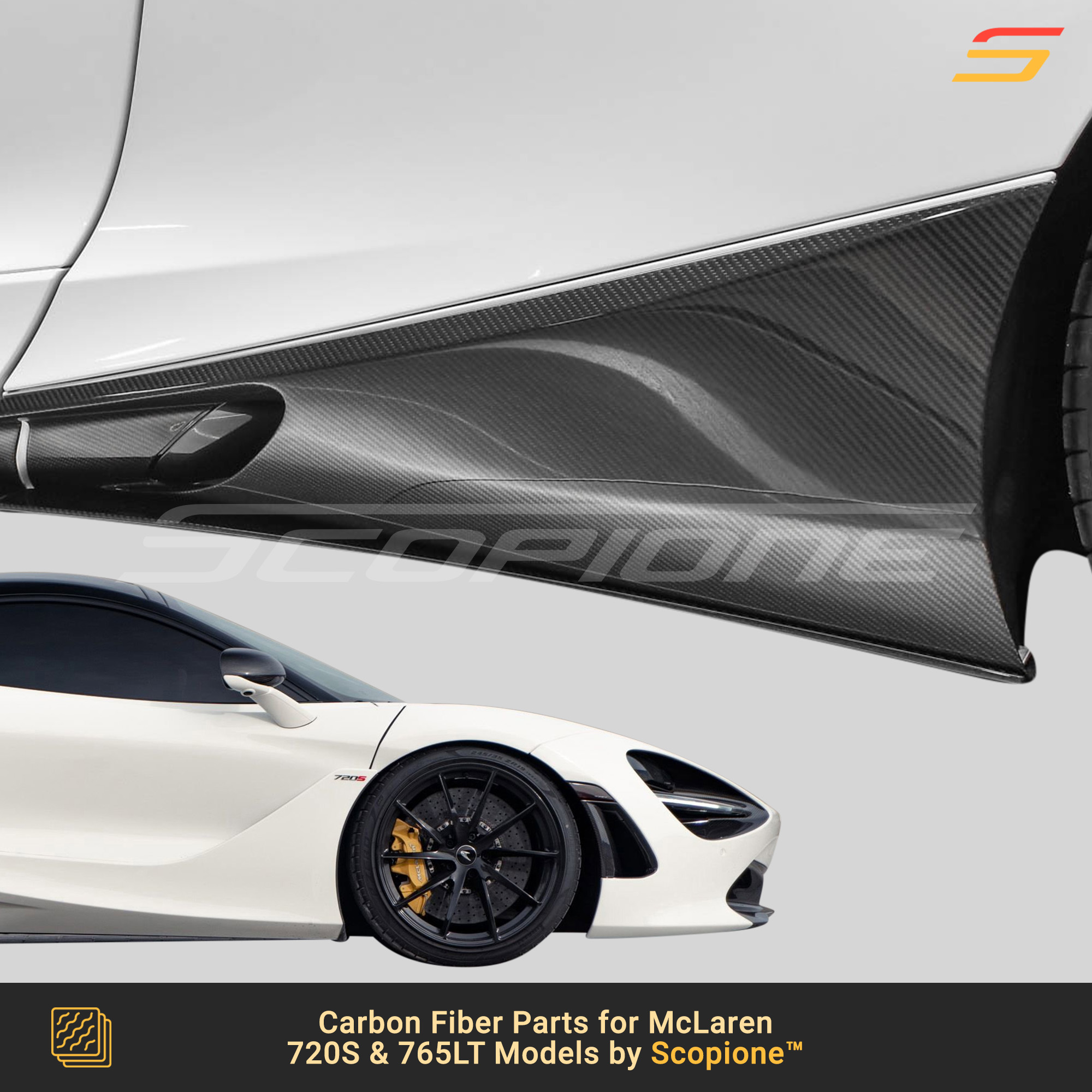
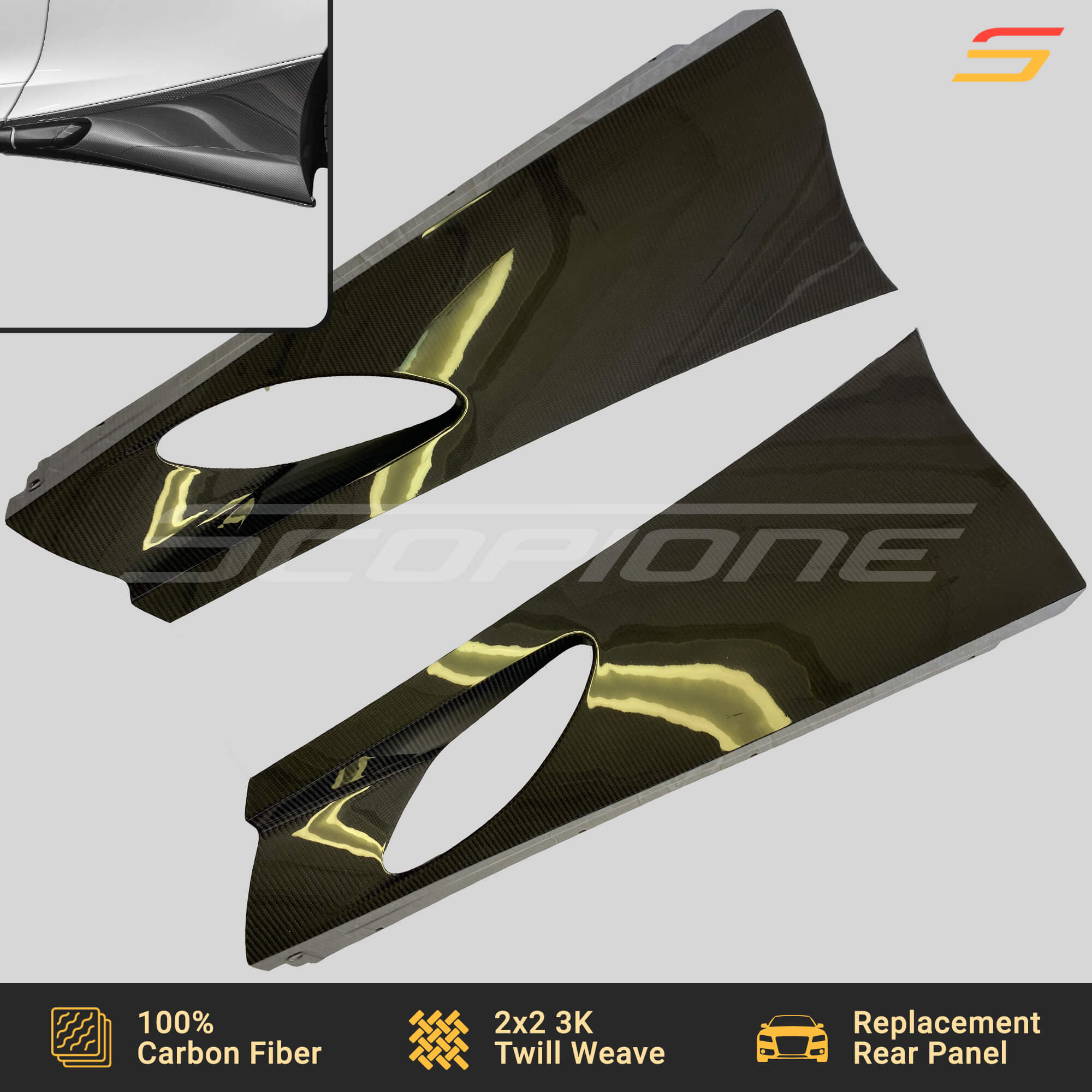
| Quarter Rocker Side Skirts (720S) | $2,500 | $200 – $400 | $2,700 – $2,900 |
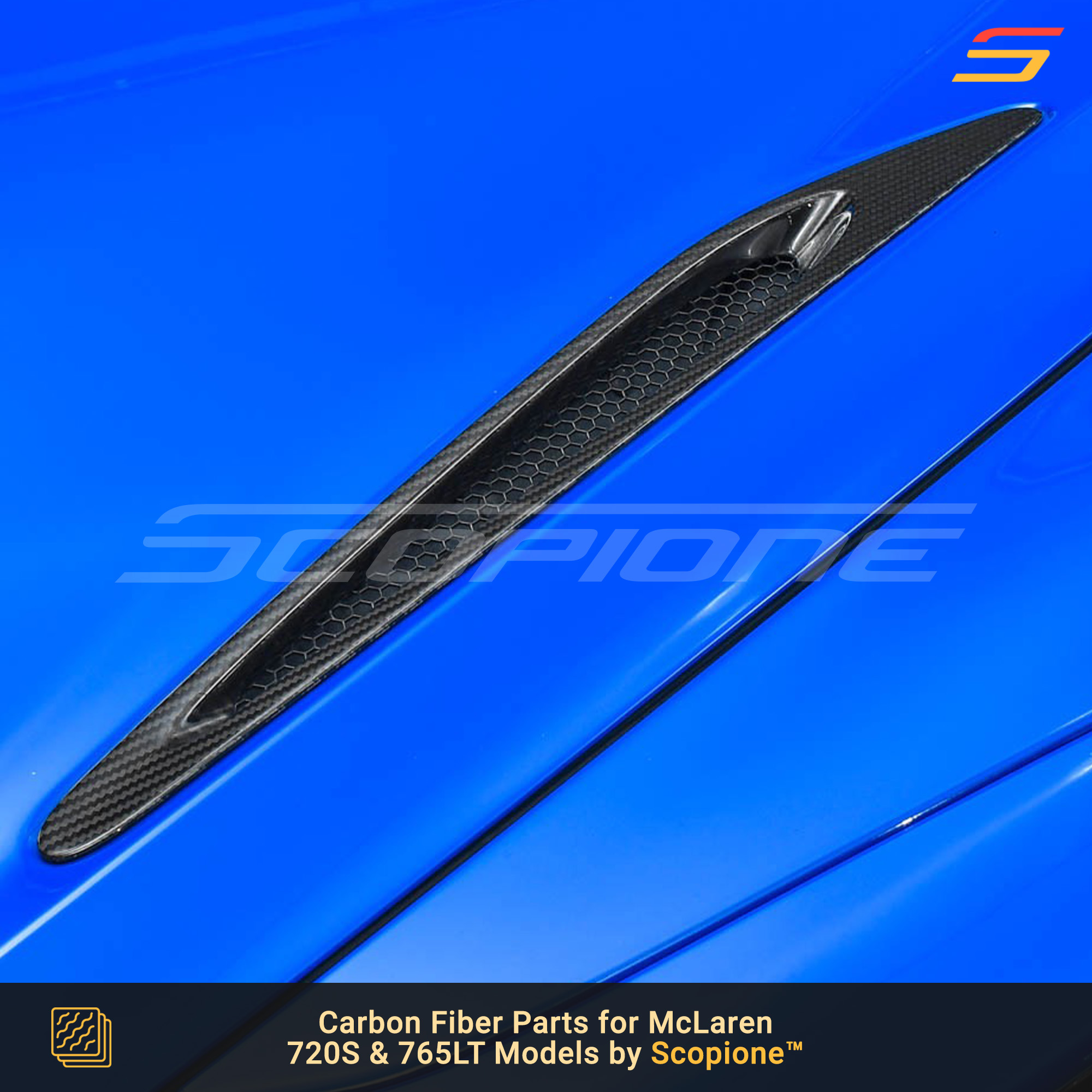
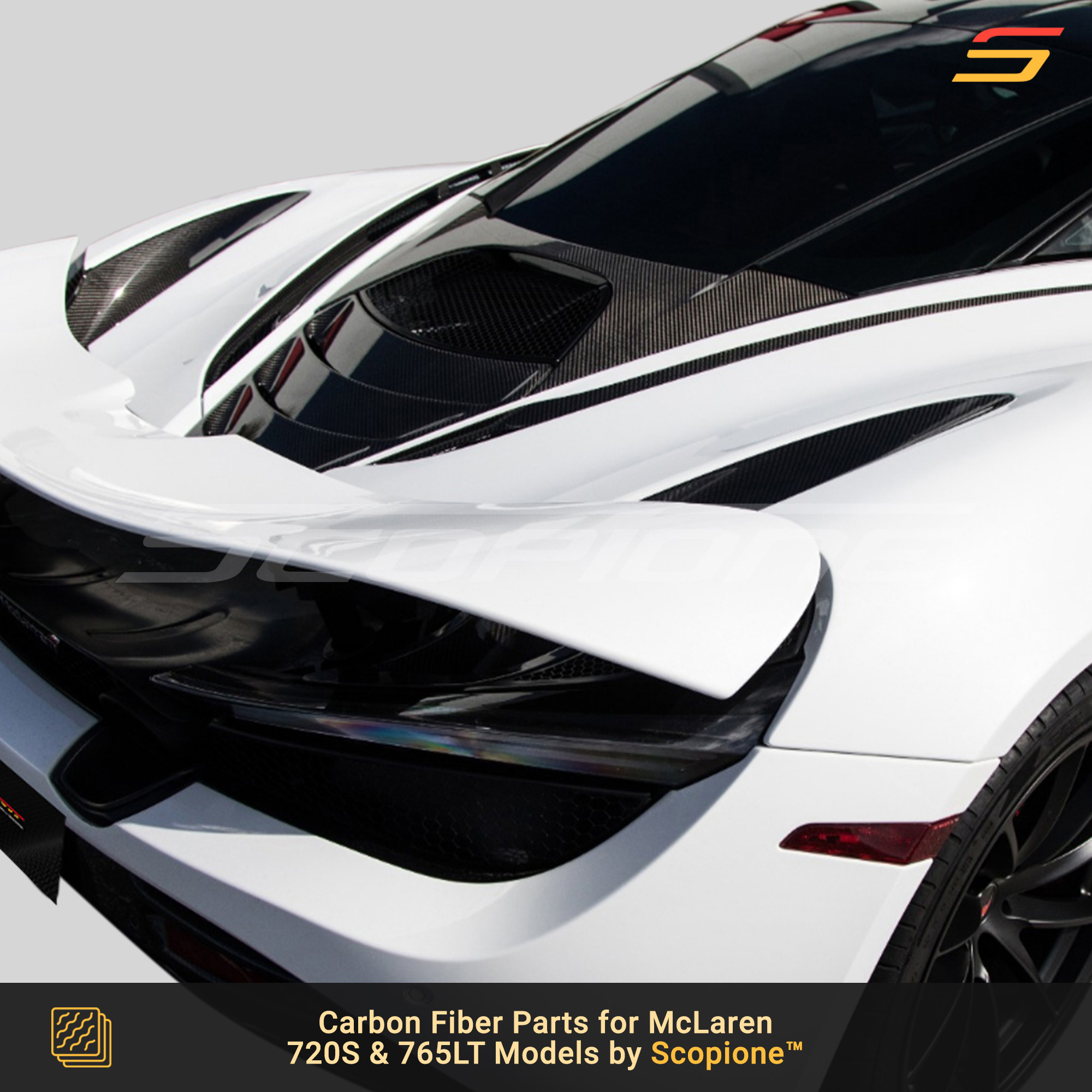
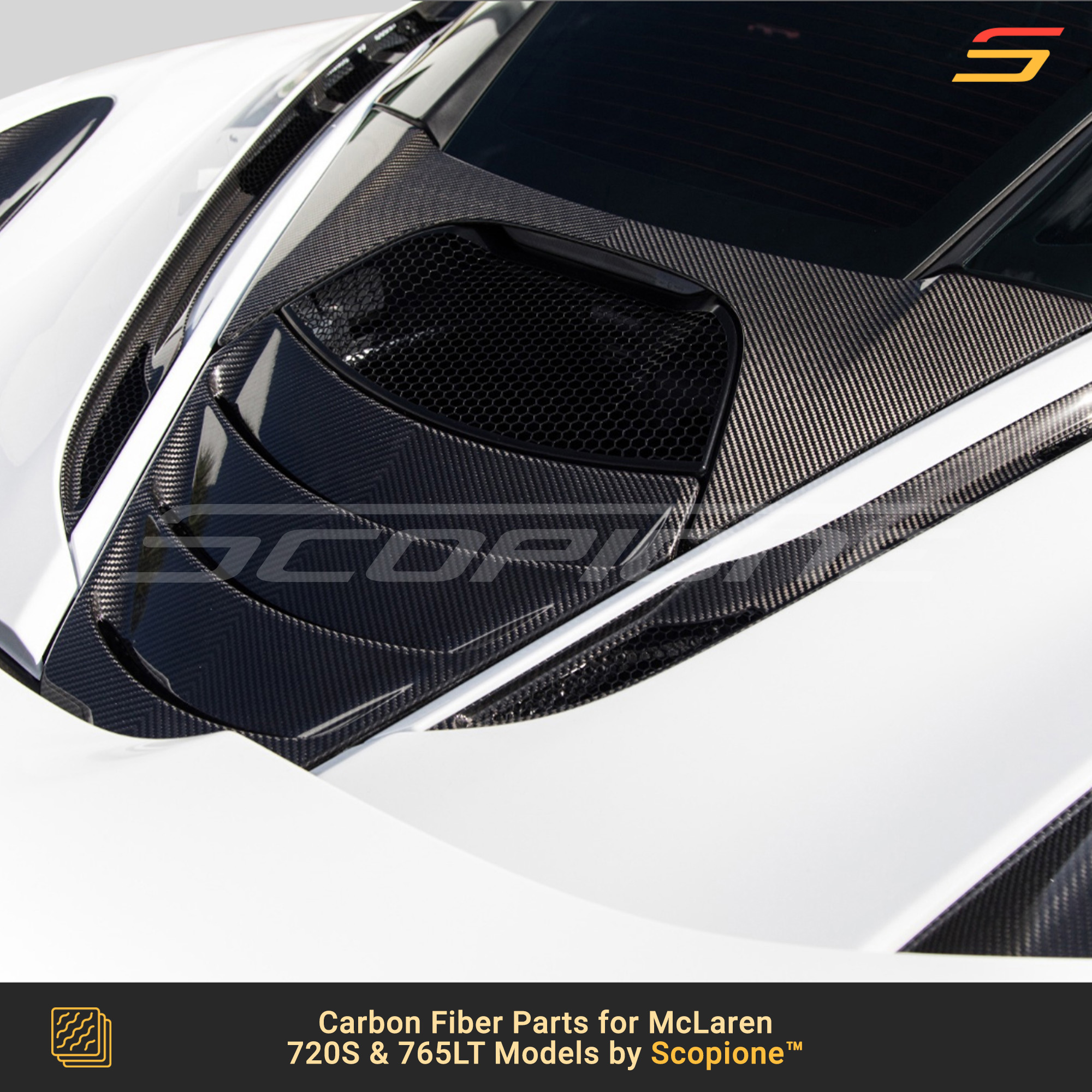
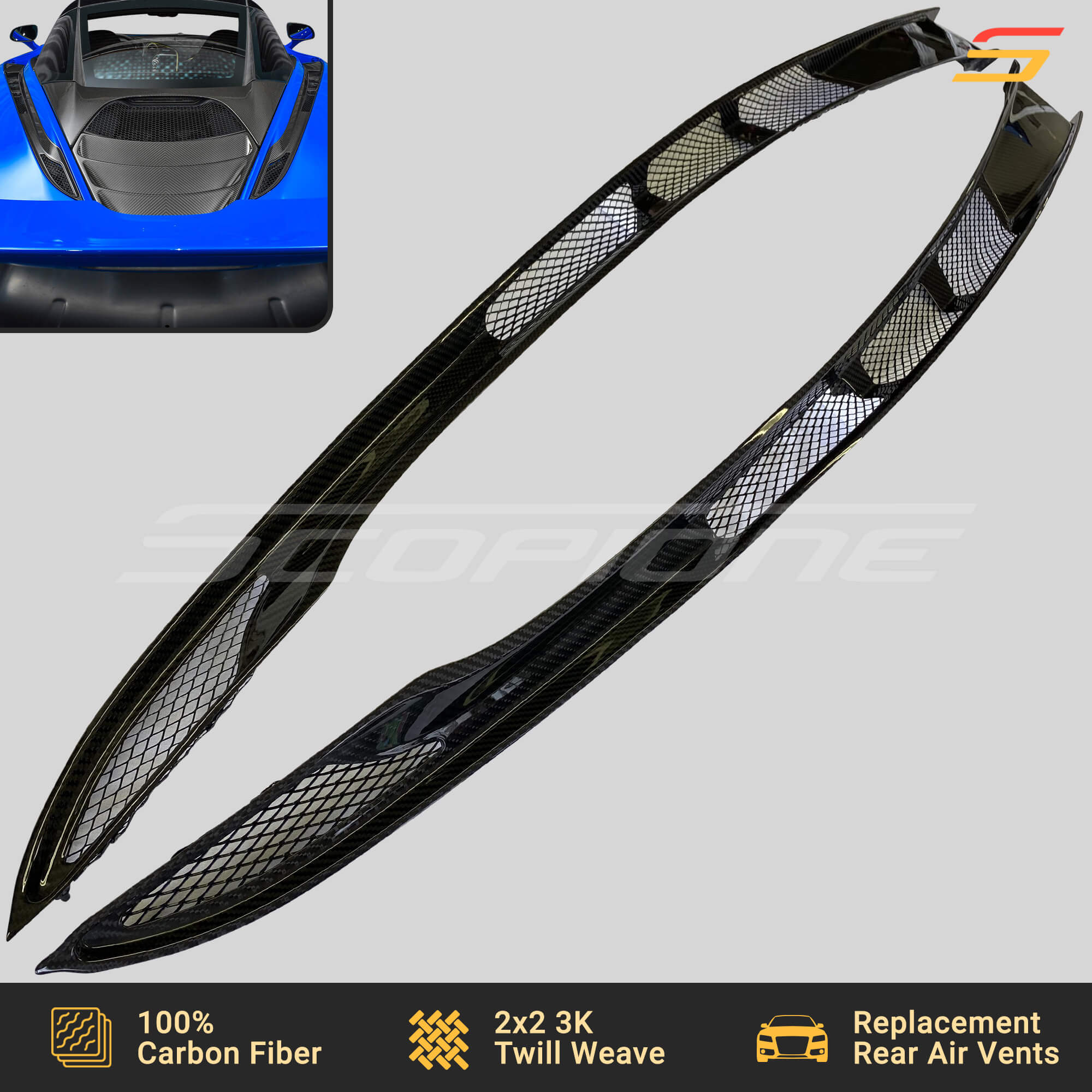
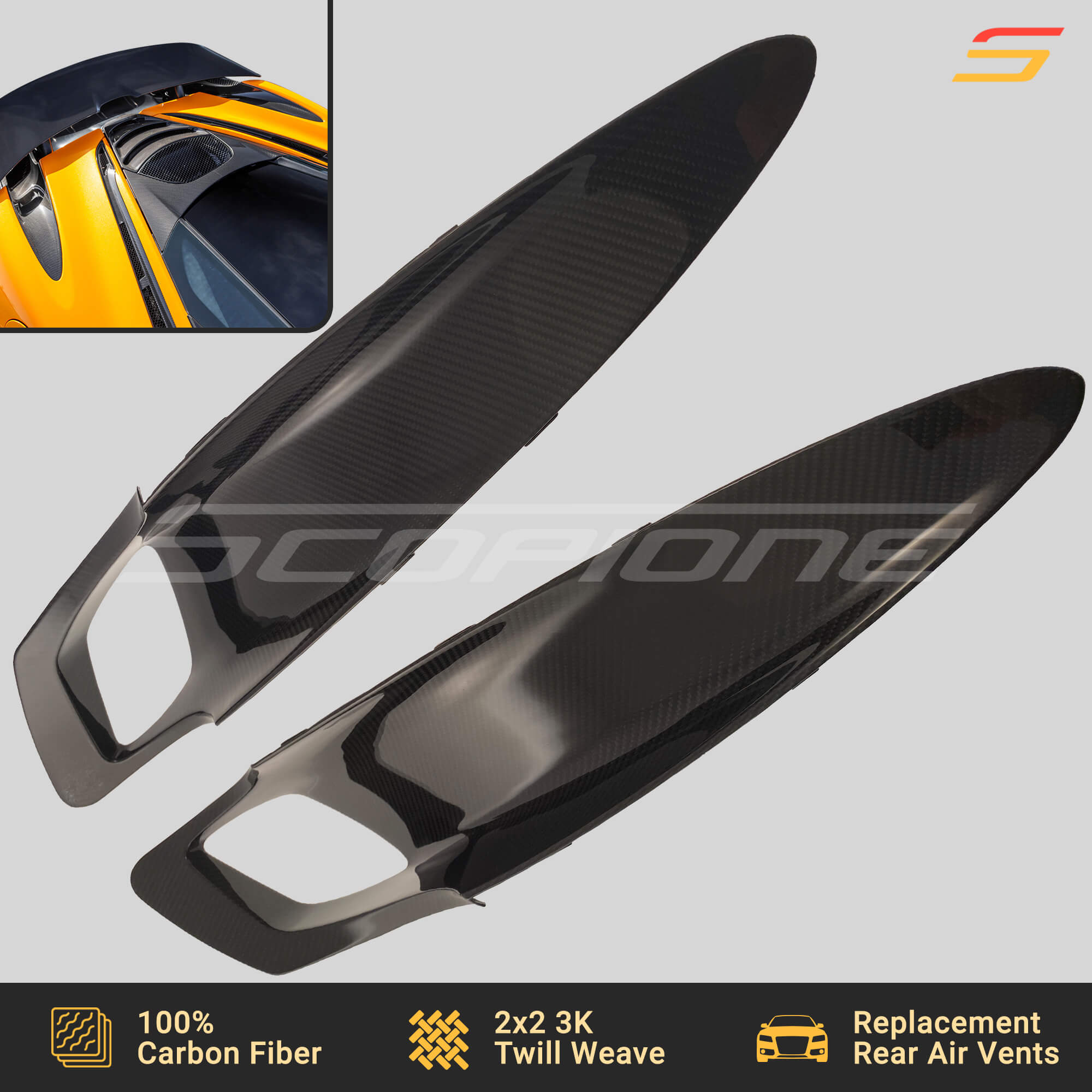
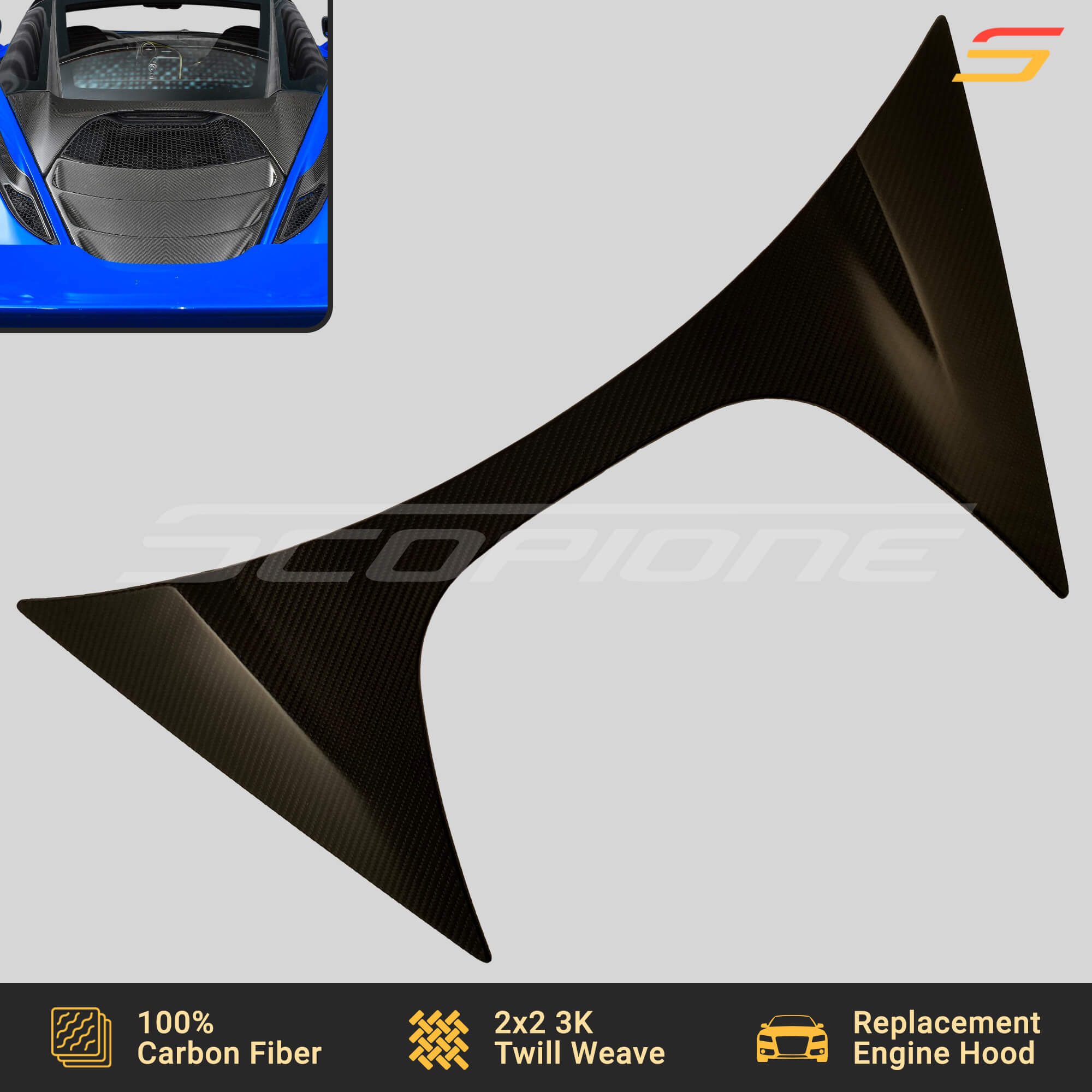
| Aero Bridge Lid Vents (720S / 765LT) | $2,500 | $200 – $400 | $2,700 – $2,900 |
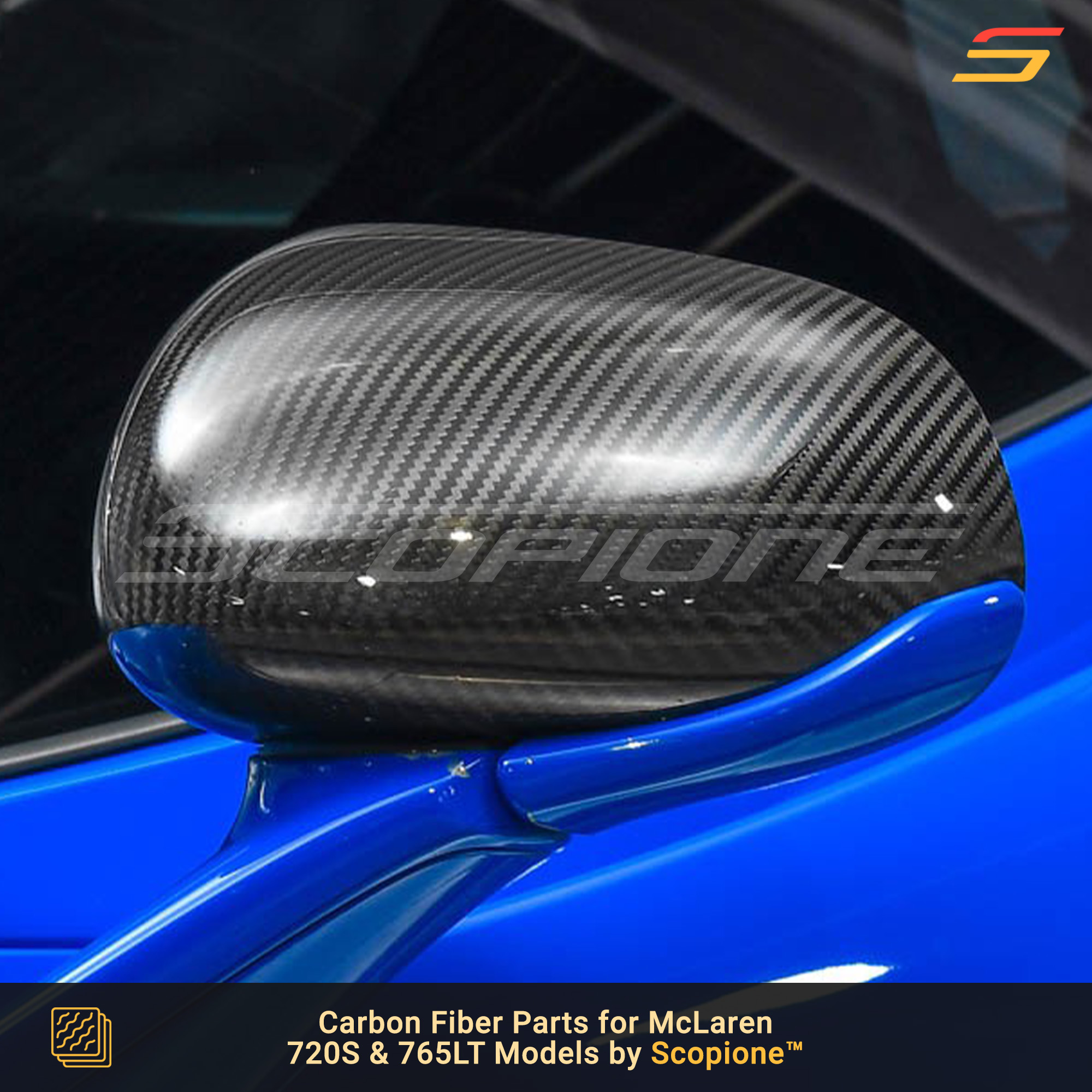
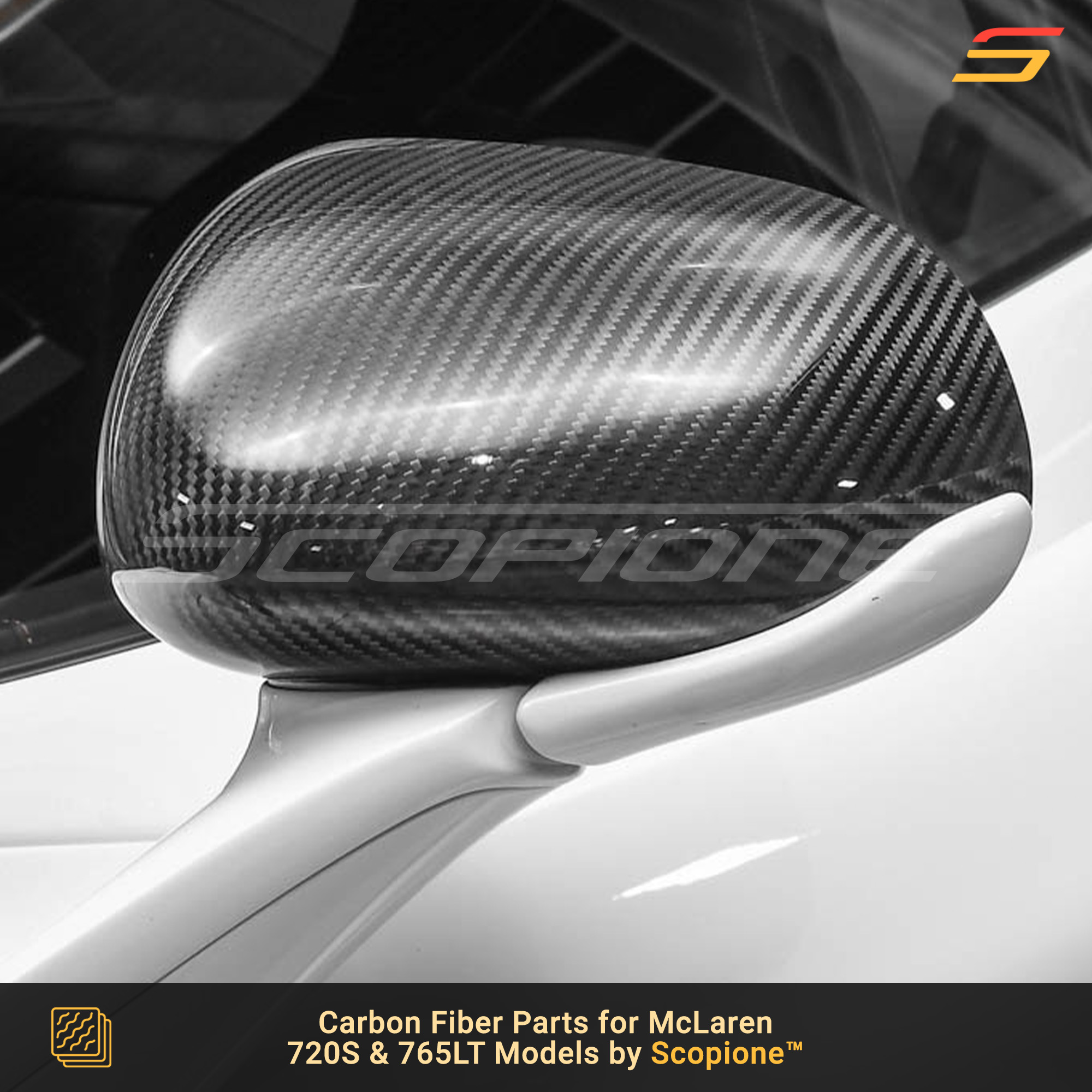
| Side Mirror Shells (570S / 720S / 12C / P1) | $2,400 | $100 – $200 | $2,500 – $2,600 |
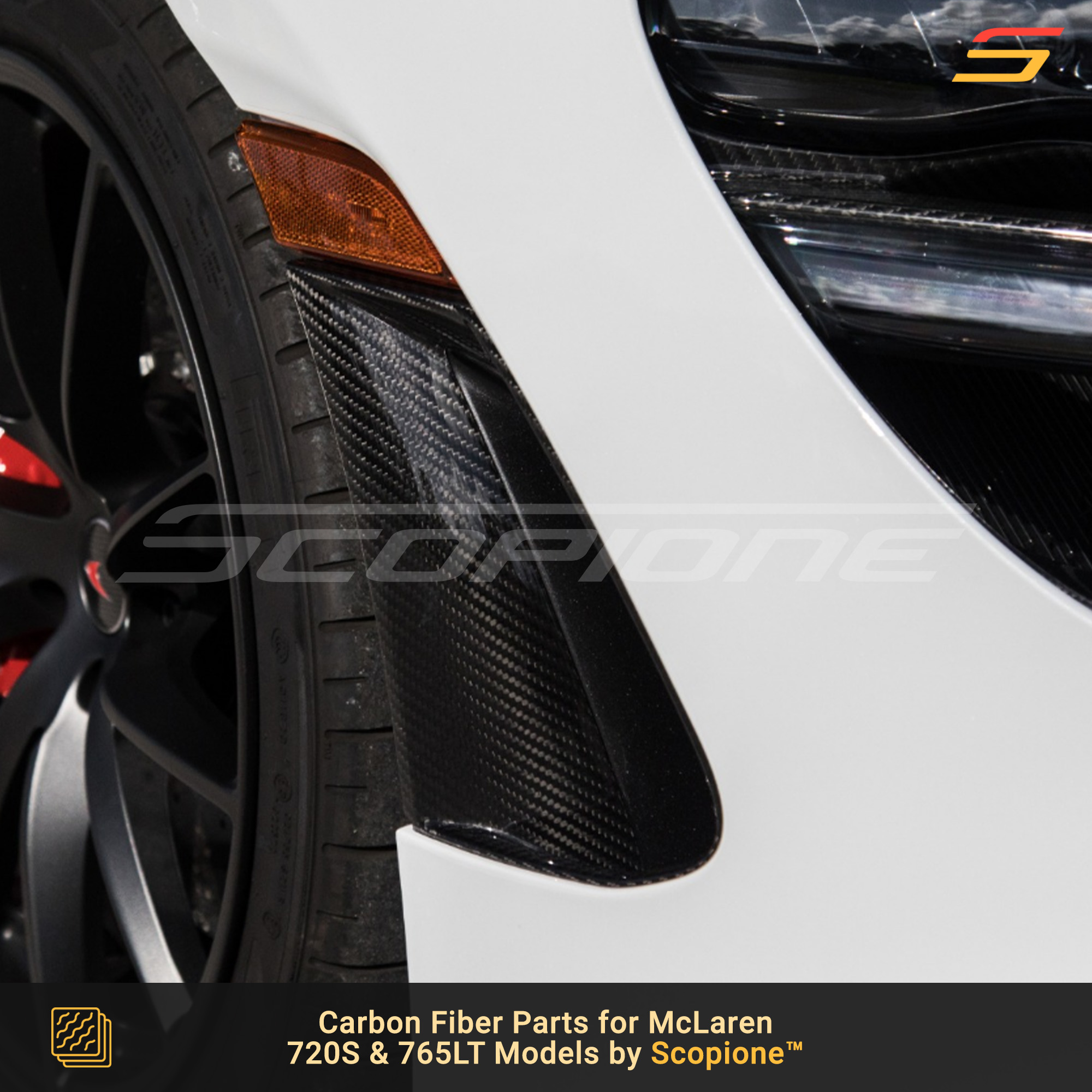
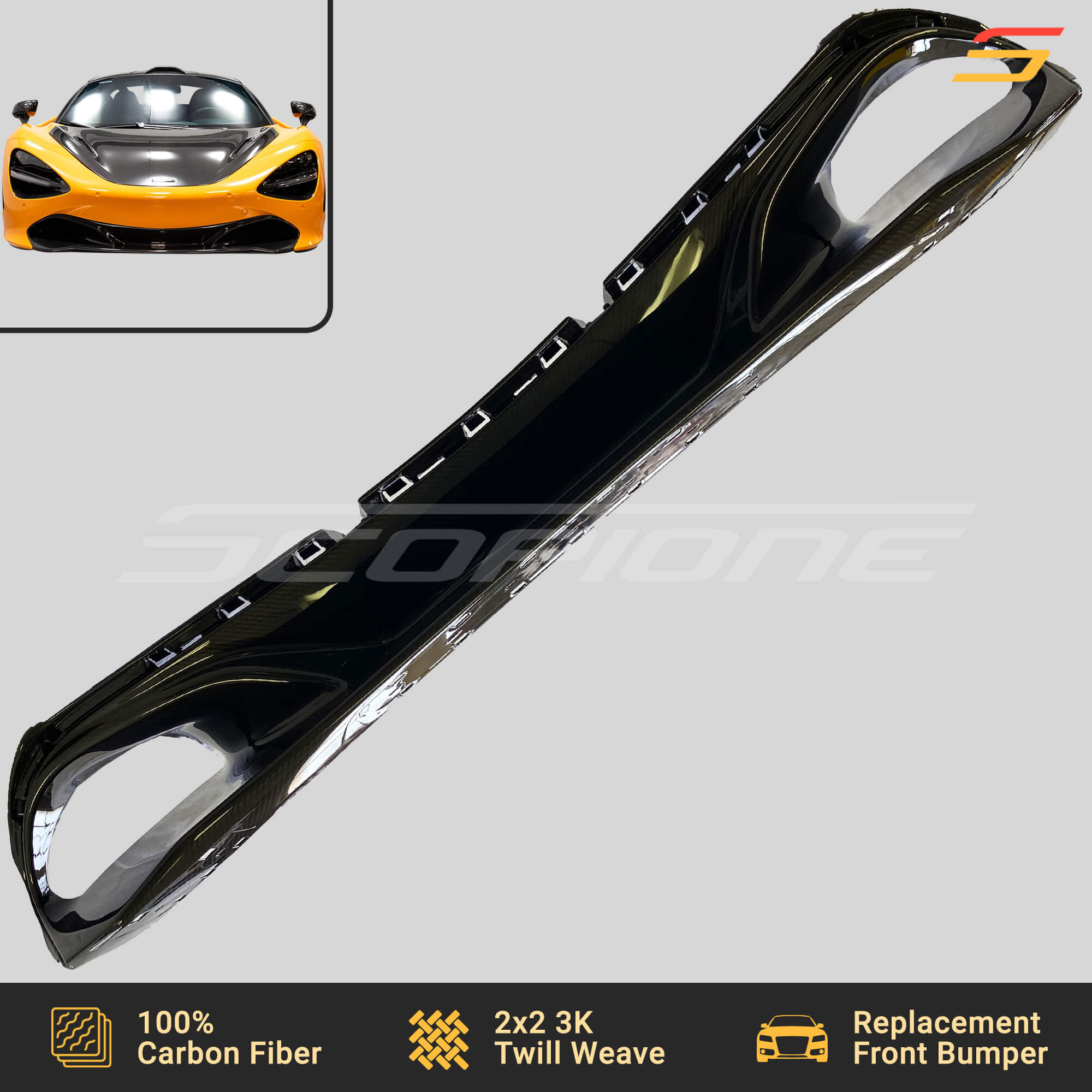
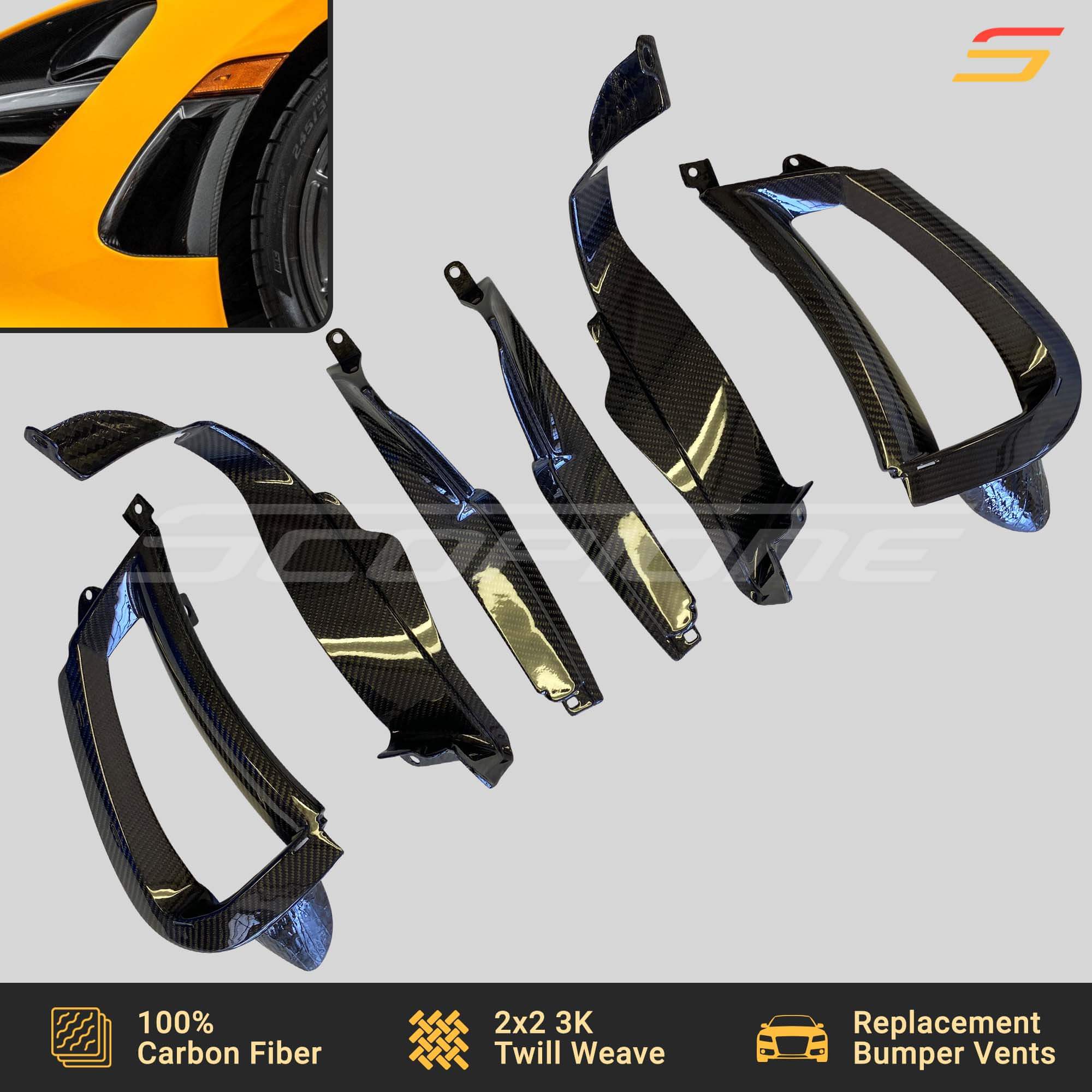
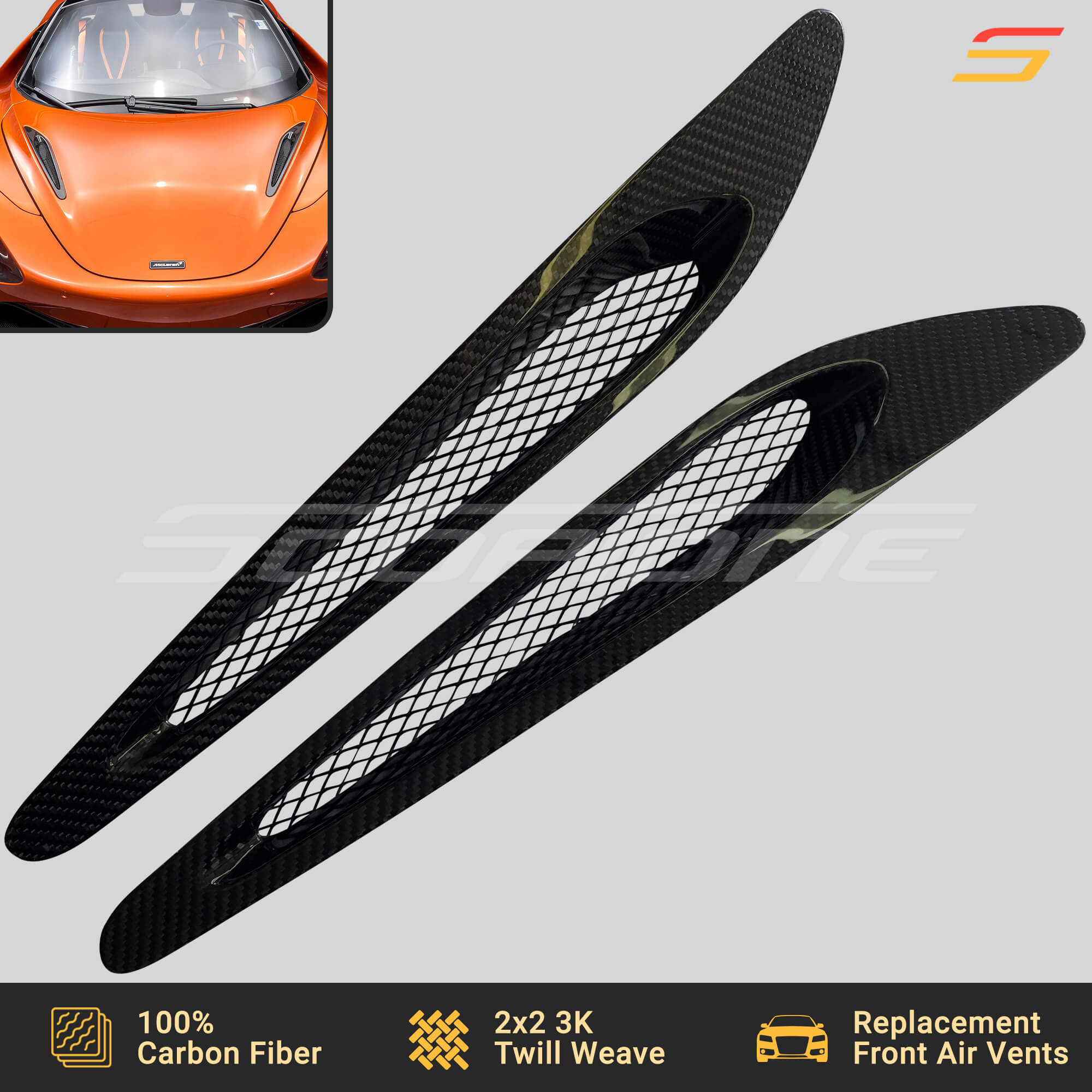
| Front Bumper Side Air Vents (720S / 750S / 765LT) | $2,300 | $200 – $400 | $2,500 – $2,700 |
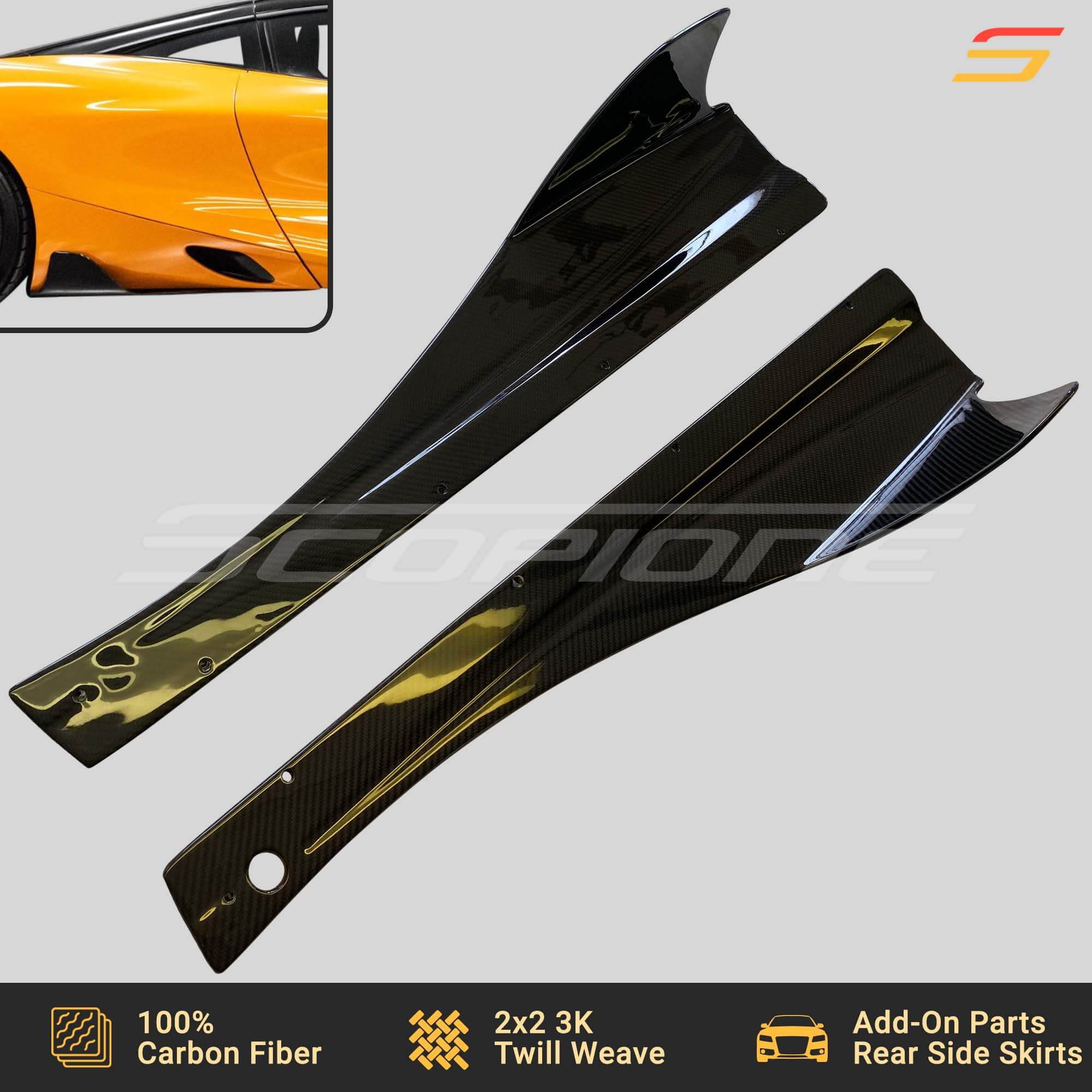
| Rear V Side Skirts (720S / 750S) | $2,200 | $200 – $400 | $2,400 – $2,600 |
| Aero Bridge Duct Vents (720S / 750S / 765LT) | $2,200 | $200 – $400 | $2,400 – $2,600 |
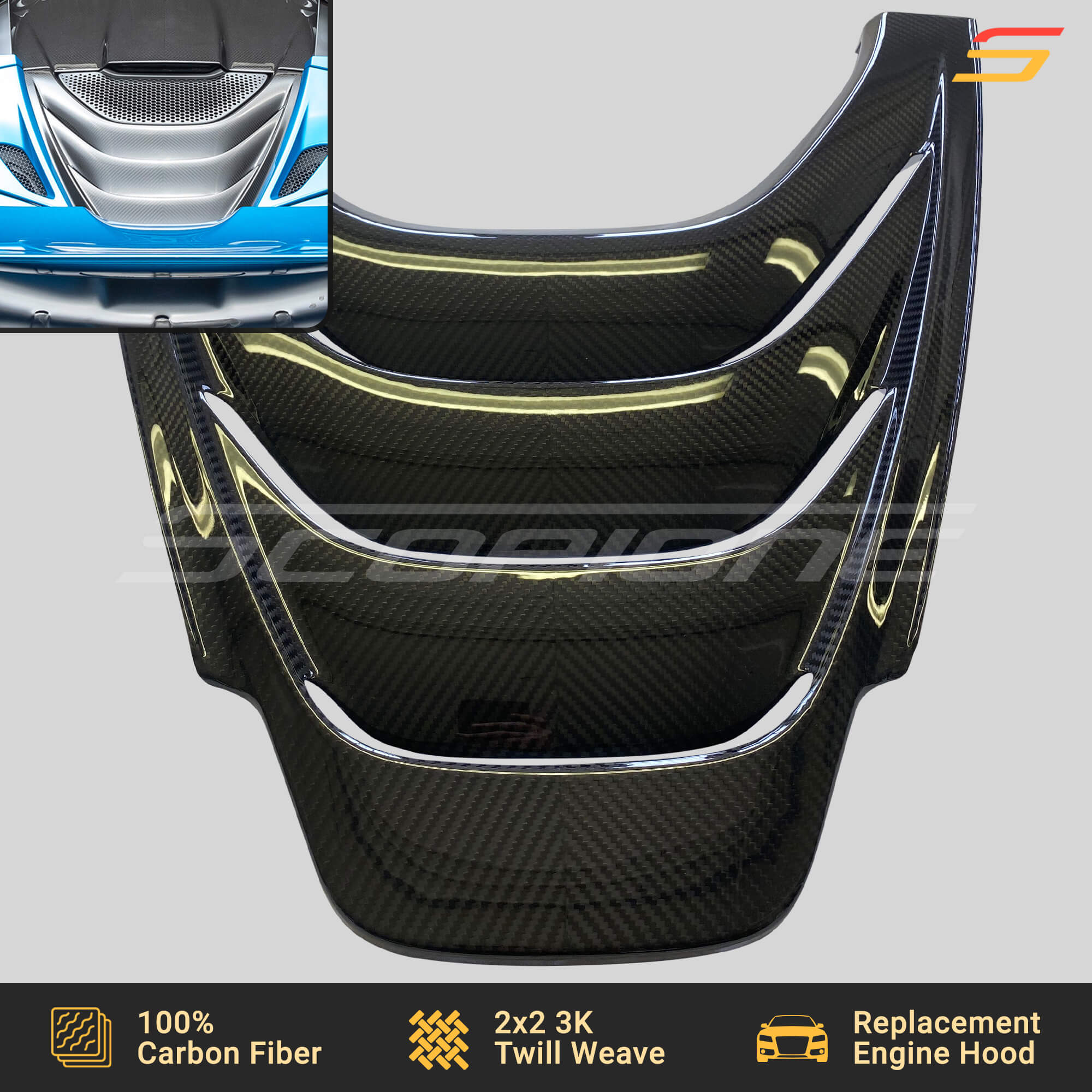
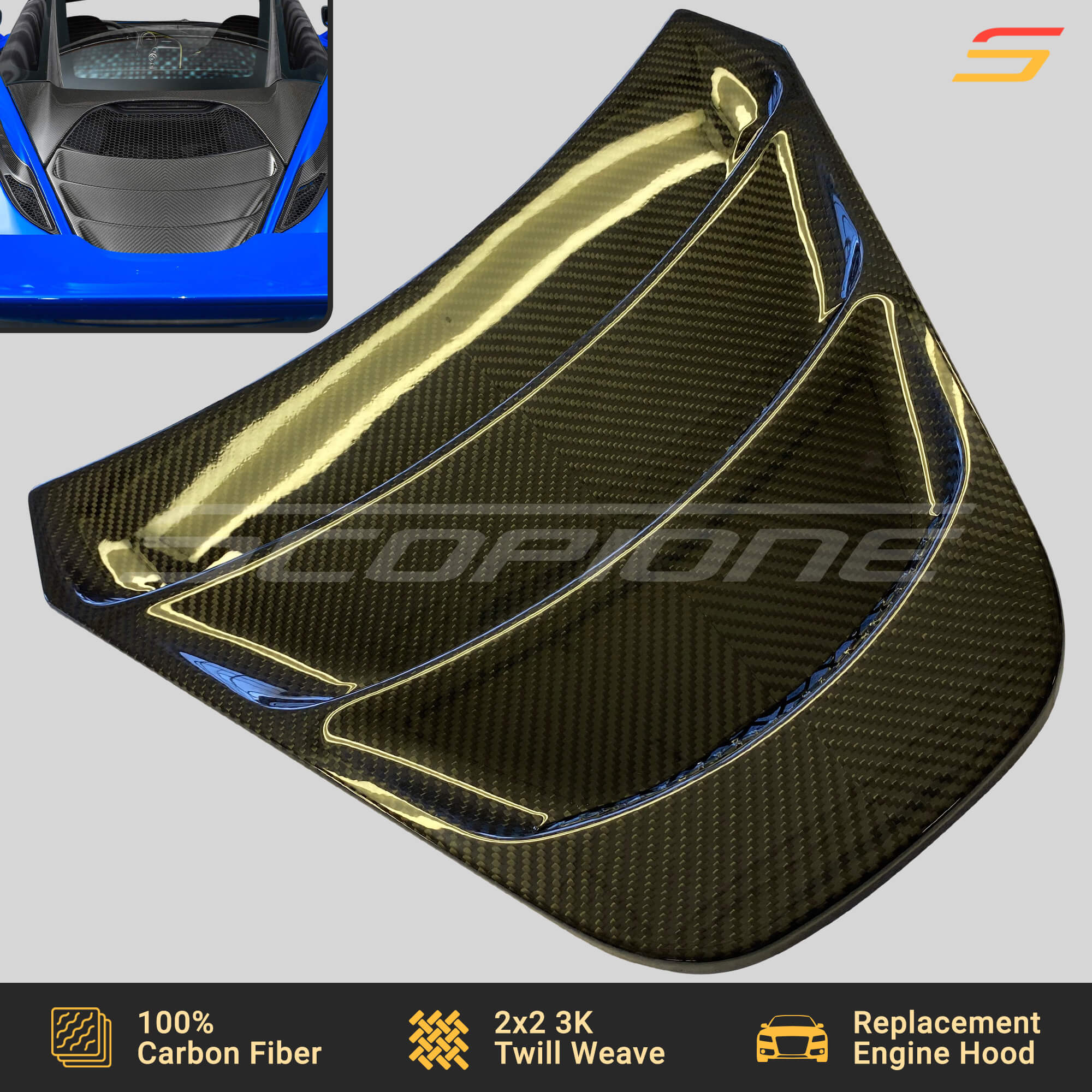
| Engine Cover – Spider (720S Spider) | $2,000 | $200 – $400 | $2,200 – $2,400 |
| Engine Cover Grille – Coupe (720S Coupe) | $1,650 | $200 – $400 | $1,850 – $2,050 |
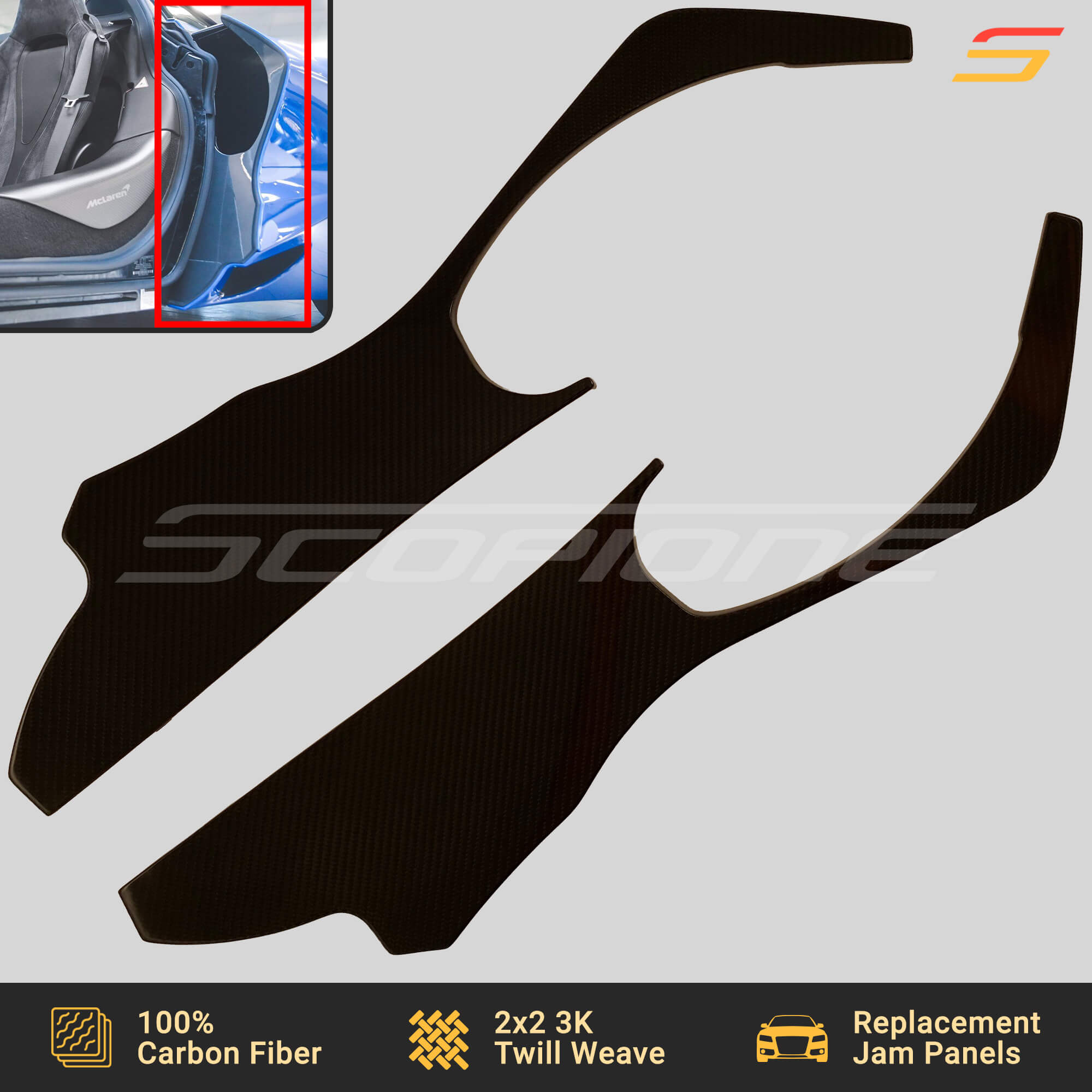
| Quarter Panel Fender Jams (720S / 750S / 765LT) | $1,700 | $200 – $400 | $1,900 – $2,100 |
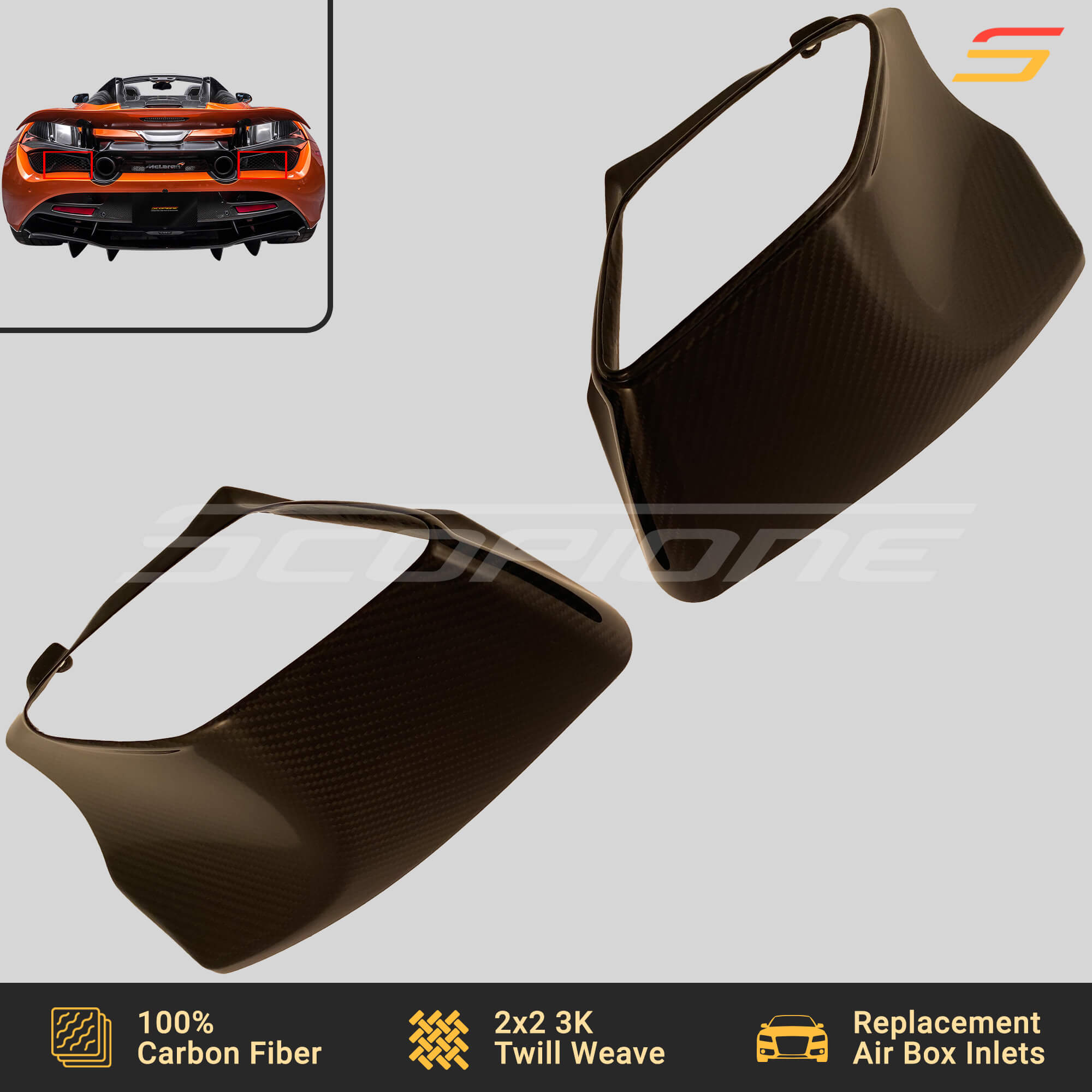
| Engine Air Box Intake (720S / 750S / 765LT) | $1,000 | $100 – $200 | $1,100 – $1,200 |
| Engine Cover Deck Panel – Coupe (720S Coupe) | $1,050 | $200 – $400 | $1,250 – $1,450 |
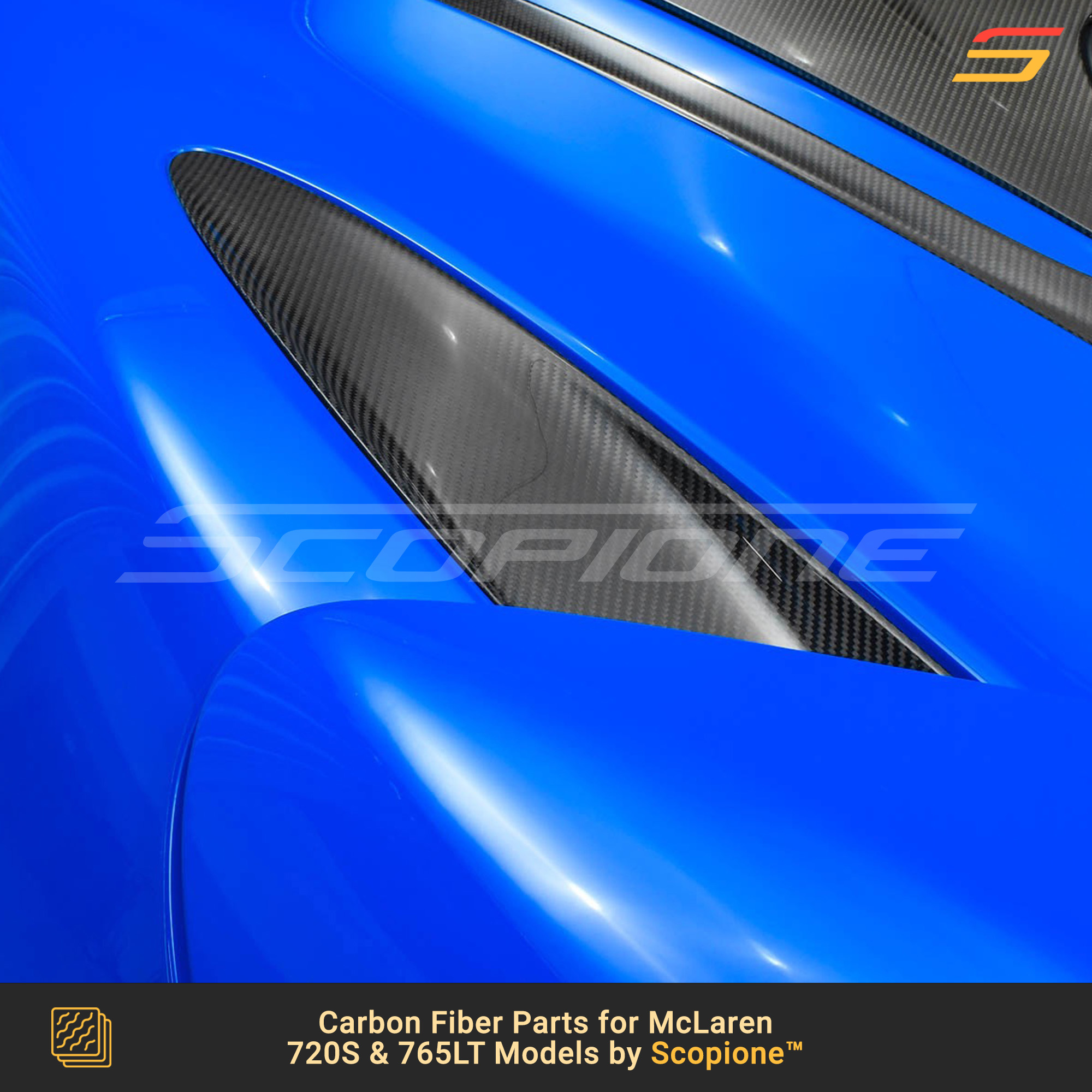
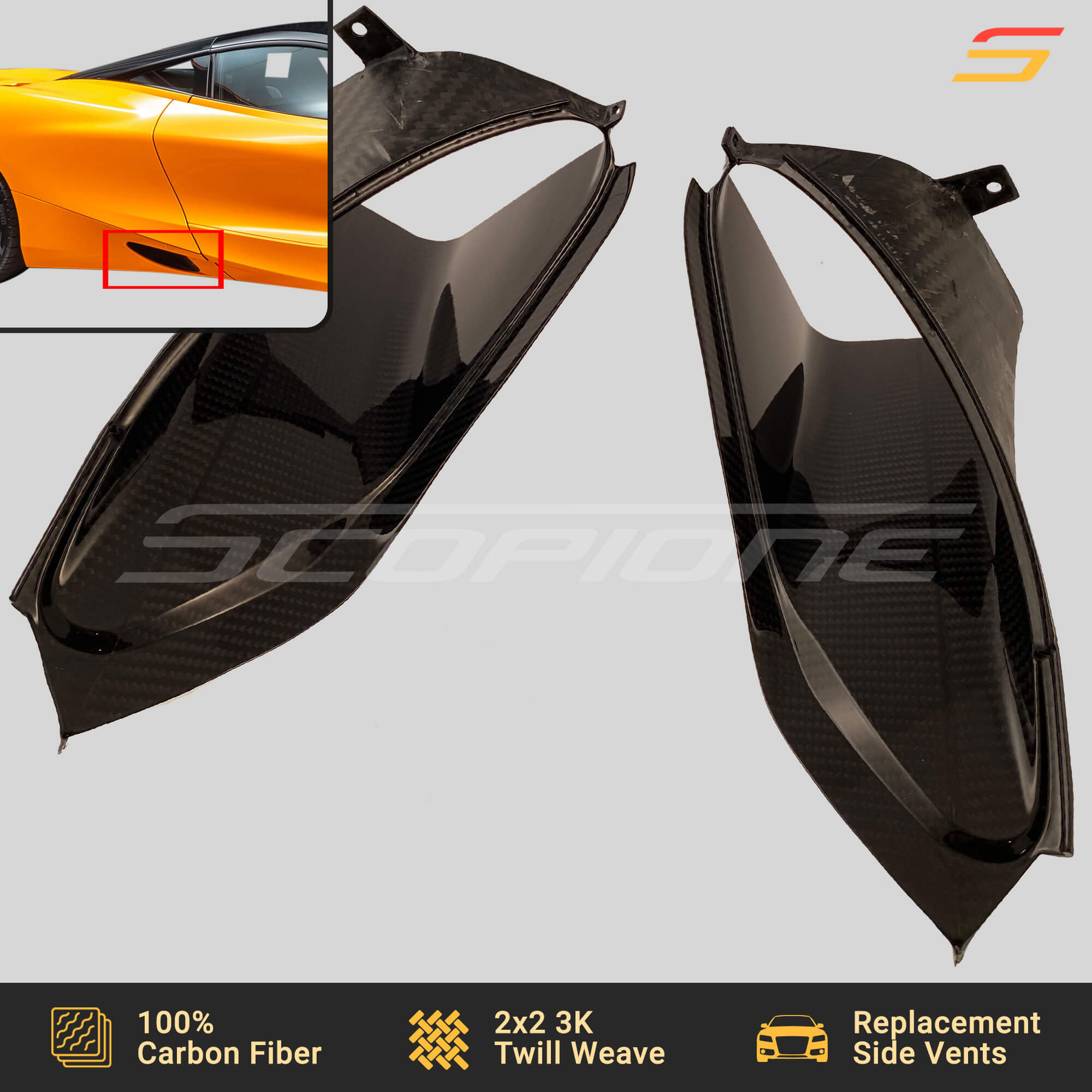
| Lower Quarter Vents (720S) | $900 | $100 – $200 | $1,000 – $1,100 |
| Front Hood Vents (720S / 750S / 765LT) | $850 | $100 – $200 | $950 – $1,050 |
| Extended Shift Paddles (570S / 720S / 12C / P1) | $500 | $50 – $100 | $550 – $600 |
Full package for a 720S Coupe: Twenty applicable parts total approximately $42,750, or $46,700–$51,050 fully installed – roughly 20–25% of the car’s current used market value. The Spider substitutes a single engine cover ($2,000) for the two coupe-specific panels ($2,700), adjusting the total slightly.
Browse Carbon Fiber Parts for the McLaren 720S, 765LT & 750S
Used McLaren 720S, 765LT & 750S Market (2024–2026)
720S, 765LT, and 750S resale values are shaped by model variant, body style, service history, and suspension accumulator condition. Current approximate market ranges:
- 2017–2022 720S Coupe: $180,000 – $275,000
- 2019–2022 720S Spider: $200,000 – $320,000
- 2020–2021 765LT Coupe (765 built): $400,000 – $550,000
- 2021–2022 765LT Spider (765 built): $500,000 – $700,000+
- 2023–present 750S Coupe: $280,000 – $350,000
- 2023–present 750S Spider: $310,000 – $380,000

Key Pricing Factors for Used McLaren 720S, 765LT & 750S
- Coupe vs. Spider premium: Spider variants carry $20K–$50K premiums. The Monocage II-S requires no chassis reinforcement, so the delta is buyer preference rather than an engineering trade-off.
- 765LT production scarcity (765 + 765): All allocations were pre-sold. Used examples consistently trade above original MSRP. Color specification, MSO options, and delivery-level mileage drive the widest premiums within the 765LT pool.
- Performance spec and Track Pack: Performance specification with forged wheels, carbon-ceramic brakes, and Trofeo R tires commands $10K–$20K over base Luxury trim. Factory CF interior packages add resale value.
- MSO heritage editions: McLaren Special Operations colors and bespoke specifications create their own tier. Le Mans (50 built), Daniel Ricciardo (3 built), and Gulf Oil livery editions trade above standard 720S values.
- Suspension accumulator condition: The PCC II system’s nitrogen-charged hydraulic accumulators are the most discussed 720S maintenance item. Failed units cause noticeable ride quality changes ($3,000–$6,000/axle to replace). Cars with documented accumulator service command premiums. The Porsche 911 Turbo S trades in the same bracket without this specific concern.
720S, 765LT, and 750S owners considering carbon-fiber modifications can explore Scopione’s McLaren carbon fiber catalog.
Does Carbon Fiber Affect the Resale Value of a McLaren 720S?
Carbon-fiber components from documented sources can maintain or strengthen resale on the 720S, 765LT, and 750S – particularly on Performance-spec and MSO-optioned cars where factory CF trim is already part of the visual identity. A twill-weave rear diffuser or spoiler wing reads as a natural extension of the 720S’s aerodynamic design rather than an aftermarket addition. On the 765LT, where nearly every body panel is factory CF, aftermarket engine bay and aero bridge pieces complement the existing carbon theme.
CF adds value when professionally installed with shop receipts, when it complements existing factory carbon elements, and on high-visibility surfaces like diffusers and door sills. It does not when fitment produces gaps against McLaren’s precision panel alignment, when installed without documentation, or when modifications conflict with the car’s MSO specification. Retain original panels in storage and keep installation records in the service file.
Is the McLaren 765LT a Good Investment?
- 765LT collector positioning: Factory CF Longtail bodywork, 755 hp, quad-exit Ti exhaust, 80 kg lighter, production capped at 765 coupes and 765 spiders – all pre-sold. The Spider has shown the strongest appreciation: $500K to $880K at auction for delivery-mileage examples.
- 720S depreciation trajectory: Early coupes have settled at $180K–$210K – roughly 35–40% below original MSRP. That curve appears to be flattening as the 720S gains recognition as the car that proved McLaren’s second-generation carbon chassis.
- Last ICE-only Longtail factor: McLaren’s next Super Series will use hybrid power. The 765LT may be the final Longtail without electric assistance – a distinction that historically drives collector premiums in the supercar segment. The Audi R8 experienced a similar dynamic as the last naturally aspirated V10 supercar in the VW Group.
- 750S positioning: Too new for definitive secondary market data. Its status as the final ICE-only Super Series McLaren may support values as hybrid models arrive.
Notable Auction Results for the McLaren 720S & 765LT (2024–2026)
| Model | Sale Price |
|---|---|
| 2018 720S Performance Coupe | $207,200 (Jan 2024, Bring a Trailer) |
| 2019 720S Coupe | $215,000 (mid-2024) |
| 2020 720S Spider | $265,000 (2024) |
| 2019 720S Spider Performance | $346,500 (late 2024, heavily optioned) |
| 2021 765LT Coupe | $445,000 (2024) |
| 2022 765LT Spider | $599,500 (Jan 2026, Barrett-Jackson) |
| 2022 765LT Spider | $880,000 (Jan 2024, highest recorded) |
What Are Common McLaren 720S Maintenance Issues and Costs?
Annual routine service runs $2,500–$4,000 at a McLaren dealer ($250–$350/hour labor). Key items by component:
- Suspension accumulators (PCC II): Nitrogen-charged hydraulic units in the Proactive Chassis Control system. Degraded units cause softer body control and increased float. Replacement: $3,000–$6,000 per axle. Typical lifespan: 4–6 years or 20,000–30,000 miles.
- Carbon-ceramic brakes: Front rotors $3,000–$5,000 per pair, rear rotors $3,000–$5,000 per pair. Rotor lifespan: 30,000–50,000 miles on street use, significantly less with frequent track days.
- SSG gearbox service: Dual-clutch transmission fluid and filter at scheduled intervals: $2,000–$3,500. The gearbox itself is robust – catastrophic failures are rare on the 720S platform.
- Engine reliability (M840T): The 4.0-liter twin-turbo is generally reliable. Catastrophic failures are uncommon; replacement runs approximately $70,000 if needed.
Tires run $500–$800 per pair depending on axle and fitment. Independent McLaren specialists can reduce costs by 25–40% versus dealer rates across all service categories.
How Much Does a Used McLaren 720S or 765LT Cost?
- Entry point: 2017–2019 720S Coupe ($180K – $230K) – The most accessible second-generation Super Series. Confirm accumulator condition, service history, and carbon-ceramic brake wear. Budget $6K–$12K annually for running costs.
- Performance pick: 2020–2022 720S Performance ($230K – $275K) – Forged wheels, Trofeo R tires, and CF interior options separate Performance from Luxury trim. Late model years carry production refinements and potentially longer warranty coverage.
- Open-air: 720S Spider ($200K – $320K) – Monocage II-S delivers coupe rigidity with the roof removed. CF engine covers and aero bridge panels achieve maximum visual impact on the Spider body style.
- Collector tier: 765LT Coupe or Spider ($400K – $700K+) – 1,530 total units. 765LT-specific Ti exhaust components carry higher replacement costs than standard 720S items. MSO-spec examples with documented provenance anchor the top of the range.
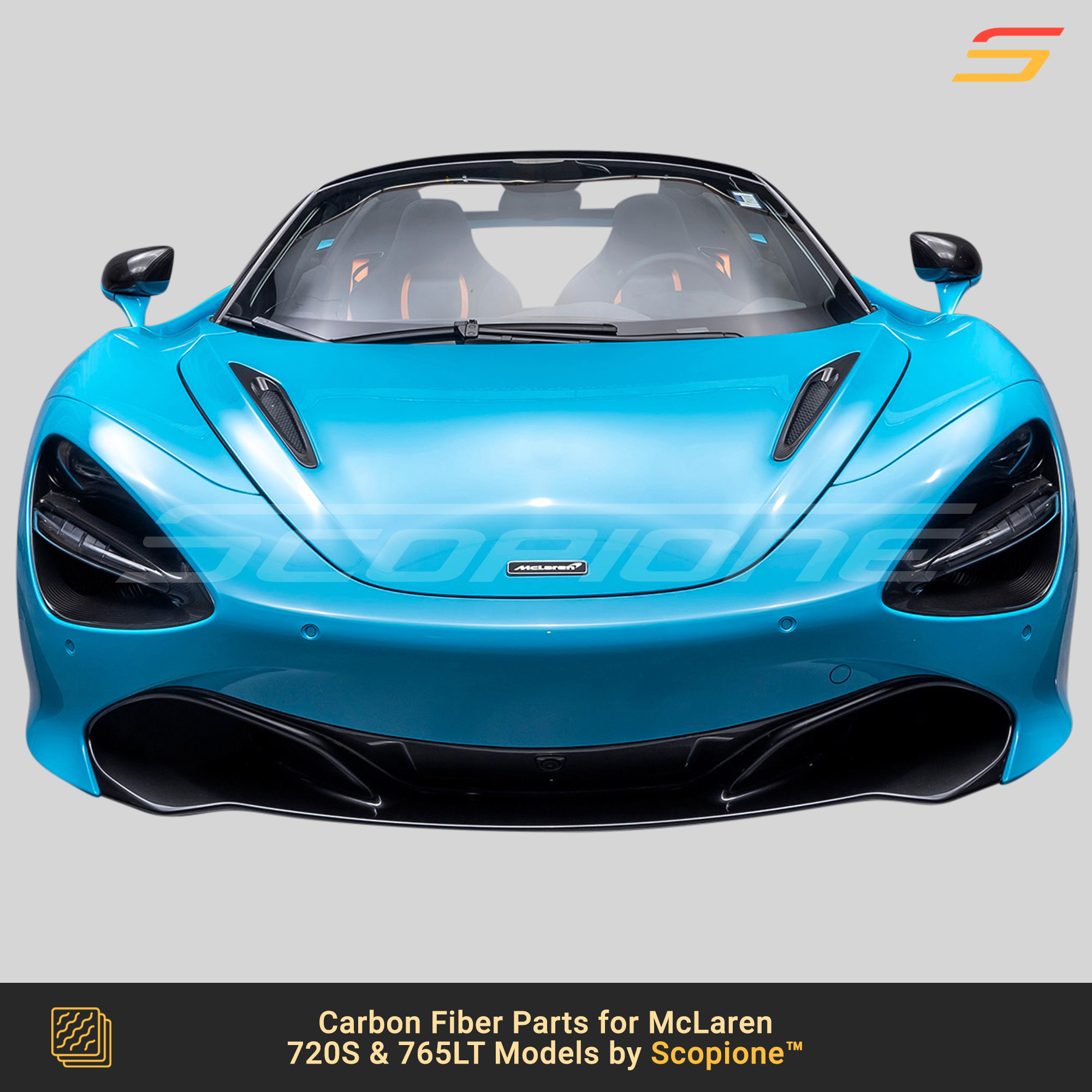
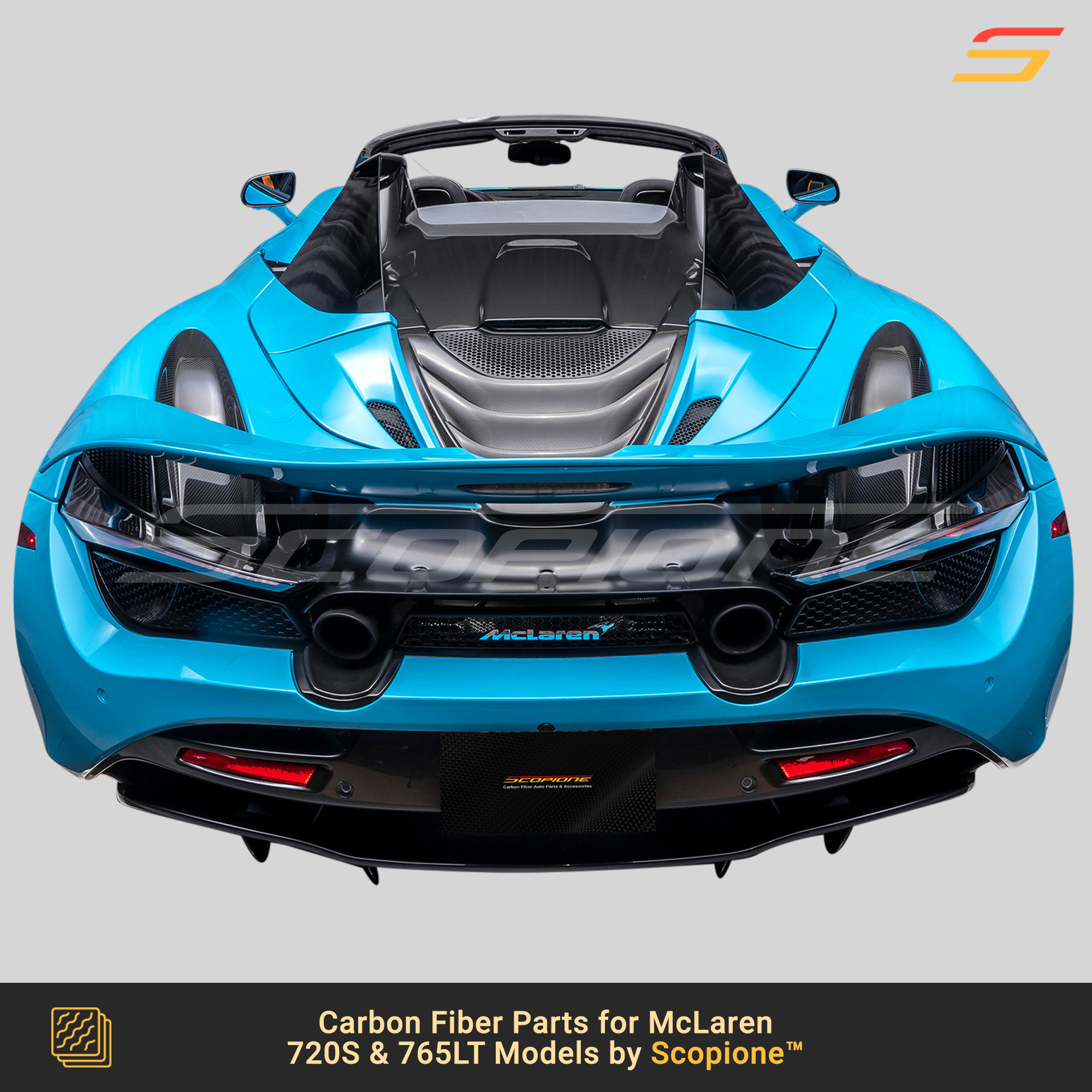
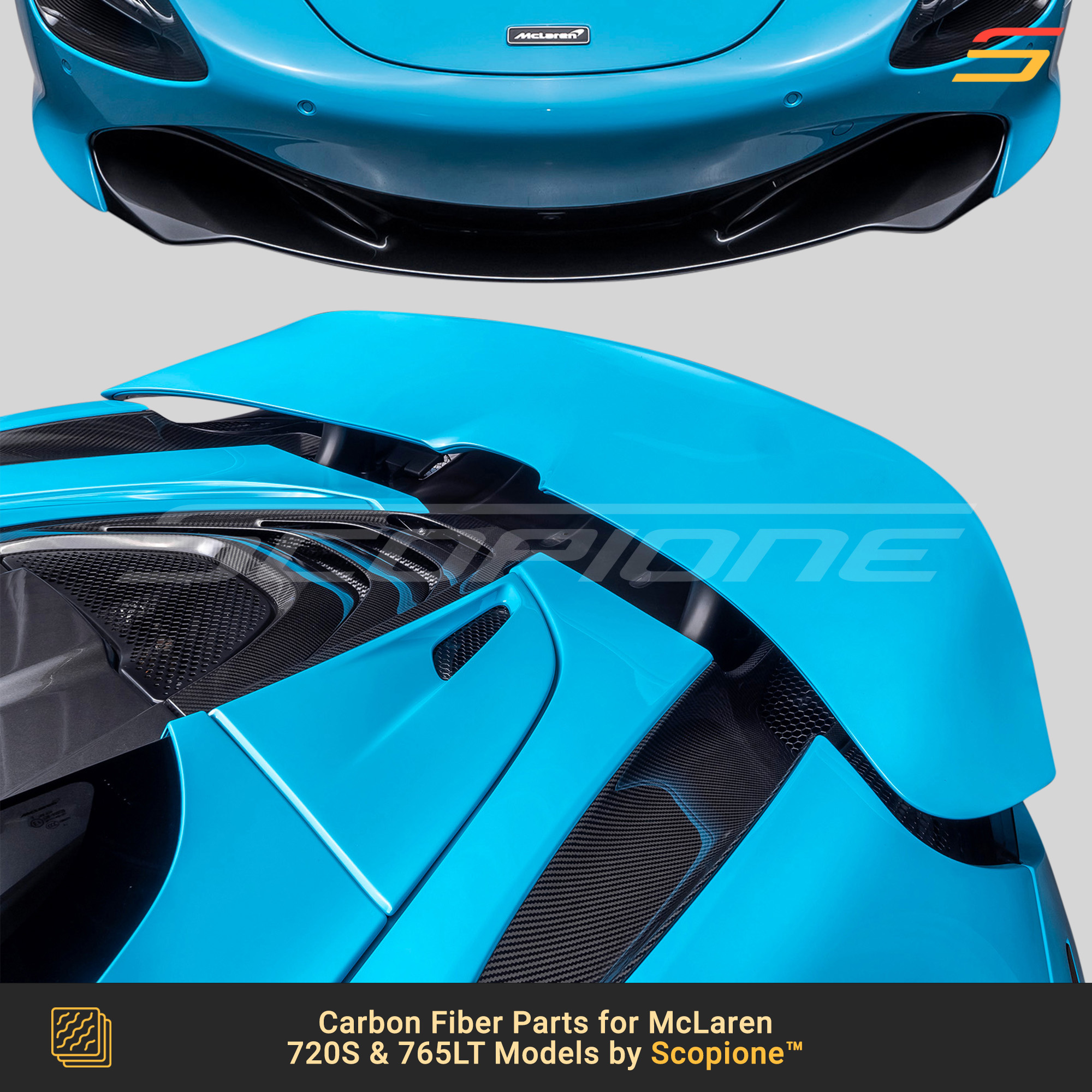
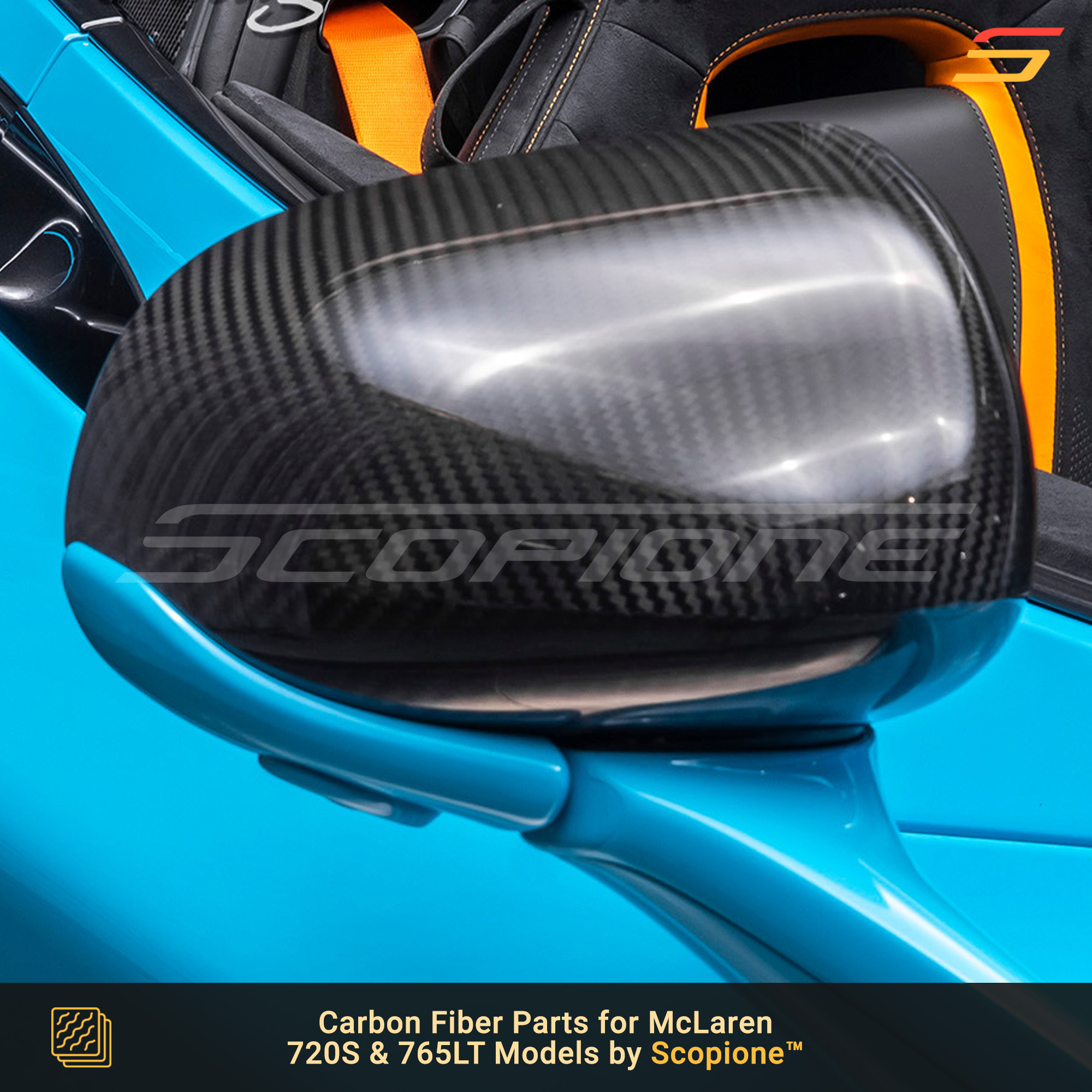
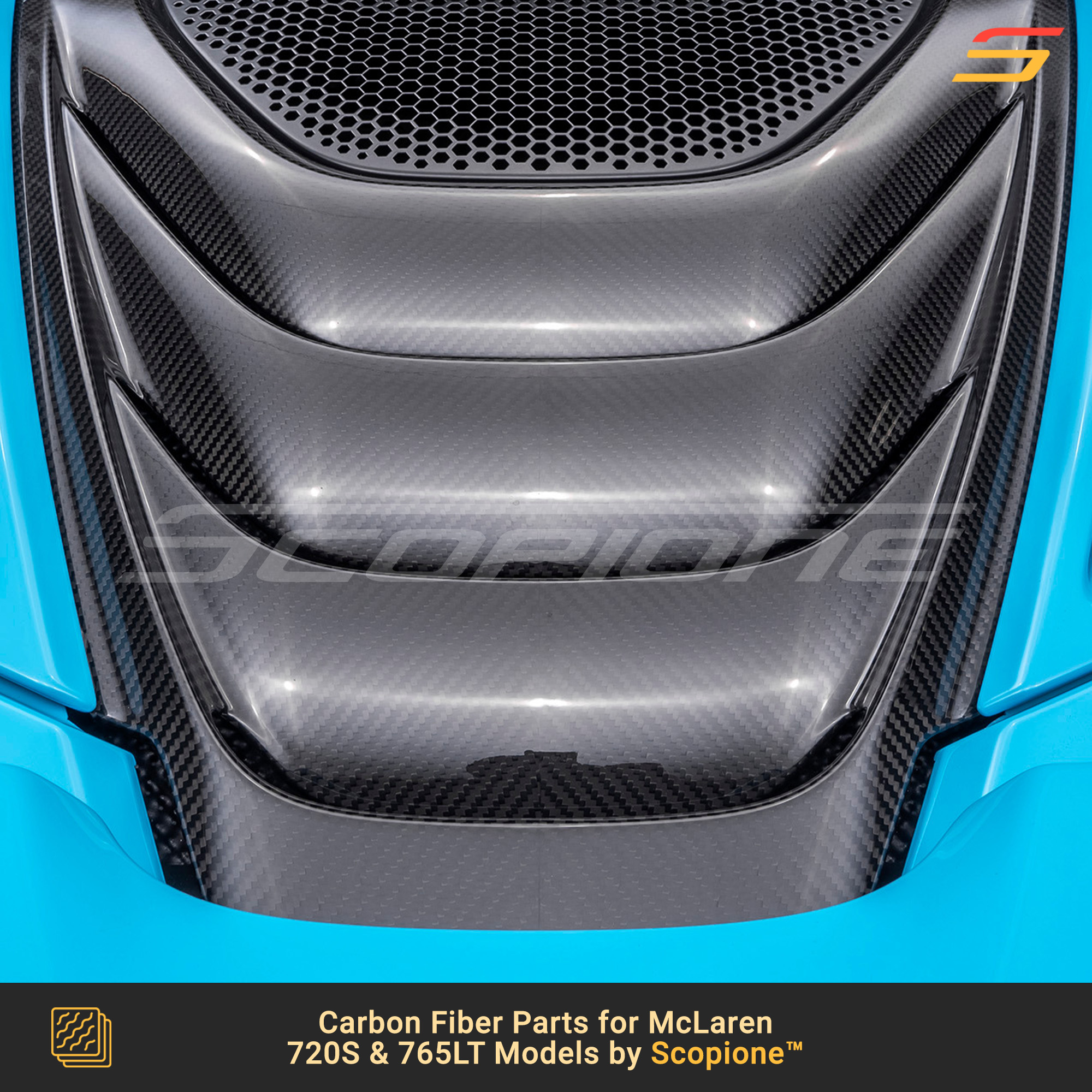
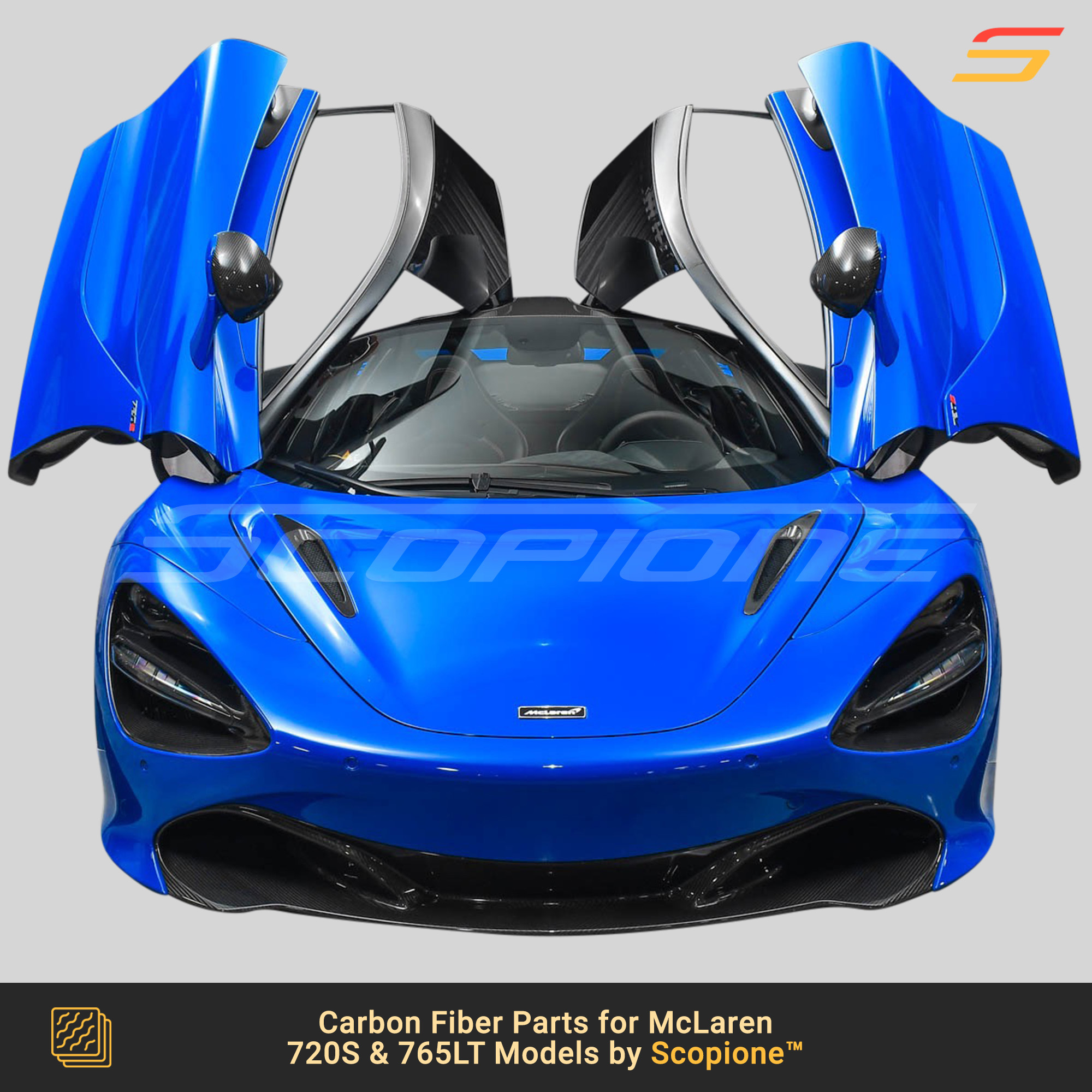
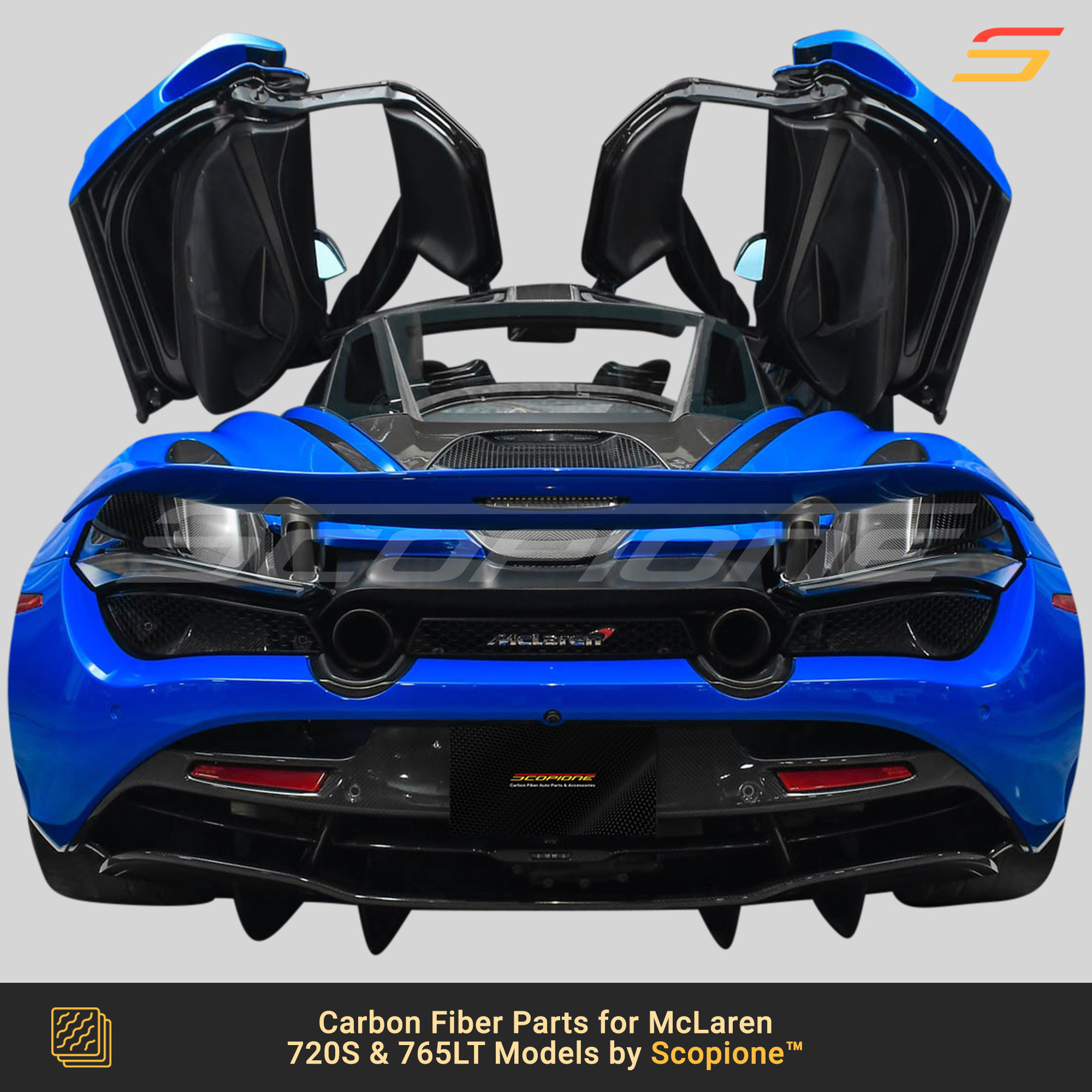
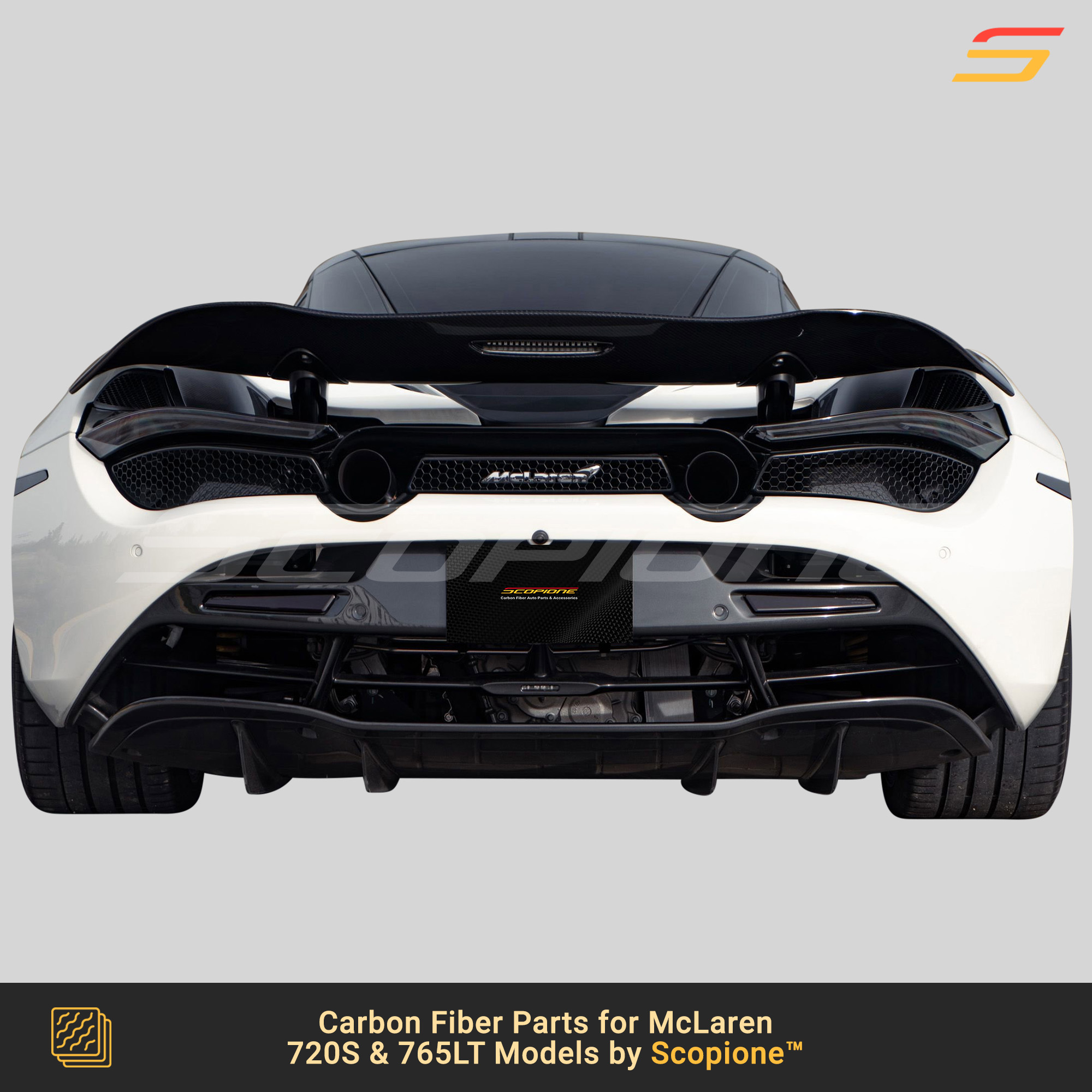
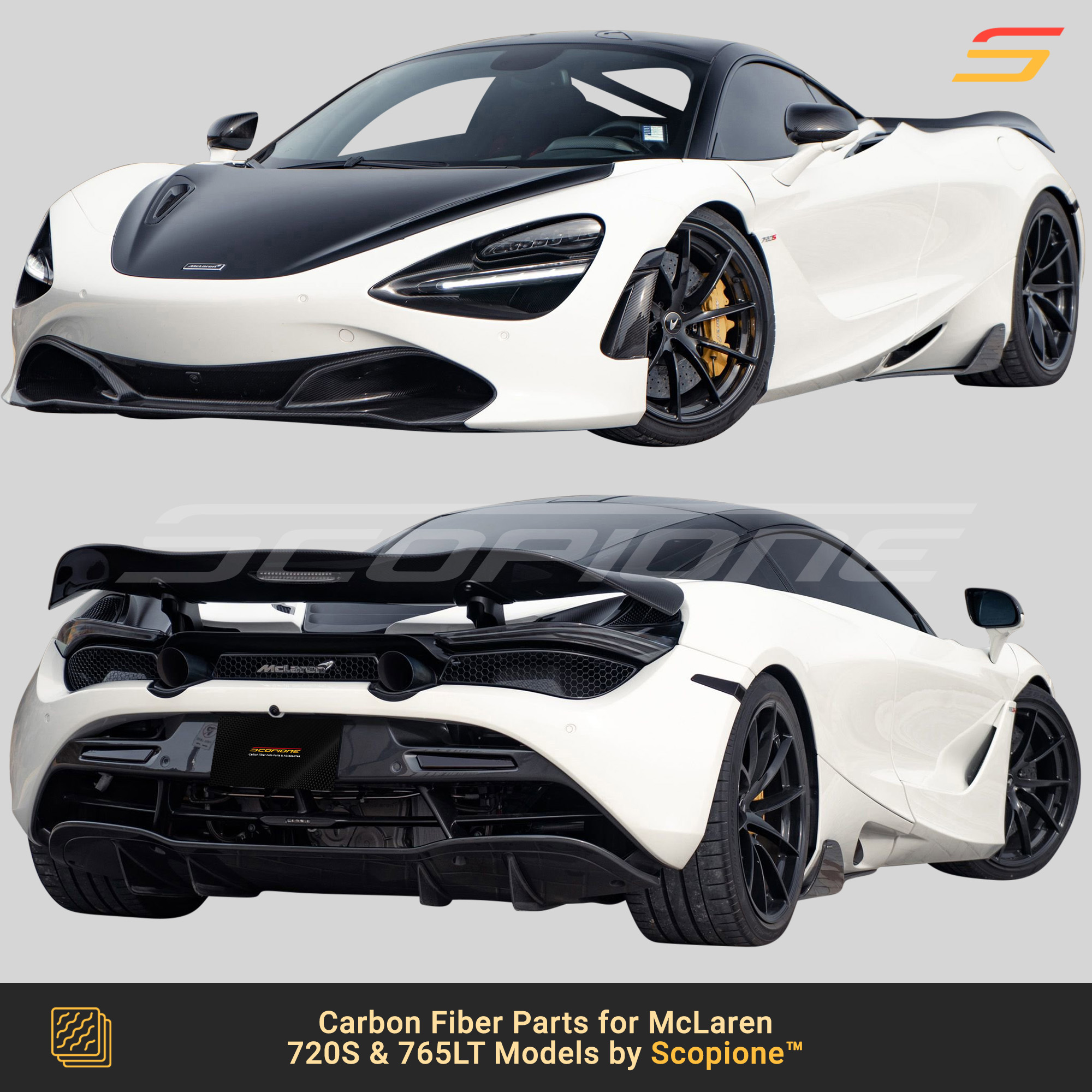
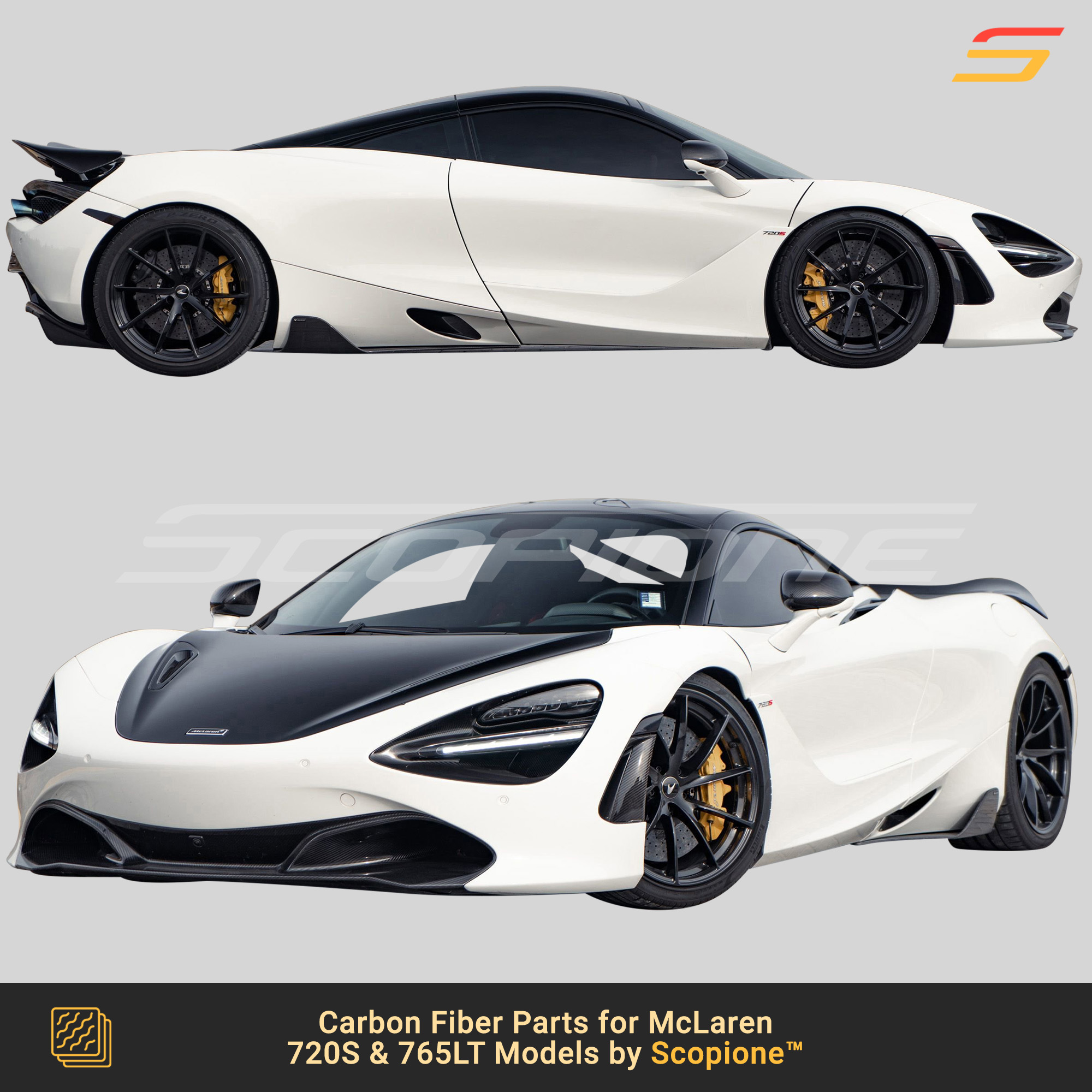
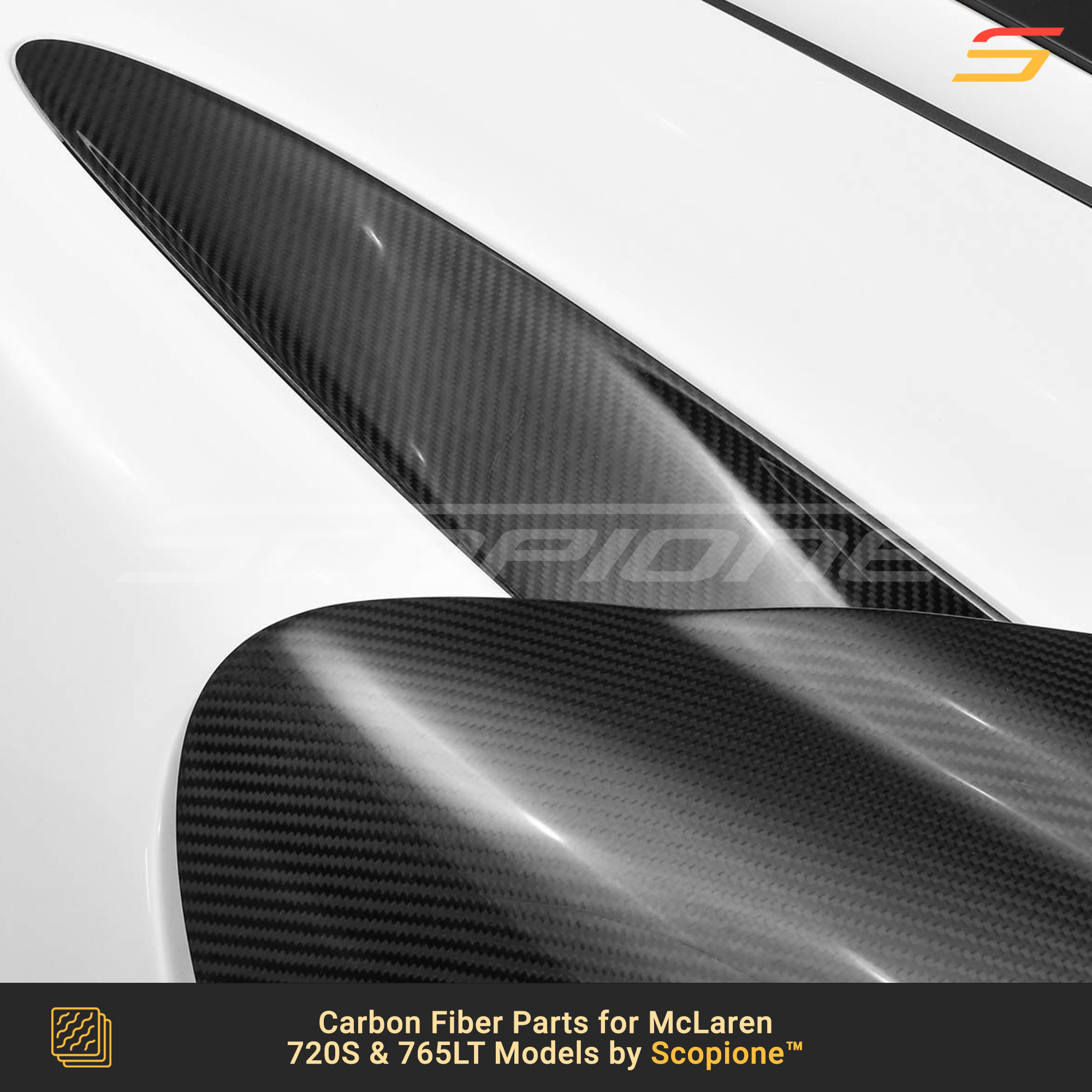
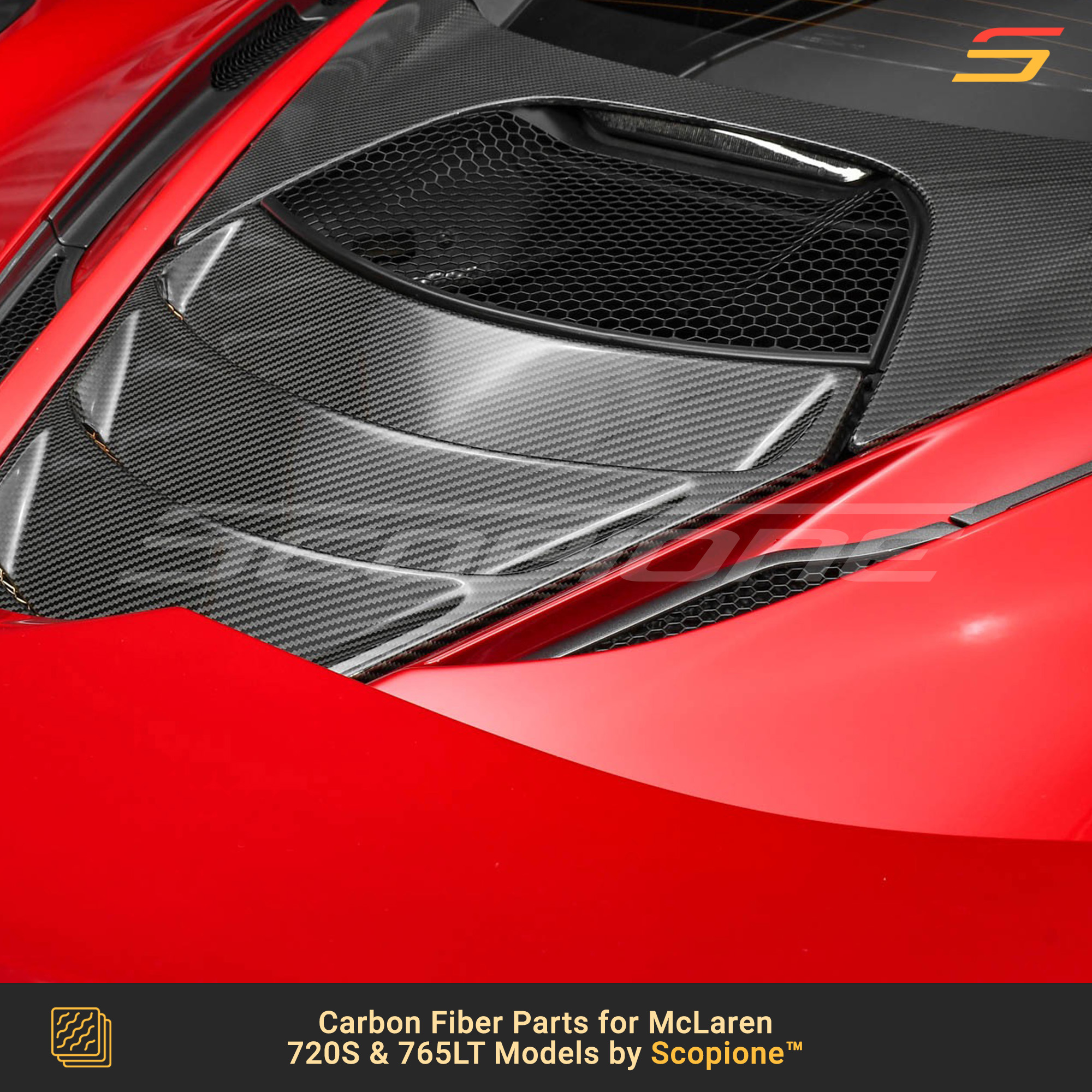
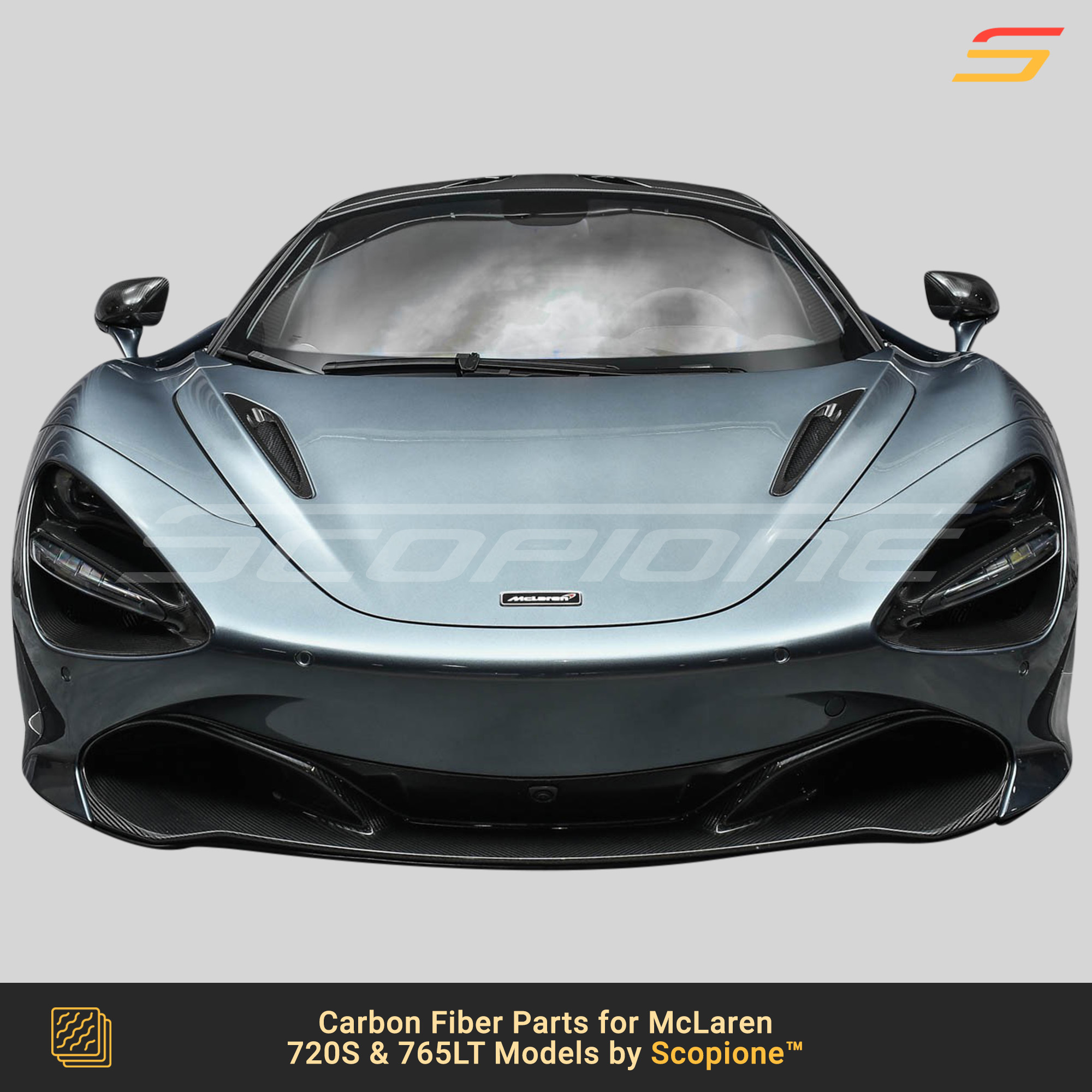
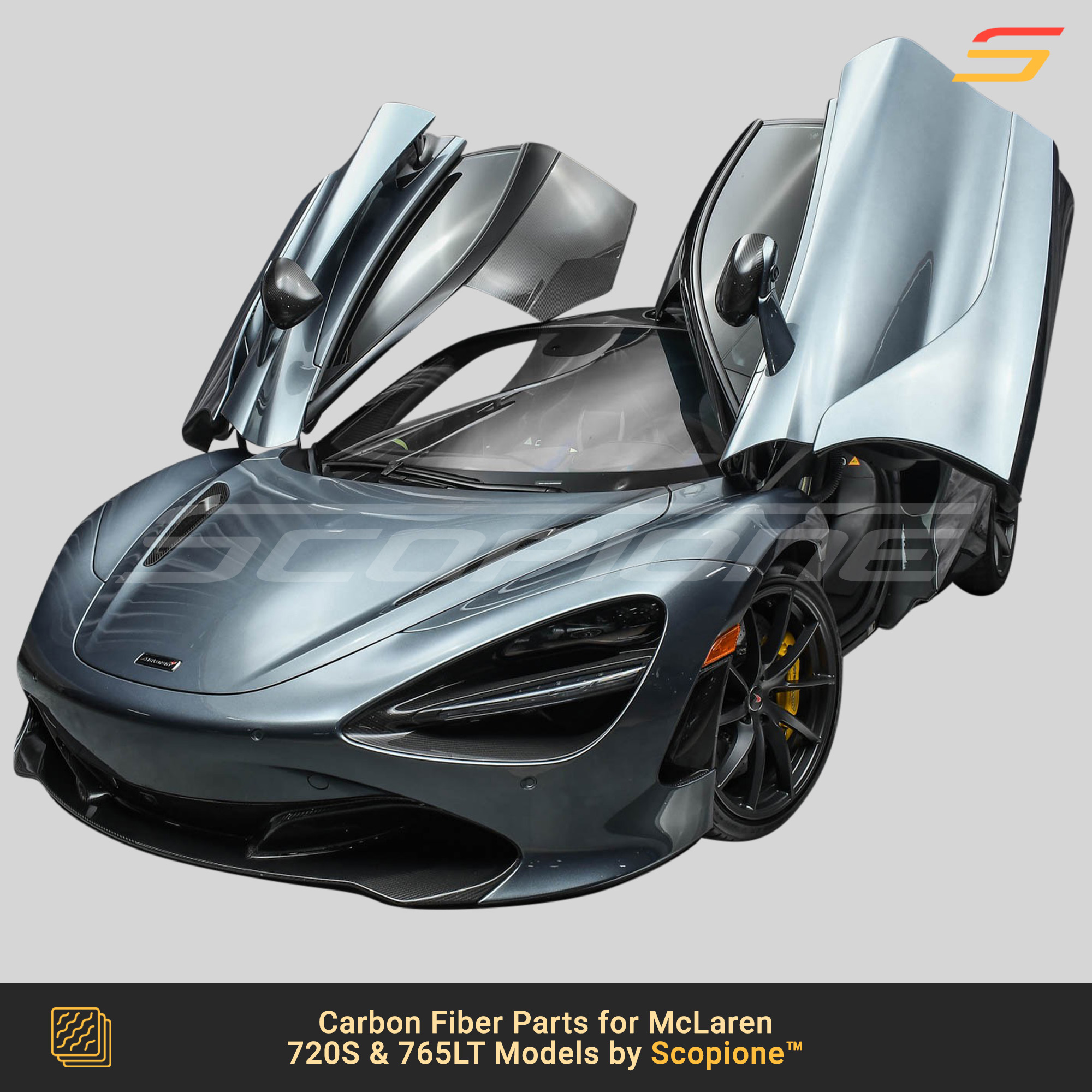
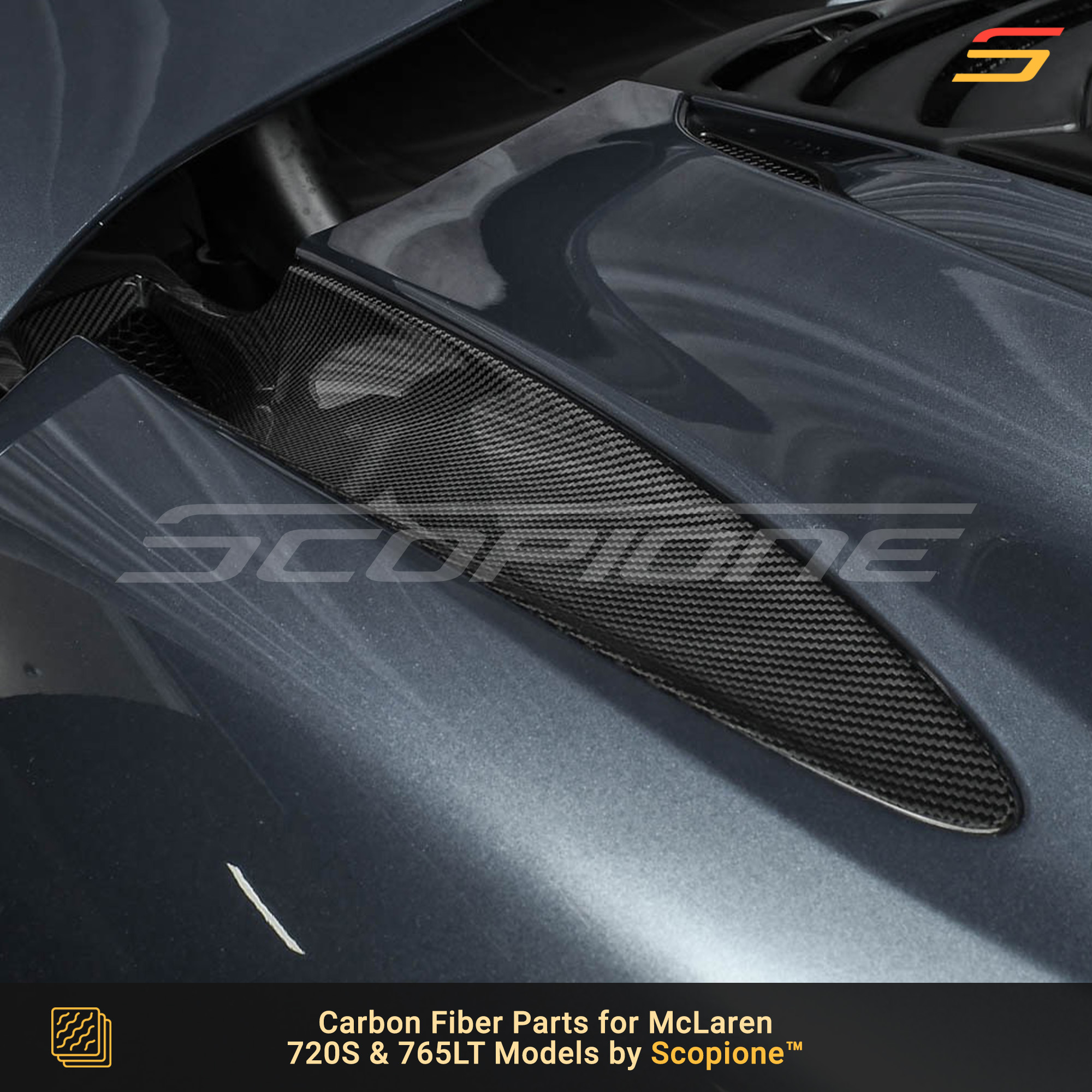
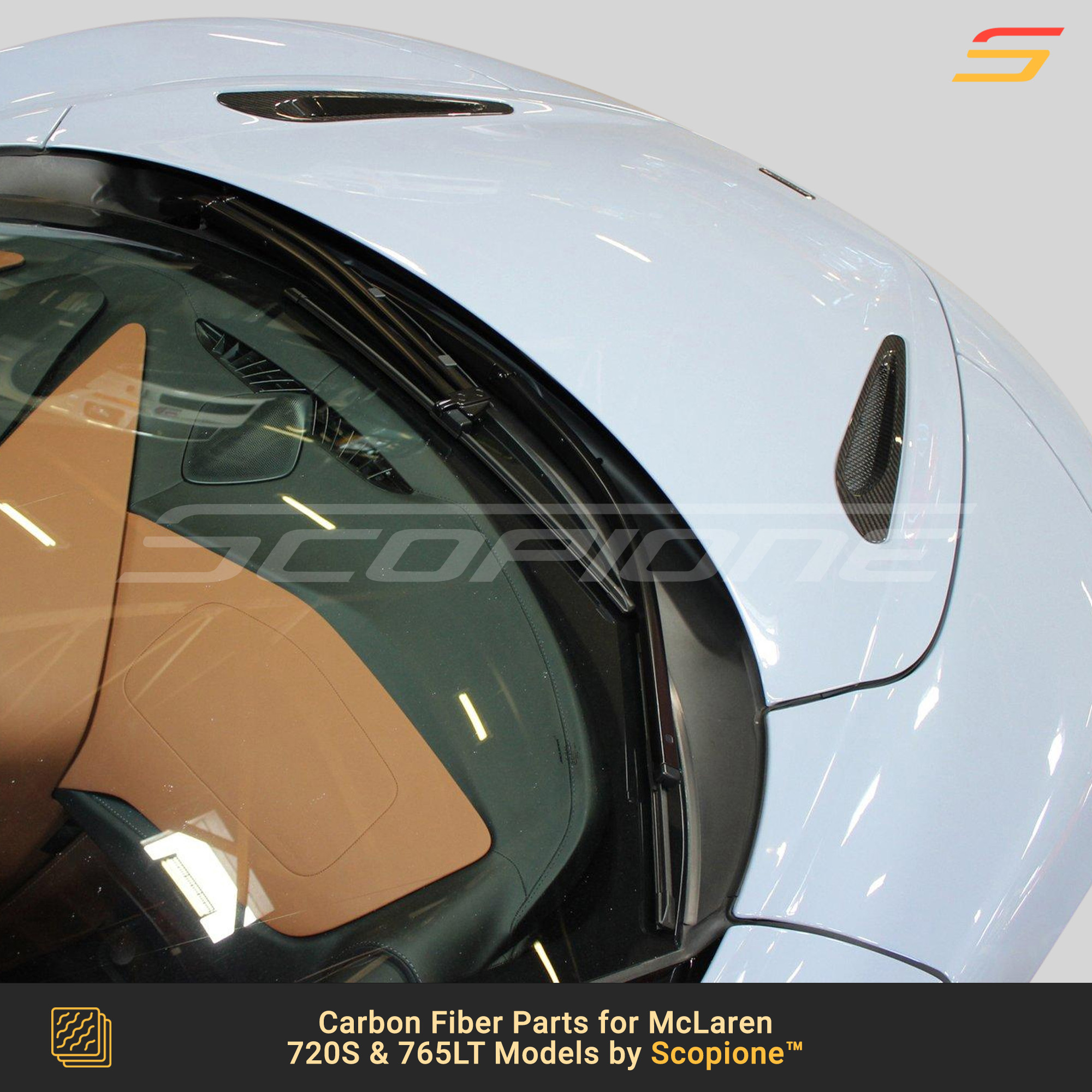
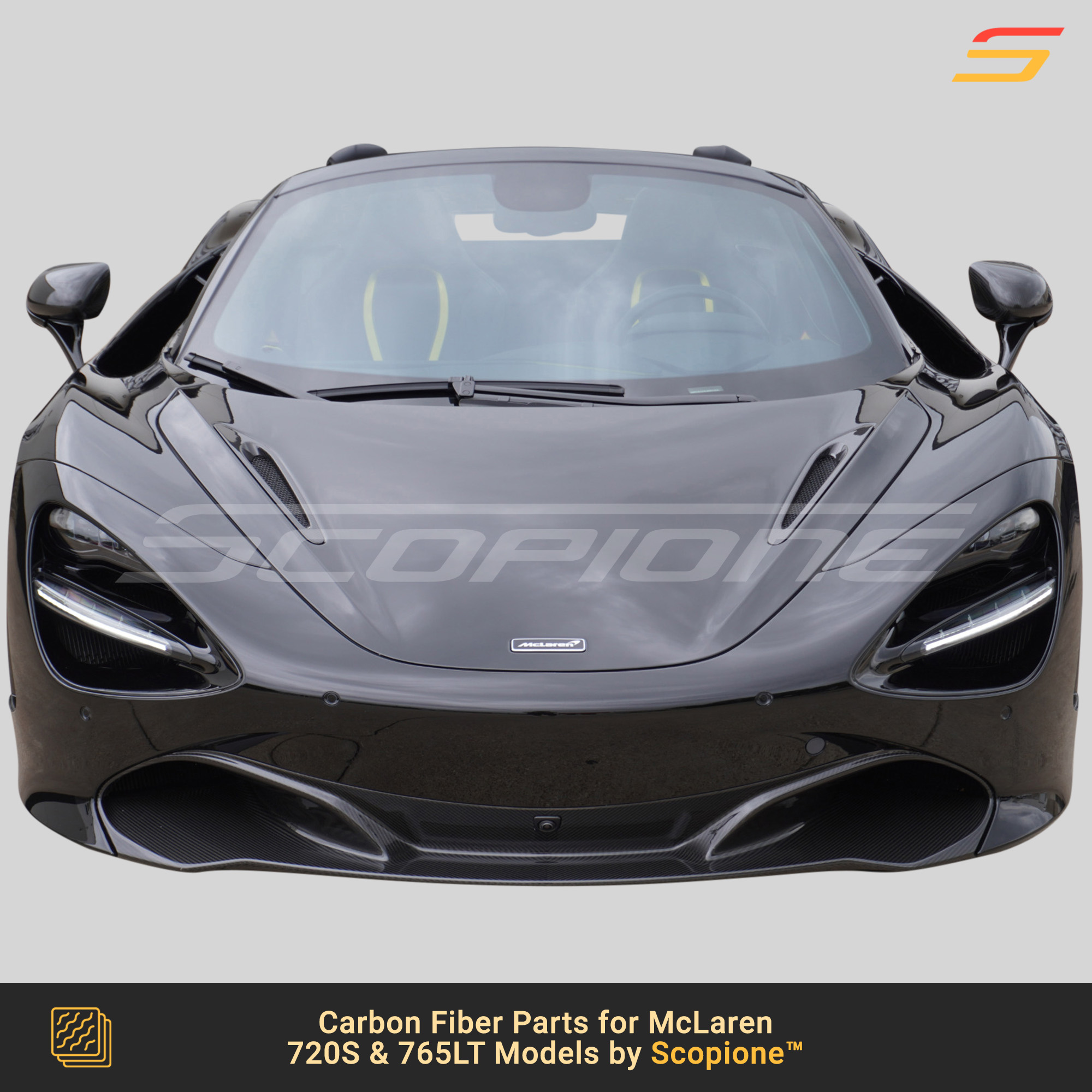
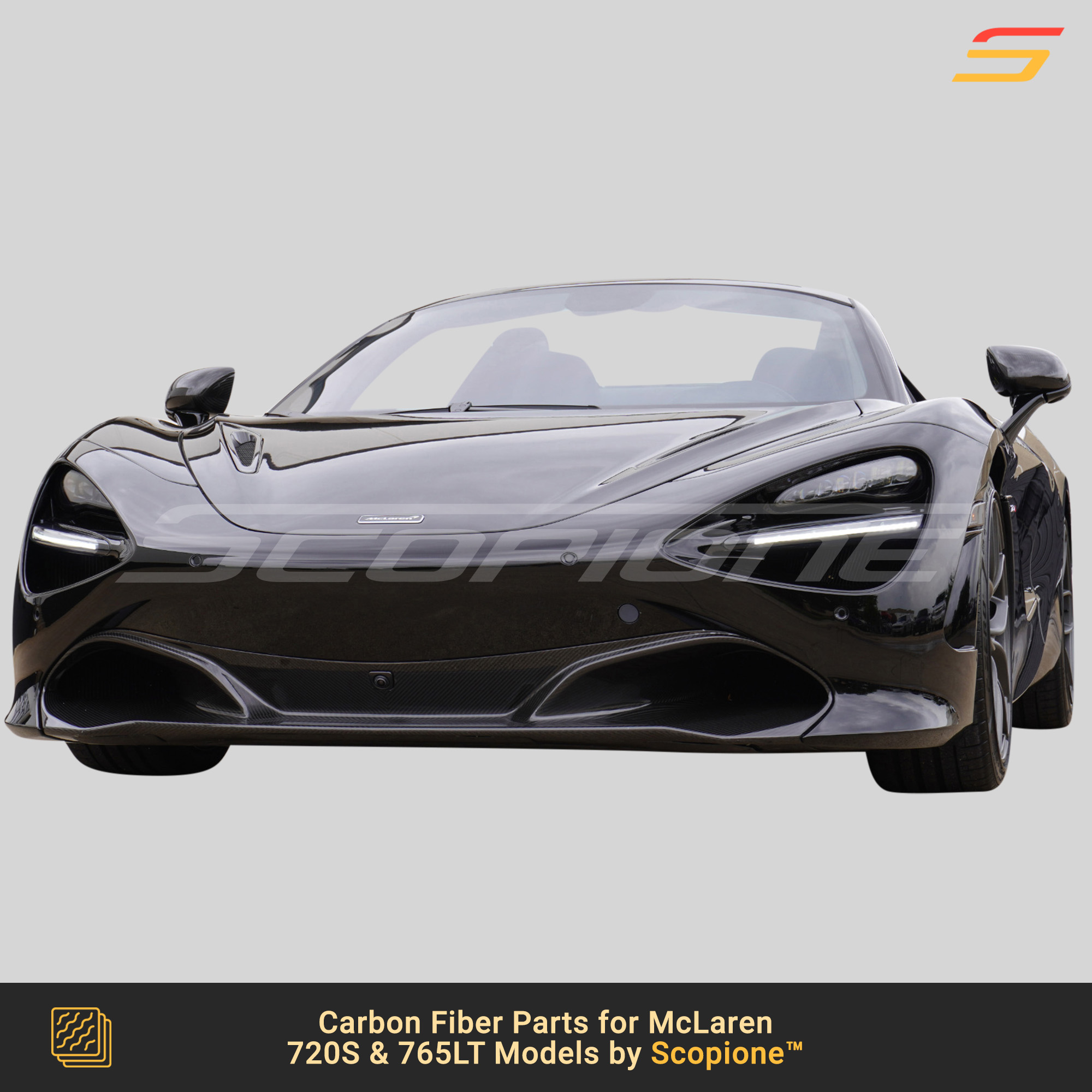
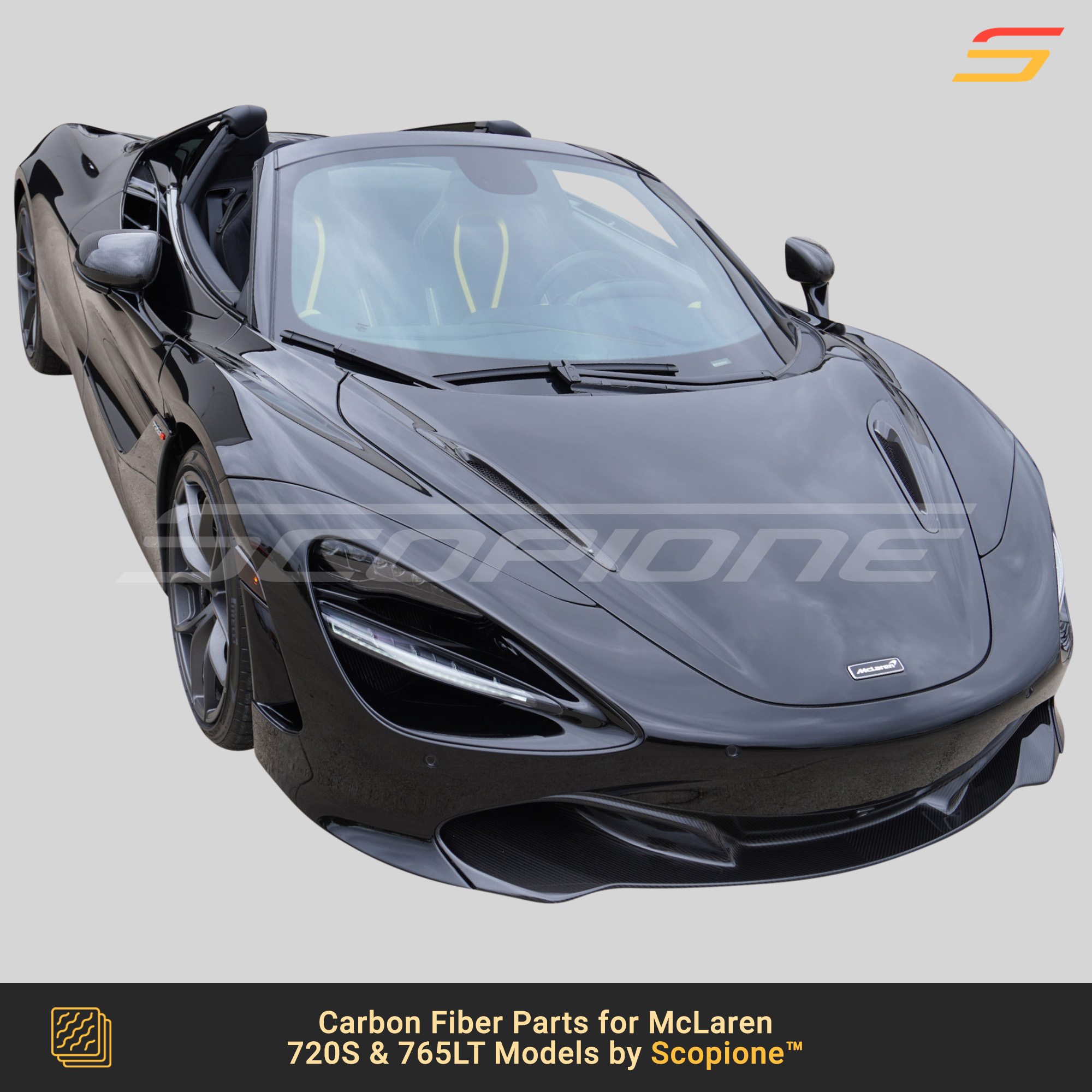
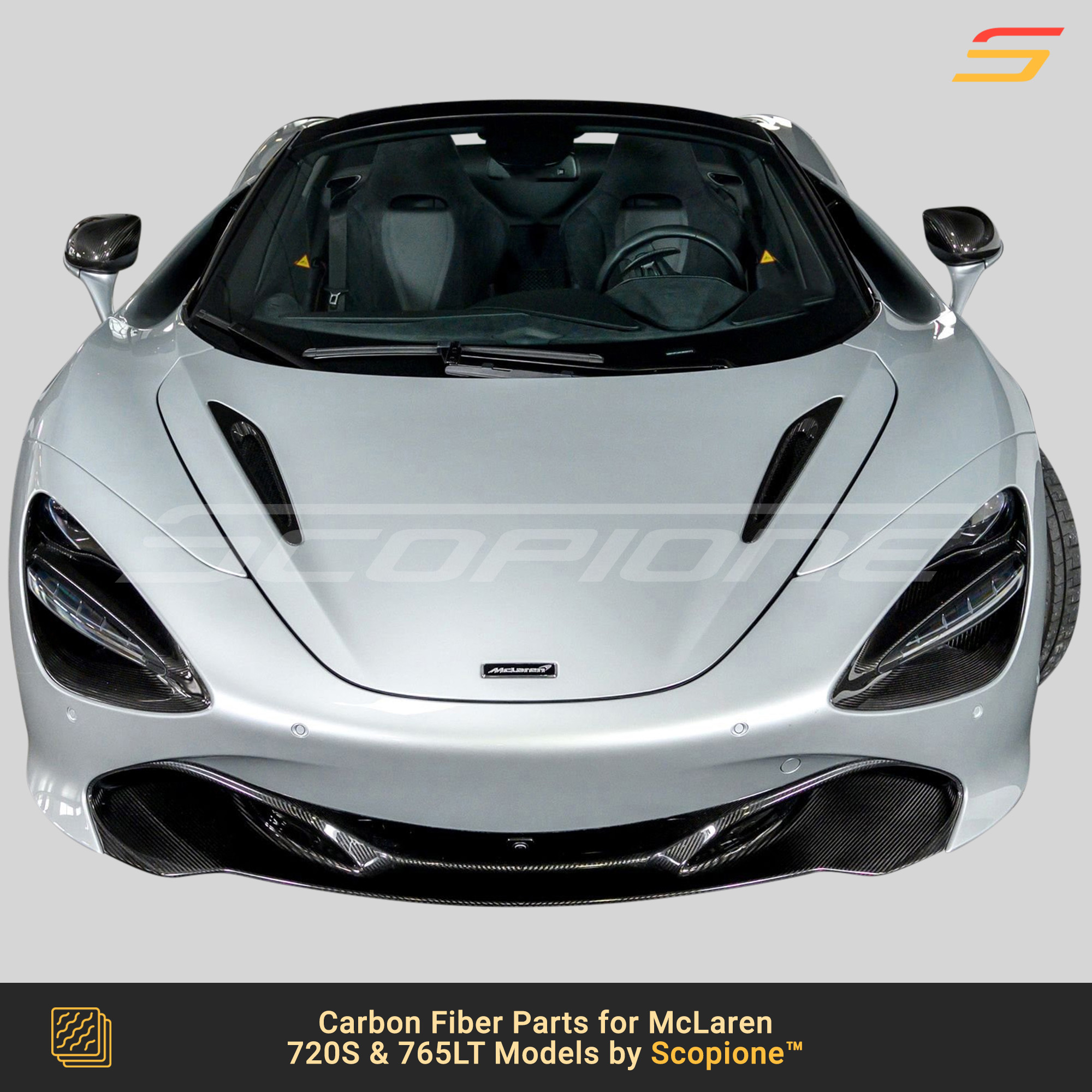
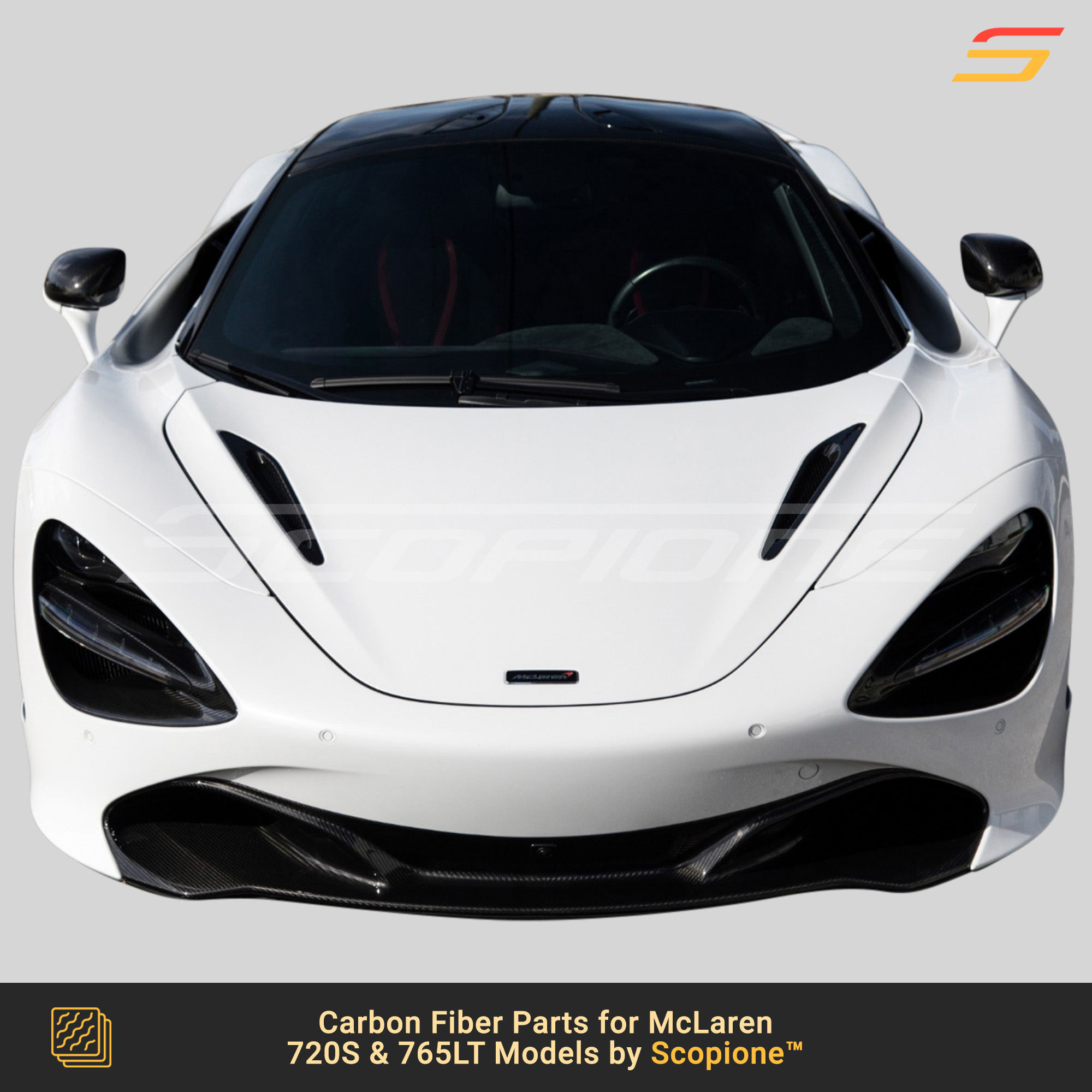
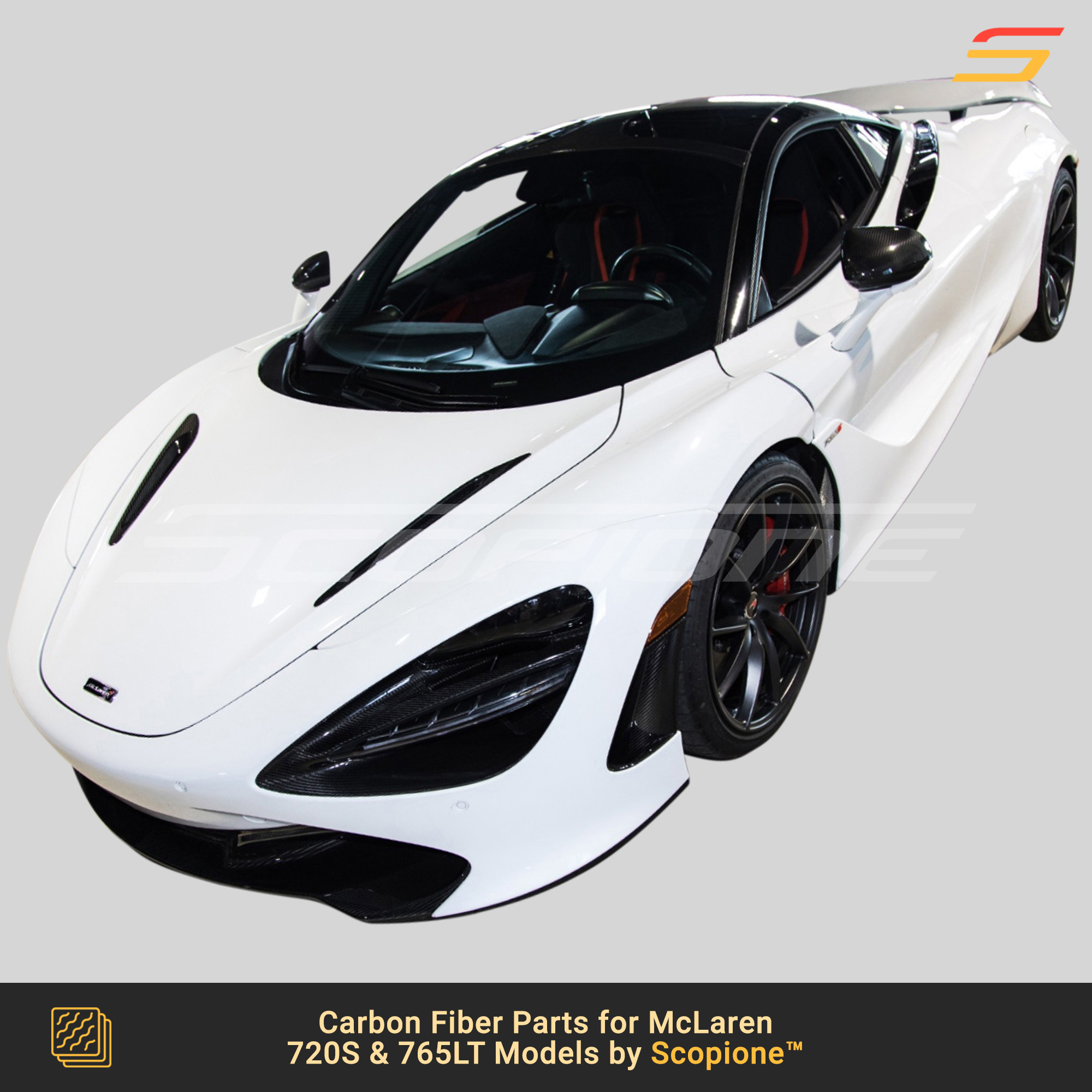
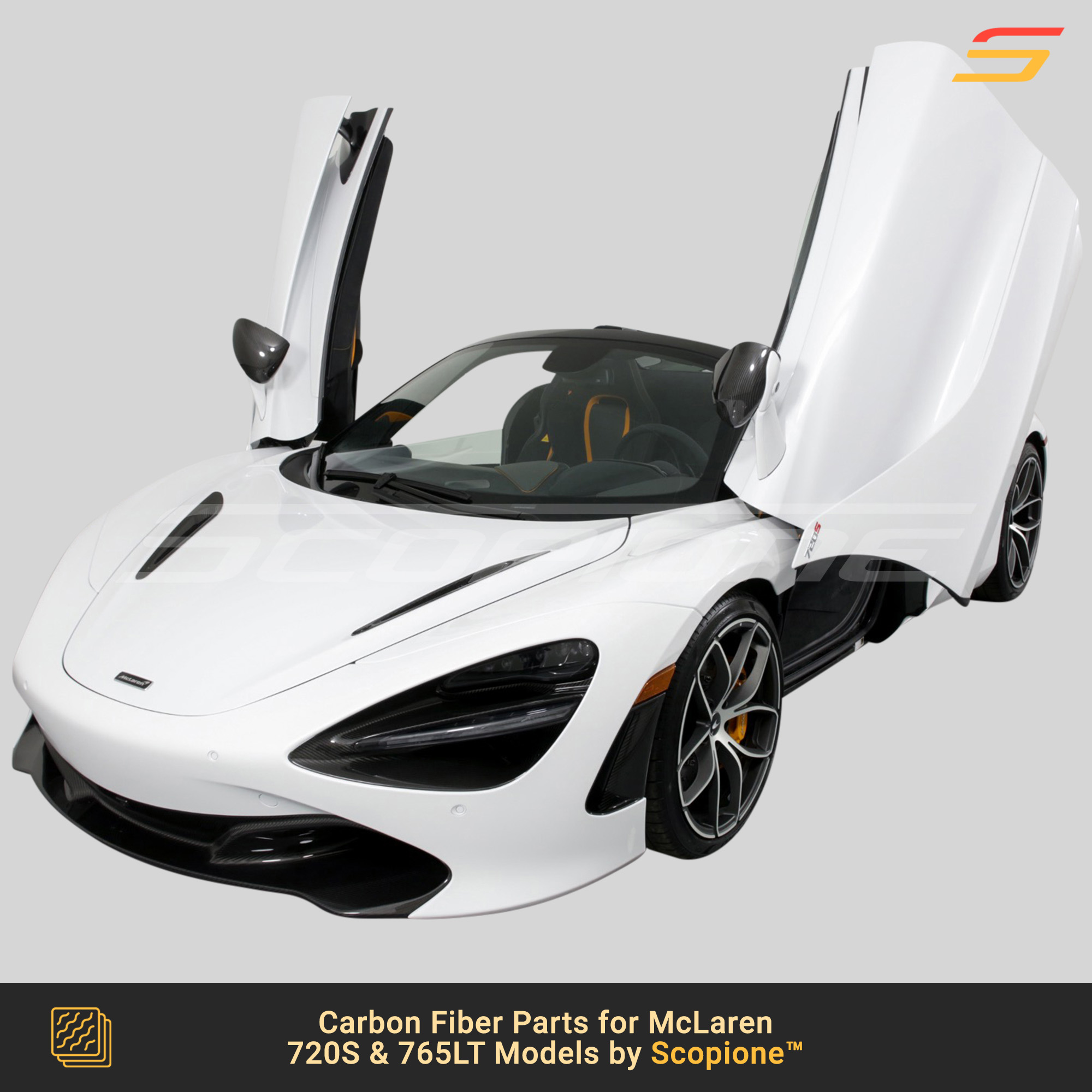
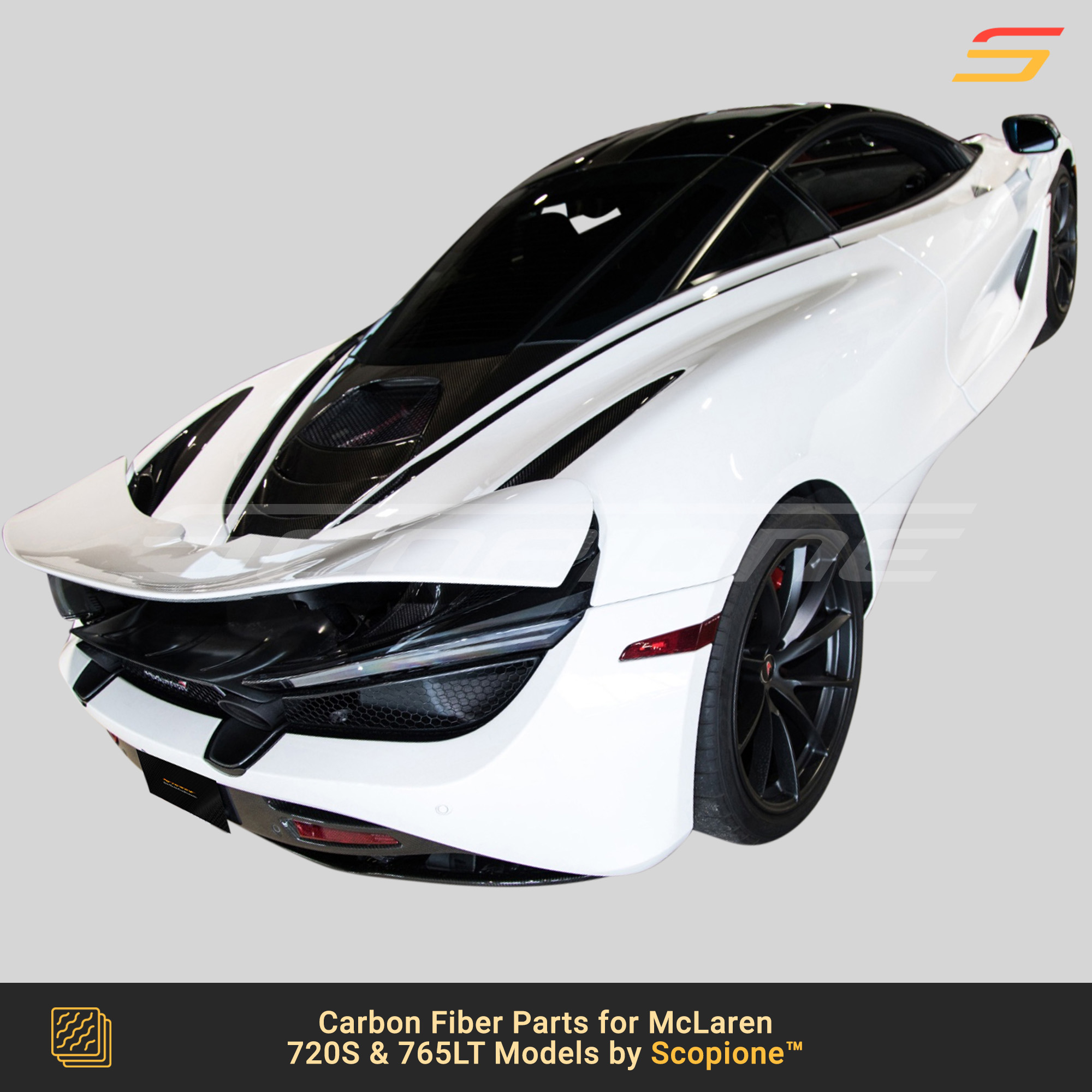
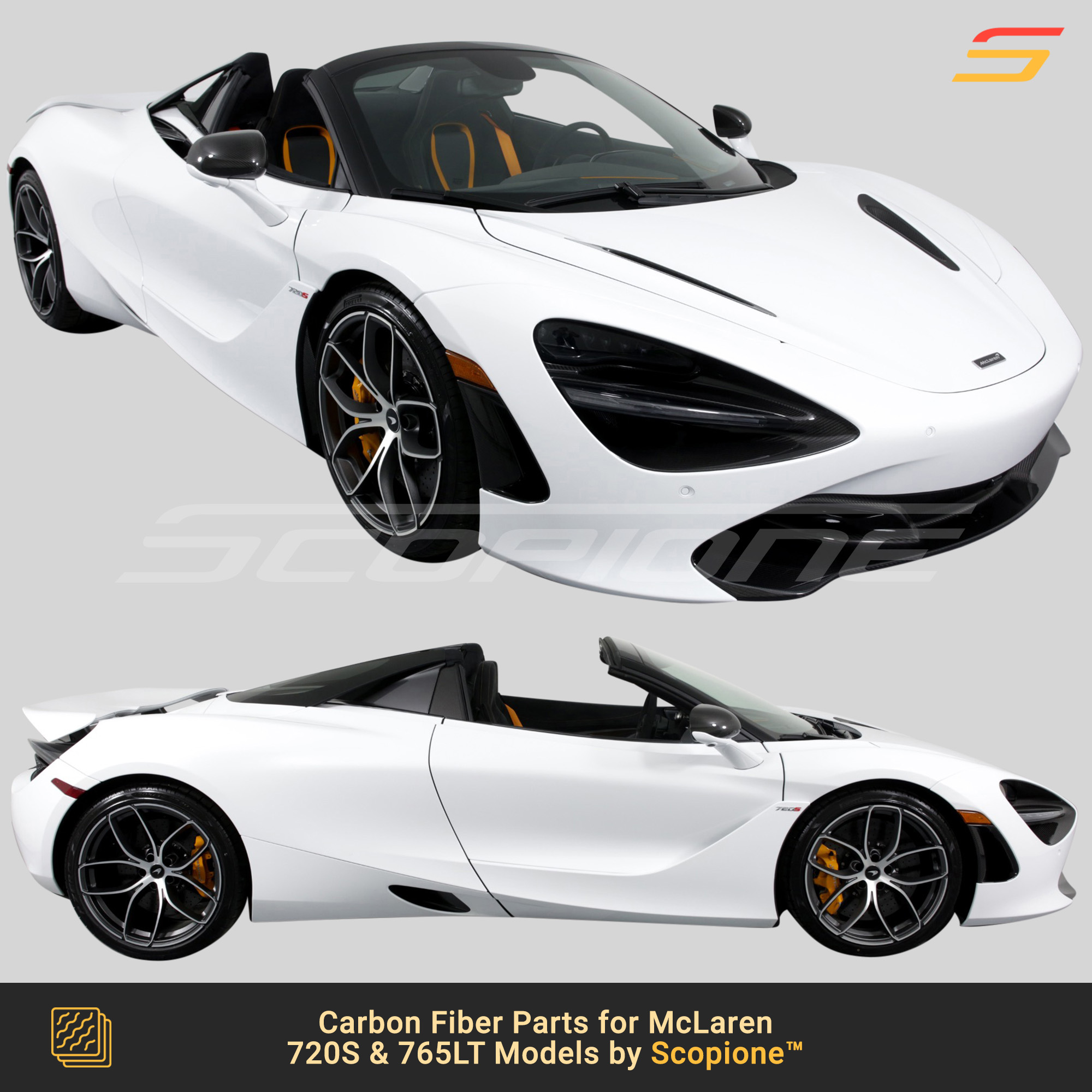
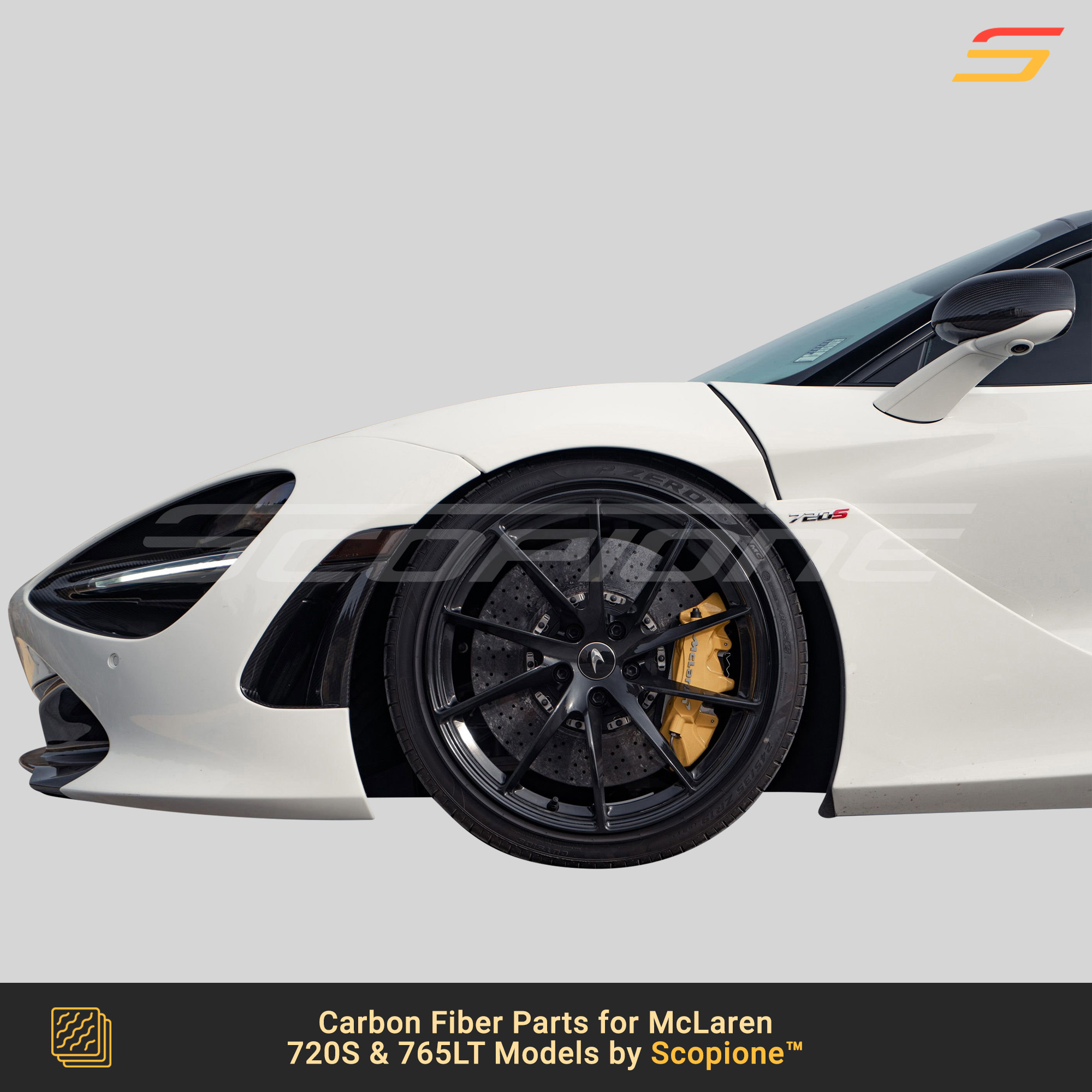
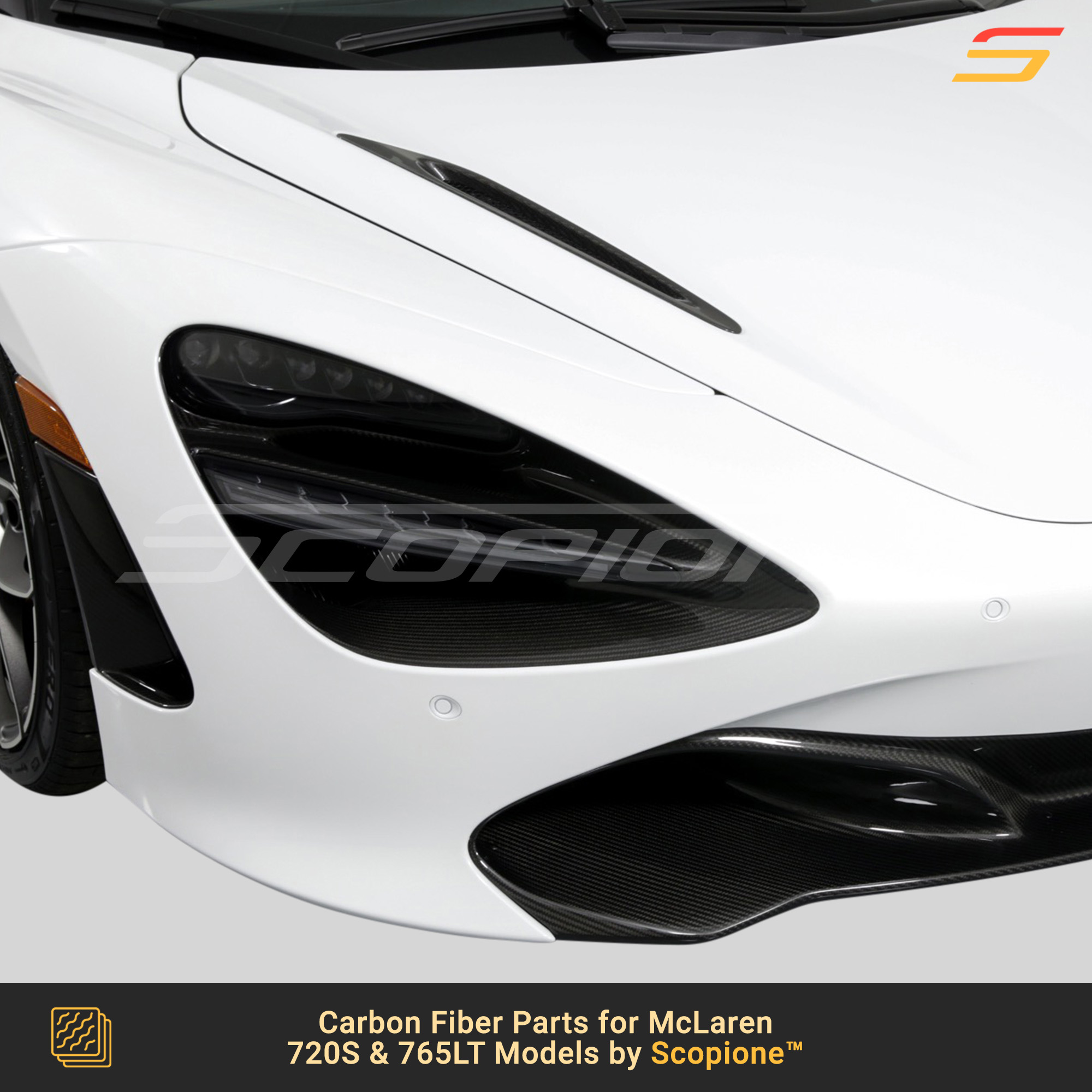
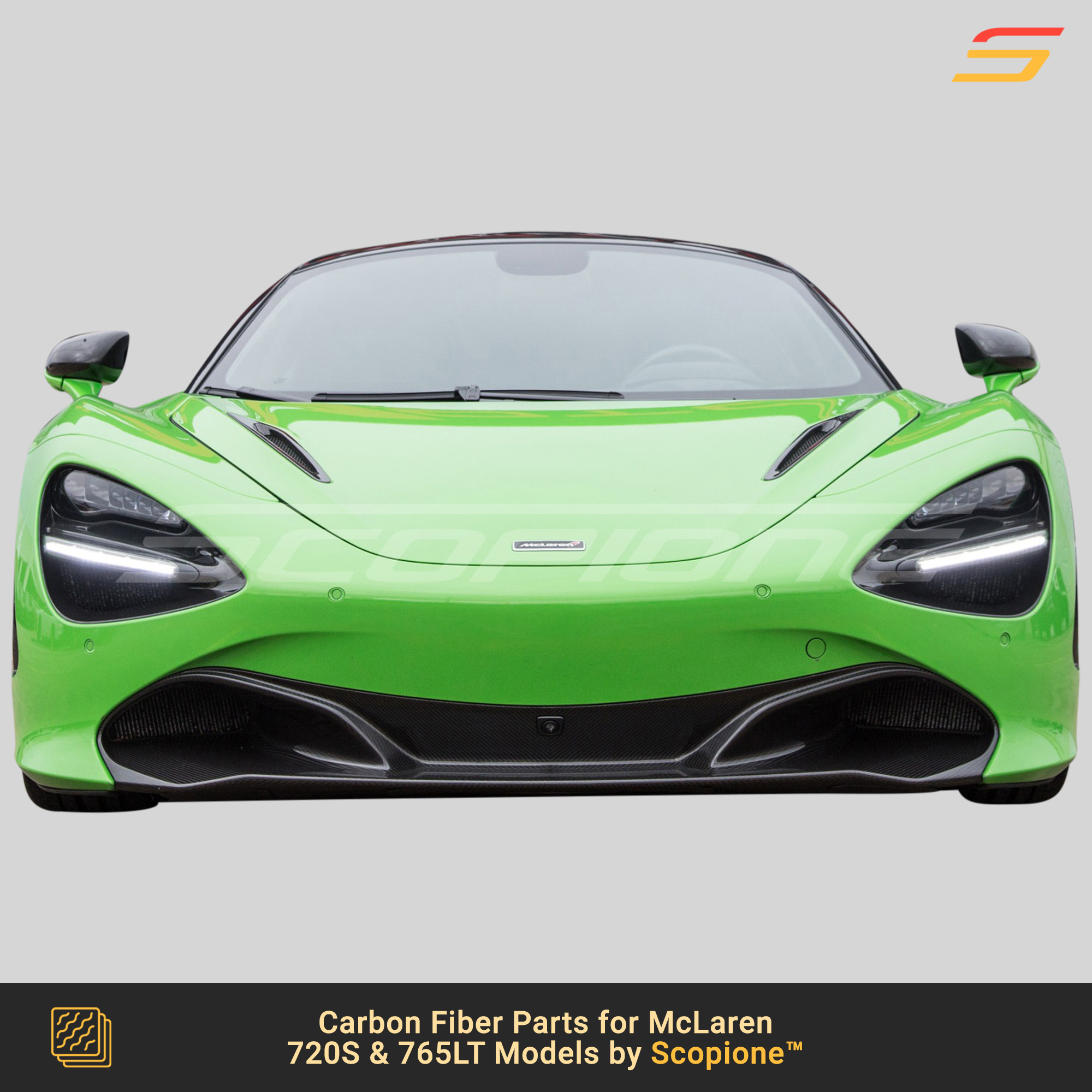
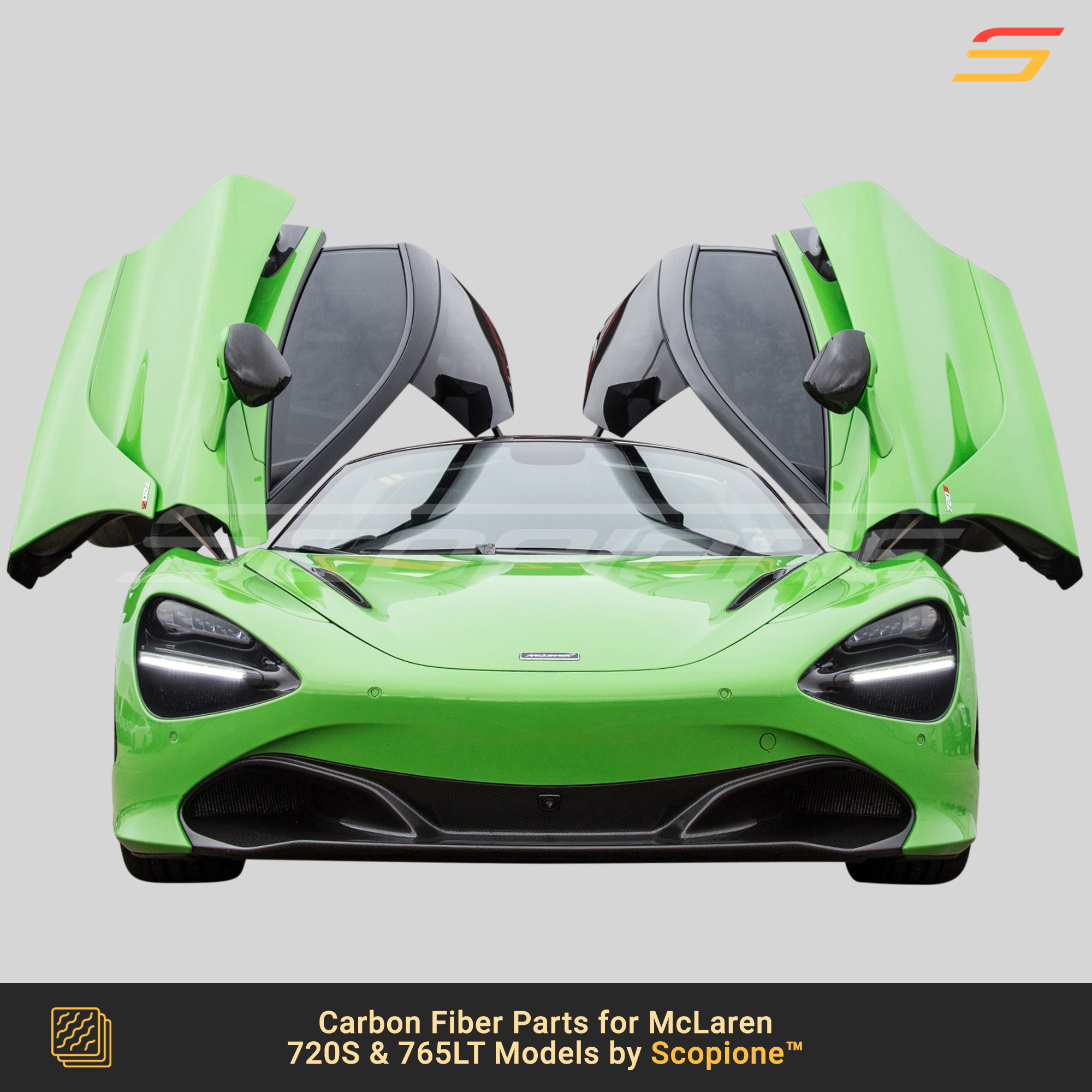
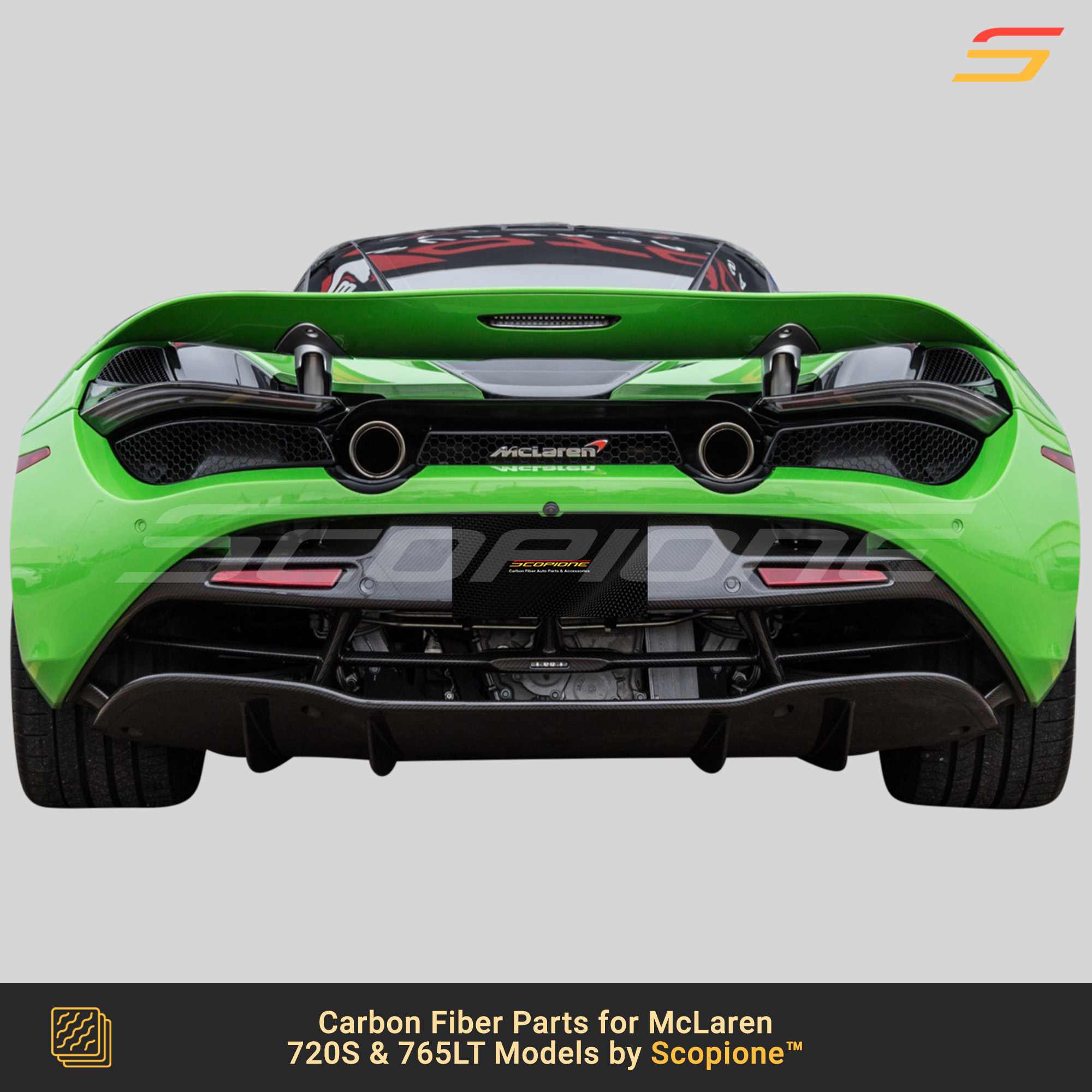
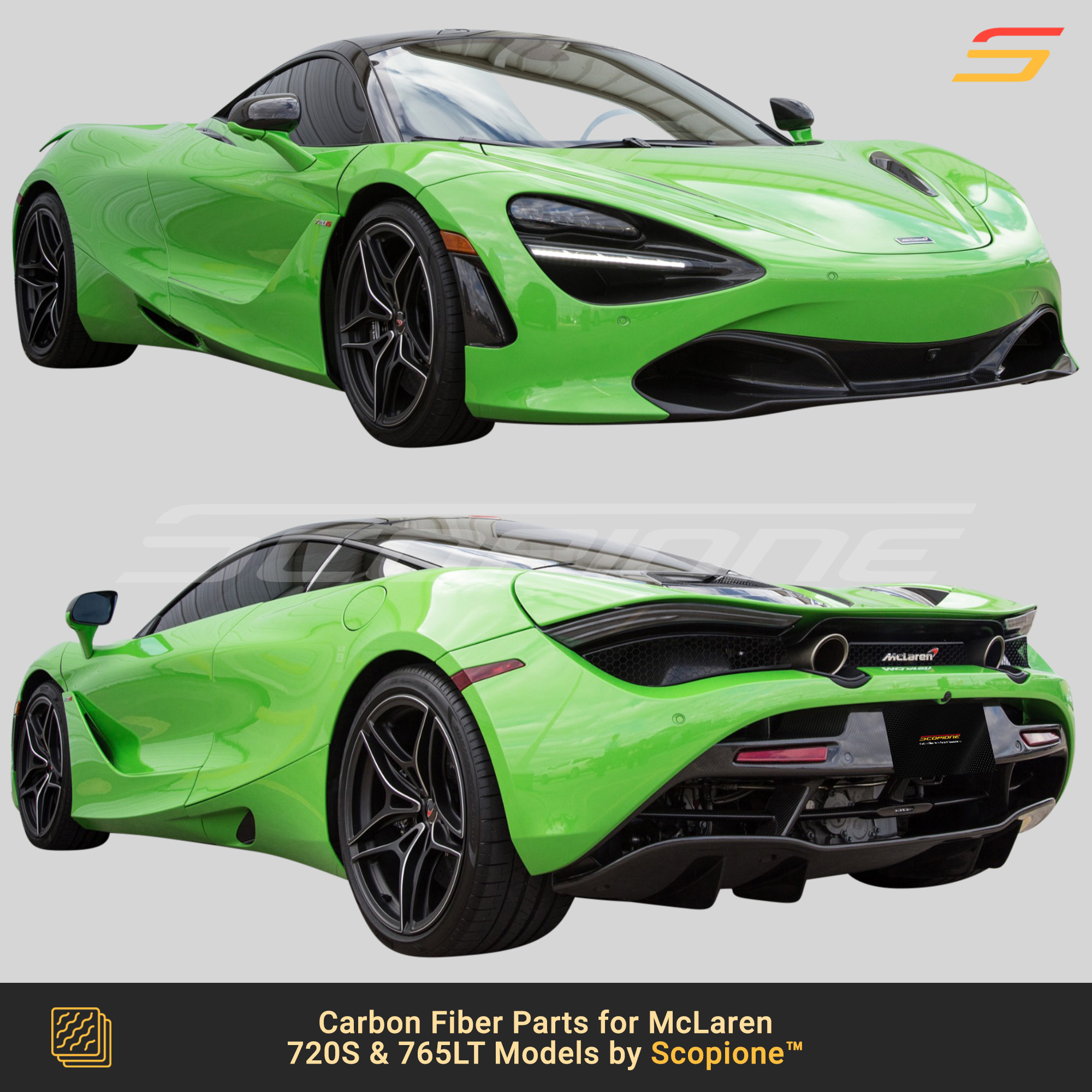
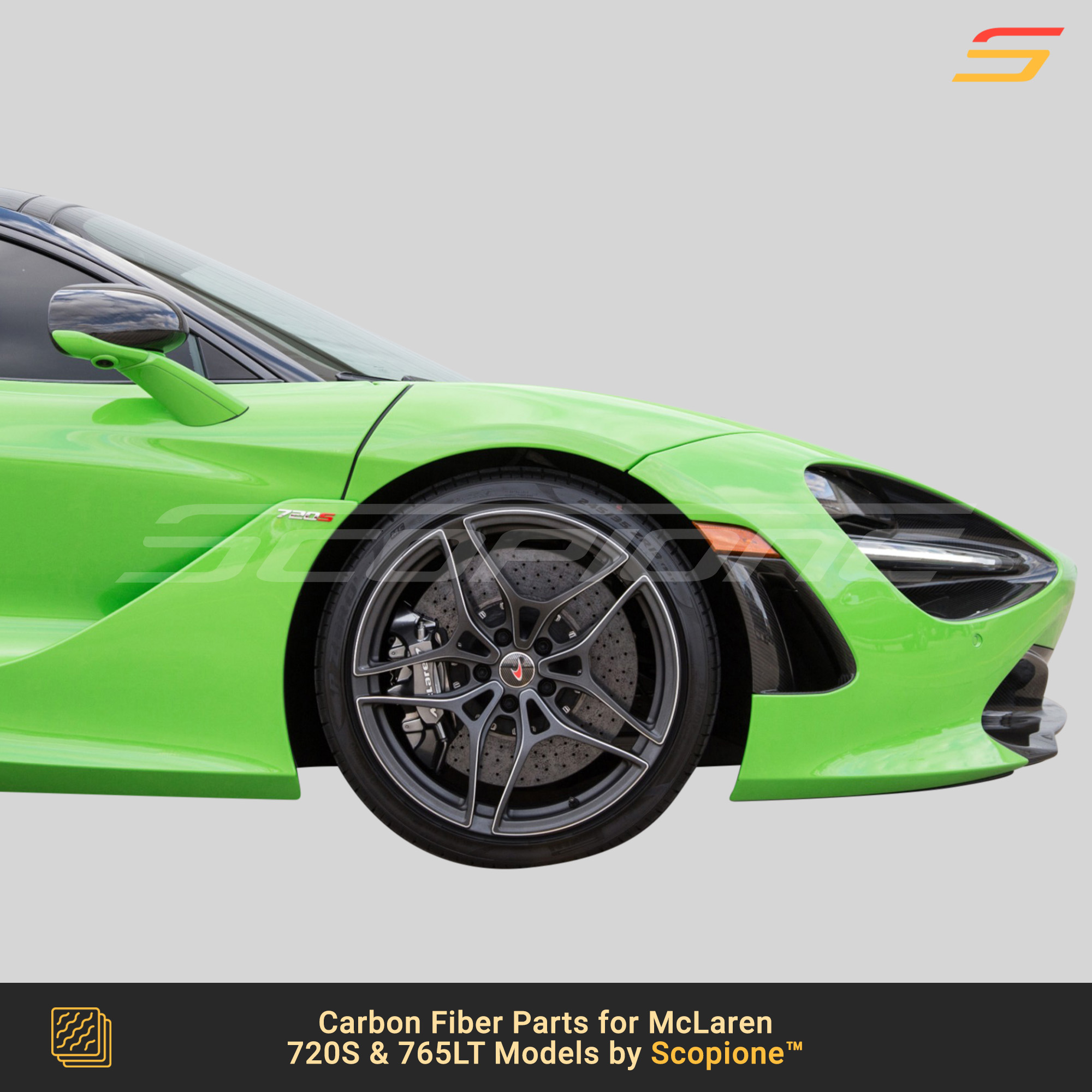
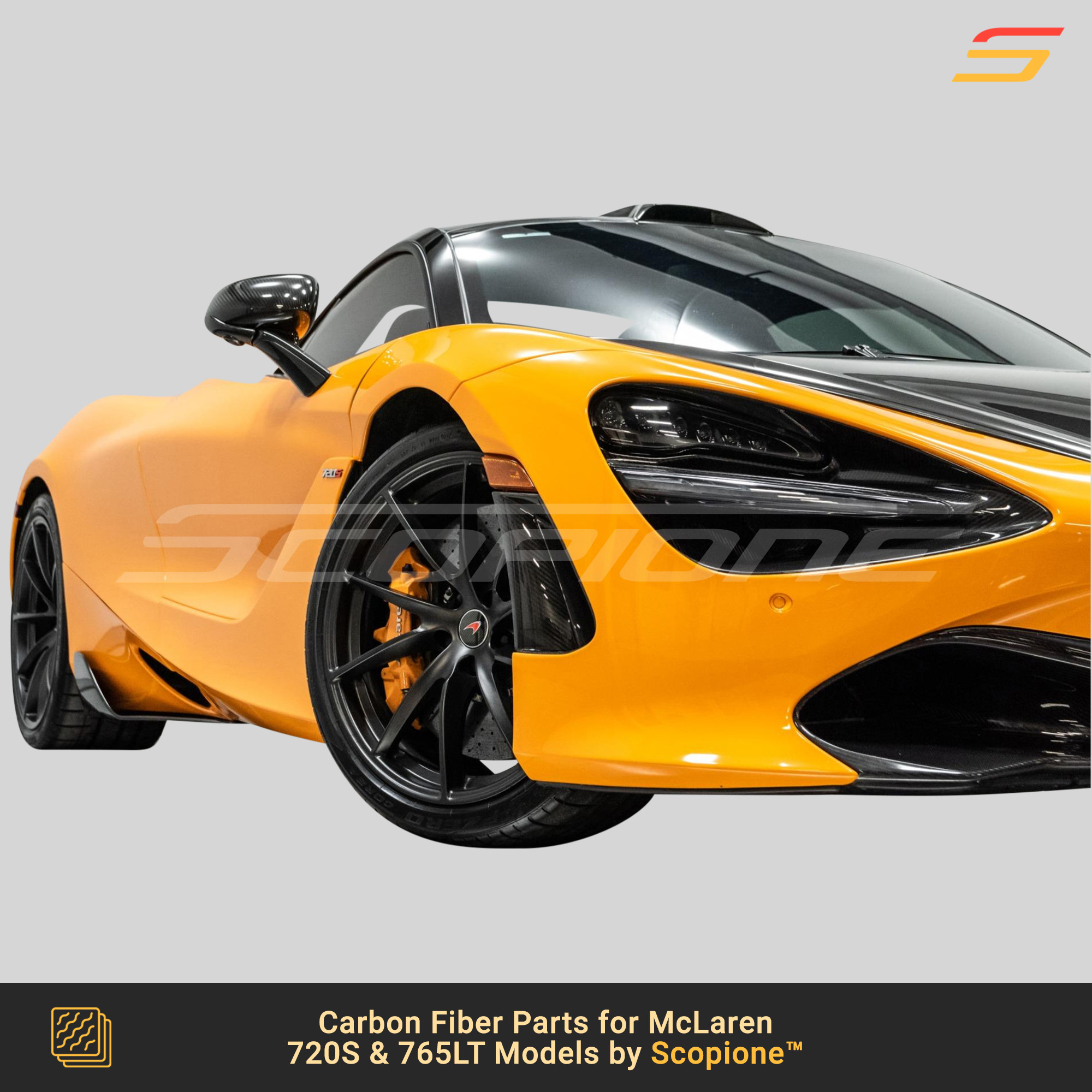
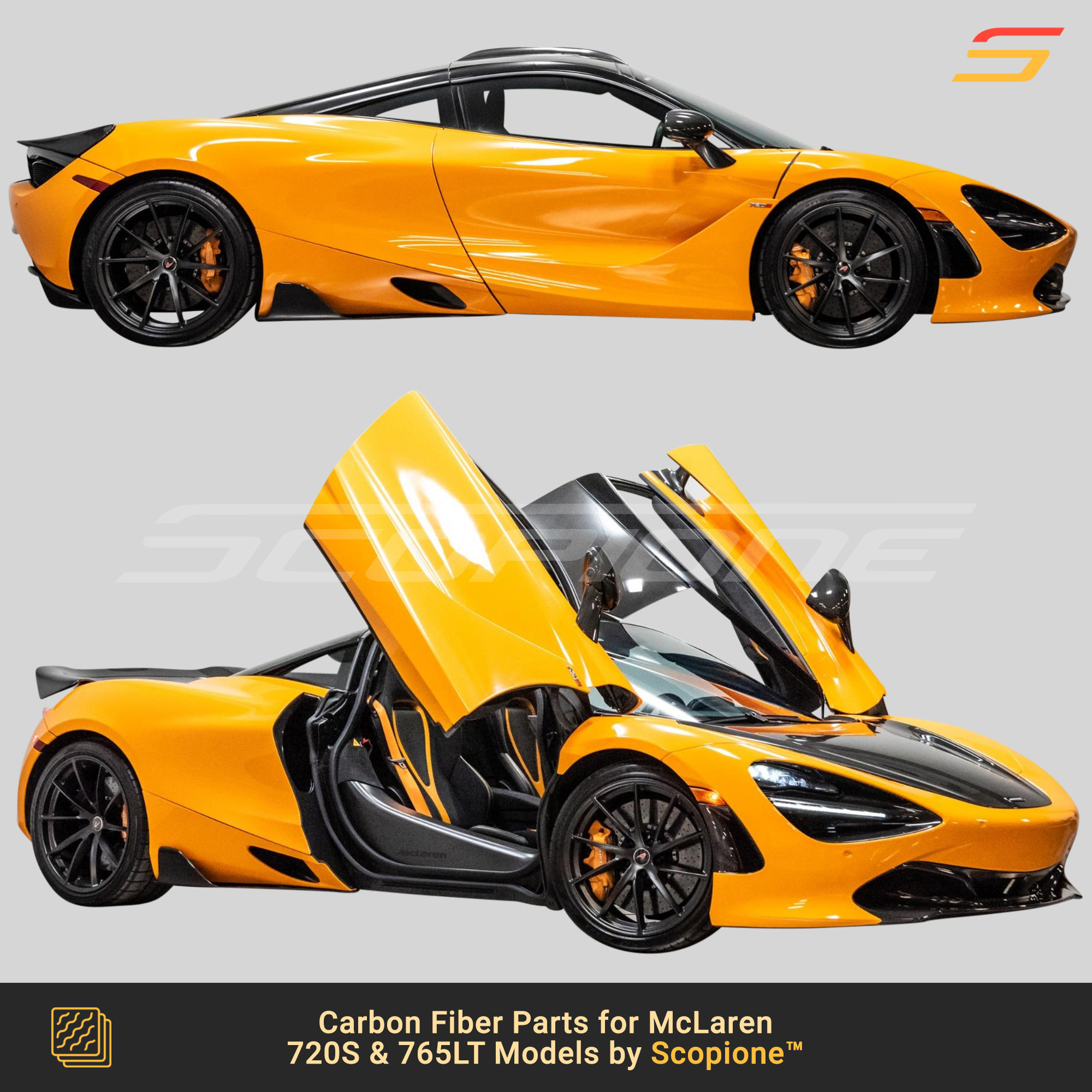
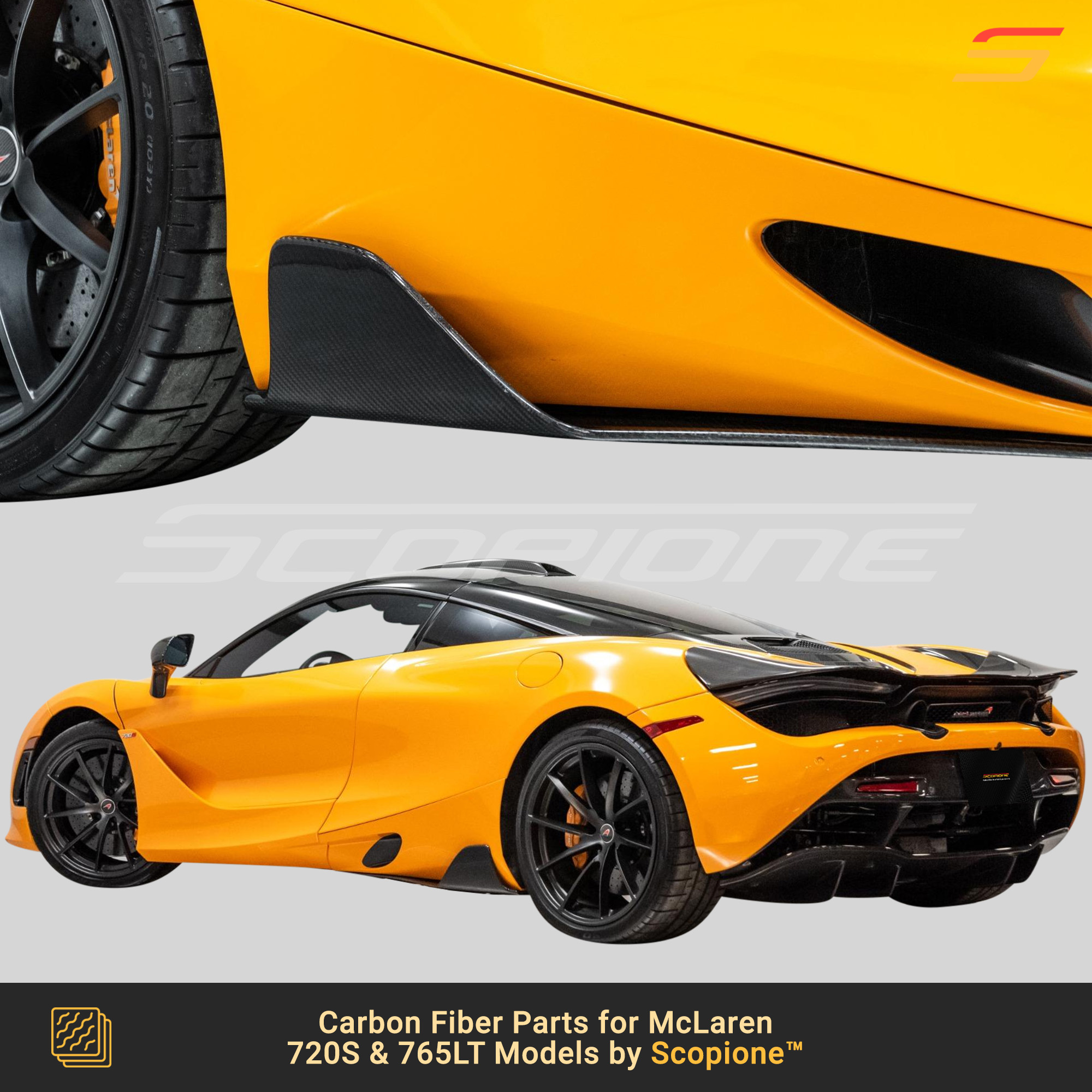
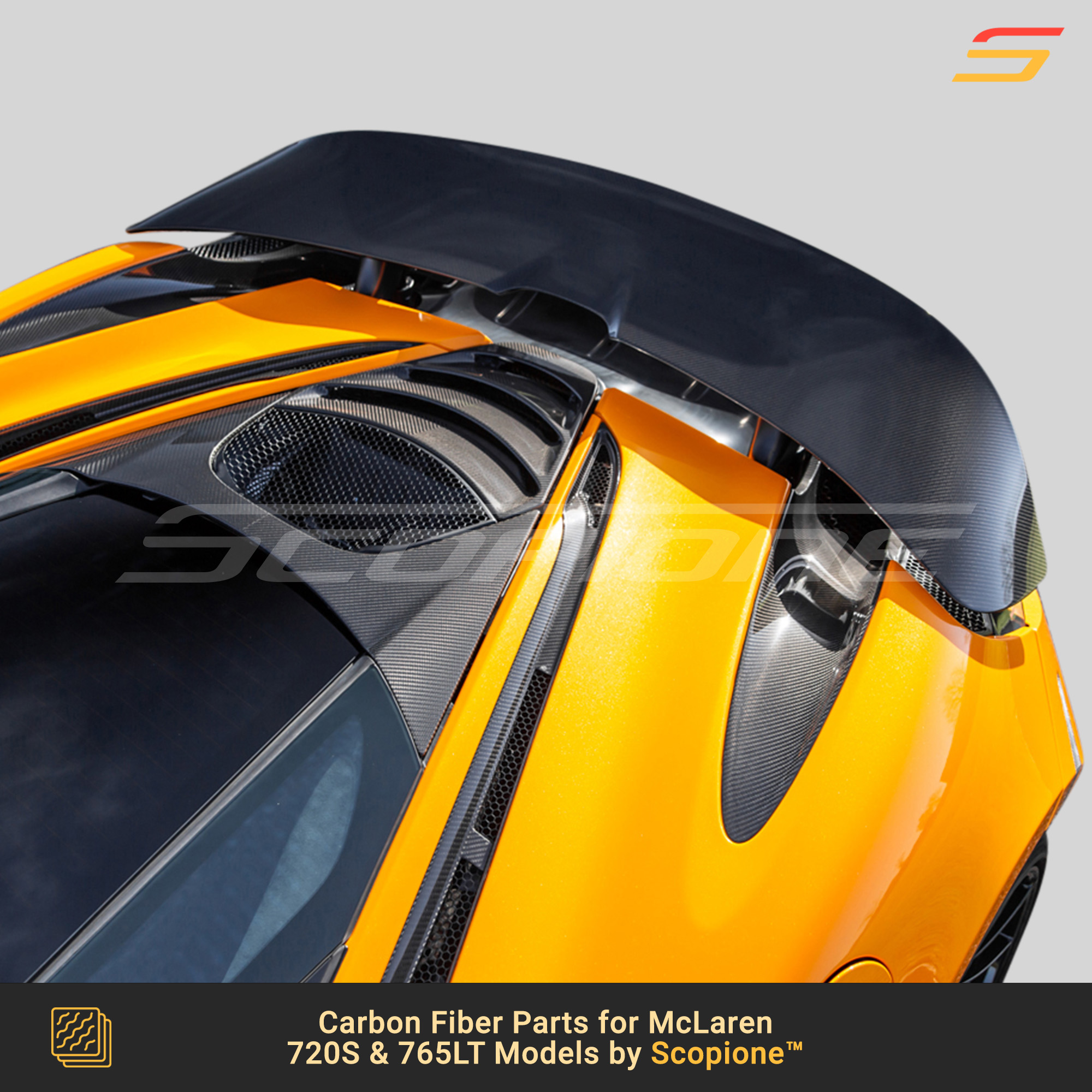
The Scopione McLaren 720S, 765LT & 750S Picture Gallery features second-generation Super Series McLarens fitted with Scopione carbon-fiber components. Every part is hand-laid from 2×2 3K twill-weave carbon fiber with a UV-resistant clear coat.
View all available McLaren carbon fiber parts on the Scopione shop page.
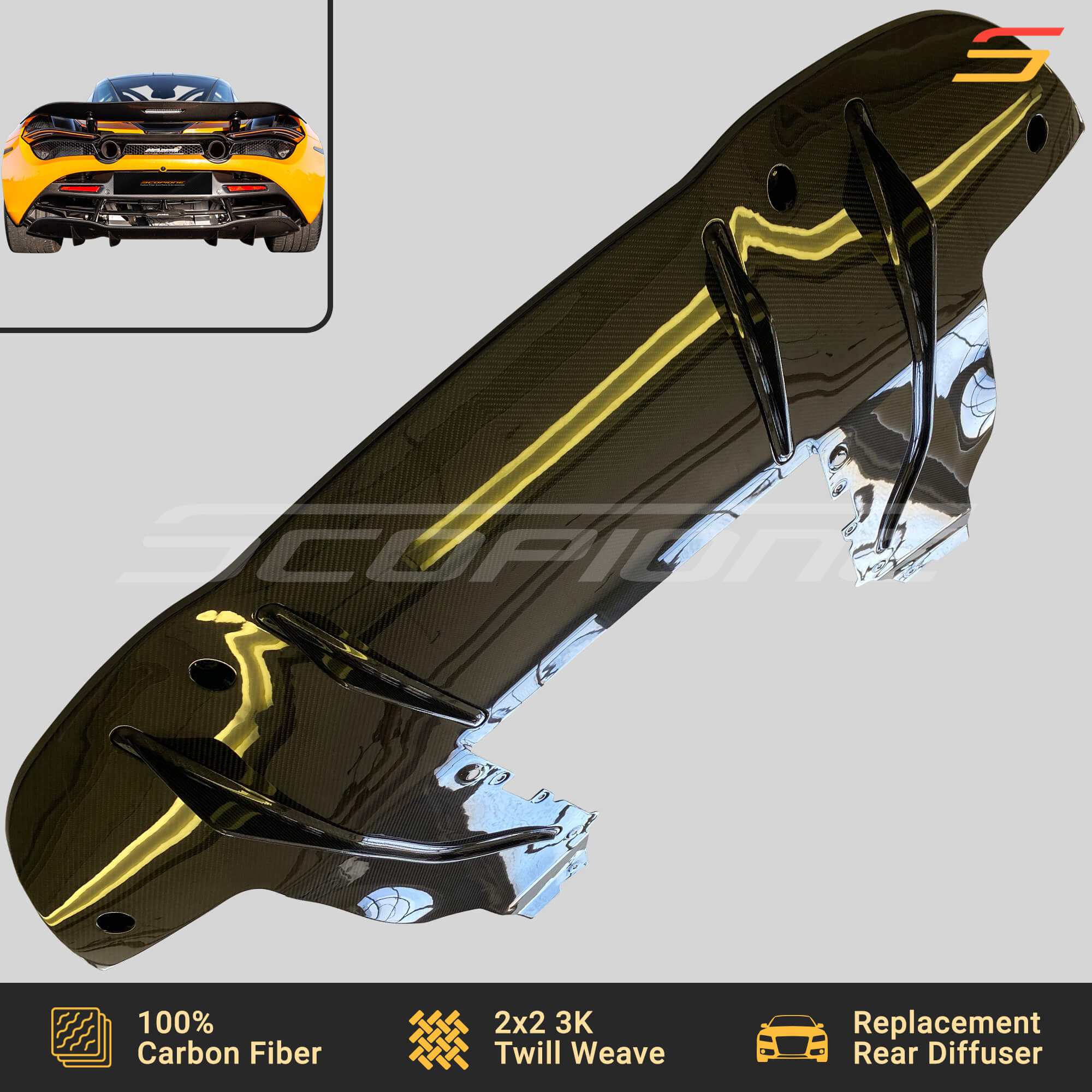
Carbon Fiber Parts for the McLaren 720S and 765LT
The 21 carbon fiber parts Scopione currently lists for the McLaren 720S and 765LT. Each image links to its product page.


More Scopione Picture Galleries
Scopione’s carbon fiber catalog covers a range of performance and luxury vehicles. Browse galleries for related makes and models:
- Ferrari: 458 Italia & Spider • 488 GTB & Spider • F8 Tributo & Spider • F12 & 812 Superfast • SF90
- Lamborghini: Gallardo • Huracan • Aventador • Urus
- McLaren: MP4-12C & 650S • Sports Series
- Porsche: 911, Boxster & Cayman
- BMW: M3, M4, M5 & More
- Audi: R8
- Nissan: GT-R R35 • 350Z, 370Z & Z
- Aston Martin: Vantage, DB9 & DBS
- Bentley: Continental GT & GTC
- Maserati: GranTurismo & GranCabrio
- Toyota: Supra
- Subaru: WRX STI
- Mitsubishi: Lancer Evolution
- Chevrolet: Corvette • Camaro
- Dodge: Viper
Experience the elegance and performance of the McLaren 720S, 765LT & 750S with Scopione. Browse our gallery and get inspired to elevate your supercar with our top-of-the-line carbon fiber upgrades.
Shop now for premium ScopioneCarbon carbon fiber upgrades and experience the ultimate in performance and aesthetics for your McLaren 720S, 765LT & 750S!