

 Shop
ShopThe Subaru WRX STI is the other half of the rally-homologation rivalry that defined two decades of performance sedans – a turbocharged flat-four and symmetrical all-wheel drive that carried the blue-and-gold 555 livery to three consecutive WRC constructors’ championships (1995–1997). Scopione carries 7 carbon fiber parts for the WRX STI spanning the GD, GR/GV, and VA eras: a front grille, headlight eyelids, a roof spoiler, a triple gauge pod, and engine bay dress-up – all in hand-laid 2×2 3K twill-weave carbon fiber with UV-resistant clear coat.
Introduction: Subaru Tecnica International
STI stands for Subaru Tecnica International – the motorsport arm Subaru founded in 1988 – and the badge earned its meaning on rally stages. The first Impreza WRX STI arrived in Japan in 1994: an EJ-series turbocharged boxer engine mounted low in the chassis, symmetrical full-time AWD, and annual “Version” updates that fed competition development straight into showrooms. Colin McRae’s 1995 drivers’ title began a run that added Richard Burns (2001) and Petter Solberg (2003) to the honor roll.
Every chapter of the STI story runs parallel to the Mitsubishi Lancer Evolution. Both turned economy sedans into rally weapons. Both hit Japan’s 280 PS ceiling and kept developing underneath it. Both reached America a year apart – the Evo VIII in 2003, the STI in 2004 – and turned US backroads into a two-make arms race. The rivalry sold both cars for two decades.
The STI outlived its rival by five years. EJ-powered production ended in 2021, and Subaru confirmed the next WRX generation would carry no combustion STI variant. The collector market has responded on schedule: the 400-unit 22B sits in six-figure territory, the S209 holds its premium, the Type RA trades in its own tier, and clean examples of every generation are appreciating as the modified majority thins supply.

GC8 Era (1994–2000): Version I–VI and the 22B
The GC8-chassis STI ran on an annual cadence Japan understood well: each year brought a new Version with incremental engine, cooling, and chassis work. Version I opened at 250 PS from the 2.0L EJ20; the lightweight Version II Type RA reached Japan’s 280 PS cap first, the standard car joined it with Version III, and the figure stayed pinned there while the underlying hardware kept improving. Lightweight RA trims – stripped of sound deadening and equipment for competition prep – played the same role Mitsubishi’s RS Evos did across town.
These cars stayed home. The GC8 STI was never officially sold in the United States, which is precisely why the 25-year import rule has turned them into a rolling event: each year another Version becomes legal, and JDM supply flows into the American market that always wanted them.
One car towers over the era. The 1998 22B STI – a widebody two-door coupe celebrating Subaru’s 40th anniversary and three straight constructors’ titles – bored the boxer to 2.2 liters, wore an adjustable rear wing, and sold out its 400-unit Japanese allocation almost immediately – 24 more cars went to the UK, Australia, and prototype duty. It has become the most valuable Subaru road car ever made – clean cars trade between $200,000 and $300,000+ now that US import eligibility arrived in 2023, and Colin McRae’s own 22B brought roughly $600,000 at auction. The 22B is to Subaru what the Tommi Makinen Edition is to Mitsubishi: the halo the whole catalog orbits.
GD Era (2002–2007): America Gets Its STI
The GD-chassis Impreza launched in Japan in 2000 – Richard Burns took his 2001 WRC title in its rally twin – and brought the STI to America in 2004, one year after the Evo VIII forced the question. The US car skipped the JDM 2.0L for a 2.5L EJ257 rated at 300 hp and 300 lb-ft, paired with an STI-exclusive 6-speed manual, a driver-controlled center differential (DCCD), Brembo brakes, BBS wheels in gold or silver, and a rear wing visible from orbit. A water-sprayed intercooler sat under the aluminum hood scoop. Sticker price: $31,545.
Enthusiasts sort the era by headlights. The 2004–2005 “blobeye” cars started it; the 2006–2007 “hawkeye” facelift brought revised gearing and suspension and became the most collected GD STI – the last of the original US body. Period testing put 0–60 mph in the 4.6–5.0 second range at roughly 3,300 lbs, dead level with the Evo VIII/IX and ahead of most sports cars at twice the money.
| US Model | Power | Original MSRP | Inflation-Adjusted |
|---|---|---|---|
| 2004 WRX STI (blobeye) | 300 hp | $31,545 | ~$53,000 |
| 2007 WRX STI (hawkeye) | 293 hp (SAE re-rating) | $33,495 | ~$51,000 |
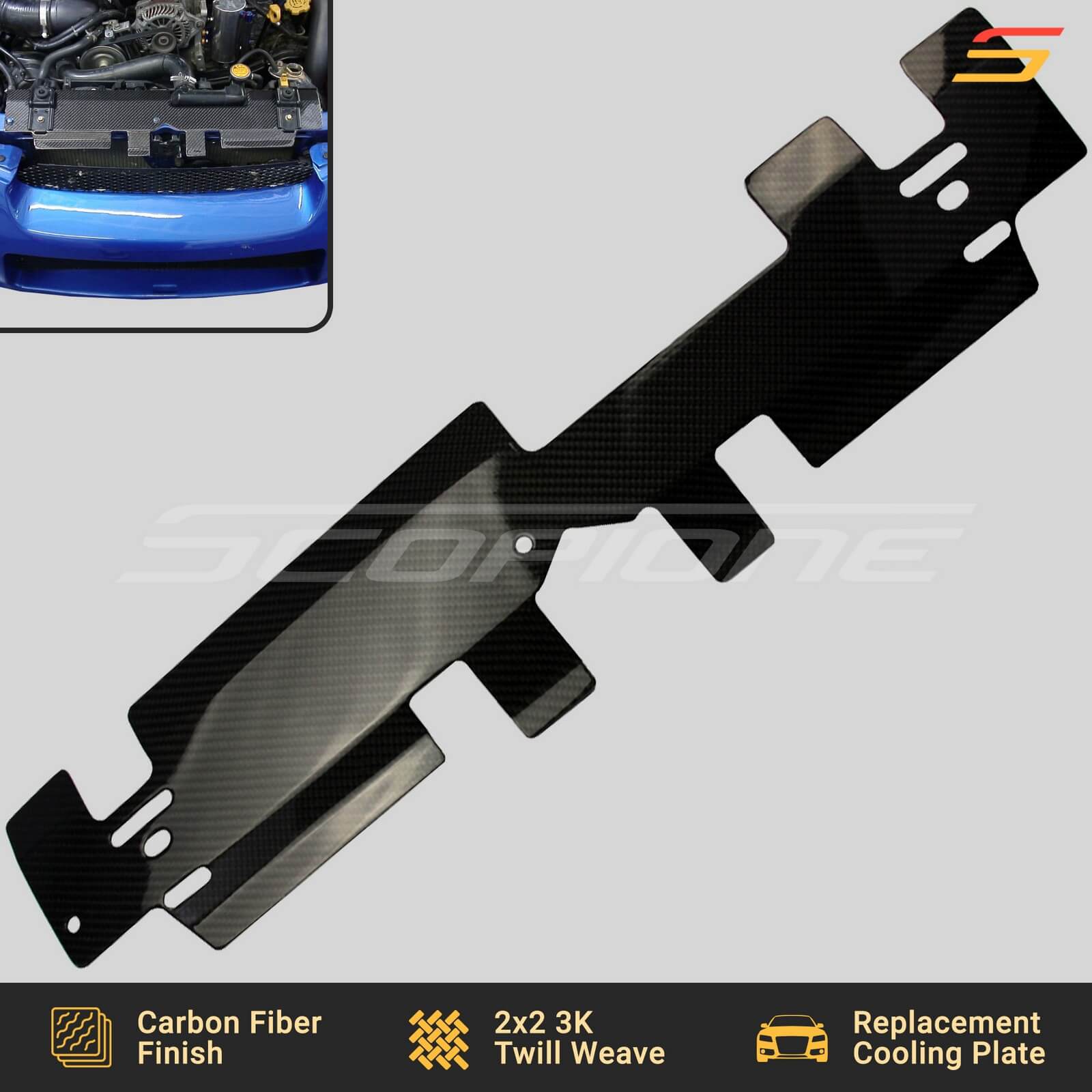
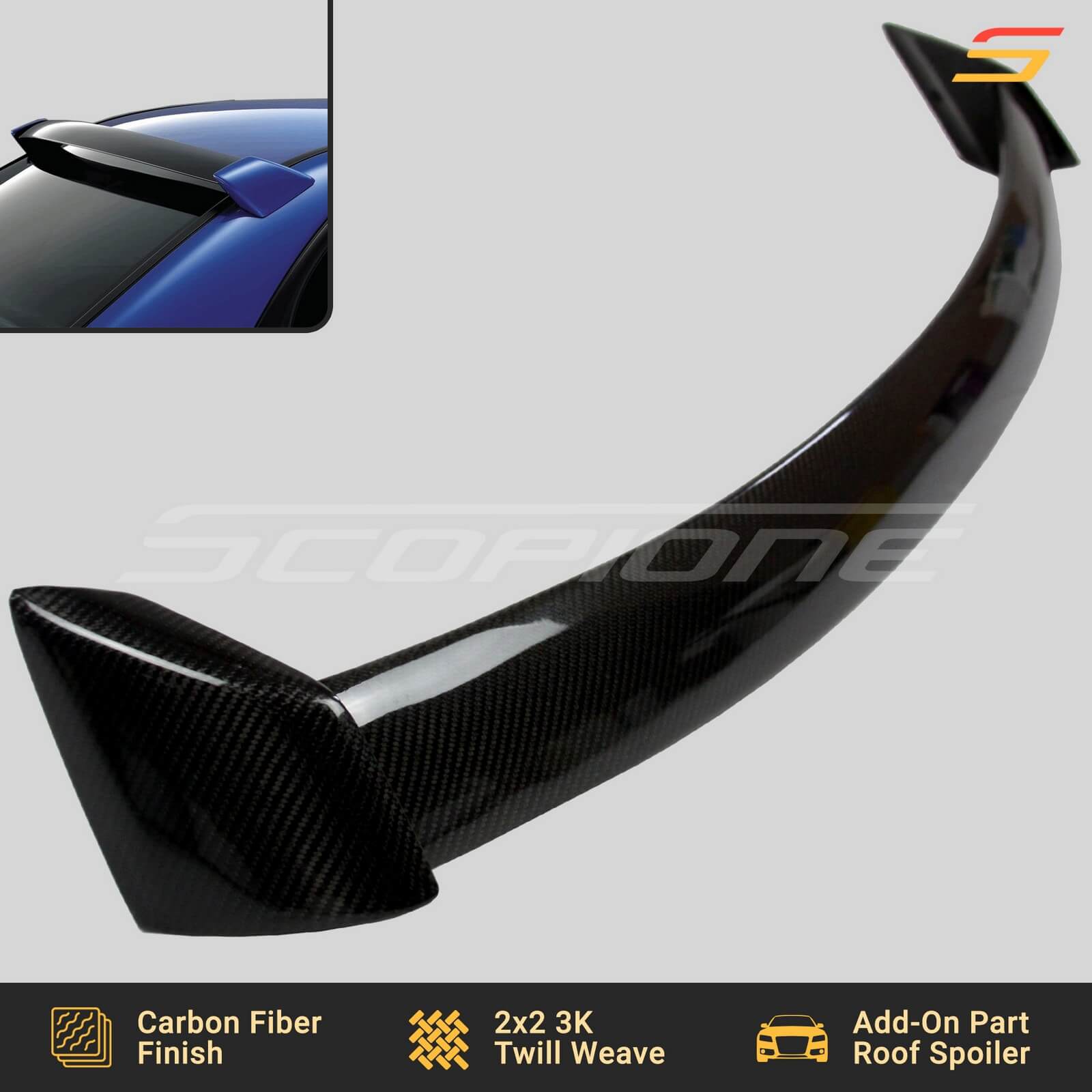
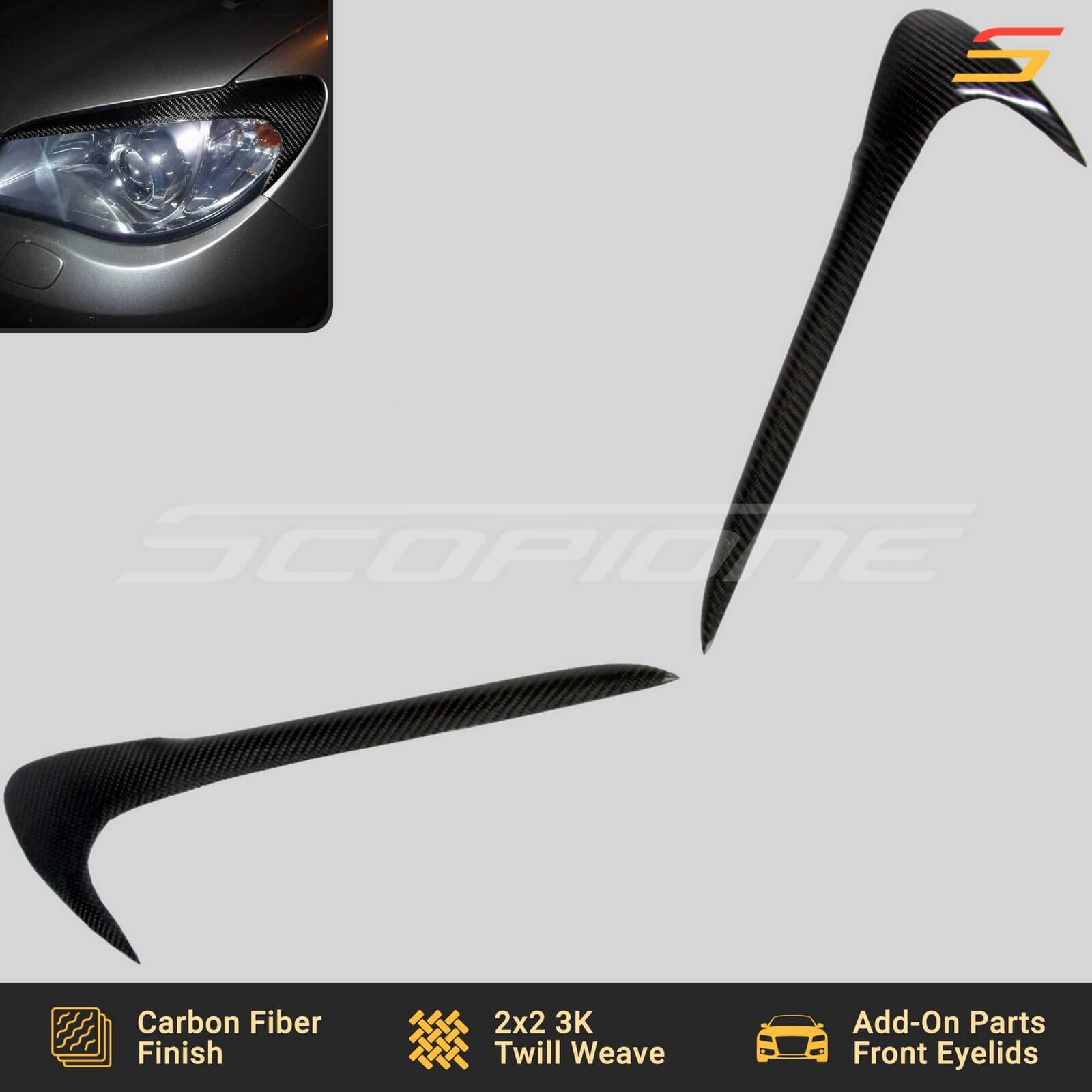
Four of Scopione’s seven STI parts fit this chassis – the radiator cooling plate, sedan roof spoiler, triple gauge pod, and hawkeye headlight eyelids. The GD is the catalog’s center of gravity, as it is for the STI aftermarket generally.
GR/GV Era (2008–2014): The Hatchback Gamble
Subaru bet the 2008 STI on a five-door hatchback – wide fenders, quad exhaust, no wing. The GR hatch handled well and the revised EJ257 made 305 hp with Dual AVCS variable valve timing, SI-Drive throttle mapping, and a multi-mode DCCD. But the formula’s buyers wanted the formula.
The timing carried an irony. Subaru withdrew from the World Rally Championship at the end of 2008, just as the new car arrived – making the GR the first STI generation sold without a factory works program running behind it. The badge’s rally credibility was banked, not current, from this point forward.
The sedan answered in 2011. The GV widebody brought the big wing back, and the two bodies sold side by side until the hatch disappeared with the generation. Today the era serves as the STI’s value entry point – and the final 2014 hatches, suddenly the last of their kind, hold their value alongside the widebody sedans.
| US Model | Power | Body | Original MSRP |
|---|---|---|---|
| 2008 WRX STI | 305 hp | 5-door hatch (GR) | $34,995 |
| 2011 WRX STI | 305 hp | Widebody sedan (GV) | $33,995 |
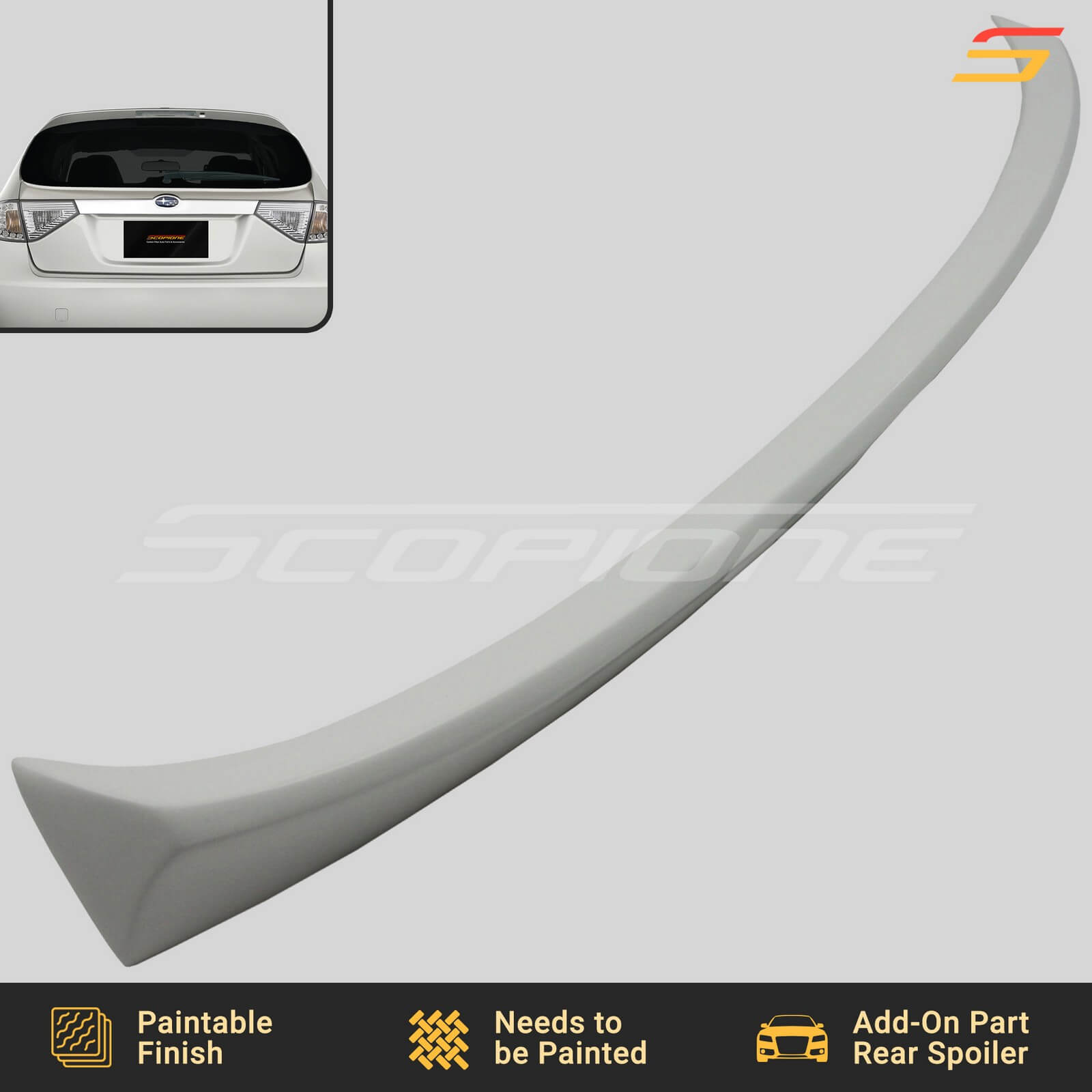
Scopione’s GR/GV coverage includes the front contour grille (2008–2010), headlight eyelids (2008–2011), and the alternator belt cover – a part whose EJ25 fitment stretches far beyond this generation. Five-door bodies – listed as “wagon” in the catalog – also have primed, paintable shark fin and trunk spoiler options alongside the CF parts.
VA Era (2015–2021): The Final EJ
The VA-chassis STI carried the EJ257 to the end – 305 hp initially, then 310 from the 2019 revision that the 2018 Type RA previewed – while the wing, the DCCD, and the 6-speed manual stayed exactly where the faithful expected them. Subaru spent the generation’s final years issuing the specials that now define its collector market.
- Type RA (2018, 500 US units) – Carbon fiber roof and rear wing, strengthened pistons, Bilstein dampers, no moonroof. The lightweight one.
- S209 (2019, 209 units) – The first S-line STI ever sold in America, final-assembled by STI in Japan: 341 hp from a larger HKS-built turbo and strengthened internals, widebody with carbon aero, Recaros. Trades at $50,000–$90,000, averaging near $80,000.
- 2021: the final year – The last EJ-powered model year in America. Japan received a 555-unit EJ20 Final Edition (2020) and Australia a 75-unit EJ25 Final Edition; the US run simply ended. Subaru confirmed in 2022 that the new-generation WRX would carry no combustion STI.
| US Model | Power | Original MSRP | Inflation-Adjusted |
|---|---|---|---|
| 2015 WRX STI | 305 hp | $34,495 | ~$47,000 |
| 2018 STI Type RA | 310 hp | $48,995 | ~$63,000 |
| 2019 STI S209 | 341 hp | $63,995 | ~$81,000 |
Twenty-seven years of EJ-powered STIs ended without a successor. The catalog closed the way the Evo’s did in 2016 – and the used market began the same sorting process a few years behind its rival.
Carbon Fiber and the WRX STI
Subaru saved factory carbon fiber for the cars that earned it. The 2018 Type RA carried a carbon fiber roof panel and rear wing; the S209 added carbon aero to its widebody. Everything below the specials relied on aluminum hoods and functional scoops – weight discipline through material choice, not exotic construction. The approach mirrors Mitsubishi’s: composite where competition justified it, metal everywhere else.
The aftermarket never waited for permission. STI culture runs deep on functional dress-up – hood scoops, canards, vortex generators, and the dash-top gauge pod holding boost, oil, and EGT readouts that became a period signature of the tuned GD. Carbon-fiber versions of these pieces replace aging plastic with a material that photographs as intentional, which matters on a platform where engine bays and interiors appear constantly in forum builds and sale listings.
Scopione’s STI line works that territory: exterior trim (grille, eyelids, roof spoiler), the triple gauge pod for period-correct interiors, and engine bay plates in hand-laid 2×2 3K twill-weave CF with UV-resistant clear coat. Fitment follows chassis generations precisely – each part lists the exact years and body styles it serves. The gauge pod alone turns a stock GD dash into a period tuner cockpit without cutting anything.
Legacy: The Boxer Rumble Goes Quiet
Three constructors’ championships, three drivers’ titles, and the 555 livery made the STI a global icon – but its deeper legacy is the sound. The unequal-length-header boxer rumble became a subculture signature recognizable from a block away, as much a part of the car’s identity as the hood scoop and the wing. Gran Turismo, rally videography, and two decades of tuner culture did the rest.
The Evo-STI rivalry ended in stages: Mitsubishi left in 2016, Subaru’s EJ era closed in 2021, and the affordable rally-homologation sedan – the category both cars built – now exists only on the used market. The collector curve is following the JDM pattern set by the Toyota Supra: the 22B has already crossed into six figures, and the modern specials are consolidating behind it. Meanwhile the Nissan GT-R carried Japanese AWD performance upmarket, leaving the STI’s giant-killing price bracket unoccupied.
Subaru keeps the STI name alive in motorsport and parts catalogs. The sedans, though, are finished – and the market is pricing them like it knows.
Scopione: Carbon Fiber Parts for the WRX STI
Scopione’s WRX STI catalog contains 7 carbon fiber products across three chassis eras, plus primed paintable spoilers for wagon bodies. Every CF part uses hand-laid 2×2 3K twill-weave carbon fiber with a UV-resistant clear coat and carries Scopione’s 12-month limited warranty against delamination. The full Subaru lineup lives on the Scopione Subaru shop page.
What Scopione Offers for the WRX STI
| Part | Fitment | Type | Price |
|---|---|---|---|
| Engine Radiator Cooling Plate | 2002–2007 (GD) | Direct replacement | $200 |
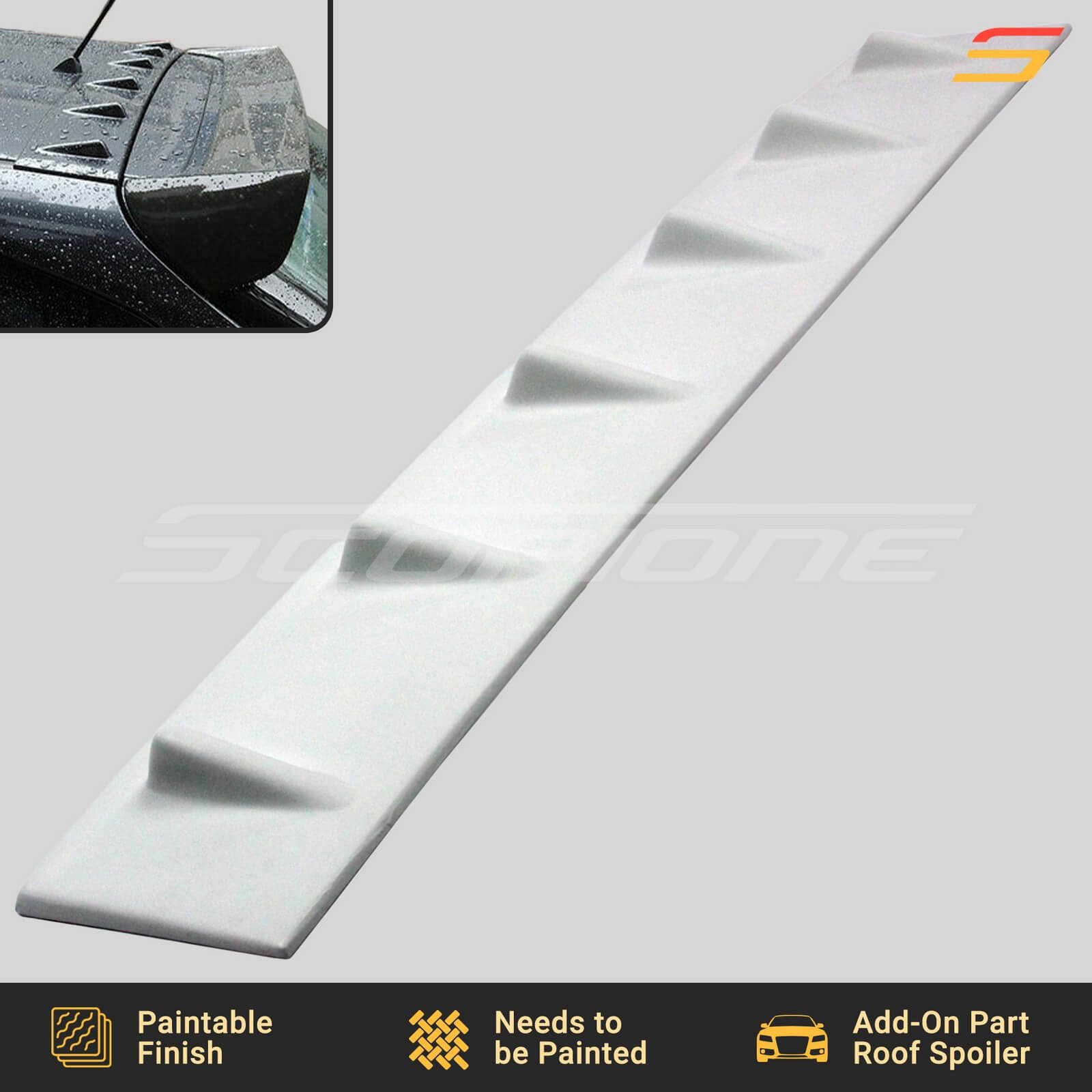
| Rear Visor Roof Spoiler | 2002–2007 sedans (GD) | Add-on | $290 |
| Triple Gauge Pod Holder | 2002–2007 (GD) | Add-on, interior | $300 |
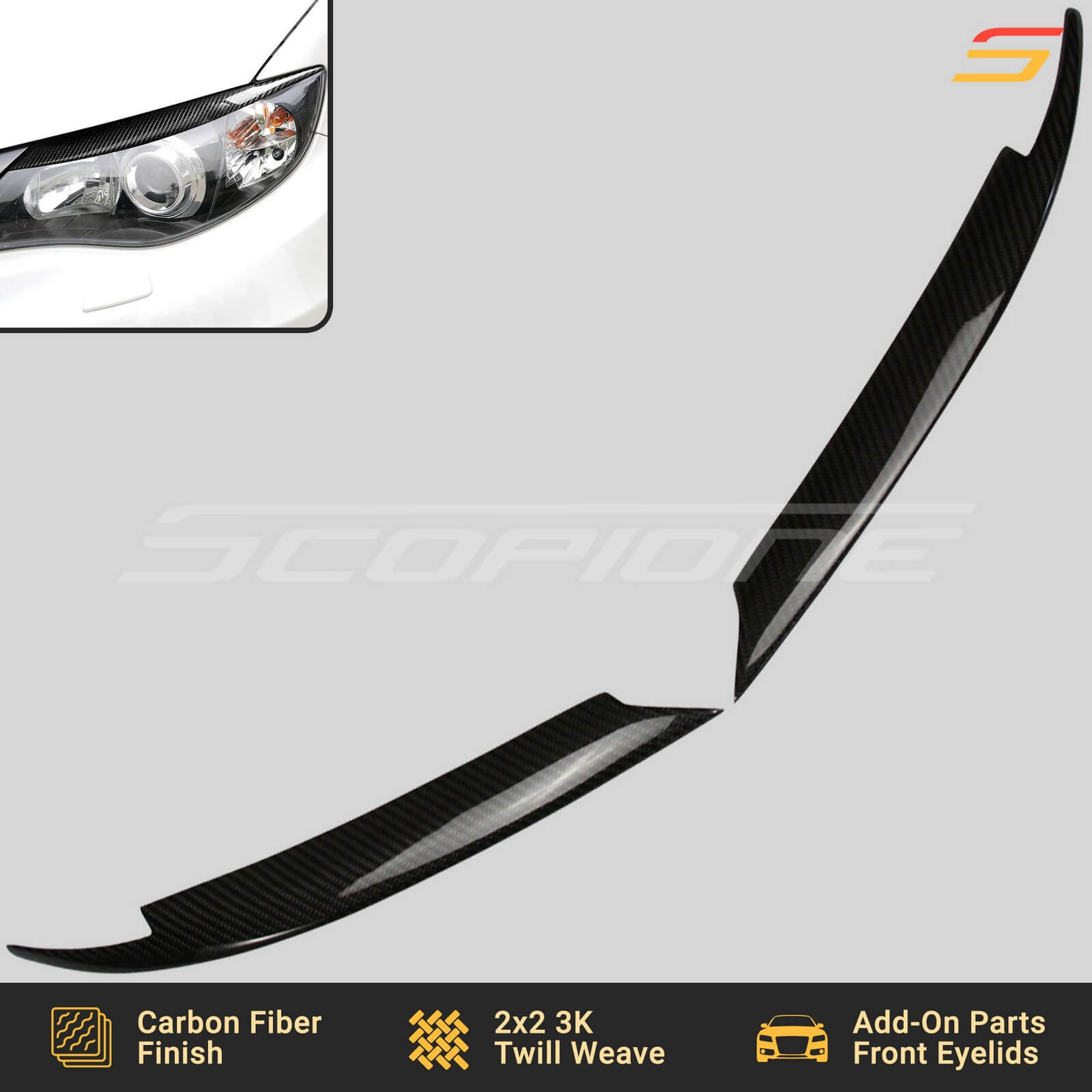
| Headlight Eyelids | 2006–2007 (hawkeye) | Add-on | $90 |
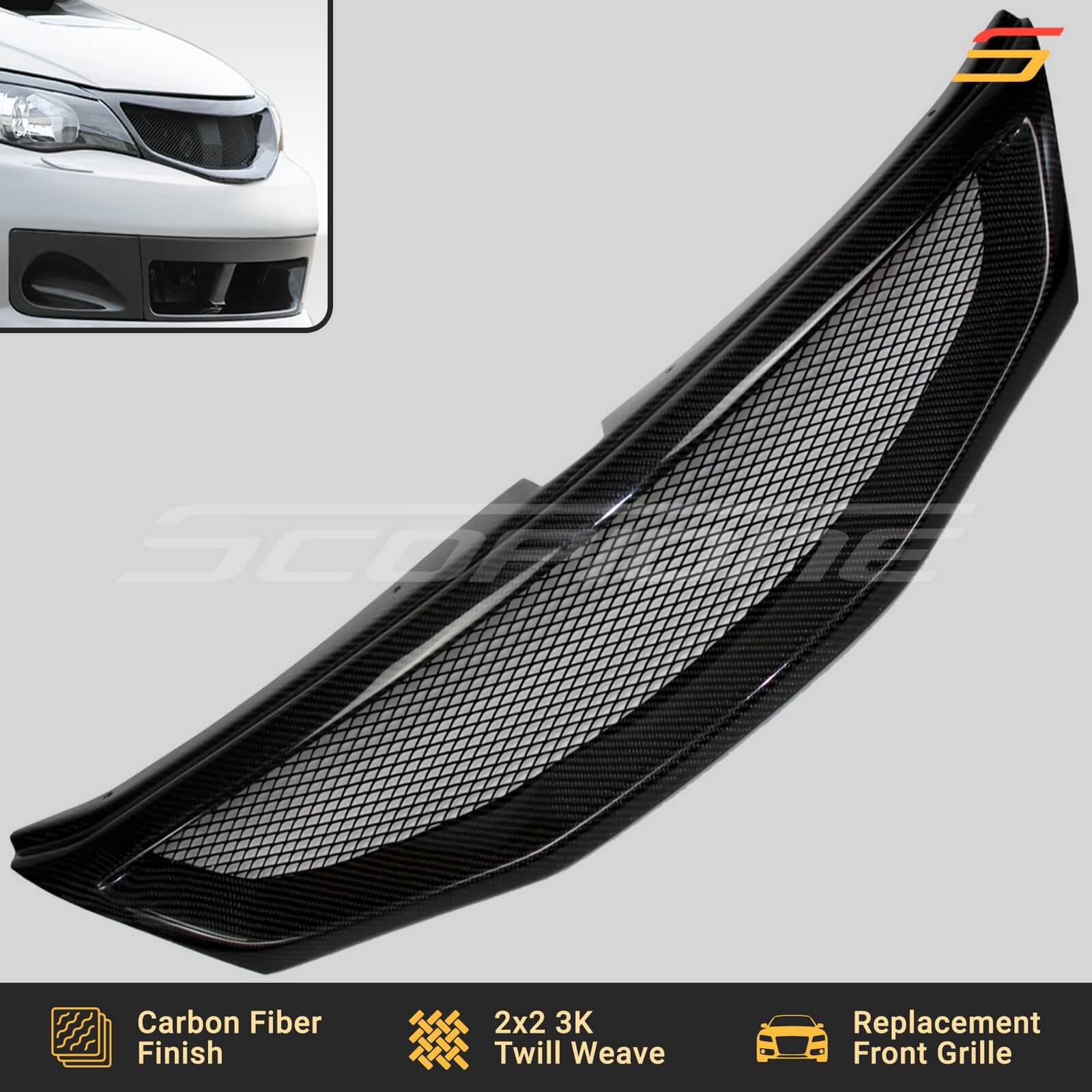
| Front Contour Grille | 2008–2010 (GR) | Direct replacement | $290 |
| Headlight Eyelids | 2008–2011 (GR/GV) | Add-on | $90 |
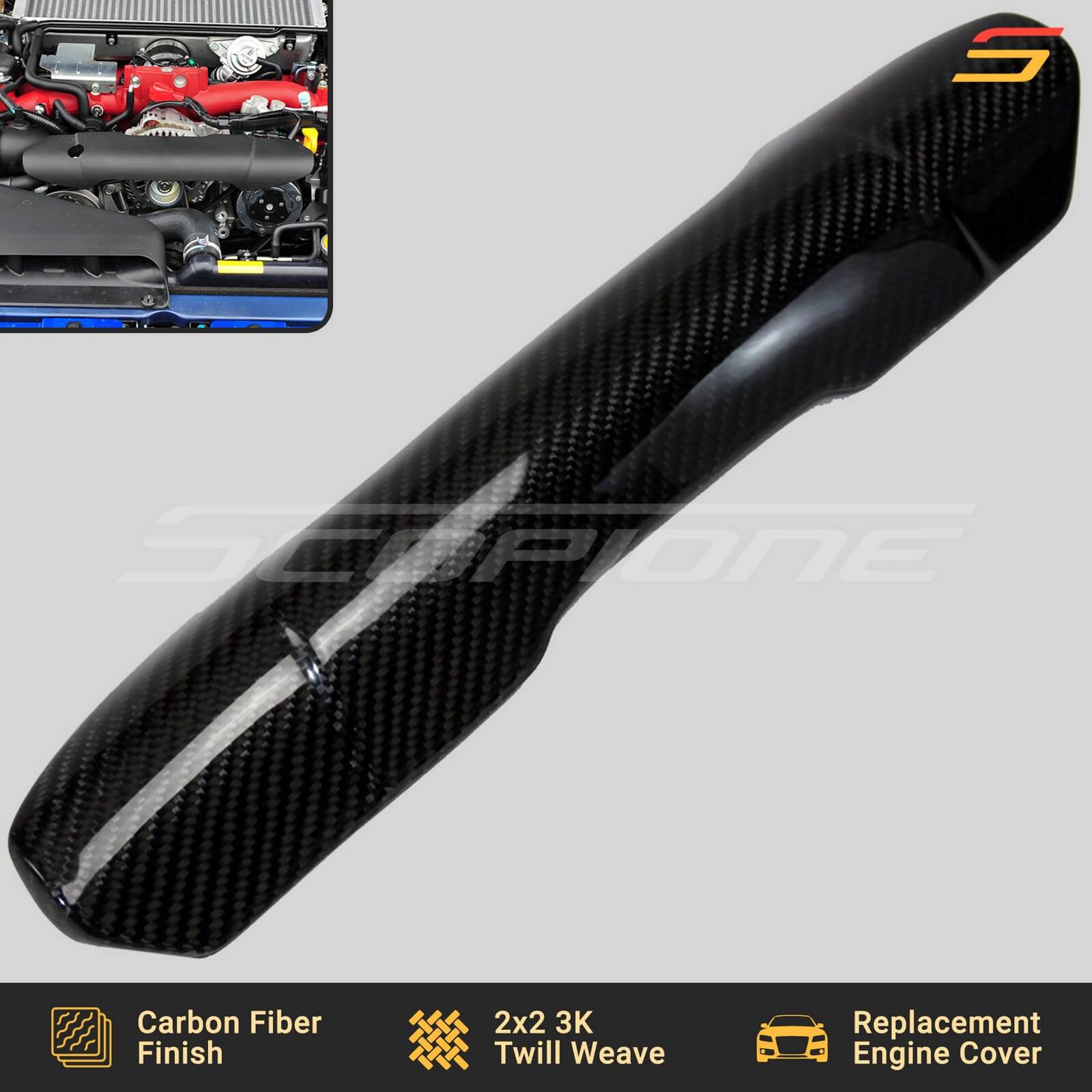
| Engine Alternator Drive Belt Cover | 2008–2021 STI (EJ25) | Direct replacement | $120 |
Browse Carbon Fiber Parts for the Subaru WRX STI
Fitment by Generation
- GD chassis (2002–2007) – Four parts: the radiator cooling plate, the sedan-only rear visor roof spoiler, the triple gauge pod, and hawkeye eyelids for 2006–2007 headlights.
- GR/GV chassis (2008–2014) – The front contour grille fits 2008–2010 cars only (not 2011), and the second eyelid set covers 2008–2011 headlights.
- The belt cover spans eras – it fits every 2.5L EJ25 STI from 2008 through the final 2021 cars, and will not fit 2.0L engines.
- Wagon owners: the CF roof spoiler is sedan-only, but primed paintable shark fin and trunk spoilers cover 2008–2014 wagon bodies.
Cross-Compatibility Across the EJ25 Family
Subaru installed the EJ25 flat-four across its whole range, and the alternator belt cover follows the engine: beyond the 2008–2021 STI, it fits the Impreza (2008–2011), Forester (2009–2010), and Legacy/Outback (2009). One part, five model lines – the same engine-sharing economics that make GM’s LS3 covers multi-platform pieces. Owners can confirm exact fitment on each listing in the Subaru catalog.
WRX STI Market Pricing & Carbon Fiber Investment
The STI market has three tiers: the 22B alone at the top, the modern limited editions (S209, Type RA) in the middle, and the volume generations sorting by condition and tune history underneath. Carbon-fiber trim serves the presentation-focused end – GD builds photographed for forums and listings – while the engine bay pieces suit any clean example.
| Variant | Original MSRP | Current Market Range | Top Upgrade |
|---|---|---|---|
| GD STI (2004–2007) | $31,545–$33,495 | $25,000–$45,000 | Gauge pod ($300) |
| GR/GV STI (2008–2014) | $33,995–$34,995 | $15,000–$30,000 | Contour grille ($290) |
| VA STI (2015–2021) | $34,495–~$38,000 | $25,000–$40,000 | Belt cover ($120) |
| Type RA (2018) | $48,995 | $26,000–$45,000 | Belt cover ($120) |
| S209 (2019) | $63,995 | $50,000–$90,000 | Belt cover ($120) |
| 22B STI (import) | JDM market | $200,000–$300,000+ | – |
Pricing Factors That Affect STI Values
- Tune history – The EJ257’s sensitivity to bad tuning makes a documented stock ECU worth real money; “never tuned” is the strongest phrase in an STI listing.
- Engine documentation – Compression and leakdown results, ringland condition, and rebuild receipts move prices materially in both directions.
- Special-edition status – 209 S209s and 500 Type RAs exist; both trade in their own tier above volume cars.
- Import provenance – GC8 Versions have entered under the 25-year rule progressively since 2019, the 22B since 2023; auction sheets and verified mileage command premiums.
- Styling era – GD hawkeyes outprice blobeyes, and final-year cars of either GR/GV body style anchor that generation’s market.
Ownership Costs
The EJ257 sets the agenda. Its known weaknesses – ringland failure (typically on poorly tuned cars, though stock engines are not immune), head gaskets at higher mileage (more prevalent on non-turbo EJ25s; the STI’s multi-layer-steel gaskets fare better), and rod bearings on abused engines – mean a full rebuild runs $5,000–$8,000, and engine documentation dominates the used market accordingly. Routine upkeep averages about $760 a year per RepairPal – the highest of any Subaru, modest for the performance class – rising to $1,500–$2,500 in years that include tires, brakes, or the 105,000-mile timing belt service ($600–$1,200). The 6-speed gearbox and AWD hardware are durable; on-schedule differential and gearbox fluids are cheap insurance for the drivetrain that defines the car.
Frequently Asked Questions
What carbon fiber parts does Scopione offer for the Subaru WRX STI?
Scopione carries 7 carbon fiber parts for the WRX STI: a radiator cooling plate ($200), rear visor roof spoiler ($290), and triple gauge pod ($300) for the 2002–2007 GD chassis; headlight eyelids for 2006–2007 ($90) and 2008–2011 ($90) cars; a front contour grille for 2008–2010 ($290); and an alternator drive belt cover ($120) fitting 2008–2021 EJ25 cars. Primed paintable wagon spoilers round out the range. Browse everything on the Scopione Subaru page.
Which WRX STI generations do Scopione parts fit?
Fitment follows the chassis. Four parts serve the GD era (2002–2007), two serve the GR/GV era (the grille fits 2008–2010 only, the eyelids 2008–2011), and the belt cover spans every 2.5L STI from 2008 to 2021 – plus the Impreza, Forester, and Legacy models that share the EJ25. It will not fit 2.0L engines, and the roof spoiler is sedan-only. Each listing states its exact fitment window.
Is the Subaru WRX STI a good investment?
The specials are. The 400-unit 22B trades at $200,000–$300,000+ since becoming US-importable in 2023, the 209-unit S209 trades at $50,000–$90,000, and the 500-unit Type RA sits at $26,000–$45,000. Clean, unmodified GD-era cars are the volume play – appreciating steadily at $25,000–$45,000 now that EJ production has ended and stock survivors keep getting scarcer. Tune history separates the market: documented-stock cars command decisive premiums.
What are common WRX STI maintenance issues and costs?
The EJ257’s reputation rests on three items: ringland failure (usually in poorly tuned cars, though stock engines are not immune), head gaskets at higher mileage, and rod bearings on abused engines. A full rebuild runs $5,000–$8,000, which is why compression tests and engine records dominate STI buying advice. Routine upkeep averages about $760 a year per RepairPal, rising to $1,500–$2,500 in years with tires, brakes, or the 105,000-mile timing belt service. A documented-stock car with fresh fluids is the reliable configuration.
More Scopione Picture Galleries
- Ferrari: 458 Italia & Spider • 488 GTB & Spider • F8 Tributo & Spider • F12 & 812 Superfast • SF90
- Lamborghini: Gallardo • Huracan • Aventador • Urus
- McLaren: MP4-12C & 650S • 720S & 765LT • Sports Series
- Porsche: 911, Boxster & Cayman
- BMW: M3, M4, M5 & More
- Audi: R8
- Nissan: GT-R R35 • 350Z, 370Z & Z
- Aston Martin: Vantage, DB9 & DBS
- Bentley: Continental GT & GTC
- Maserati: GranTurismo & GranCabrio
- Toyota: Supra
- Mitsubishi: Lancer Evolution
- Chevrolet: Corvette • Camaro
- Dodge: Viper
Experience the elegance and performance of the Subaru WRX STI with Scopione. Browse our gallery and get inspired to elevate your supercar with our top-of-the-line carbon fiber upgrades.
Shop now for premium ScopioneCarbon carbon fiber upgrades and experience the ultimate in performance and aesthetics for your Subaru WRX STI!