

 Shop
ShopThe Lamborghini Aventador was the brand’s flagship V12 supercar from 2011 to 2022 – the first Lamborghini built around a full carbon fiber monocoque and the last to use a pure naturally aspirated V12 without electrification. Over 11 production years, 11,465 Aventadors left Sant’Agata Bolognese – more than all previous Lamborghini V12 models combined. From the 691 hp LP700-4 that debuted at Geneva to the 769 hp Ultimae that closed the line, the Aventador’s L539 engine defined an era. Scopione carries a full line of carbon fiber parts for the Lamborghini Aventador – body kits, rear spoilers, front splitters, mirror shells, roof vents, engine bay covers, dashboard trim kits, and seat back panels – precision-fitted across all LP700-4, S, SV, SVJ, and Ultimae variants.

Introduction: Lamborghini’s Carbon Fiber Flagship
The Aventador debuted at the 2011 Geneva Motor Show – five months after its private unveiling at the Sant’Agata Bolognese factory. It succeeded the Murcielago as Lamborghini’s flagship V12 and introduced a structural innovation no previous Lamborghini production car had attempted: a full carbon fiber monocoque manufactured entirely in-house using the patented RTM-Lambo resin transfer moulding process.
That monocoque weighed 147.5 kg. Coupled with aluminum front and rear subframes, the total chassis came to 229.5 kg with a torsional stiffness of 35,000 Nm/degree. For context, the Murcielago’s steel tubular frame was both heavier and less rigid. The carbon fiber tub was not a marketing feature. It was the structural foundation the entire car depended on.
Filippo Perini led the exterior design at Lamborghini Centro Stile, drawing inspiration from the angular geometry of the F-117A Nighthawk and F-22 Raptor stealth aircraft. Internally codenamed LB834, the car was named after a fighting bull that fought at the Saragossa arena in 1993. Its 6.5-liter V12 – designated L539 – was developed entirely in-house with dry-sump lubrication and an 8,500 rpm redline. Power climbed from 691 hp in the LP700-4 to 769 hp in the Ultimae across 13 production variants.
During its 11-year run, the Aventador overlapped with both the Lamborghini Gallardo (2011–2013) and the Lamborghini Huracan (2014–2022) as the V10/V12 flagship pairing. Unlike those cars, the Aventador shared no platform with any other VW Group product. Its monocoque was unique to this model.
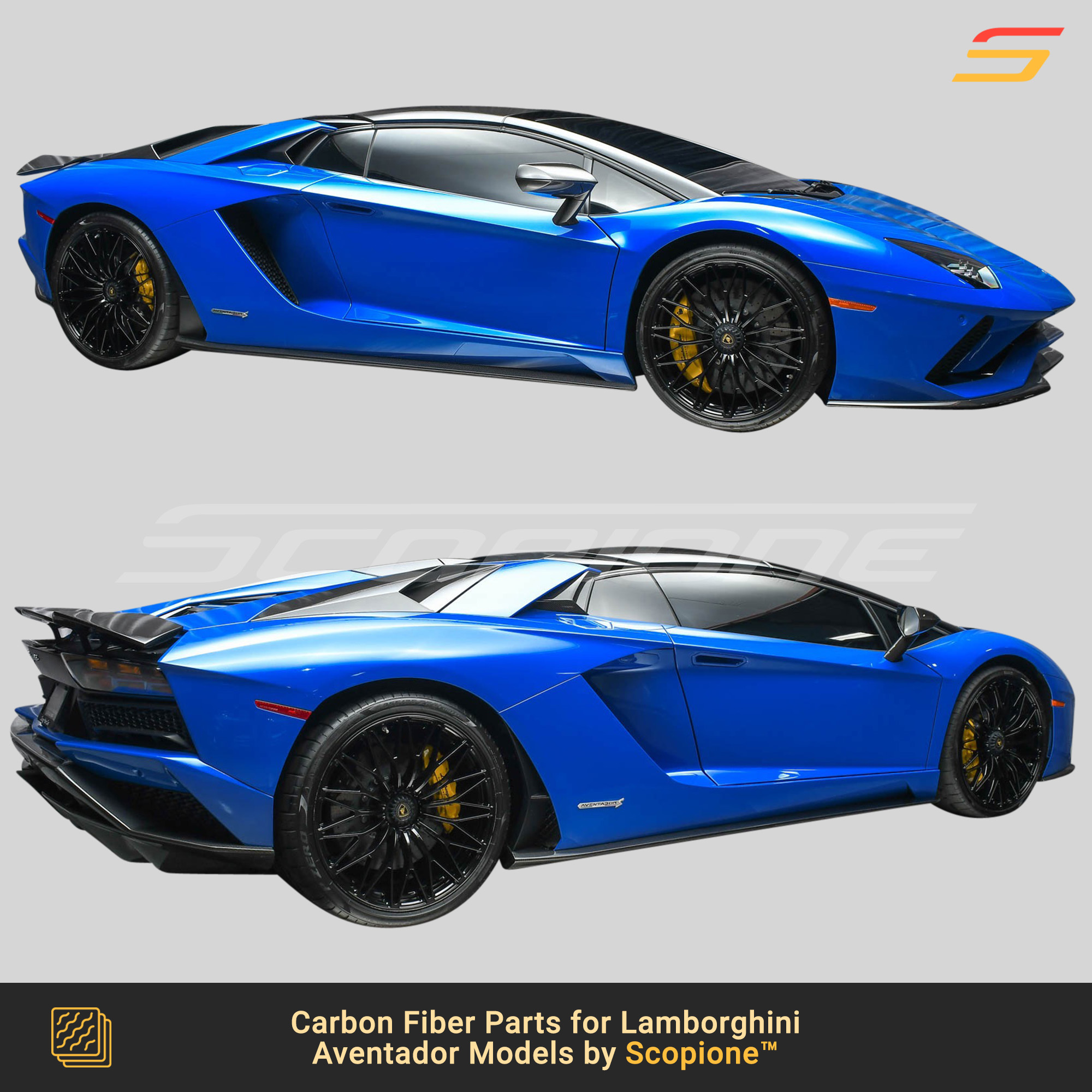
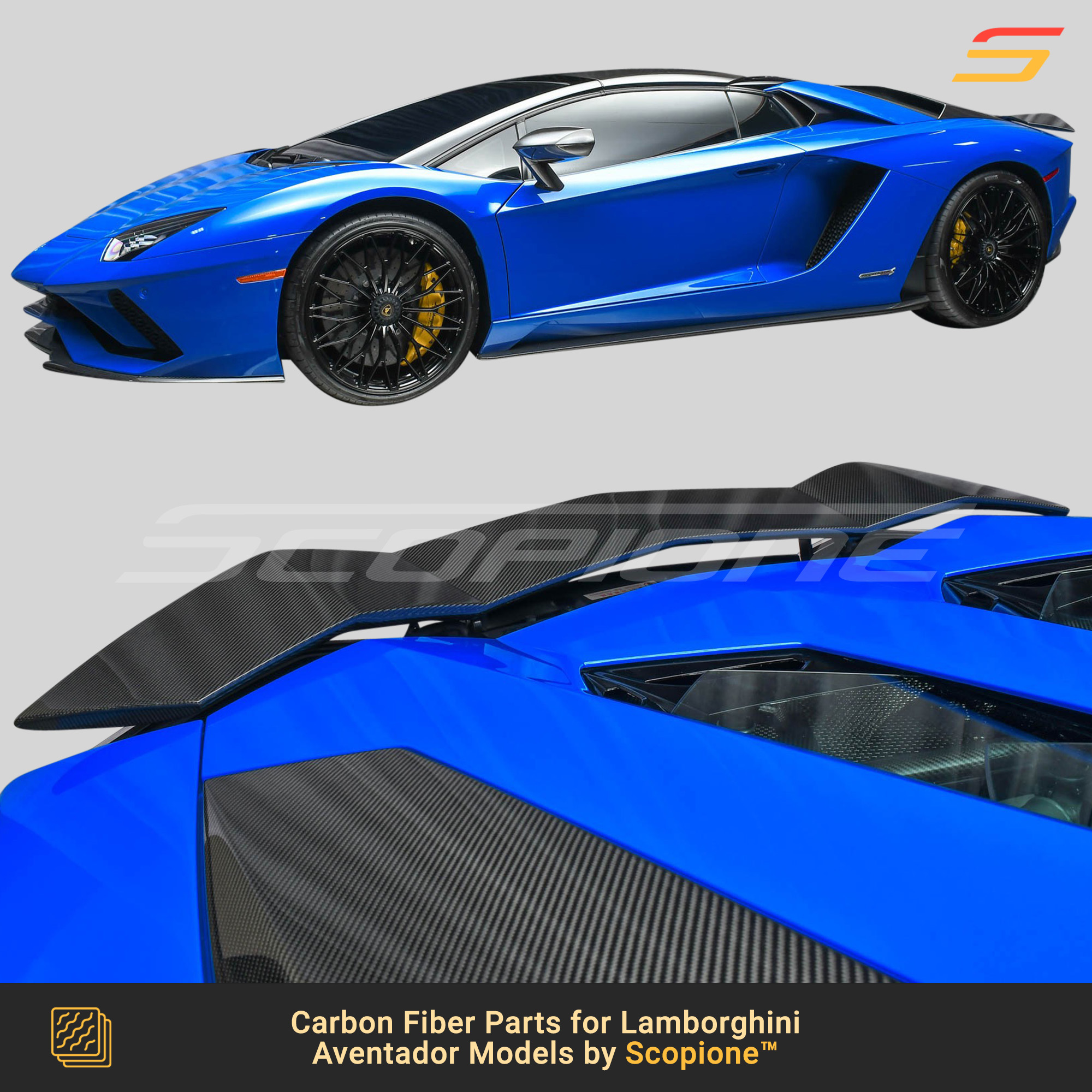
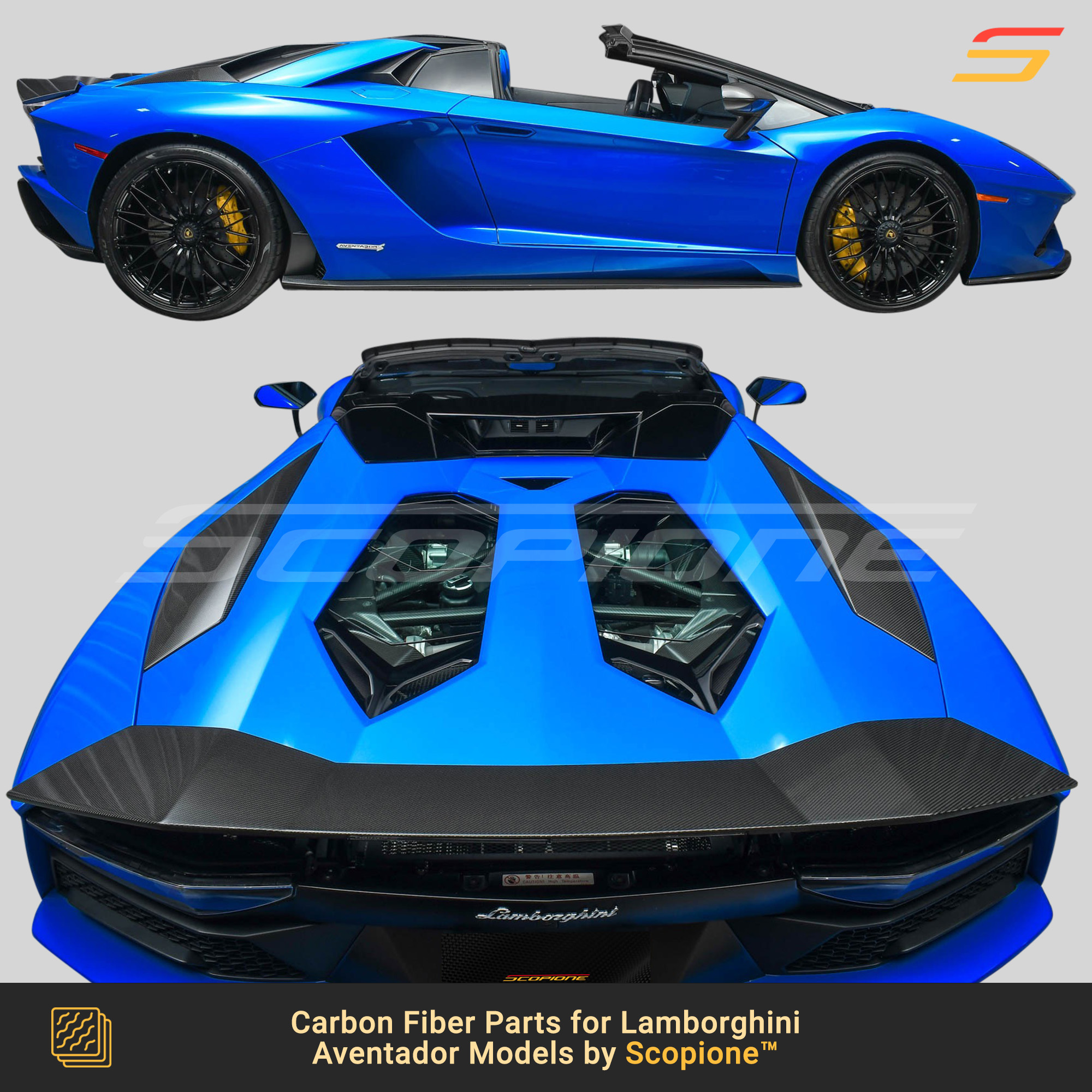
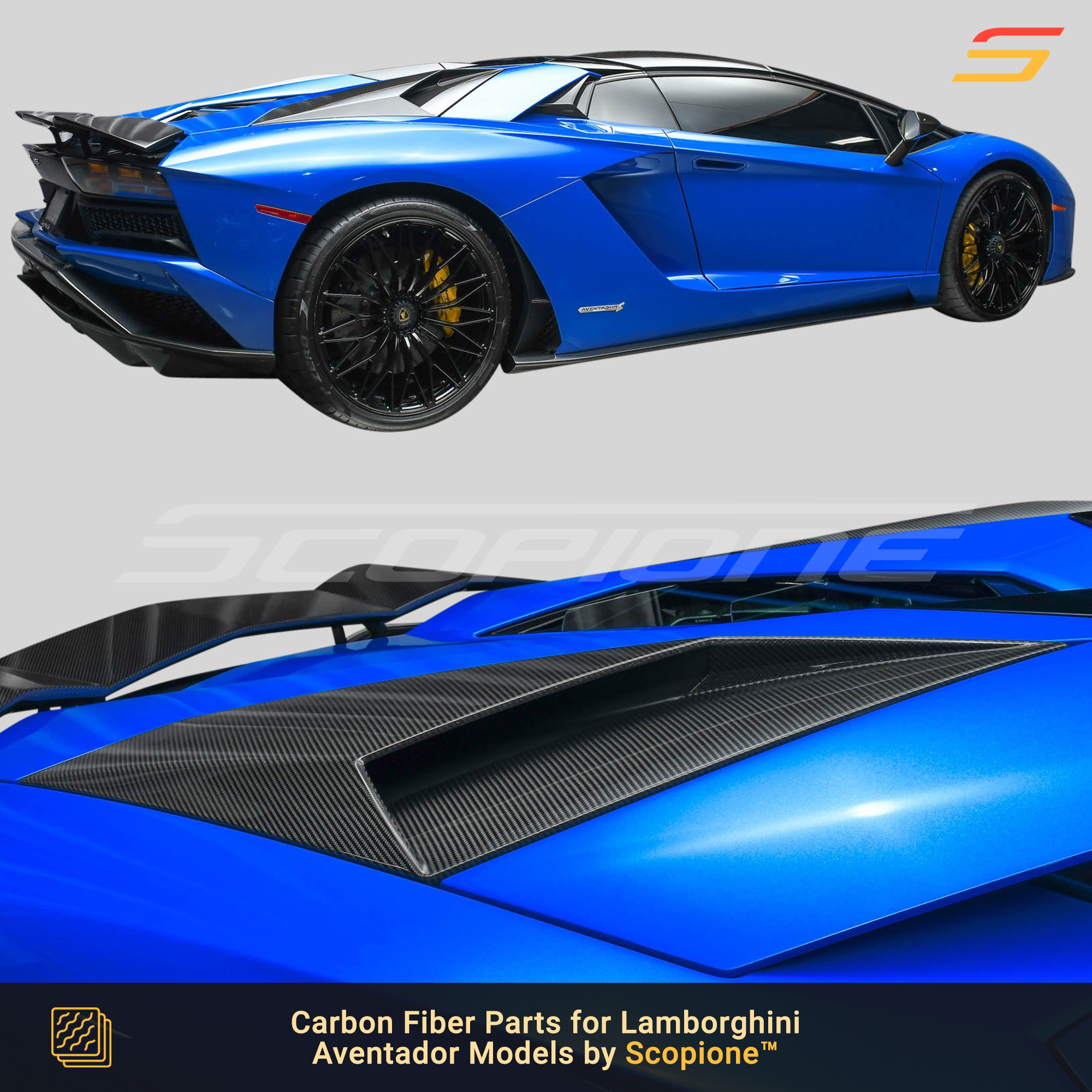
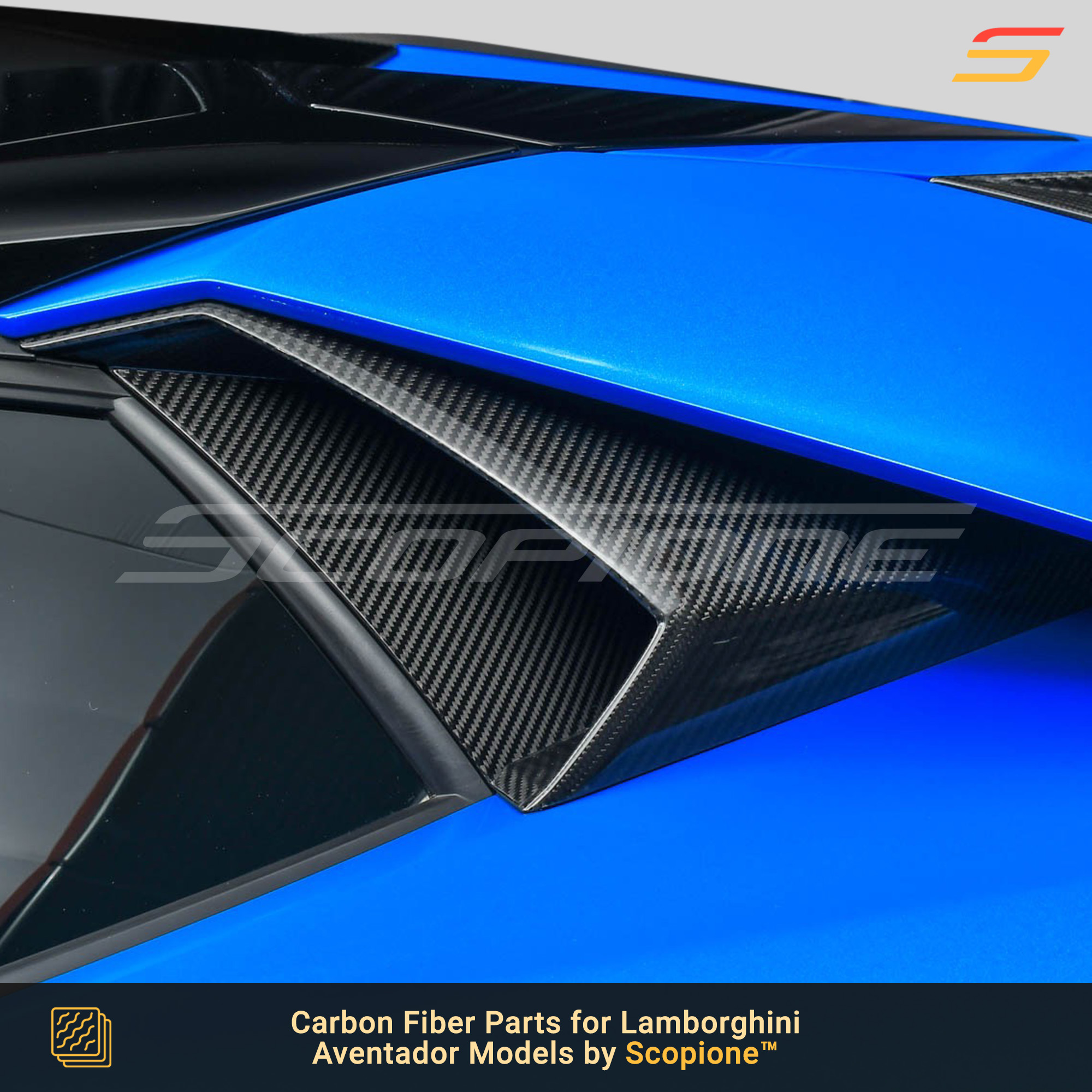
Scopione’s Aventador carbon fiber catalog covers exterior body panels, engine bay covers, interior trim, and seat back panels – precision-fitted for all variants from LP700-4 through Ultimae.




LP700-4 to Superveloce (2011–2017): The Original Aventador
The launch LP700-4 paired the 6.5-liter L539 V12 (691 hp, 509 lb-ft) with an ISR 7-speed single-clutch automated manual – built by Graziano Trasmissioni with a claimed 50-millisecond shift time. No manual transmission was ever offered. All-wheel drive was permanent via a Haldex-based system. Dry weight: 1,575 kg for the coupe. Top speed: 217 mph. The 0–62 mph sprint took 2.9 seconds.
Scissor doors. A first for a production Lamborghini V12 since the Countach. The LP700-4 Roadster followed in 2012 with removable two-piece carbon fiber roof panels and engineered rollover protection – debuting at the Los Angeles Auto Show.
Three significant variants defined this era:
- LP720-4 50° Anniversario (2013–2014) – 200 units total: 100 coupes, 100 roadsters. Celebrating Lamborghini’s 50th anniversary with 710 hp through revised engine calibration. Exclusive Giallo Maggio paintwork. Redesigned front and rear fascias delivered 50% greater aerodynamic efficiency. Q-Citura diamond-stitch interior with Forged Composite numbered badge.
- LP750-4 Superveloce Coupe (2015–2017) – 600 units. The SV designation carried forward Lamborghini’s Super Veloce heritage with 740 hp (750 CV) and a 50 kg weight reduction to 1,525 kg dry. Stiffer suspension, revised aerodynamics, and a fixed rear wing transformed the car’s high-speed stability.
- LP750-4 SV Roadster (2016–2017) – 500 units. Open-top SV with identical 740 hp output. Debuted at the 2015 Pebble Beach Concours d’Elegance. Carbon fiber engine bay louvers and a dry weight of 1,575 kg – 50 kg lighter than the standard Roadster.
Models & Key Specifications:
- LP700-4 Coupe (2011–2016)
- Engine: 6.5L V12 (691 HP / 700 CV)
- Transmission: ISR 7-speed single-clutch automated manual
- Drivetrain: Permanent AWD (Haldex)
- 0–62 mph: 2.9 seconds
- LP700-4 Roadster (2012–2016)
- Engine: 6.5L V12 (691 HP)
- Body: Removable two-piece carbon fiber roof panels
- Top speed: 217 mph
- LP750-4 SV Coupe (2015–2017)
- Engine: 6.5L V12 (740 HP / 750 CV)
- Dry weight: 1,525 kg – 50 kg lighter than LP700-4
- Production: 600 units
Lamborghini Aventador (2011–2017) MSRP Price Ranges
| Model | Base MSRP (USD) | Price Adjusted for Inflation (2024) |
|---|---|---|
| LP700-4 Coupe (2011–2016) | $379,700 | ~$510,000 |
| LP700-4 Roadster (2012–2016) | $441,600 | ~$580,000 |
| LP720-4 50° Anniversario (2013–2014) | ~$480,000 | ~$625,000 |
| LP750-4 SV Coupe (2015–2017) | $493,069 | ~$635,000 |
| LP750-4 SV Roadster (2016–2017) | $535,500 | ~$685,000 |
Scopione stocks carbon fiber components for every LP700-4 and SV Aventador variant – browse by model.



Aventador S to Ultimae (2017–2022): Active Aero and the Final V12
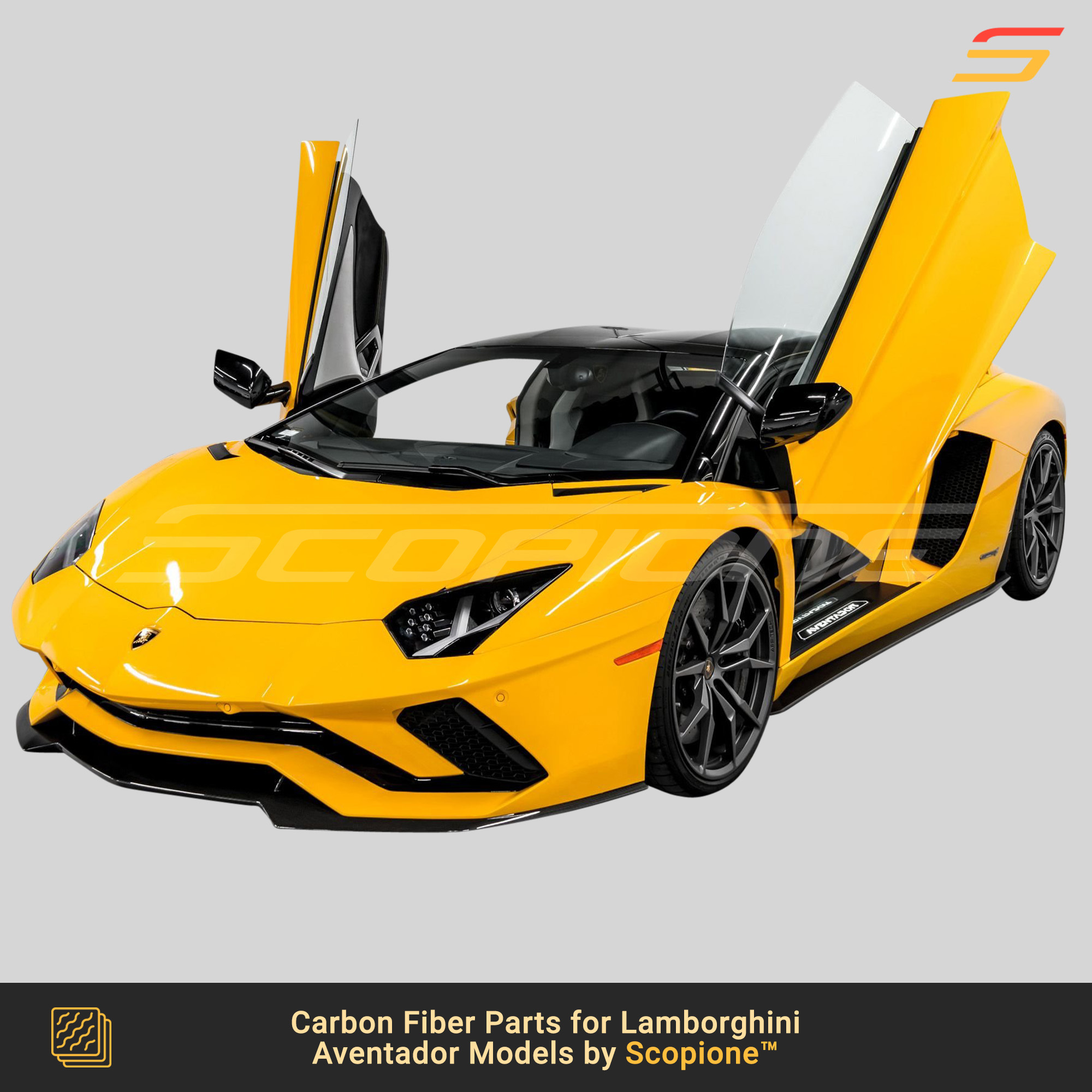
The Aventador S (LP740-4) arrived in 2017 with three firsts for the platform: four-wheel steering, the LDVA (Lamborghini Dinamica Veicolo Attiva) dynamic control system, and an EGO driving mode allowing per-parameter customization. Power rose to 730 hp (740 CV). Front downforce increased 130% over the LP700-4 through redesigned front fascia and an active rear wing.
The S Roadster followed in 2018 with identical mechanical upgrades. But the car that reshaped Aventador pricing permanently arrived in 2019.
The SVJ (LP770-4) combined 759 hp with ALA 2.0 – Aerodinamica Lamborghini Attiva – a second-generation active aerodynamic system that channeled or blocked airflow through the front splitter and rear wing in real time. The result: 40% more downforce than the SV. And the lap time that mattered – 6:44.97 around the Nurburgring Nordschleife, a production car record when set in July 2018.
- LP770-4 SVJ Coupe (2019–2020) – 900 units. LDVA 2.0 chassis control. 1,525 kg dry weight. Carbon-ceramic brakes standard. The SVJ set the definitive Aventador performance benchmark.
- LP770-4 SVJ Roadster (2020–2021) – 800 units. Full ALA 2.0 and LDVA 2.0. Removable two-piece carbon fiber hard top. Debuted at the 2019 Geneva Motor Show. Currently averages over $1 million at auction.
- SVJ 63 Coupe & Roadster (2019–2020) – 63 coupes and 63 roadsters, commemorating Lamborghini’s 1963 founding. Built within the standard SVJ allocations. Unique livery, extensive carbon fiber treatment, bespoke interior. By-invitation-only purchase.
- LP780-4 Ultimae Coupe (2021–2022) – 350 units. The final Aventador. 769 hp (780 CV) – the most powerful naturally aspirated V12 Lamborghini ever produced. Combined the SV’s lightweight construction with the SVJ’s aerodynamics. 0–62 mph in 2.8 seconds. Top speed 220 mph.
- LP780-4 Ultimae Roadster (2021–2022) – 250 units. The very last Aventador (unit #11,465) was an Ultimae Roadster finished in Ad Personam blue, delivered to a Swiss buyer. Fifteen Ultimae units were lost when the cargo ship Felicity Ace sank in the Atlantic in February 2022; Lamborghini restarted production to replace them.
Lamborghini Aventador (2017–2022) MSRP Price Ranges
| Model | Base MSRP (USD) | Price Adjusted for Inflation (2024) |
|---|---|---|
| LP740-4 S Coupe (2017–2020) | $421,350 | ~$540,000 |
| LP740-4 S Roadster (2018–2020) | $460,247 | ~$575,000 |
| LP770-4 SVJ Coupe (2019–2020) | $517,770 | ~$640,000 |
| LP770-4 SVJ Roadster (2020–2021) | $573,966 | ~$700,000 |
| SVJ 63 Coupe (2019) | ~$780,000 (est.) | ~$960,000 |
| SVJ 63 Roadster (2020) | ~$780,000 (est.) | ~$960,000 |
| LP780-4 Ultimae Coupe (2021–2022) | $498,258 | ~$580,000 |
| LP780-4 Ultimae Roadster (2021–2022) | $546,847 | ~$635,000 |
Interior and exterior carbon fiber for the Aventador S, SVJ, and Ultimae is available on the Scopione shop page.




Carbon Fiber Integration in the Lamborghini Aventador
Carbon fiber is not an accessory on the Aventador. It is the car. The entire monocoque – the structural core of the vehicle – is a single carbon fiber tub manufactured using the patented RTM-Lambo process at Sant’Agata Bolognese. No other Lamborghini before the Aventador had used a full CF monocoque in production. The SV took it further with additional CFRP body panels and a 50 kg weight reduction. The SVJ added active aerodynamic surfaces. And the Ultimae combined both approaches into the final production specification.
1. Exterior Carbon Fiber
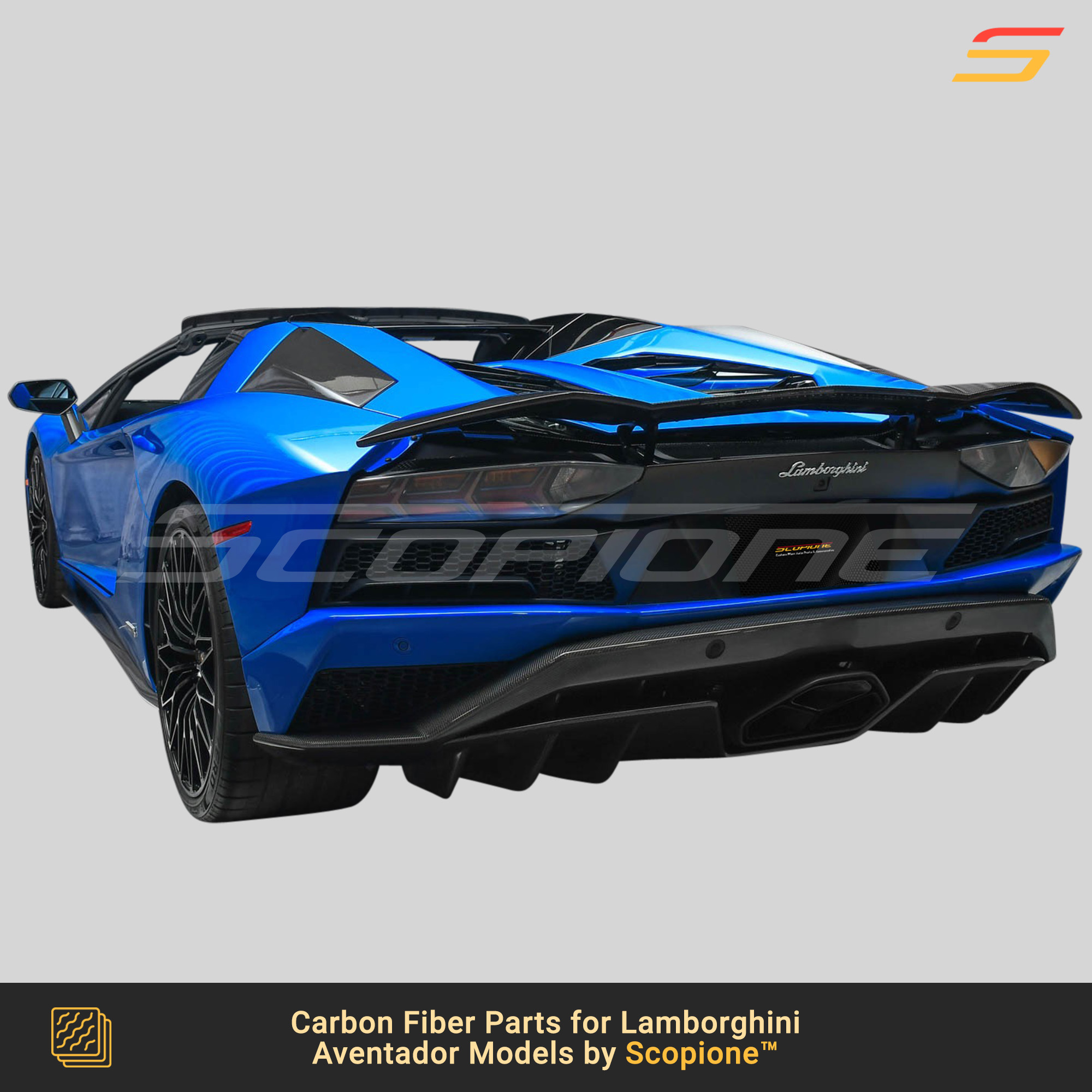
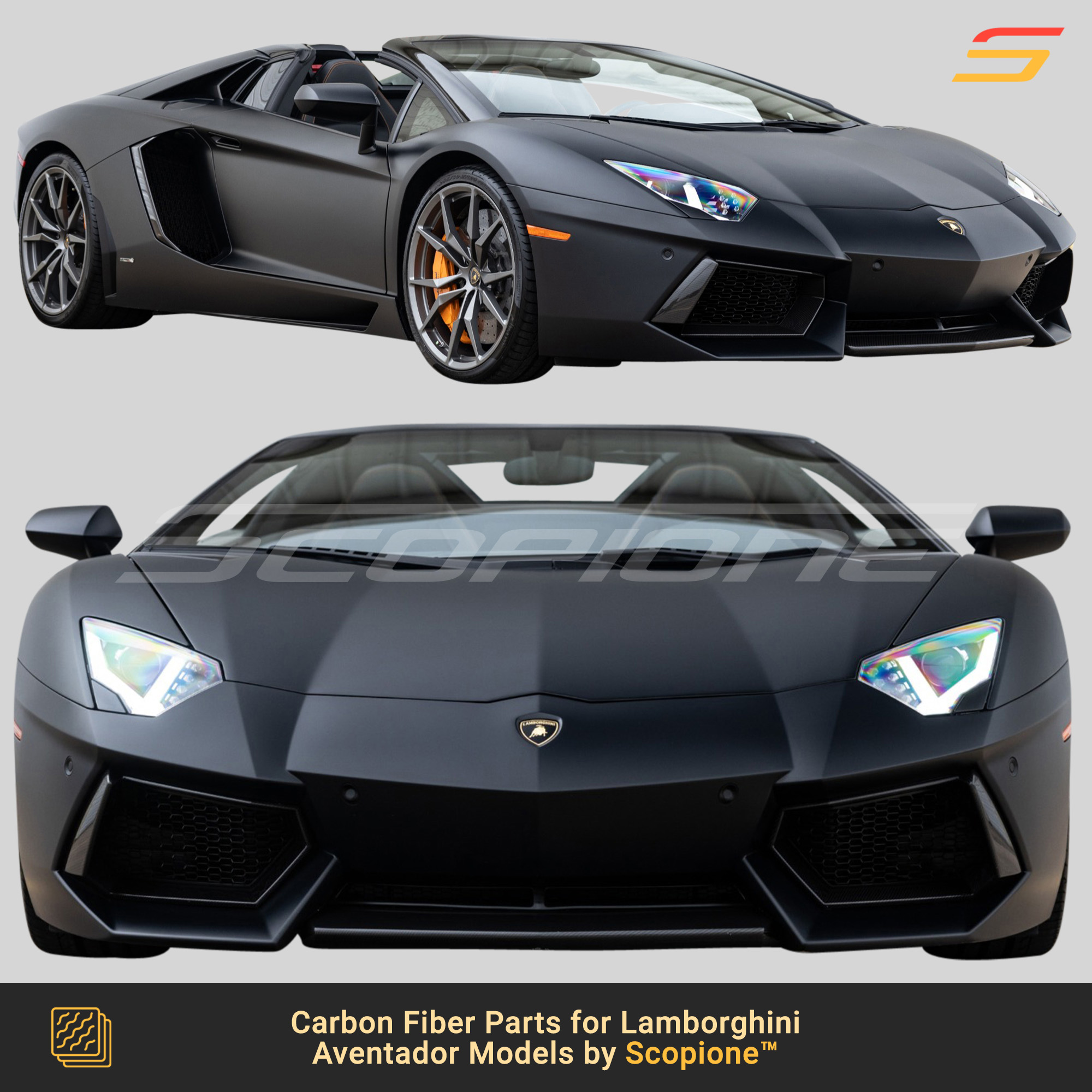
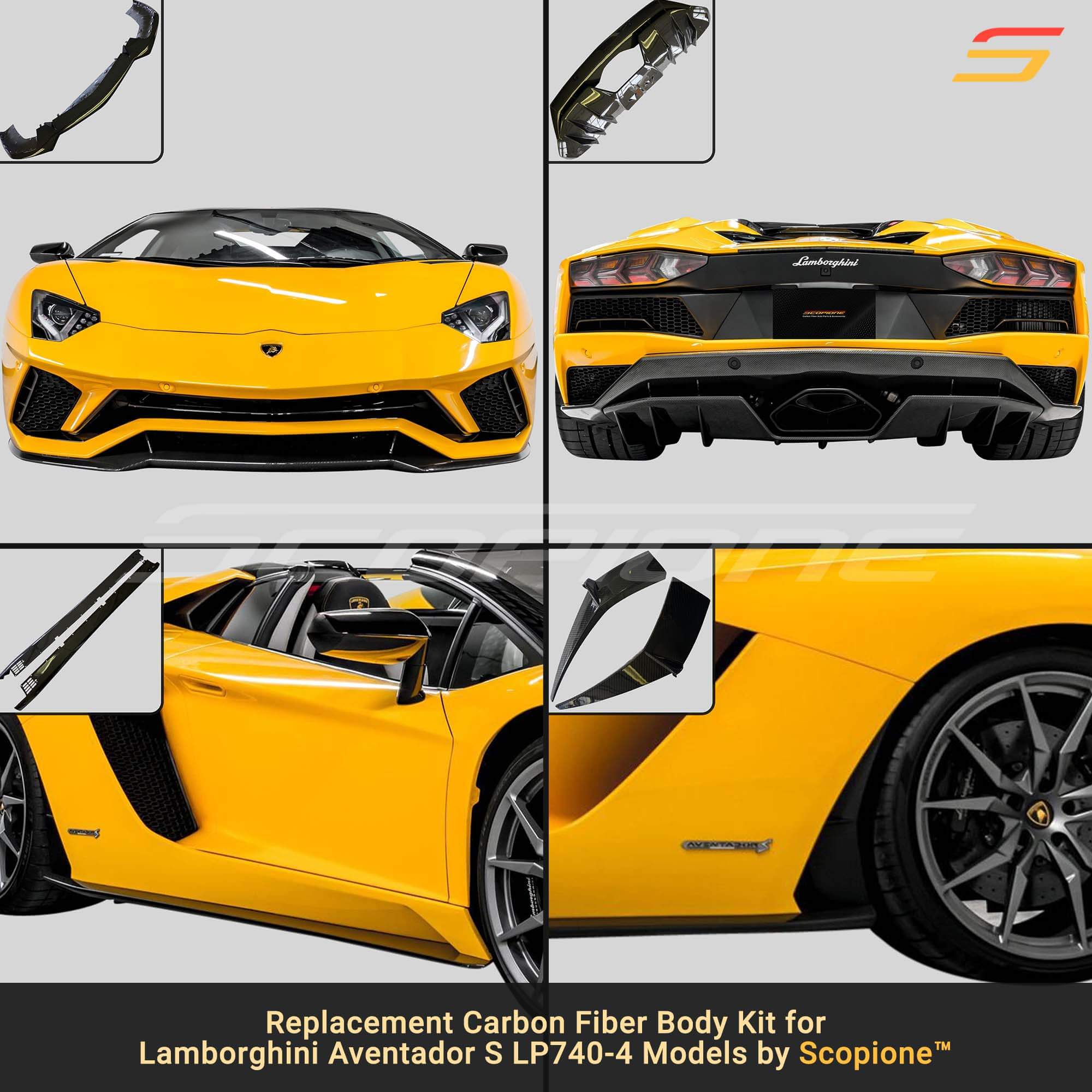
- Full replacement body kit – Complete exterior transformation in 2×2 twill-weave carbon fiber with UV-resistant clear coat. Cohesive finish across all panels with measurable weight reduction over factory components.
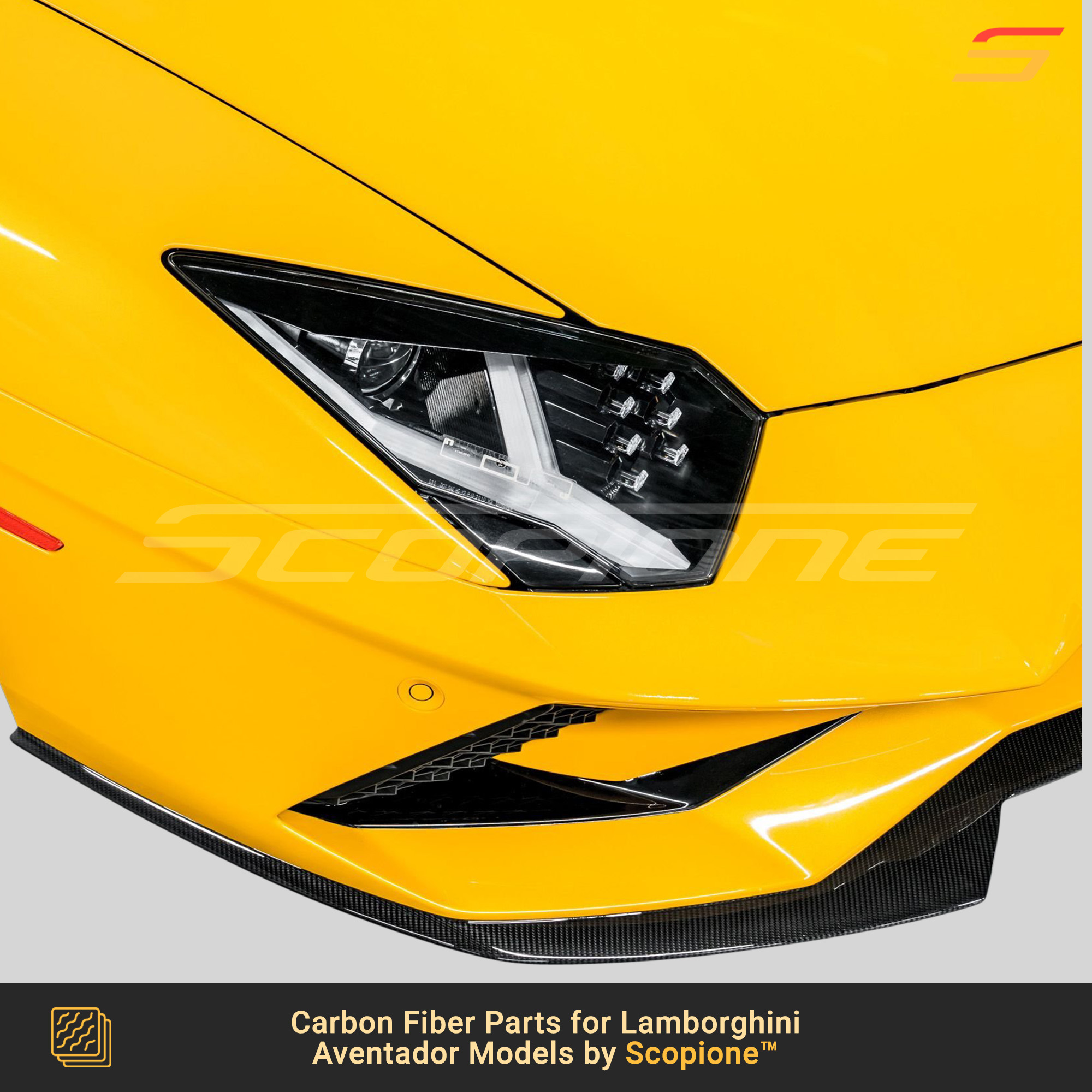
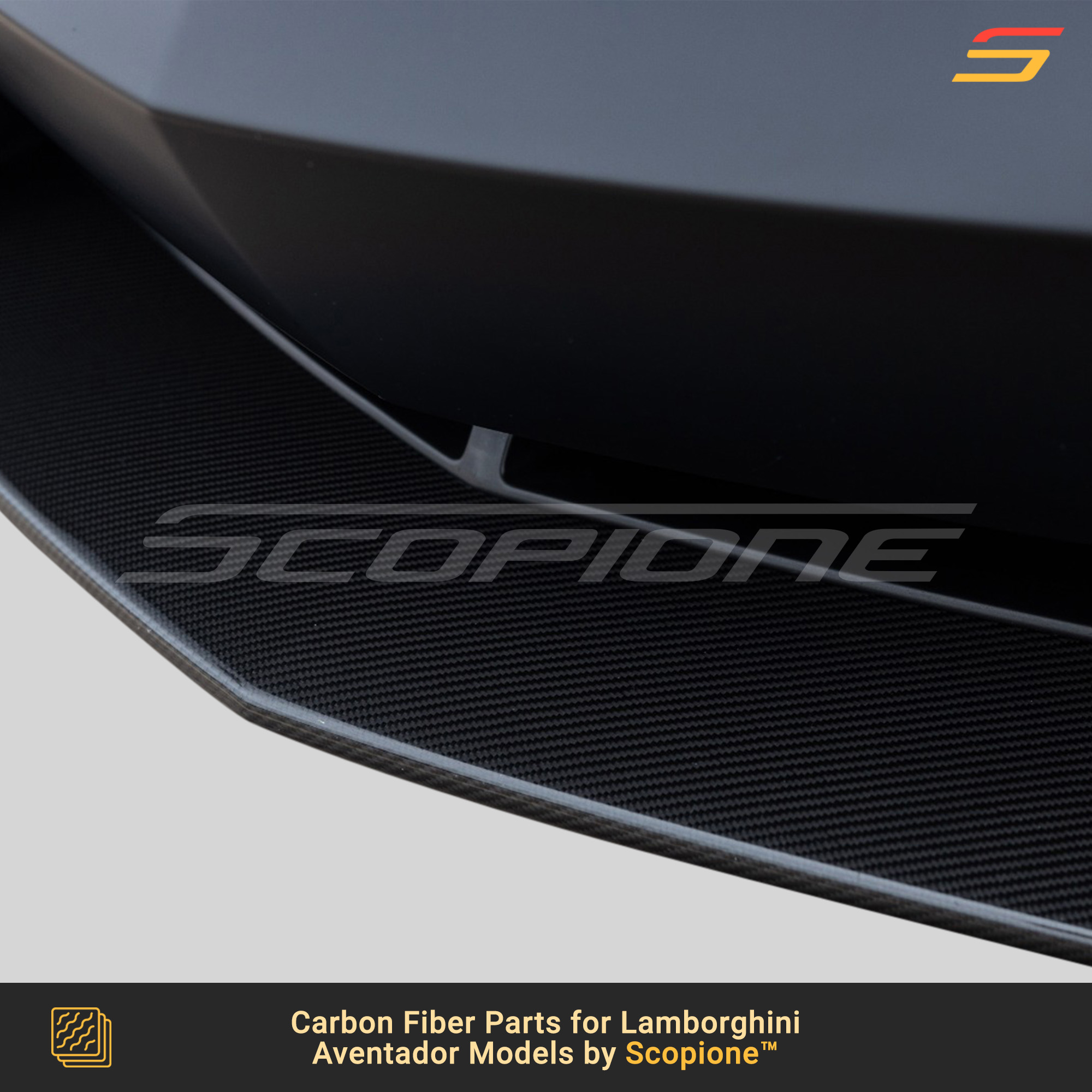
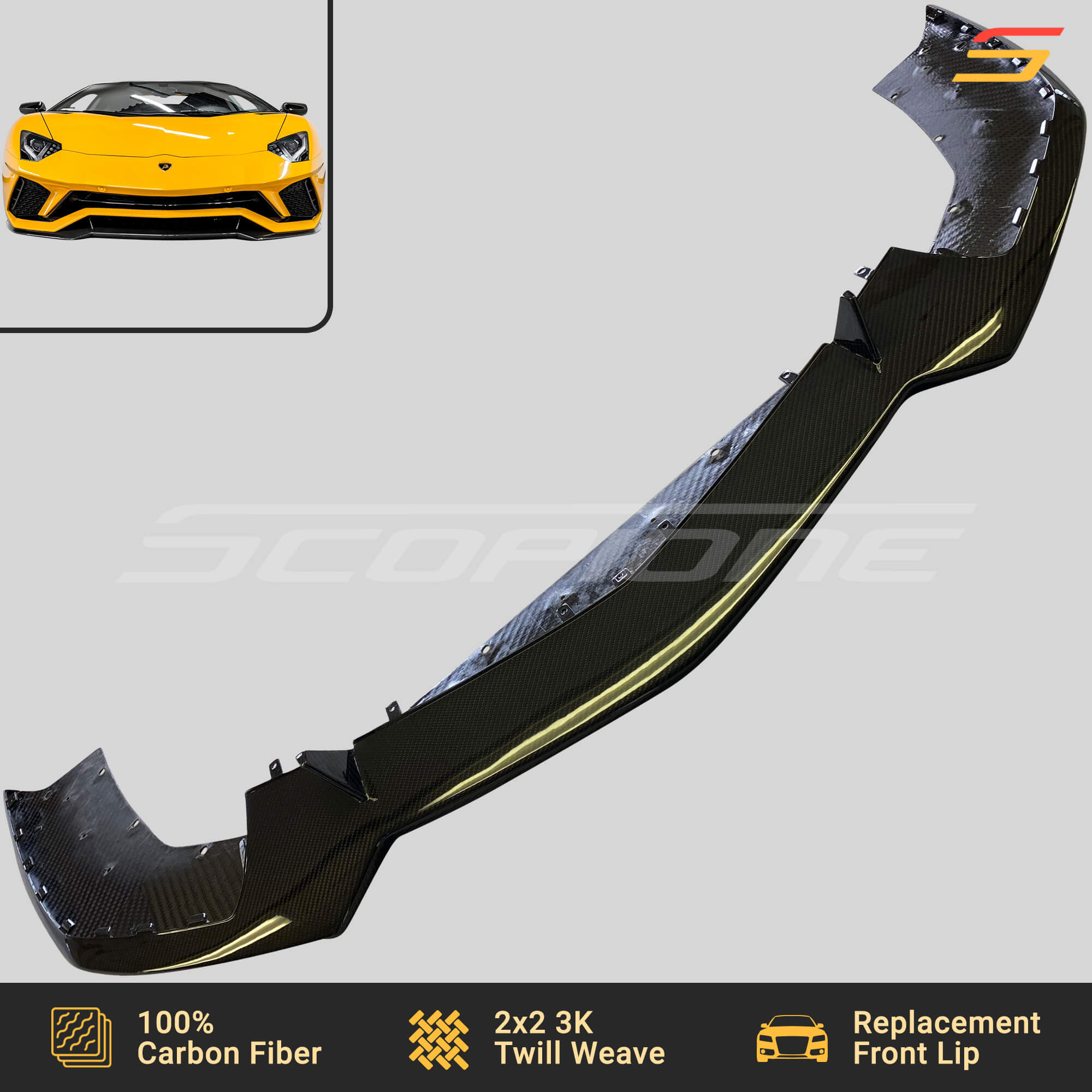
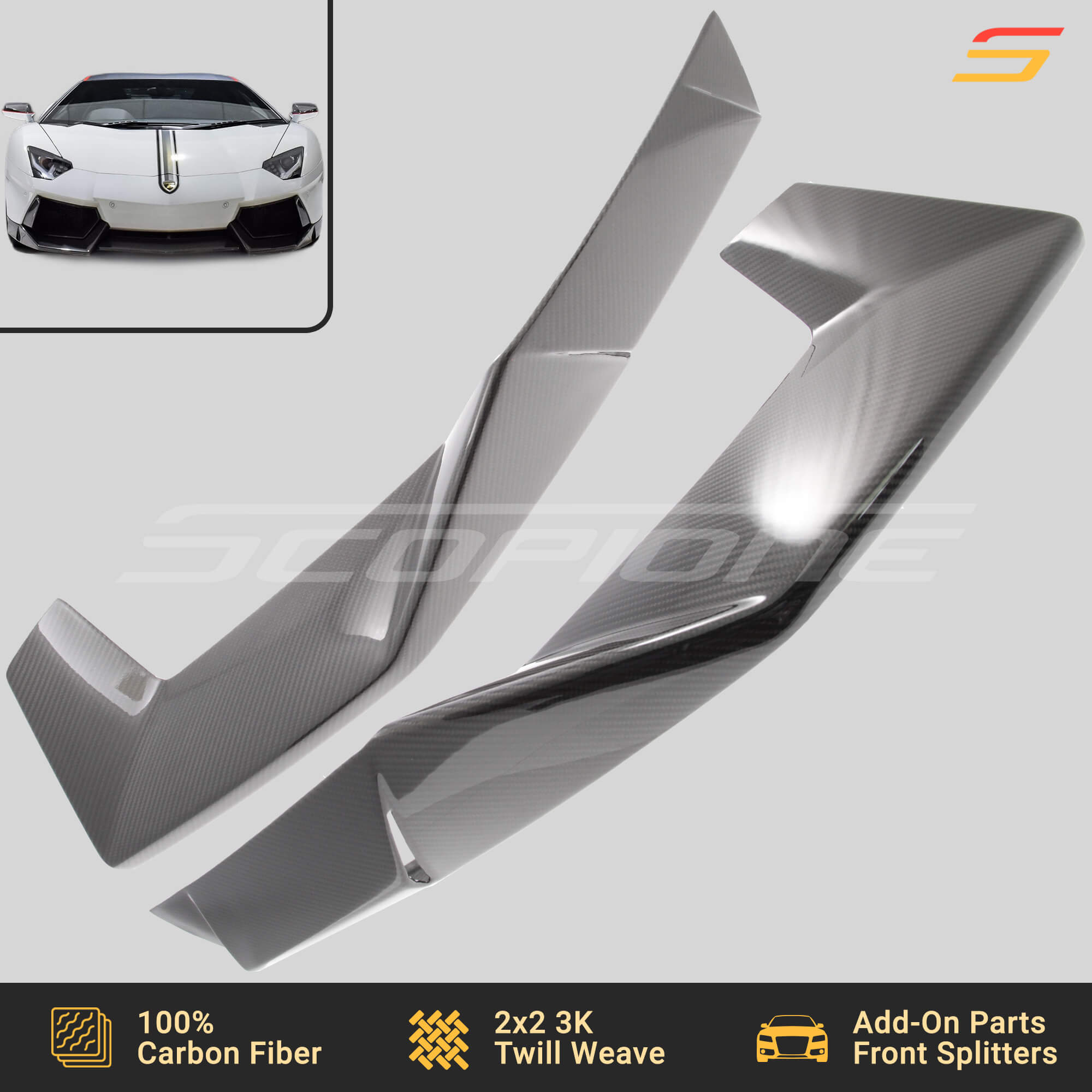
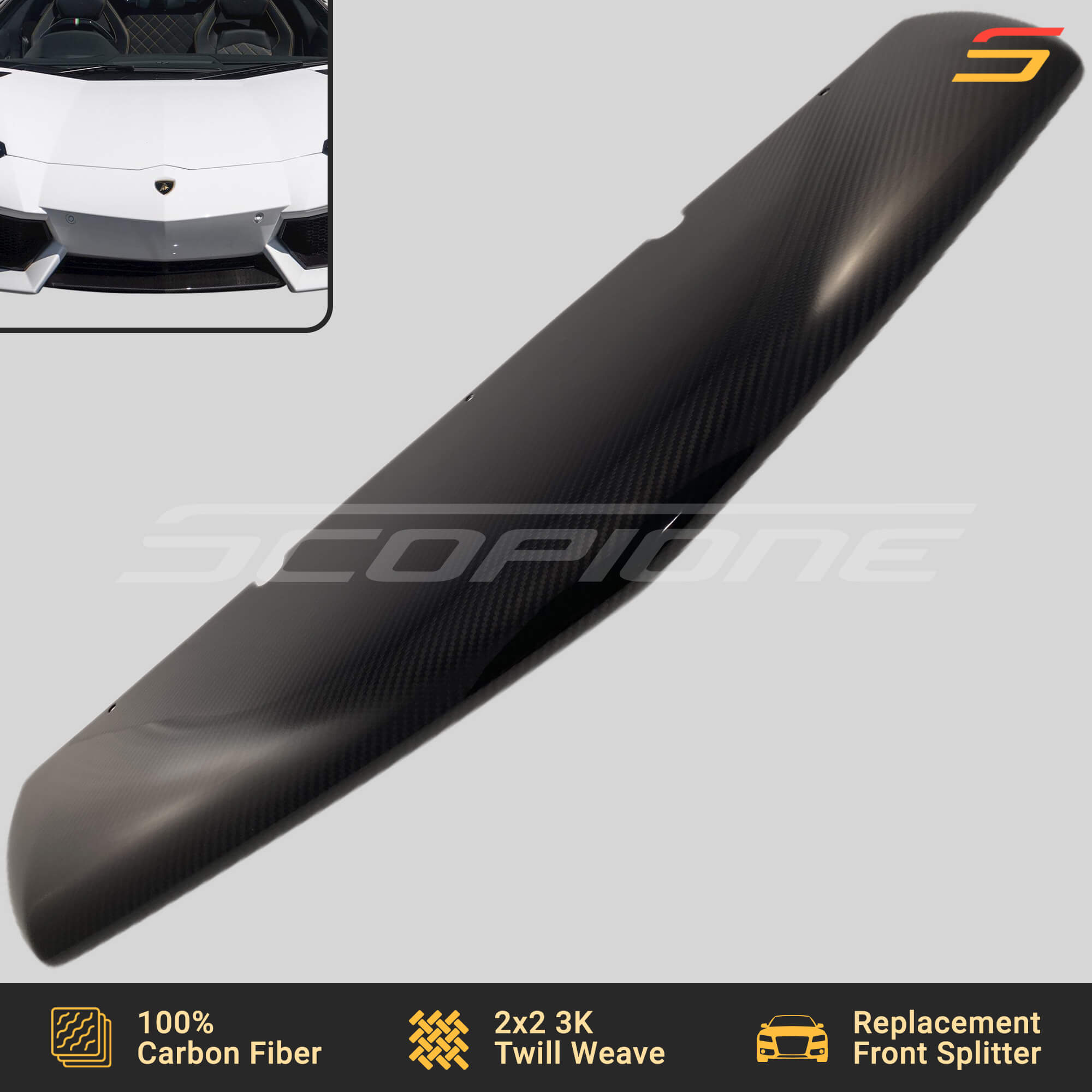
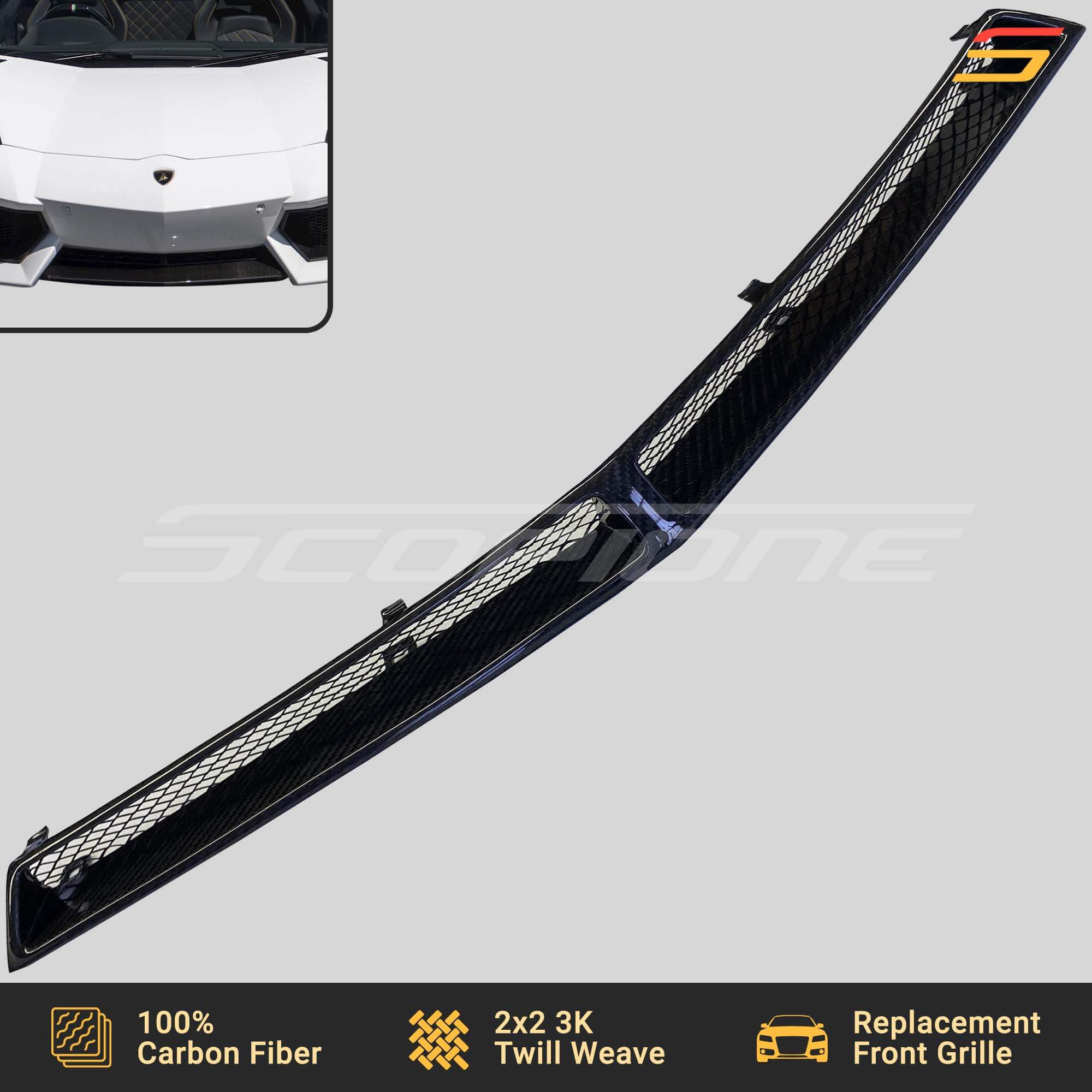
- Front bumper splitters and lip – Enhanced front-end aerodynamics with visible twill weave. Ground-effect management without modifying factory crash structure.
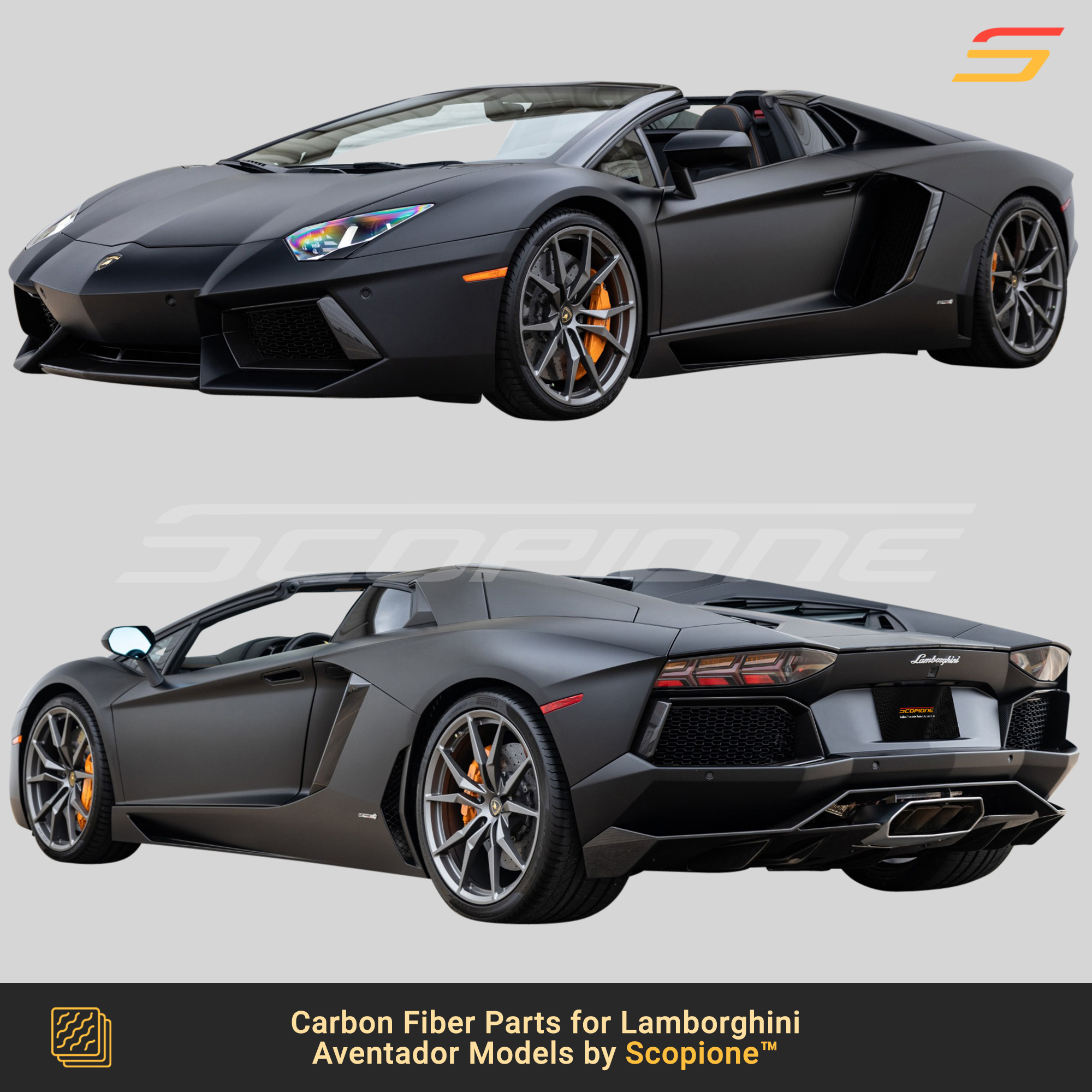
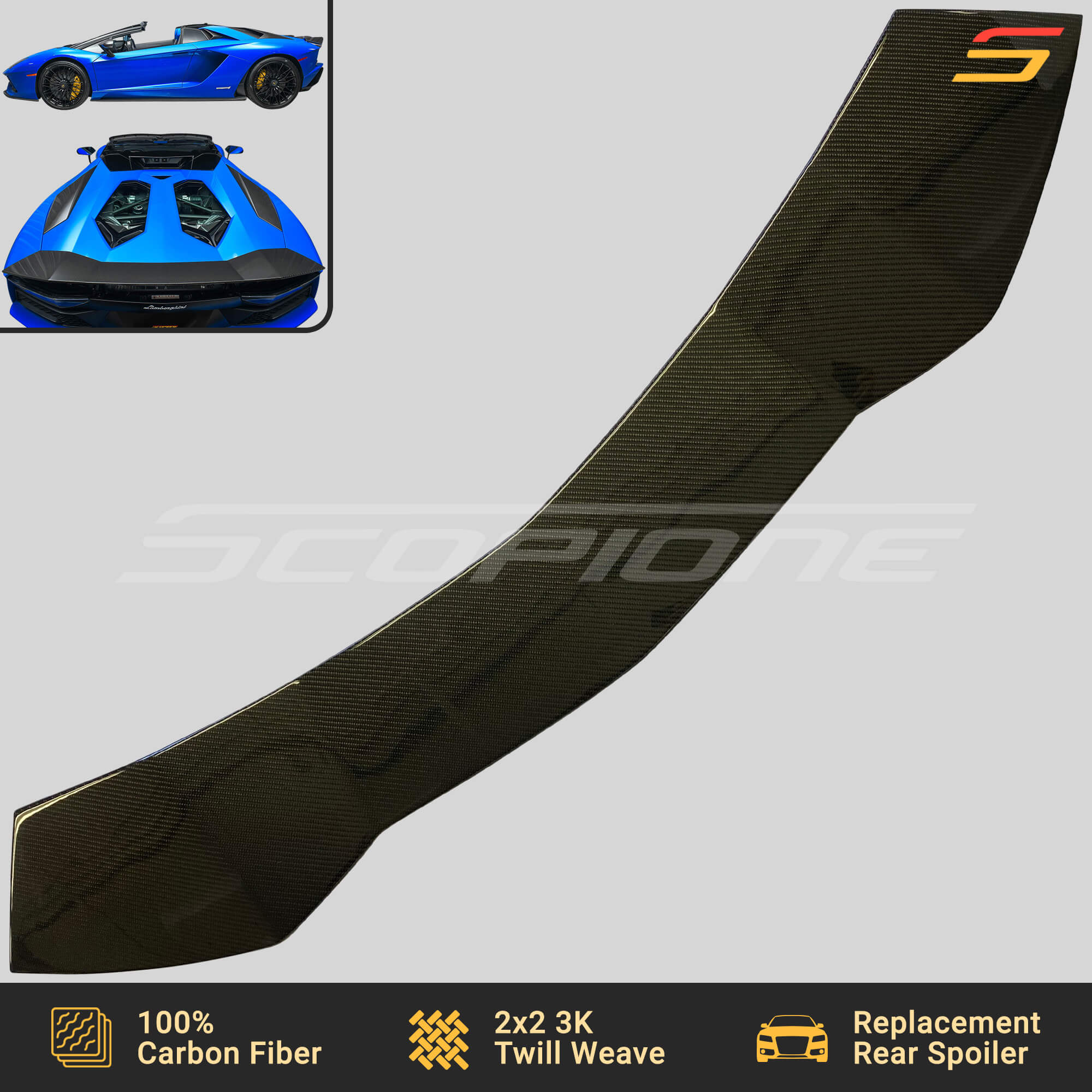
- Carbon-fiber replacement rear spoiler – lightweight wing replacement with improved visual profile. Direct bolt-on fitment.
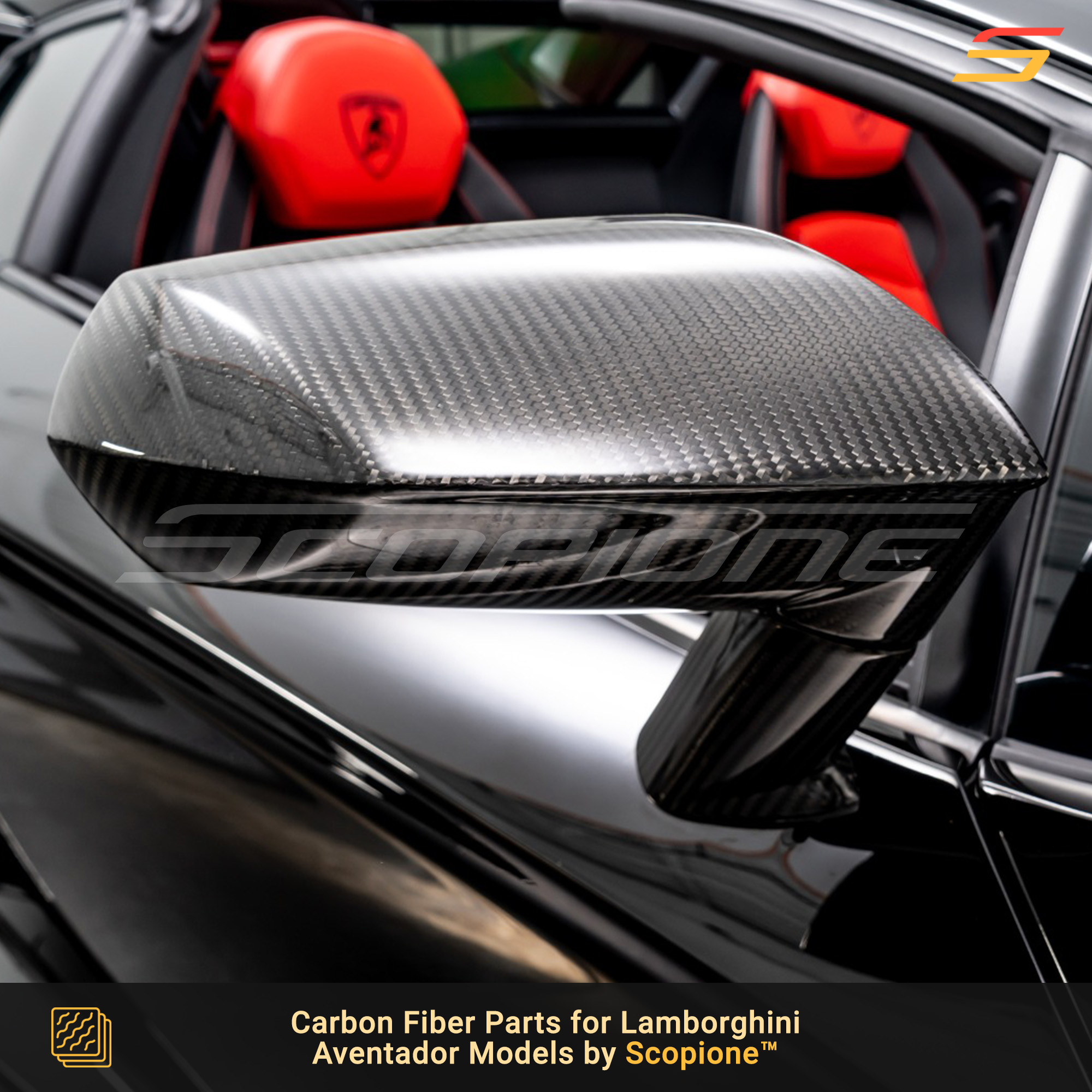
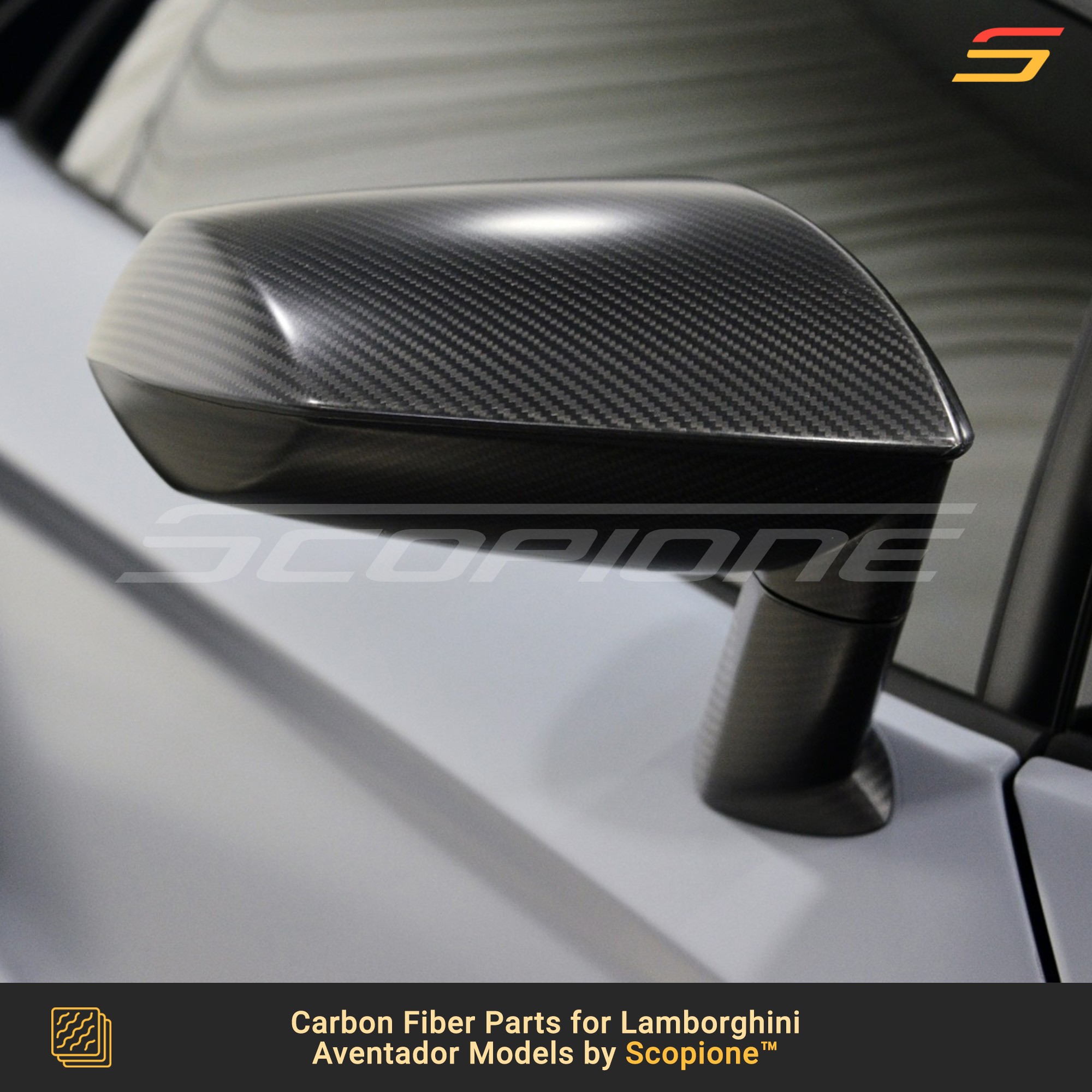
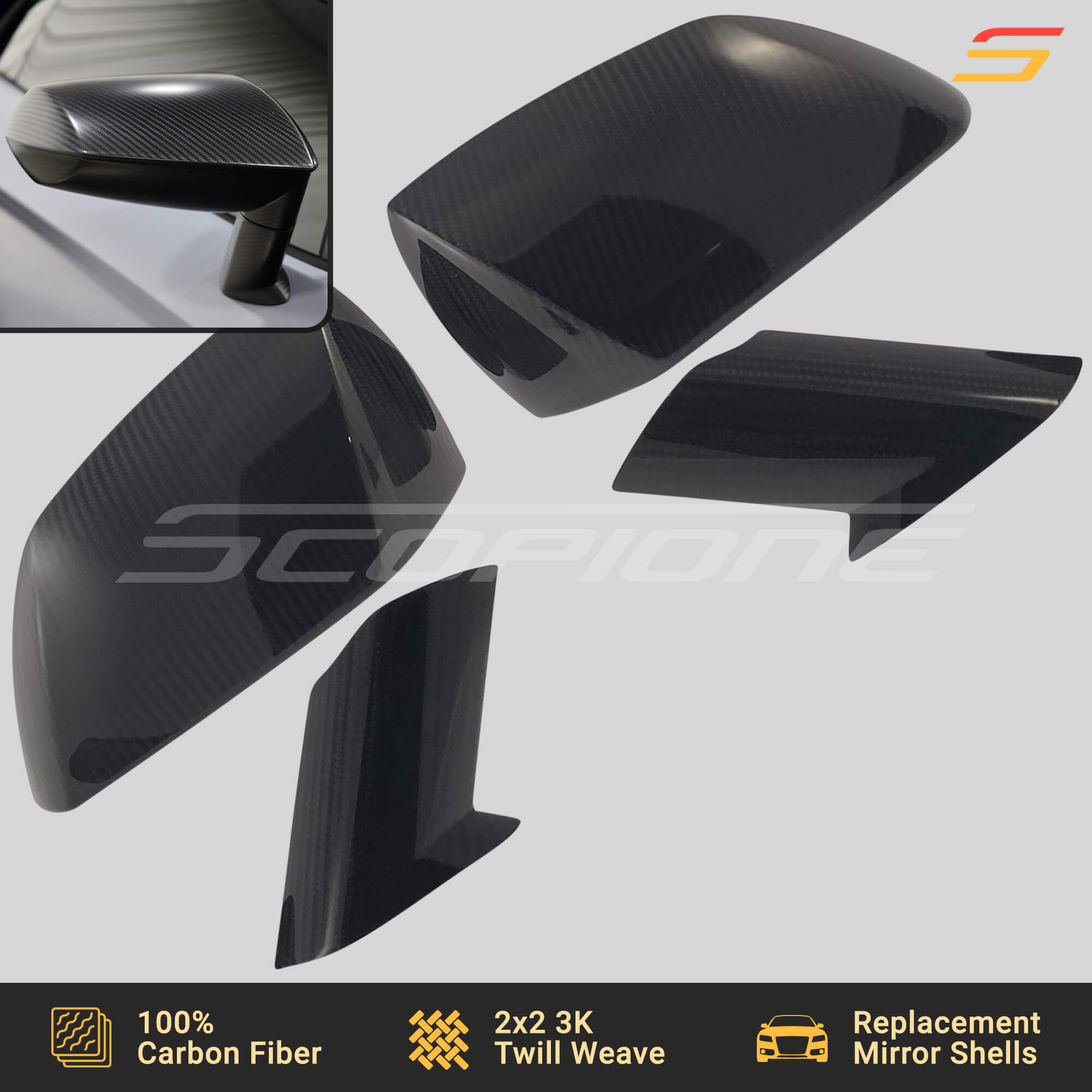
- Side mirror shells – The first CF upgrade other drivers notice on an Aventador – visible from every angle at any speed. Direct factory replacement.
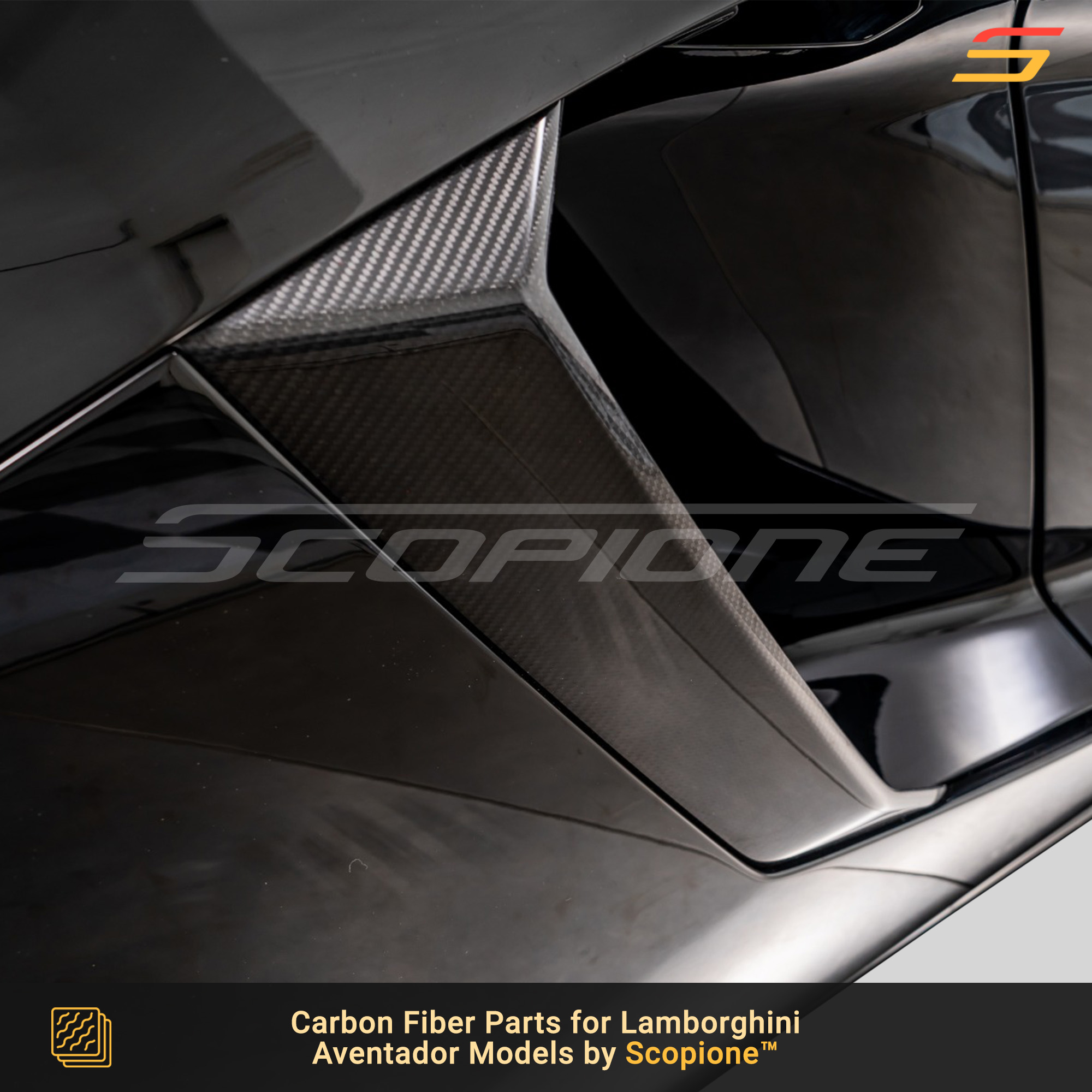
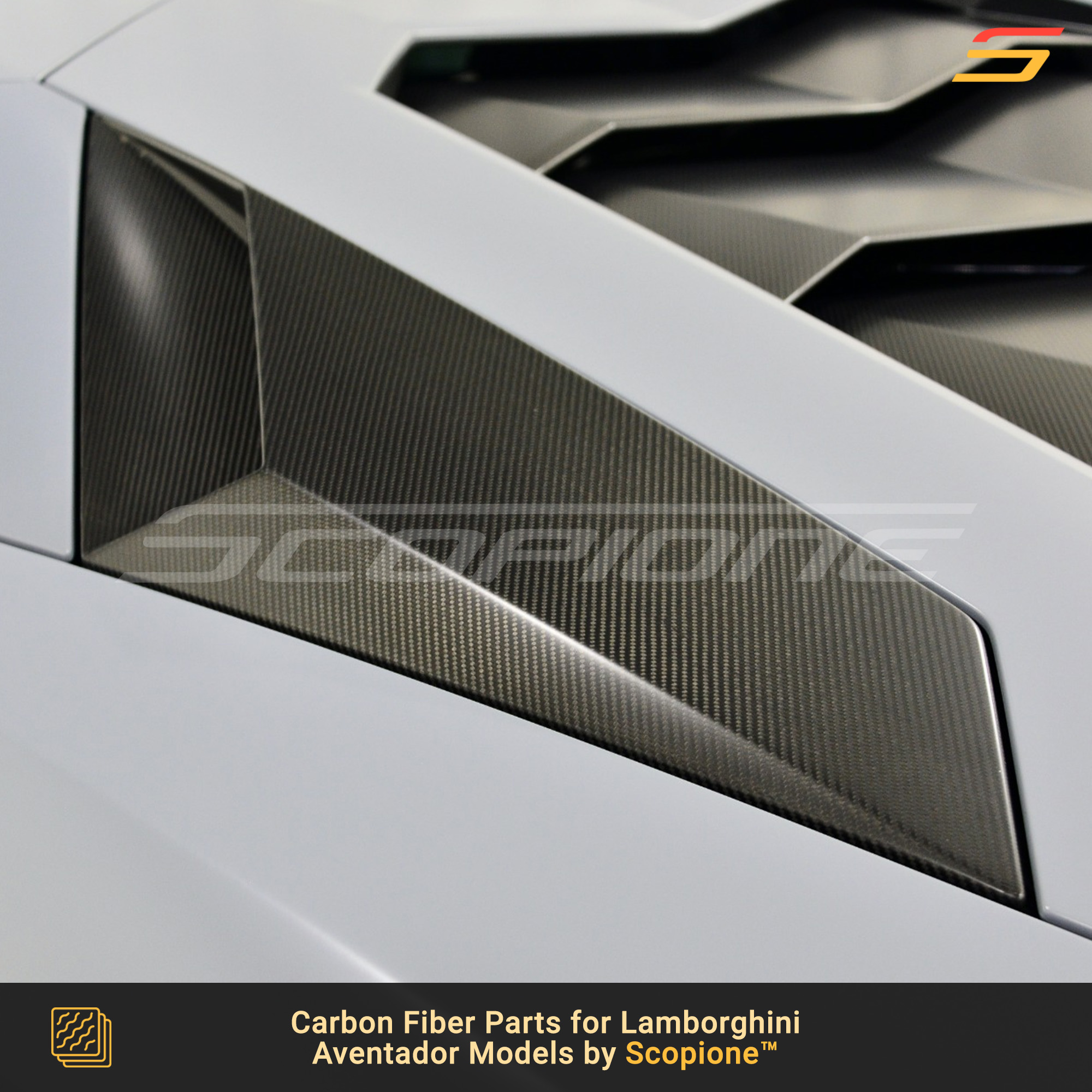
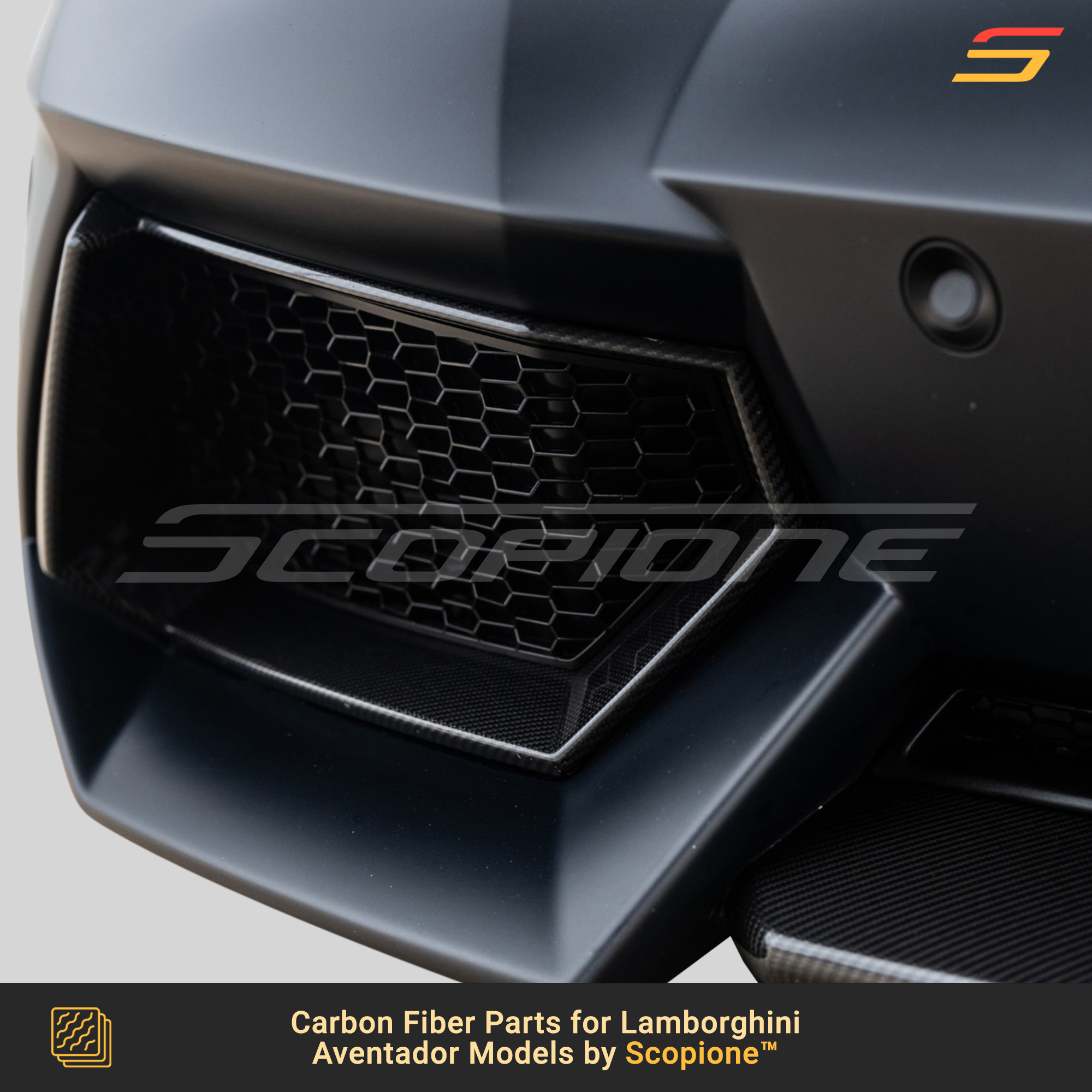
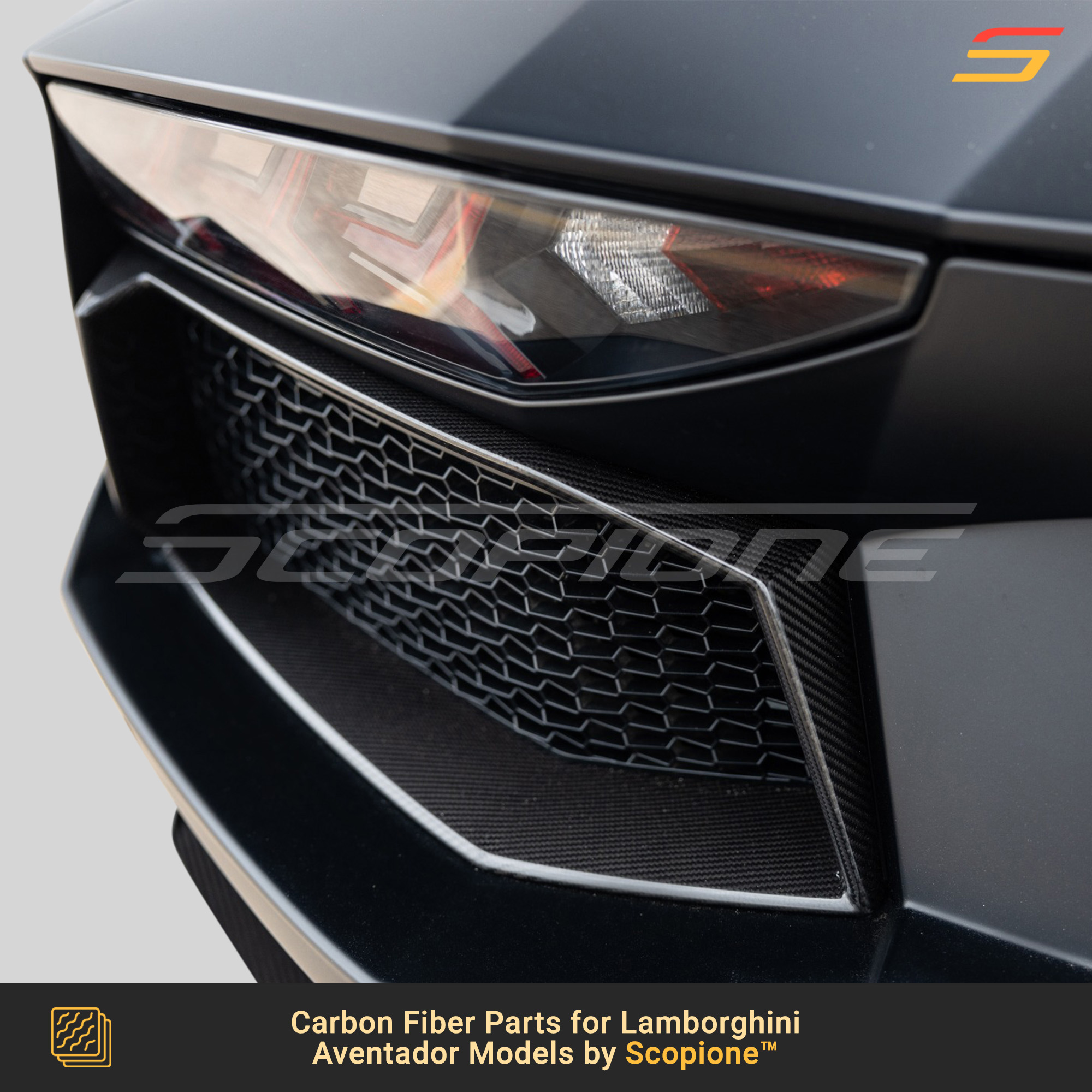
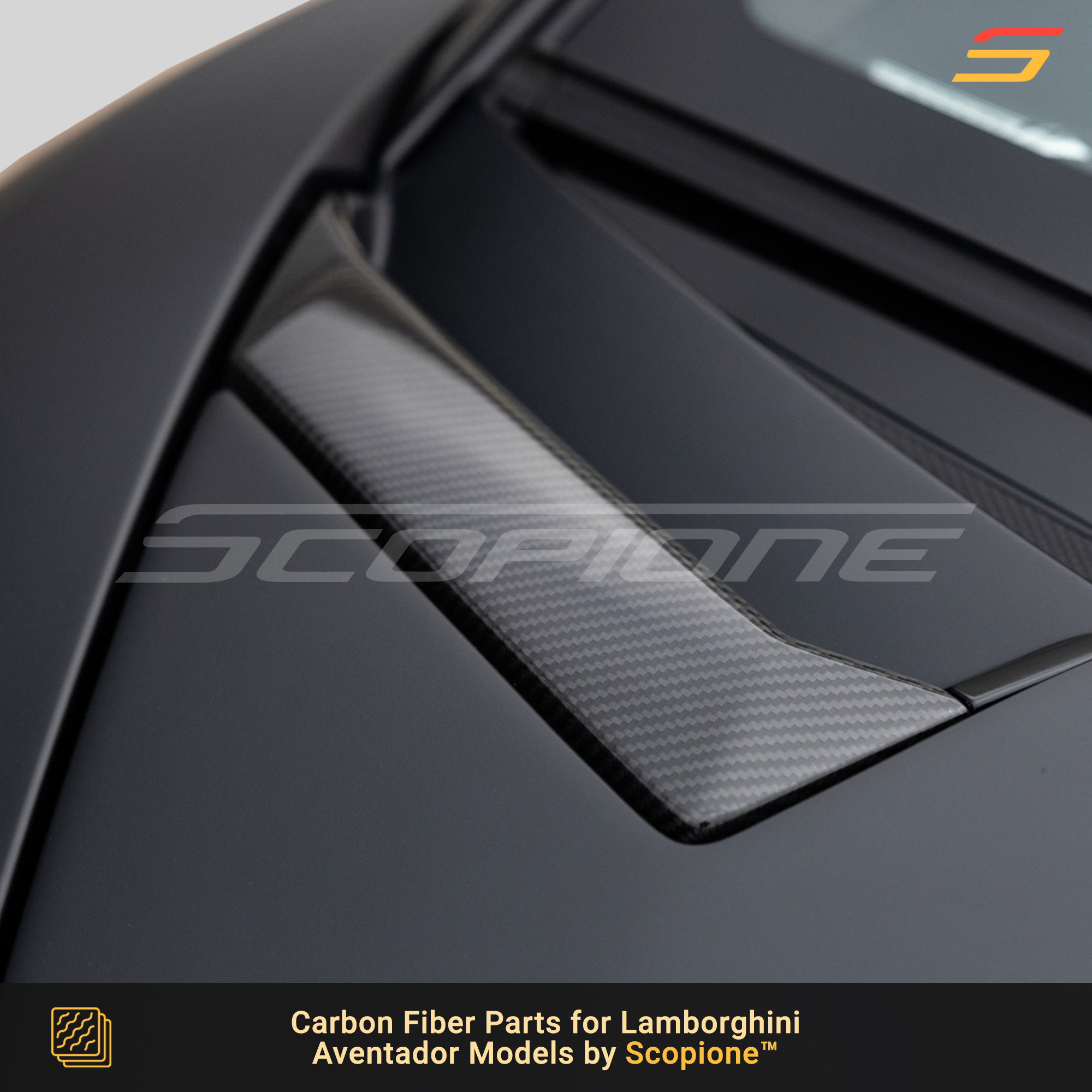
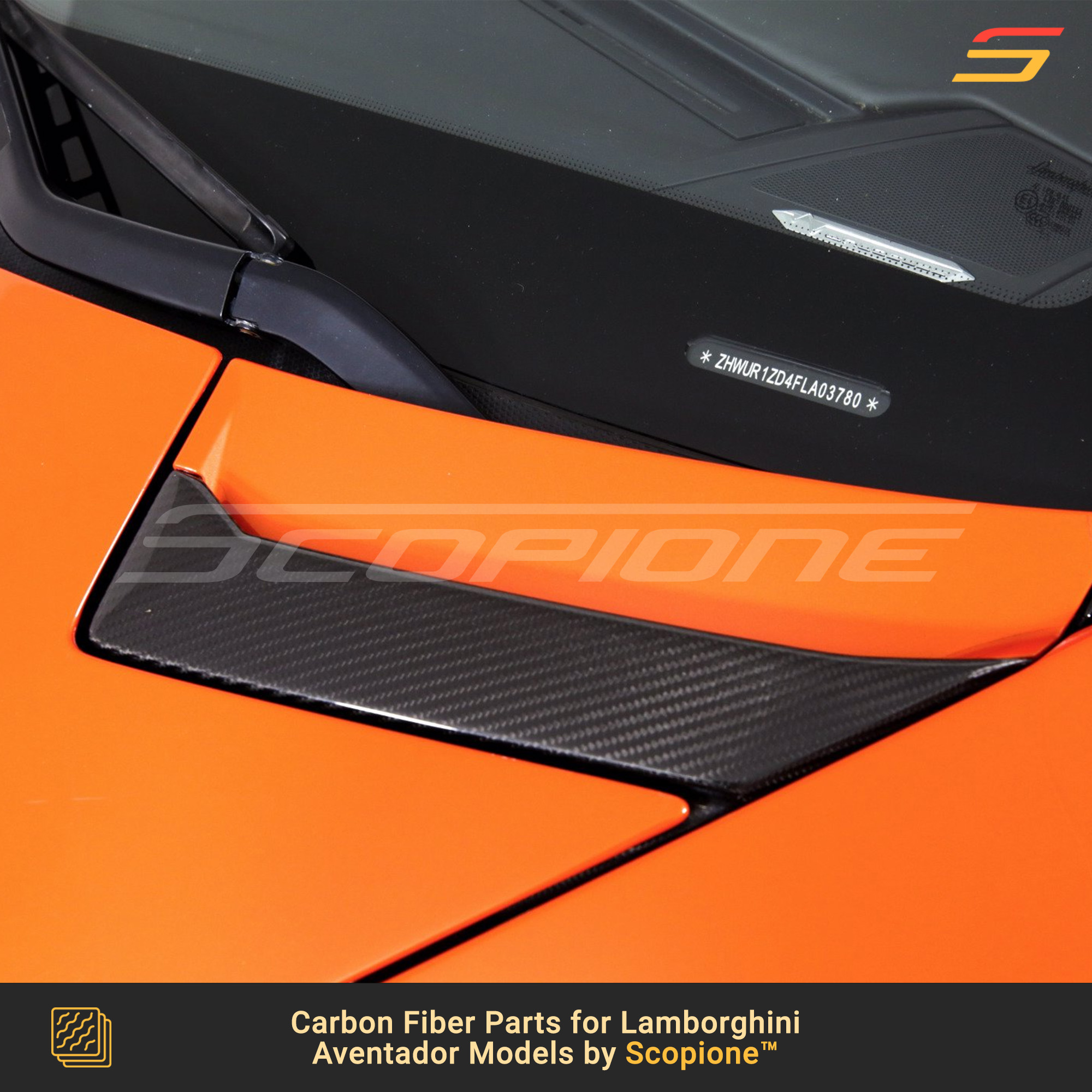
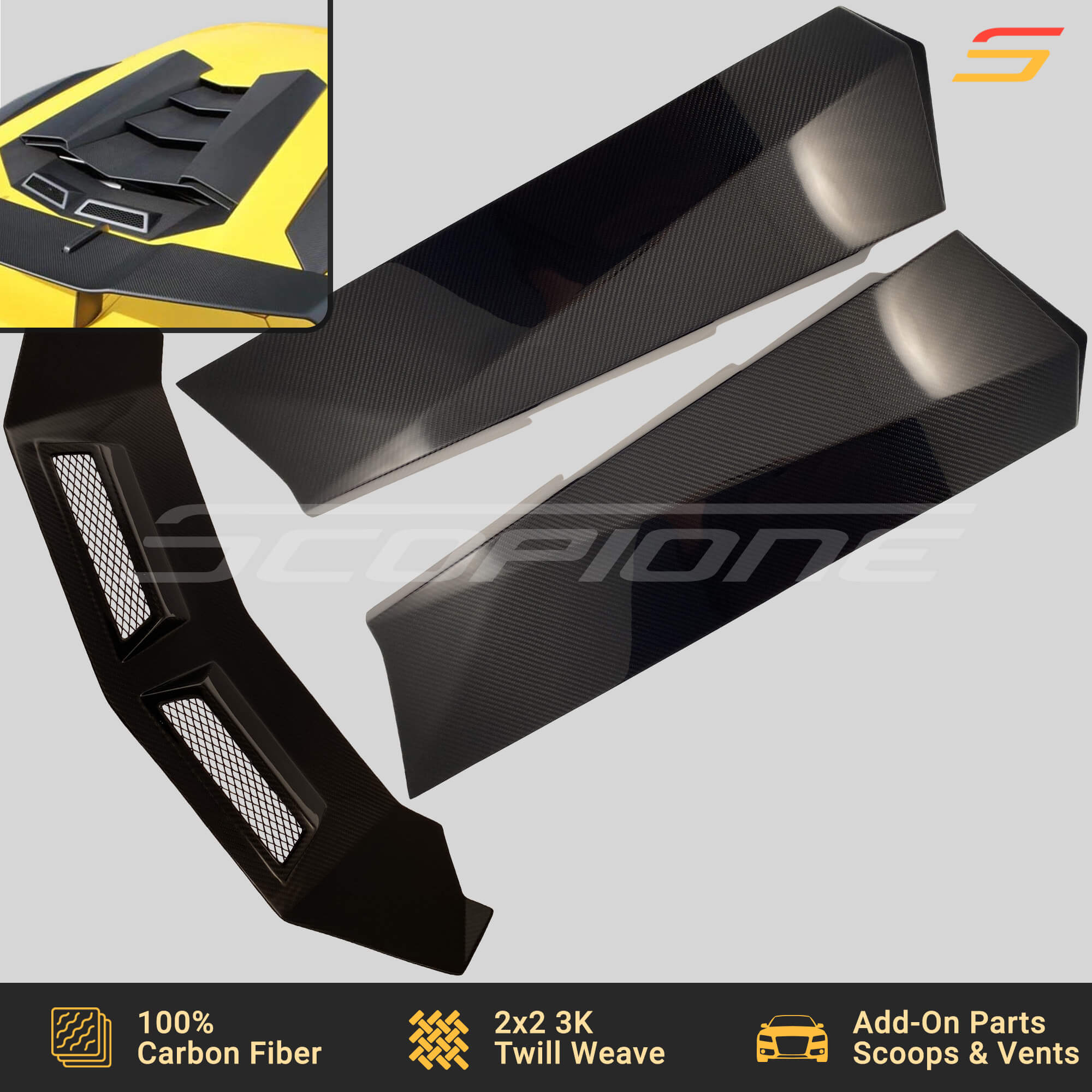
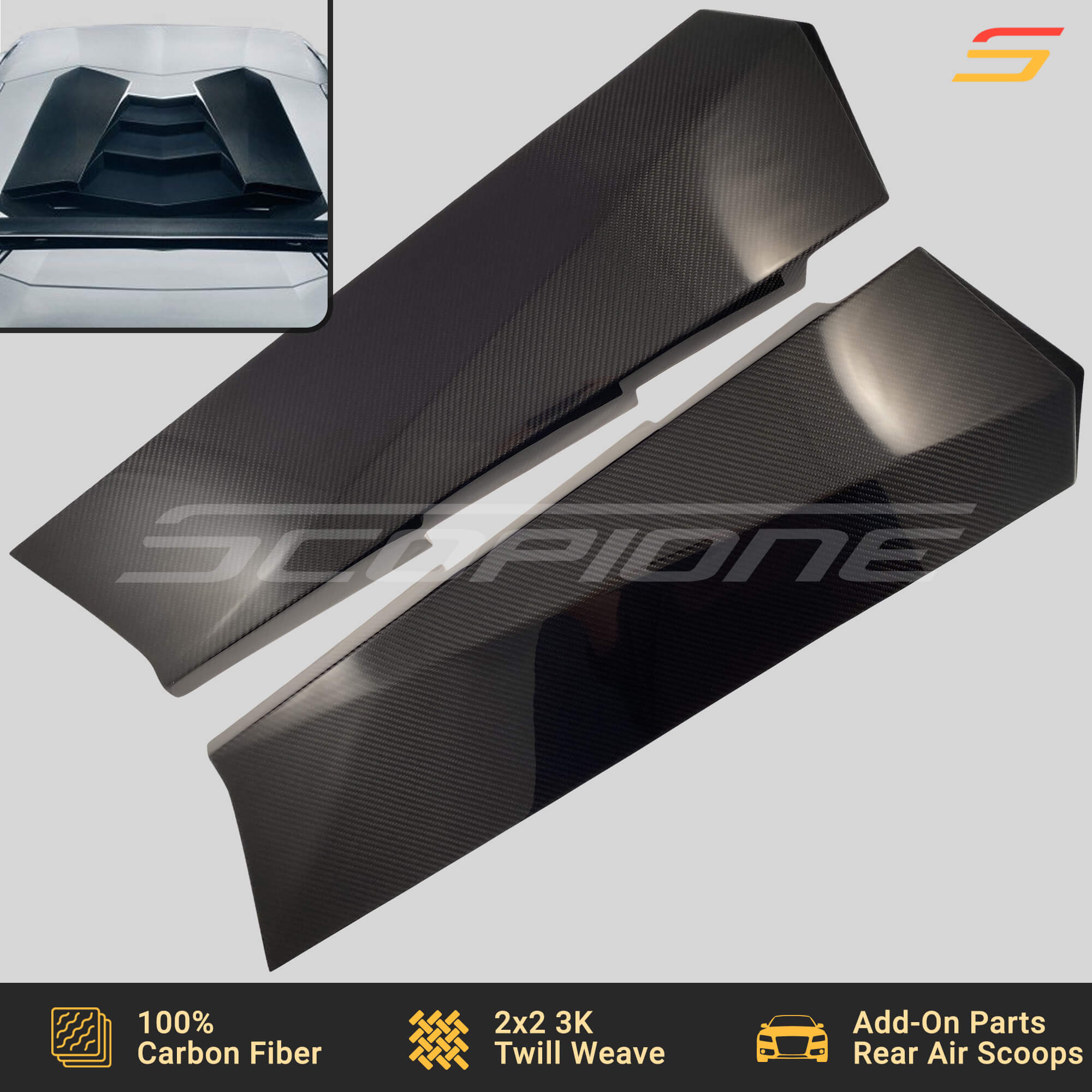
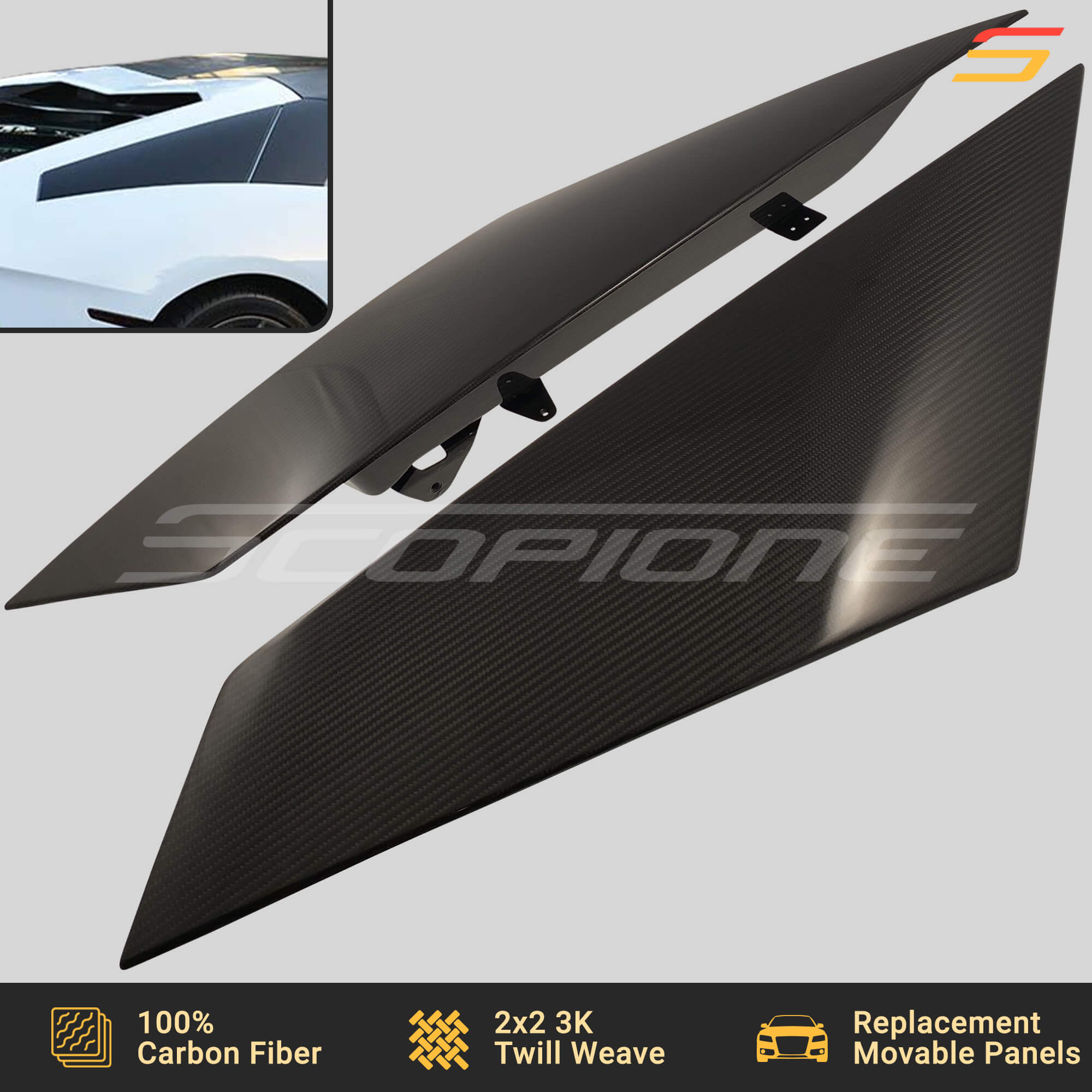
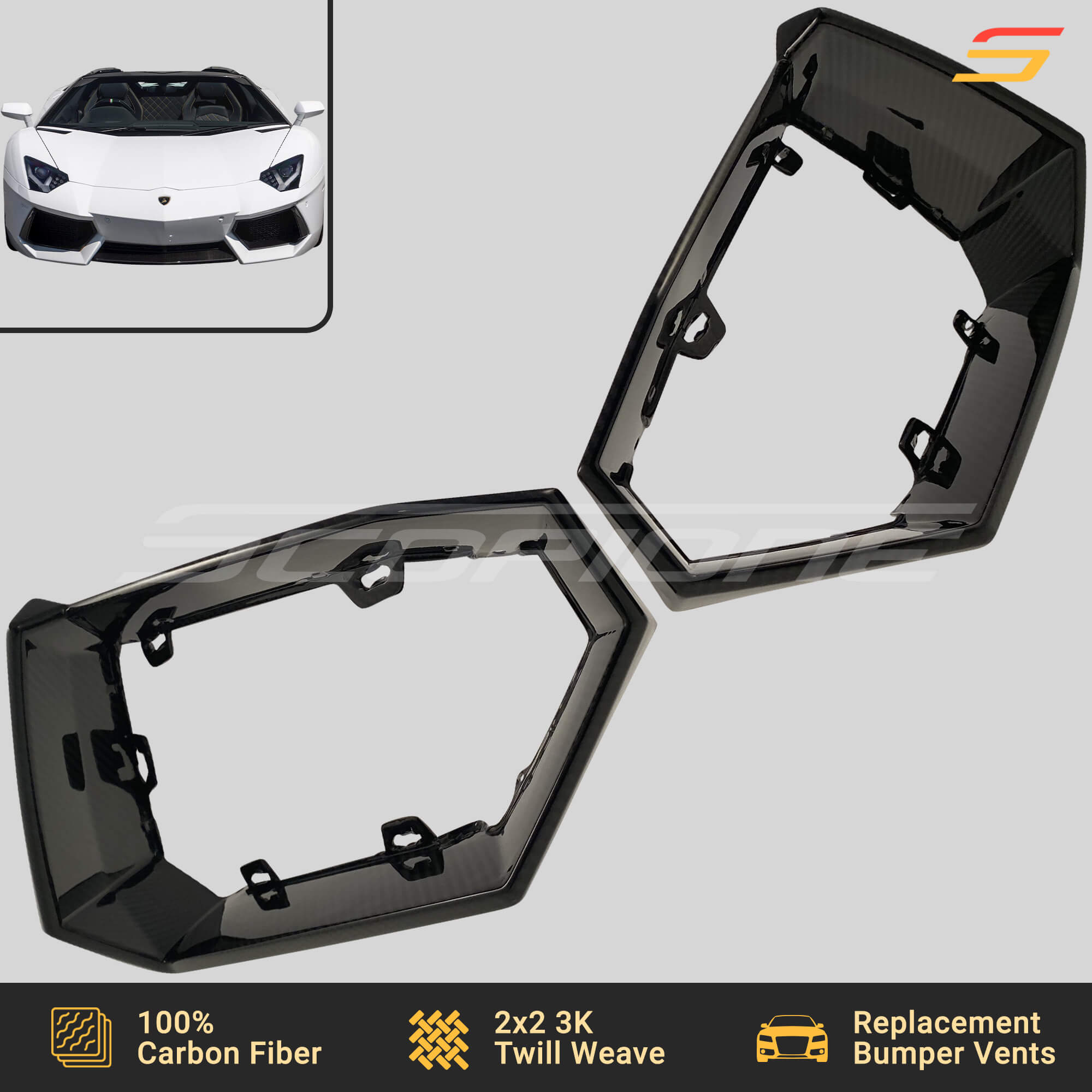
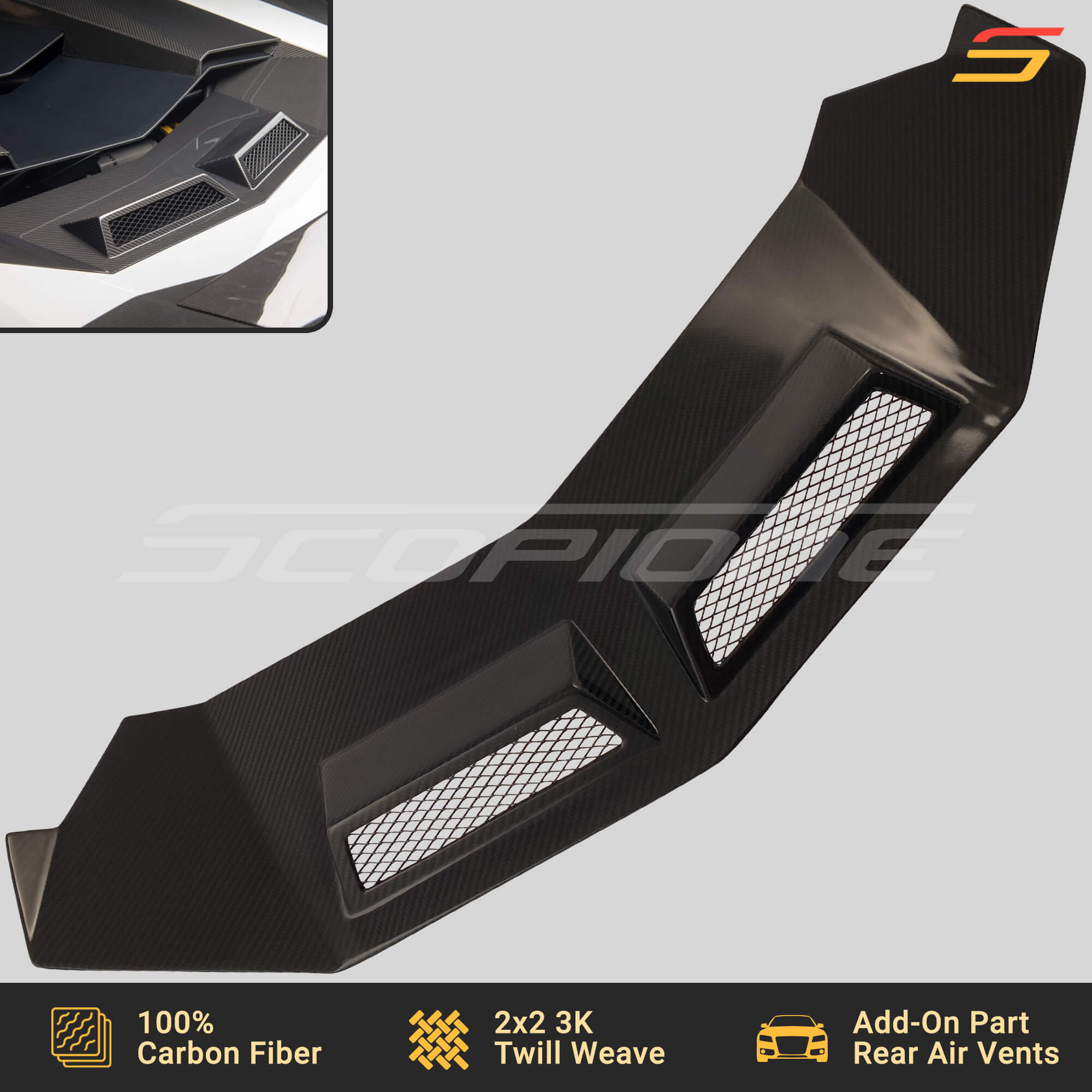
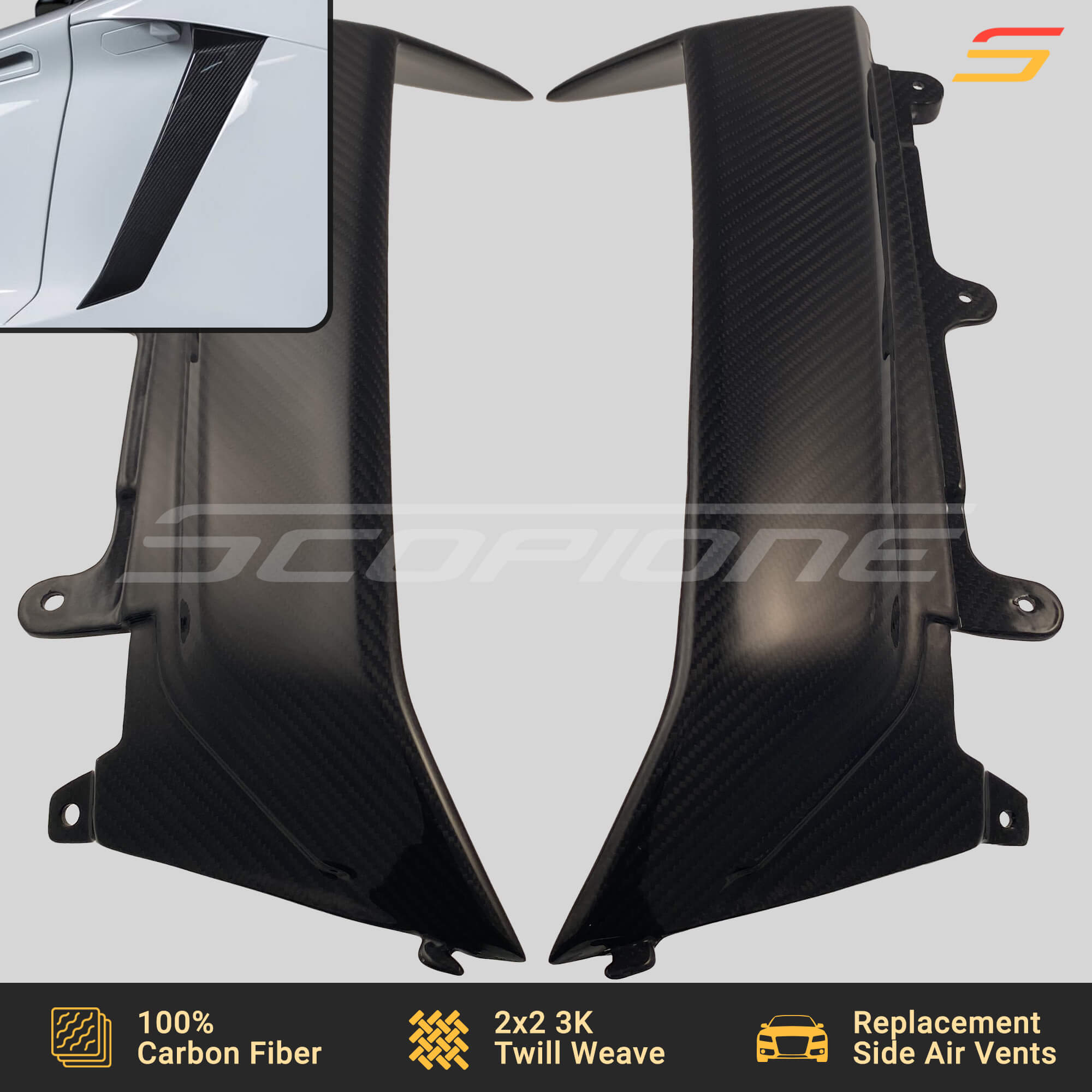
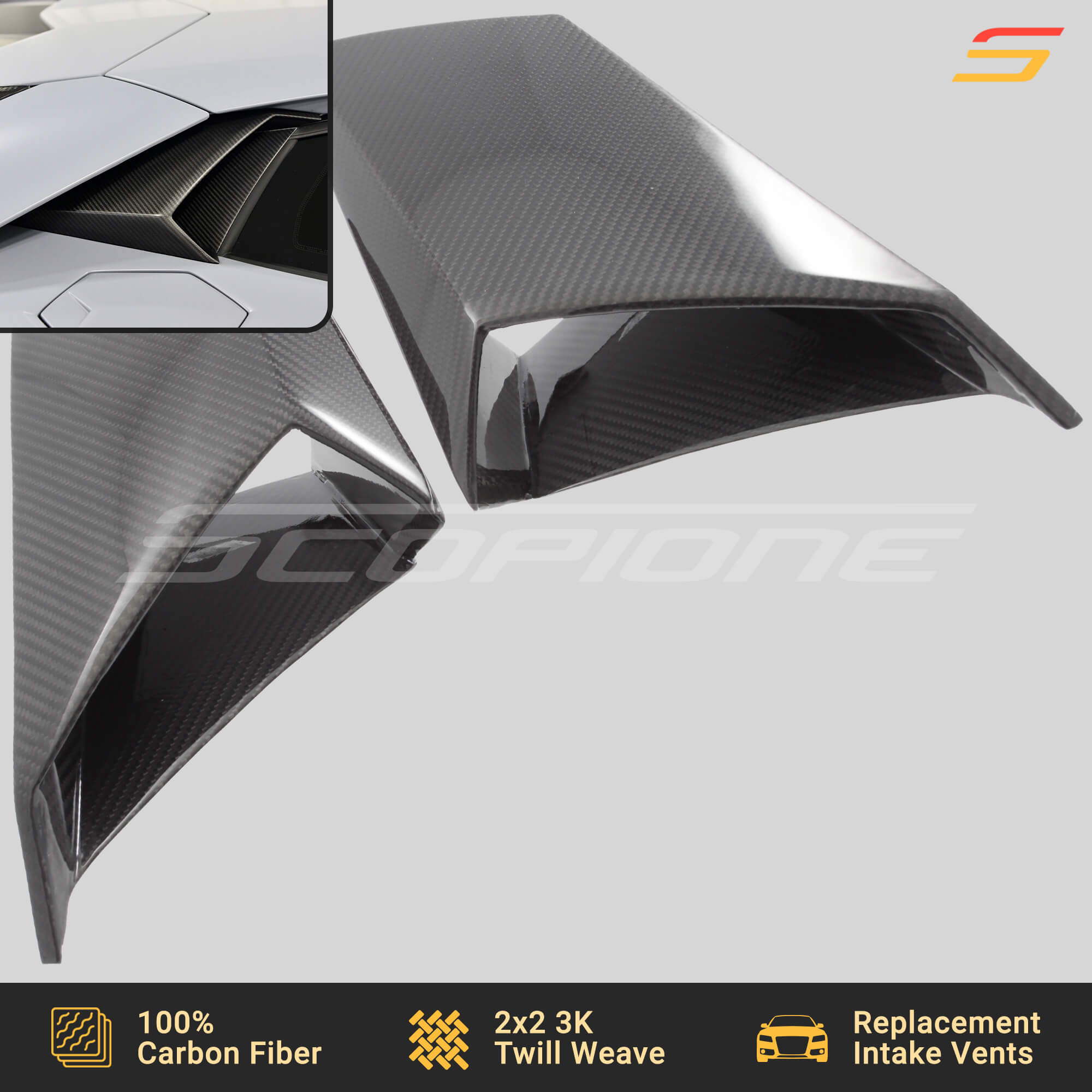
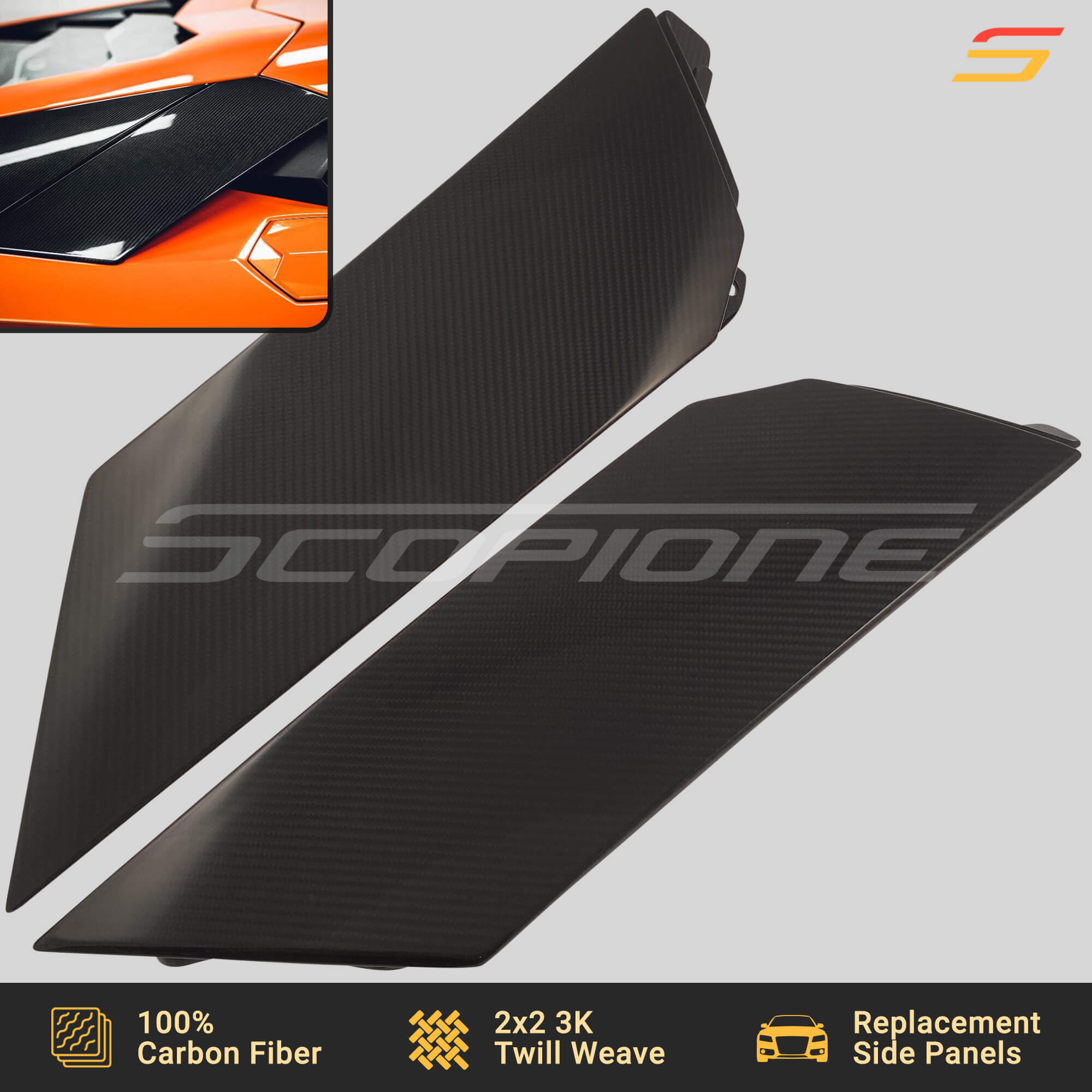
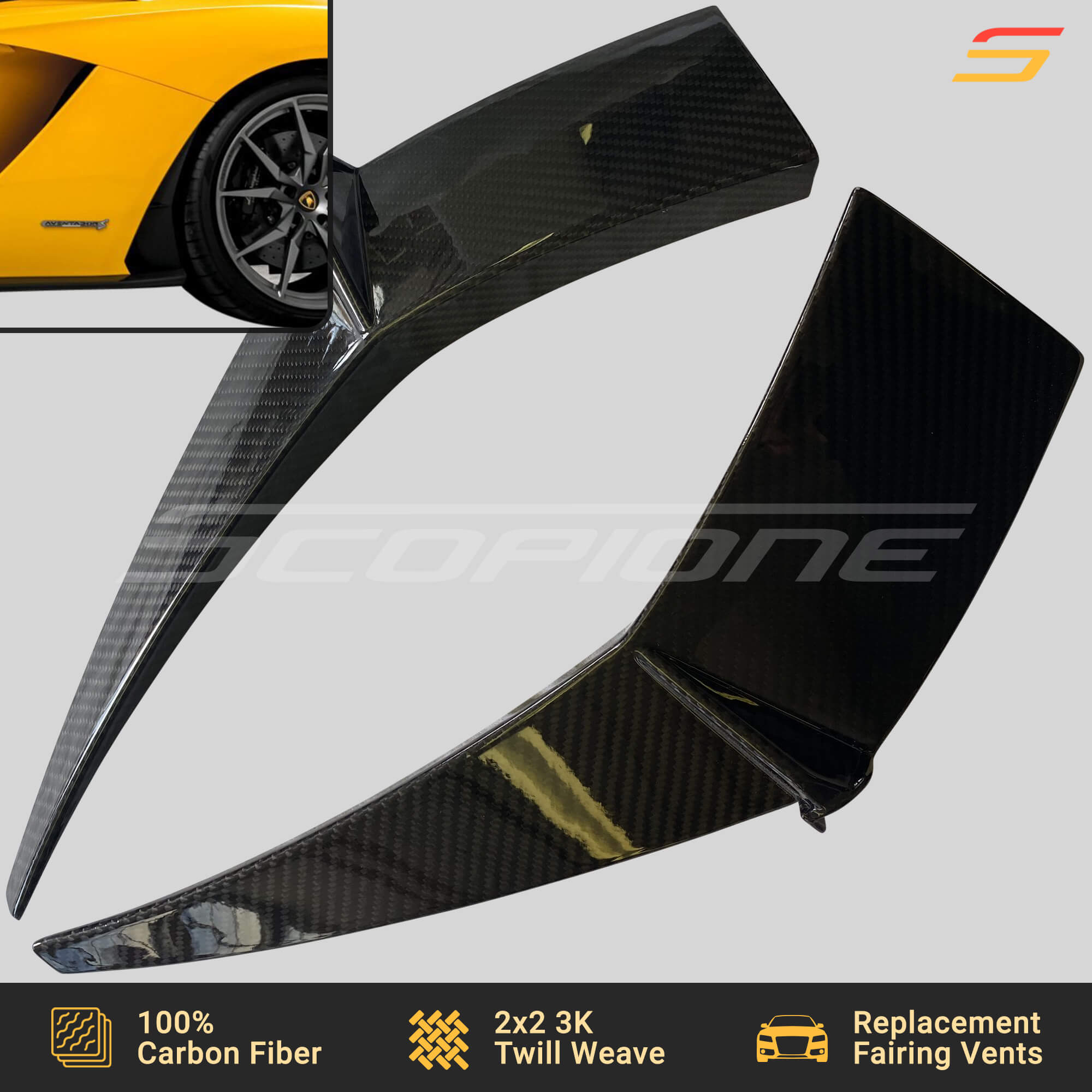
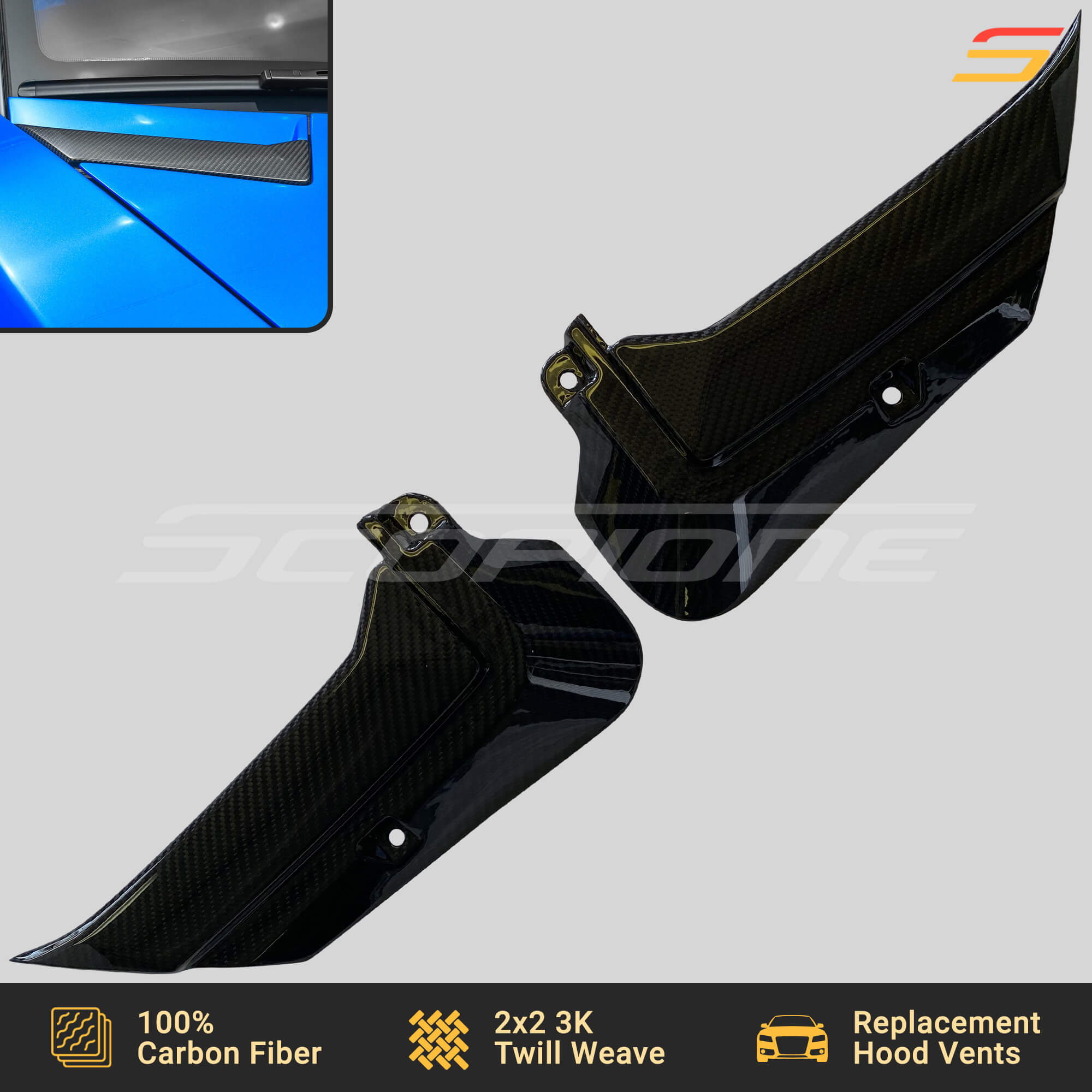
- Side window air intake vents, roof air vents and scoops, side air intake engine vents – engine cooling and aerodynamic management with exposed twill-weave finish across the car’s upper surfaces.
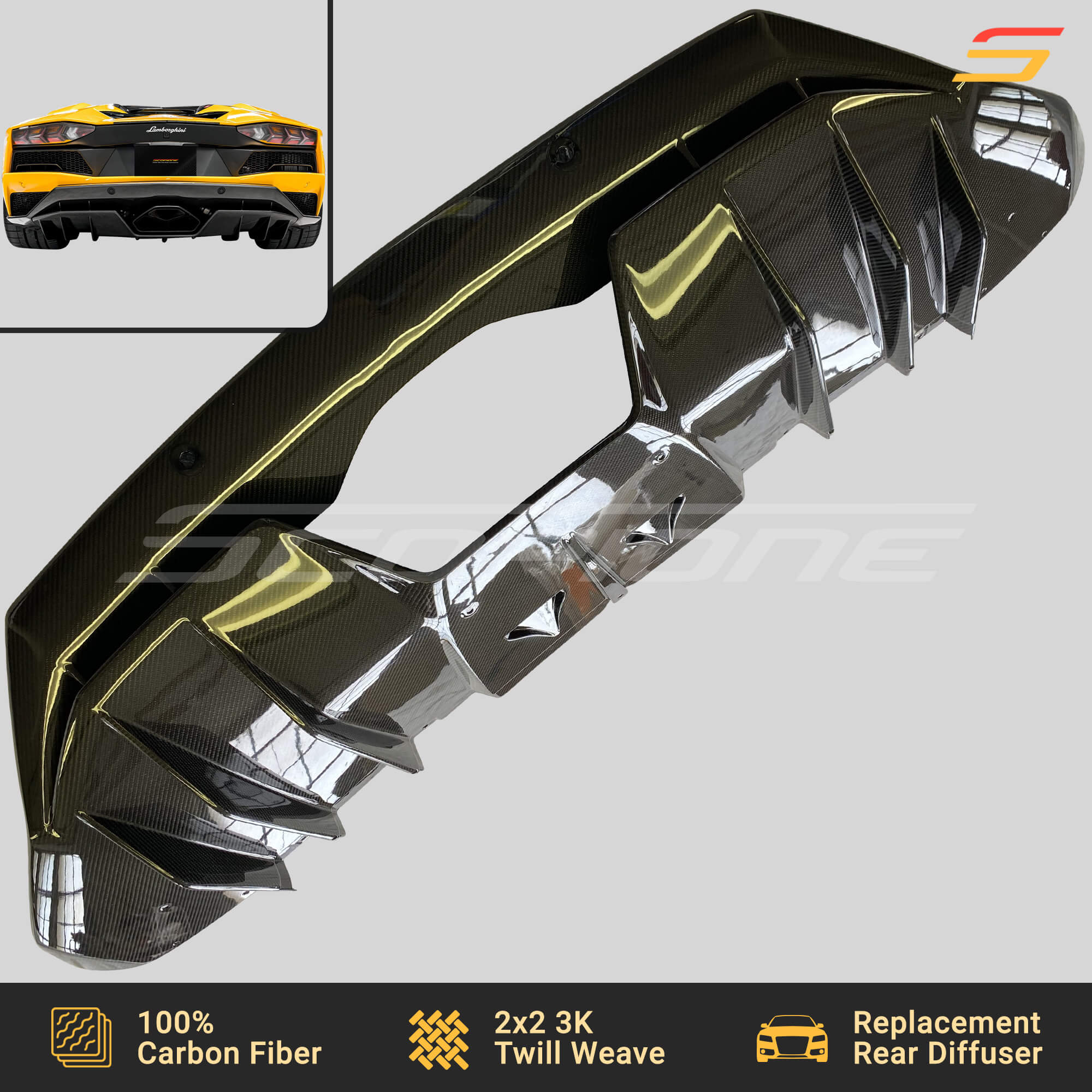
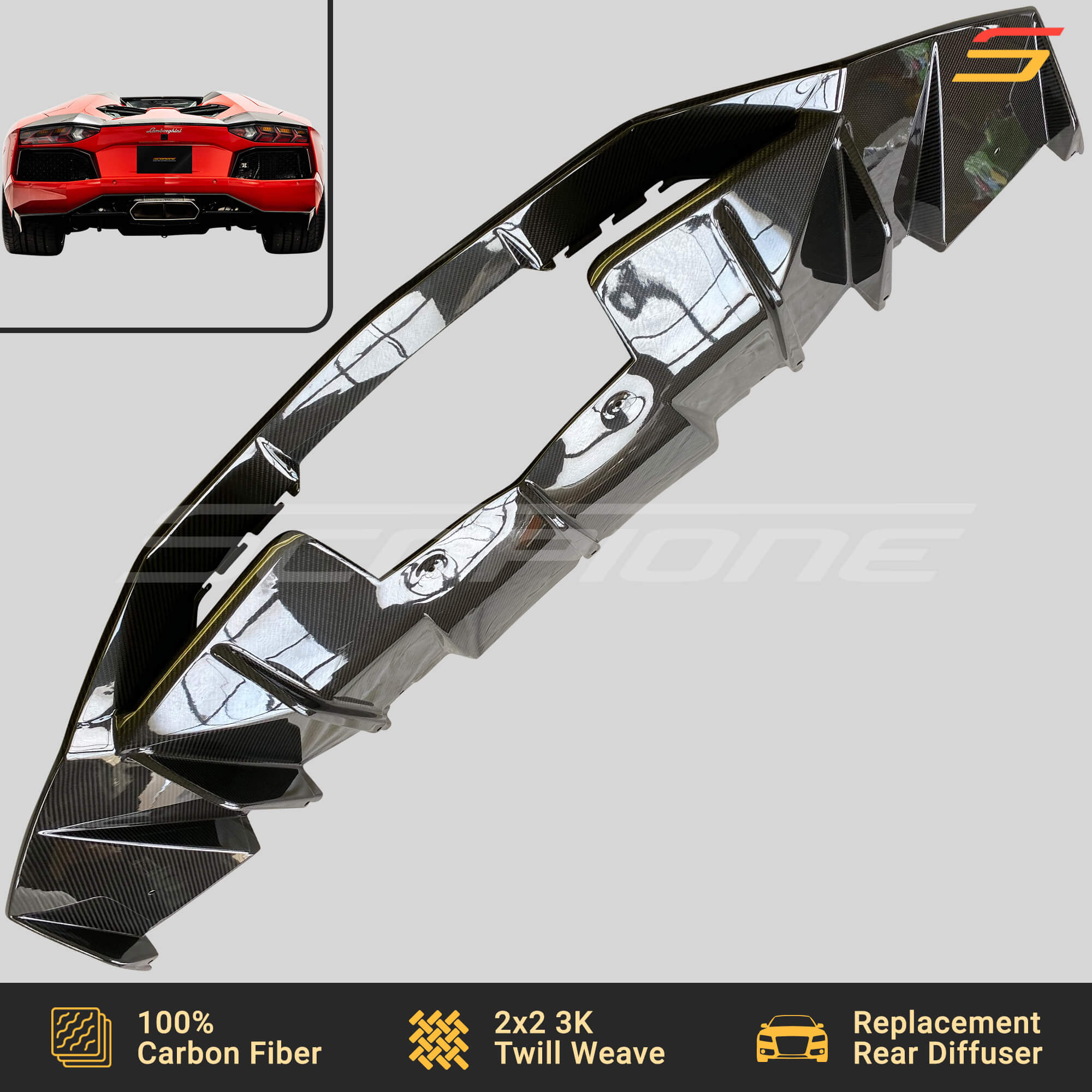
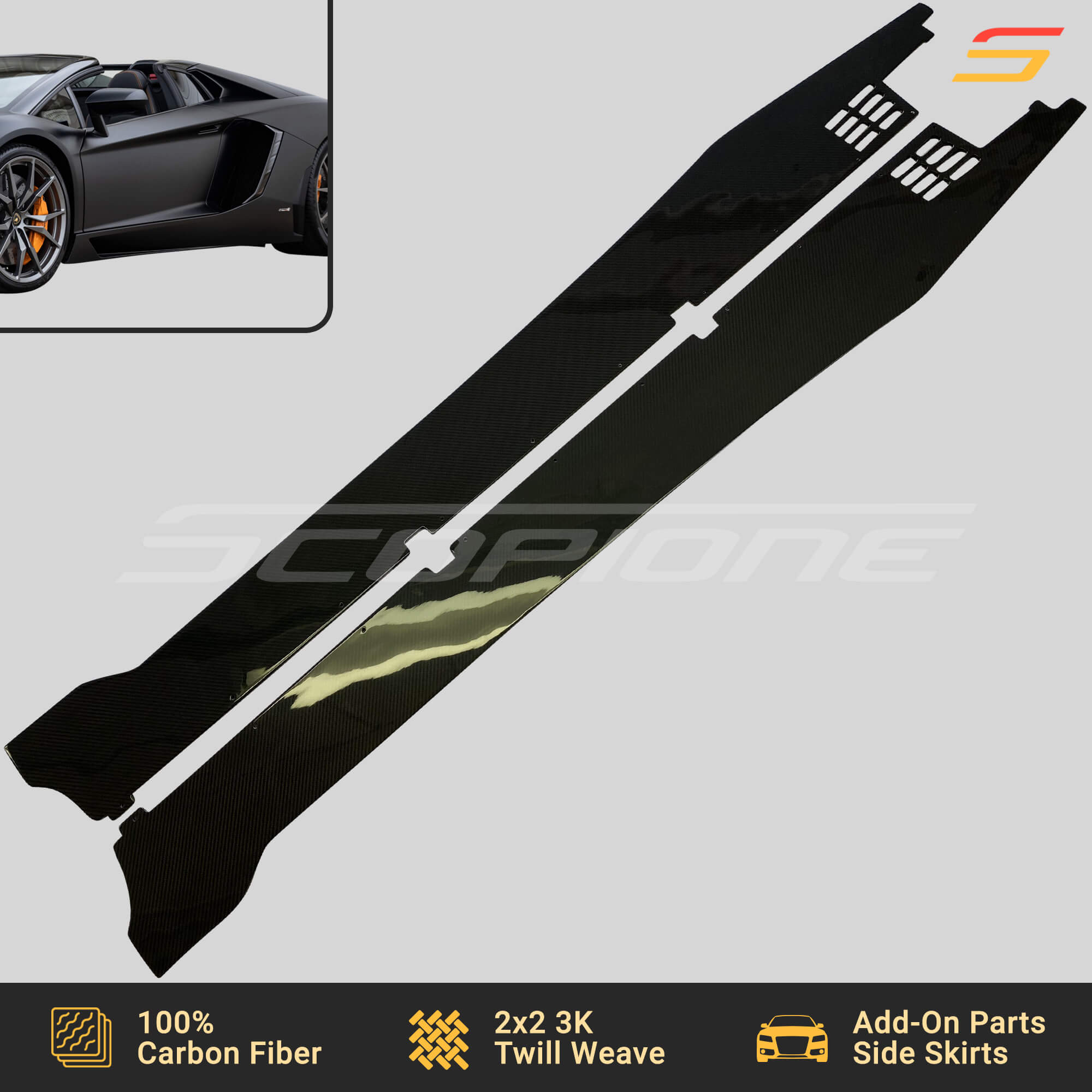
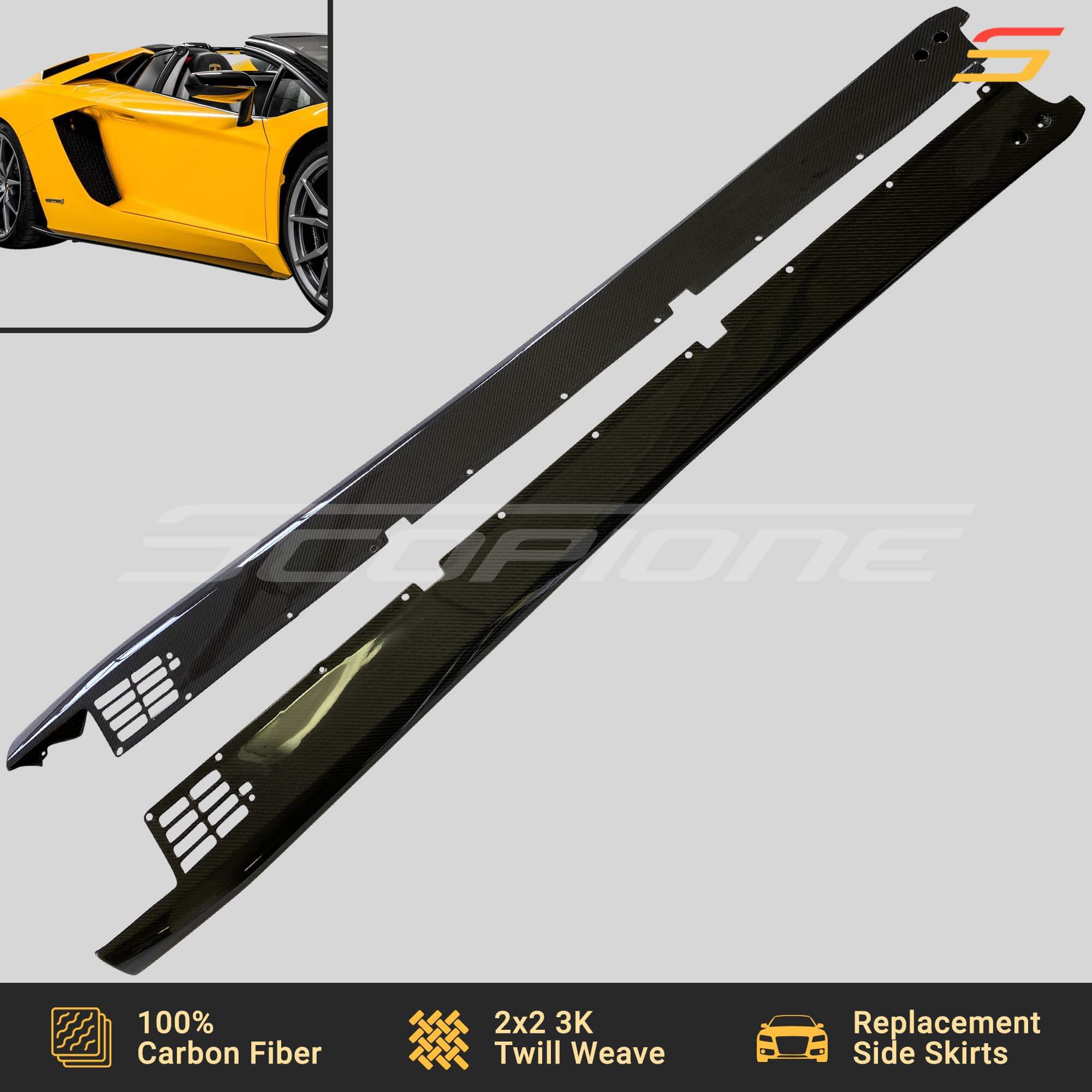
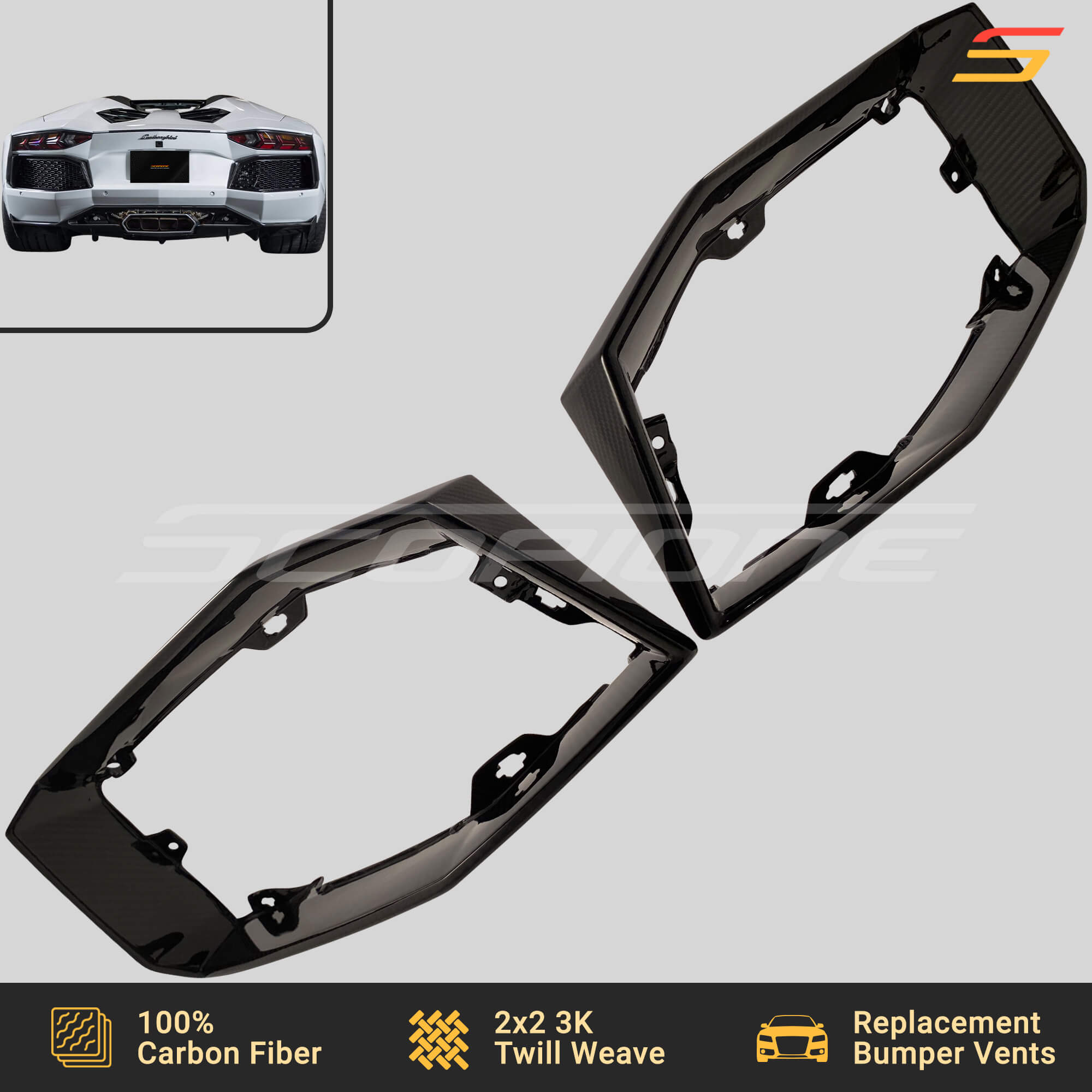
- Rear bumper diffusers and widened side skirts – LP700-4 and Aventador S fitments – complete the lower aero package, alongside front hood trim kits, hood scoop vents, and rear fender air scoops.
2. Interior Carbon Fiber
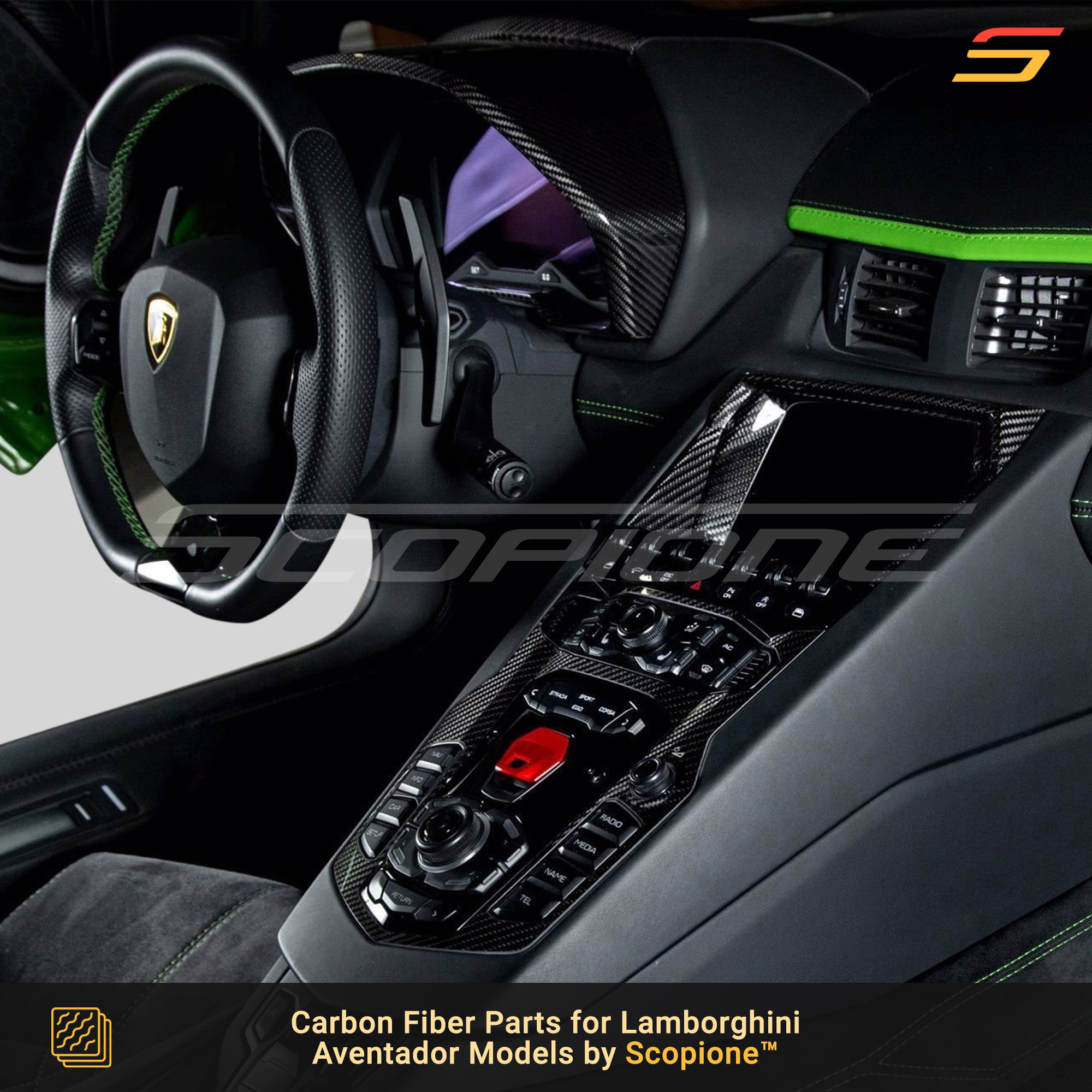
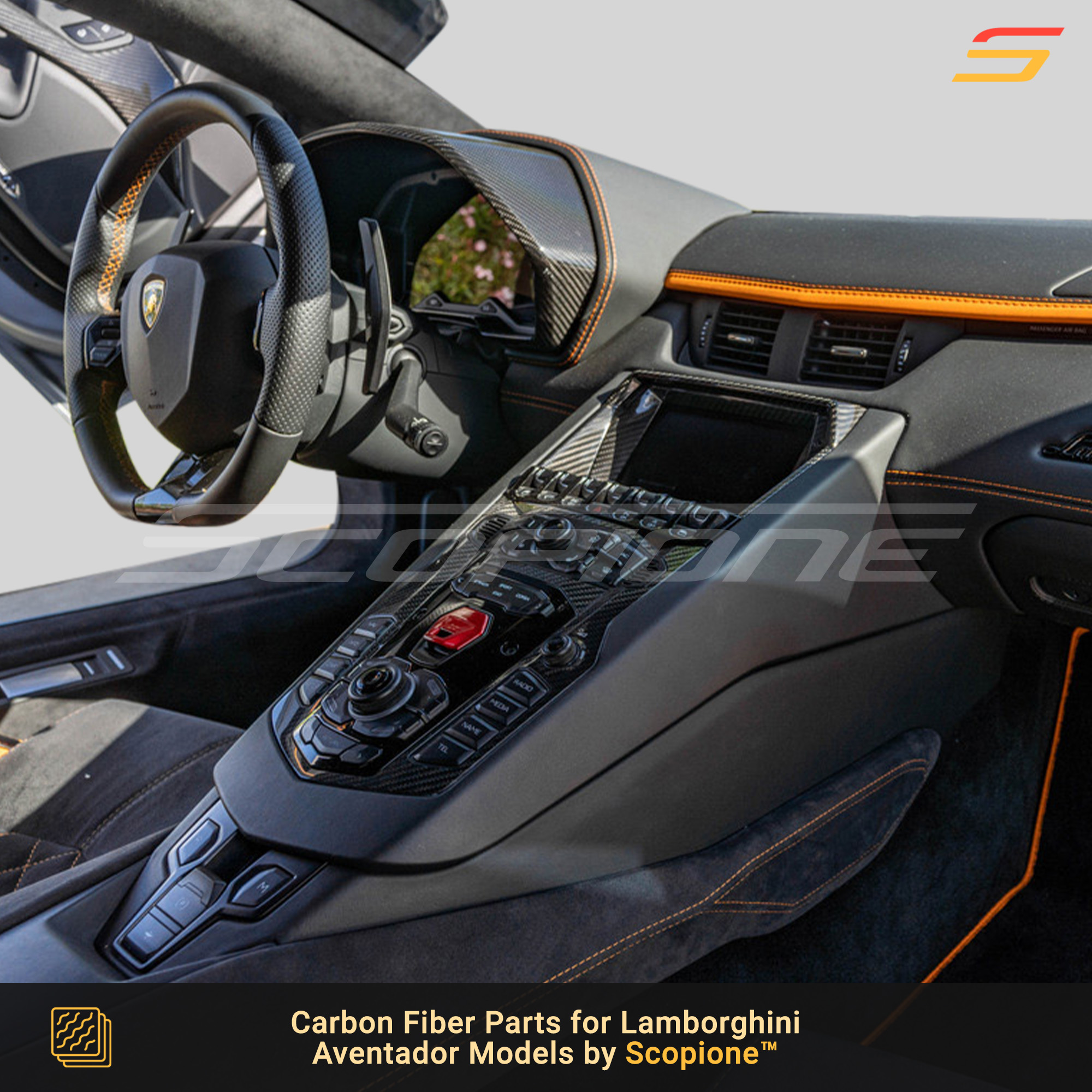
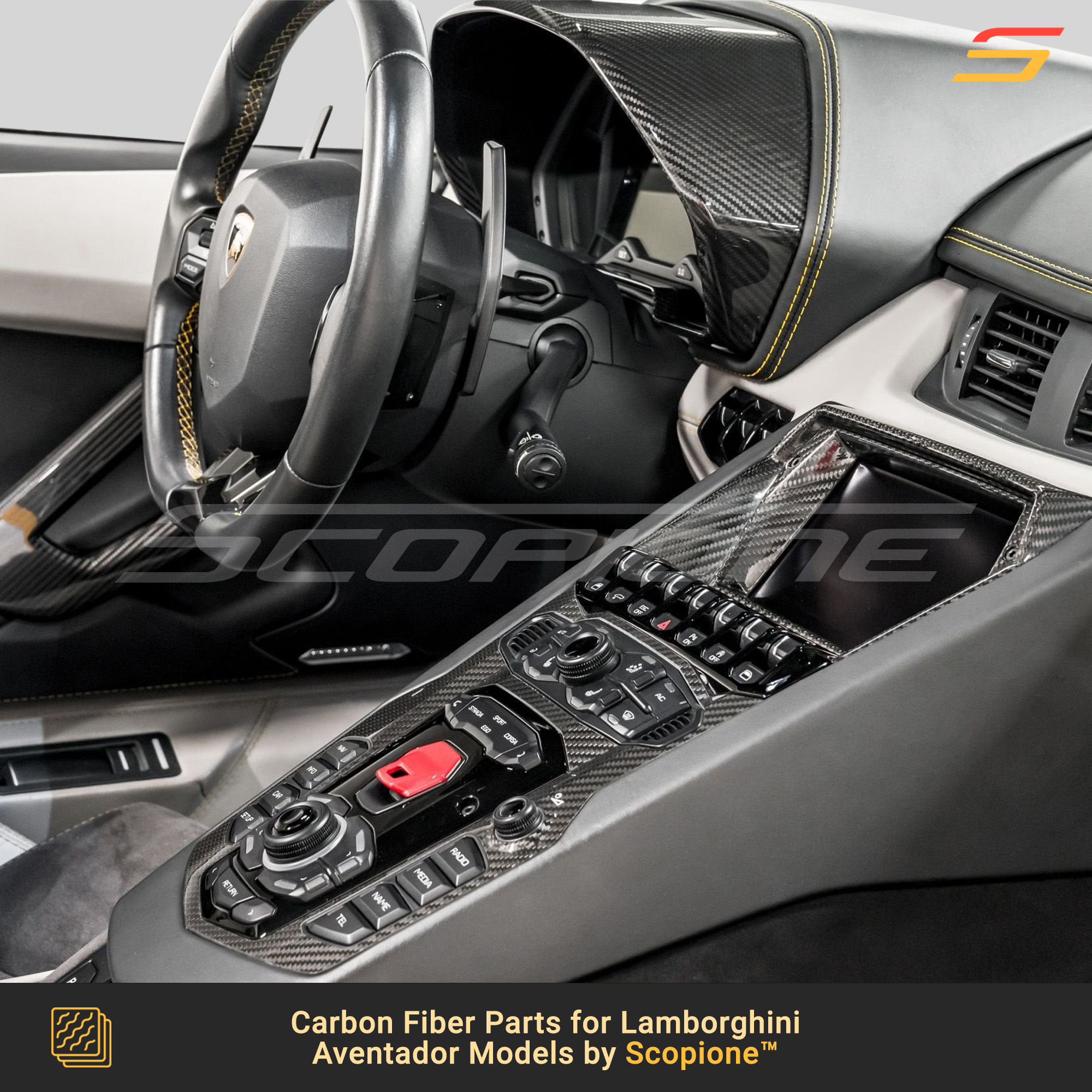
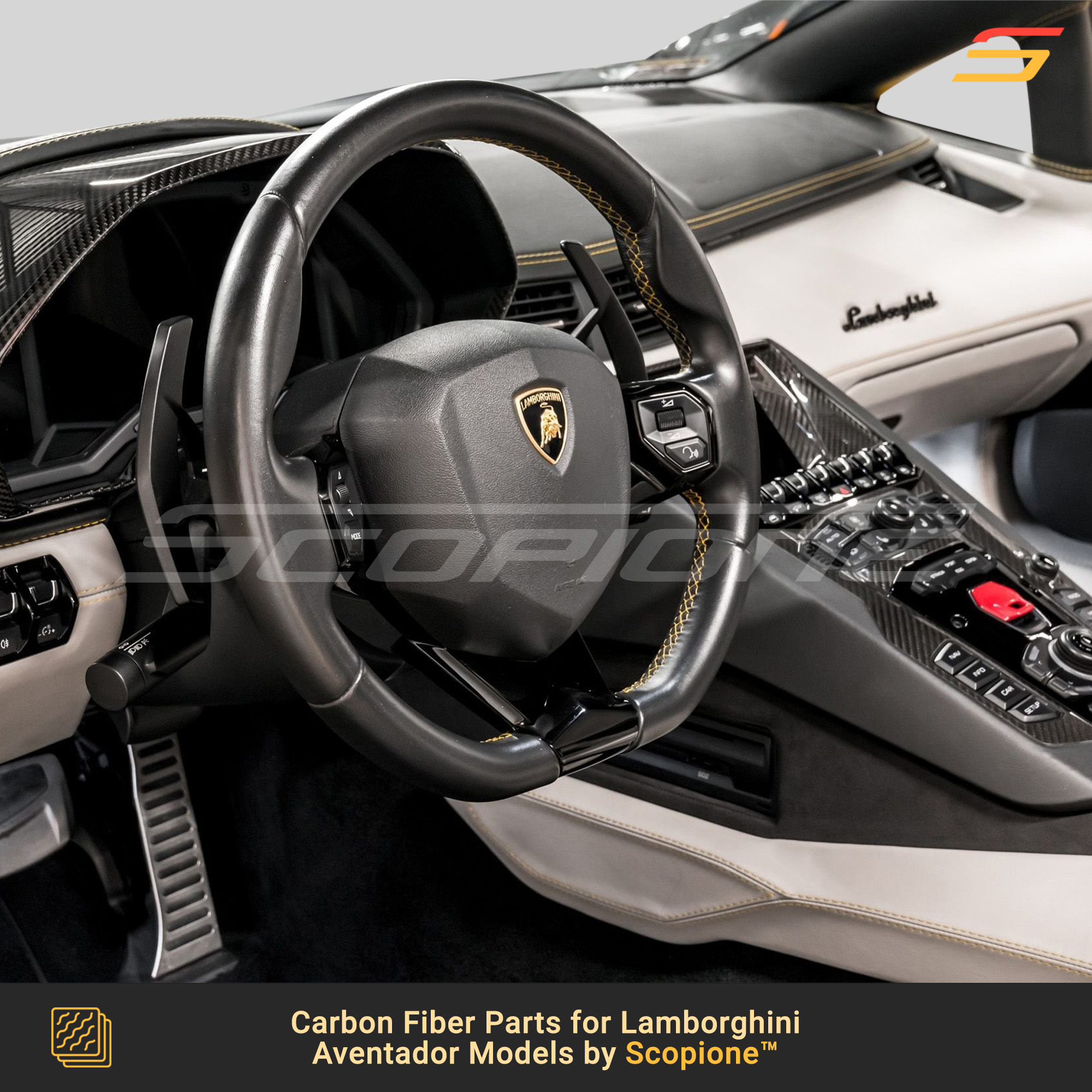
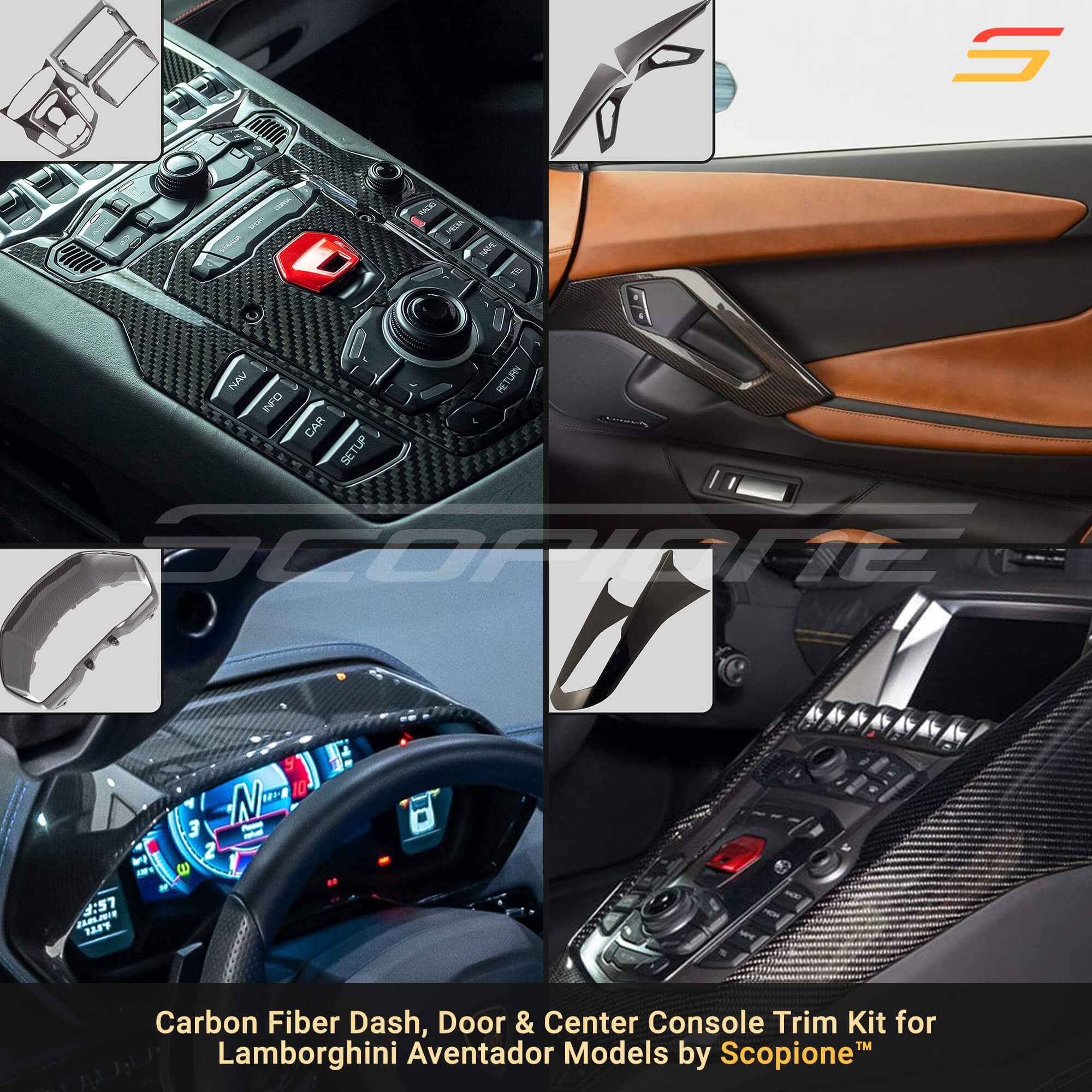
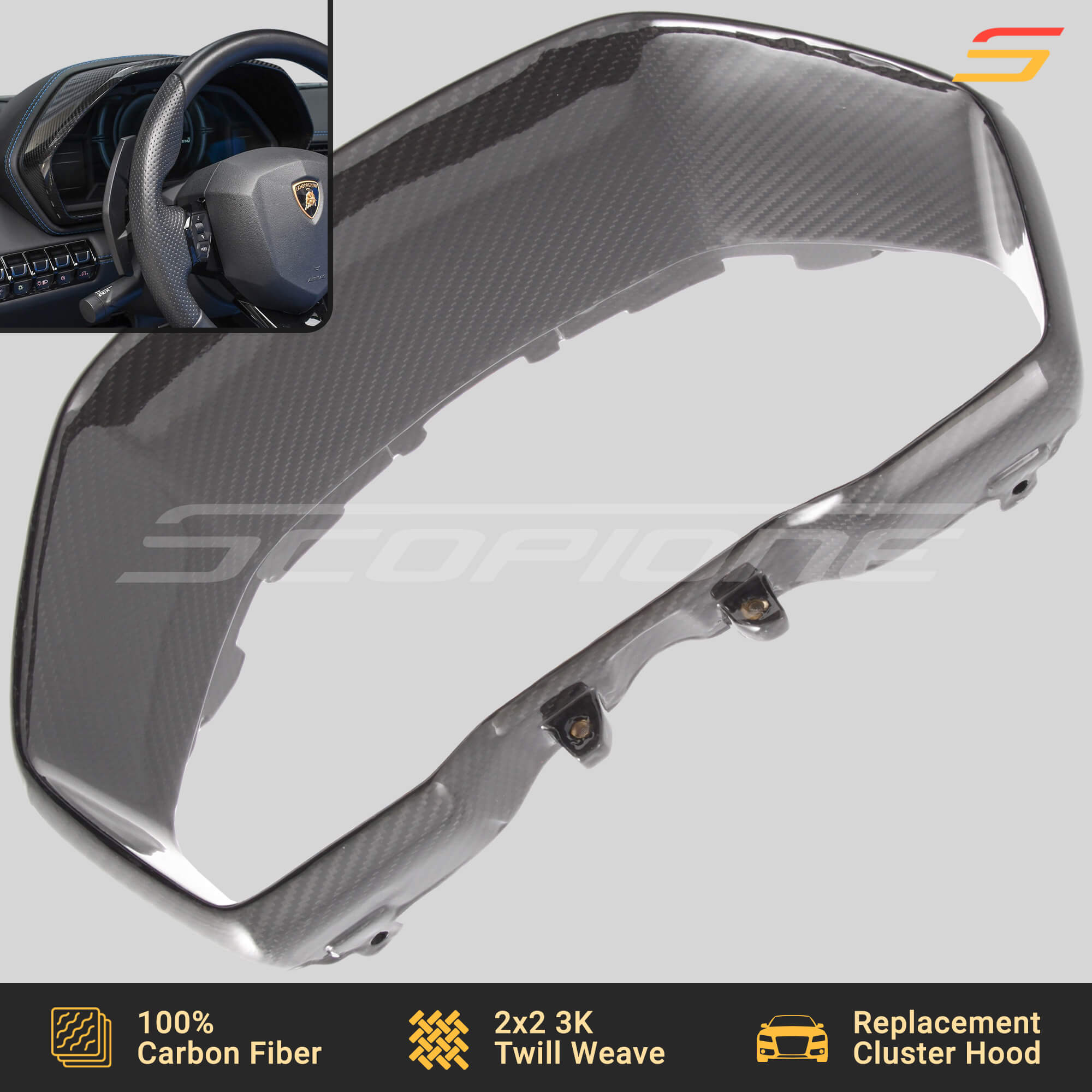
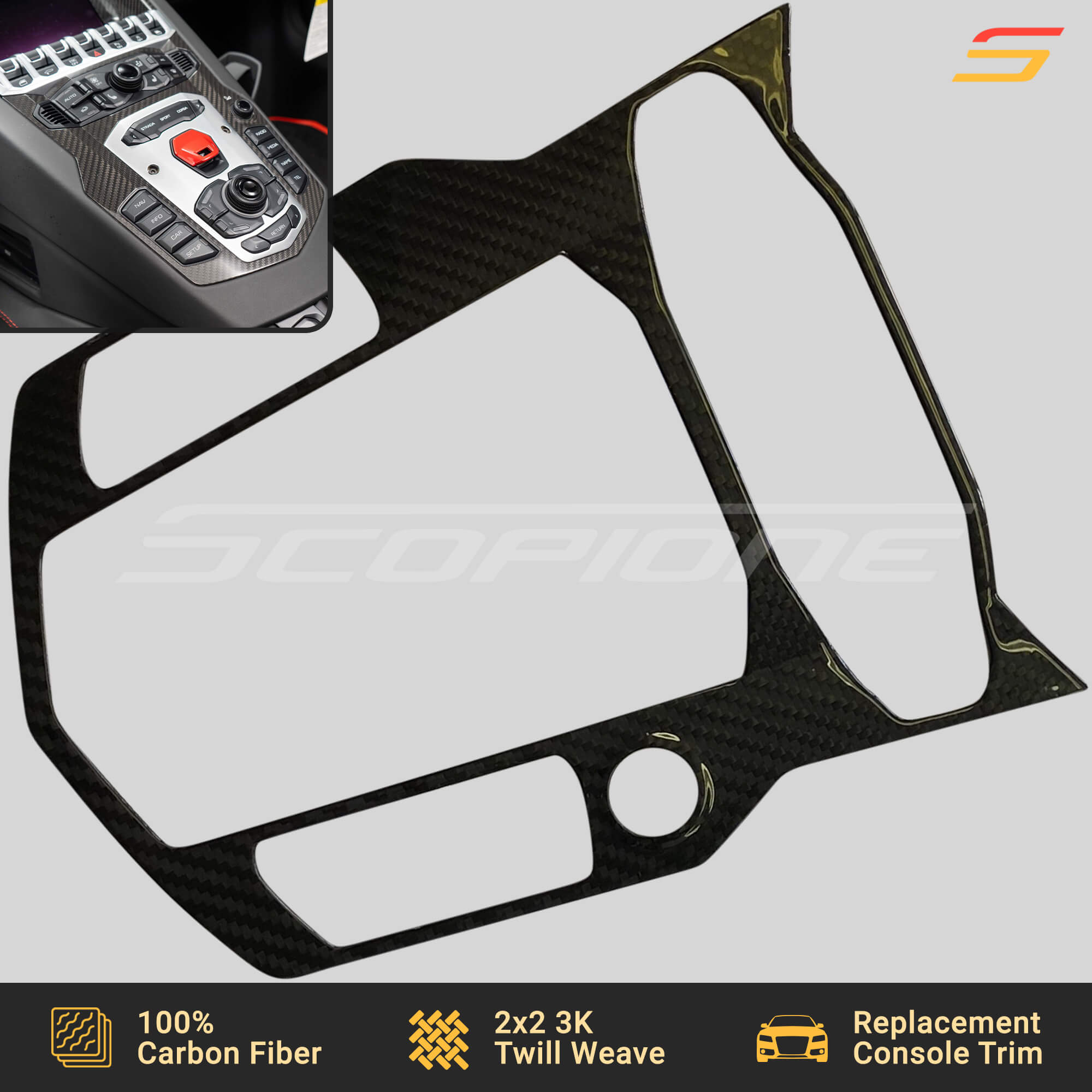
- Dashboard and door trim kit – Full cockpit transformation replacing factory plastic surfaces with visible 2×2 weave texture. The Aventador’s fighter-jet-inspired cockpit particularly benefits from carbon fiber’s angular grain patterns.
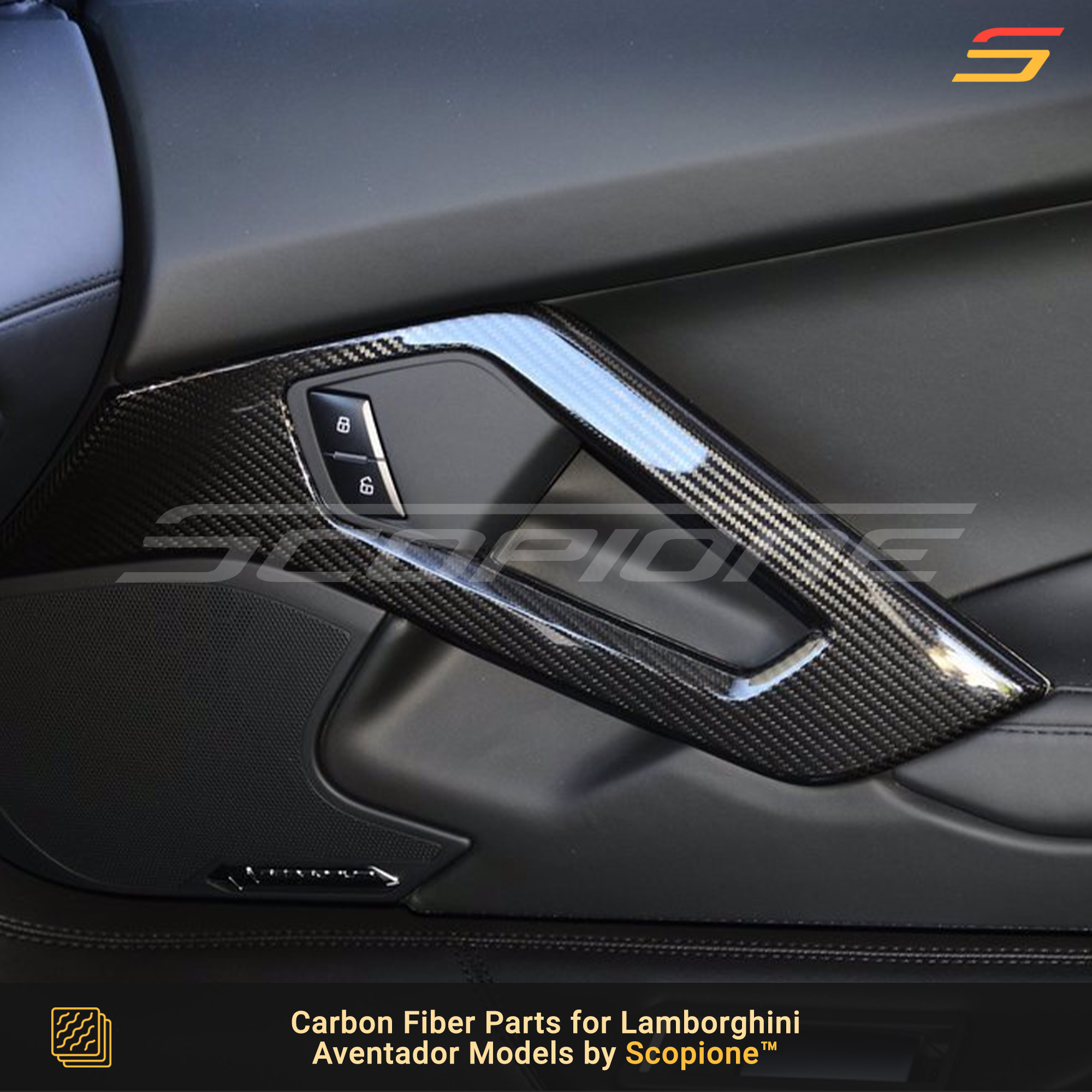
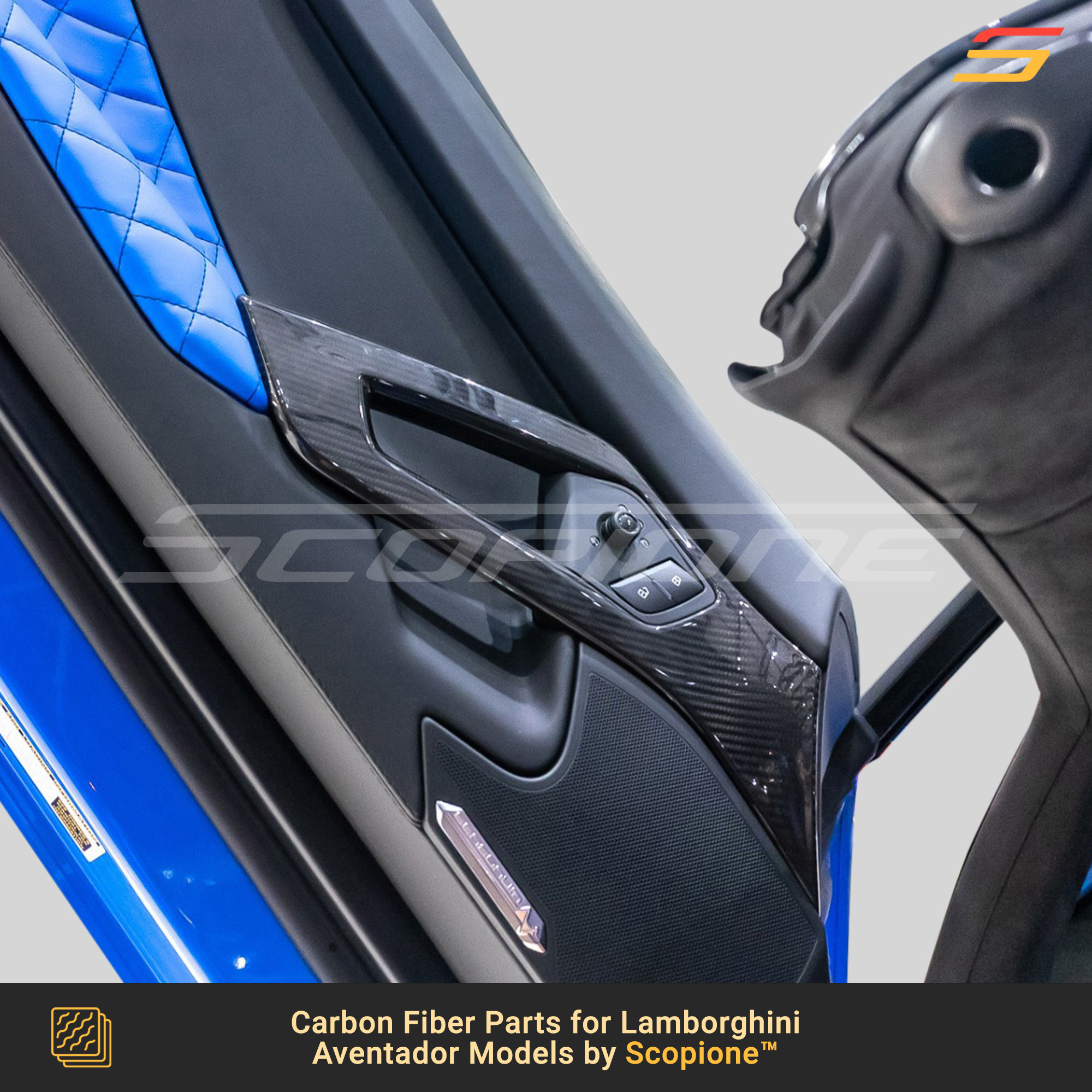
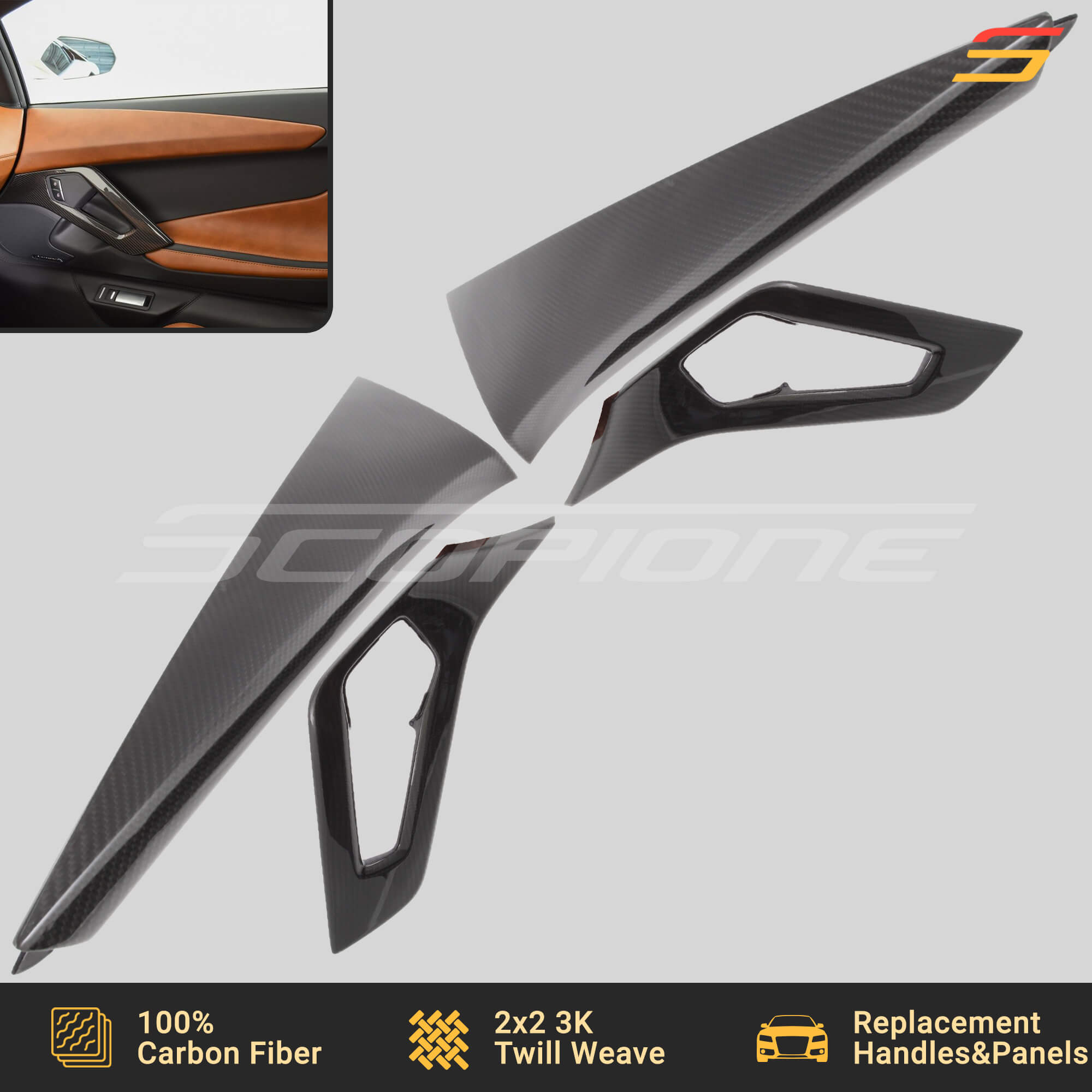
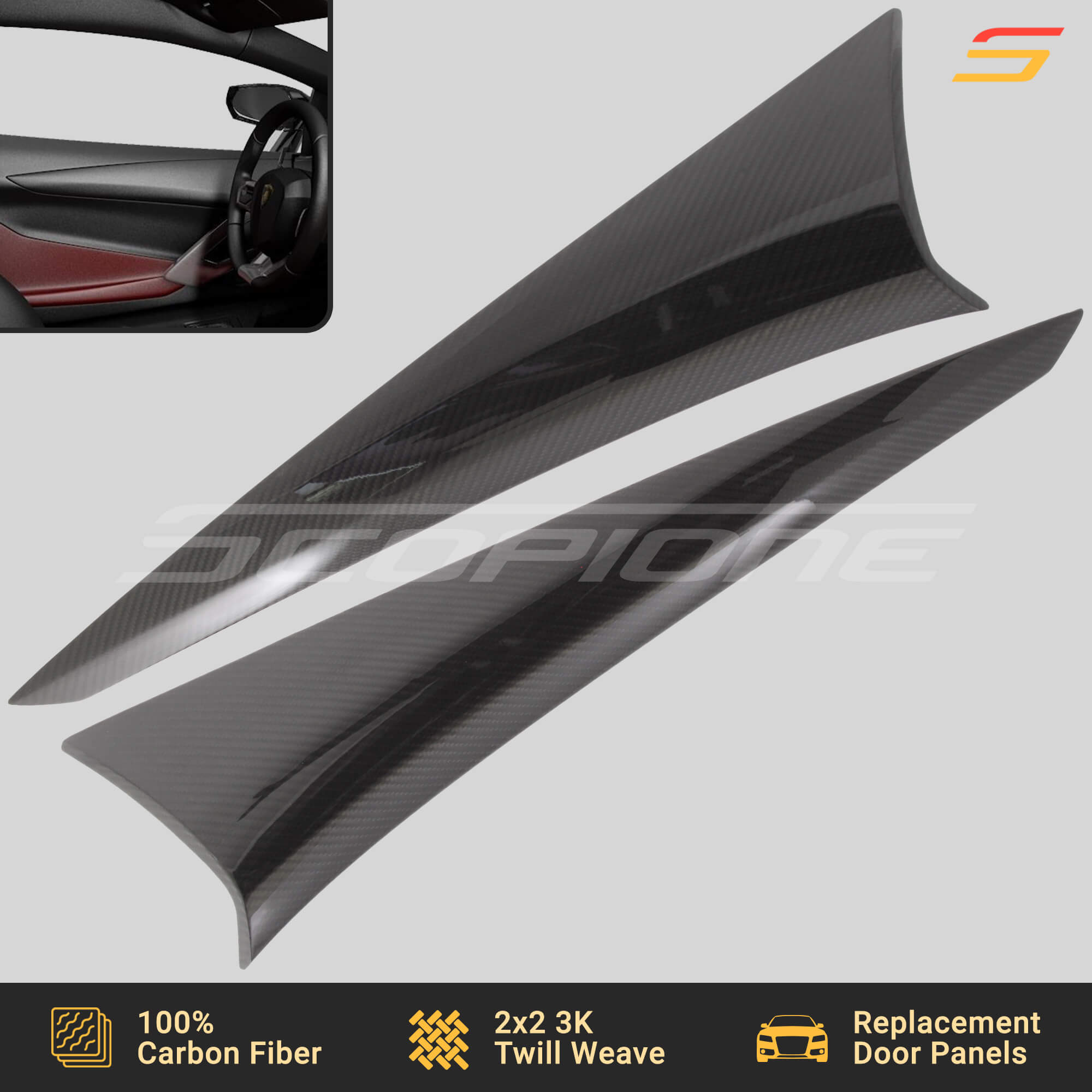
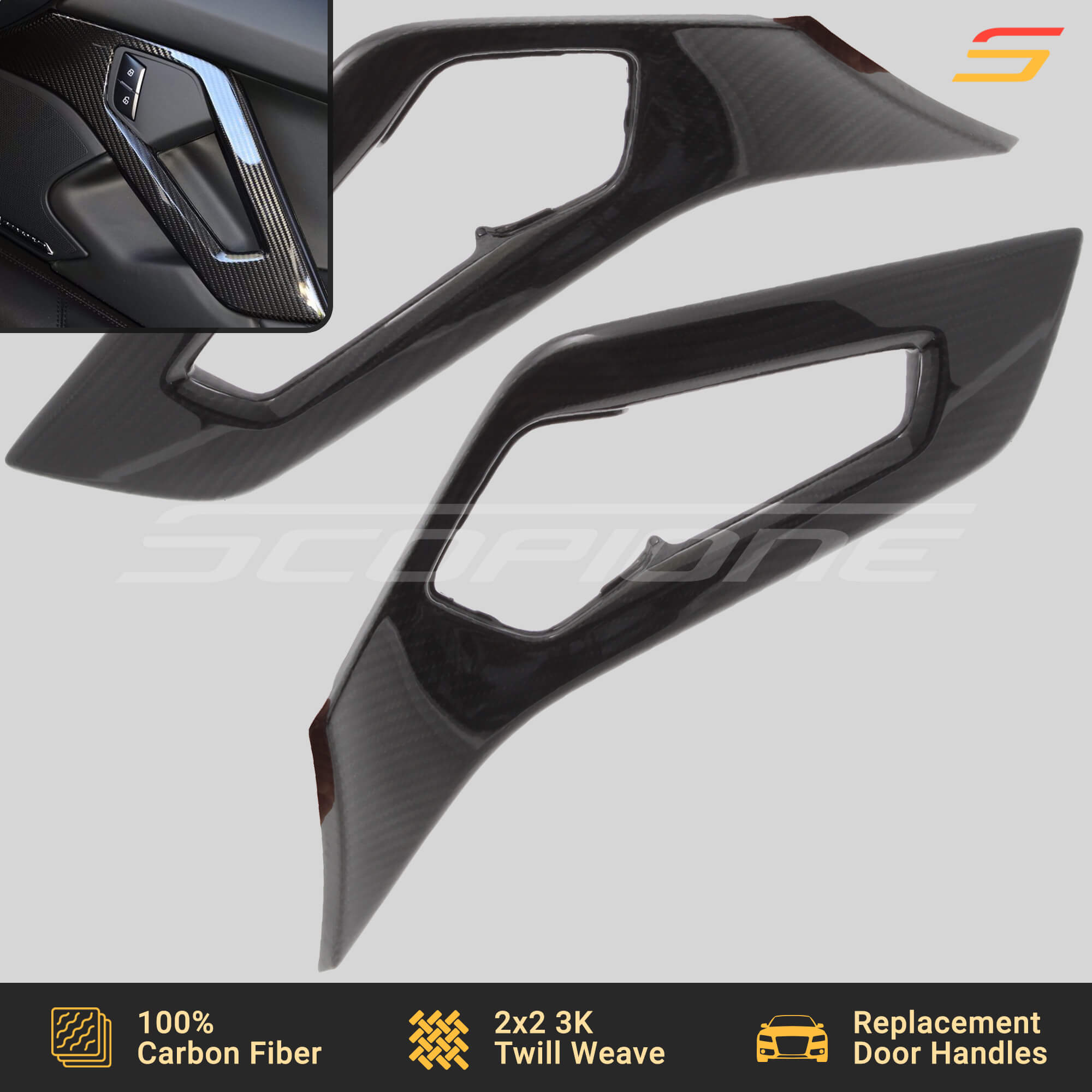
- Door handles and panels trim – tactile CF upgrade on high-contact surfaces with precision-fitted panels.
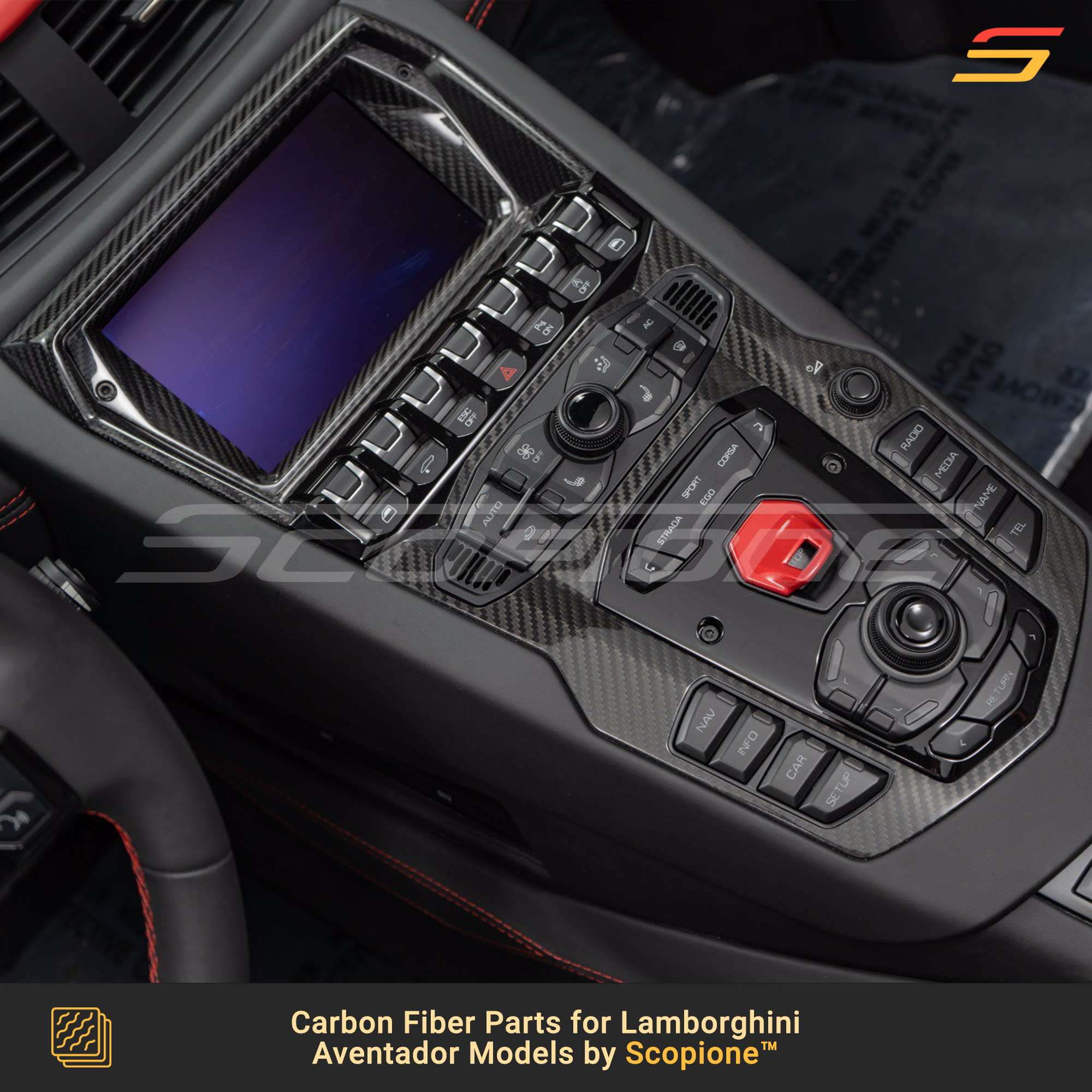
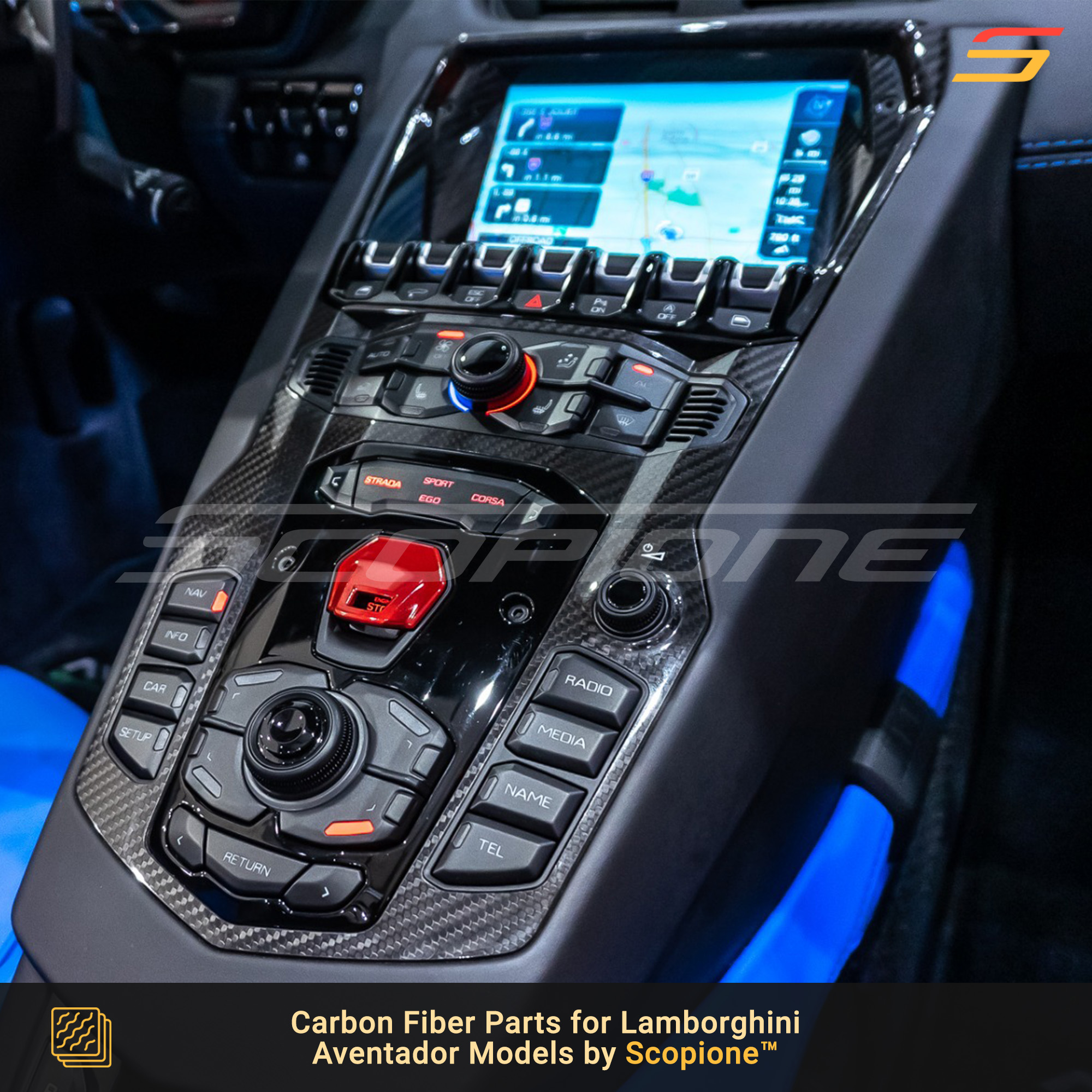
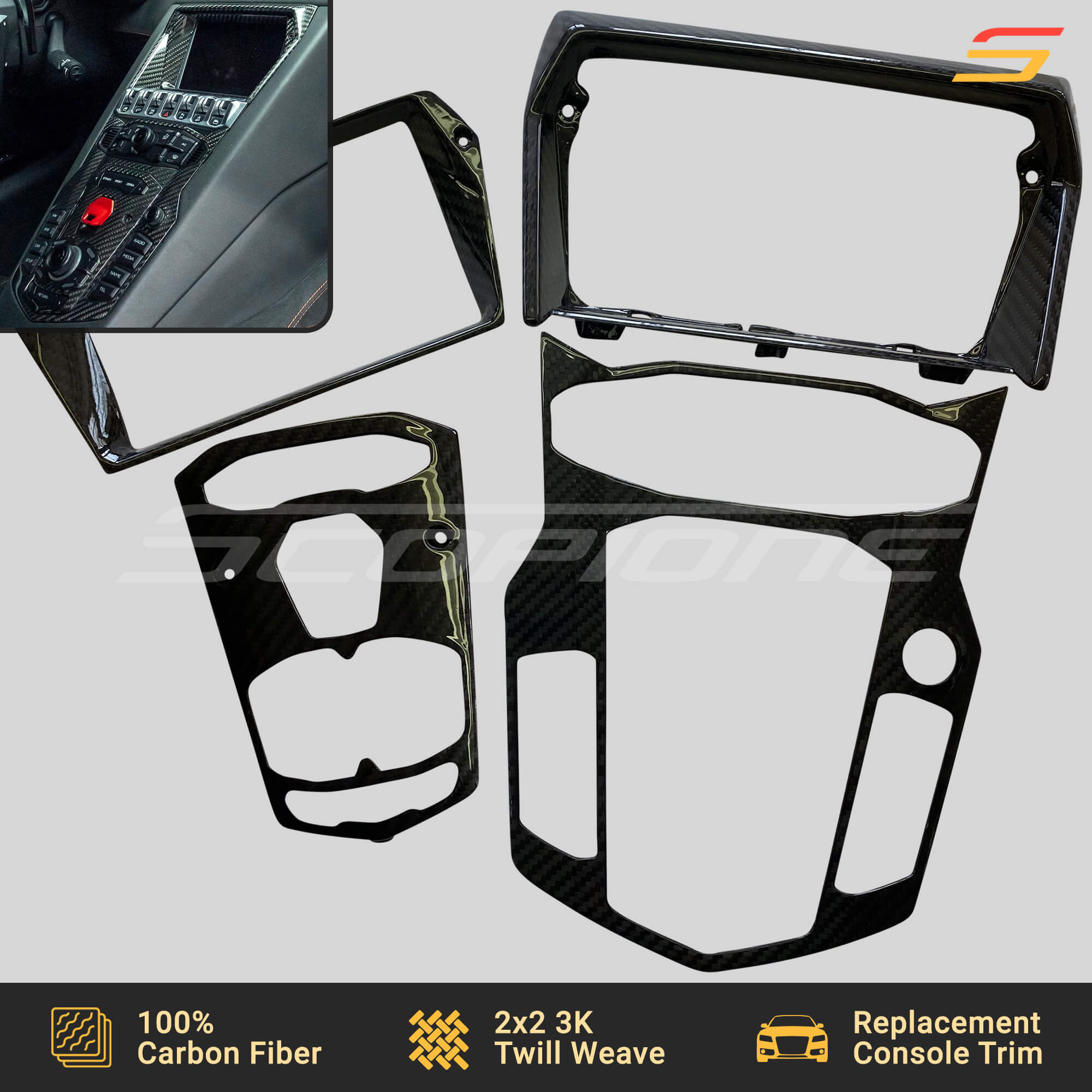
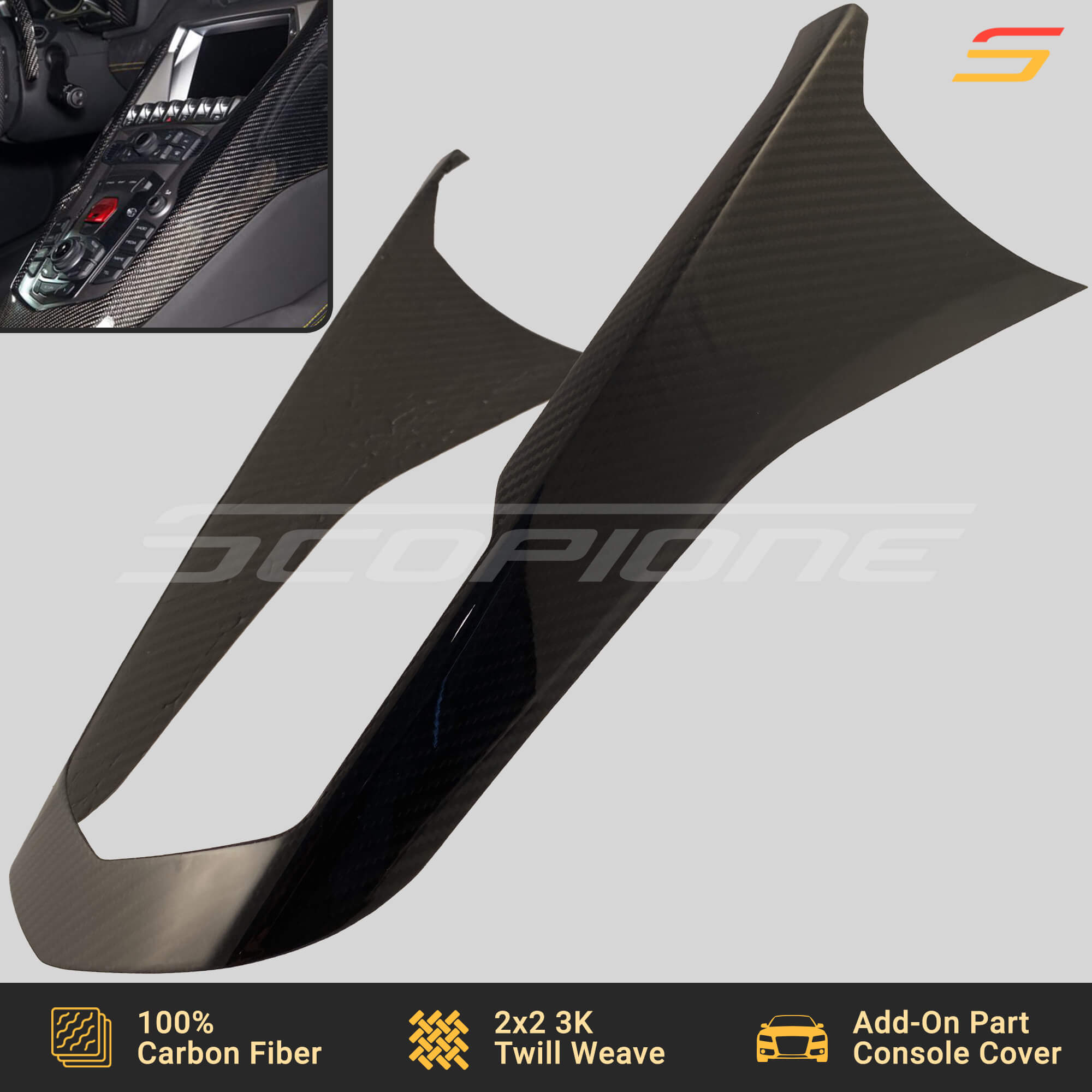
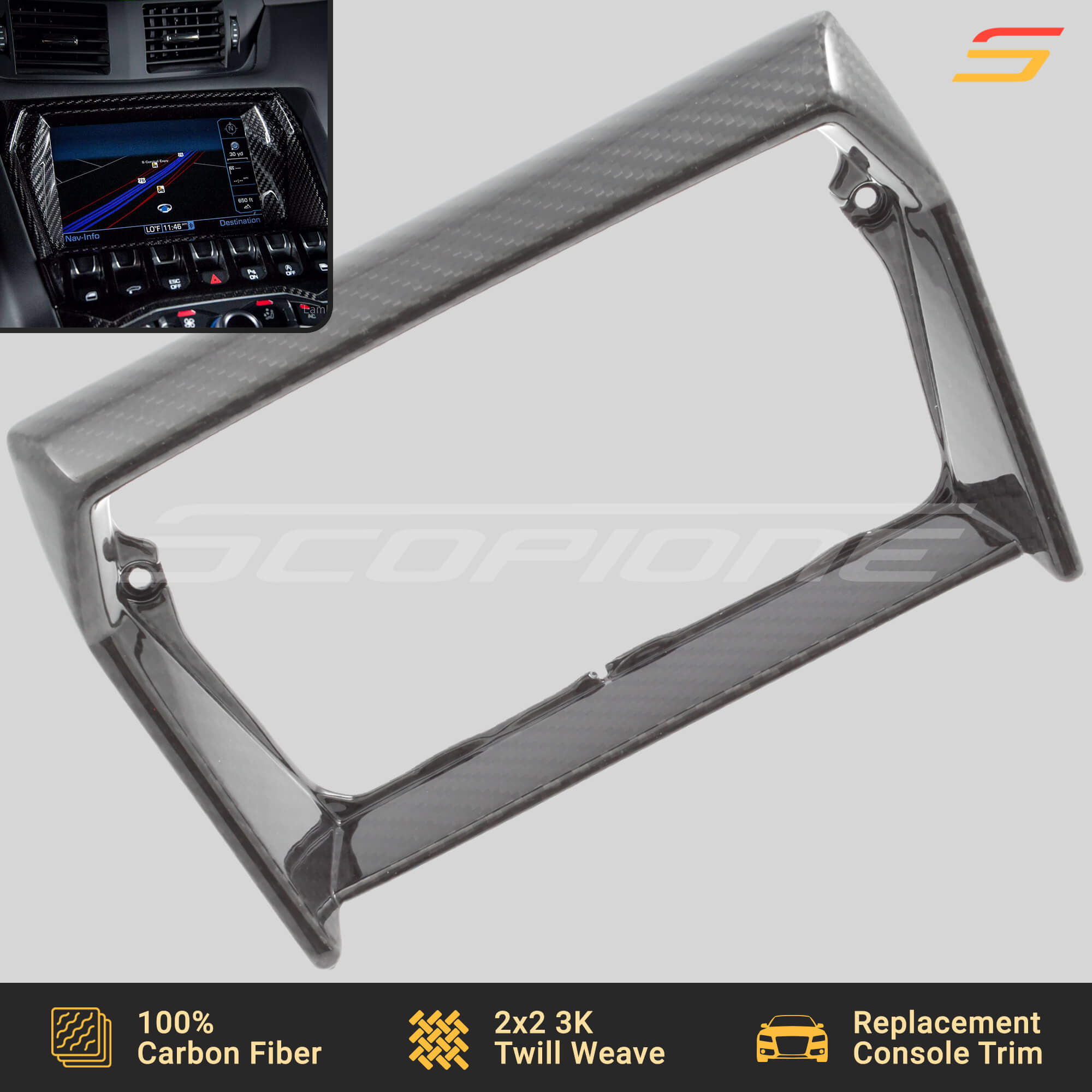
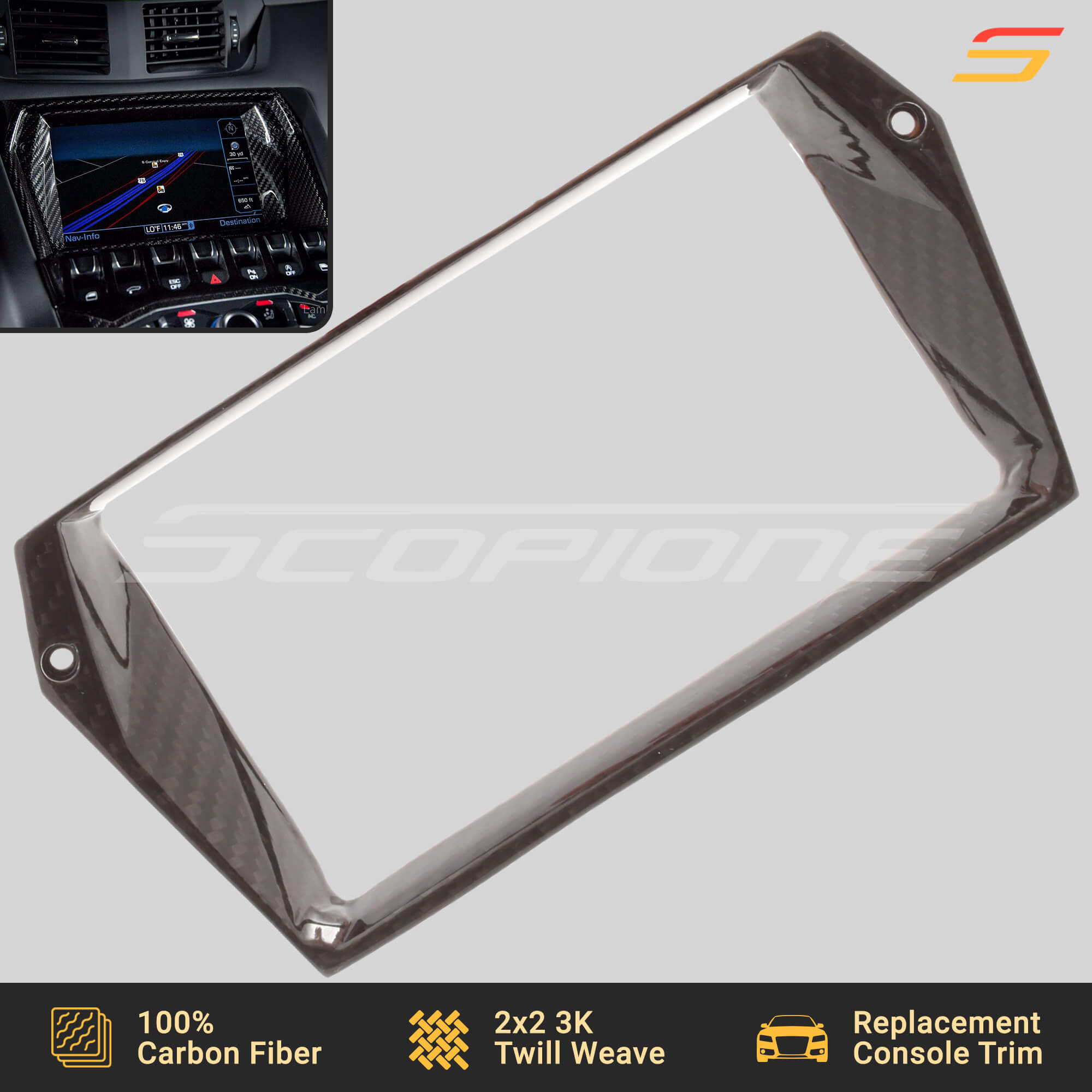
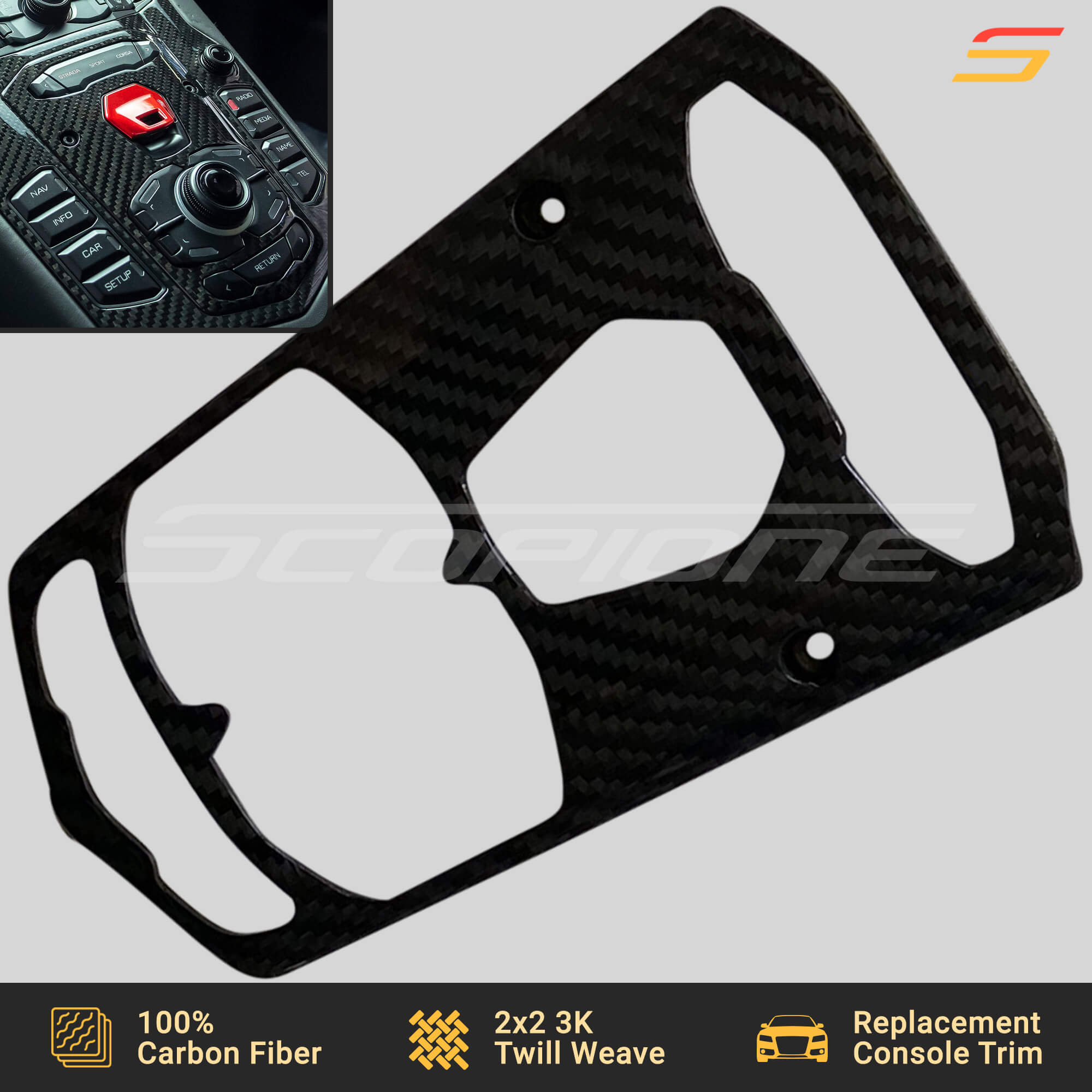
- Center console screen control trim kit – Carbon fiber surround for the infotainment area. Lightweight replacement with exposed weave.
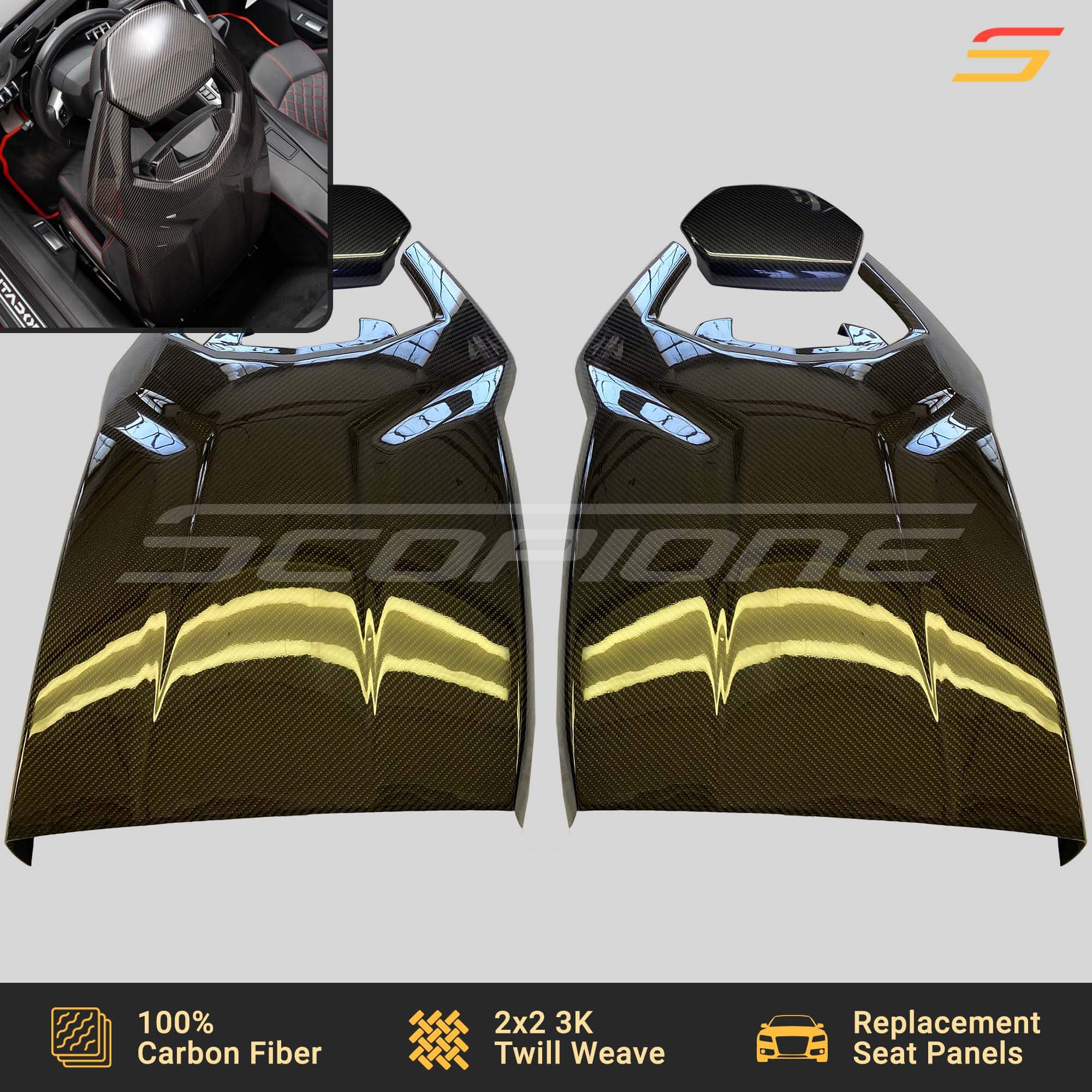
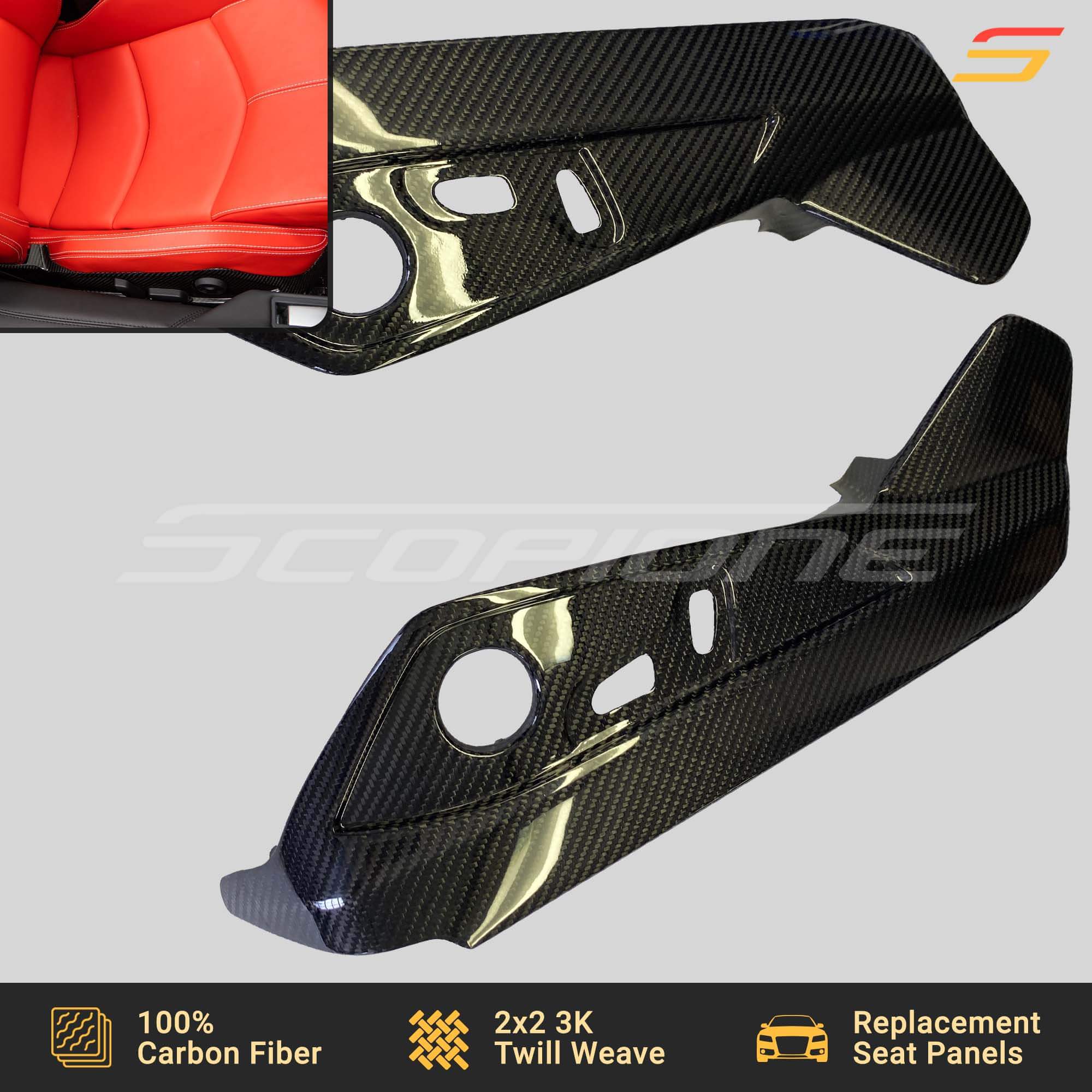
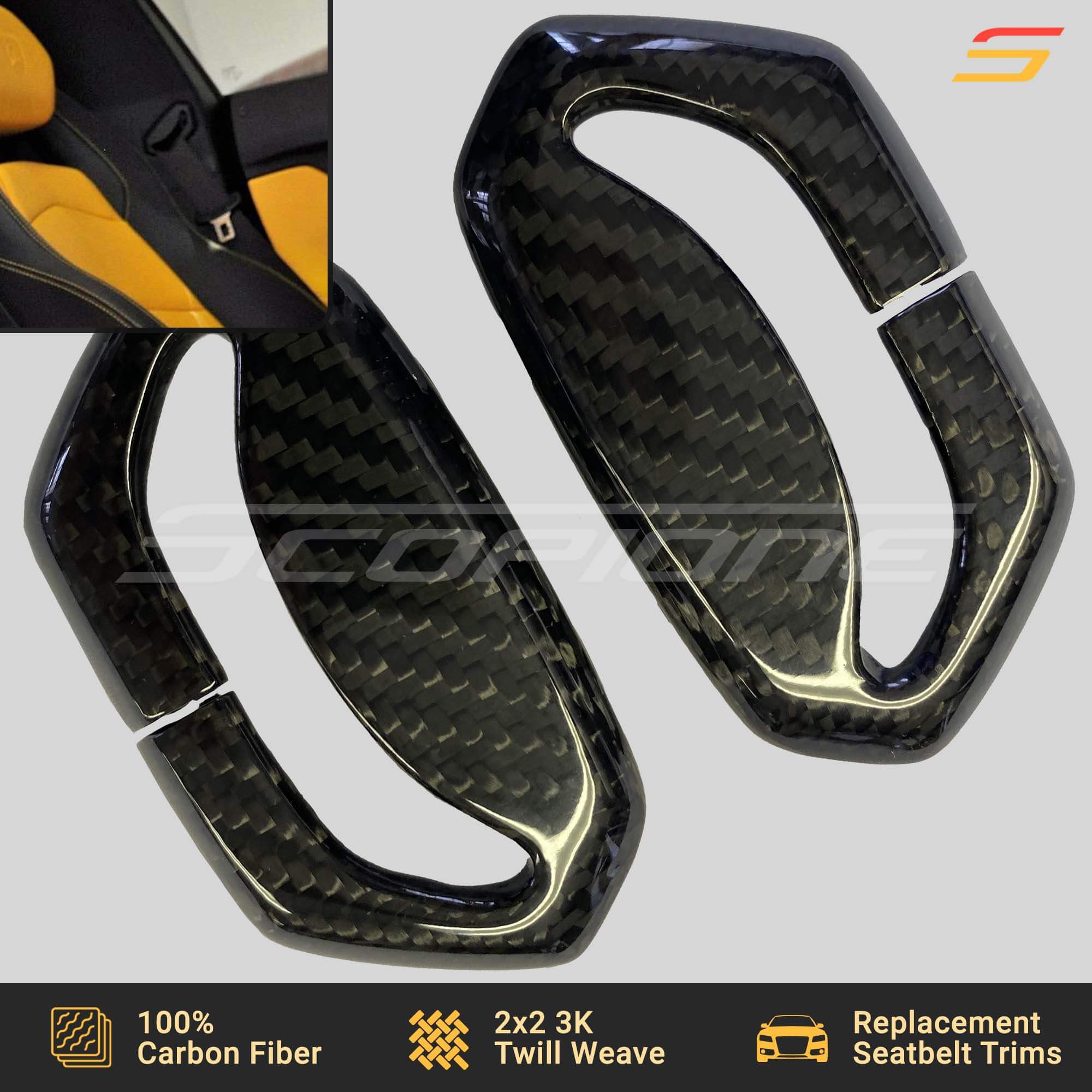
- Replacement seat back panels – weight reduction and visual impact on surfaces visible from the rear cabin. Particularly effective on Roadster variants where the seatbacks are always exposed.
3. Engine Bay & Performance
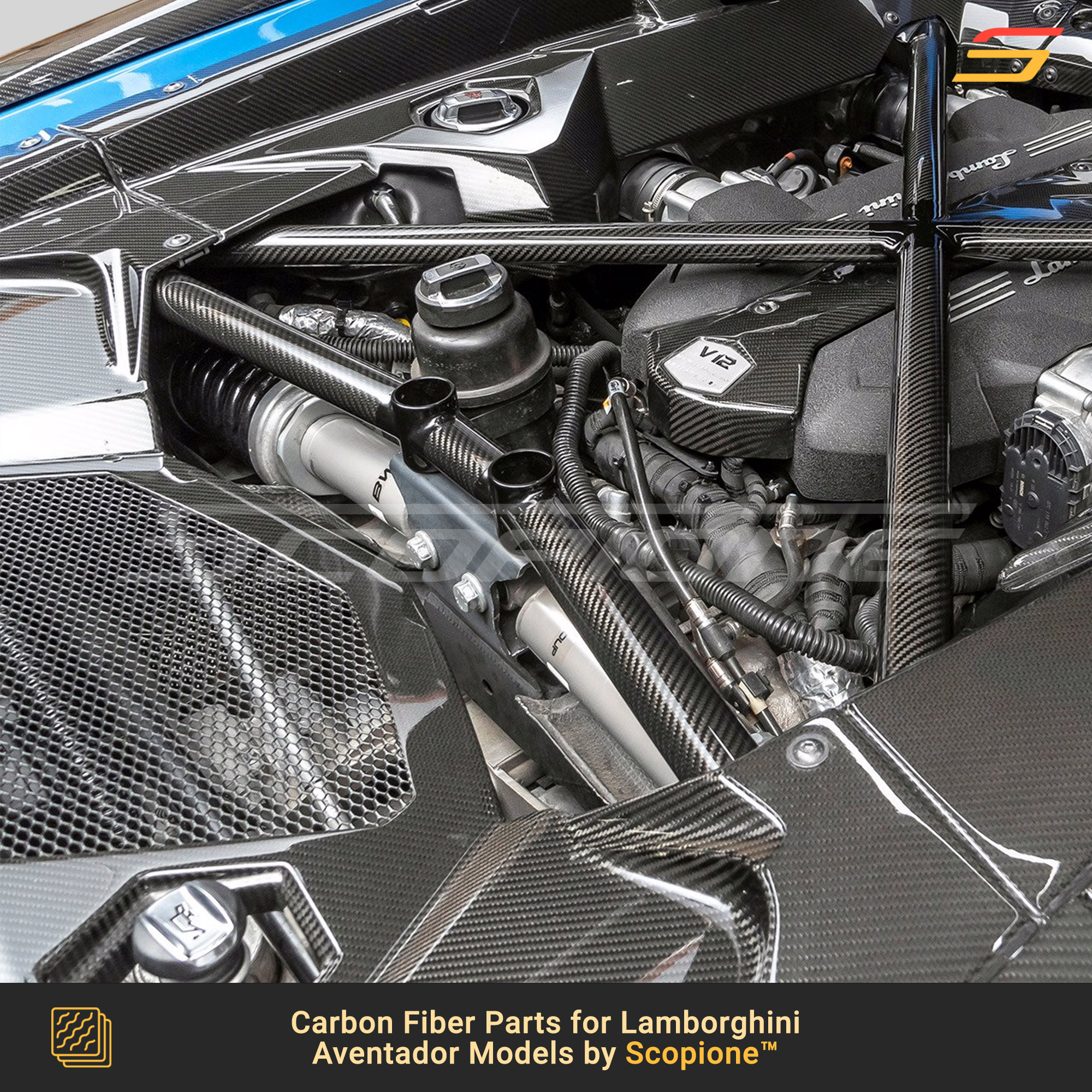
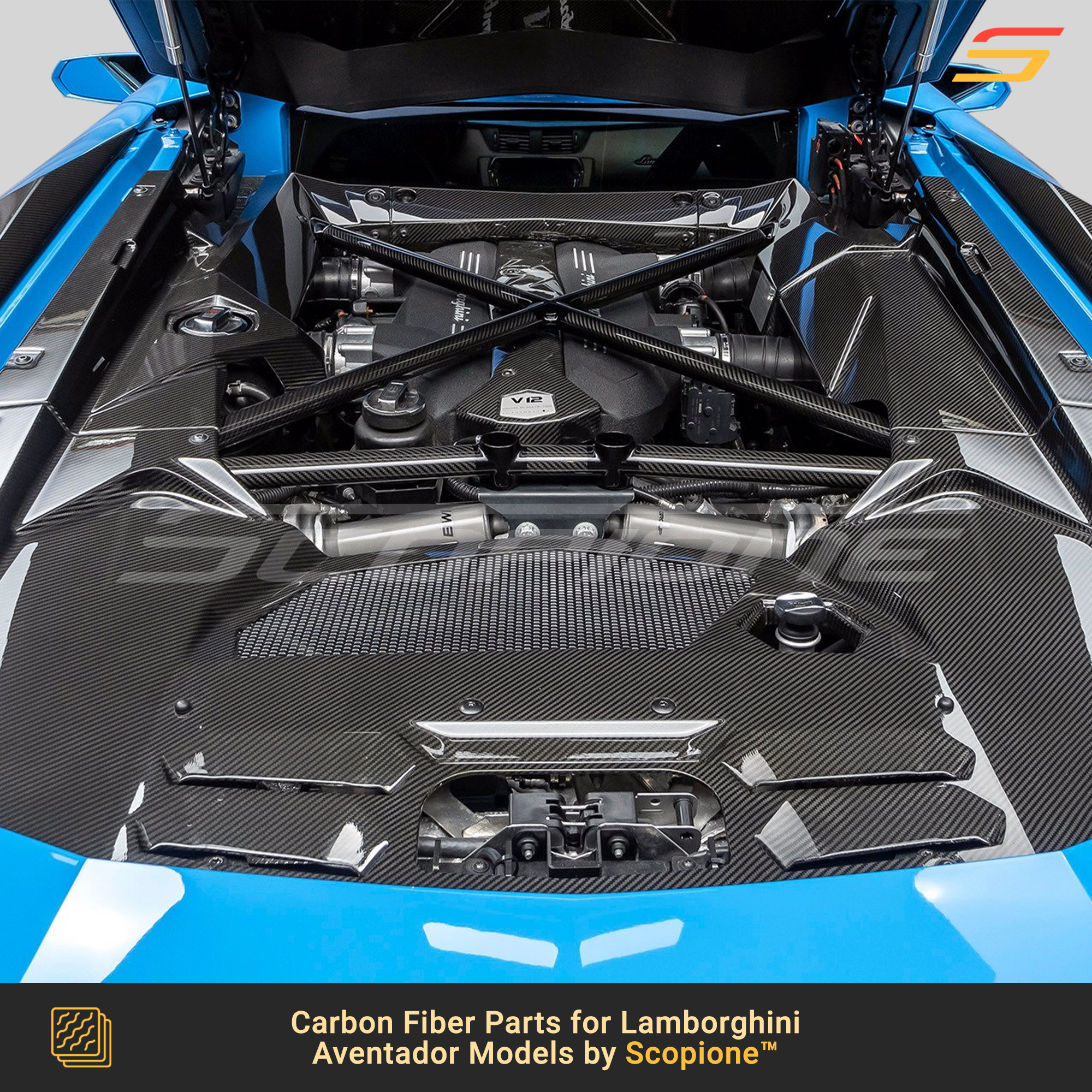
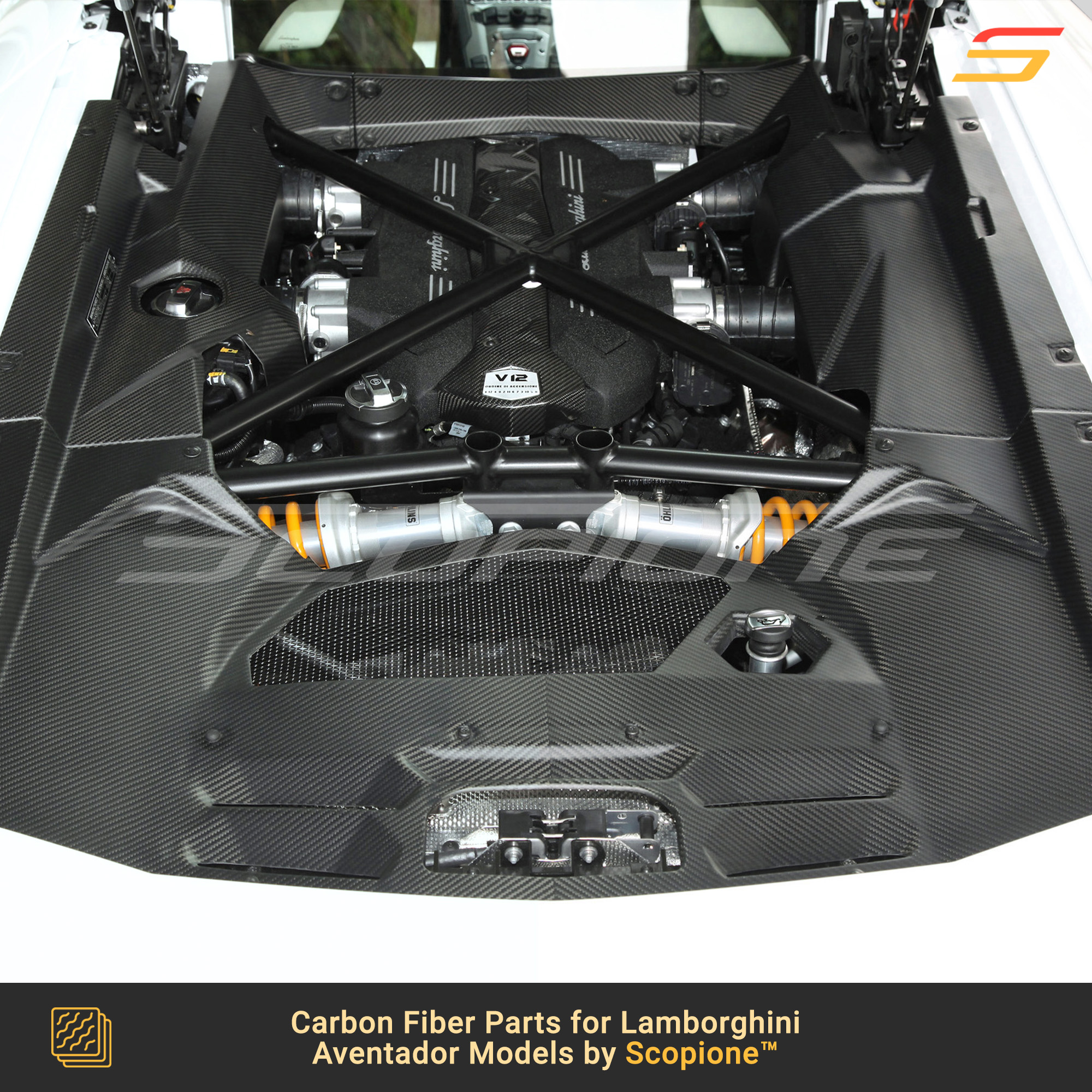
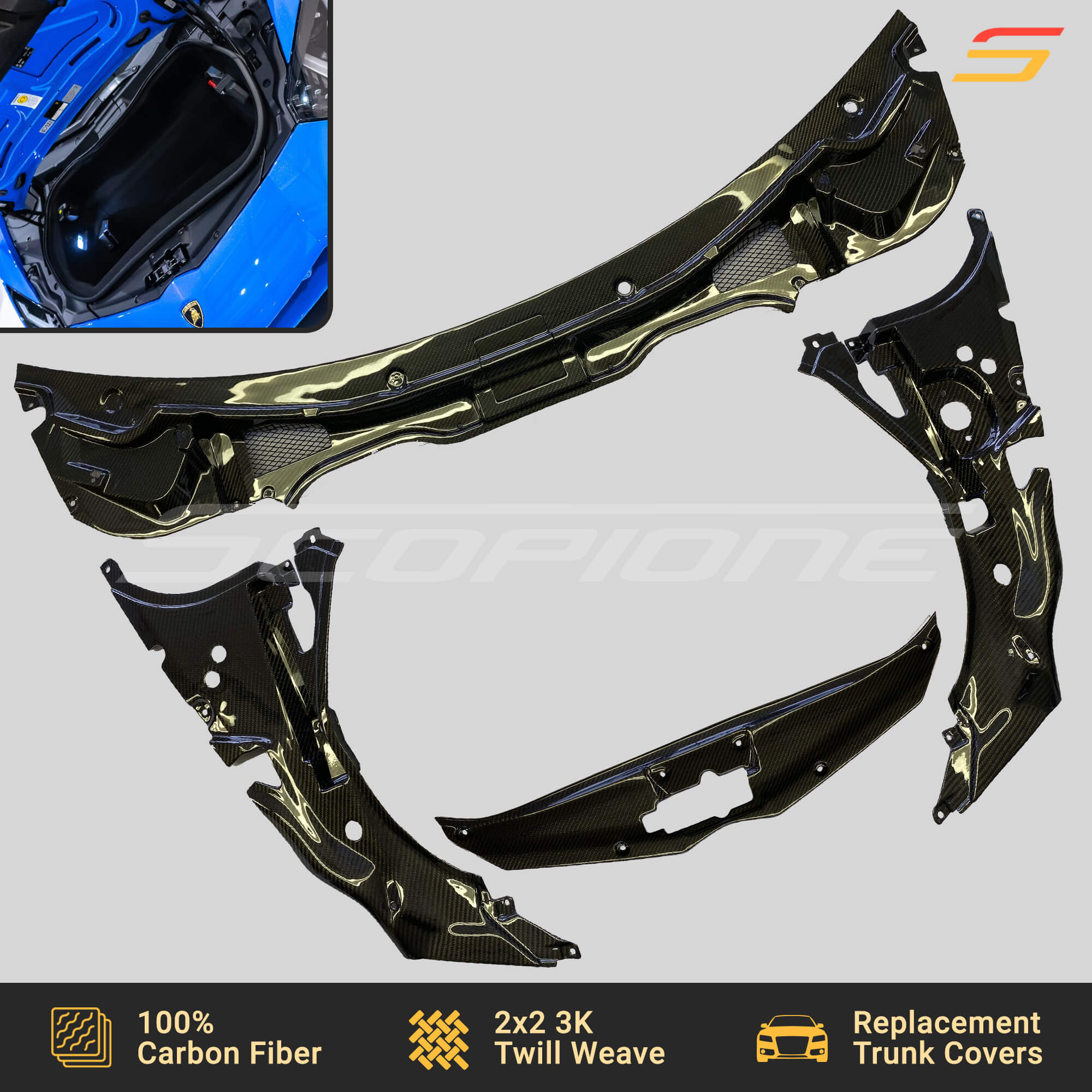
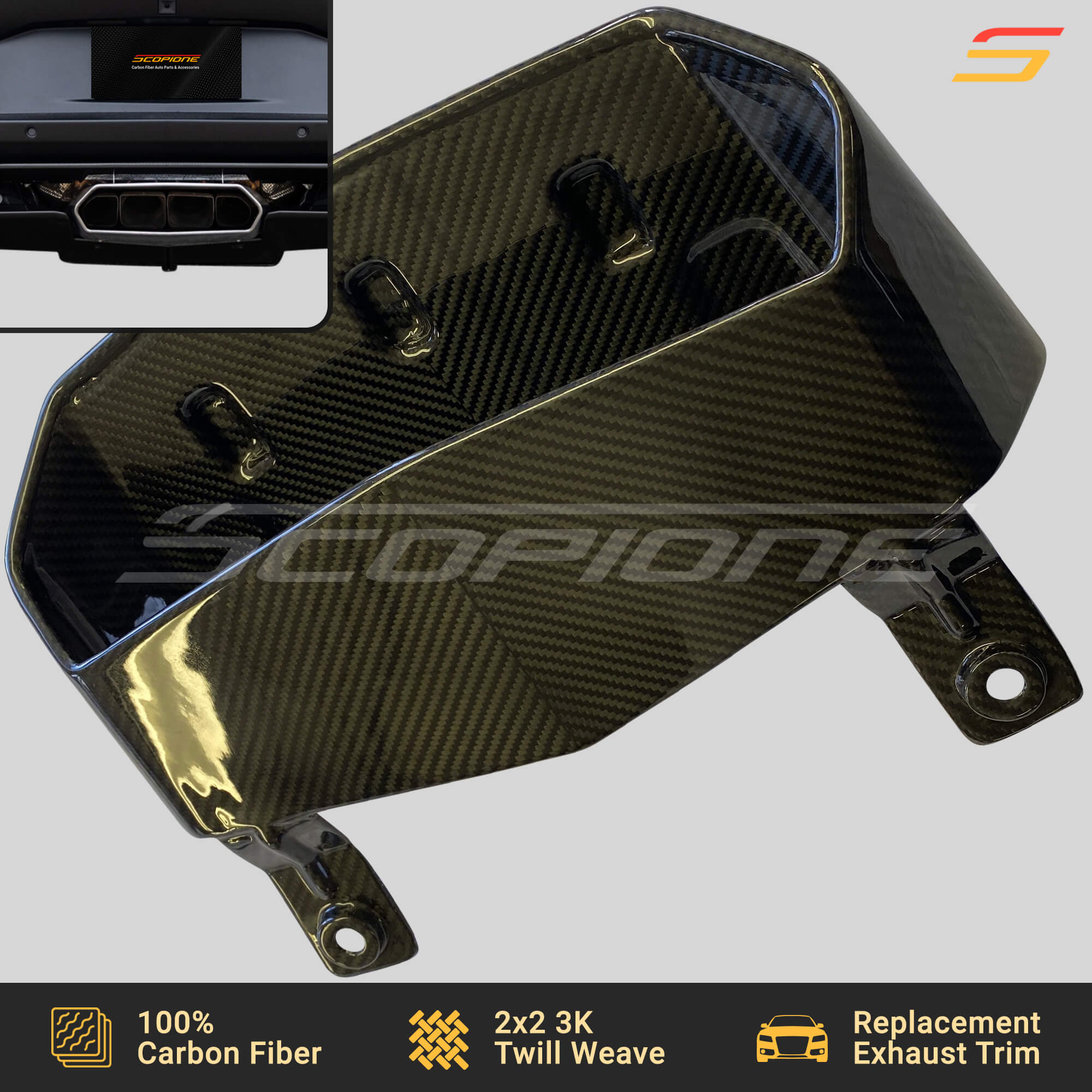
- Replacement engine bay covers kit – The Aventador Coupe’s rear glass exposes the entire V12 engine bay. Heat-resistant carbon-fiber panels reduce weight over the rear axle while displaying visible twill weave through the glass. The single highest-impact visual upgrade on coupe models.
All exterior and interior CF components are listed on the Scopione Aventador shop page with fitment data per variant.
Why Carbon Fiber Matters on the Aventador Platform
✓ Factory Precedent – The Aventador is built on carbon fiber. Its monocoque chassis, manufactured via the RTM-Lambo process, weighs 147.5 kg. Aftermarket carbon-fiber components follow the same material philosophy that defines the car’s engineering.
✓ Weight Reduction – CF body panels weigh roughly 60% less than equivalent fiberglass components. The SV proved this at production scale: CFRP panels contributed directly to a 50 kg weight reduction over the standard LP700-4.
✓ Thermal Stability – The Aventador’s V12 generates substantial heat in the engine bay. Carbon fiber’s thermal resistance is a functional advantage, not just aesthetic – particularly for engine bay covers visible through the rear glass.
✓ Collector Relevance – Documented CF modifications from recognized brands increase desirability at auction. The SVJ and Ultimae are actively appreciating – quality upgrades with receipts and records add buyer confidence.



Legacy of the Aventador & Its Place in Lamborghini History
The Aventador replaced the Murcielago (2001–2010) as Lamborghini’s flagship and was itself succeeded by the Revuelto in 2023. That transition marks a permanent shift: the Revuelto pairs its V12 with three electric motors and an 8-speed dual-clutch transmission. The pure naturally aspirated V12 with a single-clutch ISR that defined the Aventador will not return.
By the numbers, the Aventador was the most commercially successful V12 Lamborghini in history. Its 11,465 production total exceeds every previous V12 model combined – 350, Miura, Countach, Diablo, Murcielago. And 85% of those 11,465 cars were customized through the Ad Personam program, producing over 200 unique color and trim combinations.
The carbon fiber technology developed for the Aventador’s monocoque informed Lamborghini’s Advanced Composite Structures Laboratory (ACSL) – a joint research facility with the University of Washington and Boeing. That research has implications beyond automotive: Lamborghini now holds patents in composite material processes that originated with the Aventador program.
The car accumulated firsts. First production Lamborghini with a carbon fiber monocoque. First to use pushrod suspension geometry derived from F1 racing. The SVJ held the Nurburgring Nordschleife production car record at 6:44.97. And when the cargo ship Felicity Ace sank in the Atlantic carrying 15 Ultimae units, Lamborghini restarted a discontinued production line to rebuild them. That decision alone speaks to the model’s significance.
Where the Audi R8 shared its platform with the Huracan and Gallardo through VW Group engineering, the Aventador stood alone – a bespoke carbon fiber monocoque with no platform-sharing obligations. Its direct market rival, the McLaren 720S / 765LT, used a twin-turbo V8 in a MonoCell II carbon tub – a fundamentally different engineering philosophy. The Aventador’s approach – large-displacement natural aspiration paired with structural carbon fiber – has no planned successor in any manufacturer’s lineup.
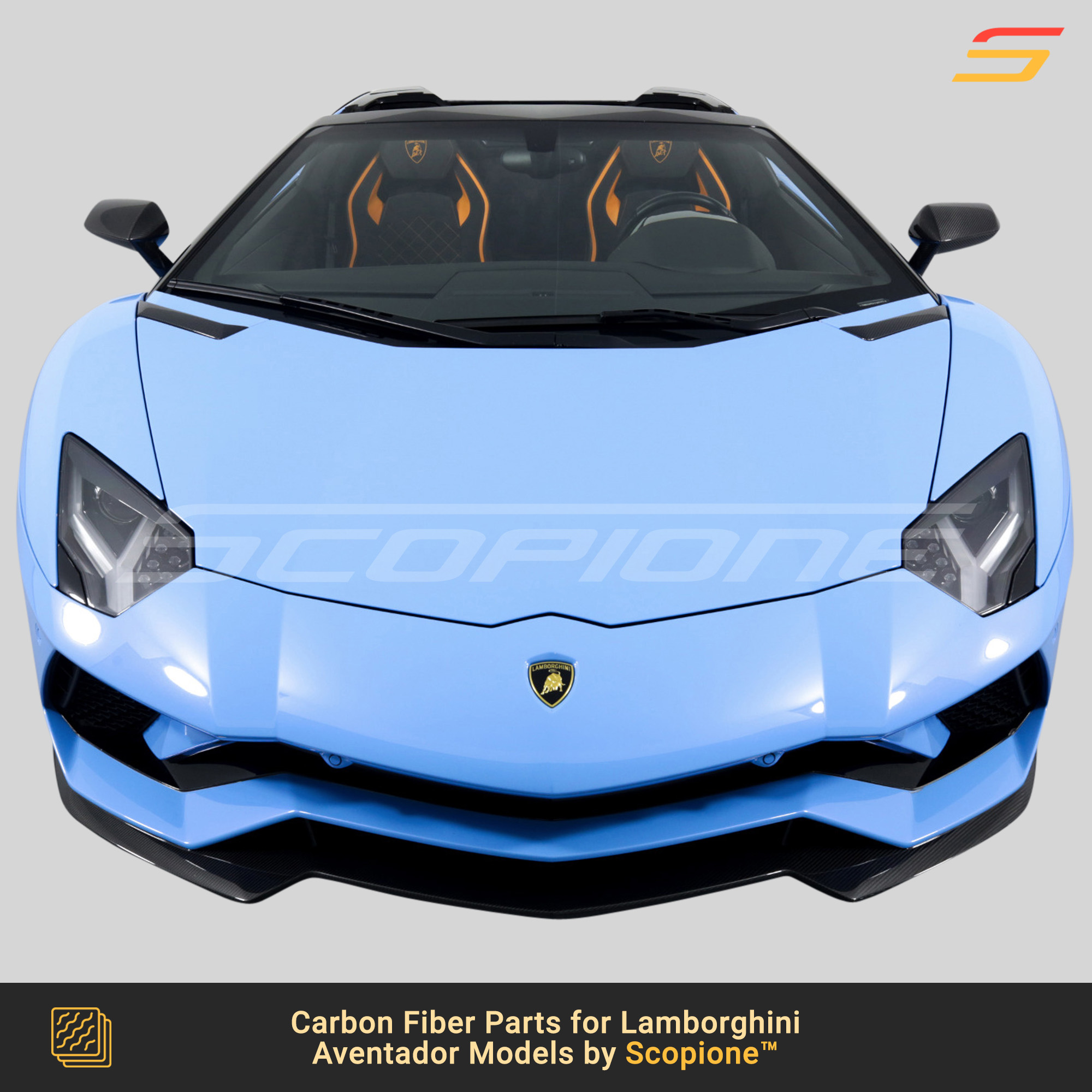
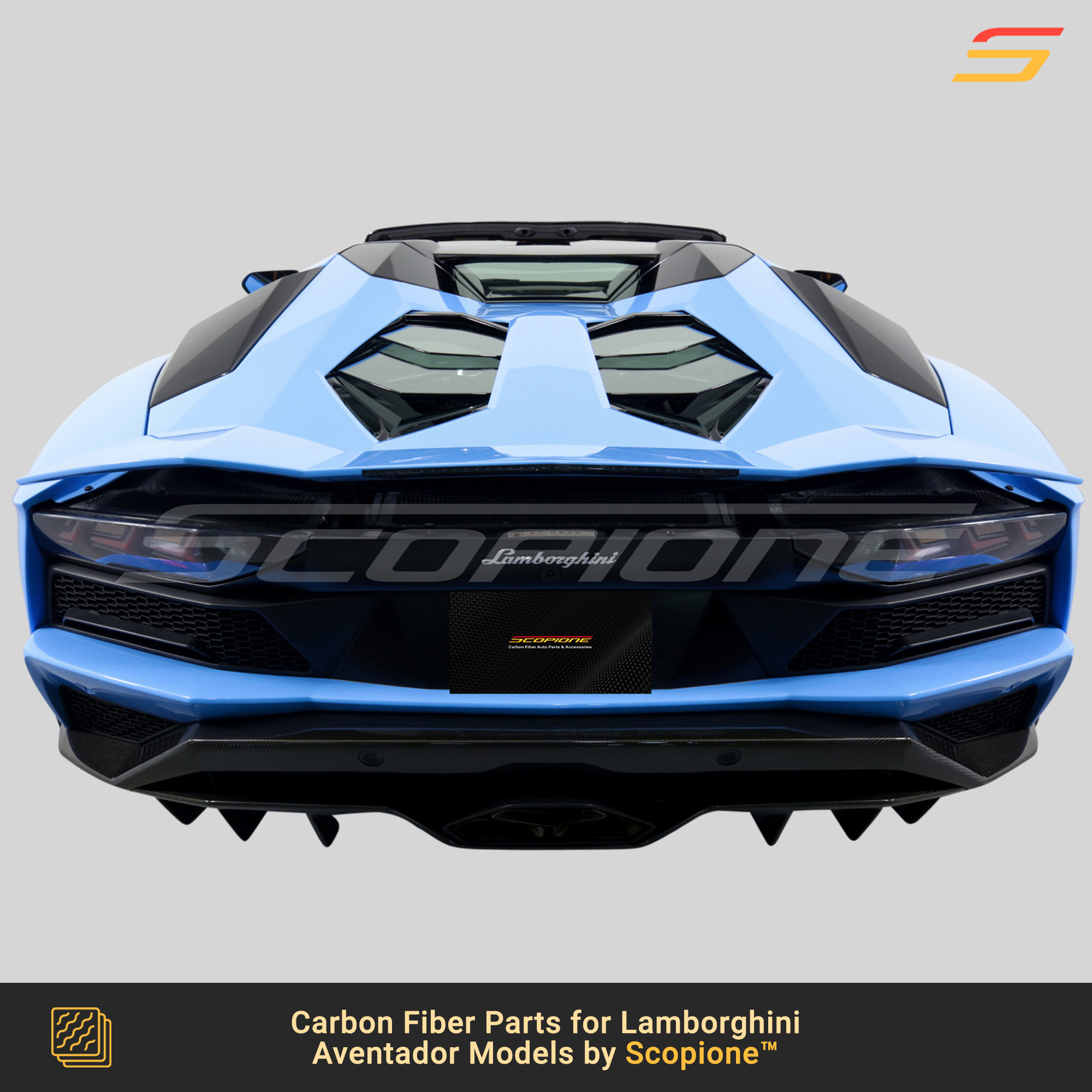
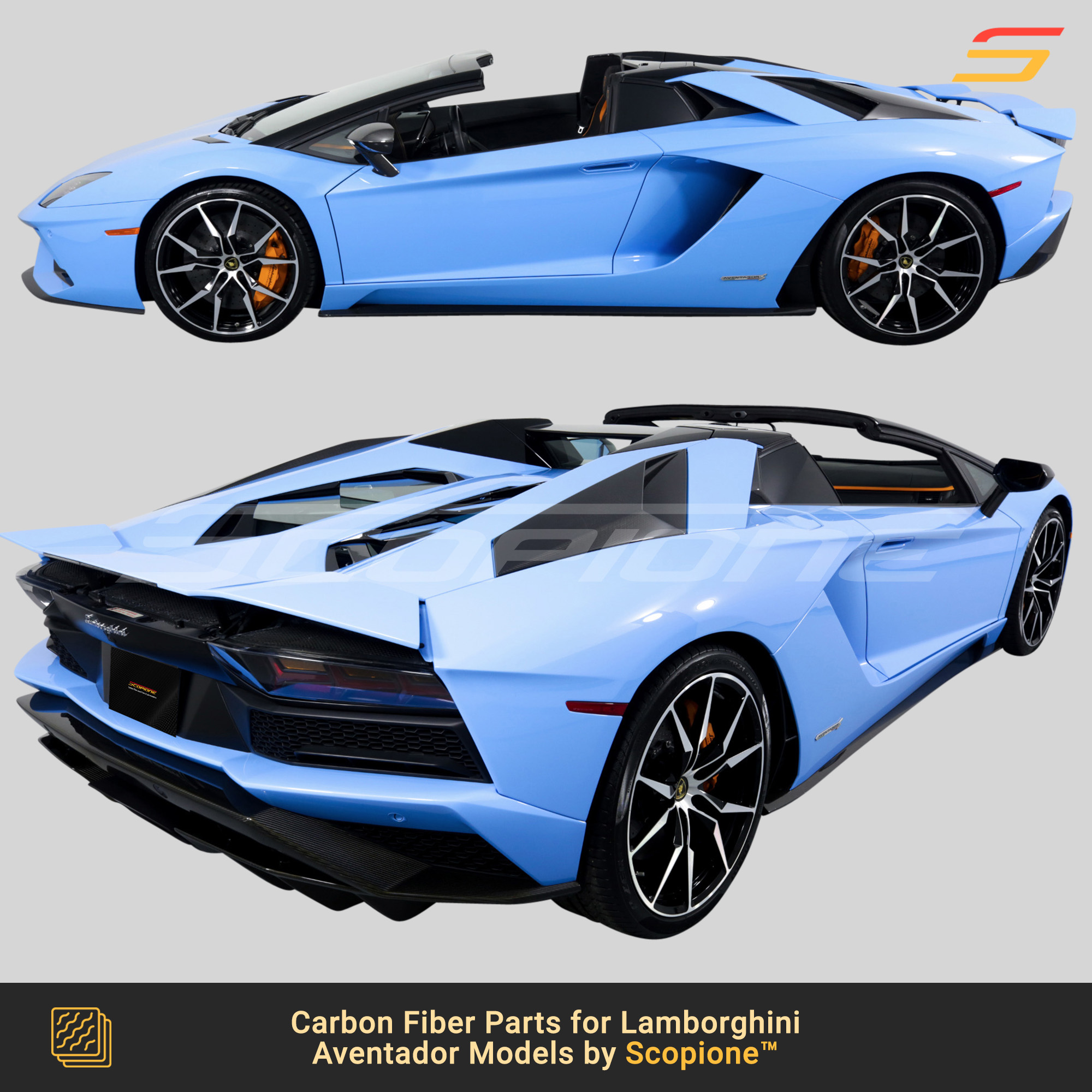
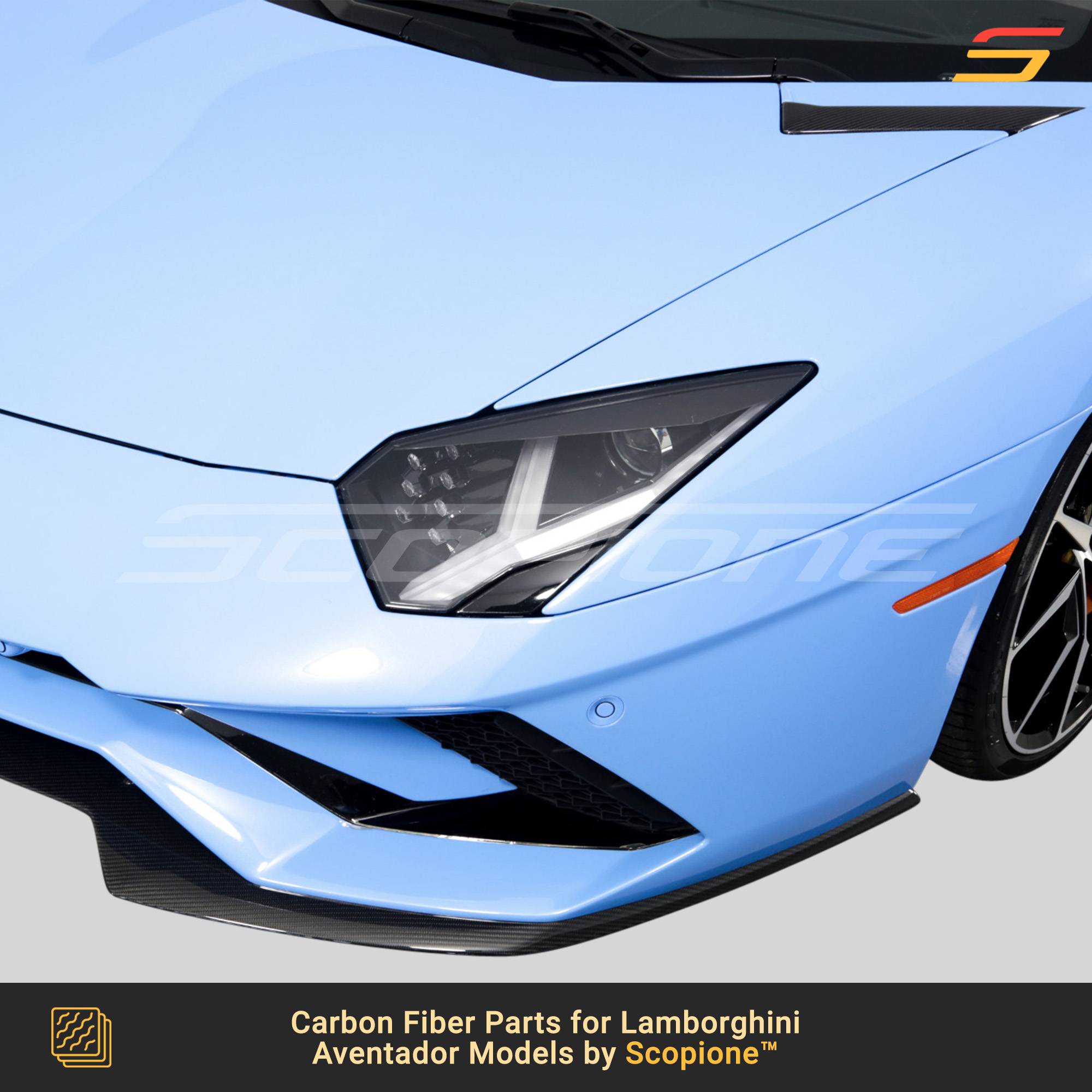
Scopione: Carbon Fiber Upgrades for the Lamborghini Aventador
The Aventador’s design invites carbon fiber modification. The coupe’s rear glass reveals the entire V12 engine bay – making engine bay covers the highest-impact visual upgrade on this platform. Exterior panels benefit from the Aventador’s angular body language, where the 2×2 twill-weave pattern aligns with the car’s geometric surfaces. Interior trim replaces factory plastics with CF in a cockpit that Perini designed around fighter-jet ergonomics.
All Scopione components are hand-laid from 2×2 twill-weave carbon fiber with a UV-resistant clear coat and mount to factory points. The Aventador catalog covers LP700-4, S, SV, SVJ, and Ultimae variants.
Breakdown of Carbon Fiber Upgrade Costs for Lamborghini Aventador
Carbon fiber upgrade costs on the Aventador vary by component category. Below is a breakdown of average pricing for aftermarket CF parts with professional installation:
| Carbon Fiber Part | Estimated Cost (USD) | Installation Cost (USD) | Total Cost (USD) |
|---|---|---|---|
| Full Replacement Body Kit | $12,000 – $19,500 | $3,000 – $6,000 | $15,000 – $25,500 |
| Dashboard & Door Trim Kit | $6,500 – $11,000 | $800 – $1,500 | $7,300 – $12,500 |
| Roof Air Vents & Scoops | $4,500 – $7,000 | $500 – $1,200 | $5,000 – $8,200 |
| Engine Bay Covers Kit | $3,300 – $5,300 | $300 – $800 | $3,600 – $6,100 |
| Seat Back Panels Set | $2,500 – $4,000 | $300 – $700 | $2,800 – $4,700 |
| Side Mirror Shells | $2,500 – $3,700 | $150 – $350 | $2,650 – $4,050 |
| Side Air Intake Engine Vents | $2,400 – $3,700 | $300 – $800 | $2,700 – $4,500 |
| Door Handles & Panels Trim | $2,200 – $3,900 | $300 – $700 | $2,500 – $4,600 |
| Center Console Trim Kit | $1,950 – $3,700 | $200 – $500 | $2,150 – $4,200 |
| Carbon Fiber Rear Spoiler | $1,900 – $3,000 | $300 – $800 | $2,200 – $3,800 |
| Front Bumper Splitters / Lip | $1,700 – $2,600 | $300 – $700 | $2,000 – $3,300 |
| Side Window Intake Vents | $1,300 – $2,100 | $200 – $500 | $1,500 – $2,600 |
OEM vs. Aftermarket: Lamborghini offered extensive factory carbon fiber on the SV (CFRP body panels, fixed CF wing), SVJ (ALA 2.0 active aero surfaces), and Ultimae (combined SV/SVJ approach). OEM CF replacements carry significant premiums. Scopione’s components use 2×2 twill-weave layup with clear coat finishing, engineered to match factory body lines and panel gaps.
Used Lamborghini Aventador Market (2024–2025)
Aventador resale values vary dramatically by variant, production numbers, and mileage. The limited-edition models – particularly the SVJ and Ultimae – have appreciated substantially since production ended. Current approximate market ranges:
- LP700-4 Coupe (2011–2016): $250,000 – $400,000
- LP700-4 Roadster (2012–2016): $300,000 – $450,000
- LP750-4 SV Coupe (2015–2017): $385,000 – $621,000
- LP750-4 SV Roadster (2016–2017): $480,000 – $611,000
- LP740-4 S Coupe (2017–2020): $370,000 – $500,000
- LP740-4 S Roadster (2018–2020): $400,000 – $550,000
- LP770-4 SVJ Coupe (2019–2020): $520,000 – $1,000,000+
- LP770-4 SVJ Roadster (2020–2021): $800,000 – $1,200,000+
- LP780-4 Ultimae Coupe (2021–2022): $700,000 – $850,000
- LP780-4 Ultimae Roadster (2021–2022): $800,000 – $1,000,000+

Browse Carbon Fiber Parts for the Lamborghini Aventador
Does Carbon Fiber Affect the Resale Value of a Lamborghini Aventador?
The Aventador is one of few production cars where carbon fiber is part of the structural identity – its monocoque is carbon fiber. Aftermarket CF components complement this engineering heritage rather than contradicting it.
When carbon fiber adds value:
• Professionally installed, documented parts from recognized brands increase buyer confidence. The Aventador’s collector market favors transparent modification histories.
• On SV, SVJ, and Ultimae variants, a cohesive carbon-fiber exterior or interior package signals an owner who understood the car’s material identity.
• Engine bay covers on coupe models – visible through the rear glass – are among the highest-return modifications in the supercar segment.
When it does not:
• Unbranded or poorly fitted parts raise flags for auction buyers accustomed to factory-level panel gaps.
• Modifications without documentation have a neutral-to-negative impact. The Aventador market is sophisticated enough that provenance matters.
• CF body kits on base LP700-4 models add less incremental value than on limited-production variants where buyers expect premium specification.
Practical approach: Use components from documented sources like Scopione, retain all receipts and installation records, keep original OEM parts stored if removed.
Is the Lamborghini Aventador a Good Investment?
The Aventador occupies a unique position as the last pure naturally aspirated V12 Lamborghini. The successor Revuelto pairs its V12 with three electric motors – a permanent shift. This end-of-era status drives collector interest across all variants, though the investment case varies significantly by specification.
- SVJ Coupe and Roadster: The strongest appreciation trajectory. 900 coupes and 800 roadsters produced. SVJ Roadsters currently average over $1 million at auction. The Nurburgring record and limited production numbers support continued growth.
- Ultimae (350 coupes, 250 roadsters): Explicitly marketed as the final naturally aspirated V12 Lamborghini. The “last of an era” narrative has translated into prices well above original MSRP. Estimated 3–5% annual appreciation for low-mileage examples.
- SV Coupe and Roadster (600 + 500 units): Stable at $385K–$621K for coupes. The SV designation carries collector weight across Lamborghini history.
- LP700-4 base models: The entry point into V12 Lamborghini ownership at $250K–$400K. Values have stabilized after the 2022–2023 exotic car correction. Long-term appreciation is modest but the floor appears solid.
- Aventador S: Mid-range values ($370K–$550K) with the full LDVA chassis technology suite in a non-limited Aventador. The four-wheel steering system makes the S the strongest daily-driver choice in the range.
Notable Auction Results for Lamborghini Aventador (2023–2025)
| Model | Sale Price |
|---|---|
| 2020 LP770-4 SVJ (record high) | $3,560,000 (Mar 2025) |
| 2022 LP780-4 Ultimae Roadster (1,069 mi) | $813,500 (Aug 2023 – RM Sotheby’s Monterey) |
| 2017 LP750-4 SV Coupe | $621,000 (Aug 2024 – Gooding) |
| 2020 LP770-4 SVJ Roadster | ~$500,000 (May 2025 – Collecting Cars) |
| 2018 LP740-4 S Coupe (13K mi) | $355,000 (2024 – Bring a Trailer) |
| 2012 LP700-4 Coupe | $257,600 (Jun 2024 – RM Sotheby’s) |
What Are Common Lamborghini Aventador Maintenance Issues and Costs?
Annual routine service runs $6,000–$10,000 (oil change, filters, inspection). The major V12 service – valve clearance check and belt replacement – comes due around 15,000 miles and costs $15,000–$20,000. Tires: $3,000–$5,000 per set with a typical lifespan of 5,000–7,500 miles. Carbon-ceramic brake replacement: $15,000+.
The ISR single-clutch automated manual is the primary ownership concern. Clutch life varies widely – aggressive driving can require replacement at 15,000 miles, while gentle highway driving has seen some original clutches last past 70,000 miles. Other documented issues include front lift system wear, ISR transmission fluid leaks (addressed on later production cars), sensor faults, and battery drain during storage. Insurance runs $2,000–$5,000+ annually depending on location and driving record.
Compared to the Huracan’s $850–$1,500 annual service, the Aventador’s V12 is substantially more expensive to maintain. But among flagship V12 supercars – Ferrari 812, Aston Martin DBS – the Aventador’s ownership costs are competitive.
What Carbon Fiber Parts Are Available for the Lamborghini Aventador?
Scopione’s Aventador catalog covers 12 product categories across exterior, interior, and engine bay applications. Exterior parts include a full replacement body kit ($12K–$19.5K), rear spoiler, front splitters/lip, side mirror shells, roof air vents, side window intake vents, and side air intake engine vents. Interior components include a dashboard and door trim kit ($6.5K–$11K), door handle panels, center console trim, and seat back panels. Engine bay covers ($3.3K–$5.3K) are the highest-impact single component on coupe models.
All parts are hand-laid from 2×2 3K twill-weave carbon fiber with UV-resistant clear coat. Installation mounts to factory points without drilling. Parts are compatible with LP700-4, LP720-4, LP740-4 S, SV, SVJ, and Ultimae variants. Browse the Scopione Aventador catalog for specific part fitment, pricing, and installation details.
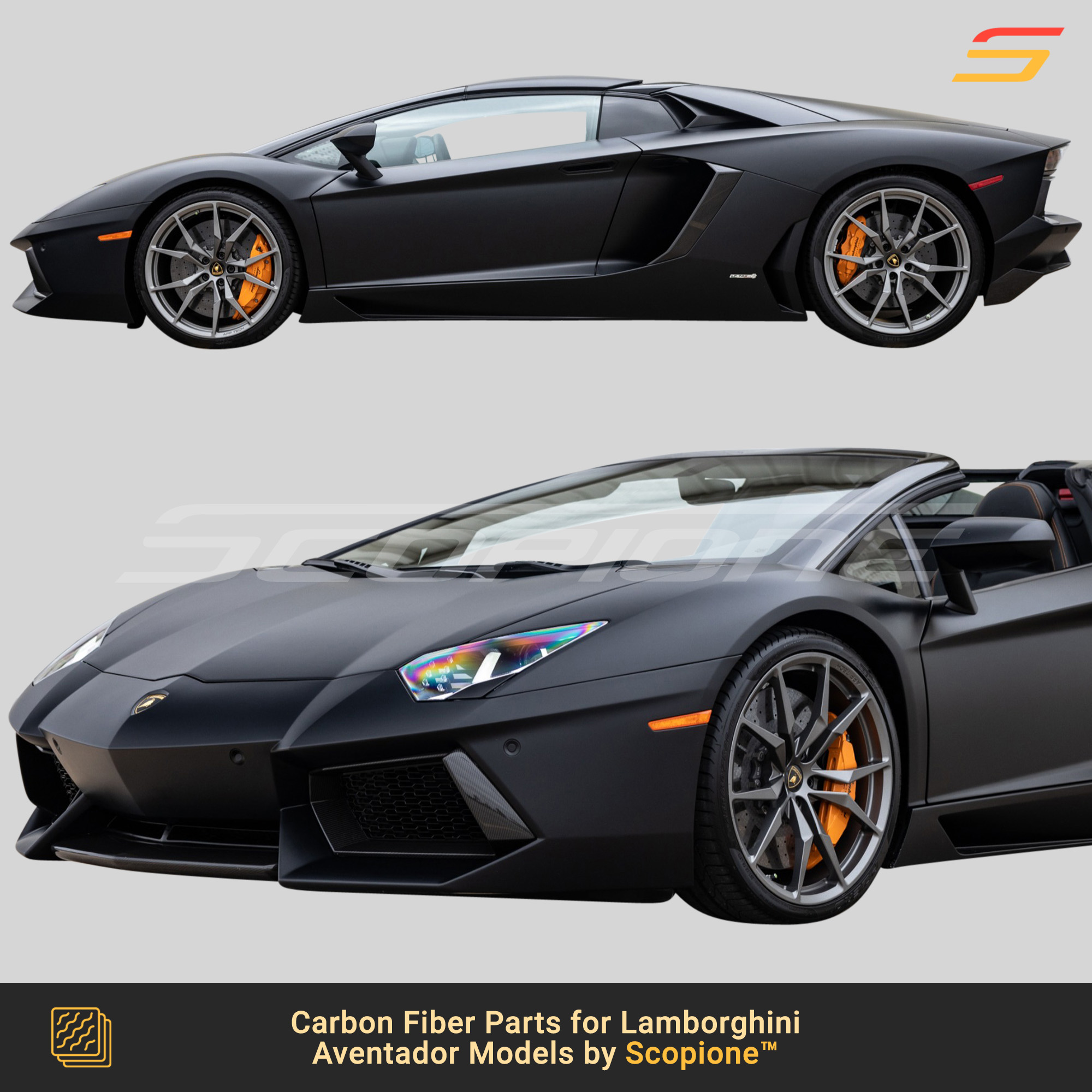
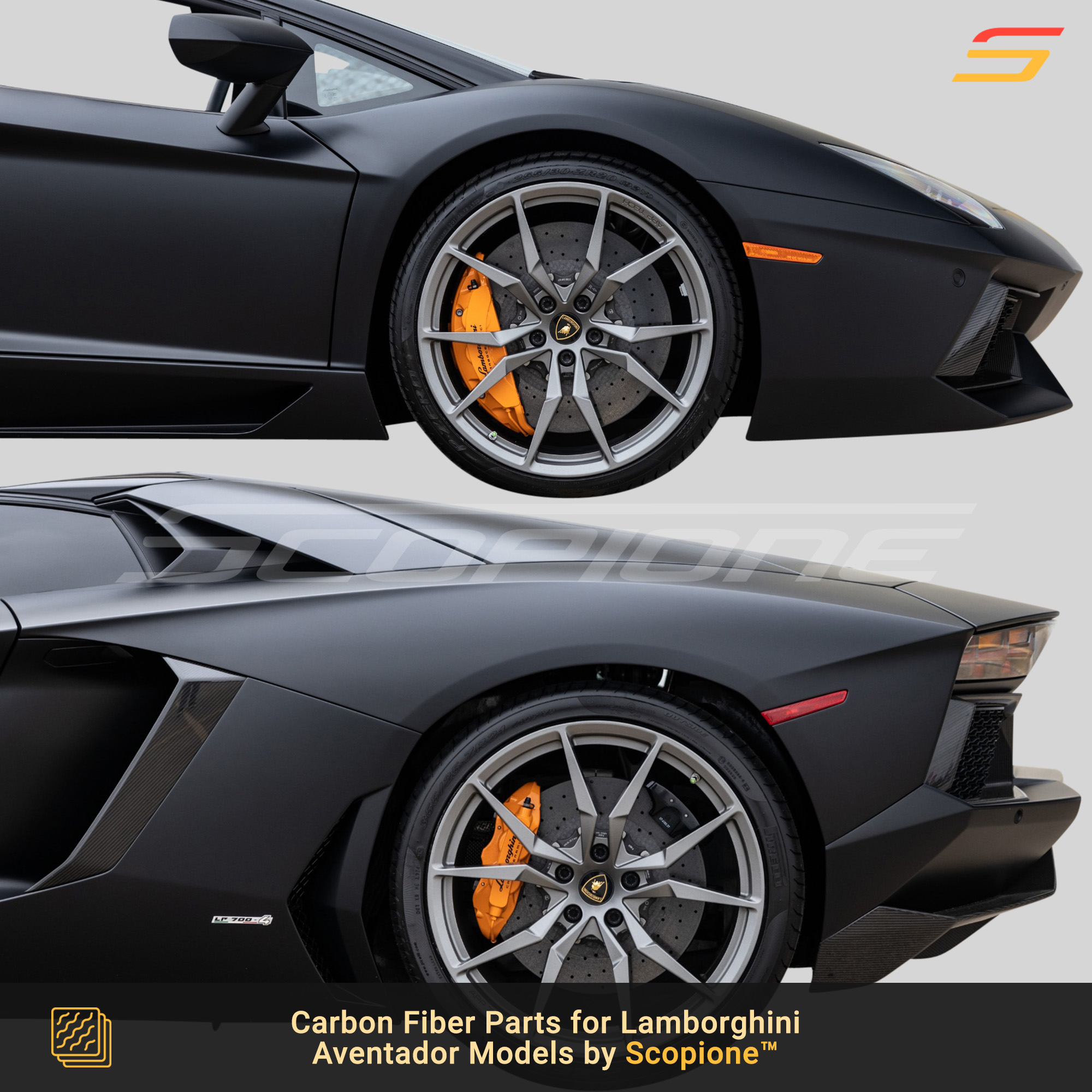
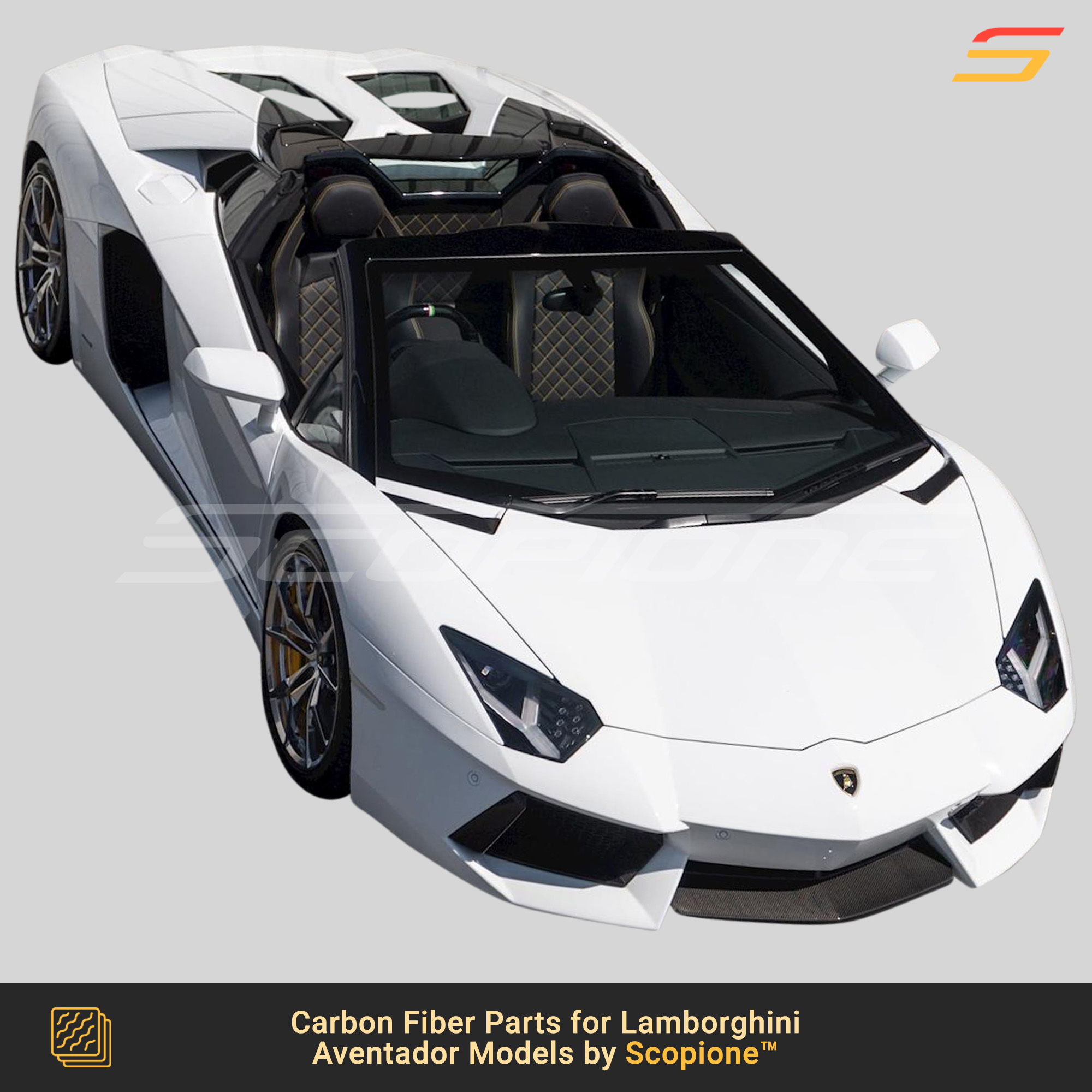
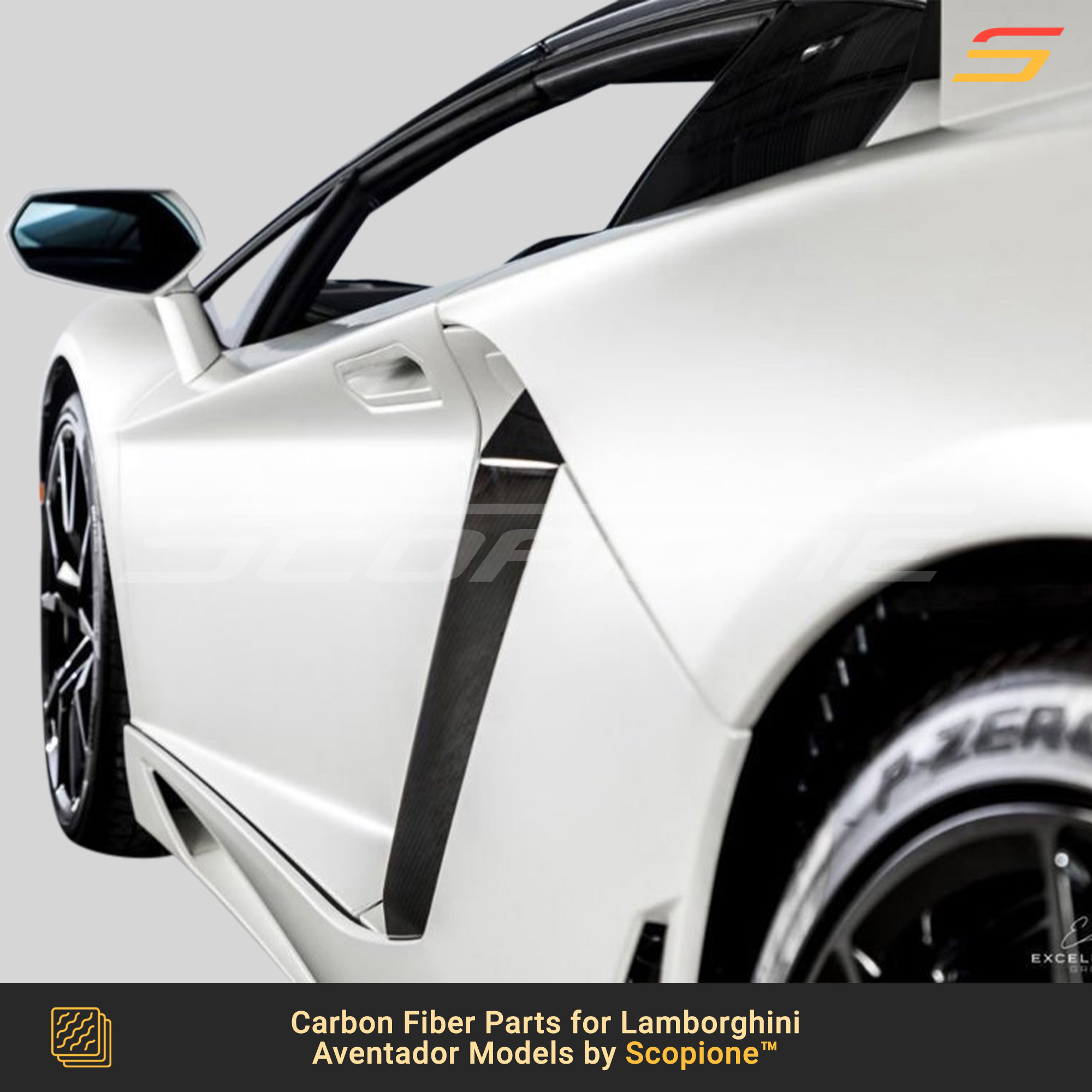
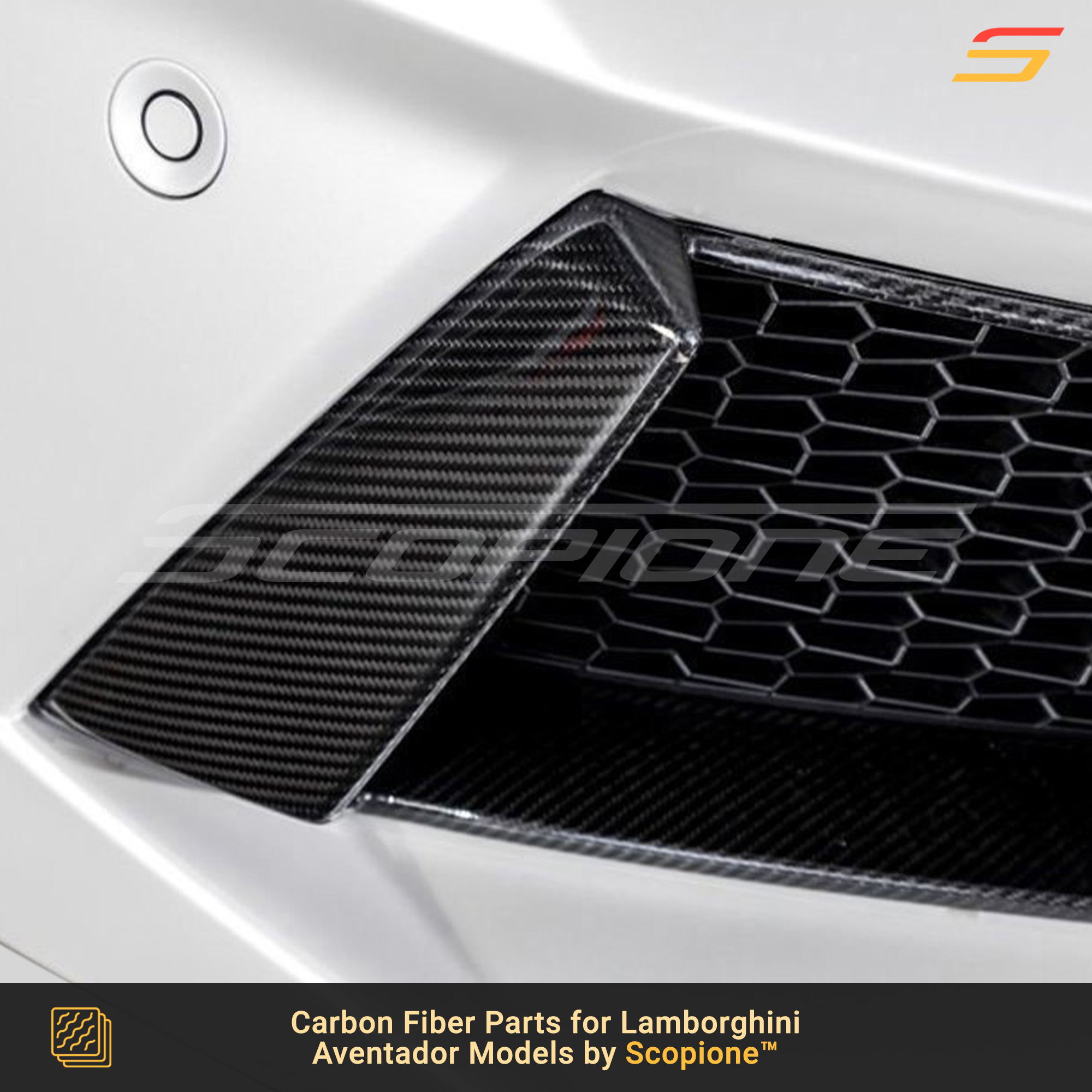
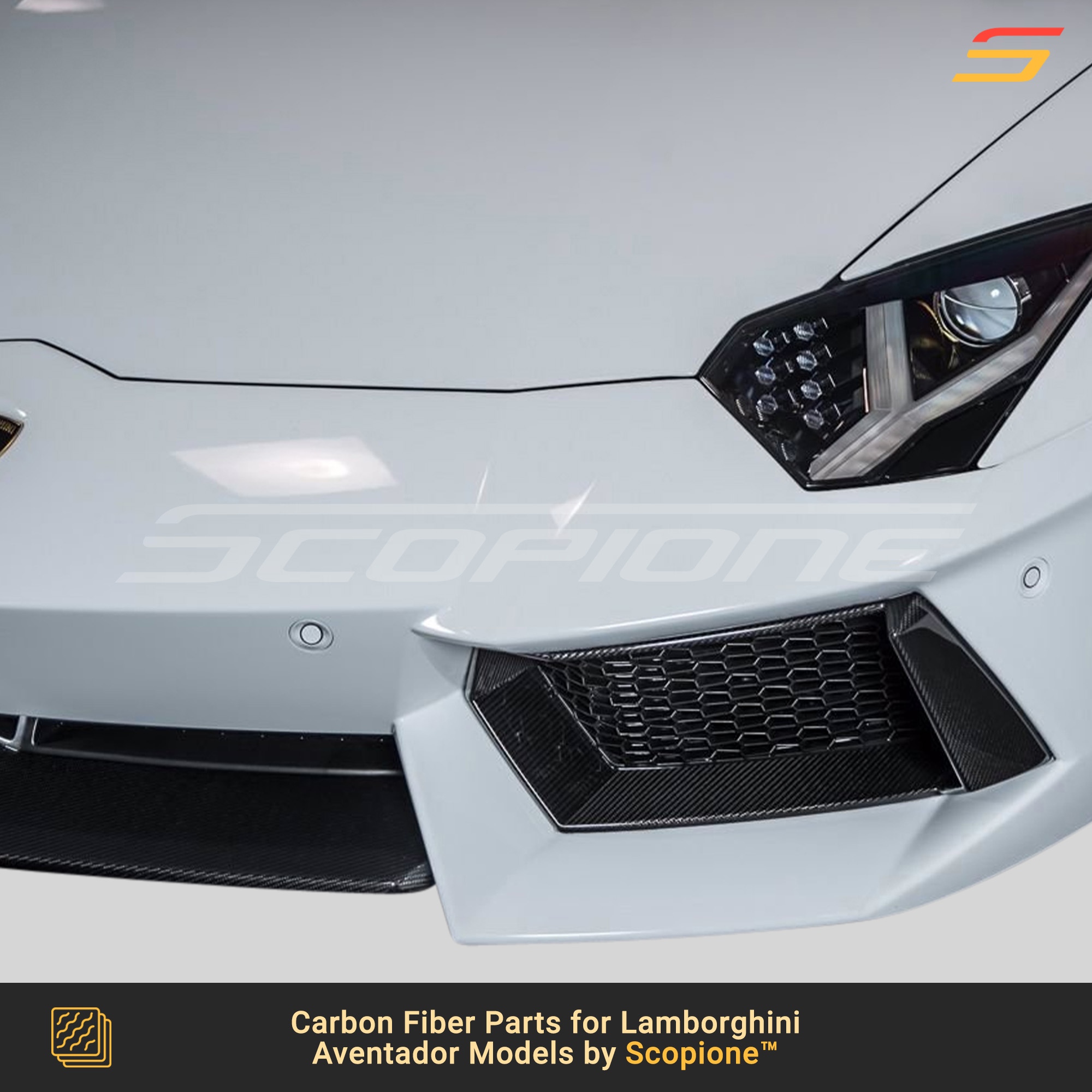
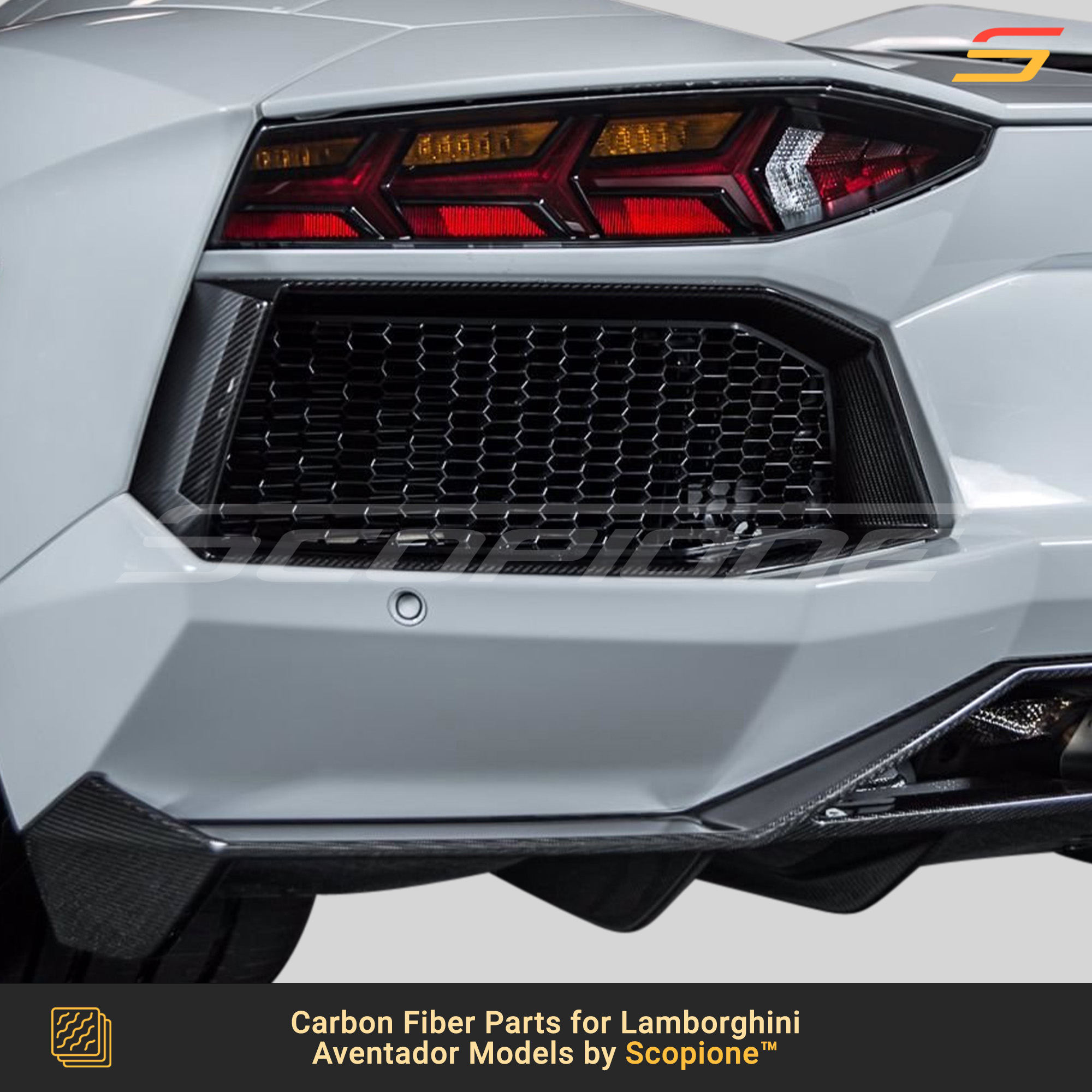
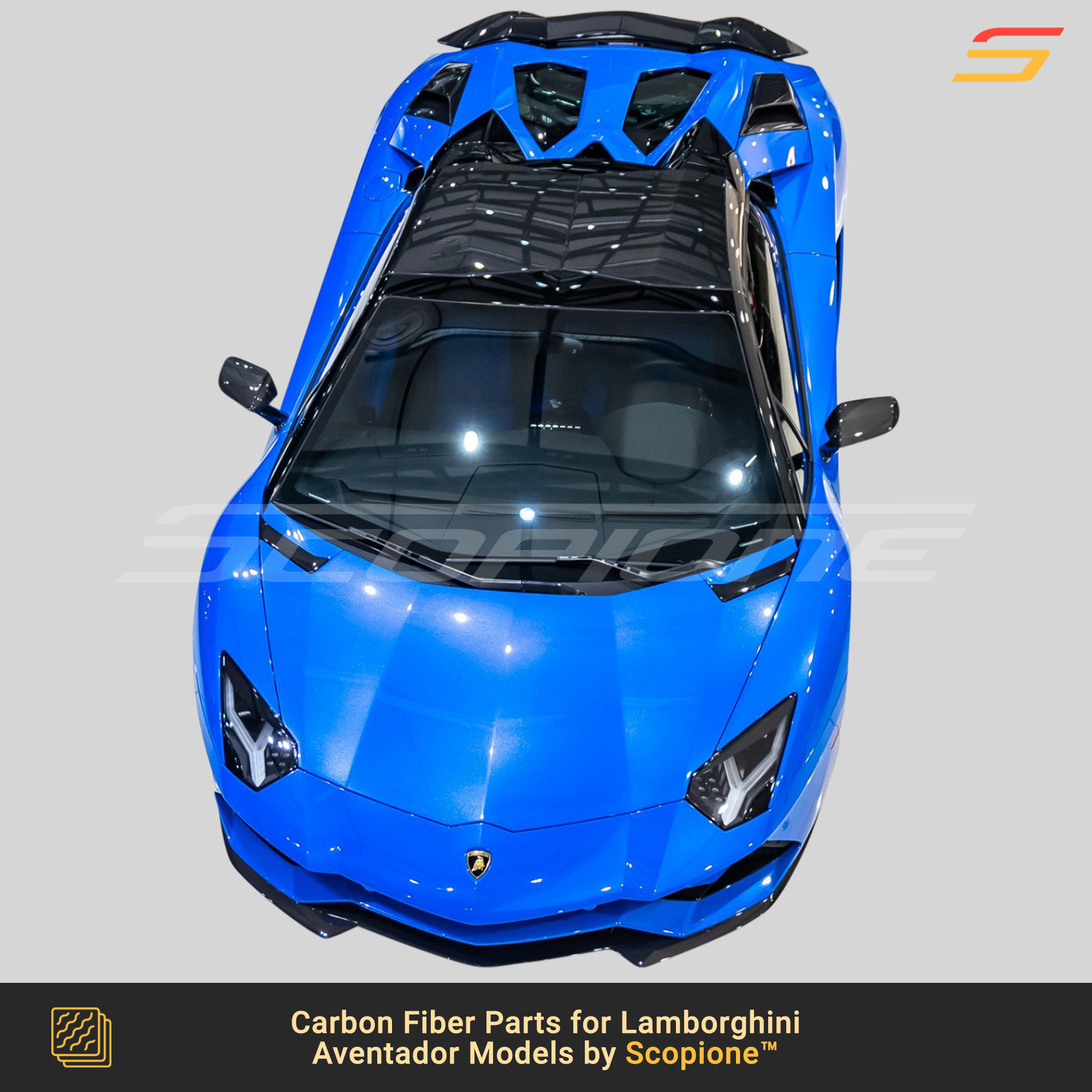
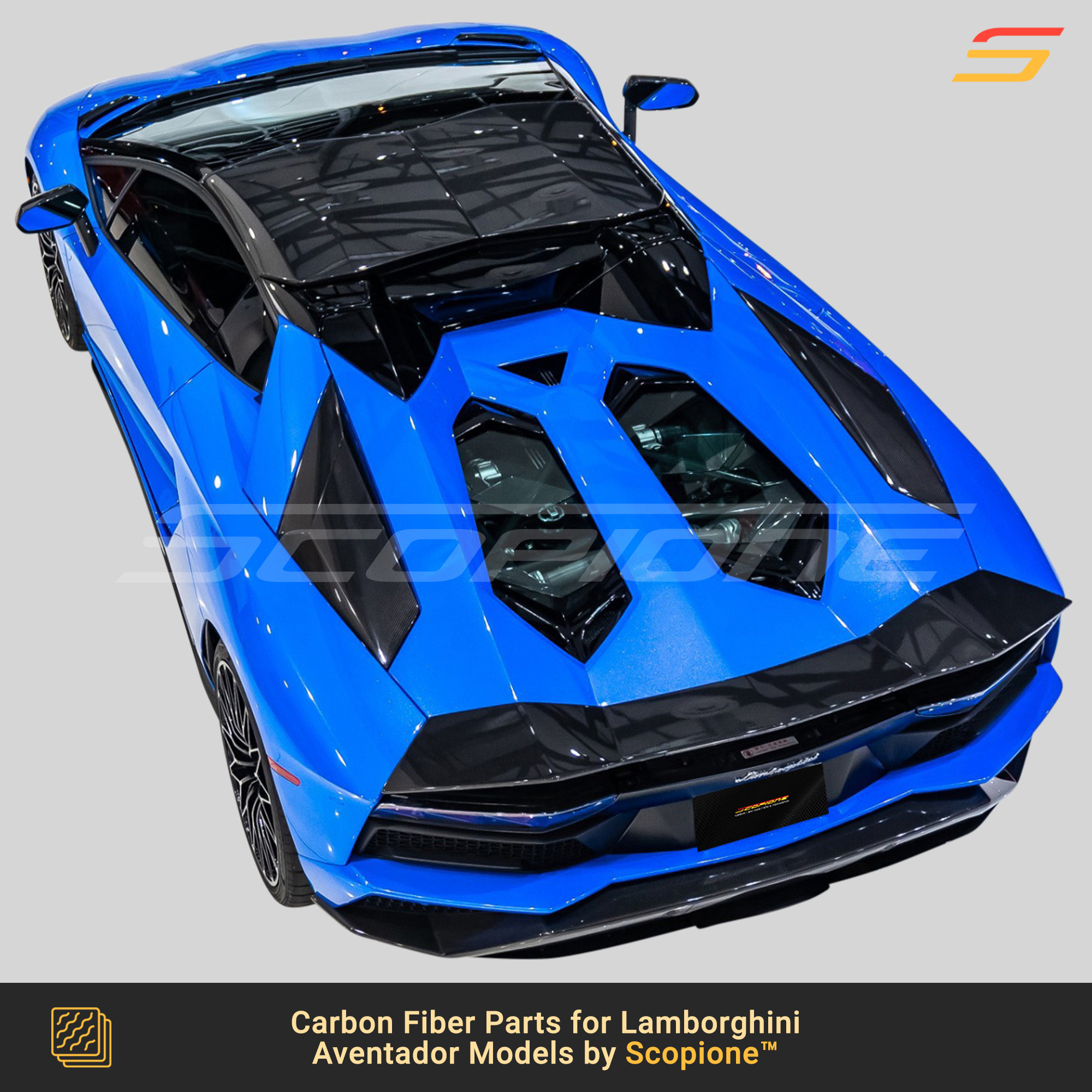
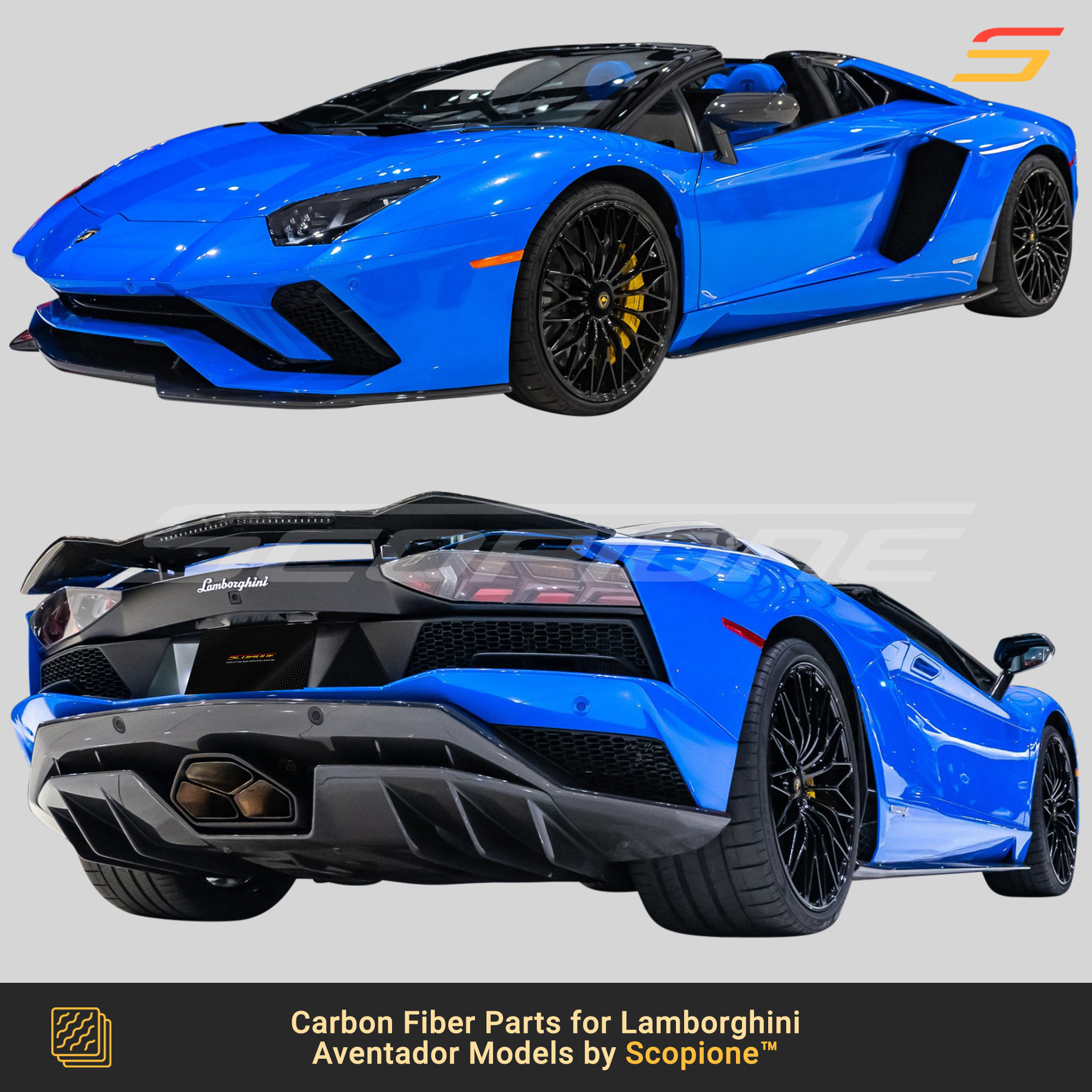
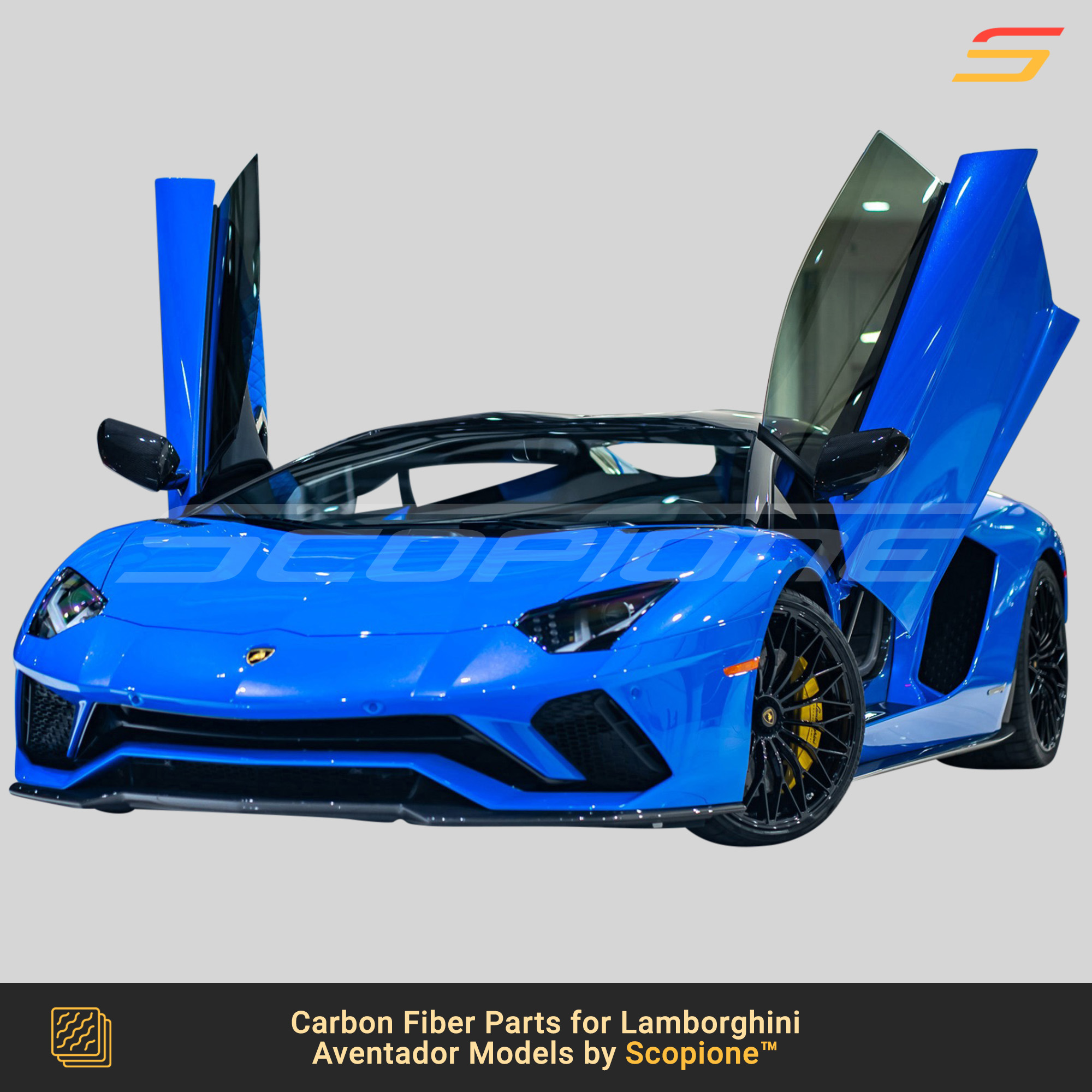
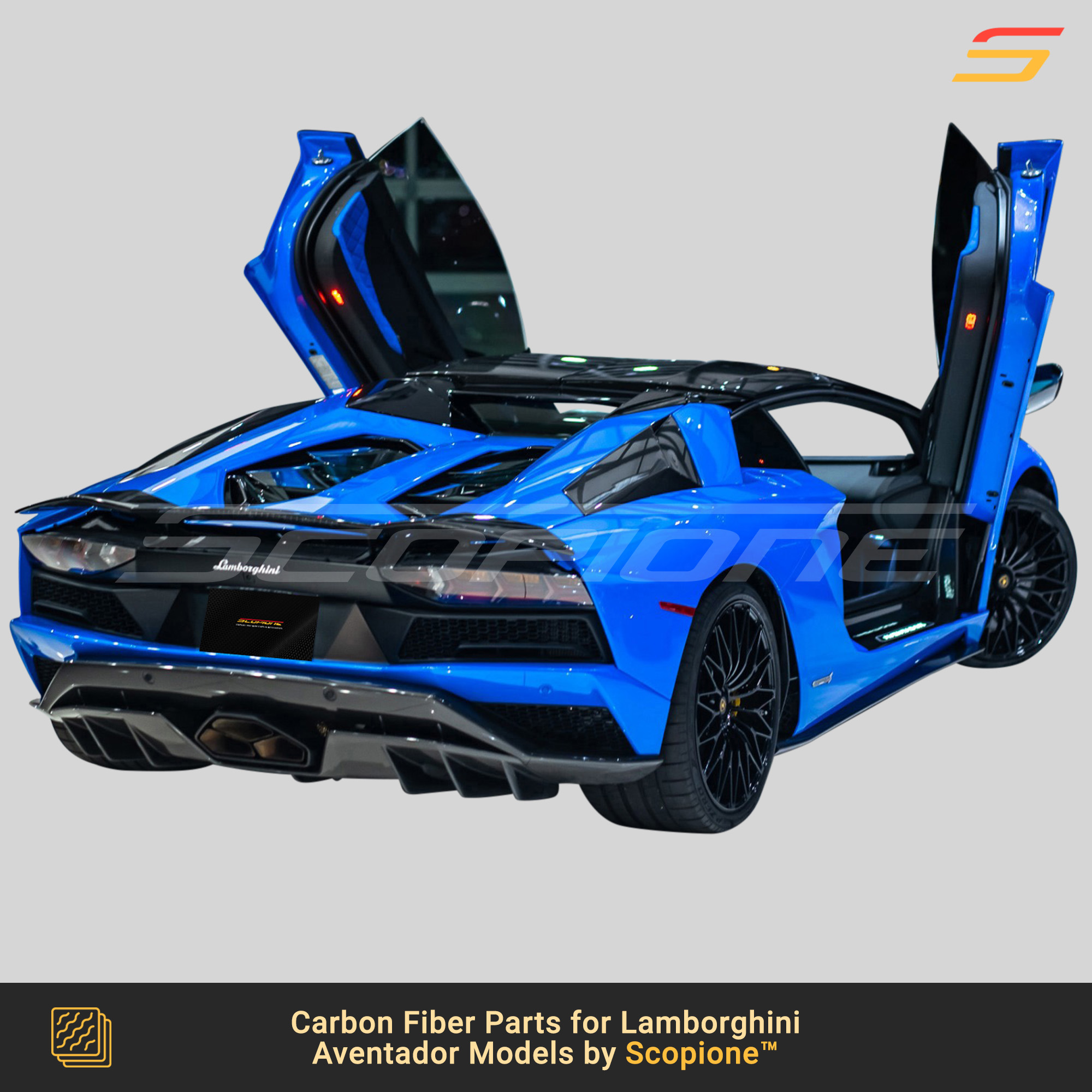
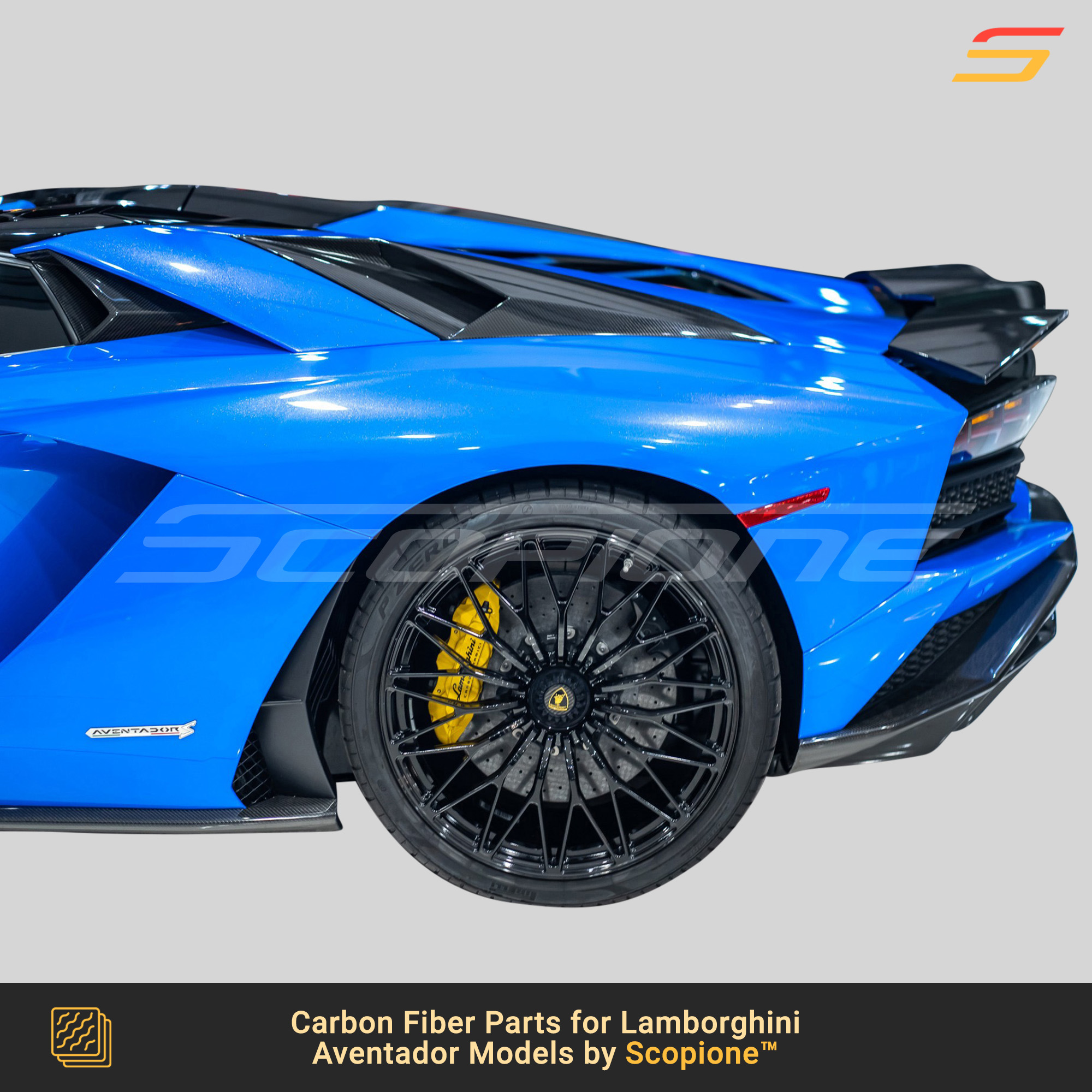
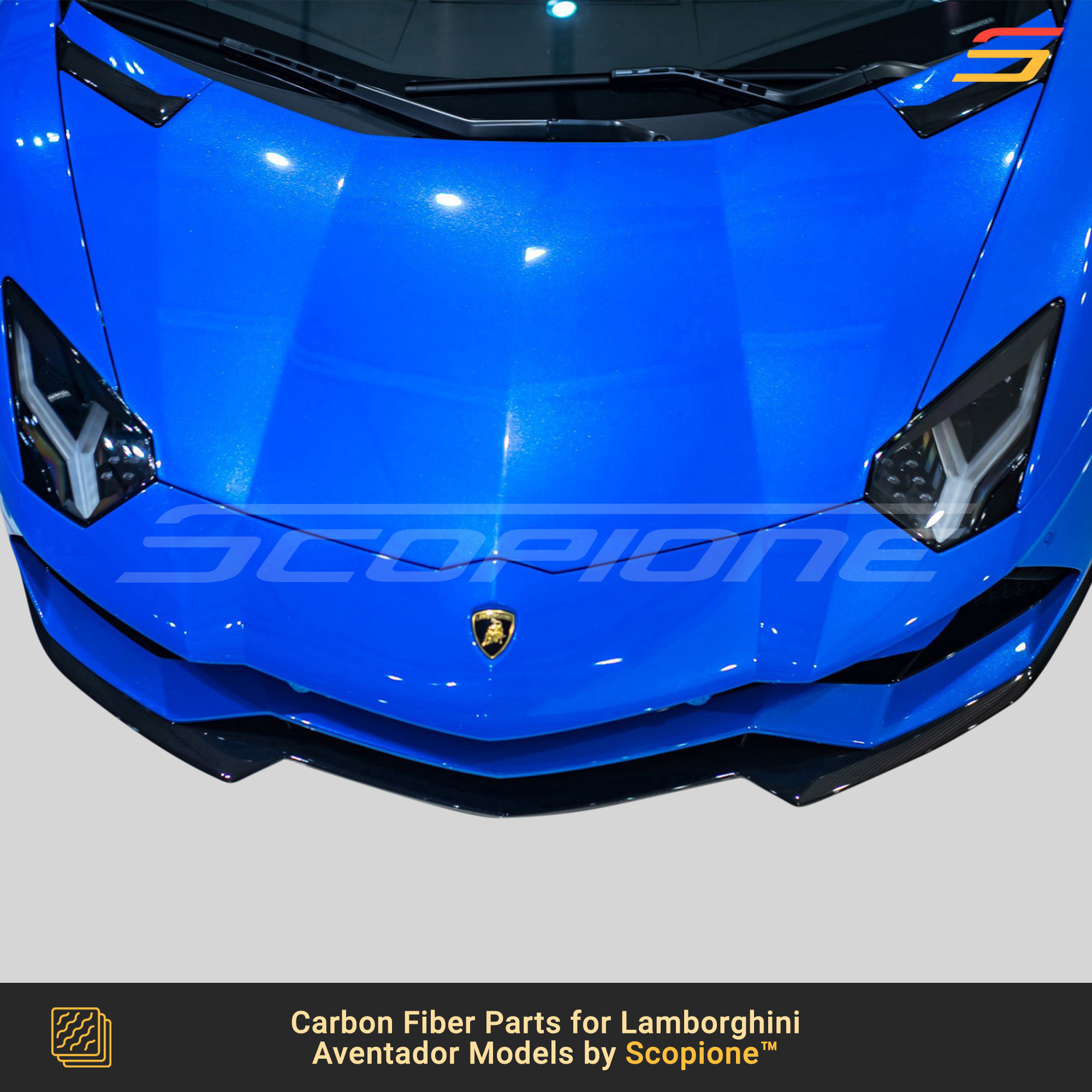
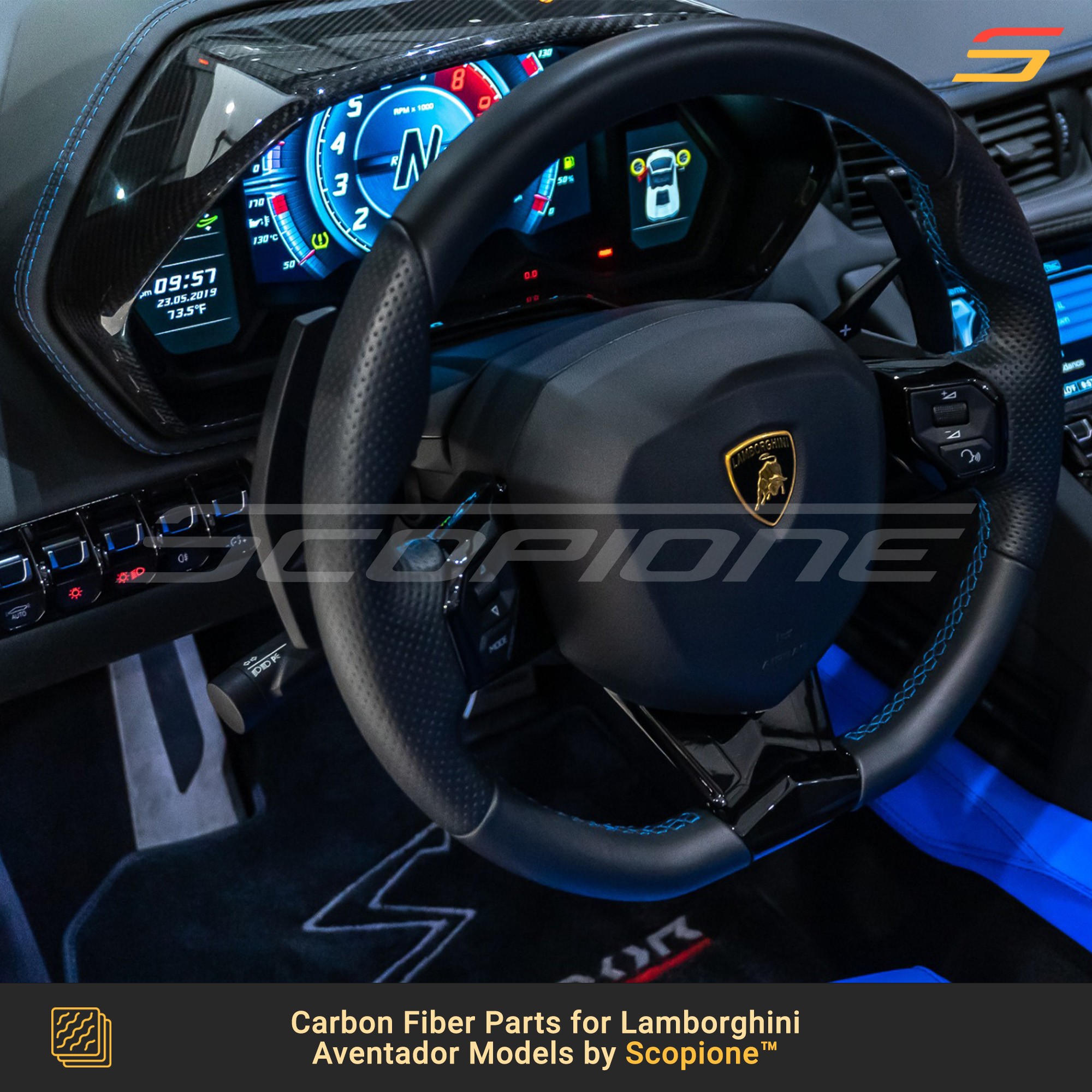
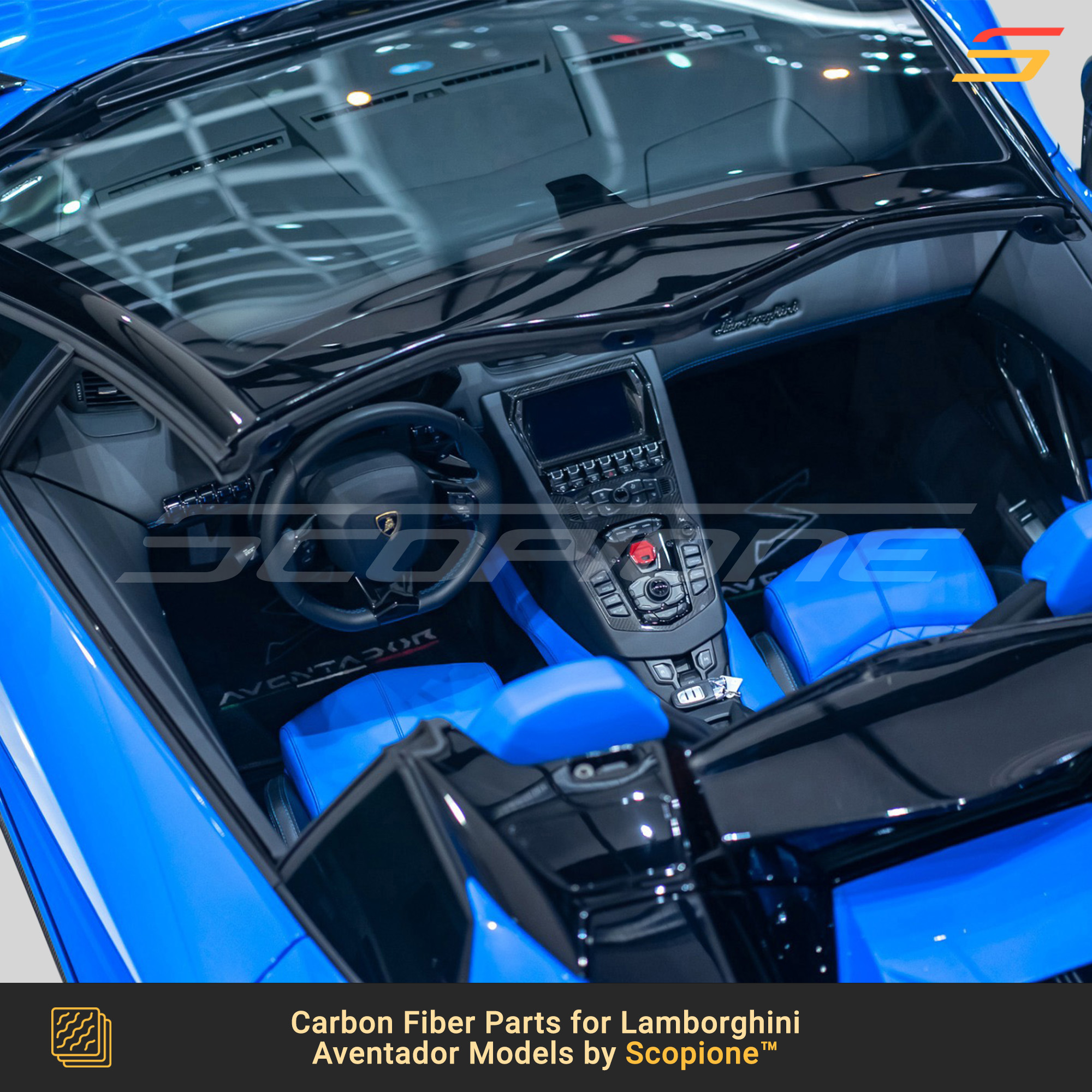
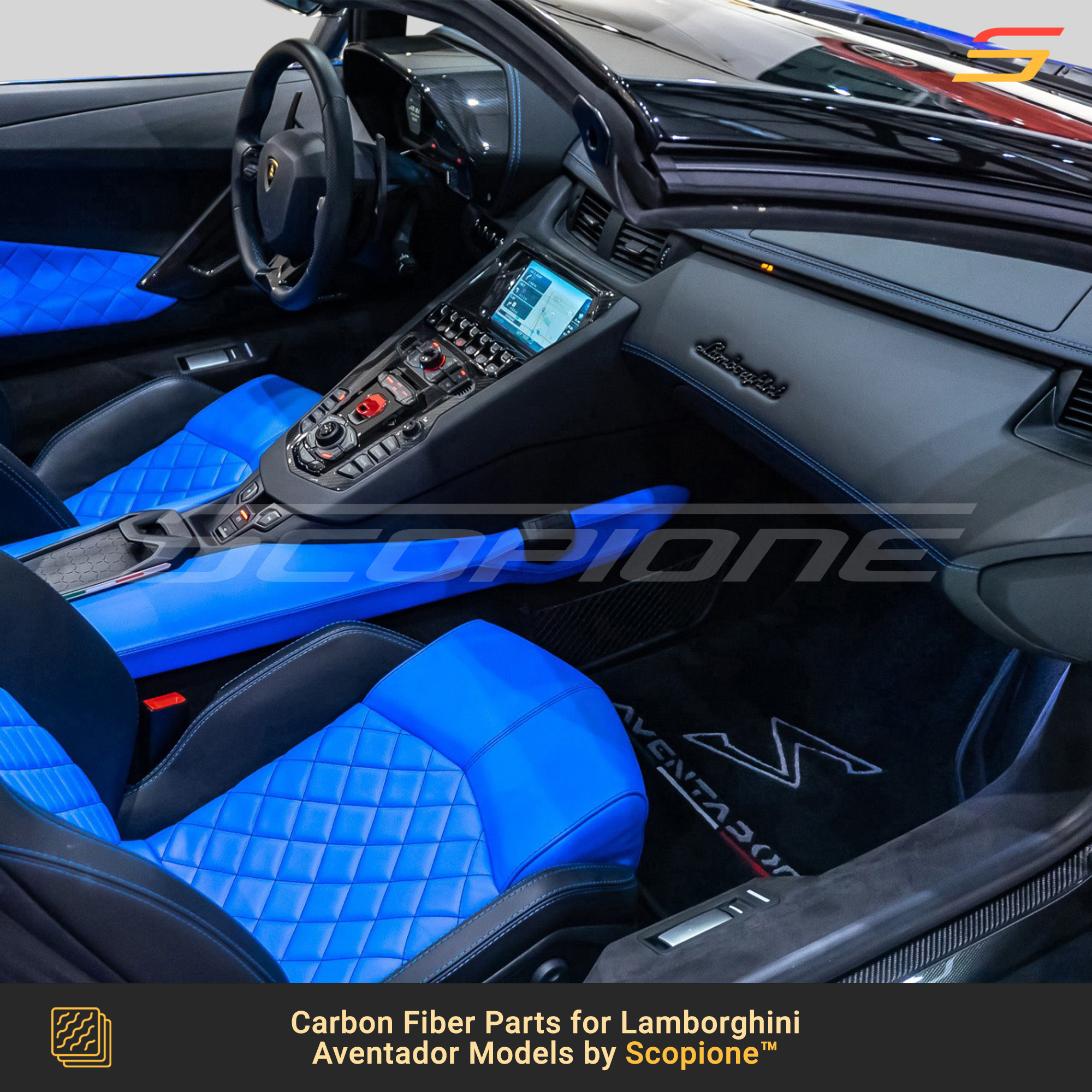
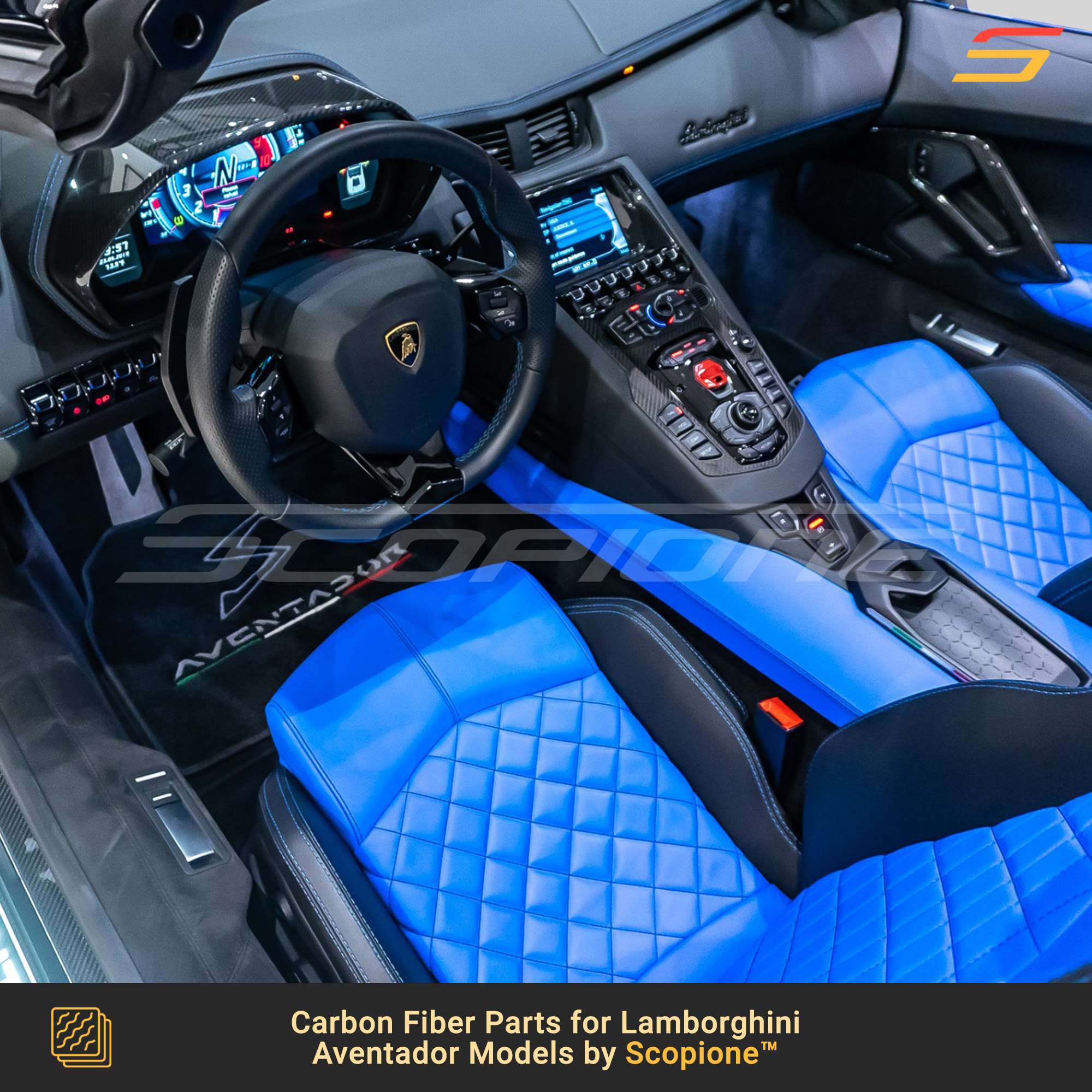
The Scopione Aventador Picture Gallery features photographs of customer Aventadors fitted with Scopione carbon fiber components – engine bay covers viewed through the coupe’s rear glass, exterior body panels, mirror shells, interior trim, and seat backs. Each image shows how the 2×2 twill-weave pattern integrates with the Aventador’s angular body surfaces.
Each installation photograph serves as a reference for potential modifications. The gallery captures the car’s scissor-door profile, rear-mounted V12, and geometric body lines – with and without carbon-fiber upgrades.
Every Scopione component for the Aventador is built to match factory mounting geometry and panel gaps. The carbon fiber layup and clear coat process is consistent across the full catalog – the same material quality on a 2012 LP700-4 as on a 2022 Ultimae.
Aventador owners considering modifications can explore Scopione’s catalog for specific part fitment and pricing.
Customer Aventador Photo Gallery
More customer Aventadors wearing Scopione carbon fiber – browse the full collection:
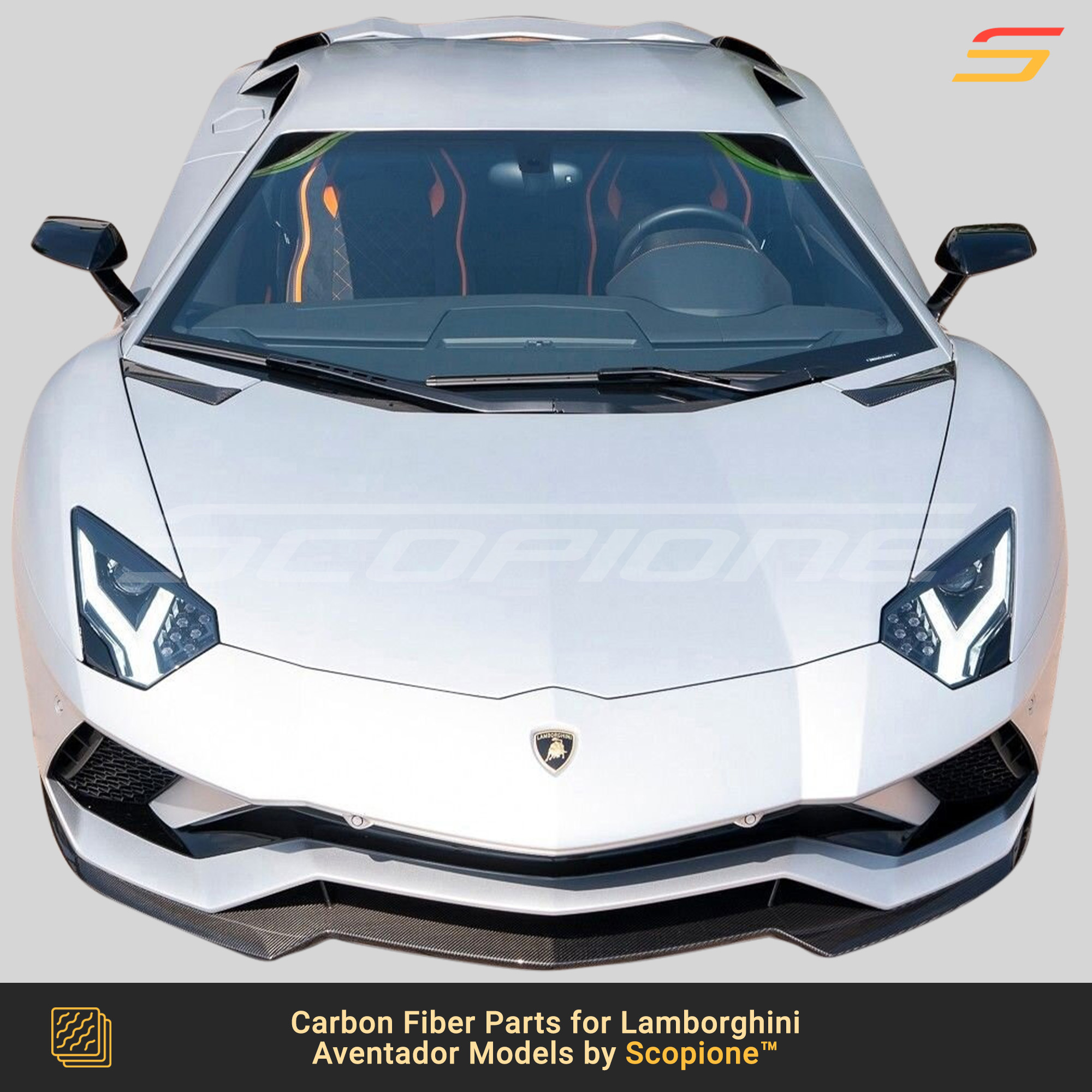


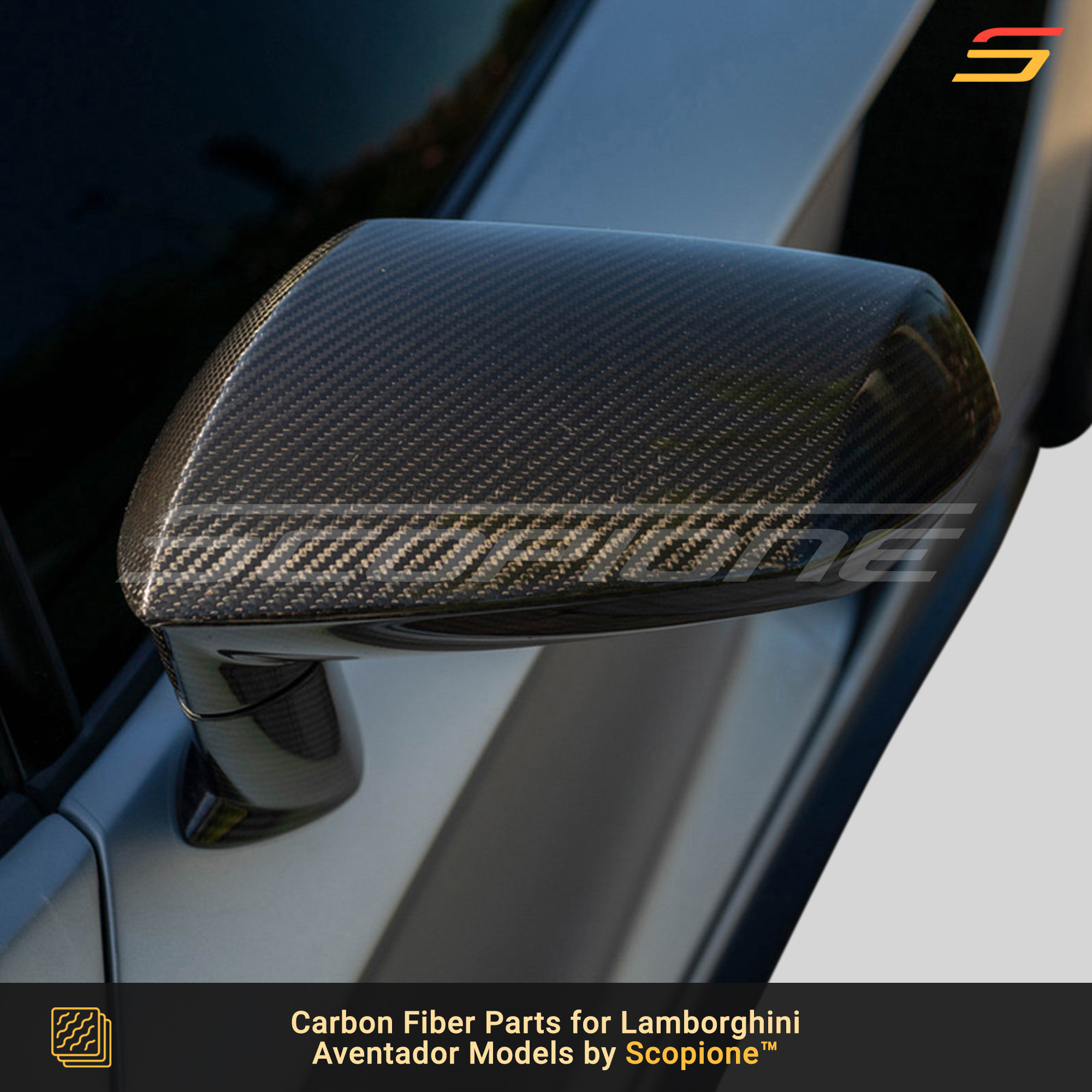
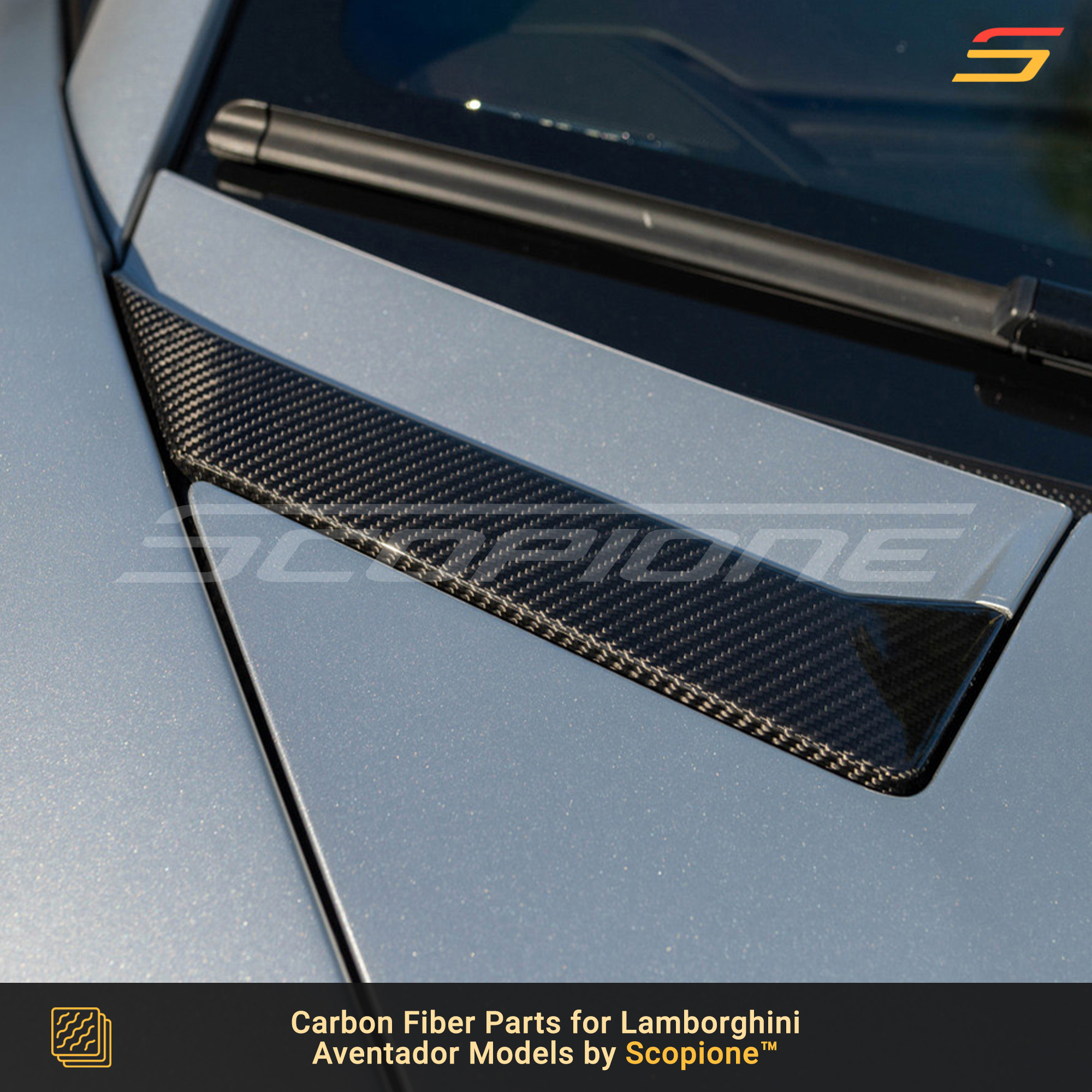
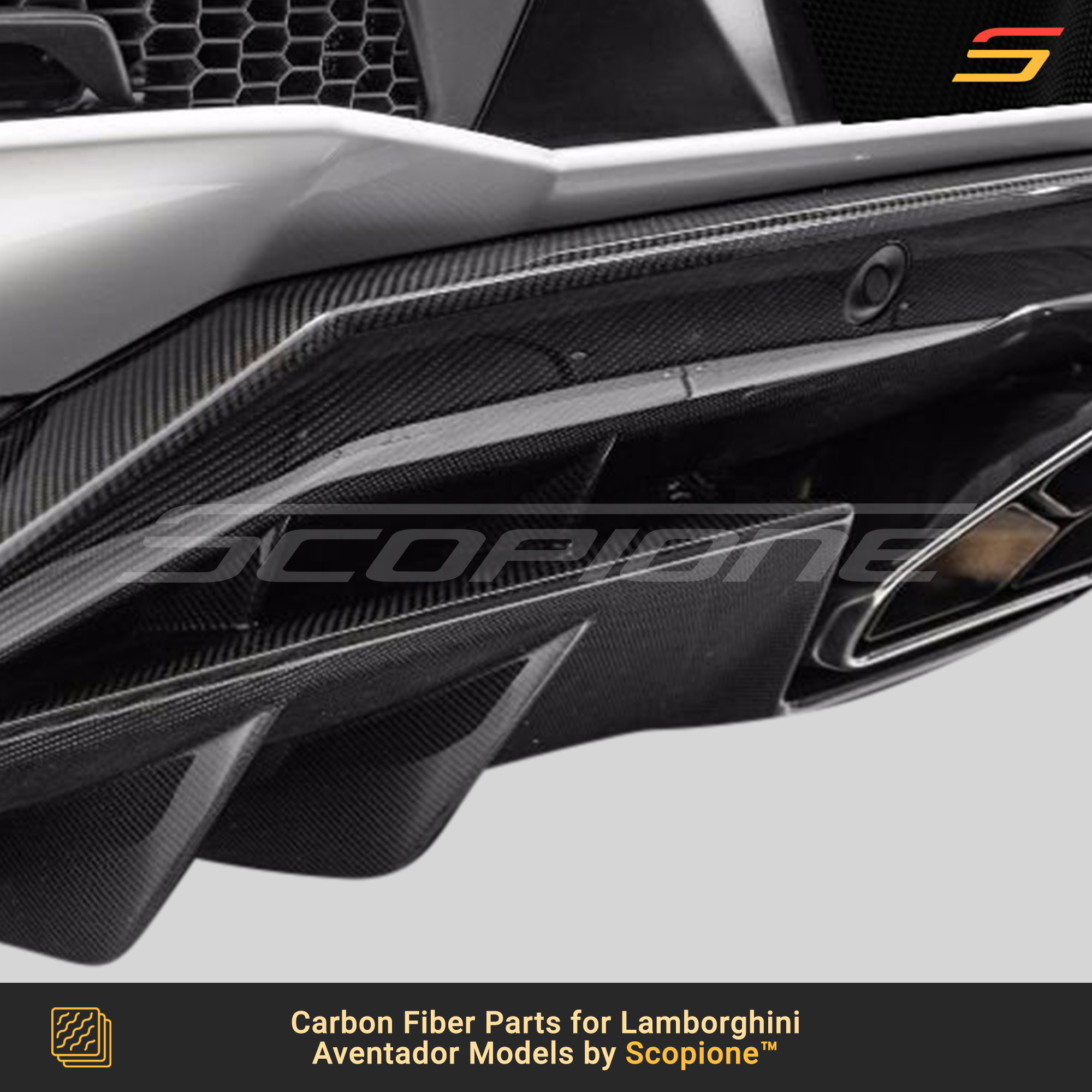

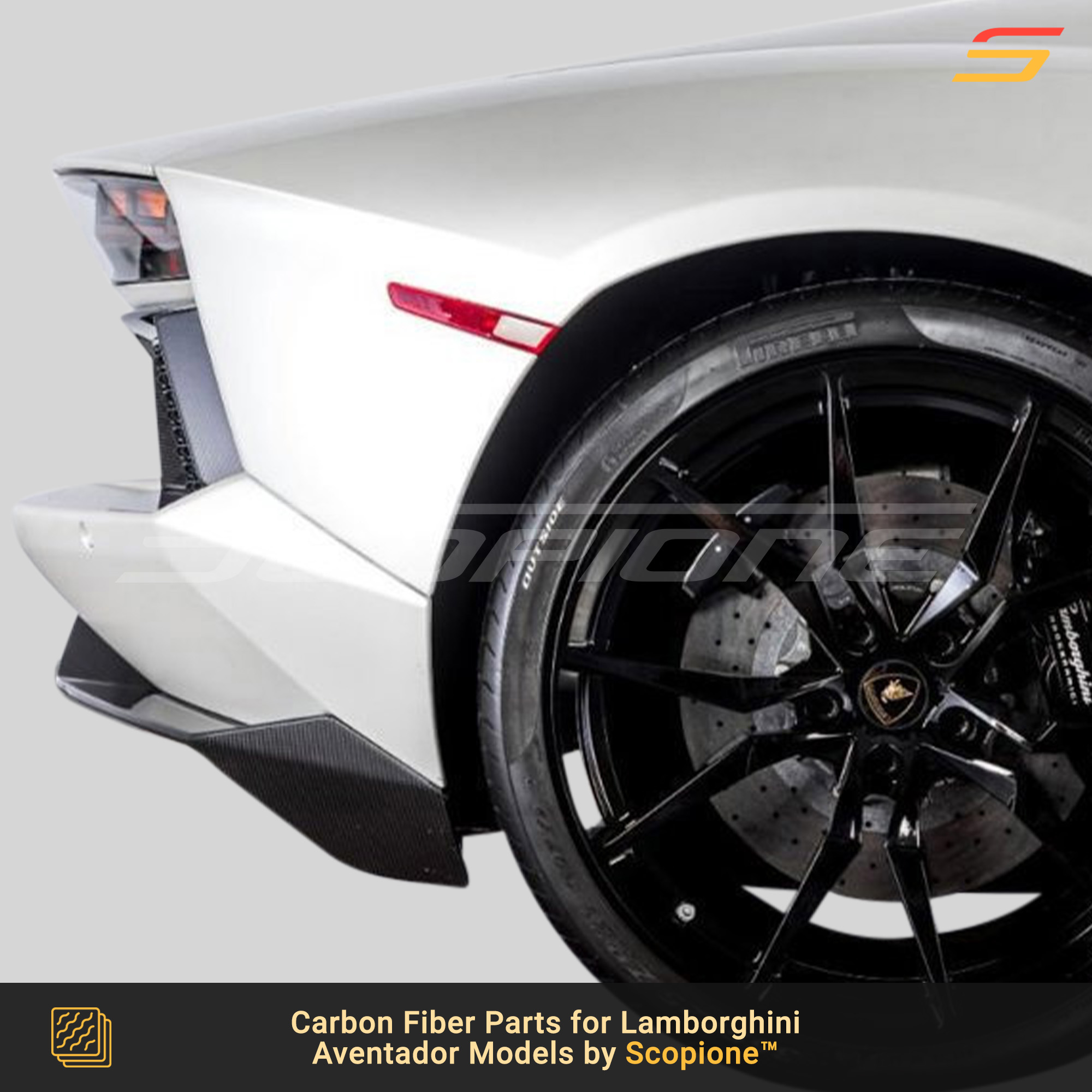

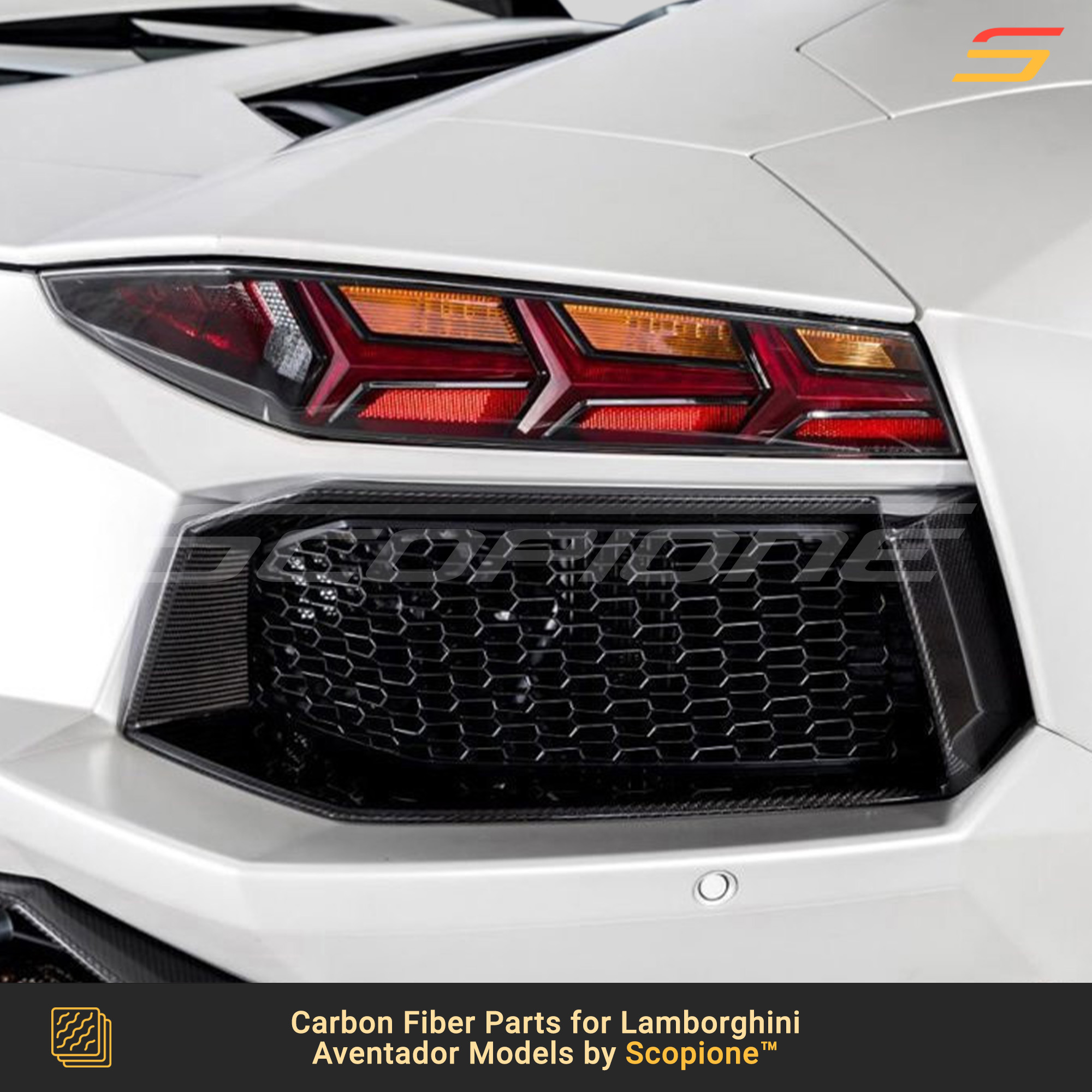
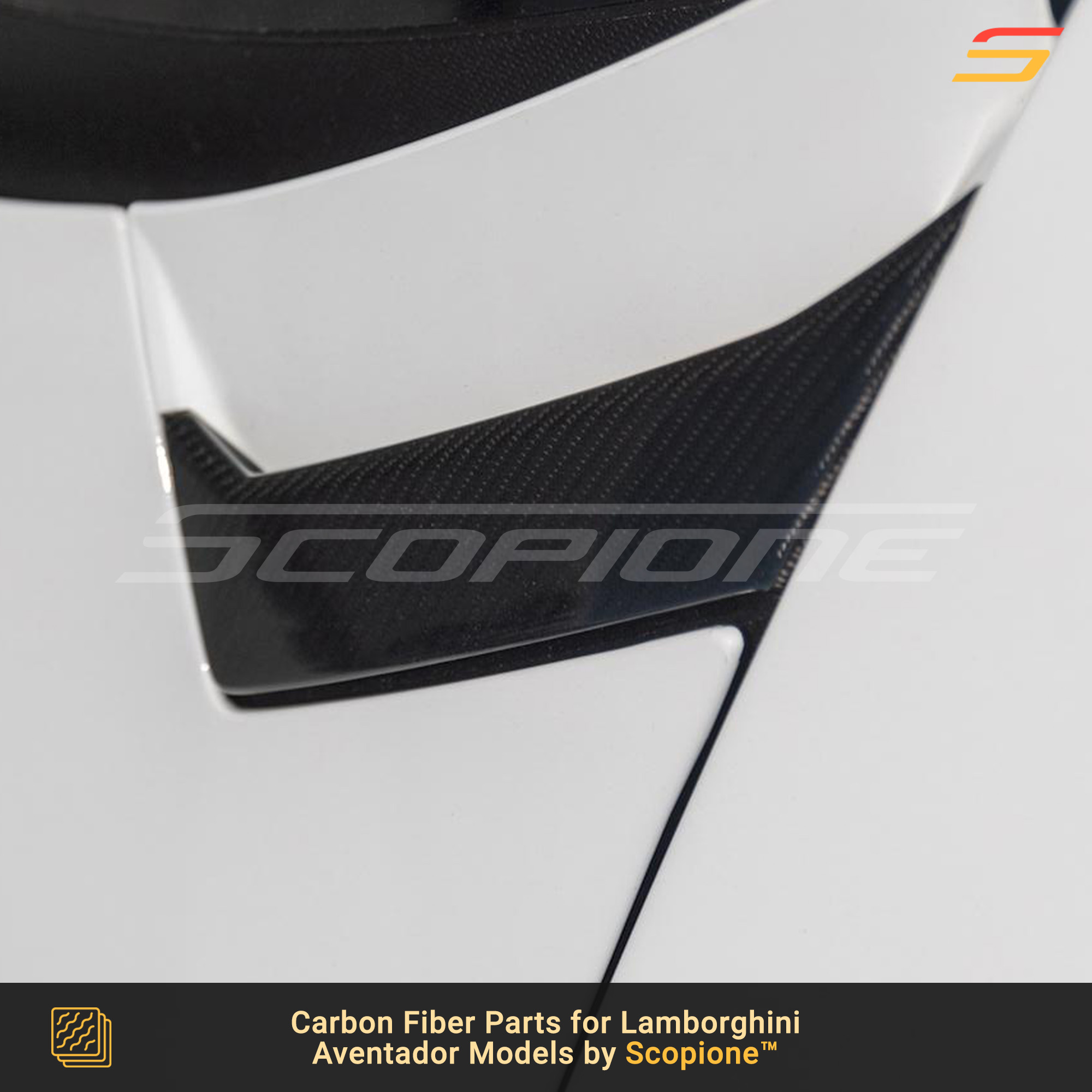
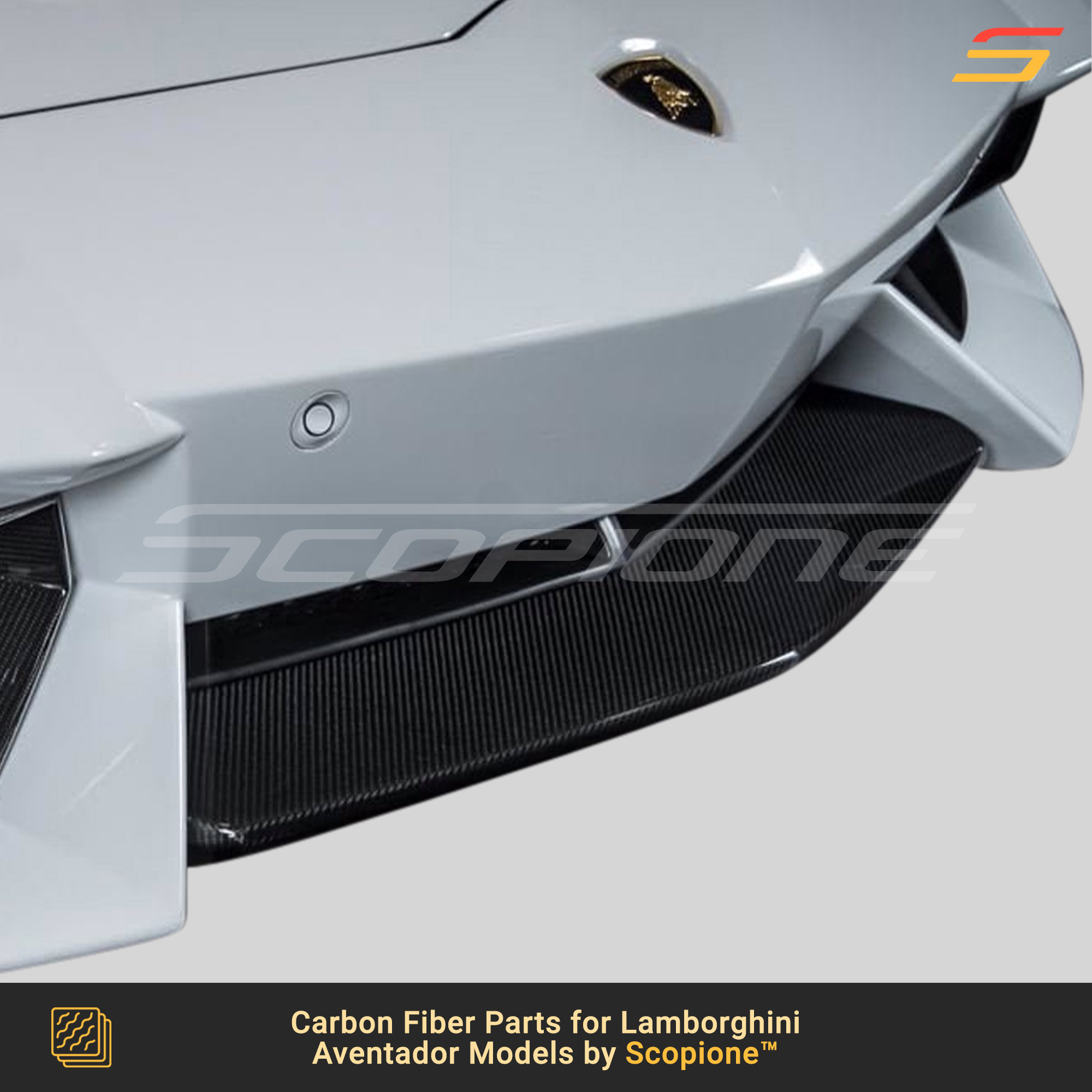



Carbon Fiber Parts for the Lamborghini Aventador
The 41 carbon fiber parts Scopione currently lists for the Lamborghini Aventador. Each image links to its product page.



More Scopione Picture Galleries
Scopione’s carbon fiber catalog covers a wide range of performance and luxury vehicles. Browse galleries for related makes and models:
- Ferrari: 458 Italia & Spider • 488 GTB & Spider • F8 Tributo & Spider • F12 & 812 Superfast • SF90
- Lamborghini: Gallardo • Huracan • Urus
- McLaren: MP4-12C & 650S • 720S & 765LT • Sports Series
- Porsche: 911, Boxster & Cayman
- BMW: M3, M4, M5 & More
- Audi: R8
- Nissan: GT-R R35 • 350Z, 370Z & Z
- Aston Martin: Vantage, DB9 & DBS
- Bentley: Continental GT & GTC
- Maserati: GranTurismo & GranCabrio
- Toyota: Supra
- Subaru: WRX STI
- Mitsubishi: Lancer Evolution
- Chevrolet: Corvette • Camaro
- Dodge: Viper
Experience the elegance and performance of the Lamborghini Aventador with Scopione. Browse our gallery and get inspired to elevate your supercar with our top-of-the-line carbon fiber upgrades.
Shop now for premium ScopioneCarbon carbon fiber upgrades and experience the ultimate in performance and aesthetics for your Lamborghini Aventador!