

 Shop
ShopThe Toyota Supra earned its reputation on one engine. The 2JZ – iron-blocked, twin-turbocharged and famously over-engineered – turned the fourth-generation car into the most tuned Japanese coupé ever built. Scopione carries 13 carbon fiber parts for the 1993–1998 Supra MK4 (JZA80), covering engine bay dress-up, interior trim and exterior aero, all in hand-laid 2×2 3K twill-weave carbon fiber with UV-resistant clear coat.
Introduction: Built Around an Engine
Most performance cars are remembered for how they drove. The Supra is remembered for what was under the hood. The 3.0-litre 2JZ inline-six – closed-deck, iron-blocked, and built with enormous structural margin – became the default answer for anyone chasing big power on a budget, and it dragged the car that carried it into permanent cult status.
That is also why the parts market for the Supra looks the way it does. Owners spend their money in the engine bay first, and Scopione’s catalog reflects it: of the thirteen parts listed further down, seven are engine-bay pieces. The rest is interior trim and a single exterior aero part.
Origins: A40 to A70 (1978–1993)
The Supra began as a Celica. North American dealers wanted something to put against the Datsun 280Z, so Toyota stretched the Celica by 129.5 mm to make room for an inline-six and sold it from April 1978 to June 1981 as the A40/A50 – engines ranging from a 125 PS 2.0-litre to a 2.8.
A60 (1981–1986)
The second car was a full redesign with pop-up headlights and, unusually for the period, the world’s first navigation computer. The 2.8-litre 5M-GE made between 145 and 161 hp depending on year and market.
A70 (1986–1993)
In February 1986 the Supra finally separated from the Celica and became its own model. The A70 ran to April 1993 with the 200 hp 7M-GE and the 231 hp turbocharged 7M-GTE; Japan also received the 1JZ-GTE twin-turbo, rated at 280 PS under the domestic gentleman’s agreement that capped advertised output. That 280 PS ceiling matters for the car that followed.
MK4 / A80 (1993–2002)
Produced from May 1993 to August 2002, the A80 is the car every part on this page is cut for. Toyota built it to a standard that made no commercial sense and has been paying dividends to tuners ever since.
The 2JZ: Two Engines, Three Ratings
- 2JZ-GE (naturally aspirated) – 3.0-litre, 220 hp at 5,800 rpm.
- 2JZ-GTE (twin-turbo), Japan – 280 PS and 318 lb-ft, the figure capped by the Japanese industry agreement rather than by the engine.
- 2JZ-GTE (twin-turbo), export – 321 hp at 5,600 rpm and 315 lb-ft for the US; European cars were rated 326 hp and 325 lb-ft.
The turbochargers ran sequentially rather than in parallel. All exhaust fed the first turbine until 3,500 rpm, when the second spooled in pre-boost; from 4,000 rpm both contributed. It is the reason a standard car pulls cleanly from low revs and still runs hard at the top – and the reason so many owners eventually replace the whole arrangement with a single large turbo.
Why the 2JZ Takes the Power
The reputation is not folklore. The 2JZ-GTE is a 2,997 cc square design – 86.0 mm bore and 86.0 mm stroke – running 8.5:1 compression, and the parts that matter are the ones you cannot see. The block is cast iron and closed-deck, with roughly 1.7 inches of deck material between the cylinders, and the forged steel crankshaft runs in seven main bearings.
That combination is why a standard bottom end will carry 800 horsepower or more once the supporting hardware – turbo, injectors, fuel system, intercooler and engine management – is upgraded to match. Toyota built in a margin the car never needed, and thirty years of tuners have been spending it ever since.
How Many Were Built
Fewer than the car’s fame suggests, and the exact figure depends on who is counting. Sources put fourth-generation production at roughly 64,000 for the 1993–1998 world-market run, or around 113,000 if you include Japanese production through to 2002. What the sources agree on is the shape: output peaked in 1993 and 1994 and tailed off afterwards, and roughly 70 per cent of all A80s stayed in Japan.
The United States took about 11,239 cars across the entire 1993–1998 run. That scarcity, and the fact that so many surviving cars are Japanese imports, is why right-hand-drive fitment matters more on this model than on almost anything else in the catalog.
VVTi and Non-VVTi – the Split That Decides Fitment
This is the single most important thing to know before ordering engine-bay parts for an A80. The 2JZ-GTE was built in two forms:
- Non-VVTi (1993–1997) – the original. Every US-market turbo Supra is this engine, for the whole of its run.
- VVTi (1997 onward) – variable valve timing was added for the facelift, and the VVTi 2JZ-GTE was sold only in Japan. No US-market turbo Supra ever received it.
There is one quirk that catches people out: the 1998 US naturally aspirated Supra did get a VVT-i version of the 2JZ-GE, while the Japanese N/A car did not. So “my 1998 car has VVT-i” is true for some US owners – just not the turbo ones.
Toyota stopped selling the A80 in the United States in 1998. Production continued in Japan until August 2002, when tightening emissions rules ended it.
MK5 / A90 (2019–2026)
After a seventeen-year gap the Supra returned in March 2019, co-developed with BMW and assembled alongside the G29 Z4 by Magna Steyr in Graz, Austria. It shares subframe, suspension and drivetrain assemblies with the Z4, which is either heresy or good sense depending on who you ask. Production ran to March 2026.
Scopione does not currently make carbon fiber parts for the A90. Every part below is cut for the A80, and the two cars share no body or engine-bay panels.
Carbon Fiber and the Supra
The A80 left the factory with no carbon fiber at all. It was built in the early 1990s, when carbon was still a motorsport and supercar material, and its body panels are steel with an aluminium hood on some markets.
That makes the Supra a pure aftermarket case. Everything carbon on an A80 today was added by an owner, which is why the parts that matter most are the ones you actually see when the hood is up – timing belt covers, spark plug covers, the intercooler duct and the relay box cap. On a car whose entire identity is its engine, dressing that engine bay is the modification that reads.
Scopione: Carbon Fiber Parts for the Supra MK4
What Scopione Offers for the Supra
Thirteen parts, all cut for the 1993–1998 A80 (JZA80). Seven are engine-bay pieces, four are interior, one is exterior aero and one is the windshield cowl.
| Part | Area | Price | Fitment Notes |
|---|---|---|---|
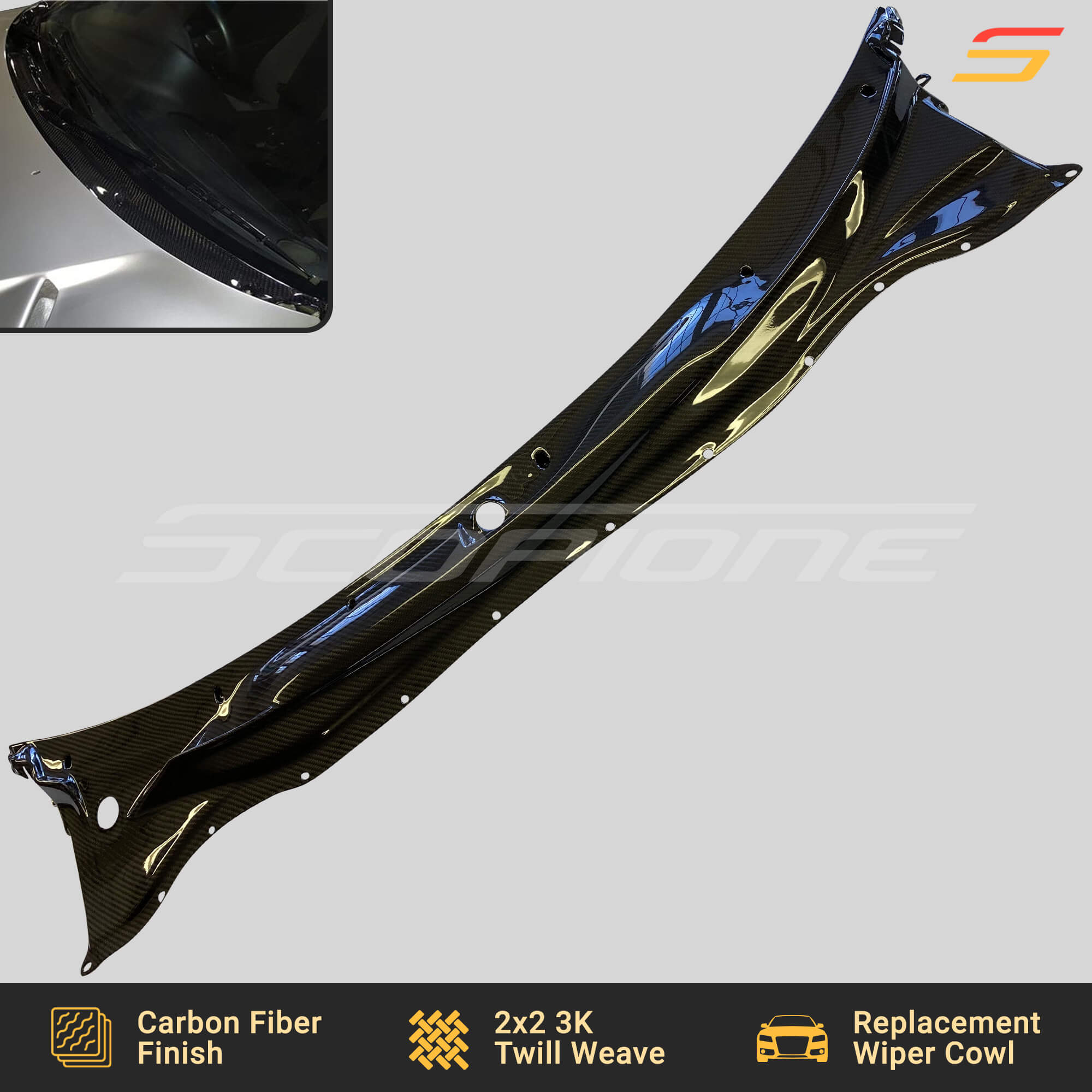
| Windshield Wiper Cowl | Exterior | $600 | RHD cars only |
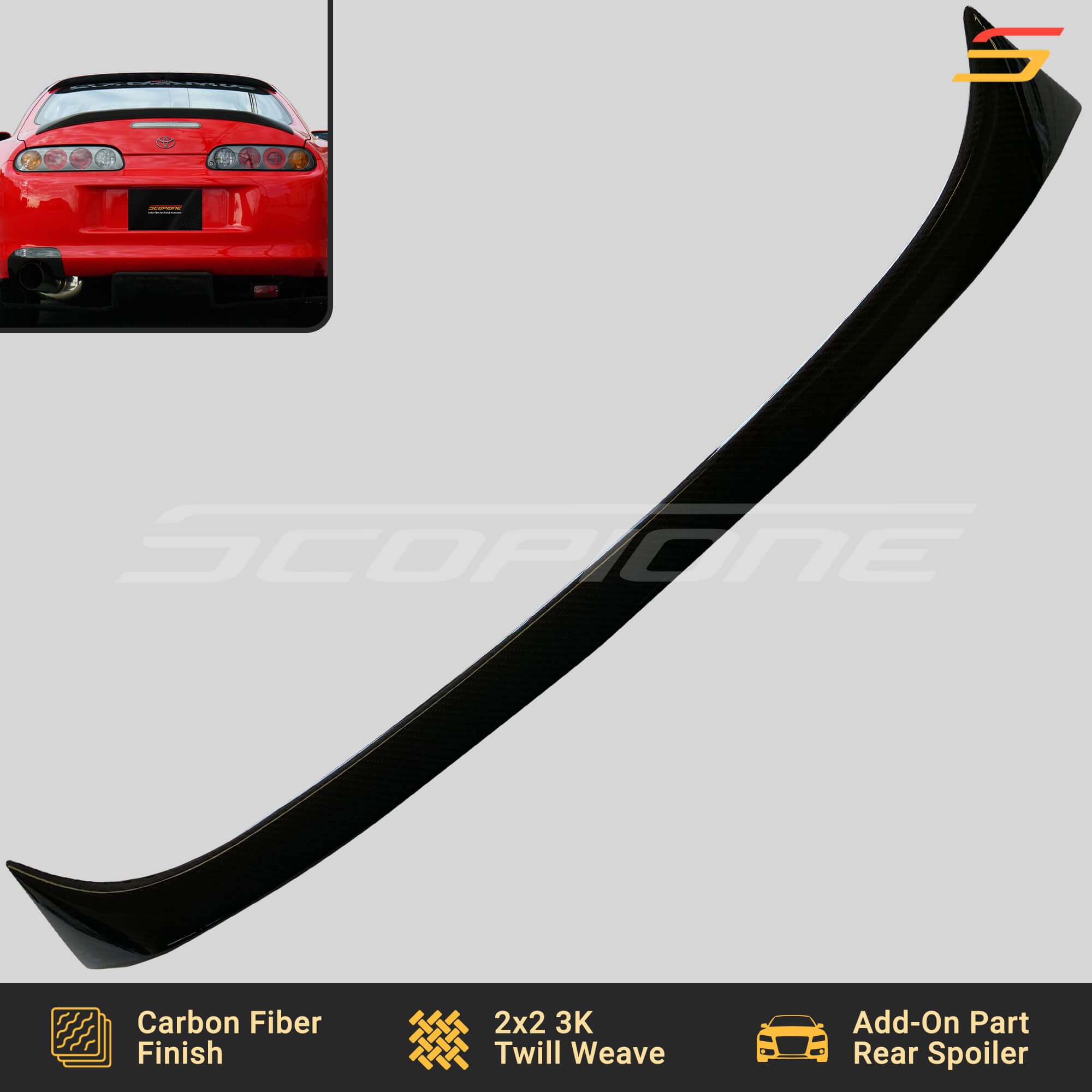
| Add-On Rear Trunk Spoiler | Exterior | $550 | All A80 |
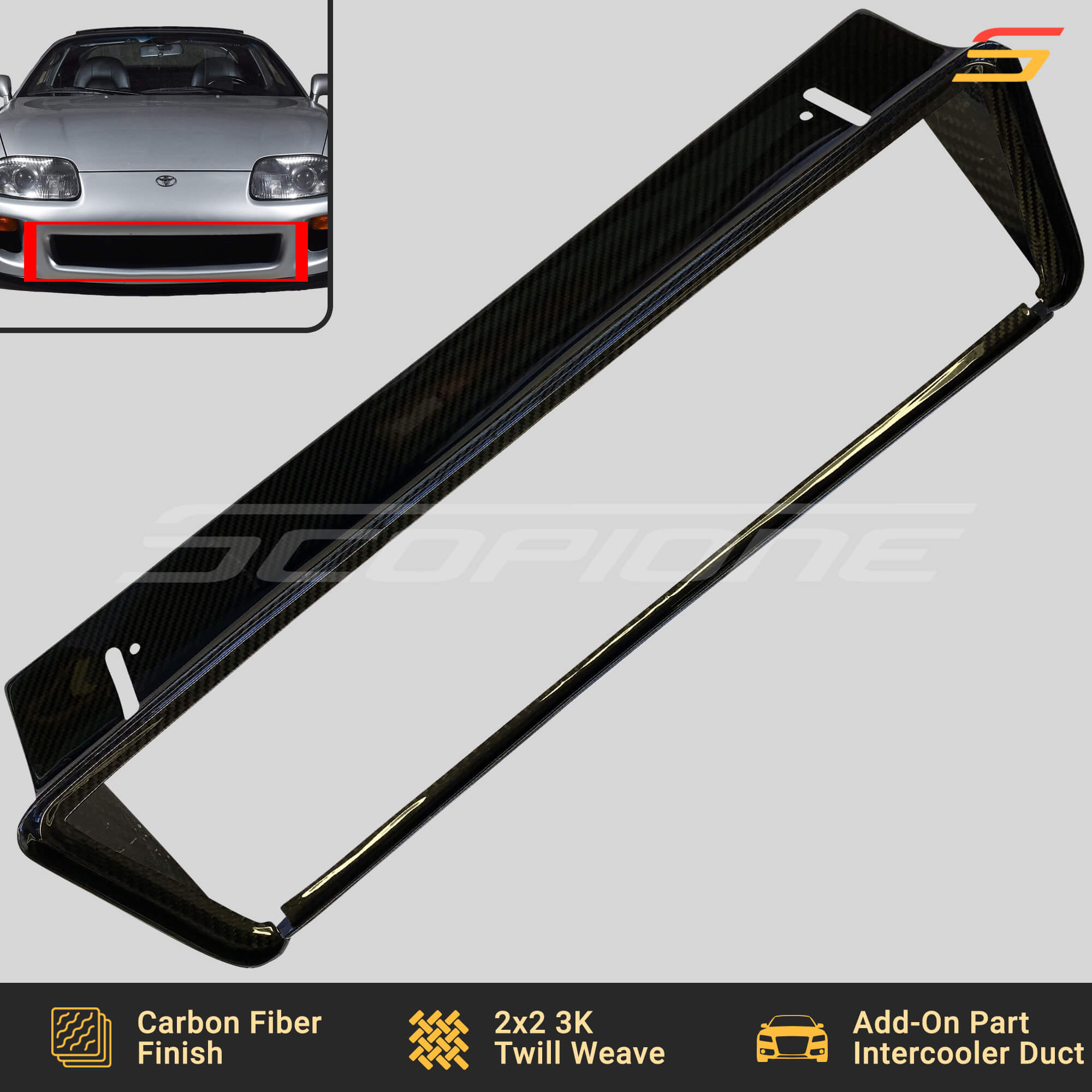
| Engine Intercooler Duct Vent | Engine bay | $550 | All A80 |
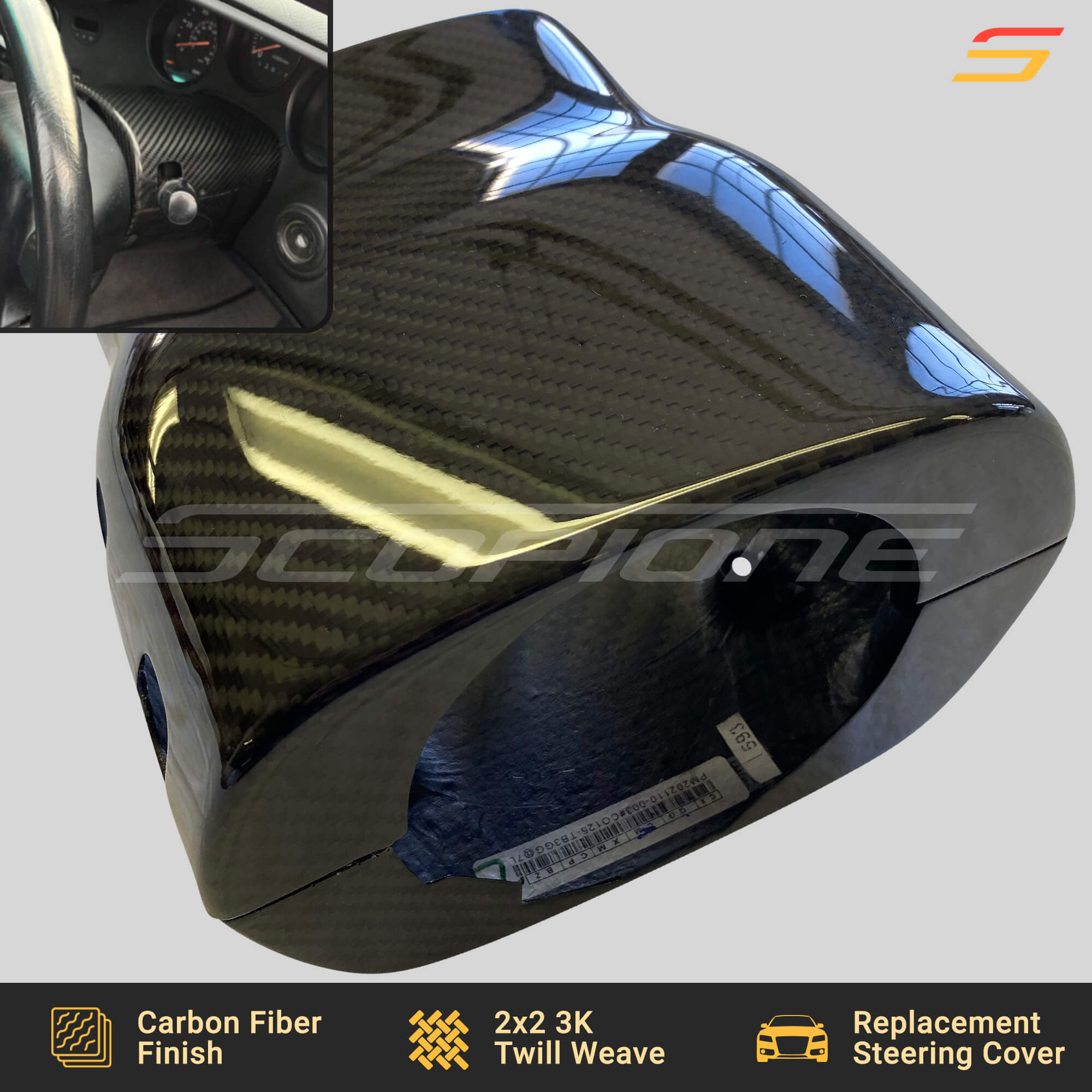
| Steering Wheel Column Covers | Interior | $500 | All A80 |
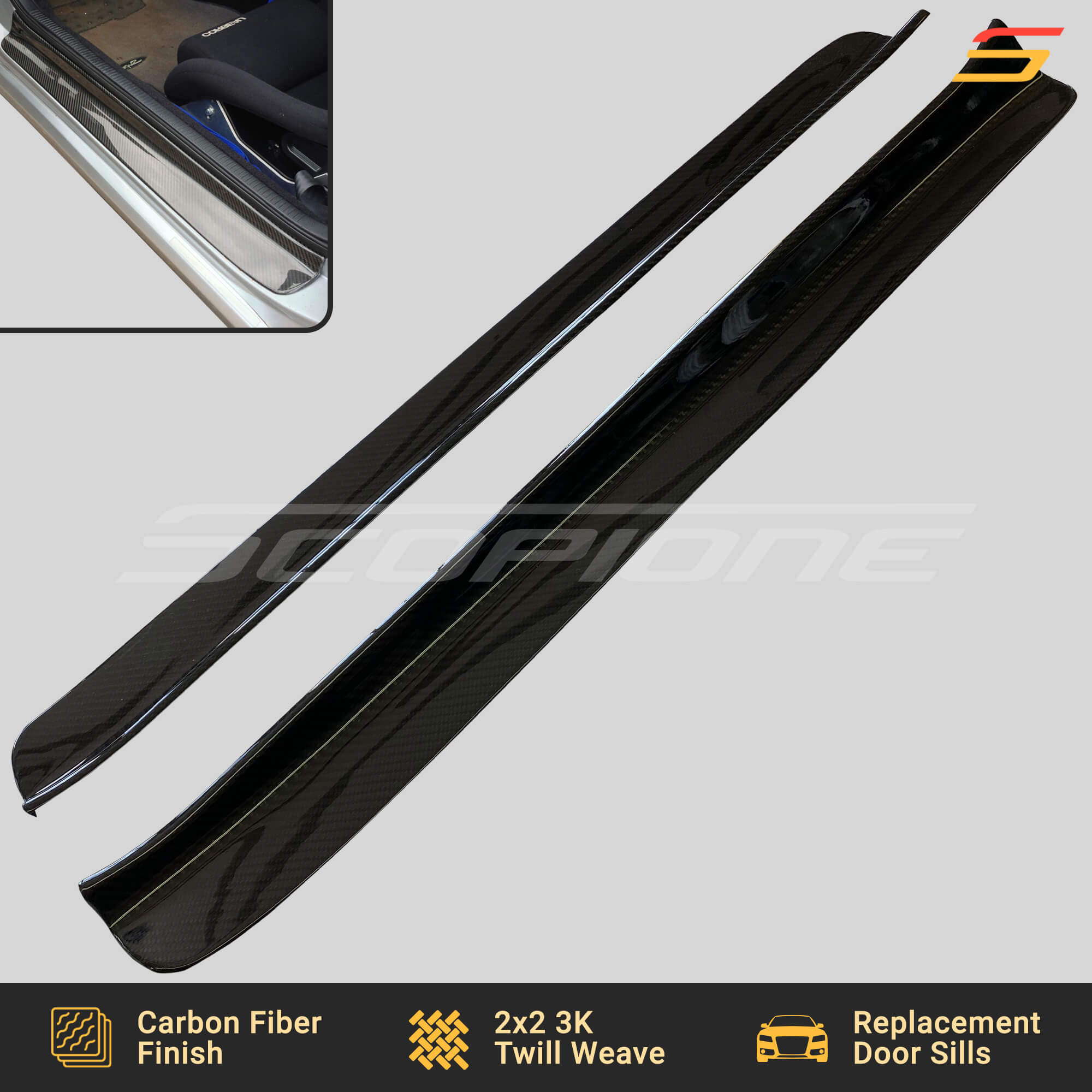
| Door Sills Scuff Plates | Interior | $500 | Pair |
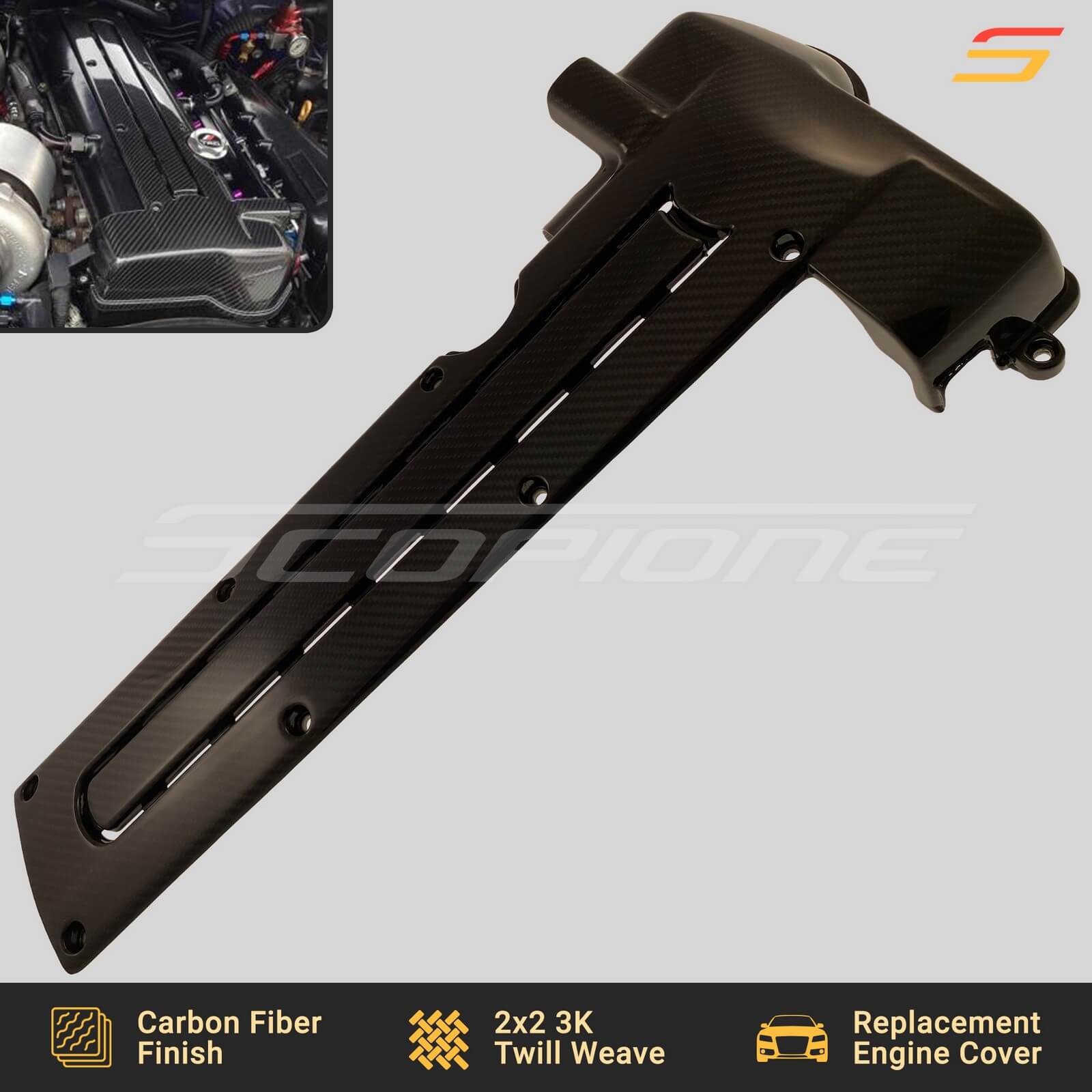
| Engine Spark Plug Cover – VVTi | Engine bay | $420 | VVTi engines only |
| Engine Spark Plug Cover – non-VVTi | Engine bay | $380 | Non-VVTi 2JZ-GTE |
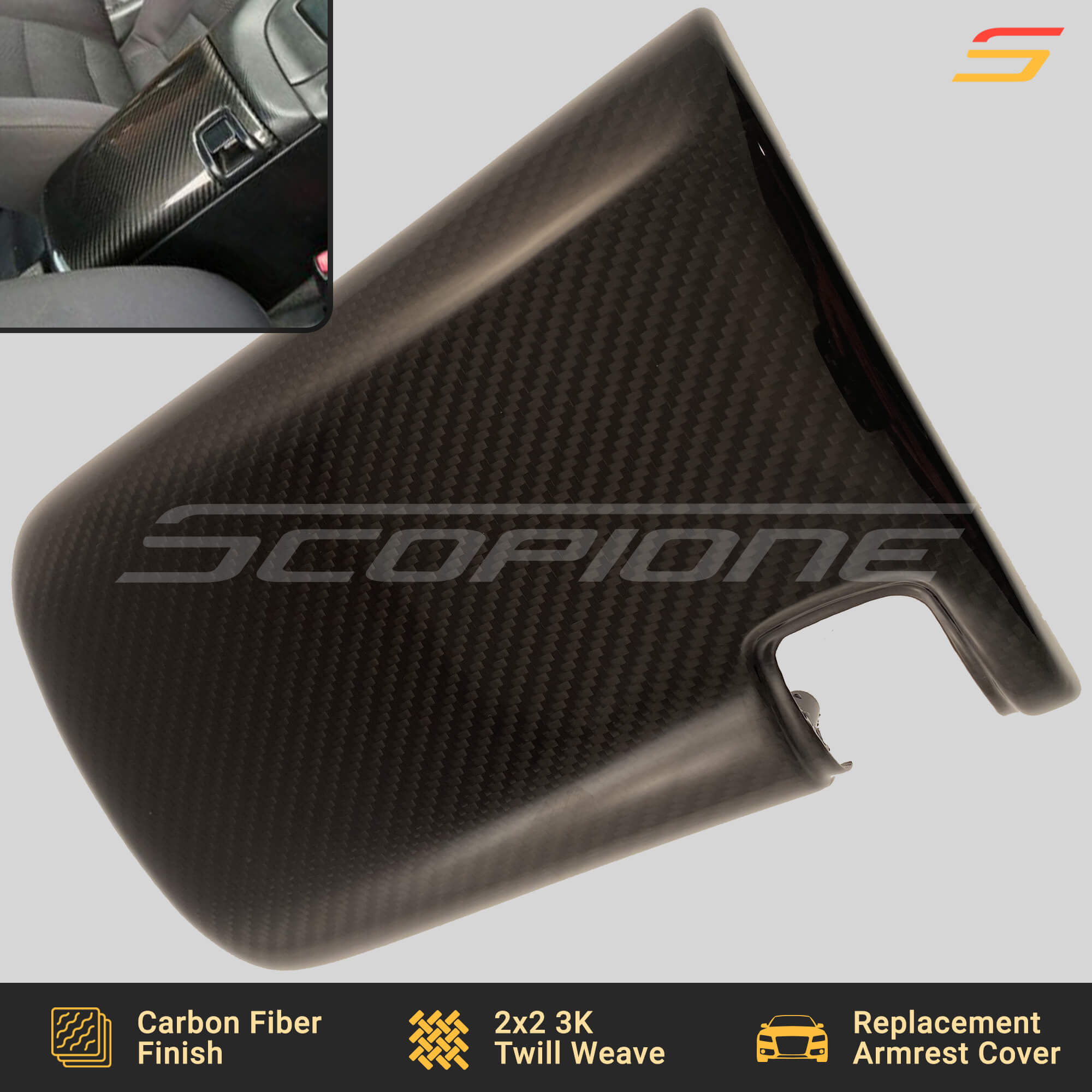
| Console Armrest Cover | Interior | $300 | RHD cars only |
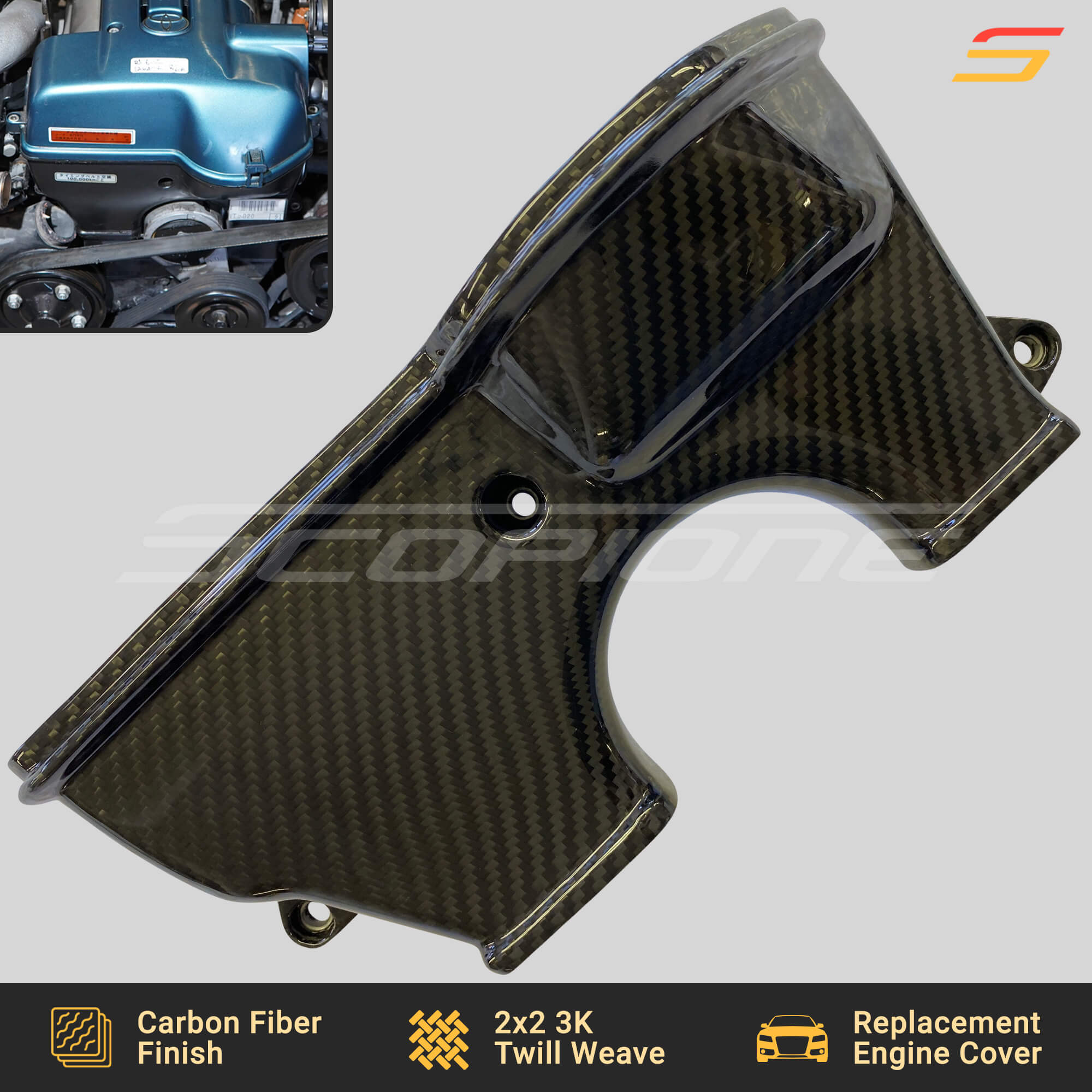
| Upper Timing Belt Cover – VVTi | Engine bay | $300 | VVTi engines only |
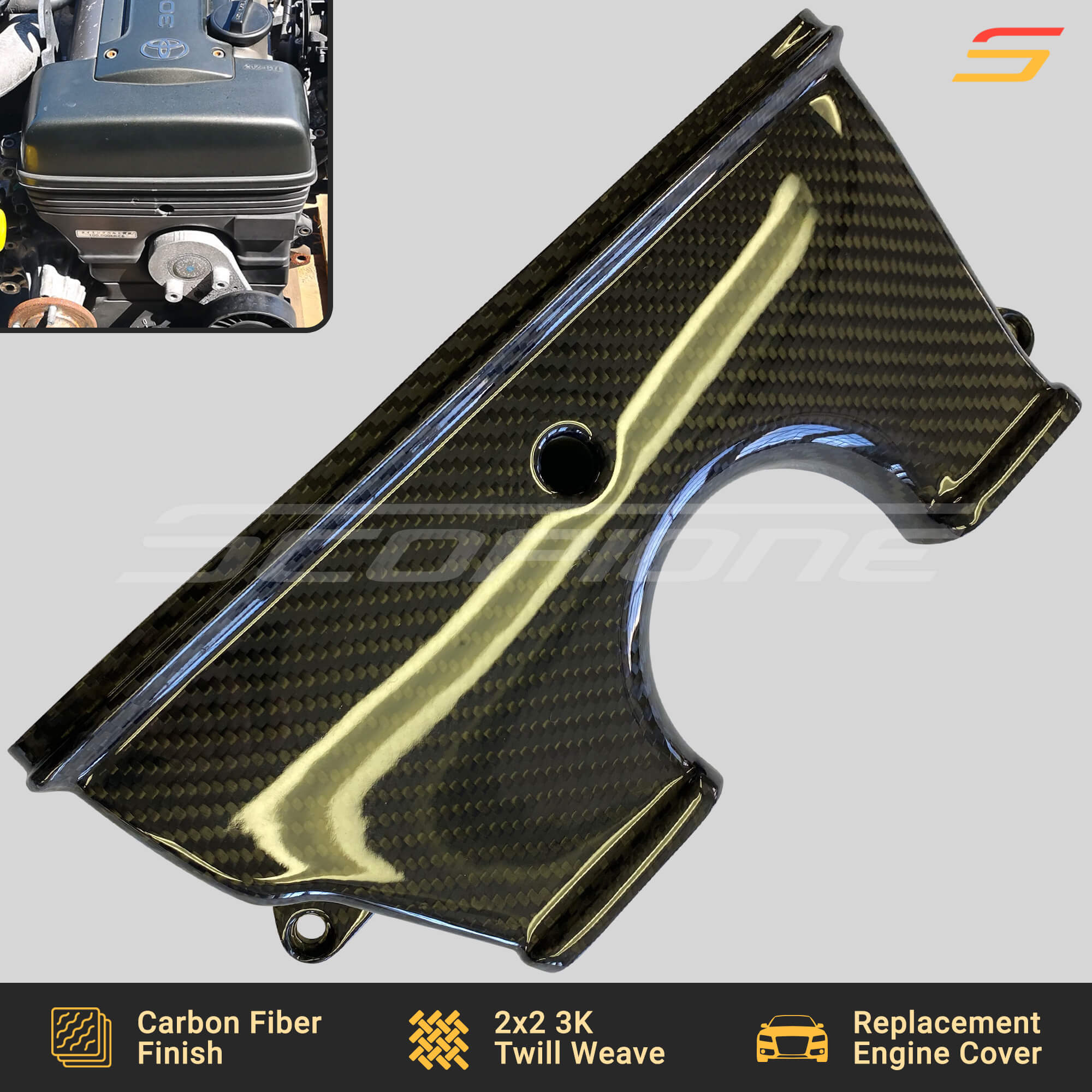
| Upper Timing Belt Cover – non-VVTi | Engine bay | $280 | Non-VVTi 2JZ-GTE |
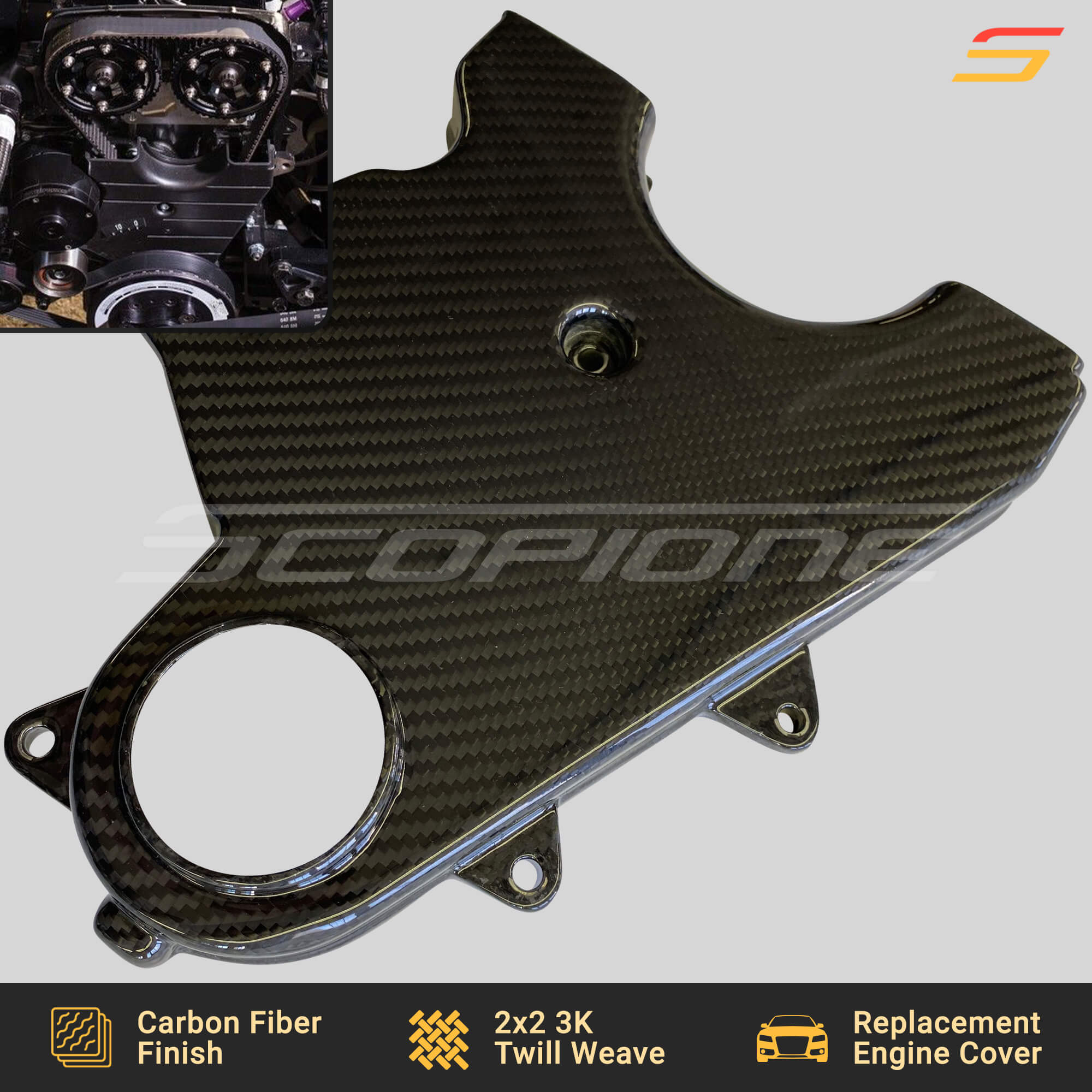
| Lower Timing Belt Cover | Engine bay | $280 | 2JZ-GTE |
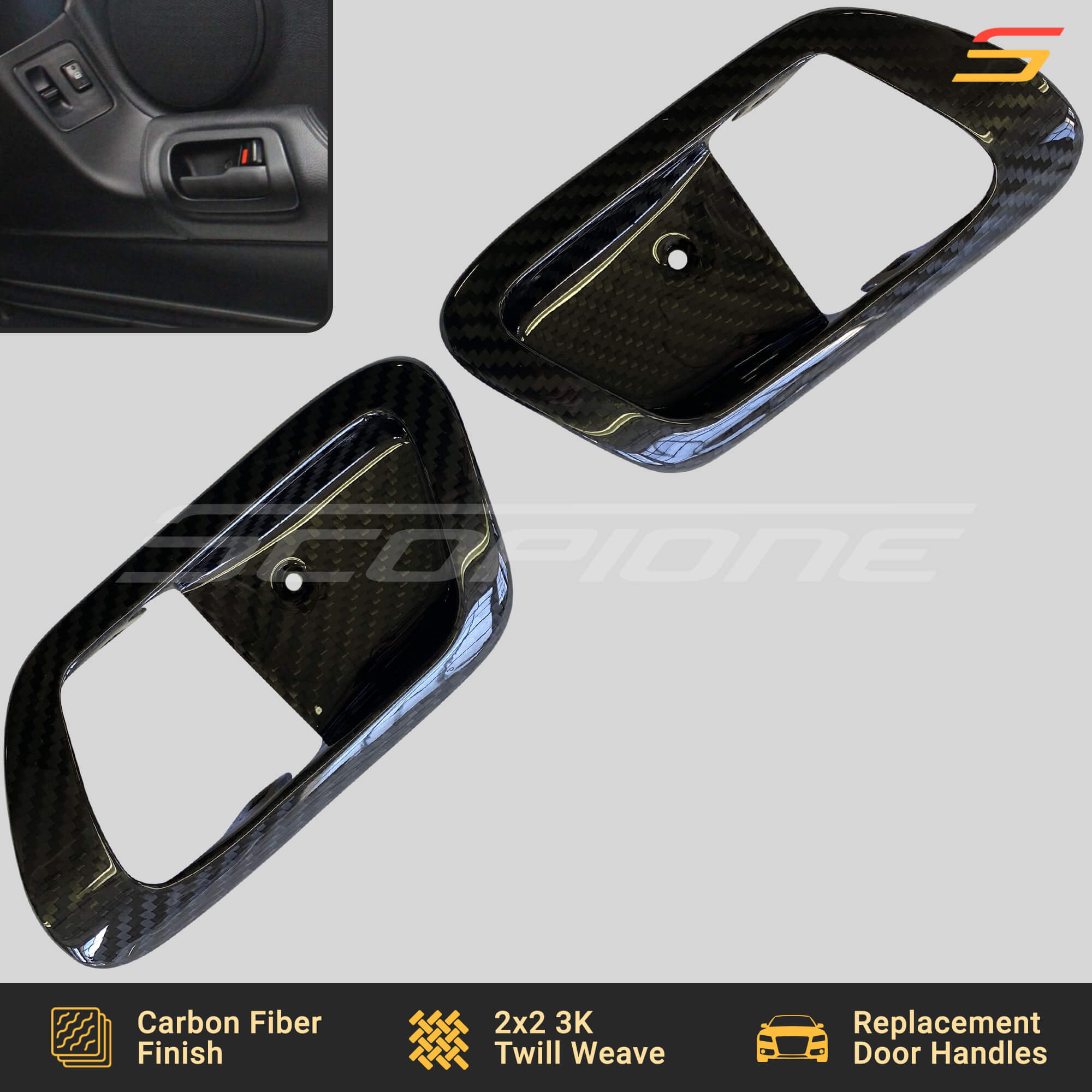
| Interior Door Handles Trim | Interior | $280 | All A80 |
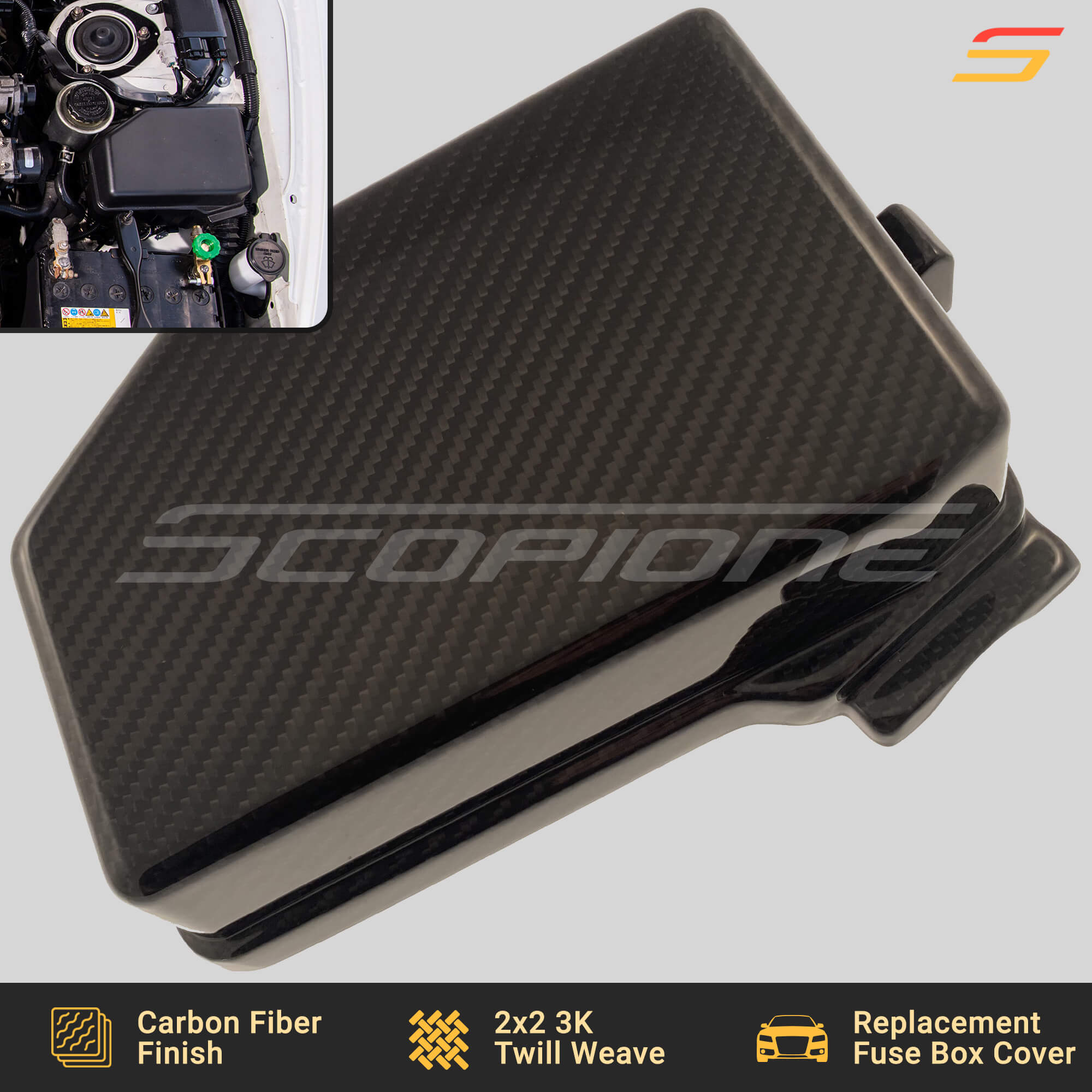
| Engine Relay Fuse Box Cover Cap | Engine bay | $240 | All A80 |
Browse Carbon Fiber Parts for the Toyota Supra MK4

Choosing Between VVTi and Non-VVTi
Four of the thirteen parts come in two versions, and picking the wrong one means it will not fit. The rule is simple:
- US-market turbo Supra – always non-VVTi. The VVTi 2JZ-GTE was never sold in the United States.
- Japanese import, 1997 or later – likely VVTi, since that is when the facelift engine arrived in Japan.
- 1993–1997 car of any market – non-VVTi.
If you are unsure, look at the front of the cylinder head rather than the model year: the VVTi engine carries the variable valve timing actuator on the intake cam, and it is visible with the timing cover off.
RHD-Specific Parts
Two parts – the windshield wiper cowl and the console armrest cover – are cut for right-hand-drive cars, which in practice means Japanese-market imports. They will not fit a US-market left-hand-drive A80.
The 2JZ Family: Parts That Fit More Than the Supra
The timing belt covers are not Supra-only. Because Toyota put the 2JZ in several cars, the same covers fit across the family – and if you own one of these, the Supra listing is the part you want:
- Lexus GS300 (JZS147 / JZS160) – 1993–2005
- Lexus IS300 (JCE10) – 2001–2005
- Lexus SC300 – 1992–1997
- Toyota Aristo (JZS147) – 1991–1997
The VVTi / non-VVTi split still applies across the whole family, and the year ranges differ by model – the VVTi covers suit the later GS300, IS300 and SC300, the non-VVTi covers the earlier ones. Check the engine, not the badge.
One more thing the product listings make clear: fitment runs to 2002 on international MK4 cars, not just to 1998. The 1993–1998 range describes the US sales window – Japanese production continued to 2002, and those cars are covered.
View all 13 carbon fiber parts for the Supra A80
Frequently Asked Questions
The questions we are asked most often about Supra fitment, engine variants and imports.
What carbon fiber parts does Scopione offer for the Toyota Supra?
Scopione offers 13 carbon fiber parts for the A80 MK4 Supra (1993-1998), including engine bay covers (spark plug covers, timing belt covers, intercooler duct, fuse box cover), interior trim (door sills, door handles, steering column covers), and an exterior trunk spoiler.
Do Scopione Supra parts fit VVTi and Non-VVTi engines?
Scopione carries separate spark plug covers and upper timing belt covers for VVTi and Non-VVTi 2JZ engines. The fitment differs between engine variants, so correct identification is required before ordering. If it is a US-market turbo Supra it is always non-VVTi – the VVTi 2JZ-GTE was sold only in Japan.
Do Scopione Supra timing belt covers fit other 2JZ-powered vehicles?
Yes. Scopione’s 2JZ timing belt covers also fit the Lexus GS300 (1993-2005), IS300 (2001-2005), SC300 (1992-1997), and Toyota Aristo (1991-1997), making them compatible across the 2JZ engine family. The VVTi and non-VVTi split still applies, so check the engine rather than the model.
Which parts only fit right-hand-drive cars?
The windshield wiper cowl and the console armrest cover are cut for right-hand-drive cars, which in practice means Japanese-market imports. Neither fits a US-market left-hand-drive A80.
Is the Toyota Supra A80 a good investment?
Clean A80 Turbo examples with 6-speed manual transmissions trade between $80,000 and $285,000, up from $15,000-$25,000 in the early 2000s. Low-mileage, unmodified examples have appreciated significantly and continue to hold value.
Does Scopione offer carbon fiber parts for the A90 GR Supra?
Not currently – the catalog is A80-specific with no A90 fitments at this time. The A90 shares its B58 engine and CLAR platform with the BMW Z4, and Scopione’s BMW line covers that engineering family; new fitments are added as the catalog grows.
More Scopione Picture Galleries
- Ferrari: 458 Italia & Spider • 488 GTB & Spider • F8 Tributo & Spider • F12 & 812 Superfast • SF90
- Lamborghini: Gallardo • Huracan • Aventador • Urus
- McLaren: MP4-12C & 650S • 720S & 765LT • Sports Series
- Porsche: 911, Boxster & Cayman
- BMW: M3, M4, M5 & More
- Audi: R8
- Nissan: GT-R R35 • 350Z, 370Z & Z
- Aston Martin: Vantage, DB9 & DBS
- Bentley: Continental GT & GTC
- Maserati: GranTurismo & GranCabrio
- Subaru: WRX STI
- Mitsubishi: Lancer Evolution
- Chevrolet: Corvette • Camaro
- Dodge: Viper
Experience the elegance and performance of the Toyota Supra with Scopione. Browse our gallery and get inspired to elevate your supercar with our top-of-the-line carbon fiber upgrades.
Shop now for premium ScopioneCarbon carbon fiber upgrades and experience the ultimate in performance and aesthetics for your Toyota Supra!