

 Shop
ShopAudi traces its engineering DNA to a 1930s mid-engine Grand Prix car with an aluminum body and a supercharged V16. That same instinct — obsessive weight reduction through advanced materials — drove the company to pioneer the all-aluminum Audi Space Frame in 1994, dominate Le Mans with carbon-fiber monocoques from 2000 to 2014, and integrate CFRP structurally into the second-generation R8 supercar. Thirteen Le Mans victories validated carbon fiber under punishing conditions that no test laboratory can replicate. Today, the RS e-tron GT carries a standard CFRP roof — a first for any production Audi – while RS models from the RS 3 to the RS Q8 offer increasingly comprehensive carbon-fiber packages. Scopione stocks carbon-fiber components for the Audi R8, and for the A3, A4, A5, A6, S4, S6 and AllRoad – browse the full Audi catalog.
Audi Carbon Fiber Timeline
| Year | Milestone | Model / Program |
|---|---|---|
| 1936 | Mid-engine layout with aluminum body in Grand Prix racing | Auto Union Type C |
| 1980 | Permanent AWD and composite body panels (Sport quattro) | Audi quattro |
| 1994 | First all-aluminum production car body (ASF) | A8 (D2) |
| 2000 | First CFRP monocoque — wins Le Mans on debut | R8 LMP |
| 2006 | First diesel car to win Le Mans (CFRP chassis) | R10 TDI |
| 2007 | Mid-engine road car with optional CF trim | R8 (Typ 42) |
| 2012 | Hybrid CFRP prototype wins Le Mans three consecutive years | R18 e-tron quattro |
| 2015 | First structural CFRP in an Audi road car (ASF-CFRP hybrid) | R8 V10 Plus (Typ 4S) |
| 2021 | First standard CFRP roof on a production Audi | RS e-tron GT |
| 2023 | Final R8 with largest factory CF package in Audi history | R8 V10 GT RWD |
1909–1993: Auto Union Heritage and the Lightweight Imperative
Audi’s first eight decades built the engineering habits that made carbon fiber adoption almost inevitable. August Horch founded the company in 1909 in Zwickau, Germany, and by 1932 it had merged with DKW, Horch, and Wanderer to form Auto Union — the four rings that still define the brand. From mid-engine Grand Prix cars in the 1930s to the quattro revolution of the 1980s, the company treated advanced materials and unconventional layouts as competitive advantages rather than risks. Carbon fiber was decades away, but the organizational instinct to pursue lightweight construction at all costs was already deeply embedded.
Auto Union Type C (1936–1937)
Ferdinand Porsche established the mid-engine concept for Auto Union’s Grand Prix program with the Type A in 1934, positioning the supercharged engine behind the driver when front-engine designs dominated racing. By the time the Type C arrived in 1936, development had passed to Robert Eberan von Eberhorst, who refined the chassis and suspension to extract more performance from the layout. The Type C carried a 6.0-liter supercharged V16 producing approximately 520 hp through an aluminum-alloy body over a tubular spaceframe. Bernd Rosemeyer won the 1936 European Championship driving it. The following year, a streamlined version reached 211 mph on the Frankfurt-Darmstadt autobahn.
The Type C’s construction reflected an early understanding of materials optimization. The aluminum-alloy body panels were hand-formed over the tubular steel spaceframe, keeping weight low while the supercharged V16 delivered enormous power for the era. Weight distribution, with the heavy engine behind the driver, gave the car different handling characteristics from front-engine rivals and required the development of new suspension geometries. Eberan von Eberhorst refined the rear-axle design across the Type C and Type D generations, accumulating knowledge about mid-engine dynamics that would become standard in racing by the 1960s.
- Engine: 6.0L supercharged V16, ~520 hp
- Layout: Mid-engine, rear-wheel drive
- Body: Aluminum alloy over tubular spaceframe
- Top speed: 211 mph (streamlined record configuration)
Carbon fiber would not exist for another three decades. But the Type C’s architectural choices resurfaced in every Audi Le Mans prototype sixty years later: mid-engine placement, lightweight body construction, aerodynamic optimization. The R8 LMP, R10 TDI, and R18 e-tron quattro all placed power behind the driver inside a lightweight composite structure. The four rings on every modern Audi descend directly from this era.
Audi quattro (1980–1991)
The Ur-quattro introduced permanent all-wheel drive to both rallying and production cars. A mechanical center differential distributed power to all four wheels, an approach dismissed as too heavy and complex by rivals who relied on rear-drive traction. Audi proved them wrong. The standard quattro used a galvanized steel body, weighed 1,290 kg, and paired a turbocharged 2.1-liter (later 2.2-liter) inline-five with a five-speed manual gearbox. Production ran to 11,452 units over eleven years.
The homologation Sport quattro told a different story. Just 224 units between 1984 and 1985, with a wheelbase shortened by 320 mm, fiberglass and Kevlar body panels replacing steel, and 306 hp from a 2.1-liter intercooled turbo five-cylinder. The Sport quattro was Audi’s first production use of non-metallic structural materials, an early signal that the company would adopt composite construction when performance justified the cost. In competition, the quattro Group B rally cars evolved rapidly: the original quattro A1 and A2 won the WRC constructors’ championship in 1982 and 1984, while the later Sport quattro S1 E2 (1985-1986) used extensive composite bodywork and produced over 500 hp from the five-cylinder engine. The quattro dominated loose-surface events where rear-drive rivals struggled for traction.
- Engine: 2.1L/2.2L turbocharged inline-five, 200–306 hp
- Production: 11,452 (standard) / 224 (Sport quattro)
- Drivetrain: Permanent AWD with mechanical center differential
- WRC constructors’ championships: 1982, 1984
Over 12 million quattro-equipped Audis have been produced since 1980, making all-wheel drive one of the defining characteristics of the brand. The system’s weight penalty, roughly 50-80 kg over comparable rear-drive configurations, created an engineering imperative that persists today: every kilogram saved through advanced materials partially offsets the mass required for all-wheel drive. That trade-off has driven Audi’s sustained investment in aluminum space frames and, later, carbon-fiber reinforcement. When competitors chose to build lighter rear-drive platforms, Audi chose to maintain quattro and pursue lightweight body construction to compensate. The CFRP components on modern RS models exist, in part, because quattro demands them.
Audi V8 quattro DTM (1990–1992)
A four-door sedan had never won the Deutsche Tourenwagen Meisterschaft. Neither had an all-wheel-drive car. The Audi V8 quattro did both. Hans-Joachim Stuck took the 1990 DTM championship, and Frank Biela repeated in 1991. The car’s quattro traction advantage on wet circuits proved so decisive that DTM organizers subsequently restricted four-wheel-drive entries, effectively pushing Audi out of the series by 1993. The regulations change was an acknowledgment that all-wheel drive, combined with Audi’s willingness to invest in advanced materials for weight reduction, created a competitive gap that rear-drive rivals could not close.
The DTM competition cars used carbon-fiber body panels and interior components to reduce weight below the homologation floor. The CFRP panels were fabricated by specialist composites suppliers under Audi Sport’s specifications, and the race team’s mechanics learned to repair damaged CF panels trackside between sessions. For Audi’s engineers, this was practical, hands-on CFRP experience: fabrication tolerances, bonding techniques, structural failure analysis, and repair procedures under race-weekend time constraints. That institutional knowledge transferred directly to the Le Mans prototype program that would begin six years later. Several engineers who worked on the V8 DTM program subsequently joined the R8 LMP development team at Audi Sport.
Scopione Perspective: Lightweight Heritage
Audi’s pre-carbon-fiber era established the engineering culture that makes the brand’s current CFRP applications coherent. The quattro system’s weight penalty created persistent demand for lightweight materials. The Sport quattro’s composite panels proved Audi would use them in production. And the DTM program trained the engineers who would later build Le Mans prototypes from carbon fiber. Scopione’s Audi catalog focuses on the R8, the model where this heritage is most tangible. Every carbon-fiber component Scopione produces for the R8 connects to a lineage that begins with aluminum-alloy Auto Union bodies and runs through 13 Le Mans victories.
1994–2006: The Aluminum Revolution – Audi Space Frame
Two parallel programs defined this era. On the road, Audi launched the Audi Space Frame — an all-aluminum body structure up to 40% lighter than steel equivalents — and proved that non-traditional materials could work in mass production. On the racetrack, Audi Sport built carbon-fiber monocoques that began winning Le Mans in 2000 and claimed five victories by 2005, with the diesel R10 TDI adding a sixth in 2006. The aluminum program established Audi’s advanced materials expertise. The racing program proved carbon fiber under conditions that destroy conventional materials. Together, they created the foundation for CFRP road car applications in the decade that followed.
Audi A8 (D2) – Audi Space Frame (1994–2002)
The D2 A8 was the first full-size luxury sedan built with an all-aluminum body. Audi partnered with Alcoa to develop the Audi Space Frame (ASF): a structure combining aluminum extrusions, cast aluminum nodes, and aluminum sheet panels into a rigid, lightweight cage. The body-in-white weighed just 249 kg, approximately 40% less than a comparable steel structure, saving roughly 200 kg. The joining process combined self-piercing rivets with structural adhesive, a novel rivet-bonding technique that required entirely new manufacturing infrastructure at the Neckarsulm plant. Conventional spot welding, the standard joining method for steel bodies, does not work with aluminum at the same gauge and alloy specification that Audi needed.
The A8’s crash energy management also required new engineering. Aluminum absorbs energy differently from steel: it does not fold as predictably under impact, requiring carefully designed crumple structures with specific alloy and temper selections at each crush point. Audi developed a series of extruded aluminum crash members with programmed deformation zones. The D2 A8 passed all contemporary crash safety regulations and earned high marks in both European and North American testing, proving that aluminum safety performance could match or exceed steel at a significant weight reduction.
- Engine range: 2.8L V6 to 4.2L V8, 174–310 hp
- Body-in-white weight: 249 kg (ASF aluminum)
- Weight savings vs. steel: ~200 kg (approximately 40%)
- Joining technology: Self-piercing rivets + structural adhesive (rivet-bonding)
No carbon fiber appeared in the D2 A8. Its relevance to Audi’s CFRP story is indirect but foundational: the ASF program proved Audi could mass-produce vehicles using non-traditional body materials. New joining techniques, corrosion management protocols, and crash energy absorption strategies for aluminum built organizational capability that later transferred to CFRP applications. The A8’s repair procedures alone required a complete rethinking of dealer service infrastructure, since aluminum cannot be welded and straightened using conventional steel body shop equipment.
The ASF engineering team evolved into Audi’s Lightweight Design Center in Neckarsulm, the same facility that developed CFRP integration for the second-generation R8 and the e-tron GT. Subsequent A8 generations (D3, D4, D5) refined the aluminum construction and gradually introduced multi-material body concepts, mixing aluminum with high-strength steel and magnesium. By the time carbon fiber entered the ASF in the R8 Typ 4S, the engineering culture around advanced material joining was mature enough to accommodate CFRP without disrupting established manufacturing processes.
Audi R8 LMP (2000–2005)
Five Le Mans victories in six years. Eighty career wins across ALMS, the Le Mans Series, and the 24 Hours of Le Mans itself. The R8 LMP (unrelated to the road car that would later borrow its name) was built with a carbon-fiber monocoque designed in collaboration with Dallara and powered by a 3.6-liter twin-turbo V8 producing approximately 610 hp. The 2001 version introduced Fuel Stratified Injection (FSI) to endurance racing, a direct-injection gasoline technology that Audi subsequently rolled out across its entire production engine lineup. The technology transfer from Le Mans to showroom was direct and measurable.
The CFRP monocoque was the structural foundation of the entire car. It absorbed crash energy through programmed deformation zones built into the carbon layup, supported the engine and transmission mounting loads, carried the fuel cell in a protected bay, and maintained structural rigidity through 24 hours of continuous racing at speeds exceeding 200 mph on the Mulsanne Straight. The body panels were designed for rapid pit-stop replacement: pre-fabricated CFRP sections could be unbolted and swapped in minutes after contact damage, allowing the car to return to racing with minimal time lost. This modular approach to CFRP body panels required careful attention to panel edges, fastener locations, and aerodynamic sealing at each joint.
The R8 LMP proved CFRP construction could survive 24-hour endurance racing without structural degradation, and it gave Audi Sport’s engineers direct fabrication experience with the material. The knowledge gained at Le Mans was not theoretical. Engineers learned how carbon fiber behaves under sustained thermal cycling (repeated brake heating and cooling), vibration loads from curbing and track surface irregularities, and the low-speed impacts common in multi-class prototype racing. That hands-on data informed every CFRP road car application that followed.
- Chassis: Full CFRP monocoque by Dallara
- Engine: 3.6L twin-turbo V8 FSI, ~610 hp
- Le Mans wins: 2000, 2001, 2002, 2004, 2005
- Career total: 80 race victories
Audi R10 TDI (2006–2008)
The first diesel car to win Le Mans. The R10 TDI’s 5.5-liter twin-turbo V12 produced approximately 650 hp and, crucially, over 1,100 Nm of torque. That torque figure mattered for the CFRP chassis: the monocoque had to absorb torsional loads nearly double what the R8 LMP’s gasoline V8 generated. Dallara redesigned the carbon-fiber structure with thicker layups at the engine mounts and transmission attachment points.
Three consecutive Le Mans victories (2006, 2007, 2008) validated the diesel-CFRP combination. The TDI efficiency advantage, fewer fuel stops over 24 hours, became Audi’s strategic weapon. A gasoline prototype might need five pit stops for fuel during the race; the diesel R10 could complete the same distance with one fewer stop, translating directly into lap time and track position. Audi repeated this formula with the R15 TDI Plus (Le Mans winner 2010) and the R18 e-tron quattro. Each generation pushed the CFRP monocoque further, managing increasingly complex powertrain loads while meeting tightening crash safety regulations from the ACO and FIA.
- Chassis: Full CFRP monocoque by Dallara (reinforced for diesel torque)
- Engine: 5.5L twin-turbo V12 TDI, ~650 hp / 1,100+ Nm
- Le Mans wins: 2006, 2007, 2008
- First diesel victory at Le Mans in history
Scopione Perspective: Racing Heritage and Road Car Carbon
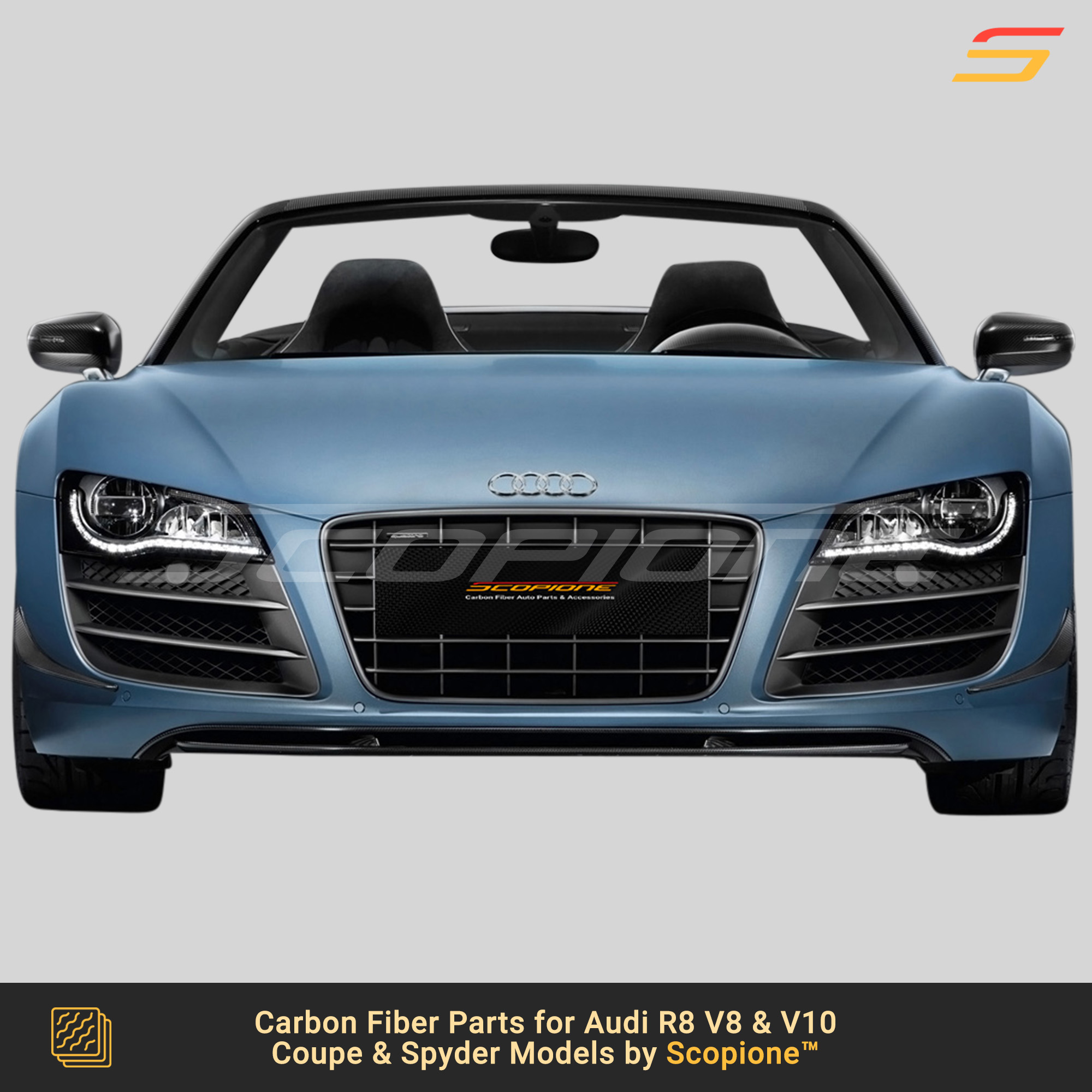
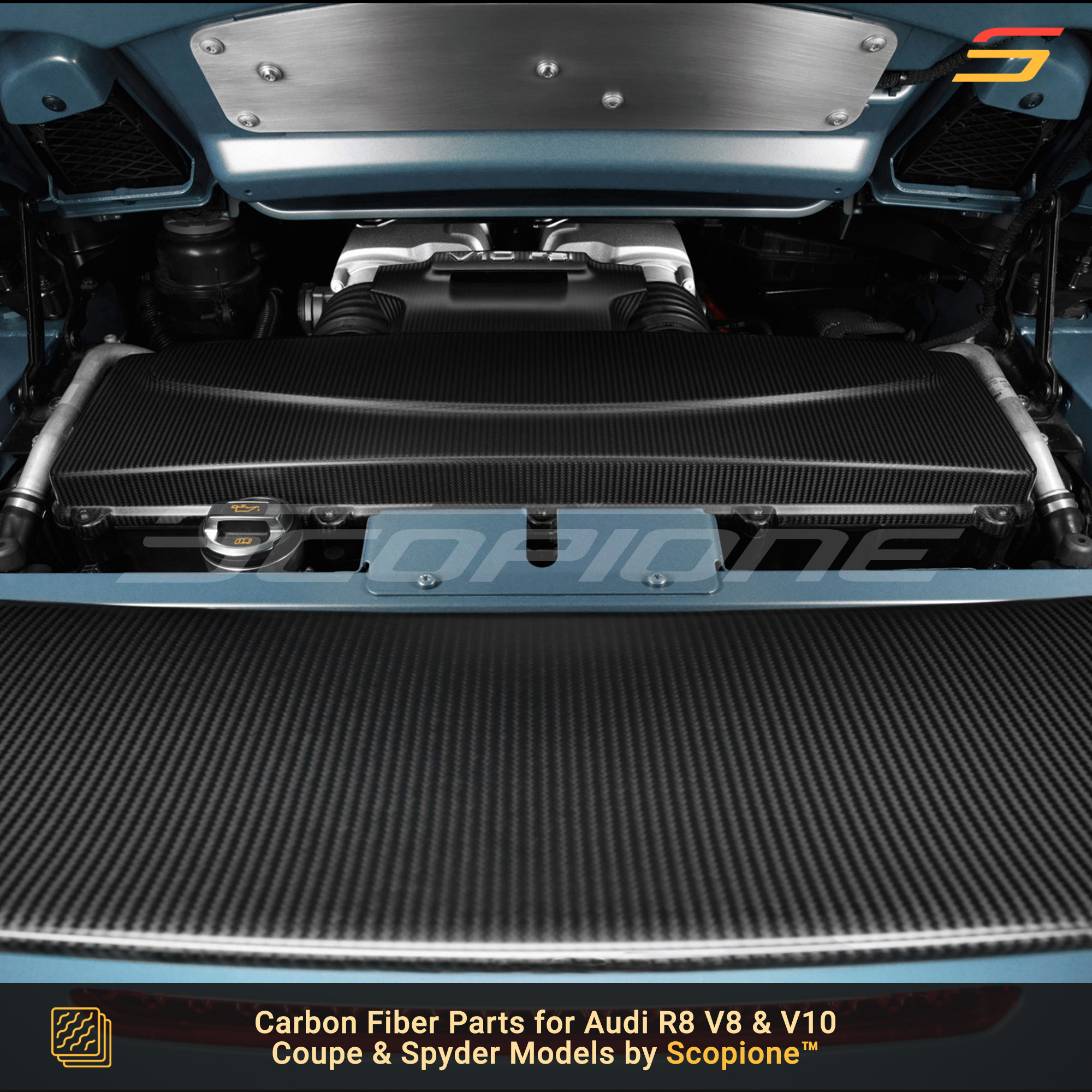
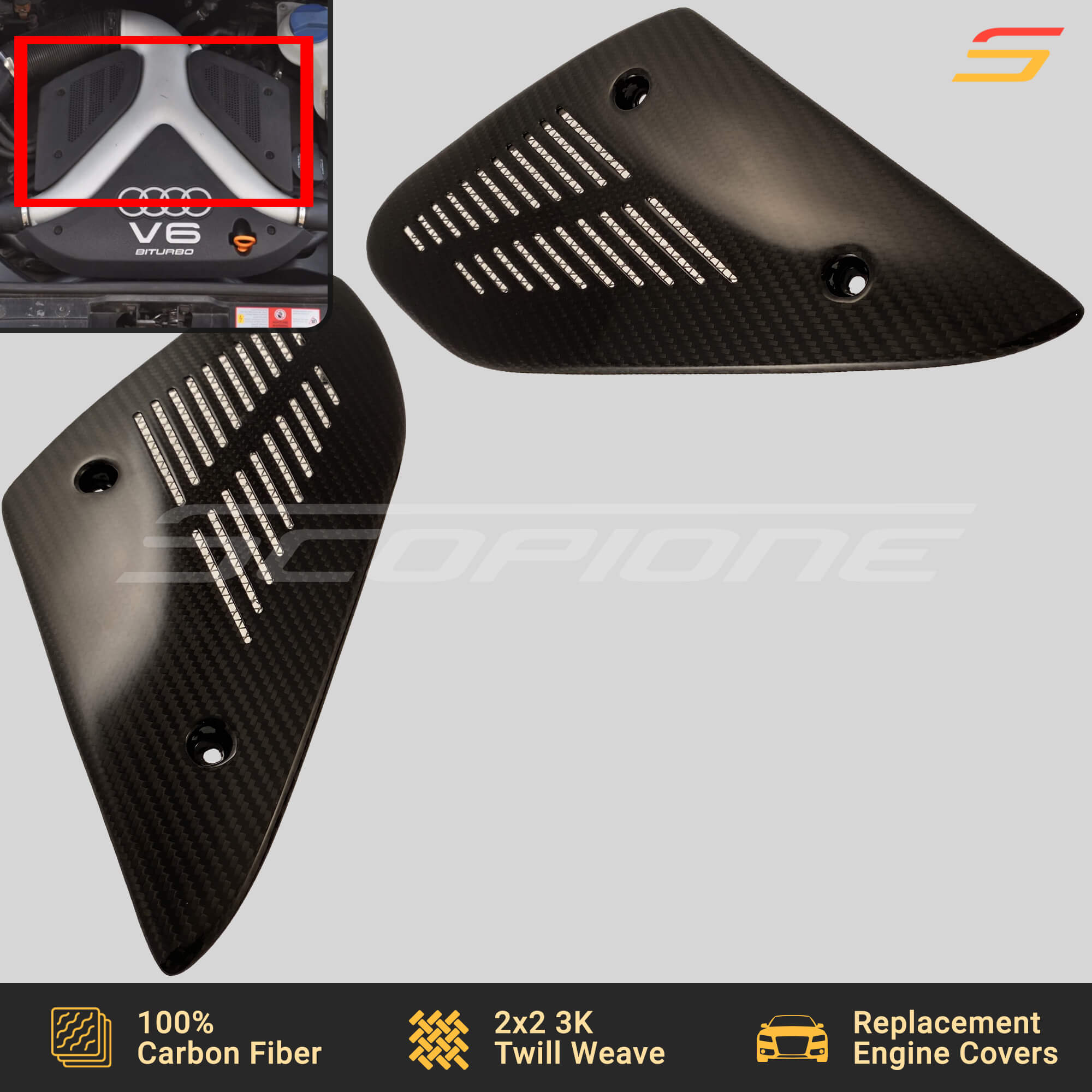
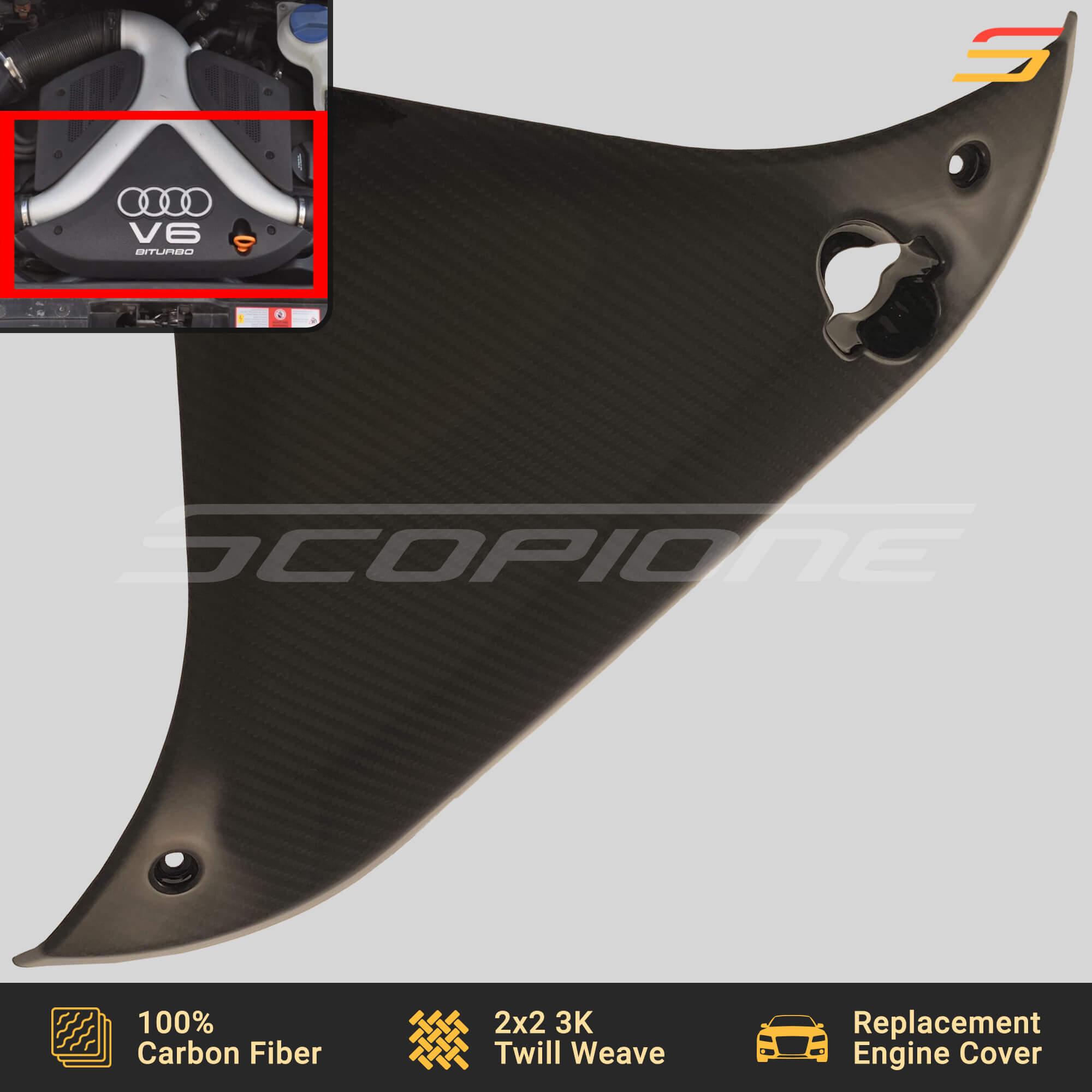
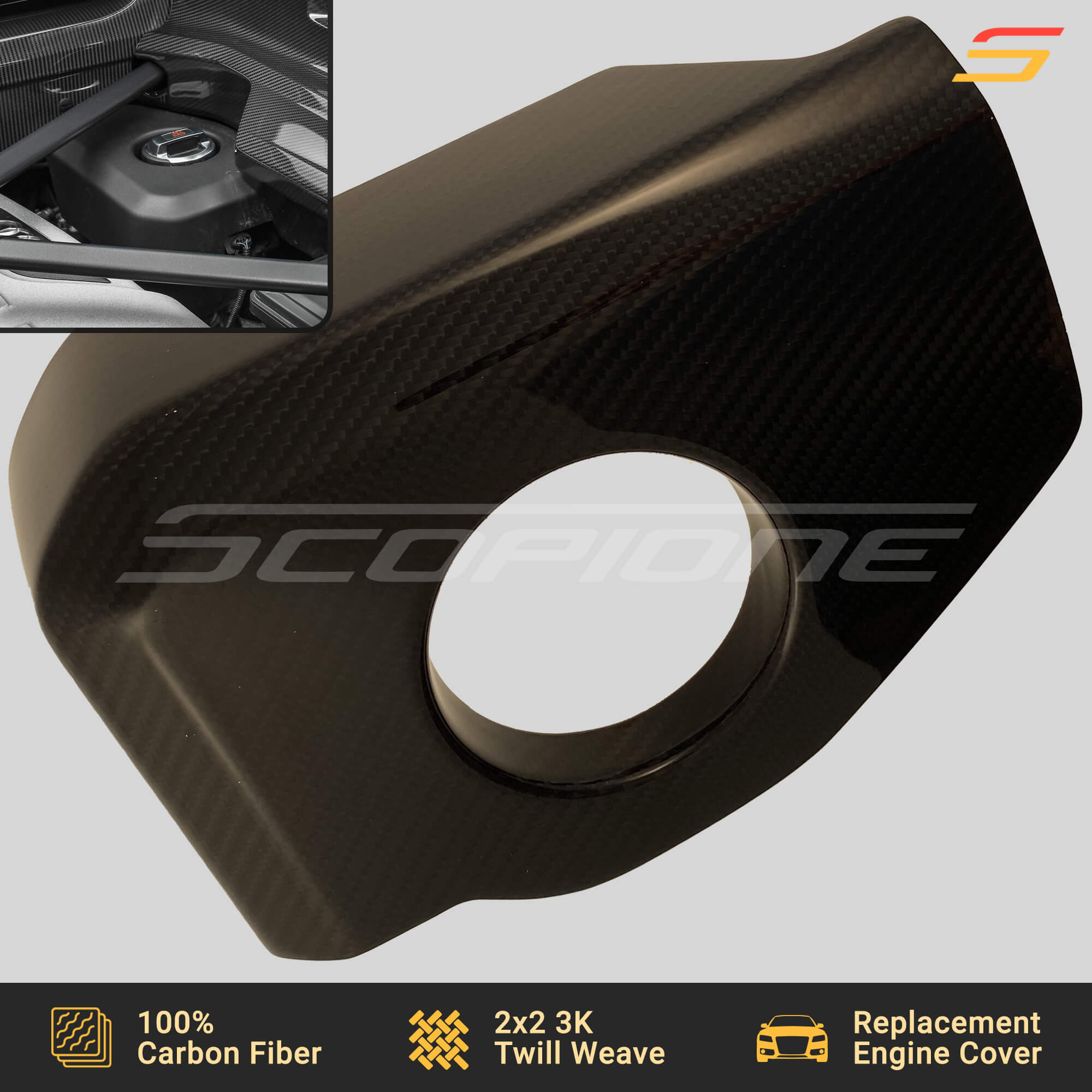
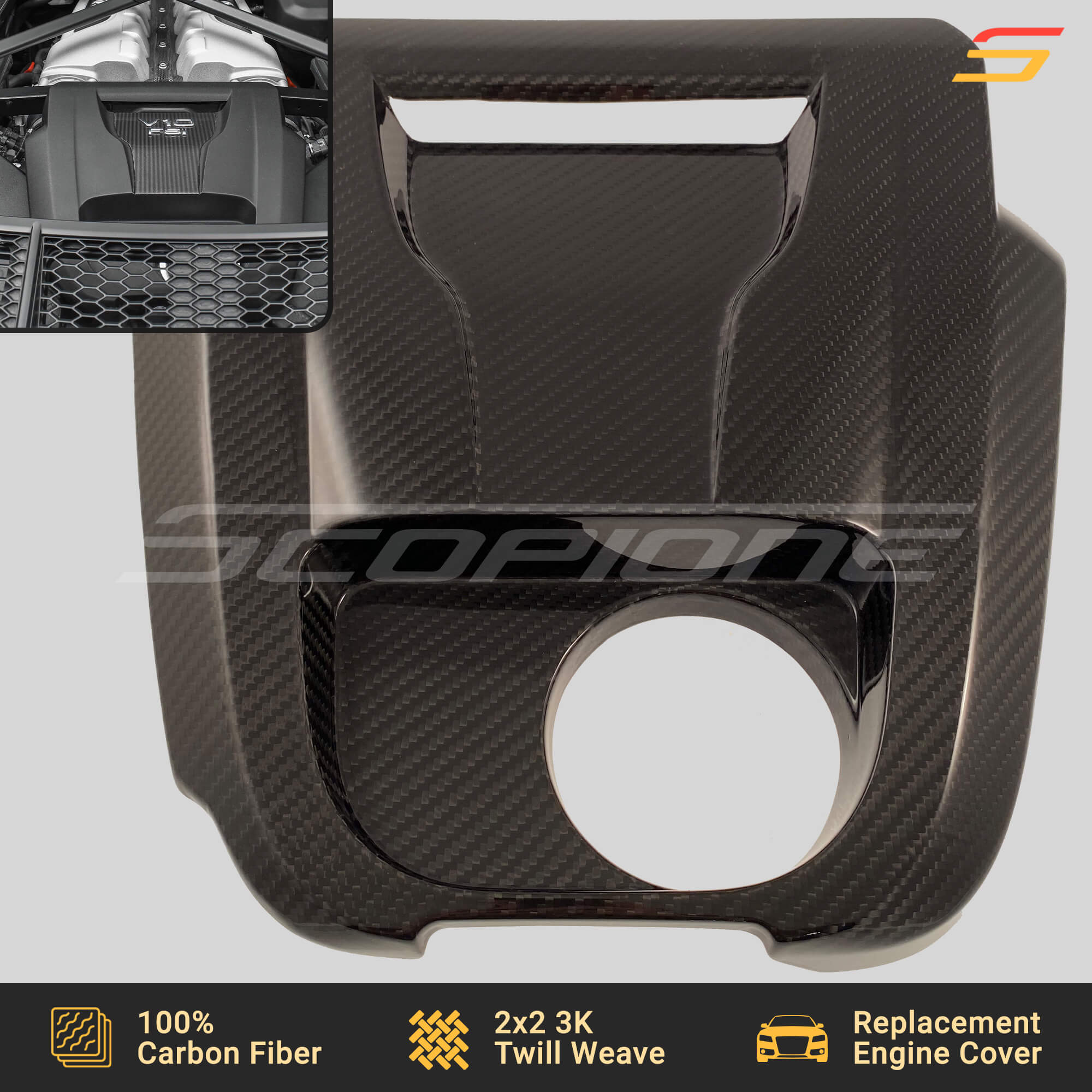
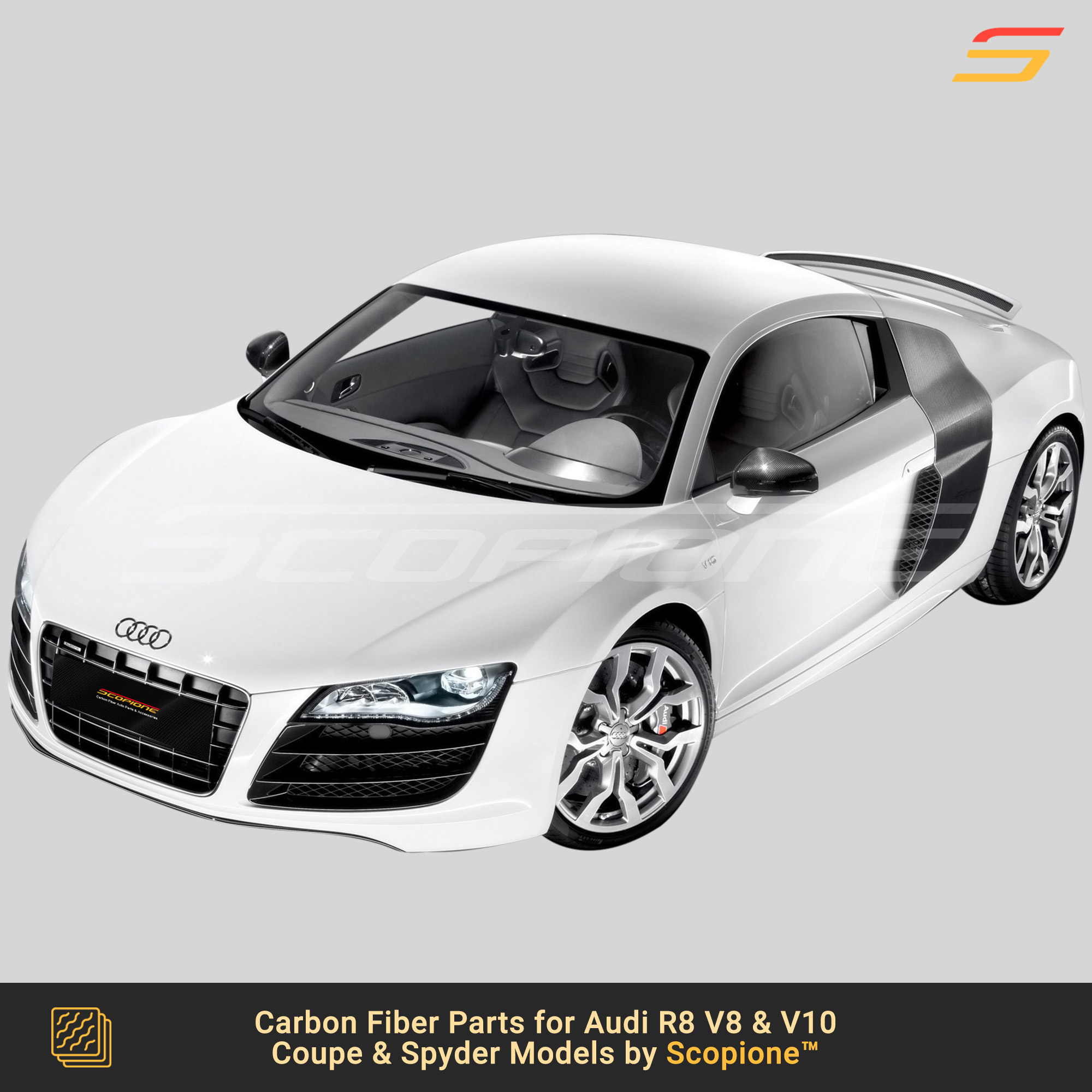
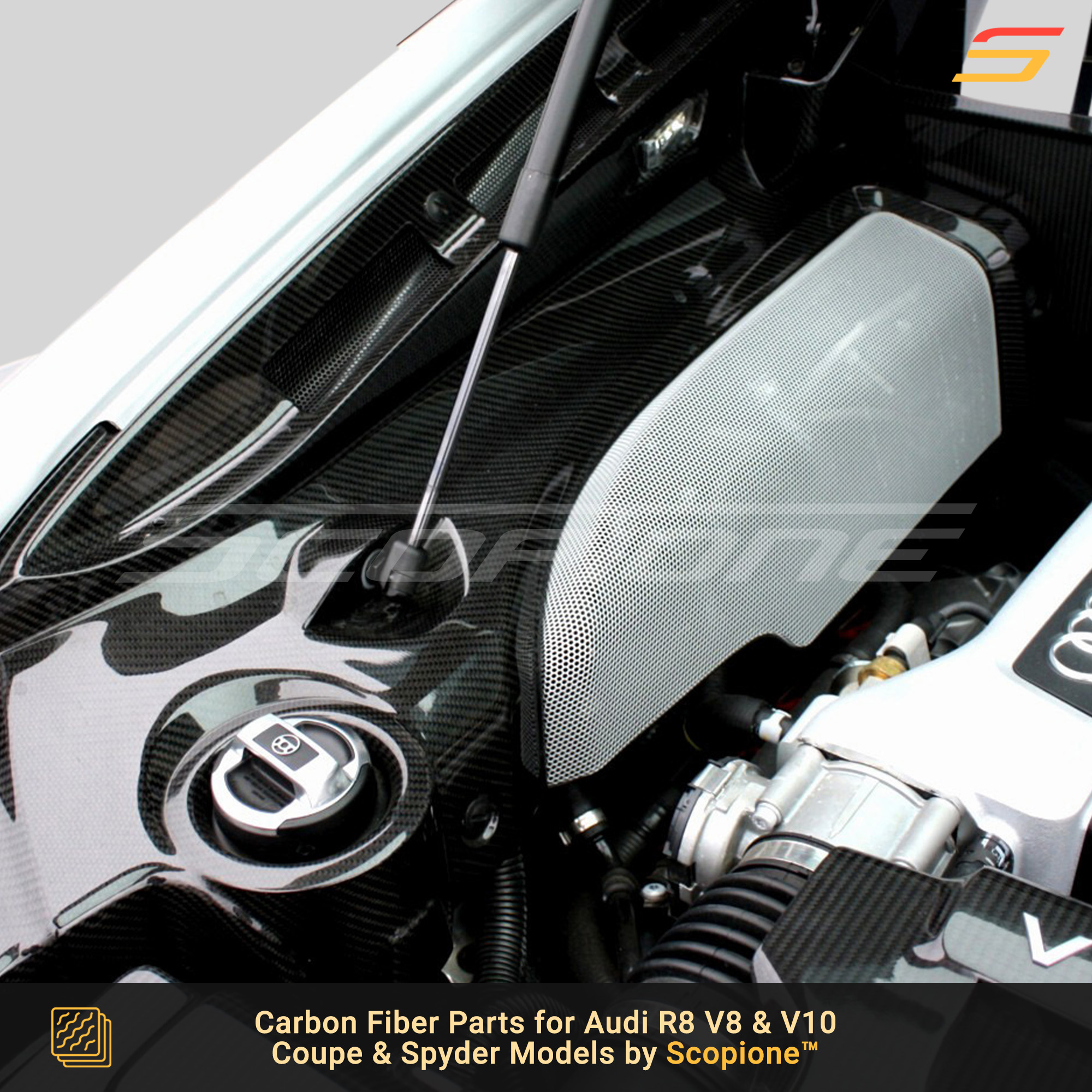
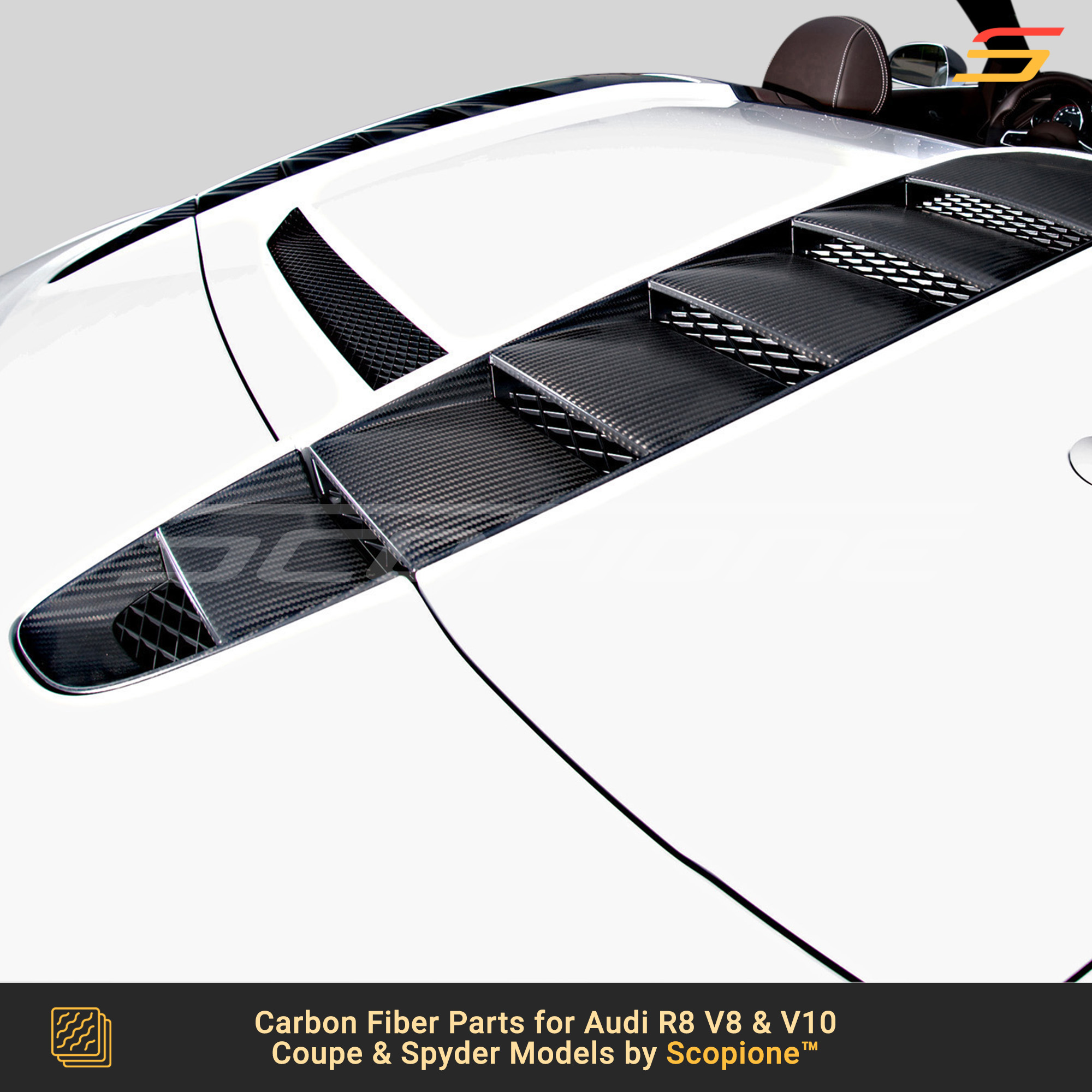
The technology pipeline from Le Mans to the R8 showroom ran through carbon fiber. Audi’s racing monocoques taught the company how CFRP behaves under extreme load, sustained heat cycling, and high-speed impact. That knowledge informed the structural carbon-fiber elements in the second-generation R8 and continues to shape Audi’s approach to CFRP integration. Scopione’s Audi R8 catalog includes carbon-fiber front lip spoilers, mirror caps, side blades, and engine bay covers, connecting R8 owners to a racing lineage validated over thirteen Le Mans victories at Circuit de la Sarthe.

2007–2018: Carbon Fiber Meets the Road – R8, RS, and Le Mans Dominance
This era marks the transfer of carbon fiber from Audi’s racing programs to its production vehicles. The first-generation R8 debuted in aluminum; the second generation integrated CFRP structurally. RS models began offering carbon-fiber packages as factory options. And the R18 e-tron quattro won Le Mans three consecutive years with a CFRP monocoque and hybrid powertrain. Technology proved in competition arrived on the road within a product cycle.
Audi R8 (Typ 42, 2007–2015)
Audi’s first mid-engine production supercar arrived in 2007, and it carried a name borrowed directly from the Le Mans program. The R8 inherited its platform architecture from a joint VW Group development that also underpinned the Lamborghini Gallardo, though Audi used its own Audi Space Frame aluminum body rather than Lamborghini’s steel-aluminum hybrid structure. The ASF body-in-white weighed approximately 210 kg, reflecting two decades of aluminum construction refinement that started with the D2 A8. The V8 engine (4.2-liter FSI, 420 hp) shared its basic architecture with the RS 4 and RS 5 powerplants, while the V10 (5.2-liter FSI, 525 hp) was jointly developed with Lamborghini and installed in both the R8 and the Gallardo LP560-4. Both engines were naturally aspirated and paired with either a gated manual transmission or R-tronic automated-manual gearbox.
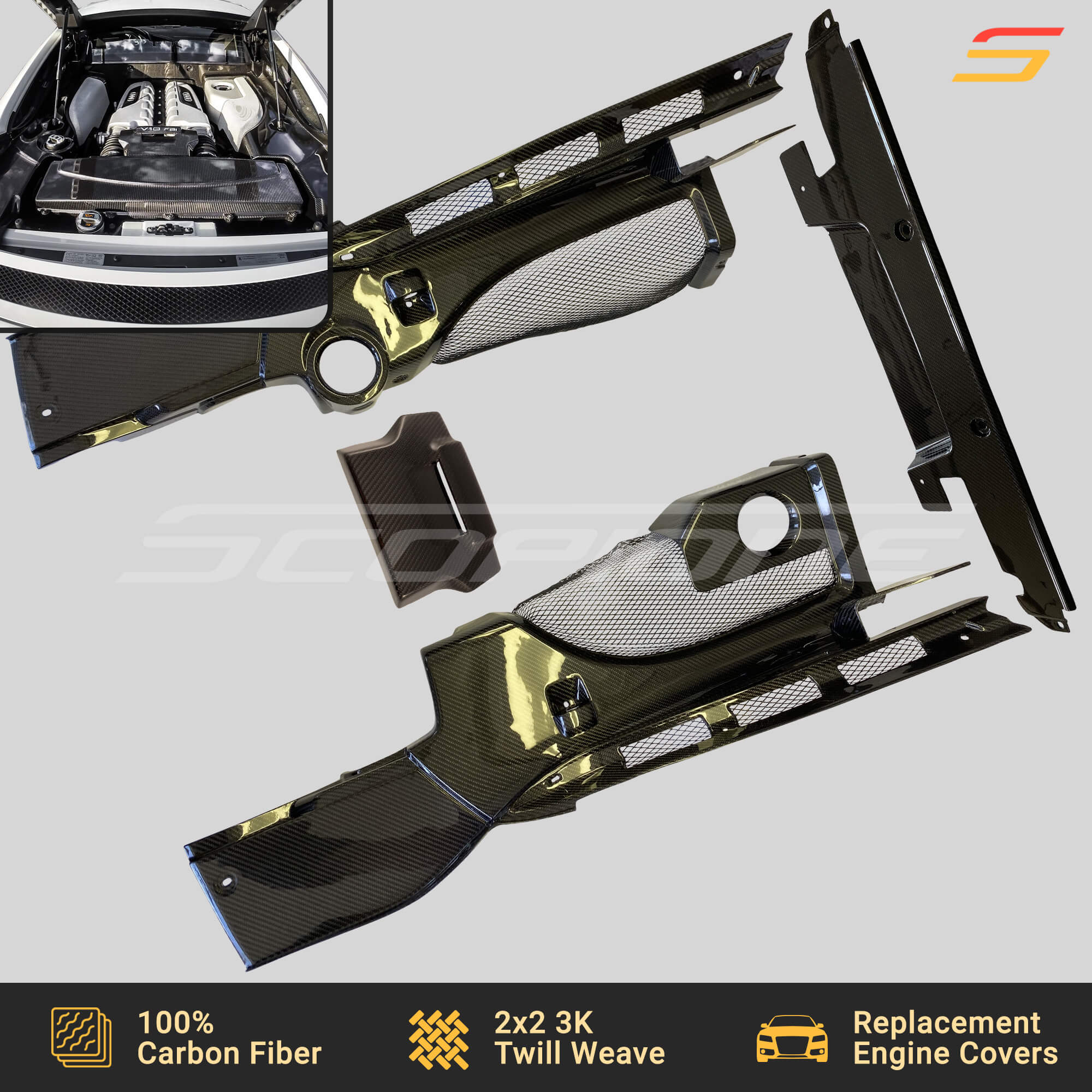
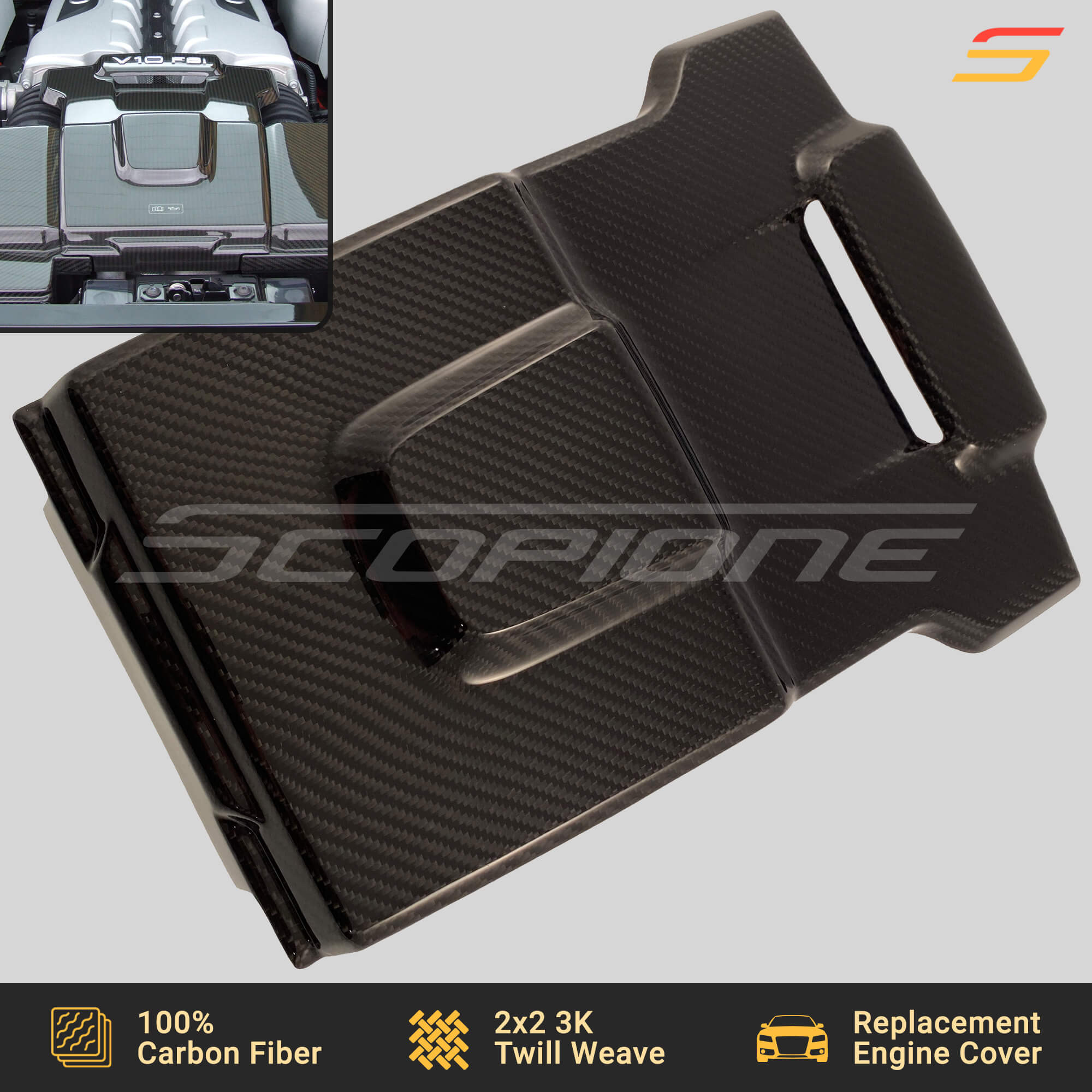
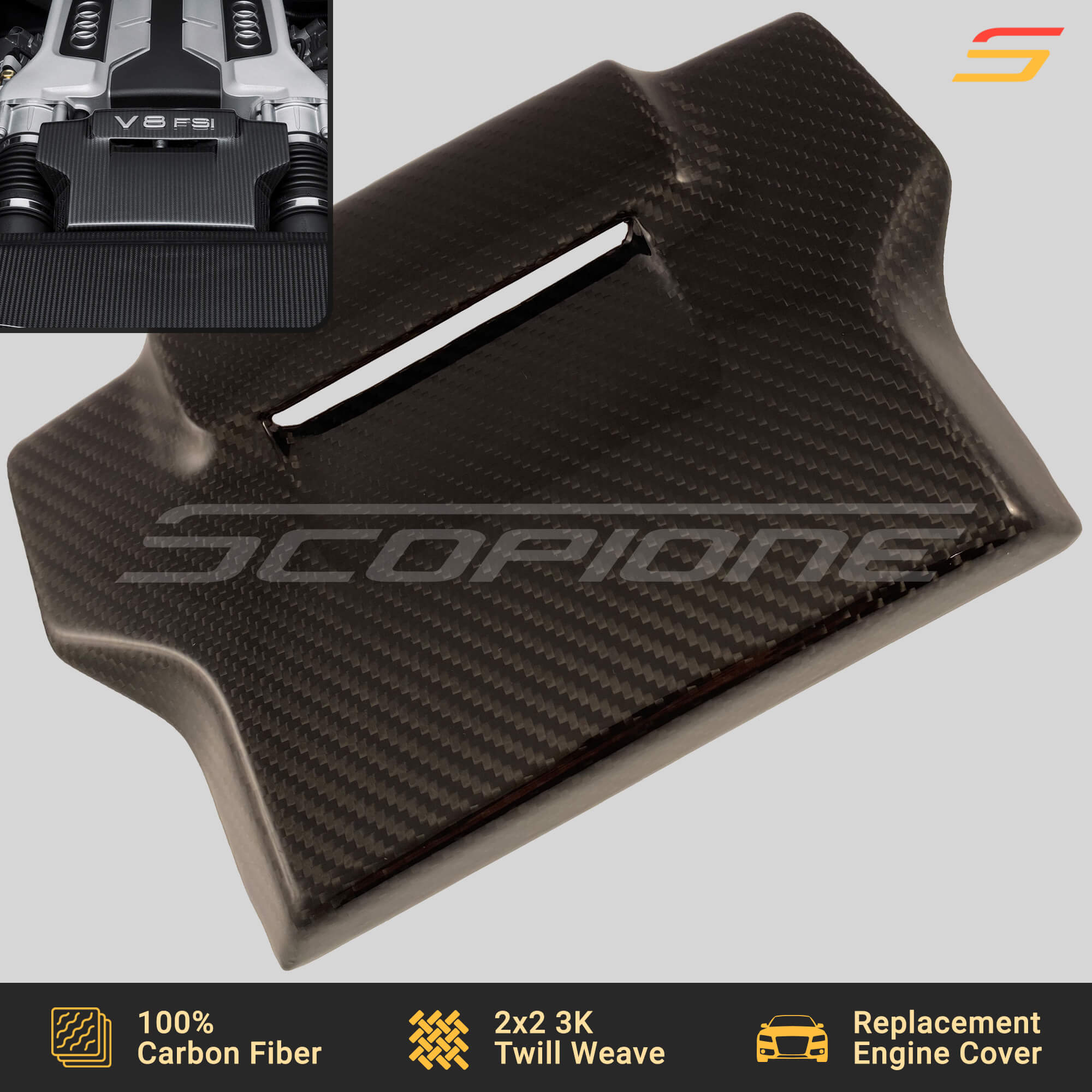
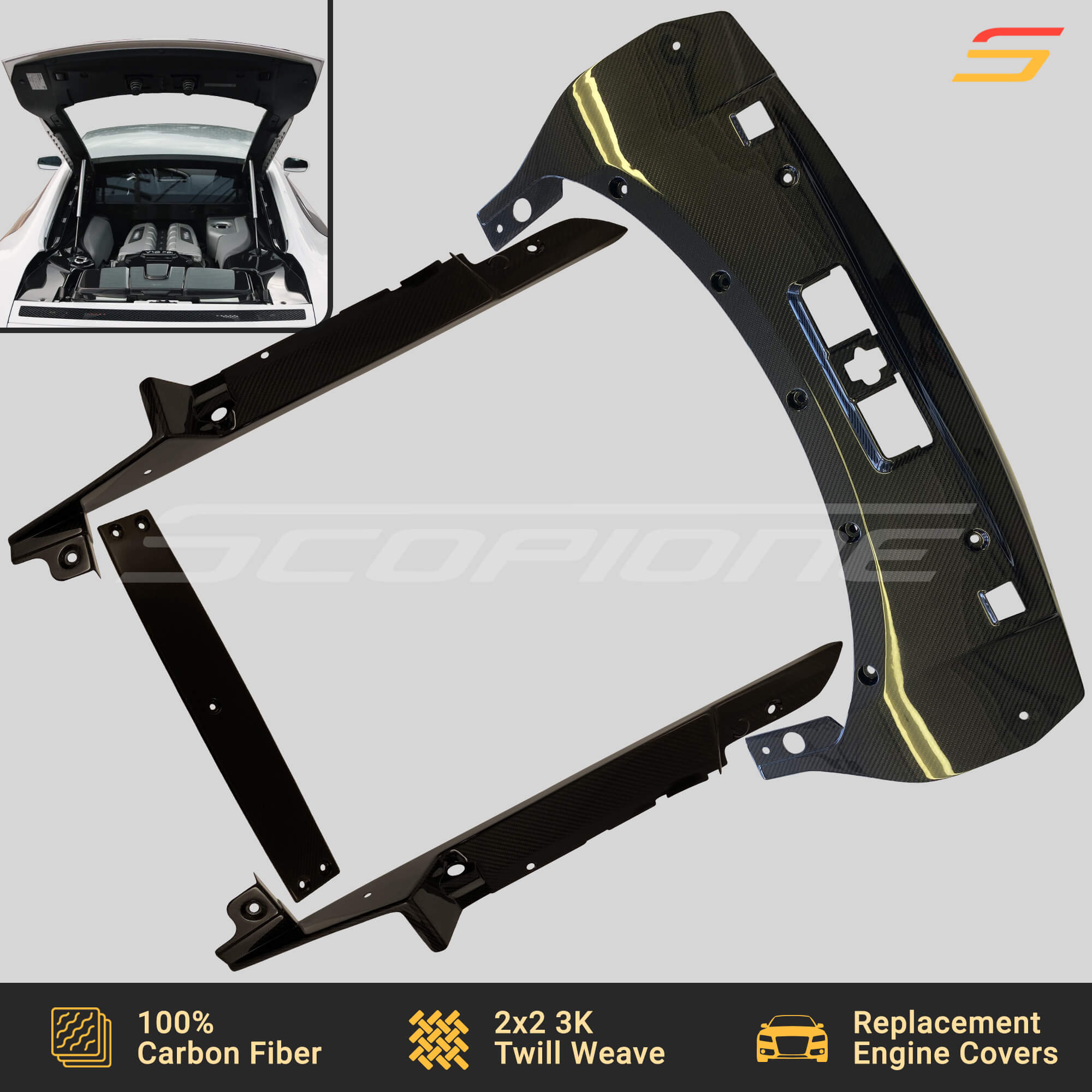
Carbon fiber on the first-generation R8 was decorative and aerodynamic rather than structural. The signature side blades (the air intake panels behind the doors) were available in visible carbon fiber as an option. Carbon-fiber engine bay covers, mirror caps, and interior trim pieces expanded the catalog through Audi’s accessories program. The R8 GT (2011, limited to 333 units) went further: a fixed rear wing in CFRP, CF front splitter and diffuser, 560 hp from the V10, and approximately 100 kg of weight reduction.
- Engine: 4.2L V8 FSI (420 hp) / 5.2L V10 FSI (525 hp)
- Body: Audi Space Frame, all-aluminum (~210 kg BIW)
- R8 GT: 333 units, CFRP rear wing/splitter/diffuser, 560 hp, ~100 kg lighter
- Platform shared with Lamborghini Gallardo
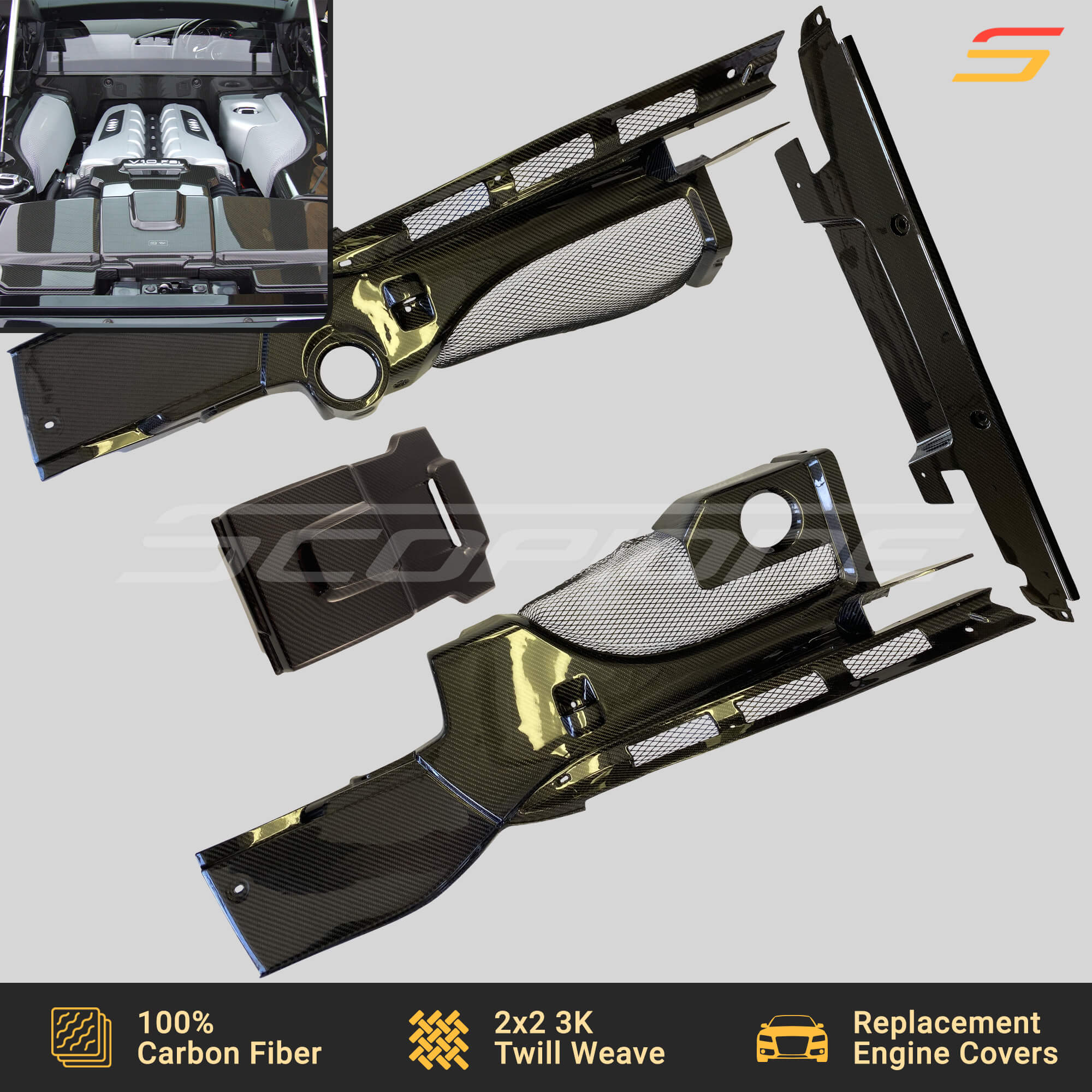
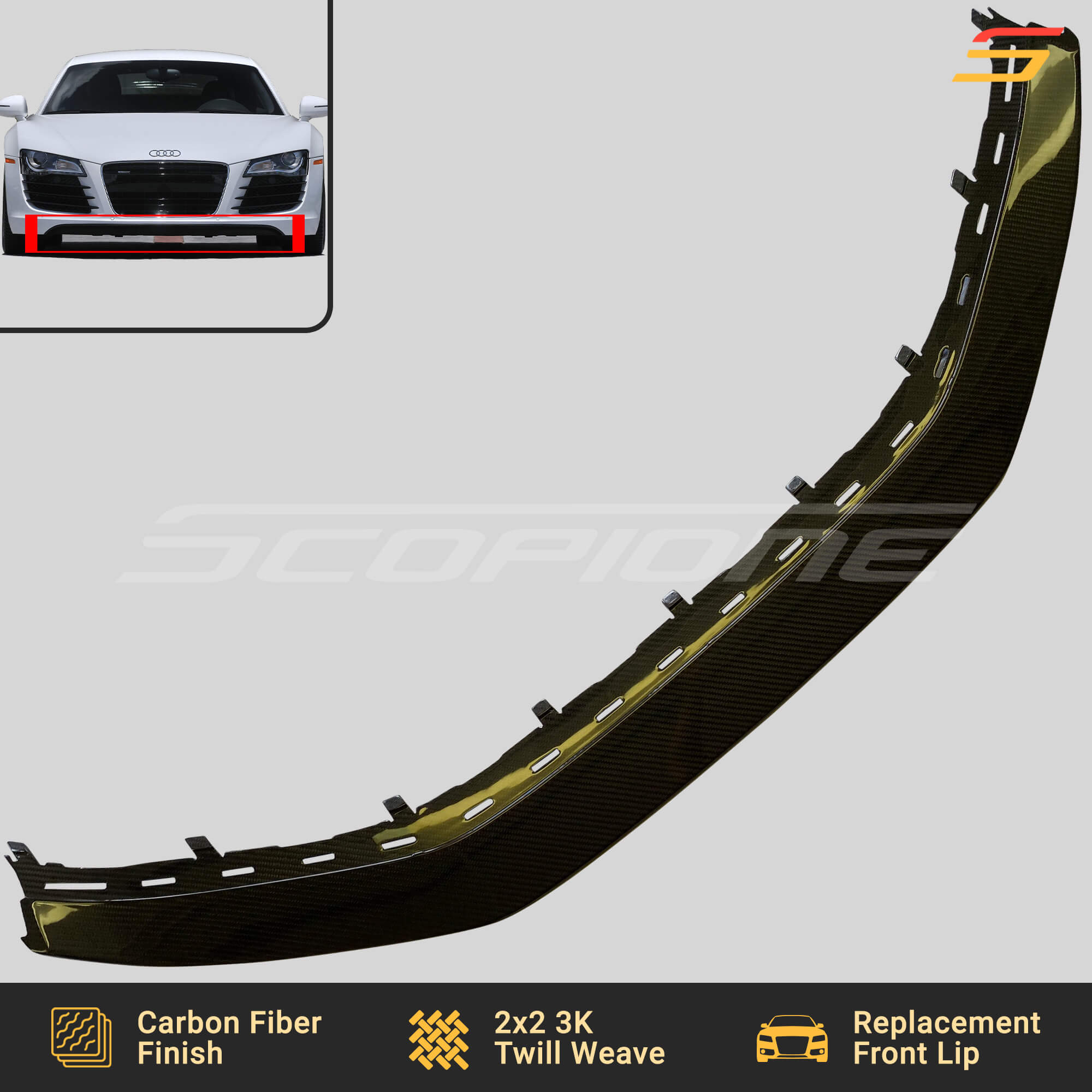
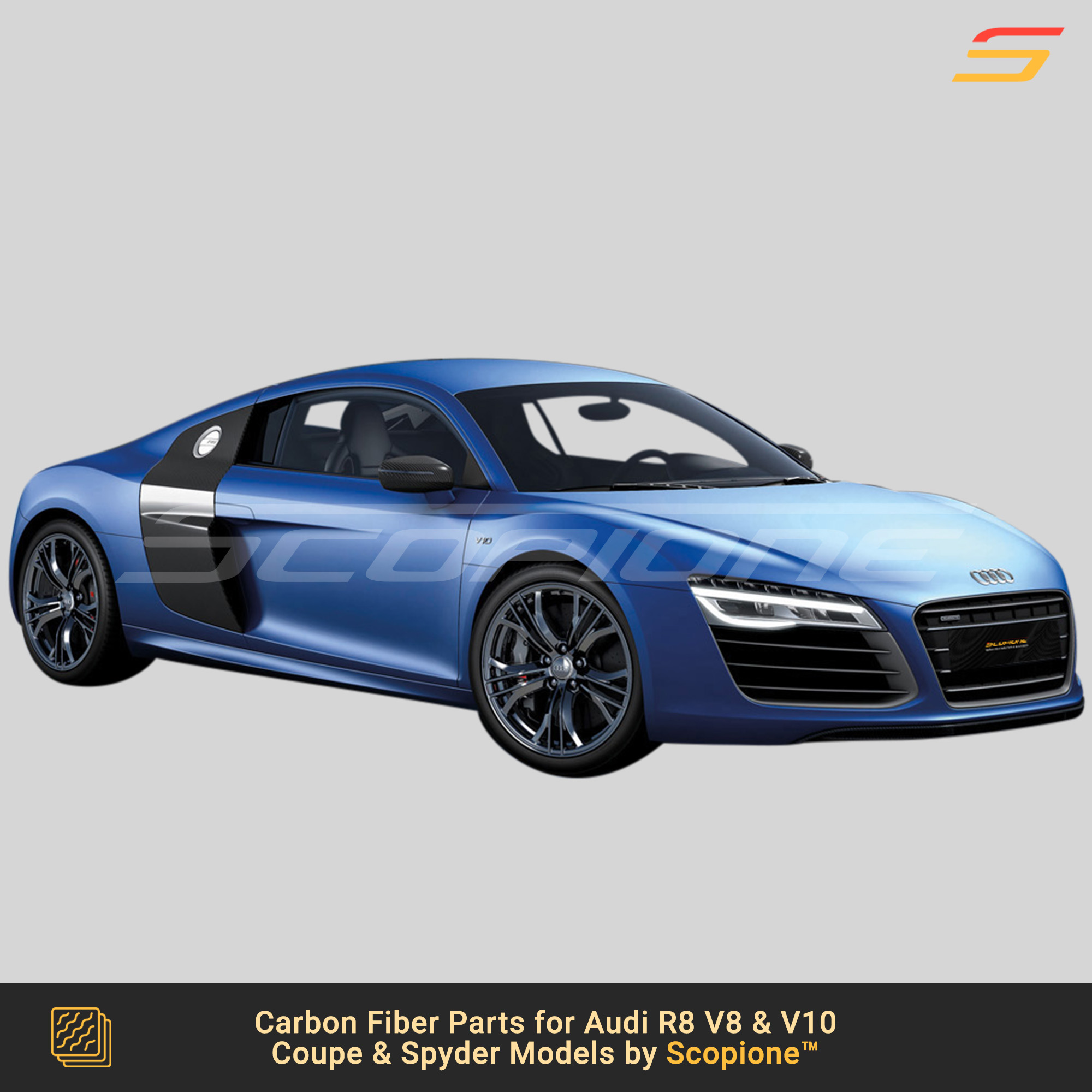
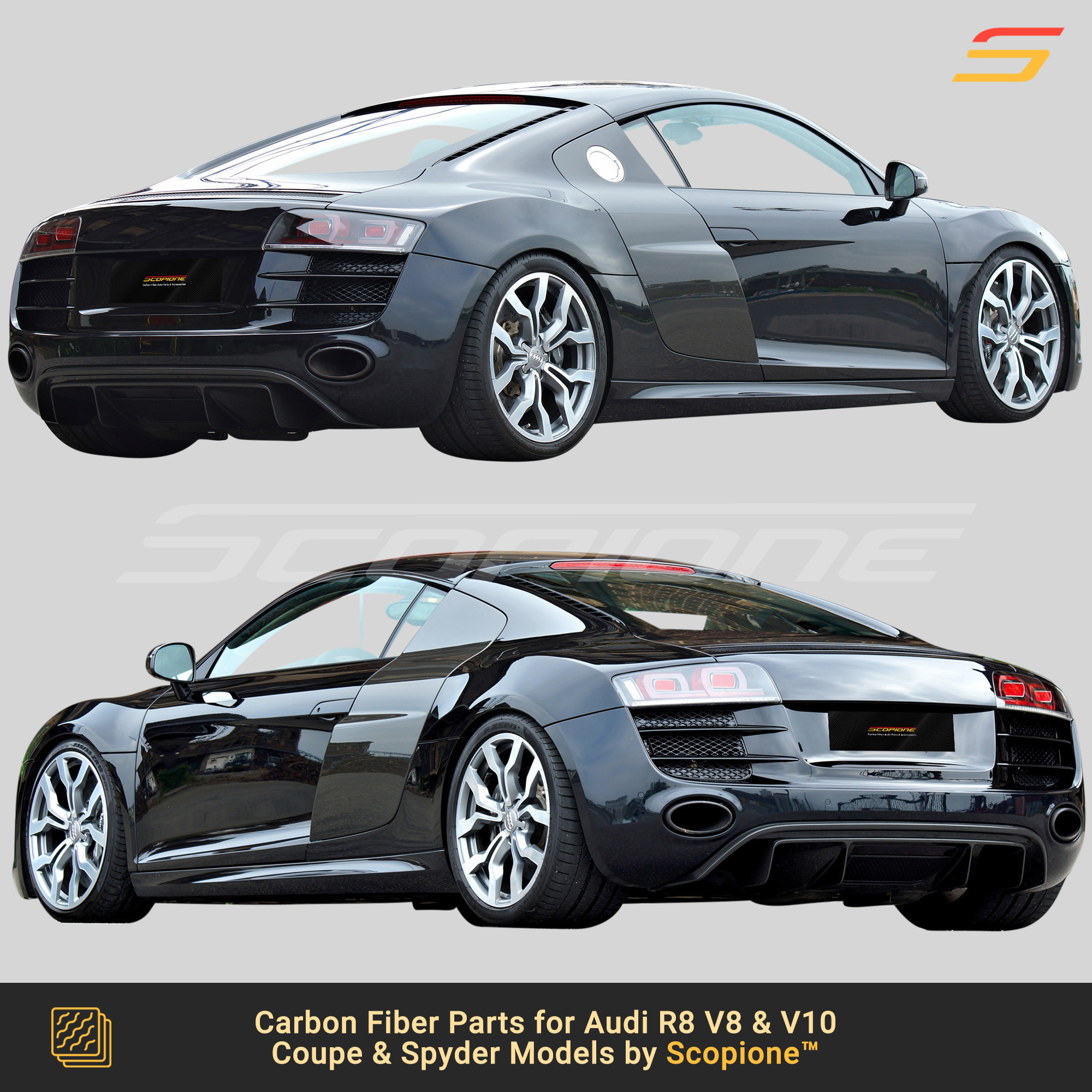
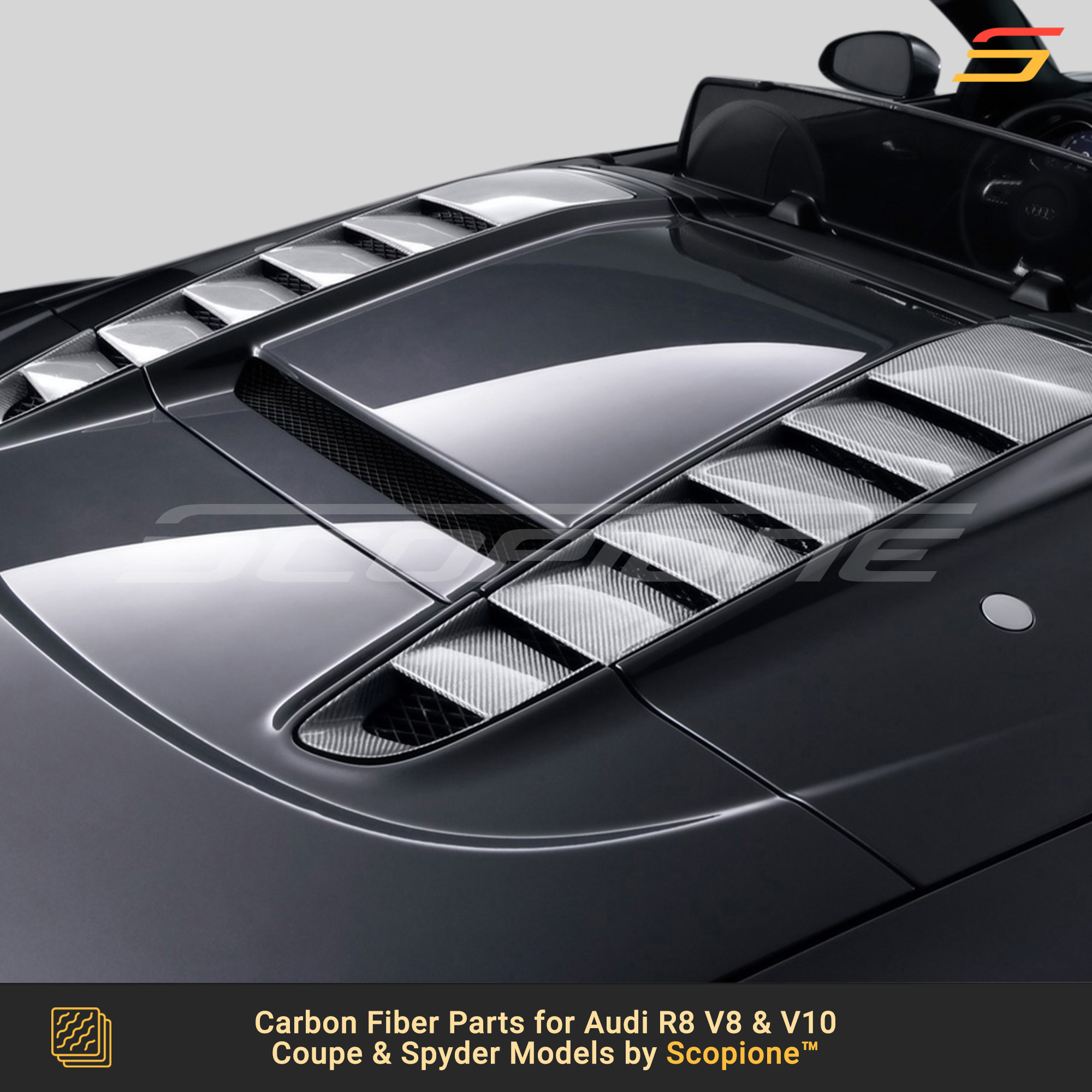
The R8’s commercial success proved Audi could compete against Porsche, Ferrari, and its own subsidiary Lamborghini in the supercar segment. Its Le Mans-derived name was deliberate branding, trading on endurance racing credibility to position a road car. And its carbon-fiber accessories created measurable customer demand for CF-equipped Audis, justifying the investment in structural CFRP for the second generation. R8 owners looking to add carbon-fiber exterior components (front lip spoilers, side blades, diffusers) can explore Scopione’s Audi R8 Picture Gallery for fitment references and installation context.

Audi R18 e-tron quattro (2012–2016)
Three consecutive Le Mans victories: 2012, 2013, 2014. The R18 e-tron quattro combined a 4.0-liter V6 TDI with a hybrid energy recovery system — first a flywheel-based system, later lithium-ion batteries, for a combined output of approximately 850 hp. The hybrid configuration allowed electric-only acceleration out of slow corners and diesel efficiency on the Mulsanne Straight. The hybrid configuration demanded an entirely new level of packaging complexity from Audi Sport’s chassis engineers.
The CFRP monocoque represented the peak of Audi’s carbon fiber racing expertise. Built entirely from carbon fiber, the tub managed both diesel torsional loads and hybrid battery cell packaging while meeting FIA crash safety requirements that tightened with each regulation cycle. In 2014, Loic Duval’s R18 became airborne on the Mulsanne Straight in a catastrophic accident — the CFRP safety cell protected the driver while the rest of the car disintegrated. The monocoque weighed approximately 80 kg.
- Chassis: Full CFRP monocoque (~80 kg) by Audi Sport
- Powertrain: 4.0L V6 TDI + hybrid, ~850 hp combined
- Le Mans wins: 2012, 2013, 2014
- Audi’s total Le Mans tally: 13 victories (2000–2014)
Audi withdrew from the WEC after the 2016 season to redirect resources toward Formula E and electric vehicle development. But thirteen Le Mans victories across the R8 LMP, R10 TDI, R15 TDI Plus, and R18 e-tron quattro gave Audi more CFRP monocoque racing experience than almost any manufacturer in history. The engineering staff dispersed across Audi’s road car divisions, carrying that expertise with them.
Audi RS 5 (B8, 2010–2016)
The B8 RS 5 paired the naturally aspirated 4.2-liter V8 with quattro and a sport differential. The engine shared its basic architecture with the first-generation R8’s V8. It revved to 8,250 rpm with a flat, linear power delivery that rewarded committed driving. The 444 hp output arrived at high rpm through direct injection (FSI), and the V8’s throttle response was immediate in a way that turbocharged successors would struggle to replicate.
An optional CFRP roof panel was the first carbon fiber offered on an Audi RS coupe, signaling that the material was migrating from supercars into the broader performance lineup. The CFRP roof lowered the vehicle’s center of gravity by reducing weight at the highest point of the body structure, a benefit that improved turn-in response and high-speed stability. Carbon-fiber mirror caps and interior trim pieces expanded the CF options further. Audi priced the RS 5’s CFRP roof at a premium that reflected the material’s manufacturing cost, but customers who specified it received a genuine structural benefit alongside the visual distinction of exposed carbon weave.
- Engine: 4.2L V8 FSI, 444 hp, 8,250 rpm redline
- Carbon fiber: Optional CFRP roof, CF mirror caps, interior trim
- Last naturally aspirated RS model before the lineup switched to turbocharging
- Sport differential: Torque vectoring on rear axle for improved cornering
Audi R8 V10 Plus / Performance (Typ 4S, 2015–2023)
The second-generation R8 integrated CFRP into the Audi Space Frame for the first time. The redesigned ASF combined aluminum extrusions and castings with a carbon-fiber rear wall, CFRP B-pillar reinforcements, and CFRP sill inserts. The result: a multi-material body structure 15% stiffer and approximately 50 kg lighter than the first generation’s all-aluminum frame. The car shared its platform with the Lamborghini Huracan (itself a significant CFRP user through the Forged Composite rear bulkhead), and Audi assembled it at the Bollinger Hofe facility in Neckarsulm alongside the A8 and, later, the e-tron GT.
This was the first Audi road car to use CFRP structurally within the body-in-white. The carbon-fiber rear wall replaced an aluminum panel behind the engine bay, reducing weight while adding torsional rigidity at a critical structural junction between the passenger cell and the engine compartment. CFRP B-pillar reinforcements improved crash performance without adding mass, using layups optimized to absorb side-impact energy. The sill inserts contributed to overall structural stiffness while protecting the lower body sides. The manufacturing process, resin transfer molding developed at Audi’s Lightweight Design Center, drew directly on expertise accumulated through twenty years of Le Mans CFRP monocoques. Engineers who had worked on the R18 program contributed to the R8’s carbon-fiber integration, ensuring that racing-grade CFRP knowledge informed the road car’s structural design.
- Engine: 5.2L V10 FSI, 540–620 hp (Performance: 620 hp)
- Body: ASF with CFRP rear wall, B-pillar, and sill inserts
- 0–60 mph: 3.2 seconds (V10 Performance)
- Standard CF side blades on V10 Performance; optional CF splitter, diffuser, engine cover
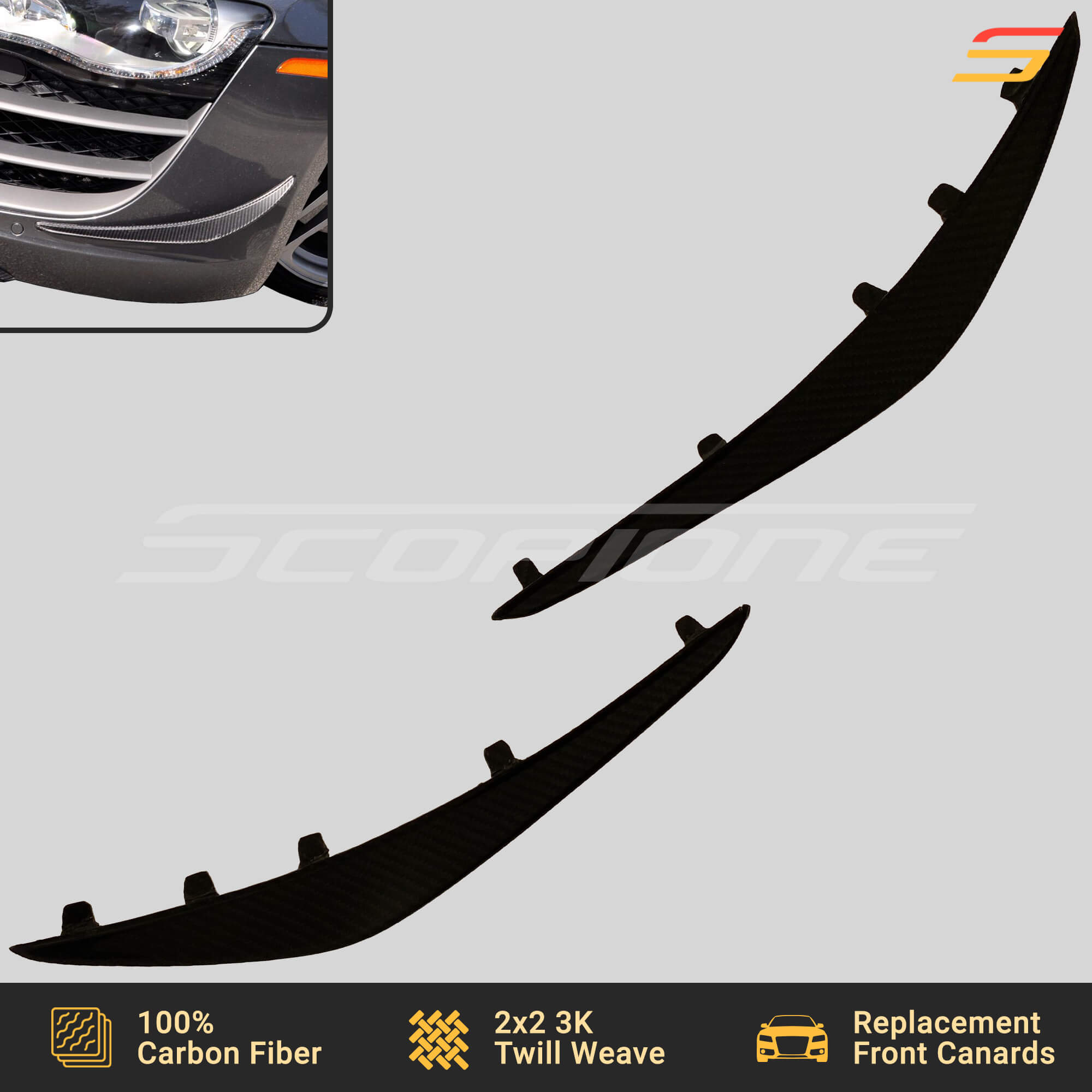
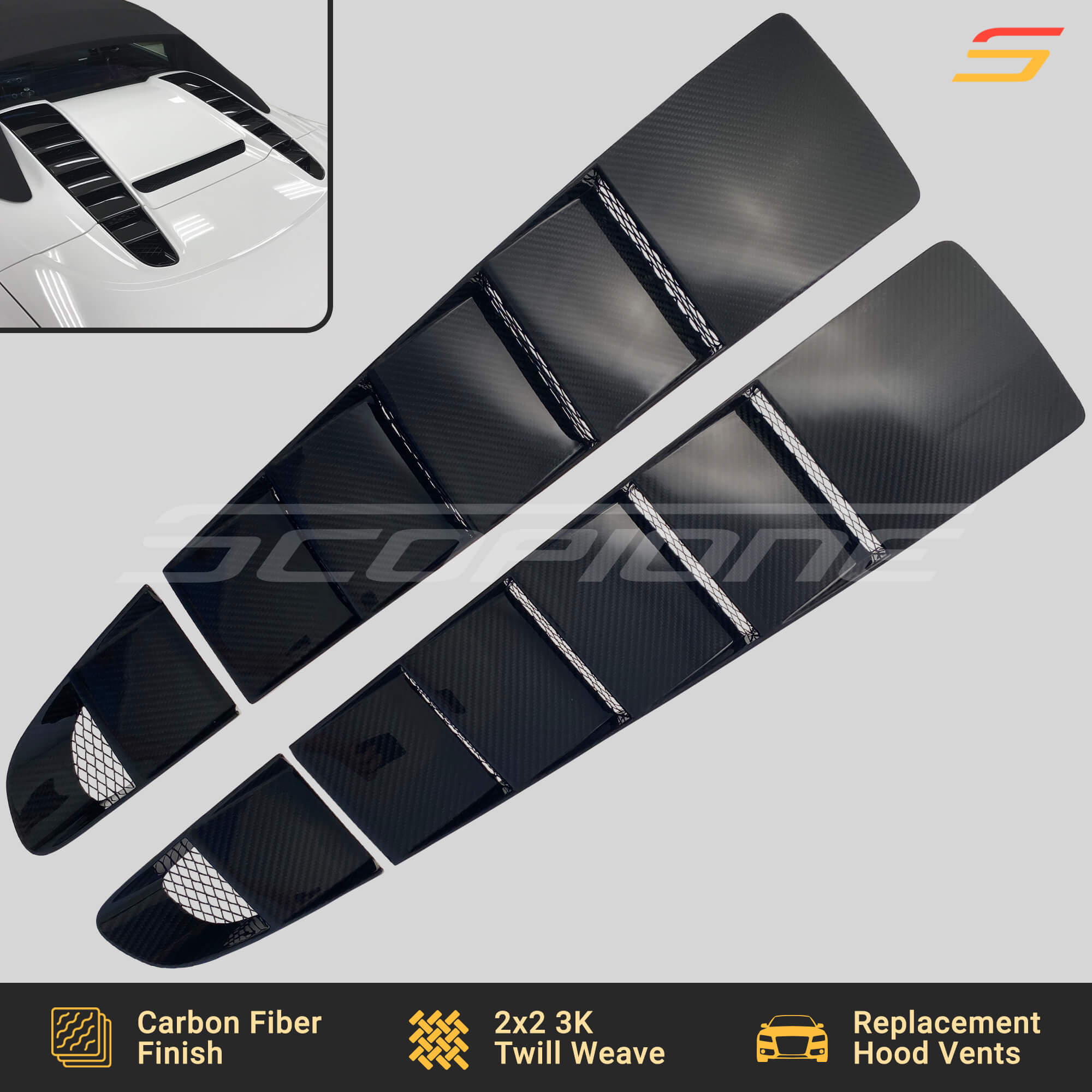
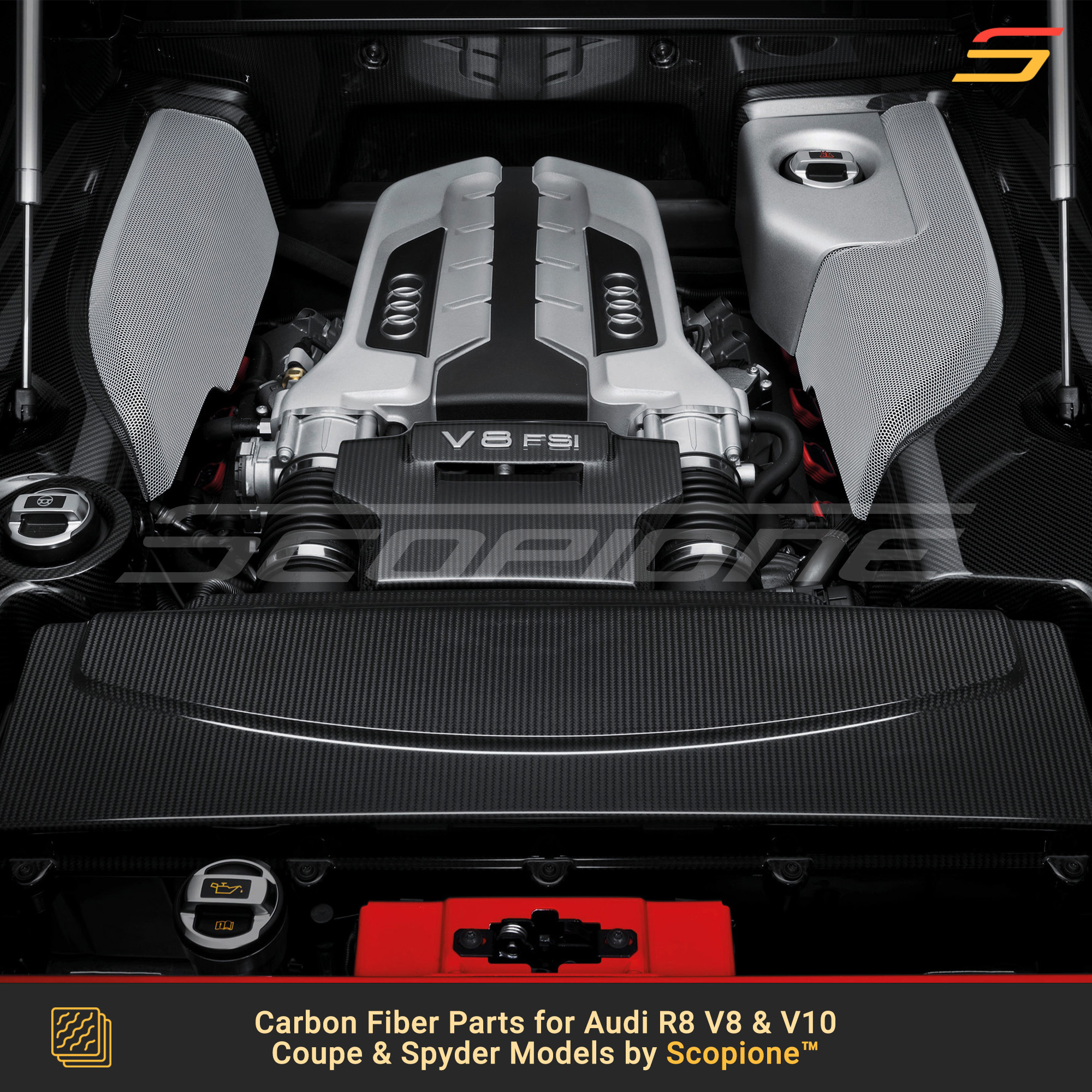
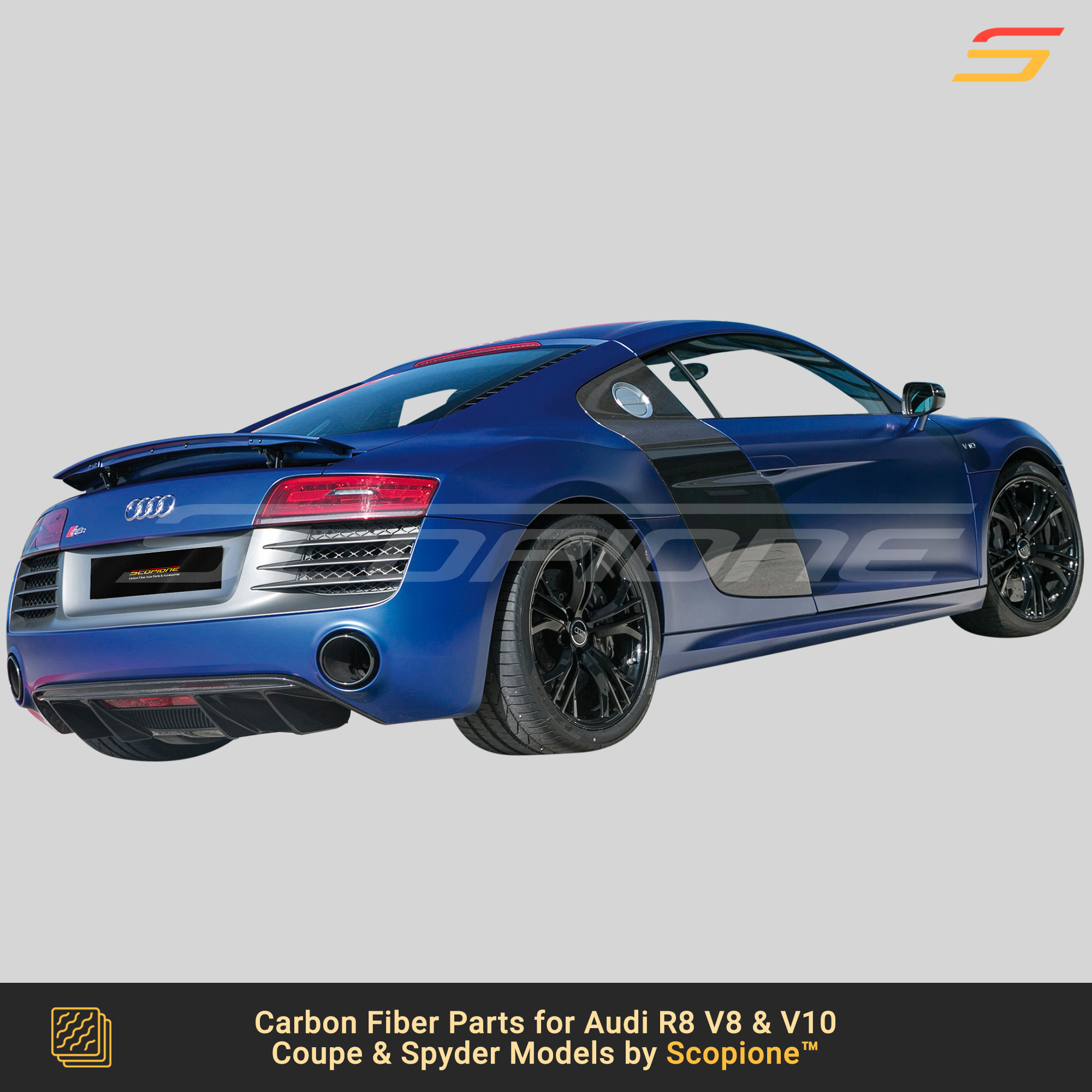
The R8 V10 Performance’s dry weight was listed at 1,595 kg, competitive with the Lamborghini Huracan Performante that shared its platform. Visible carbon-fiber weave on the side blades became a design signature that distinguished the V10 Performance from lesser variants. The exposed 2×2 twill pattern caught light differently at every angle, creating visual depth that painted surfaces cannot replicate. The R8’s carbon-fiber side blades remain one of the defining visual elements of the Typ 4S generation. Scopione’s R8 Picture Gallery documents both generations’ carbon-fiber applications, with fitment references for Coupe and Spyder body configurations.


Audi RS 6 Avant (C7, 2013–2018)
The C7 RS 6 Avant established the high-performance super-wagon as an Audi trademark. A 4.0-liter twin-turbo V8 producing 553 hp (or 605 hp in Performance specification) moved a full-size wagon to 190 mph with the optional speed delimit. The combination of a practical estate body, quattro all-wheel drive, and over 700 Nm of torque created a car that could serve as a family vehicle during the week and outpace sports cars on weekends.
Carbon-fiber components arrived through the RS Design Package: CFRP mirror caps, front splitter inserts, rear diffuser elements, and interior trim including dashboard inlays and door sill plates. The carbon content was aerodynamic and decorative rather than structural, but it demonstrated market appetite for CF trim on performance estates. Customer take rates on the CF options package influenced Audi’s decision to expand carbon-fiber availability across the C8 RS 6 Avant and RS Q8, where CFRP became near-standard on Performance variants. The C7 RS 6 Avant proved that carbon fiber demand extended beyond two-door sports cars into the practical performance segment.
Scopione Perspective: R8 Carbon Fiber
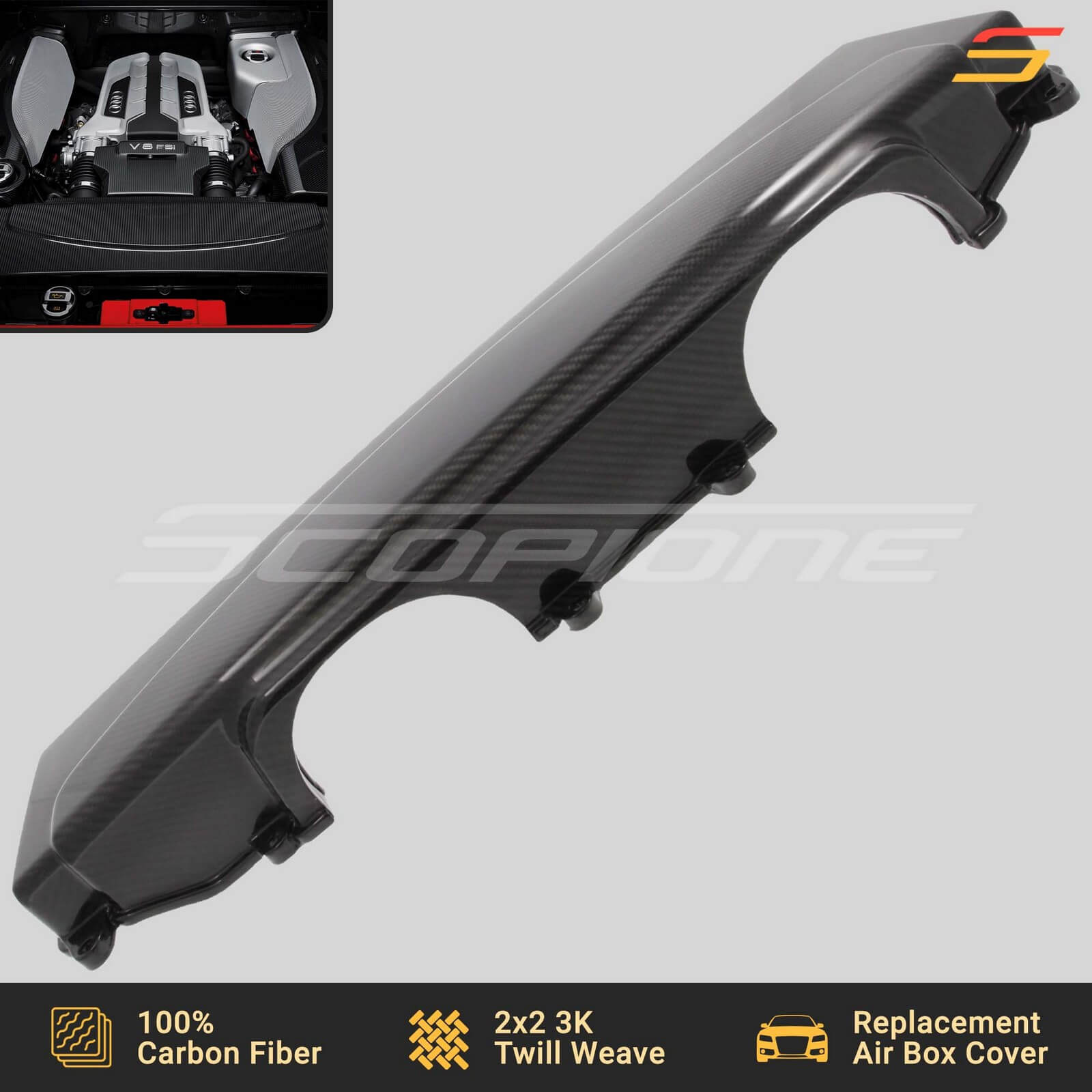
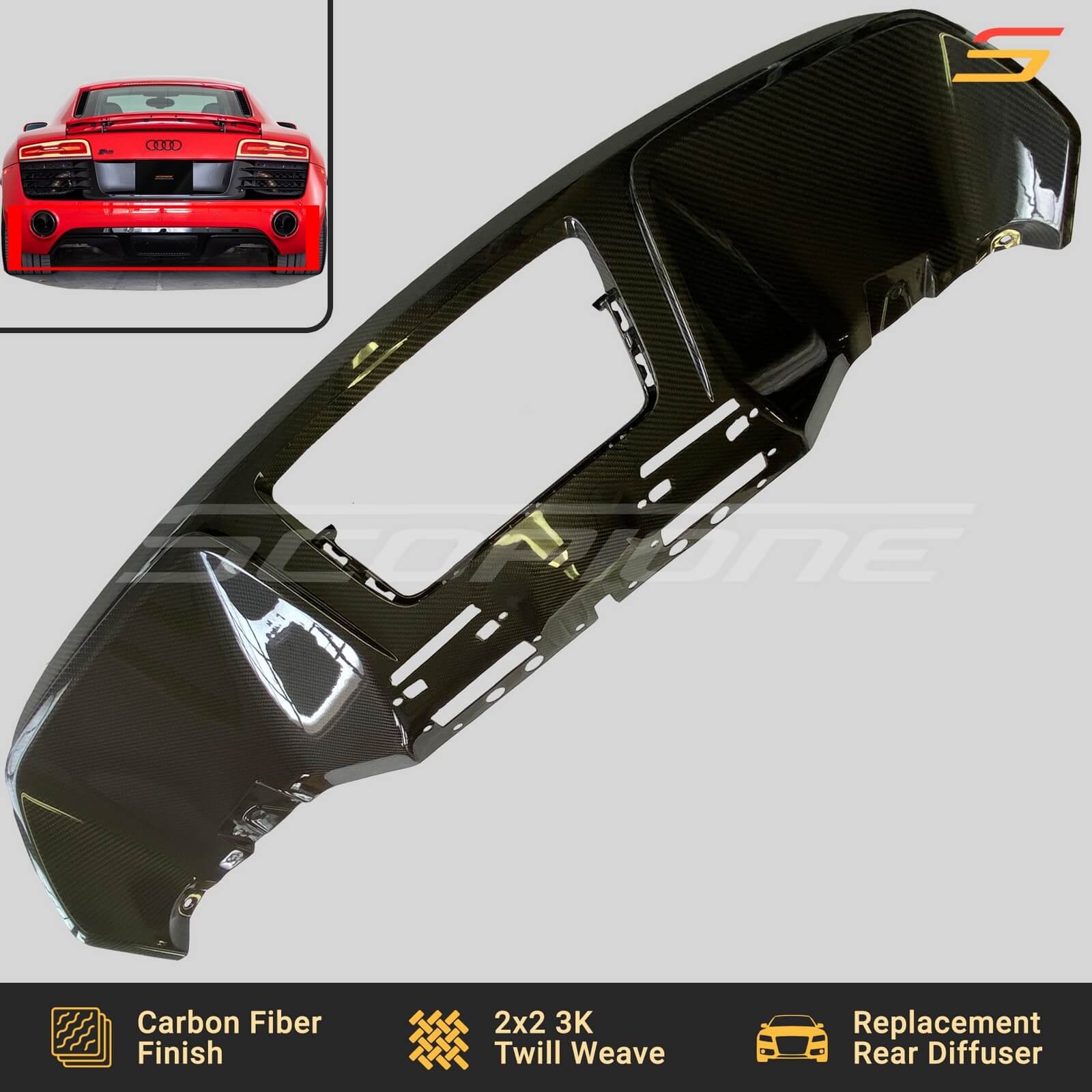
Both R8 generations created distinct CFRP opportunities. First-generation Typ 42 owners often upgrade the factory-painted side blades to visible carbon fiber, adding a front lip spoiler and mirror caps to complete the look. Second-generation Typ 4S owners typically expand on the factory’s standard CF side blades with aftermarket diffusers, engine bay covers, and interior trim in matching 2×2 3K twill weave. Scopione’s R8 components are precision-fitted for specific model years and body configurations, with separate part numbers for Coupe and Spyder where fitment differs.
2019–Present: Electric Performance and Carbon Fiber’s Expanding Role
The R8’s discontinuation in 2023 closed one chapter; the electrification of Audi’s RS lineup opened another. Carbon fiber is no longer confined to the supercar or the racetrack. It has expanded across the RS range, from the compact RS 3 to the full-size RS Q8. The RS e-tron GT carries a standard CFRP roof, a first for any production Audi. And the forthcoming electric successor to the R8 is expected to use substantially more structural CFRP than the Typ 4S, leveraging Audi’s Le Mans monocoque expertise to offset battery weight.
Audi RS 6 Avant (C8, 2020–Present)
The C8 RS 6 Avant expanded on the C7’s formula with widened wheel arches (40 mm front, 40 mm rear), a 48V mild-hybrid system for start-stop and torque fill, and significantly more aggressive styling. The 4.0-liter twin-turbo V8 delivers 591 hp in standard form and 621 hp in the Performance variant, paired with an 8-speed torque converter automatic and quattro with a sport differential.
Carbon fiber content has grown substantially from the C7 generation. The Performance model carries several CFRP exterior elements as standard rather than options, reflecting a deliberate shift from carbon fiber as an aftermarket add-on to a factory-integrated material. The Carbon Optic Package includes components manufactured in visible 2×2 twill weave with clear coat, matching the visual language of Audi’s R8 and RS Q8 carbon trim. This consistency across the RS lineup signals that Audi treats CFRP as a cohesive design element, not a model-specific feature.
- Engine: 4.0L twin-turbo V8 TFSI + 48V mild-hybrid, 591–621 hp
- 0–60 mph: 3.3 seconds (Performance)
- Carbon Optic Package: CFRP mirror caps, splitter, sill inserts, diffuser, rear spoiler lip
- Interior CFRP: dashboard inlays, center console trim, door sill plates
Audi RS Q8 (2020–Present)
The RS Q8 shares its MLB Evo platform with the Lamborghini Urus, and both vehicles are among the heaviest performance machines in their respective lineups. At over 2,300 kg, the RS Q8 represents a segment where carbon fiber’s weight savings are welcome but cannot fundamentally alter the vehicle’s mass profile. Frank Stippler set the Nurburgring Nordschleife SUV lap record of 7:42.2 at launch, a time that demonstrated the chassis tuning’s capability despite the vehicle’s size. The 4.0-liter twin-turbo V8 produces 591 hp in standard specification and 631 hp in the Performance variant.
A carbon styling package covers mirror caps, front splitter elements, air curtain inserts, side sill blades, rear diffuser, and rear spoiler. These exterior components are manufactured in visible CFRP weave and serve aerodynamic and visual functions. Interior CF options extend to dashboard, center console, and door panels. The Performance variant carries the exterior CFRP elements as near-standard equipment. Shared engineering with the Urus means Audi benefits from VW Group’s consolidated carbon-fiber procurement, reducing per-unit CFRP costs through platform-level volume.
- Engine: 4.0L twin-turbo V8 TFSI + 48V mild-hybrid, 591–631 hp
- 0–60 mph: 3.6 seconds (standard) / 3.4 seconds (Performance)
- Nurburgring lap: 7:42.2 (SUV record at launch)
- Platform shared with Lamborghini Urus
Audi e-tron GT / RS e-tron GT (2021–Present)
The e-tron GT shares Porsche’s J1 platform, an 800-volt electrical architecture with a two-speed transmission on the rear axle. Audi assembles it at the Bollinger Hofe facility in Neckarsulm, the same plant that built the R8. The 2024 facelift introduced the RS e-tron GT Performance: 912 hp in boost mode from dual electric motors, establishing a new output benchmark for the brand. Standard output for the RS sits at 646 hp, with the 912 hp figure available for brief acceleration bursts.
The RS e-tron GT carries a standard CFRP roof panel. It is the first production Audi to include structural carbon fiber as standard equipment. The roof reduces weight at the vehicle’s highest point, lowering the center of gravity and improving handling balance in a car that weighs 2,347 kg with its floor-mounted battery pack. An optional carbon package adds CFRP mirror caps, front splitter, side sill elements, and rear diffuser. The body structure incorporates targeted CFRP reinforcements developed at the Neckarsulm Lightweight Design Center.
- Powertrain: Dual electric motors, 469–912 hp (RS Performance: 912 hp boost)
- 0–60 mph: 2.5 seconds (RS Performance, boost mode)
- CFRP roof: Standard on RS variants
- 800V architecture shared with Porsche Taycan; two-speed rear transmission
The e-tron GT represents the convergence of Audi’s three material science traditions: ASF aluminum expertise developed through four generations of the A8, Le Mans-derived CFRP structural knowledge accumulated over 13 race victories, and Porsche’s 800V electrical platform engineering. In electric vehicles, every kilogram saved from the body structure translates directly to extended battery range and improved acceleration. The CFRP roof panel alone saves approximately 4-5 kg compared to a conventional steel roof, a modest figure in isolation but meaningful when combined with other lightweight measures across the body structure. For RS e-tron GT owners, the carbon-fiber roof is also a visual statement: the exposed or body-color-painted CFRP panel distinguishes the RS from the standard e-tron GT at a glance.
Audi RS 3 (8Y, 2022–Present)
The RS 3 carries Audi’s turbocharged 2.5-liter inline-five, a direct descendant of the Ur-quattro’s engine now producing 394 hp. The RS torque splitter, an electronically controlled twin-clutch rear differential, can send up to 100% of rear axle torque to a single wheel. The torque splitter gives the RS 3 a level of rear-axle agility that earlier quattro systems could not replicate.
Carbon fiber has reached Audi’s most accessible RS model. The Performance Edition (limited to 300 units in North America) included a standard CFRP roof, ceramic brakes, and exclusive Daytona Grey paint. It was the first time Audi fitted a carbon-fiber roof to a compact RS car. The CFRP roof lowers the center of gravity by a small but measurable margin, and its visual presence on a compact sedan signals that carbon fiber is no longer reserved for six-figure supercars. Optional CF mirror caps, front splitter elements, and rear spoiler are available through the RS Design Package for standard RS 3 models. The trajectory mirrors what BMW accomplished with the M2 CS: CFRP migration from flagship models into entry-level performance vehicles.
- Engine: 2.5L turbocharged inline-five, 394 hp
- 0–60 mph: 3.8 seconds
- Performance Edition: Standard CFRP roof, ceramic brakes, 300 units (North America)
- RS torque splitter: electronically controlled twin-clutch rear differential
Audi R8 V10 GT RWD – Final Edition (2023)
The final R8. Limited to 333 units, mirroring the 333-unit production of the original R8 GT. Rear-wheel drive only, 602 hp from the last evolution of the naturally aspirated 5.2-liter V10, and the largest factory carbon-fiber package Audi has fitted to a road car. Standard CFRP components included the front splitter, mirror housings, side blades, engine bay cover, rear wing endplates, and rear diffuser. Exposed carbon-fiber weave on the side blades and aerodynamic elements served as a visual farewell in visible CFRP.
The R8 V10 GT RWD’s dry weight of approximately 1,570 kg made it the lightest Typ 4S variant. Carbon fiber played a measurable role in achieving that figure, with the combined CFRP components saving an estimated 15-20 kg over their aluminum and painted equivalents. Adjustable coilover suspension and carbon-ceramic brakes (standard) further reduced unsprung and rotating mass. When production ended in late 2023, the R8 was the last naturally aspirated mid-engine V10 car produced by any manufacturer. That distinction is unlikely to be repeated. Emissions regulations, electrification mandates, and fuel economy requirements have effectively closed the door on large-displacement naturally aspirated engines in mid-engine sports cars. The R8 V10 GT RWD’s 602 hp arrived without turbochargers, superchargers, or electric assistance, a purity of engineering approach that future performance cars will achieve through entirely different means.
- Engine: 5.2L V10 FSI, 602 hp
- Production: 333 units worldwide
- Carbon fiber: Standard CF splitter, mirrors, side blades, engine cover, wing endplates, diffuser
- Dry weight: ~1,570 kg — lightest Typ 4S R8
Audi’s Electric Future and CFRP
Audi has confirmed an electric successor to the R8, expected between 2025 and 2027 on either Porsche’s PPE platform or VW Group’s SSP architecture. Industry reports indicate the car will feature significantly more structural CFRP than the Typ 4S. The reason is straightforward: battery weight. A competitive electric supercar requires an estimated 500-700 kg of battery cells for adequate range, and the only way to keep total curb weight within reasonable limits is to reduce body structure mass through CFRP. Audi’s Lightweight Design Center has been developing carbon-fiber body panels and structural elements specifically for next-generation EV platforms.
Twenty-three years of CFRP monocoques in Le Mans prototypes, combined with the R8’s aluminum-CFRP hybrid ASF and the e-tron GT’s standard CFRP roof, give Audi a material science foundation that few competitors can match. The electric R8 successor will reveal whether Audi follows BMW’s path of selective CFRP reinforcement within a conventional body structure or pursues a more comprehensive approach closer to McLaren’s carbon-tub philosophy. Audi’s Le Mans heritage suggests the latter is technically within reach; the economics of mass production will determine which approach prevails.
Scopione Perspective: RS and Performance Audi Carbon Fiber
The R8’s discontinuation has not diminished its presence in Scopione’s catalog. Demand for carbon-fiber R8 components remains strong among owners who view the naturally aspirated V10 as a future collectible. Scopione’s R8 inventory spans both generations and includes parts designed to complement the Typ 4S’s factory CFRP elements, maintaining visual consistency between OEM and aftermarket carbon fiber. All Scopione R8 parts ship with a 12-month limited warranty and include UV-resistant clear coat rated for extended outdoor exposure.
Frequently Asked Questions
Audi and Carbon Fiber: Common Questions
When did Audi first use carbon fiber?
Audi’s first significant CFRP application was the R8 LMP race car’s carbon-fiber monocoque, designed with Dallara, which won the 24 Hours of Le Mans on its debut in 2000. On road cars, the second-generation R8 (Typ 4S, launched in 2015) was the first Audi to integrate CFRP structurally — using a carbon-fiber rear wall, B-pillar reinforcements, and sill inserts within the Audi Space Frame. Earlier road car applications (R8 Typ 42, RS 5 B8) used carbon fiber for decorative and aerodynamic trim rather than structural load-bearing elements.
How many times did Audi win Le Mans with CFRP monocoques?
Thirteen times between 2000 and 2014. The R8 LMP won in 2000, 2001, 2002, 2004, and 2005. The R10 TDI — the first diesel car to win Le Mans — took victories in 2006, 2007, and 2008. The R15 TDI Plus won in 2010. And the R18 e-tron quattro claimed three consecutive victories in 2012, 2013, and 2014. Every car in the program used a full carbon-fiber monocoque chassis.
What Audi models currently feature carbon fiber components?
The RS e-tron GT carries a standard CFRP roof — the first Audi to include structural carbon fiber as standard equipment. The R8 V10 (Typ 4S, now discontinued) used structural CFRP in its body and offered extensive carbon-fiber exterior components. Current RS models including the RS 3 Performance Edition, RS 5, RS 6 Avant, and RS Q8 offer carbon-fiber packages covering mirror caps, splitters, diffusers, spoilers, and interior trim. The RS 3 Performance Edition also carries a standard CFRP roof.
What is the Audi Space Frame and how does it relate to carbon fiber?
The Audi Space Frame (ASF) is an all-aluminum body structure first used on the 1994 Audi A8. The ASF reduced body weight by approximately 40% compared to steel equivalents. When Audi redesigned the R8 for its second generation in 2015, the company evolved the ASF into a multi-material structure that combined aluminum extrusions and castings with CFRP reinforcements — a carbon-fiber rear wall, B-pillar inserts, and sill elements. This hybrid approach produced a body 15% stiffer and approximately 50 kg lighter than the all-aluminum original.
What carbon fiber parts does Scopione offer for Audi?
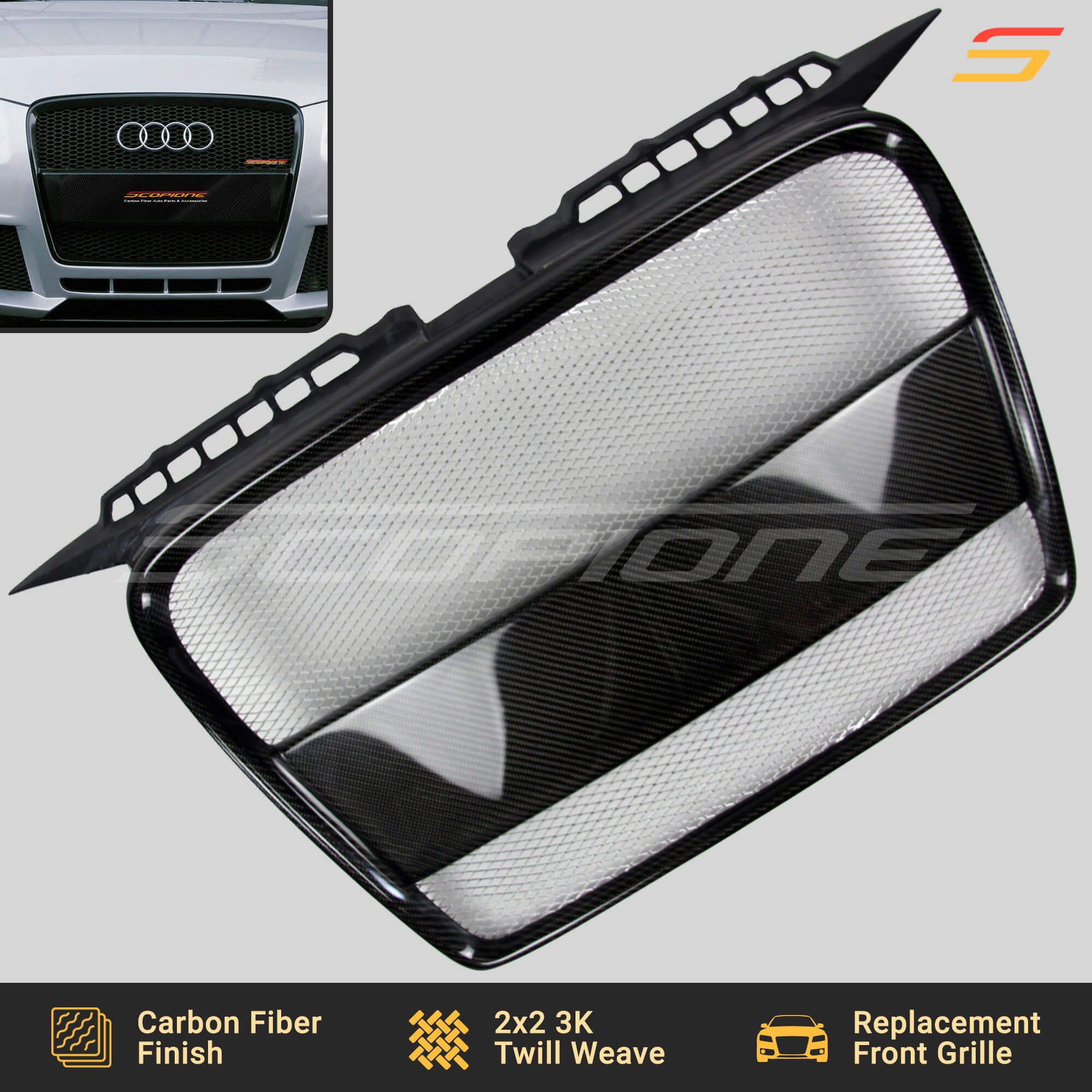
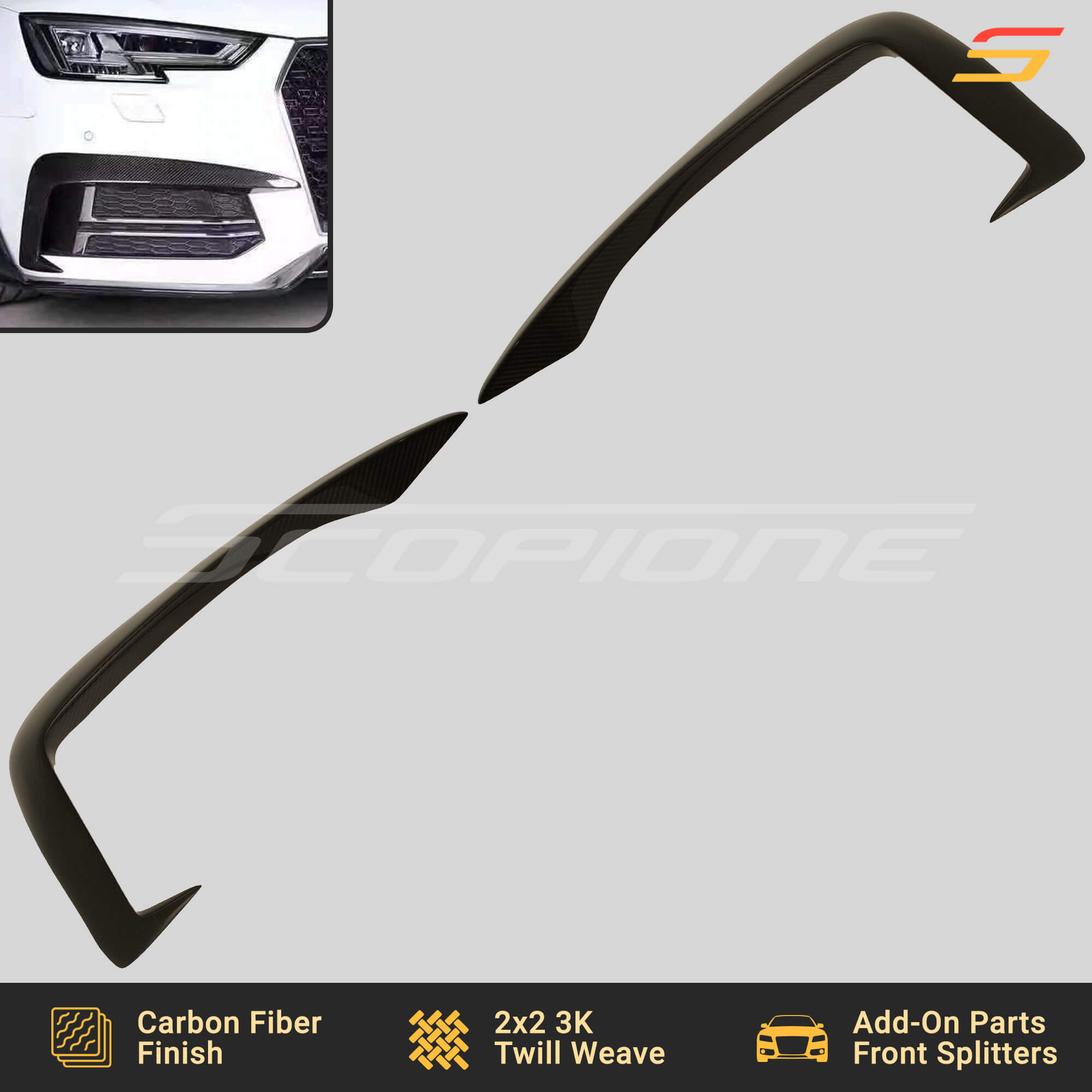
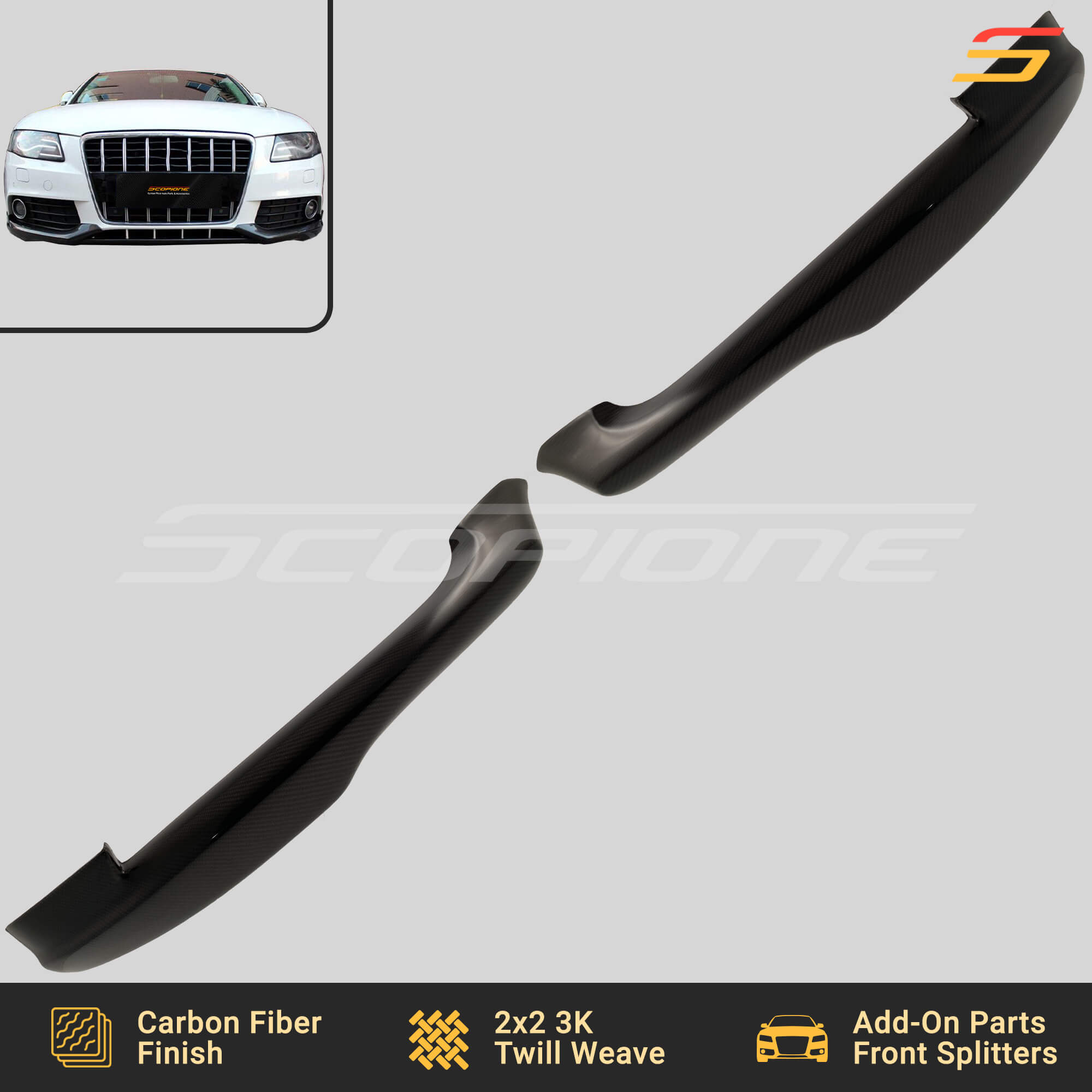
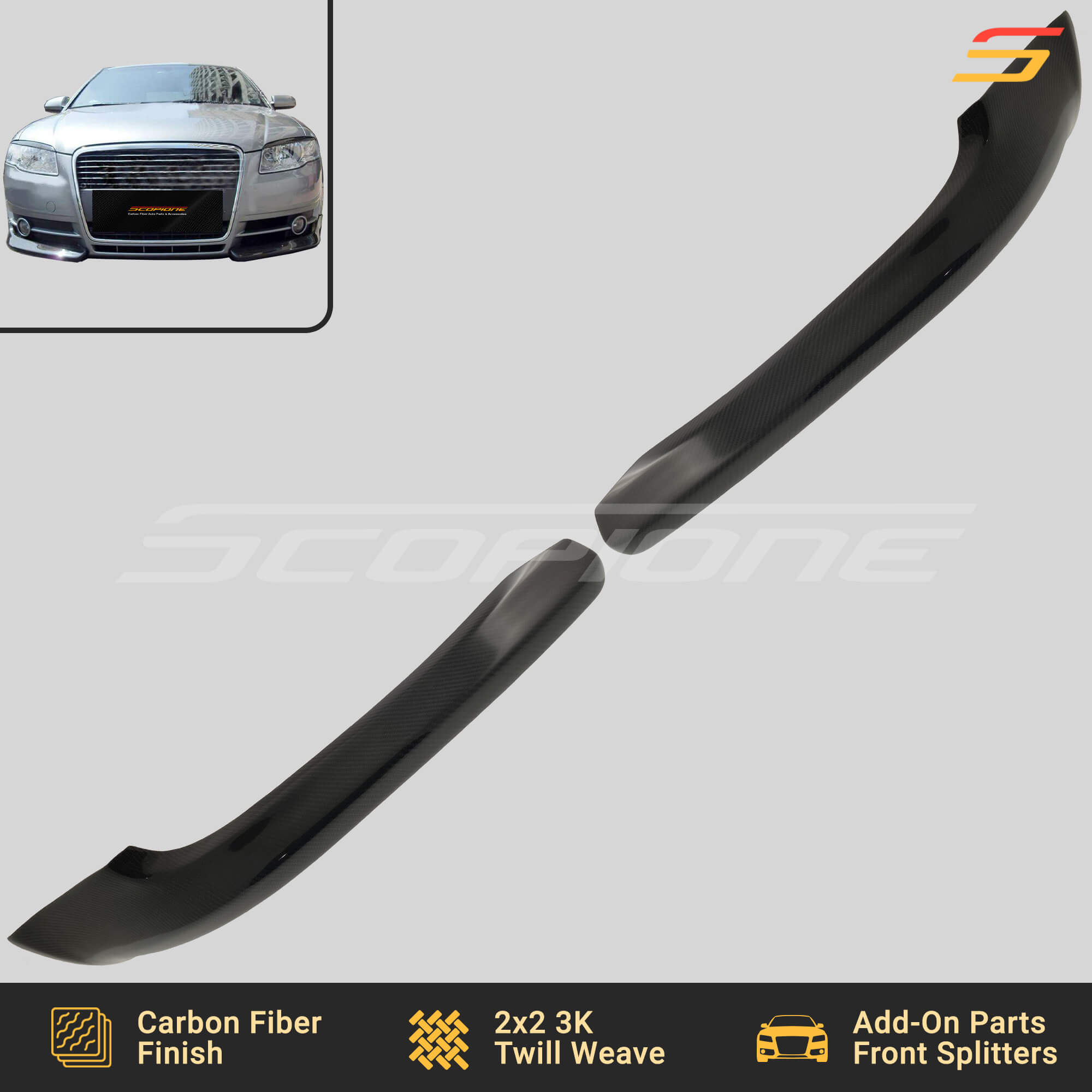
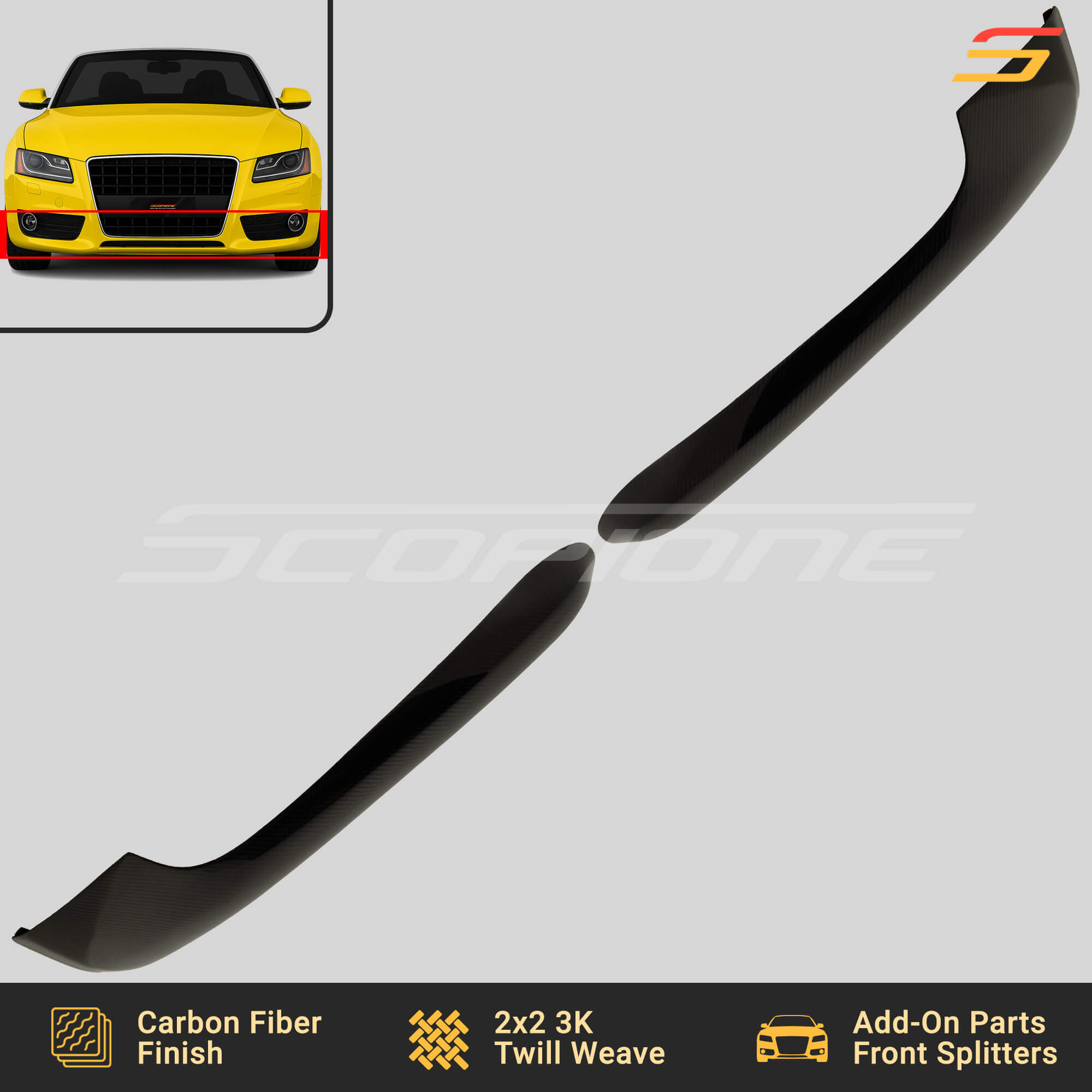
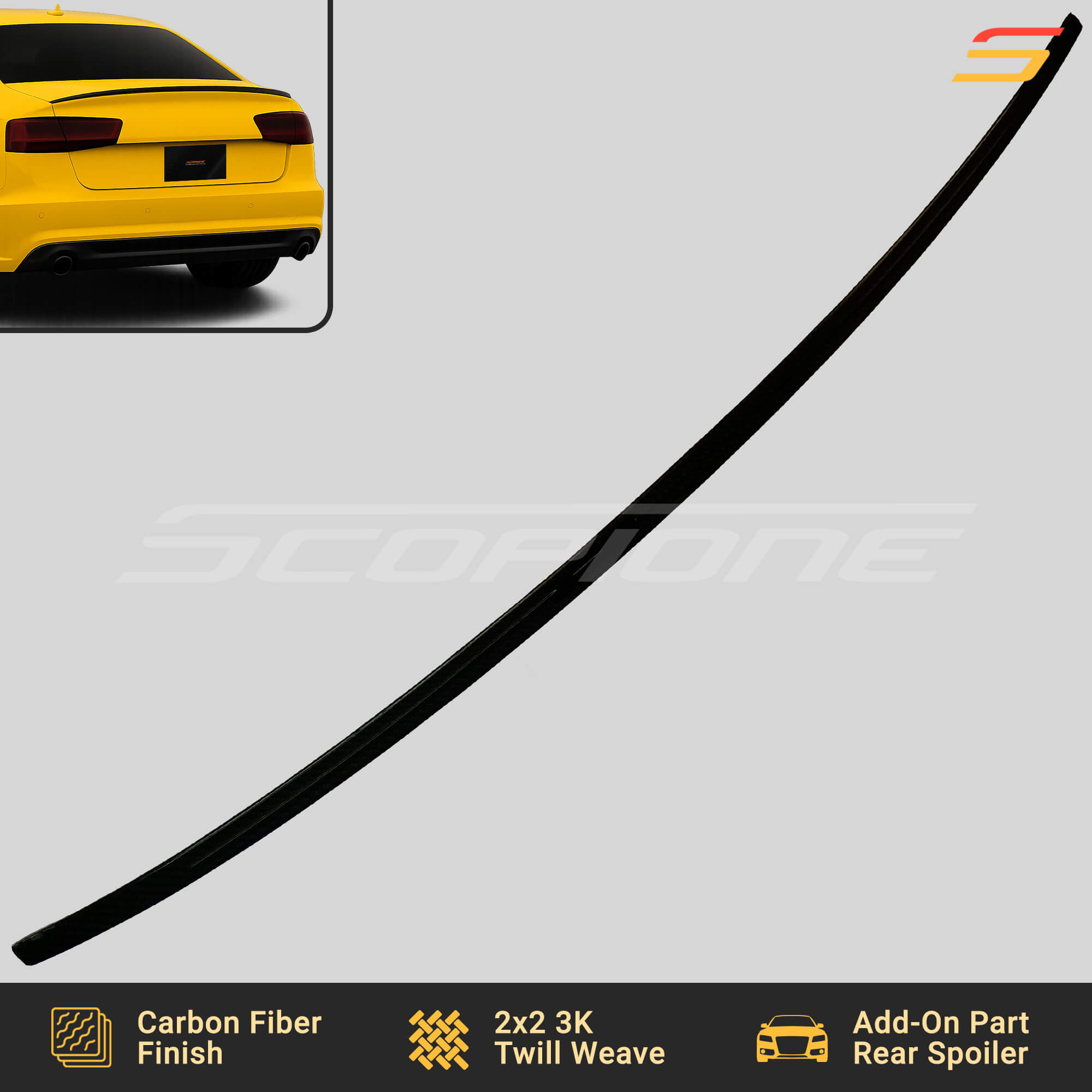
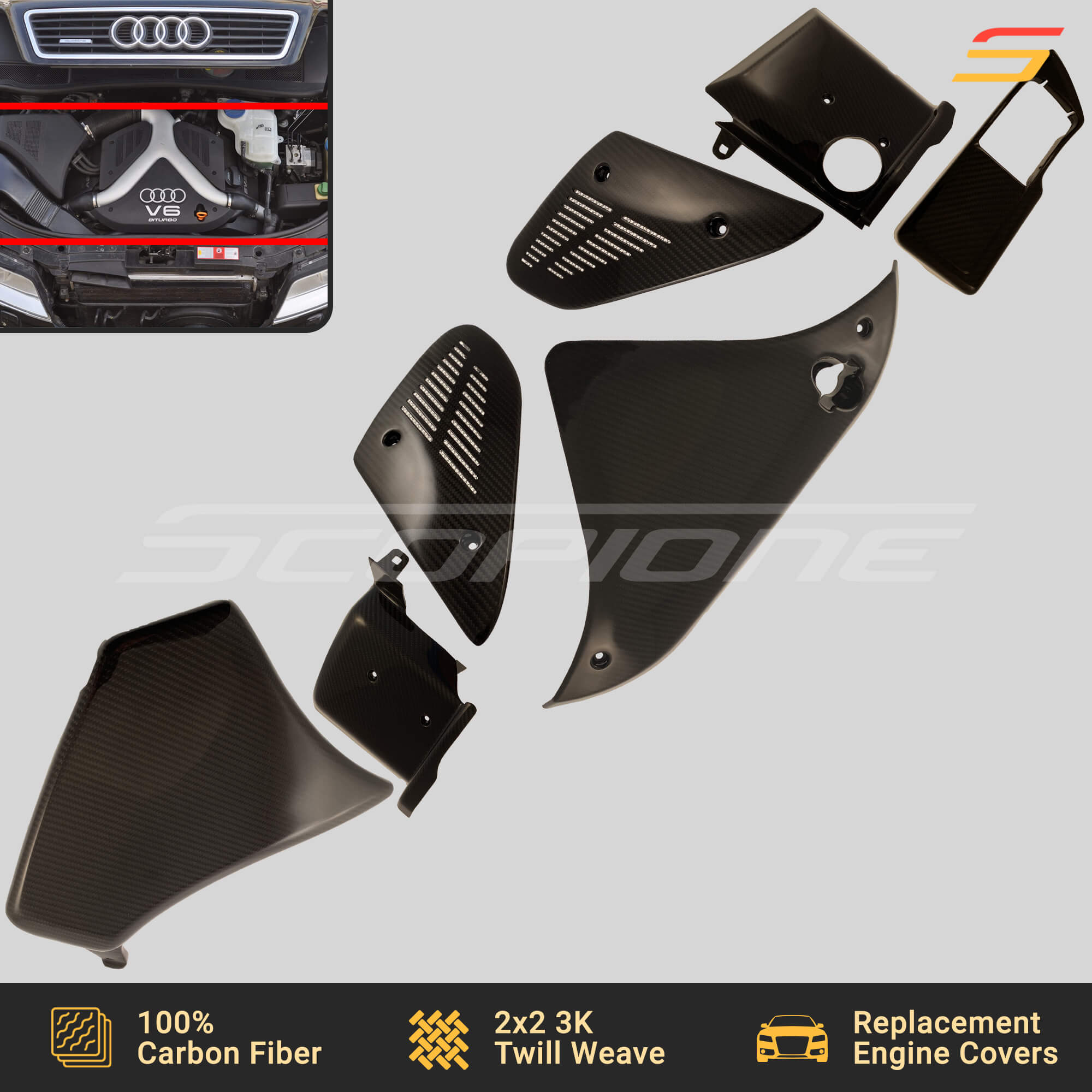
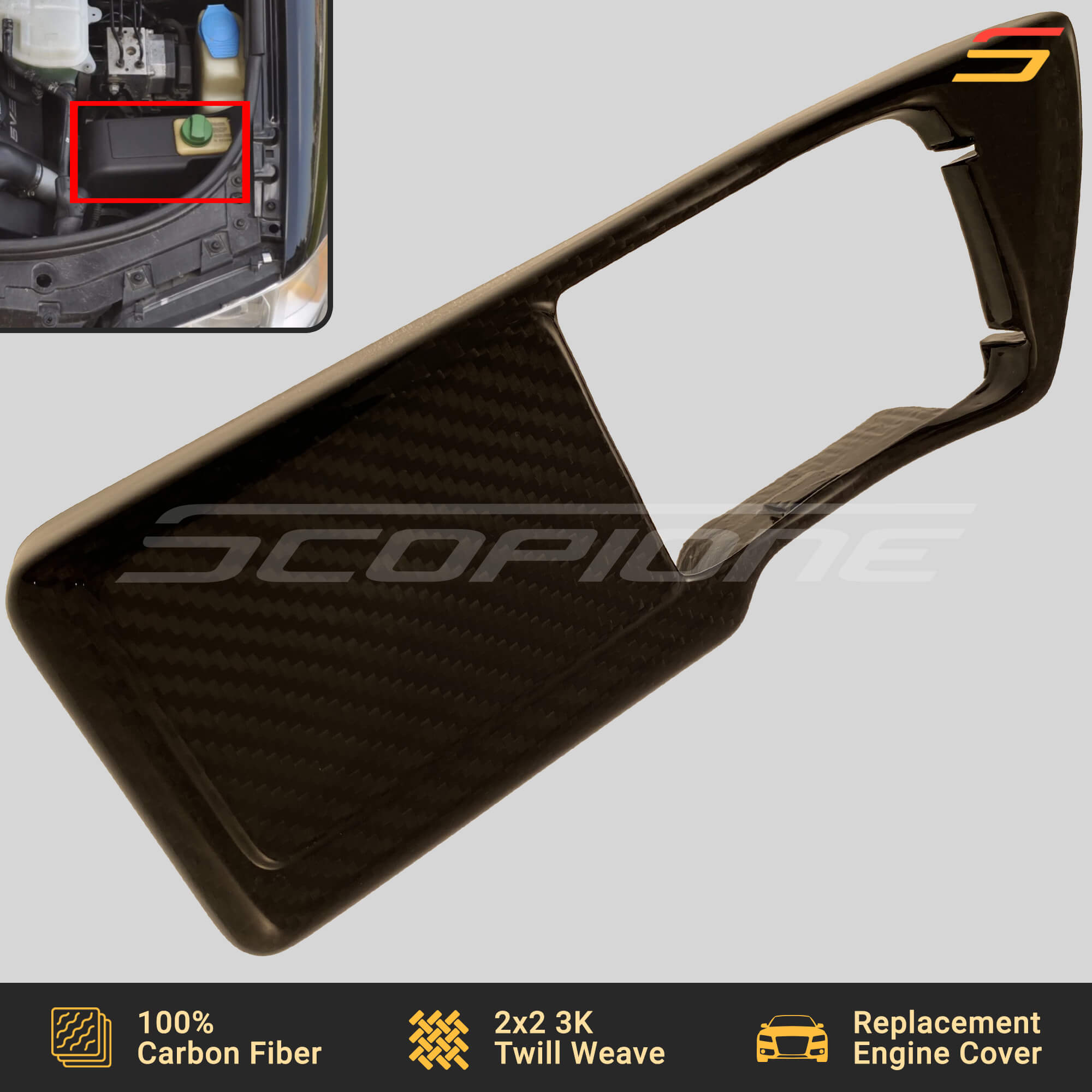
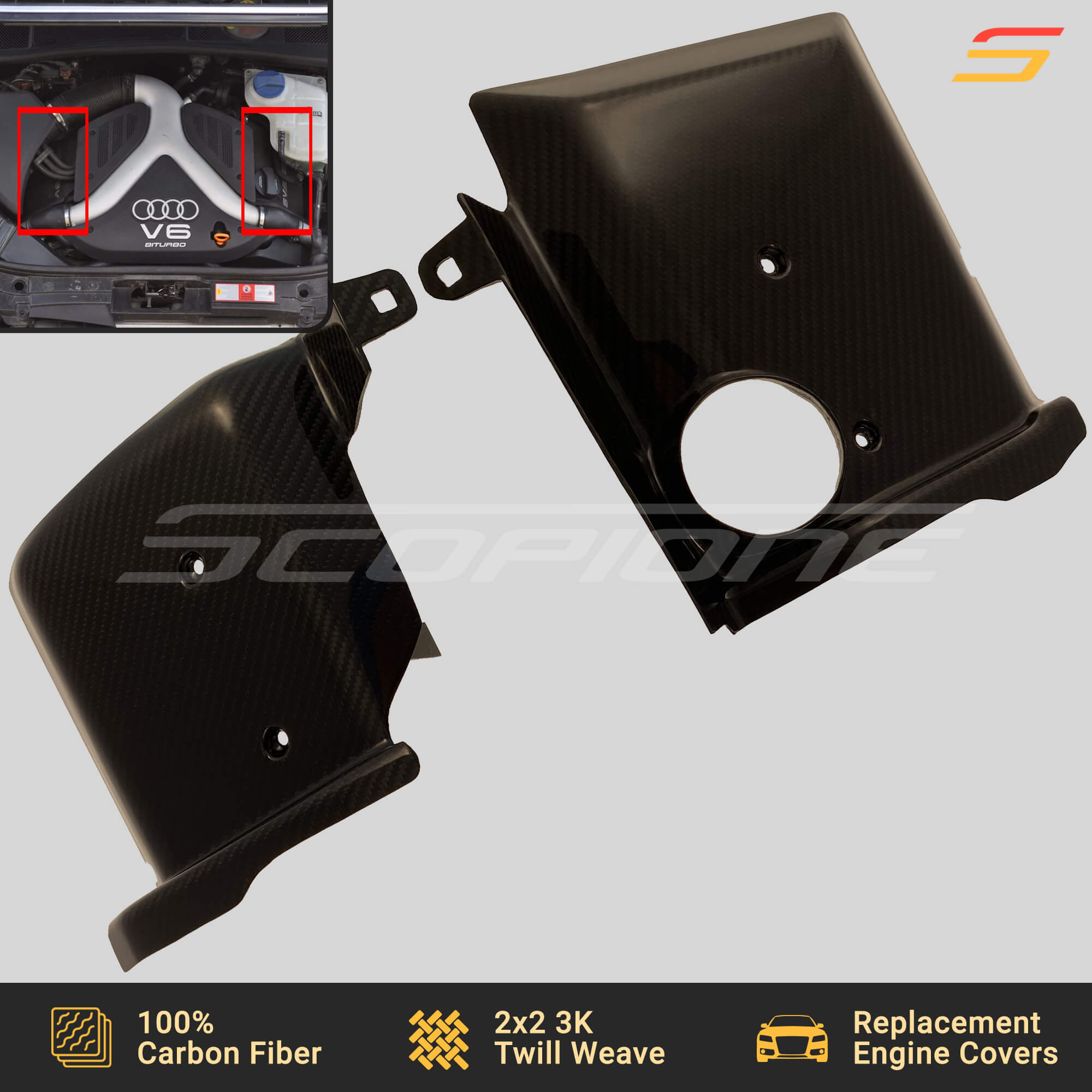
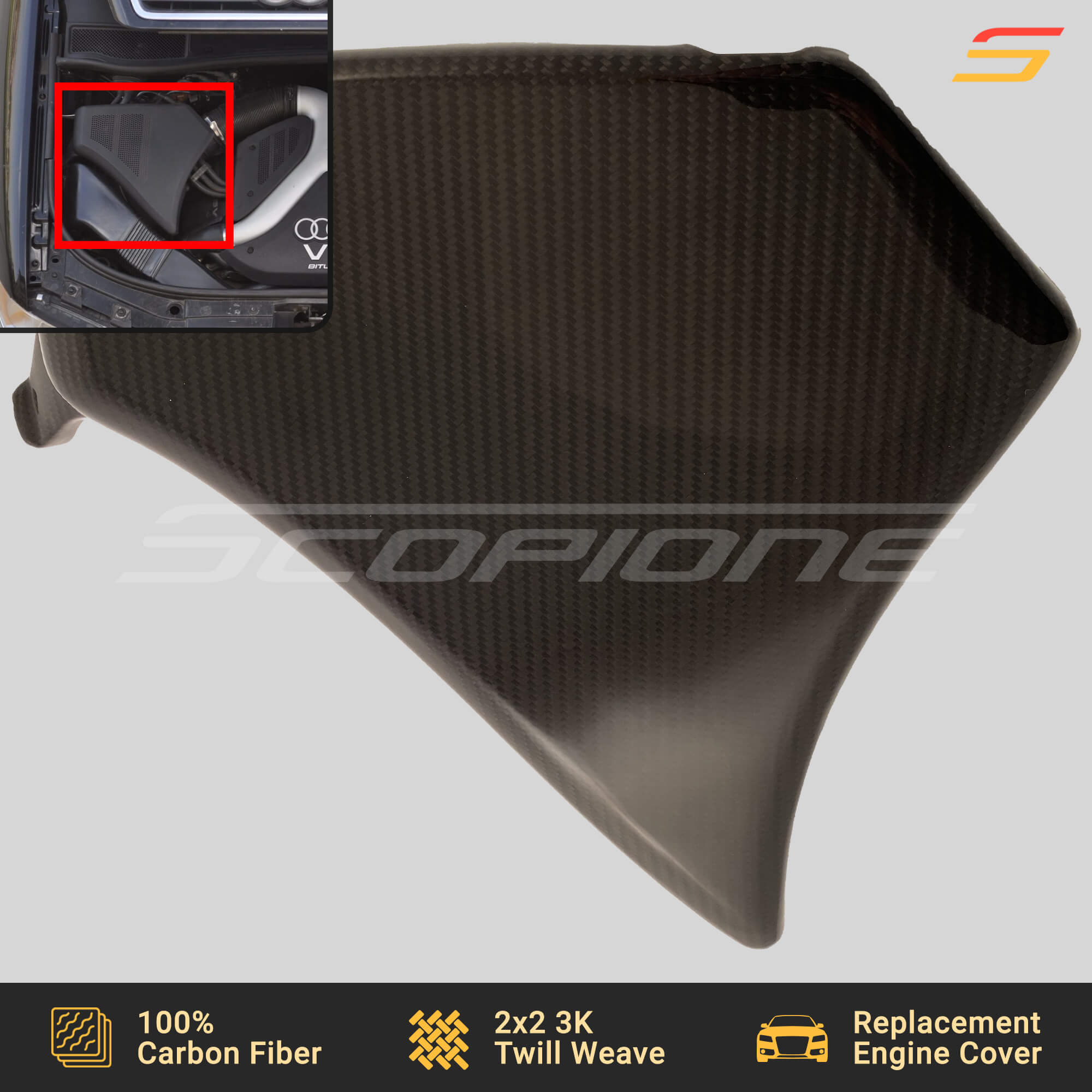
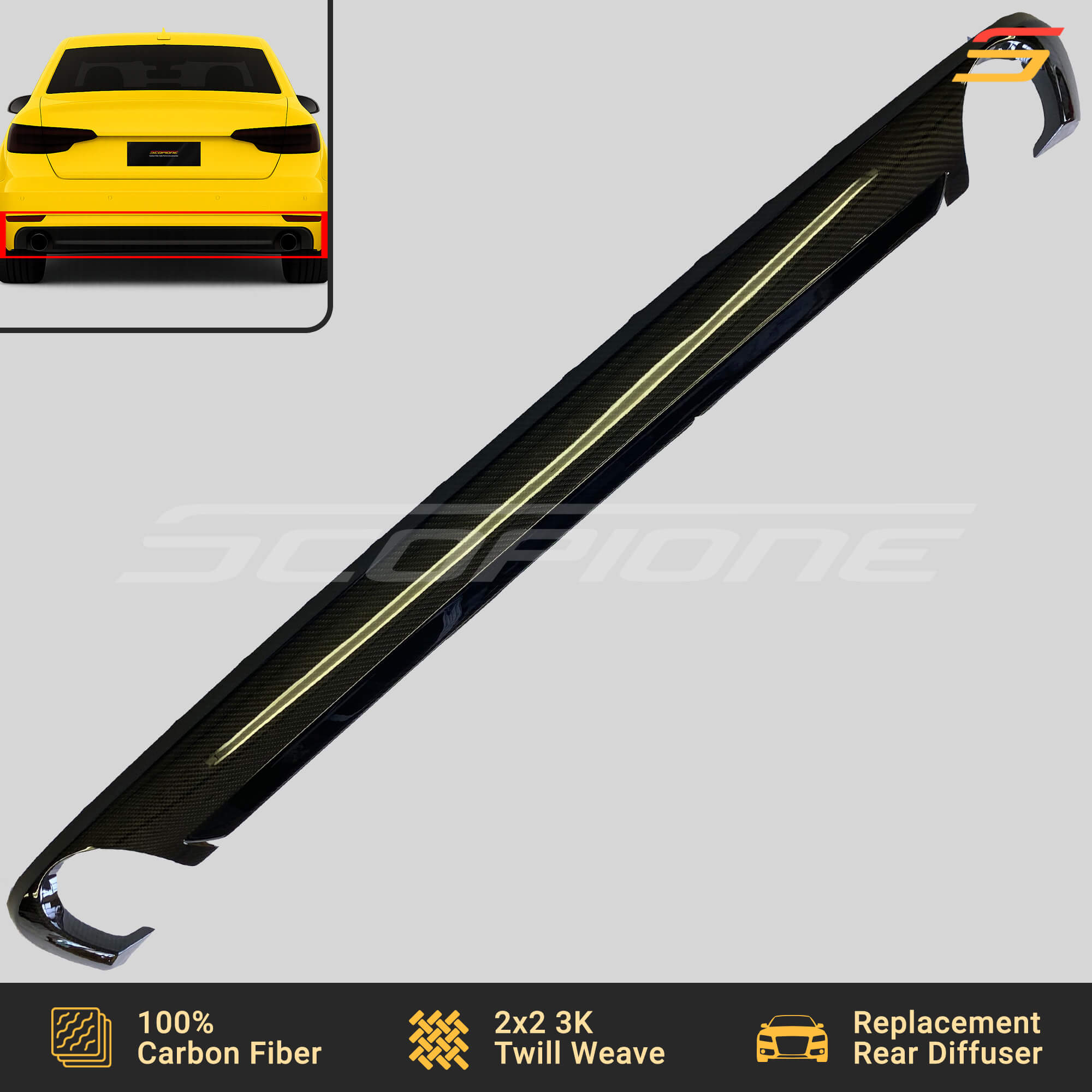
Scopione’s Audi catalog is broader than the R8 alone: 2×2 3K twill-weave carbon fiber for the R8 (Typ 42 and Typ 4S) and also for the A3 (8P), A4 (B7, B8, B9), A5 (B8), A6 (C5, C7), S4 (B5), S6 and AllRoad. The range covers front bumper splitters and canards, a front lip spoiler, a mesh front grille, rear bumper diffusers, an add-on rear trunk spoiler, rear engine vents and louvers, door sills, a rear engine hatch lid cover, and a deep set of engine-bay covers — each precision-fitted for specific model years and body configurations (Coupe and Spyder where fitment differs) — each precision-fitted for specific model years and body configurations (Coupe and Spyder). All parts are finished with UV-resistant clear coat and backed by a 12-month limited warranty – explore the R8 carbon fiber range.
Experience the elegance and performance of the Audi with Scopione. Browse our gallery and get inspired to elevate your supercar with our top-of-the-line carbon fiber upgrades.
Shop now for premium ScopioneCarbon carbon fiber upgrades and experience the ultimate in performance and aesthetics for your Audi!
Back to Top ↑Disclaimer: Technical specifications, production figures, and historical details presented in this article are editorial in nature and may differ from official manufacturer data. Photographs show Scopione carbon fiber parts for the Audi R8, A3, A4, A5, A6, S4, S6 and AllRoad, and customers’ R8s fitted with them.