

 Shop
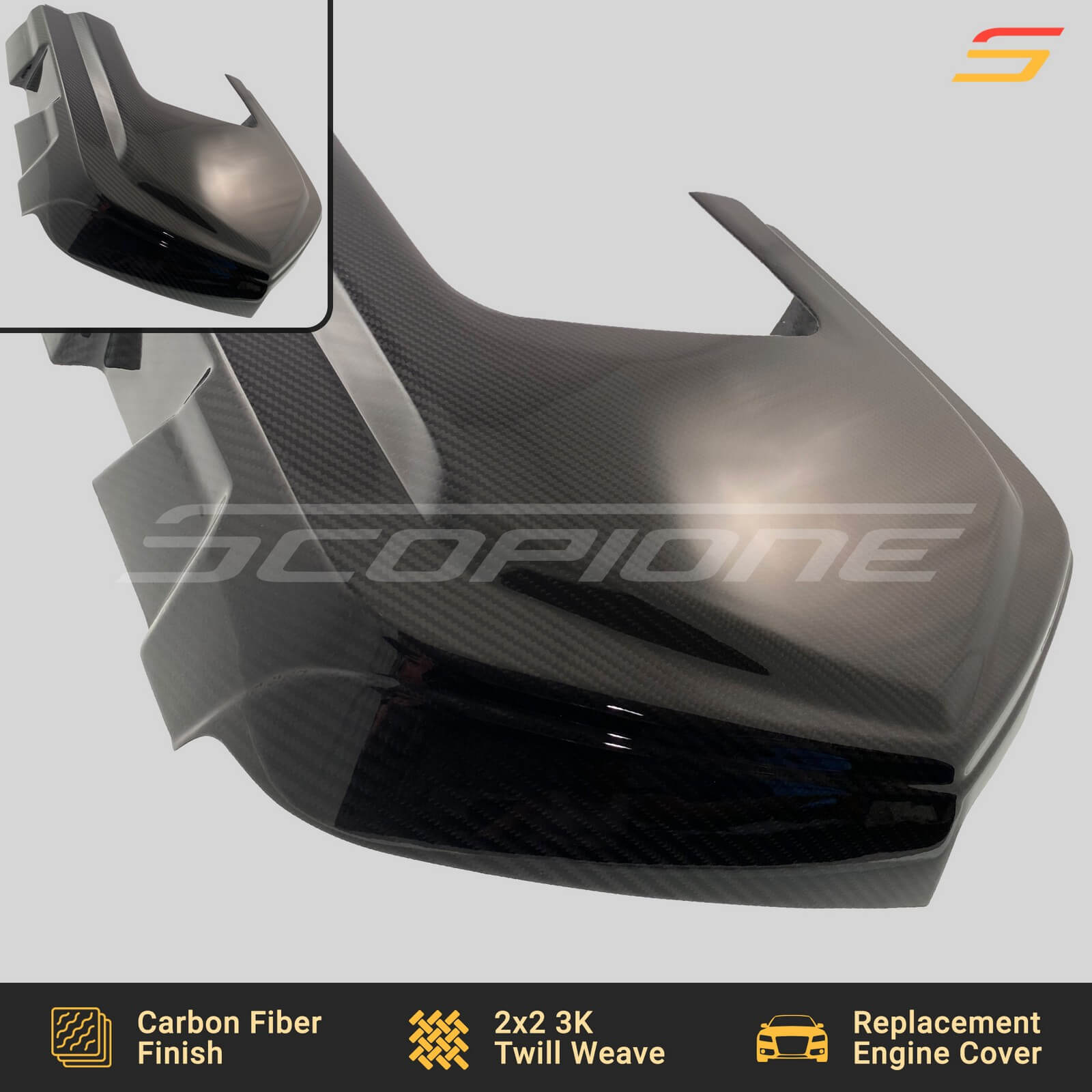
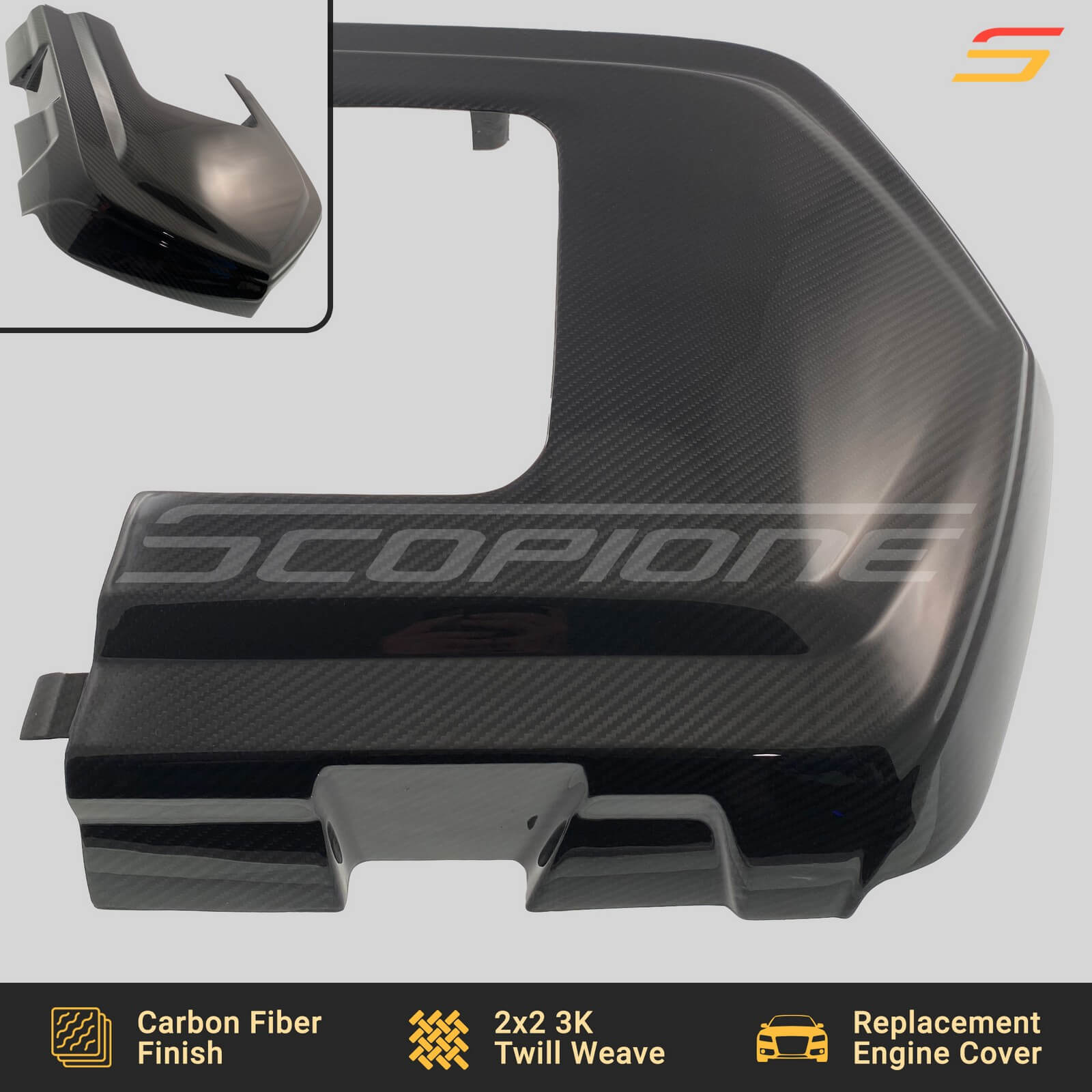
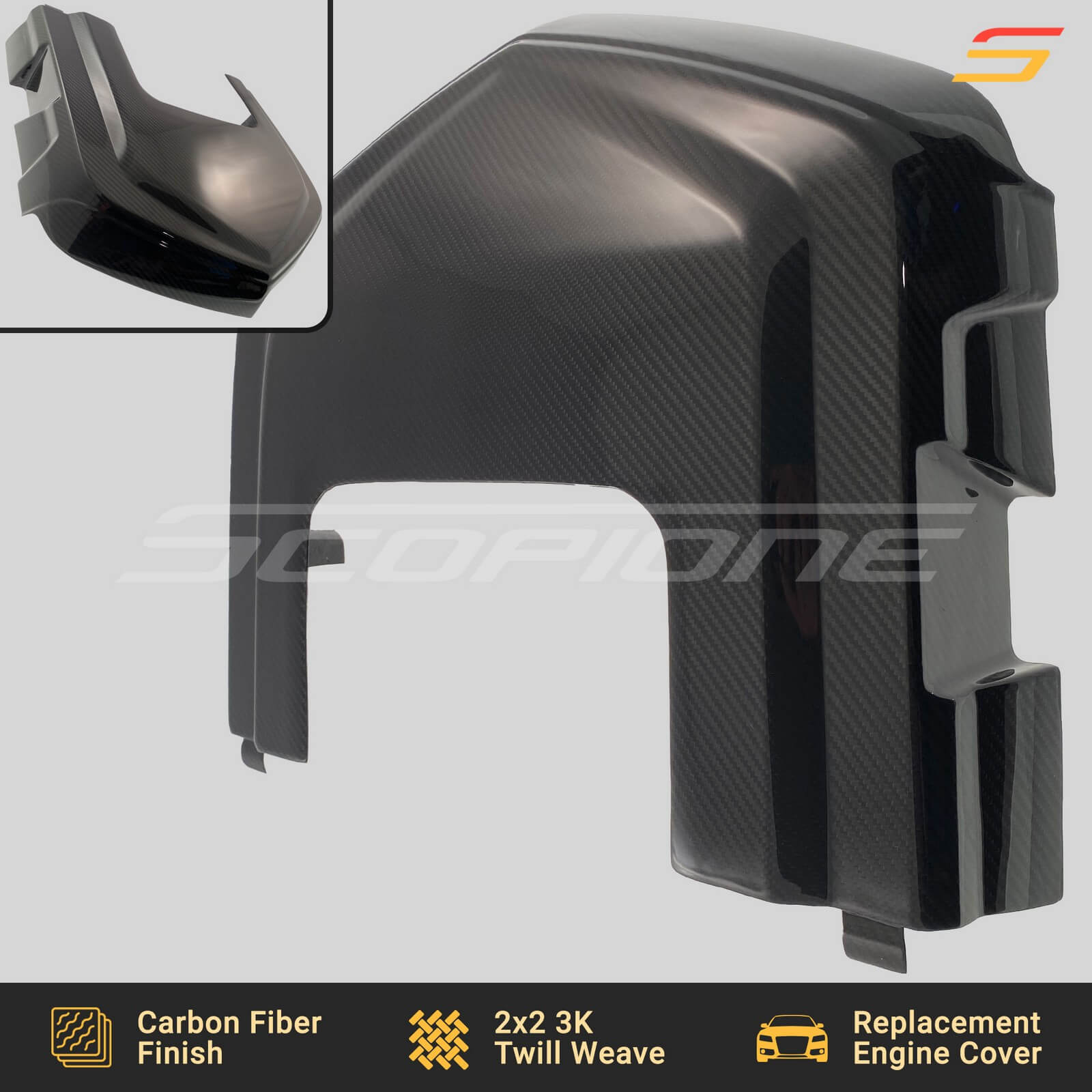
ShopCadillac spent its first century defining American luxury through size, refinement, and V8 displacement. Carbon fiber arrived late in that story. Not until the third-generation CTS-V in 2016 did a production Cadillac offer factory CF components, but the trajectory since has been steep. The V-Series program grew from a single optional aero package into the CT5-V Blackwing’s tiered CF1 and CF2 systems, totaling $9,330 in functional carbon-fiber aerodynamics. Then came the CELESTIQ: a hand-built, $340,000+ electric sedan with carbon fiber body panels mounted to an aluminum spaceframe, the deepest structural CF application in the brand’s 120-year history. Cadillac carbon fiber evolution is the story of a traditional luxury brand finding new purpose for advanced composites, first as track-focused aero hardware on supercharged sedans, then as lightweight body construction on a bespoke electric flagship. Scopione stocks a 2×2 3K twill-weave carbon-fiber engine cover for the 2009–2015 CTS-V 6.2L V8 – browse the Scopione catalog.
Cadillac Carbon Fiber Timeline
| Year | Milestone | Model / Program |
|---|---|---|
| 1902 | Cadillac founded in Detroit by Henry M. Leland | Corporate |
| 1908 | Dewar Trophy for standardization of parts | Corporate |
| 1912 | Electric starter introduced, an industry first | Model Thirty |
| 1953 | Eldorado debuts as limited-production show-car convertible | Eldorado (532 units) |
| 2004 | First CTS-V enters the performance sedan market | CTS-V (Gen 1) |
| 2009 | Supercharged CTS-V reaches 191 mph | CTS-V (Gen 2, 556 hp) |
| 2016 | First factory carbon fiber options on a Cadillac | CTS-V (Gen 3, CF Package) |
| 2019 | Hand-built Blackwing V8, only 875 CT6-Vs produced | CT6-V |
| 2022 | Tiered CF1/CF2 aero packages on a 668 hp sedan | CT5-V Blackwing |
| 2023 | Supercharged V8 in a full-size SUV, 682 hp | Escalade-V |
| 2024 | Carbon fiber body panels on a hand-built electric sedan | CELESTIQ ($340,000+) |
1902–2003: American Luxury Heritage and the Performance Awakening
For a hundred years, Cadillac built its reputation on precision engineering and opulent appointments rather than lightweight materials. Henry M. Leland founded the company on August 22, 1902, in Detroit, drawing on his background in firearms manufacturing at Colt and toolmaking at Brown & Sharpe to establish a culture of interchangeable parts. That precision earned the 1908 Dewar Trophy, the automotive industry’s equivalent of a knighthood. Three Royal Automobile Club judges in London disassembled three Cadillacs, mixed the parts, reassembled the cars, and drove them 500 miles without a single failure. No other manufacturer had demonstrated this level of standardization.
The electric starter arrived in 1912 on the Model Thirty, replacing the hand crank that had killed and injured drivers since the automobile’s invention. The synchromesh transmission followed in 1928. The tailfin era of the 1950s and 1960s turned Cadillac into a symbol of American aspiration, with Harley Earl’s styling studio at GM producing designs that defined postwar consumer culture. Through all of this, carbon fiber had no role. Cadillac vehicles were large, heavy, and deliberately so. The brand’s engineering identity centered on comfort, V8 smoothness, and interior luxury rather than power-to-weight ratios. Lightweight materials simply did not align with a philosophy that measured prestige partly in curb weight.
But the institutional ambition that drove Cadillac to pioneer the electric starter and win the Dewar Trophy would eventually pivot toward performance engineering. The seeds were planted in the late 1990s, when GM’s leadership recognized that Cadillac was losing relevance against BMW, Mercedes-Benz, and Lexus. Average buyer age had crept above 60, and median household income among Cadillac purchasers skewed older. Conquest sales from European brands were negligible. The brand needed a performance identity to attract younger, driving-focused customers. When it finally built one, carbon fiber followed.
Cadillac Eldorado (1953–2002)
The Eldorado spanned twelve generations across nearly five decades, beginning as a limited-production show-car convertible in 1953. Only 532 units were built in that first year, each priced at $7,750 when a standard Cadillac Series 62 cost under $4,000. The name derived from the mythical city of gold, and the car lived up to it: hand-finished interior trim, a wraparound windshield, and styling details drawn from the Motorama show circuit. The 1959 Eldorado Biarritz, with tailfins reaching 42 inches above the ground, became one of the era’s defining automobiles, its chrome-laden silhouette still instantly recognizable sixty years later.
By 1967, the Eldorado shifted to front-wheel drive and a personal luxury coupe format that influenced competitors for two decades. It rode on GM’s E-body architecture, shared with the 1966 Oldsmobile Toronado that introduced the front-wheel-drive layout, paired with a 429 cui (7.0L) V8 and packaging that maximized cabin space. The Eldorado Brougham (1957–1960) occupied an even higher tier: hand-built at Cadillac’s Clark Avenue plant, fitted with a stainless steel roof, air suspension, memory-position power seats, and a vanity case containing a perfume atomizer, lipstick holder, and cigarette case. Only 704 Broughams were produced across four years.
- Engine: Various V8s, 5.4L to 8.2L (331 to 500 cui), 210–400 hp across generations
- Top speed: ~120–130 mph
- Notable variant: Eldorado Brougham (1957–1960), hand-built, 704 total units
- Production span: 12 generations, 1953–2002
No carbon fiber appeared on any Eldorado. The car’s significance is contextual: it established Cadillac’s pattern of flagship halo vehicles built to individual specification with premium materials. The Eldorado Brougham, with its hand-built construction and limited 704-unit run, directly prefigures the CELESTIQ program. One bespoke Cadillac used stainless steel roofs and air suspension. The other, sixty-five years later, uses carbon fiber body panels and smart glass. The lineage is direct. Both vehicles were produced in dedicated low-volume facilities, finished by hand, and priced far above the rest of the Cadillac range. The Brougham cost $13,074 in 1957, roughly four times the price of a base DeVille. The CELESTIQ exceeds $340,000, approximately five times the price of a current CT5. The ratio of ambition to volume has remained remarkably consistent.
Cadillac DeVille (1959–2005)
The DeVille was Cadillac’s volume luxury sedan, the model that put more Americans behind the Cadillac crest than any other nameplate. Introduced as the Series 62 Sedan de Ville in 1956, it sold 41,732 units in its first year. The 1965 model year peaked at 123,080 units, a production figure that dwarfed every European luxury competitor combined. Through eight generations, the DeVille delivered smooth V8 power, expansive interiors, and the boulevard ride quality that defined American luxury for nearly five decades.
The Northstar V8 engine system arrived with the 1993 model year, a dual-overhead-cam 4.6-liter aluminum V8 producing 270 to 300 hp depending on specification. The Northstar represented Cadillac’s highest-output powertrain engineering of that period, with four valves per cylinder, variable valve timing, and an aluminum block that saved weight over the cast-iron predecessors. It was a genuine attempt to match European engine sophistication, even if the DeVille’s chassis and suspension tuning remained comfort-oriented.
- Engine: Various V8s, 4.6L Northstar to 7.7L (472/500 cui), 200–300 hp
- Peak annual production: 123,080 units (1965)
- First-year sales: 41,732 units (1956)
- Northstar spec: 4.6L DOHC aluminum V8, 32 valves, 270–300 hp
Composites had no place on a DeVille. The model’s relevance is commercial: its enormous sales volumes funded the institutional capability that would later produce the V-Series program. Over its 46-year production span, the DeVille generated revenue that sustained Cadillac through economic downturns, fuel crises, and competitive pressure from Japanese luxury brands. The nameplate’s replacement by the DTS (2006–2011) and eventually the CT6 (2016–2020) reflected a generational shift from comfort-first luxury toward performance-oriented sedans. That shift is what brought carbon fiber to Cadillac. Without the commercial foundation the DeVille established, GM would not have had the financial confidence to invest in Cadillac’s performance transformation.
Scopione Perspective: A Century of Precision
Cadillac’s first century established a culture of precision engineering, from interchangeable parts that won the 1908 Dewar Trophy to the Northstar V8’s dual-overhead-cam architecture. That culture created the institutional foundation for advanced materials adoption. The same attention to manufacturing tolerances that impressed the Royal Automobile Club’s judges eventually extended to the carbon-fiber aero packages on the V-Series sedans. Scopione’s CTS-V engine cover in 2×2 3K twill-weave CF connects to that lineage: precision-fitted components for vehicles built by a brand that has valued engineering exactness since 1902.
2004–2015: The V-Series Revolution and Performance Credibility
The CTS-V changed everything. Three generations of increasingly powerful V-Series sedans, each borrowing Corvette-derived V8 hardware, proved that Cadillac could compete with BMW M and Mercedes-AMG on objective track metrics. The formula was straightforward: take GM’s performance hardware and wrap it in Cadillac’s Art and Science design language. Carbon fiber was minimal during this era, limited to aftermarket accessories. But the V-Series built the performance infrastructure, and the customer base, that would demand factory CF in the next generation.
Simultaneously, the Escalade rescued Cadillac’s commercial relevance. Introduced in 1999 as a response to the Lincoln Navigator, it became the brand’s highest-revenue vehicle within a decade, generating the profit margins that funded everything from V-Series engineering to the CELESTIQ program. Without Escalade revenue, Cadillac’s performance ambitions and eventual adoption of carbon fiber would not have been financially viable.
Cadillac CTS-V, Gen 1 (2004–2007)
The first CTS-V was Cadillac’s declaration of war against European sport sedans. A Corvette-derived LS6 V8 producing 400 hp, paired with a Tremec T-56 six-speed manual transmission, sat inside a mid-size luxury sedan. The combination was deliberate provocation. Cadillac took the CTS-V to the Nürburgring Nordschleife and posted a claimed 7:59.32 lap with engineering executive Mark Reuss driving, a time that ran competitive with the contemporary BMW M5 and Mercedes-Benz E55 AMG. The Nordschleife result mattered enormously for brand perception: a public, repeatable benchmark that an American luxury sedan could keep pace with its German rivals on their home circuit.
The CTS-V’s Art and Science design language, with its sharp creases and angular headlamp clusters, signaled a deliberate visual departure from the rounded, anonymous styling that had plagued Cadillac through the 1990s. Chief designer Wayne Cherry oversaw the transformation that gave Cadillac a contemporary identity. The Sigma platform underneath was rear-wheel-drive, purpose-built for the kind of balanced handling that front-drive Cadillacs had never offered. For the first time since the muscle car era, a Cadillac was engineered around driver engagement rather than passenger isolation.
- Engine: 5.7L LS6 V8 (2004–2005), 6.0L LS2 V8 (2006–2007), 400 hp
- Transmission: Tremec T-56 six-speed manual
- 0–60 mph: 4.6 seconds
- Top speed: ~163 mph
- Nürburgring lap: 7:59.32 claimed (Mark Reuss, 2004)
Factory carbon fiber was not yet on the option sheet. The CTS-V’s performance positioning, however, created aftermarket demand for CF components including hoods, trunk lids, splitters, and engine covers, establishing the accessory market Scopione serves today. The Gen 1 proved that a Cadillac could lap a European circuit faster than its German rivals. The question of materials would follow.
Cadillac CTS-V, Gen 2 (2009–2014)
The second-generation CTS-V escalated dramatically. A supercharged 6.2L LSA V8 producing 556 hp and 551 lb-ft of torque. A top speed of 191 mph. Available as a sedan, coupe, and, critically, a wagon. Approximately 1,764 CTS-V wagons were produced across 2011–2014, with annual output ranging from 209 in the first year to 530 in the final year. The wagon body style created one of the era’s instant collectibles: a 556 hp, rear-wheel-drive, manual-transmission luxury estate that could haul both groceries and sub-4-second 0–60 sprints. The rarity of that combination, supercar power in a practical body style with three pedals, earned the CTS-V wagon a cult following that persists years after production ended.
Cadillac Racing campaigned the CTS-V in SCCA World Challenge, winning multiple manufacturers’ championships with factory support. The racing program served a dual purpose: it validated the platform’s engineering under sustained competitive stress, and it built credibility with the enthusiast community that Cadillac needed to attract. The Gen 2 CTS-V also appeared in coupe form, a two-door variant that combined the sedan’s supercharged V8 with shorter rear overhangs and a lower roofline that improved the car’s visual proportions. Total production across sedan, coupe, and wagon body styles reached approximately 15,000 units over the model’s six-year run.
- Engine: 6.2L LSA supercharged V8, 556 hp, 551 lb-ft
- 0–60 mph: 3.9 seconds
- Top speed: 191 mph
- Wagon production: ~1,764 units across 2011–2014
- Body styles: Sedan, coupe, wagon
The factory CF option still did not exist. The CTS-V used conventional steel body construction throughout, with no composite alternatives offered through dealers. The aftermarket scene expanded sharply around this generation, however. Carbon-fiber hoods, front splitters, rear spoilers, and engine covers became popular modifications among enthusiasts chasing weight reduction on a 4,200-pound sedan. The appetite was there. The factory supply was not. Yet.
Cadillac CTS-V, Gen 3 (2016–2019)
The third-generation CTS-V pushed Cadillac into supercar territory. The Corvette Z06-derived LT4 supercharged V8 produced 640 hp and 630 lb-ft, enabling a 200 mph top speed and a 3.6-second 0–60 sprint. It was the fastest production sedan Cadillac had ever built. And it was the first to offer factory carbon fiber.
The available Carbon Fiber Package included a CF rear spoiler, front splitter, and rear diffuser, all functional aerodynamic components designed to manage airflow at 200 mph rather than serve as cosmetic garnish. Cadillac’s engineers specified the splitter to reduce front-end lift and the rear spoiler to balance downforce distribution at sustained high speeds. This was Cadillac’s first acknowledgment that carbon fiber belonged in its factory performance catalog. The package was optional and relatively limited in scope compared to European competitors, but it marked a threshold: from this point forward, every flagship V-Series Cadillac would offer carbon-fiber aerodynamic hardware.
- Engine: 6.2L LT4 supercharged V8, 640 hp, 630 lb-ft
- 0–60 mph: 3.6 seconds
- Top speed: 200 mph
- CF option: Carbon Fiber Package (rear spoiler, front splitter, rear diffuser)
- Transmission: 8-speed automatic (no manual)
The shift from manual to automatic-only was controversial among V-Series loyalists, but the 8-speed unit delivered faster shift times and a broader effective powerband than the outgoing six-speed manual. The carbon-fiber package partially offset the disappointment: it signaled that Cadillac was investing in the kind of material sophistication that European competitors had normalized a decade earlier. GM’s decision to offer the CF package on the CTS-V rather than reserving it for a future, higher-tier model suggested confidence in customer willingness to pay for factory carbon fiber. The Gen 3 CTS-V bridged the gap between aftermarket CF demand and factory CF supply, establishing the commercial proof of concept for the tiered CF1/CF2 programs that would arrive on the Blackwing models.
Cadillac Escalade, Gen 1–4 (1999–2020)
The Escalade transformed Cadillac’s brand perception. The first generation in 1999 was essentially a rebadged GMC Yukon Denali with a 5.7L Vortec V8 making just 255 hp. Not exactly a statement. The second generation (2002) applied Cadillac’s Art and Science design language to the full-size SUV format, giving the Escalade the sharp-edged styling that would define the nameplate. By the fourth generation (2015), the Escalade had matured into a genuine luxury SUV with magnetic ride control, a 6.2L V8 producing 420 hp, and interior appointments that rivaled the brand’s sedans.
More importantly, the Escalade became Cadillac’s commercial anchor. Its transaction prices routinely exceeded $80,000, and the margins on each unit dwarfed those of any Cadillac sedan. The cultural impact was equally significant: the Escalade appeared in hip-hop music videos, professional sports parking lots, and Hollywood productions with a frequency that no other American luxury vehicle matched. It attracted younger buyers to a brand that had been aging out of relevance. By the mid-2000s, the Escalade accounted for a disproportionate share of Cadillac’s total profit, a commercial dynamic that gave GM the financial latitude to greenlight expensive engineering programs like the V-Series. The Escalade rescued Cadillac as a commercial enterprise and funded the performance ambitions that eventually brought carbon fiber into the lineup.
- Engine evolution: 5.7L Vortec V8 (255 hp) to 6.2L V8 (420 hp)
- 0–60 mph: ~5.5–7.0 seconds across generations
- Gen 4 feature: Carbon-fiber interior trim in Premium Luxury and Sport trims
- Transaction prices: Routinely exceeding $80,000 (Gen 4)
Production Escalades through the fourth generation carried no structural carbon fiber. The Gen 4 introduced carbon-fiber interior trim in its upper trims, bringing CF visibility to a broader customer base than the low-volume V-Series models. Interior CF trim on an Escalade served a different purpose than CF aero on a CTS-V: it communicated luxury rather than performance, positioning carbon fiber alongside leather, wood, and aluminum as a material worthy of a $90,000 SUV interior. The V-Series program, the Blackwing engines, the CELESTIQ: all of it traces back, at least partially, to the revenue generated by America’s dominant full-size luxury SUV.
Scopione Perspective: The V-Series Foundation
Three generations of CTS-V created the performance credibility and aftermarket demand that brought carbon fiber into Cadillac’s vocabulary. Scopione’s CTS-V engine cover in 2×2 3K twill-weave carbon fiber reflects this era’s legacy: a precisely fitted CF component for a sedan that proved American performance engineering could match European benchmarks on the Nürburgring. The CTS-V’s combination of supercharged V8 power and track-validated dynamics made it a natural platform for carbon-fiber accessories in the GM performance ecosystem.
2016–2021: Growing Carbon Fiber Integration
This transitional era saw carbon fiber expand beyond the CTS-V into multiple Cadillac models, though primarily as trim and optional aerodynamic components rather than structural applications. The ATS-V brought CF aero hardware to the compact performance segment. The CT6-V introduced the hand-built Blackwing twin-turbo V8, a 1,500-unit engine run that became an instant collector’s item. The XT5 carried carbon-fiber interior trim into Cadillac’s mainstream crossover lineup. The brand was building infrastructure: engineering expertise, supplier relationships, and customer expectations for the ambitious CF applications that would arrive next.
Cadillac ATS-V (2016–2019)
The ATS-V targeted the BMW M3/M4 segment directly. A twin-turbocharged 3.6L V6 producing 464 hp and 445 lb-ft, available with either a six-speed manual or eight-speed automatic. A 189 mph top speed that required aerodynamic management of the kind that only carbon fiber could provide at production-car weight. Cadillac Racing campaigned the ATS-V.R in IMSA GT Daytona, winning the 2017 manufacturers’ championship with drivers including Michael Cooper, who took five individual race victories that season.
The road car sat on the Alpha platform, a rear-wheel-drive architecture shared with the Chevrolet Camaro but tuned to different priorities. Cadillac’s chassis engineers calibrated the ATS-V’s magnetic ride control dampers, Brembo brakes (six-piston front, four-piston rear), and electronic limited-slip differential for a driving experience that prioritized response and feedback over the isolation that had characterized earlier Cadillacs. The 3.6L twin-turbo V6 was Cadillac’s own design, not a Corvette derivative, using two BorgWarner turbochargers to produce power competitive with the BMW M3’s inline-six and the Mercedes C63’s twin-turbo V8. The ATS-V weighed approximately 3,700 pounds, competitive with its German rivals, and its rear-biased weight distribution gave it neutral handling characteristics that surprised journalists expecting American understeer.
- Engine: 3.6L LF4 twin-turbocharged V6, 464 hp, 445 lb-ft
- 0–60 mph: 3.8 seconds
- Top speed: 189 mph
- Racing: ATS-V.R, IMSA GTD, 2017 manufacturers’ championship
- Brakes: Brembo 6-piston front, 4-piston rear
The ATS-V offered optional carbon-fiber aerodynamic components: a CF front splitter, rear spoiler, and hood vent trim. These were functional parts designed to manage airflow at nearly 190 mph. Interior CF trim was also available. The scope remained modest, but the ATS-V expanded Cadillac’s CF catalog beyond the larger CTS-V and proved that carbon-fiber aero had a place even on the brand’s compact performance sedan.
Cadillac CT6-V (2019–2020)
The CT6-V carried Cadillac’s rarest production engine: a hand-built 4.2L twin-turbocharged DOHC V8, internally designated “Blackwing.” Each of the 1,500 engines was assembled by a single technician at the Performance Build Center inside the Bowling Green, Kentucky Corvette Assembly Plant. The builder’s name and signature appeared on a plaque affixed to each unit. It was a level of individual craftsmanship typically associated with Aston Martin or Mercedes-AMG, applied to a Cadillac powerplant for the first time.
The hot-vee turbocharger configuration, with twin-scroll turbos mounted between the cylinder banks rather than on the exhaust manifold outsides, represented Cadillac’s pinnacle of combustion engineering. This layout shortened the exhaust path from cylinder to turbine, reducing turbo lag and enabling the engine to produce 550 hp and 640 lb-ft from just 4.2 liters. The configuration also centralized mass, improving the CT6-V’s weight distribution. Only 875 CT6-Vs were produced: 504 in 2019 and 411 in 2020, each equipped with all-wheel drive and a ten-speed automatic transmission.
- Engine: 4.2L twin-turbocharged DOHC V8 (Blackwing), 550 hp, 640 lb-ft
- 0–60 mph: 3.8 seconds
- Top speed: 197 mph
- Total production: 875 units (504 in 2019, 411 in 2020)
- Total Blackwing engines: 1,500 (875 CT6-V + 625 CT6 Platinum)
Carbon-fiber interior trim appeared as part of the CT6-V’s premium specification, including dashboard accents and door panel inserts. External CF aero was limited compared to the CTS-V. The Blackwing name was subsequently repurposed for the CT4-V and CT5-V performance trims, though those vehicles use entirely different engines: the LF4 twin-turbo V6 and the LT4 supercharged V8, respectively. The original hand-built Blackwing V8 died with the CT6-V, making it one of the rarest modern American performance engines.
Cadillac XT5 (2017–Present)
The XT5 is not a performance vehicle. It is a mid-size luxury crossover that replaced the SRX in 2017, sharing its C1XX architecture with the GMC Acadia and Buick Enclave, and it became one of Cadillac’s consistent sellers with annual U.S. volumes typically between 35,000 and 60,000 units. Its relevance to carbon fiber is specific and narrow: the XT5 introduced CF as a luxury interior trim material in Cadillac’s crossover lineup. The Platinum Package offers Bronze carbon-fiber trim on the dashboard, center console, and door panels. Sport trims feature V-Line carbon-fiber high-gloss-finish accents that contrast with the interior’s leather and aluminum surfaces.
- Engine: 2.0L turbocharged I4 (235 hp) or 3.6L V6 (310 hp)
- CF application: Interior trim: Bronze CF (Platinum), V-Line CF high-gloss (Sport)
- Segment: Mid-size luxury crossover
Decorative rather than functional. But the XT5’s CF interior trim exposed a much broader customer base to carbon fiber as a premium material. The V-Series buyer already understood CF through splitters and spoilers. The XT5 buyer encountered it on their dashboard, perhaps for the first time, as a visual and tactile indicator of the vehicle’s premium positioning. That familiarity matters because it prepared the broader Cadillac market for more ambitious carbon-fiber applications in the Blackwing sedans and CELESTIQ. Exposure precedes demand. By the time a Cadillac buyer encounters carbon-fiber aero packages on a Blackwing configurator, the material is already familiar from the XT5’s interior. The psychological barrier to a $4,100 CF1 package is lower when the buyer already associates carbon fiber with premium Cadillac trim.
Scopione Perspective: Expanding the Carbon Fiber Vocabulary
Between 2016 and 2021, Cadillac expanded its carbon-fiber vocabulary from a single optional package on the CTS-V into splitters, spoilers, hood vents, and interior trim across the ATS-V, CT6-V, and XT5. The aftermarket opportunity grew in parallel. Scopione’s 2×2 3K twill-weave engine cover for the CTS-V addresses the same engineering philosophy that drove Cadillac’s own factory CF expansion: functional, precision-fitted components that enhance both the mechanical environment and the visual character of high-performance GM hardware.
2022–Present: Blackwing Performance and CELESTIQ Craftsmanship
Cadillac’s current era splits carbon fiber into two distinct philosophies. The CT5-V Blackwing and CT4-V Blackwing deliver CF as functional aerodynamic hardware: splitters, spoilers, and diffusers that generate measurable downforce on sedans capable of 200 mph. The CELESTIQ treats carbon fiber as a structural and luxury material, with CF body panels on a hand-built electric sedan priced above $340,000. One philosophy is track-focused. The other is bespoke-luxury. Together, they represent the broadest carbon-fiber program in Cadillac’s history.
Cadillac CT5-V Blackwing (2022–Present)
The CT5-V Blackwing is the most powerful Cadillac production car ever built. A 6.2L LT4 supercharged V8 producing 668 hp and 659 lb-ft drives the rear wheels through either a standard six-speed Tremec manual or an optional ten-speed automatic. That manual transmission is significant. The CT5-V Blackwing is one of the last new vehicles available with a clutch pedal and this level of output, a combination that several European competitors have already abandoned in favor of dual-clutch automatics. It outperforms the BMW M5 CS and Mercedes-AMG E63 S on both circuit and drag strip while keeping daily-driver refinement intact.
The chassis underpinning is the Alpha 2 platform, extensively reinforced with structural bracing and equipped with Magnetic Ride Control 4.0 dampers that read the road surface 1,000 times per second. Brembo brakes, six-piston front and four-piston rear gripping carbon-ceramic-optional rotors, provide stopping power proportional to the engine’s output. Cadillac developed the CT5-V Blackwing through extensive lapping at GM’s Milford Proving Ground and at international circuits, with an engineering target of competing against the BMW M5 CS and Mercedes-AMG E63 S on objective performance metrics. Track capability is not an afterthought; it is built into the car’s specification sheet.
- Engine: 6.2L LT4 supercharged V8, 668 hp, 659 lb-ft
- 0–60 mph: 3.4 seconds
- Top speed: 200 mph
- Transmission: 6-speed Tremec manual (standard) or 10-speed automatic
- Suspension: Magnetic Ride Control 4.0 (1,000 reads/sec)
The CT5-V Blackwing offers Cadillac’s widest-ranging factory carbon-fiber program. The Carbon Fiber 1 Package ($4,100) includes a CF front splitter and CF rear spoiler, both functional aerodynamic components that reduce front-end lift and improve rear-wheel traction at speed. The Carbon Fiber 2 Package ($5,230, requires CF1) adds extended CF aerodynamic elements including side skirt extensions and an enhanced rear diffuser. Combined, the packages total $9,330, a serious investment in functional aero. This is the first time Cadillac has offered a multi-tier factory carbon-fiber program on any production vehicle. Supply constraints have limited availability in recent model years.
The CT5-V Blackwing may be the final combustion-powered Cadillac sedan. If so, its carbon-fiber aero packages represent a capstone: the fullest expression of the V-Series formula that began with a 400 hp LS6 in 2004 and concluded with 668 hp, a manual gearbox, and $9,330 worth of factory CF hardware.
Cadillac CT4-V Blackwing (2022–Present)
The CT4-V Blackwing succeeds the ATS-V as Cadillac’s compact performance sedan. The twin-turbocharged 3.6L V6 produces 472 hp and 445 lb-ft, a modest increase over the ATS-V’s 464 hp, but with revised chassis tuning that automotive journalists have praised as among the sharpest of any sedan at any price. A six-speed manual remains standard. The CT4-V Blackwing competes directly with the BMW M3 and Mercedes-AMG C63, and press comparisons have frequently placed the Cadillac at or near the top of multi-car tests on the strength of its steering feel and body control.
The platform shares the Alpha architecture with the CT5-V Blackwing, scaled down in wheelbase and overall length. Magnetic Ride Control 4.0 dampers, an electronic limited-slip differential, and Brembo brakes carry over from the larger car. The 3.6L twin-turbo V6 is the same LF4 unit from the ATS-V, re-tuned for slightly higher output and paired with a revised exhaust that exits through quad tips. Curb weight sits around 3,800 pounds, roughly 400 pounds lighter than the CT5-V Blackwing, giving the compact sedan a perceptibly quicker response in corner transitions and direction changes.
- Engine: 3.6L LF4 twin-turbocharged V6, 472 hp, 445 lb-ft
- 0–60 mph: 3.9 seconds
- Top speed: 189 mph
- Transmission: 6-speed manual (standard) or 10-speed automatic
- Curb weight: ~3,800 lbs
Available carbon-fiber aerodynamic components include a CF front splitter and CF rear spoiler, mirroring the CT5-V Blackwing’s CF program at a lower price point. The packages serve both performance and visual distinction, marking the CT4-V Blackwing as a car that takes aerodynamic efficiency seriously despite its more accessible positioning. Manual transmission availability and carbon-fiber aero options position both Blackwing sedans as potential future collectors, the kind of cars whose option sheets will matter at auction in twenty years. A CT4-V Blackwing equipped with the manual transmission and carbon-fiber package represents a specification that the automotive industry is actively discontinuing: high-output, rear-wheel-drive, three-pedal sedans with factory CF aero. Scarcity of this combination will define the car’s long-term value.
Cadillac Escalade-V (2023–Present)
The Escalade-V is absurd in the way only American performance can be. A 6.2L LT4 supercharged V8 producing 682 hp and 653 lb-ft inside a three-row luxury SUV weighing over 6,200 pounds. A 2.65L R2650 TVS supercharger feeding approximately 10 psi of boost through a ten-speed automatic to full-time all-wheel drive. A 0–60 sprint of 4.4 seconds in something with a third-row seat and a power-folding tailgate. The Escalade-V does not apologize for any of this.
The powertrain is essentially identical to the CT5-V Blackwing’s LT4, re-tuned to produce 14 additional horsepower (682 vs 668) and adapted for the T87 body-on-frame platform rather than the Alpha unibody. Magnetic Ride Control dampers, air ride adaptive suspension, and an electronically controlled limited-slip rear differential attempt to manage a vehicle that combines supercar-level power with school-bus-level mass. Brembo brakes, with six-piston front calipers gripping 16.1-inch rotors, handle deceleration from speeds that no three-row SUV was ever intended to reach.
- Engine: 6.2L LT4 supercharged V8, 682 hp, 653 lb-ft
- Supercharger: 2.65L R2650 TVS, ~10 psi
- 0–60 mph: 4.4 seconds
- Curb weight: 6,217 lbs
- Front brakes: Brembo 6-piston, 16.1-inch rotors
Carbon-fiber interior trim elements come standard, including CF accents on the dashboard, center console, and door panels. Engine covers, interior trim upgrades, and exterior accents represent growing aftermarket demand among Escalade-V owners. At 6,217 pounds, carbon-fiber weight reduction is proportionally significant. Every kilogram removed from a vehicle this heavy translates into measurable improvements in acceleration, braking distance, and cornering response. The physics are straightforward: power-to-weight ratio governs acceleration, and unsprung weight governs how quickly the suspension can respond to surface imperfections. Carbon fiber addresses both, making it a logical material choice for owners who have already committed to the performance philosophy that the Escalade-V represents.
Cadillac CELESTIQ (2024–Present)
The CELESTIQ is the boldest Cadillac in decades, and it contains the first structural application of carbon fiber in the brand’s history. A hand-built, fully electric ultra-luxury sedan starting above $340,000, each unit is produced to individual customer specifications on a dedicated low-volume production line at the GM Technical Center in Warren, Michigan. GM invested $81 million in the facility. The build sheet includes a four-quadrant smart glass roof (each quadrant independently adjustable for opacity), a 38-speaker Dolby Atmos sound system, and over 100 3D-printed components including structural brackets, interior trim pieces, and HVAC ducting.
The powertrain uses dual electric motors on GM’s Ultium platform, drawing from a 111 kWh battery pack to produce 655 hp combined and 646 lb-ft of torque. All-wheel drive is standard. The 0–60 sprint takes 3.7 seconds, competitive with combustion-powered luxury sedans costing far less. But the CELESTIQ is not engineered to compete on acceleration metrics. It is engineered to compete on exclusivity, craftsmanship, and the kind of individual specification that Cadillac last offered with the Eldorado Brougham in the late 1950s.
- Powertrain: Dual electric motors, 111 kWh Ultium battery, 655 hp combined, 646 lb-ft
- 0–60 mph: 3.7 seconds
- Platform: GM BEV3, aluminum spaceframe
- Facility investment: $81 million dedicated production line
- 3D-printed components: 100+ per vehicle
Carbon fiber body panels mounted to the aluminum spaceframe represent a fundamental departure from every previous Cadillac CF application. The CTS-V’s splitters and spoilers were bolt-on aerodynamic accessories. The Blackwing’s CF packages are optional performance add-ons. The CELESTIQ uses carbon fiber as primary body construction, with structural panels that define the car’s shape and contribute to chassis rigidity. The hand-built production process allows for composite materials that would be impractical at higher volumes, including labor-intensive lay-up and finishing techniques that require individual attention to each panel. The CELESTIQ’s price point absorbs the material cost without the margin compression that constrains mass-market CF adoption. Where BMW invested in automated CFRP production at the Leipzig plant for the i3 (producing over 250,000 carbon-fiber passenger cells), Cadillac has chosen the opposite approach: low-volume, hand-finished composite construction where the craftsmanship itself is part of the value proposition.
The CELESTIQ revives a lineage that runs back to the Eldorado Brougham of the 1950s: a hand-built, no-compromise Cadillac that exists above the regular lineup. Sixty-five years separate the Eldorado Brougham’s 704 units from the CELESTIQ’s bespoke production. The materials changed, from chrome, stainless steel, and leather to carbon fiber, aluminum, and smart glass. The philosophy did not. Both vehicles were built by hand to individual customer specification, using whatever advanced material the era offered, without regard for volume production economics. The CELESTIQ also signals Cadillac’s direction for carbon fiber in the electric era. If CF body panels prove successful on a hand-built flagship, the material and manufacturing knowledge developed at the Warren facility could scale to higher-volume electric Cadillacs. The V-Series carbon-fiber packages demonstrated that Cadillac customers will pay for factory CF on combustion sedans. The CELESTIQ tests whether they will embrace it as structural body construction on an electric platform.
Scopione Perspective: From Aero Packages to Body Panels
Cadillac’s carbon-fiber trajectory, from the CTS-V’s optional splitter to the CT5-V Blackwing’s tiered CF1/CF2 program to the CELESTIQ’s structural body panels, traces a clear arc of increasing ambition. Scopione’s 2×2 3K twill-weave CF engine cover for the CTS-V sits within the V-Series ecosystem that initiated this progression. As Cadillac’s factory carbon-fiber offerings expand across the Blackwing and CELESTIQ programs, the aftermarket opportunity for precision-fitted CF components grows in parallel. The engineering standards established by GM’s V-Series program set a benchmark for material quality that the broader carbon-fiber accessories market follows.
Frequently Asked Questions
Cadillac and Carbon Fiber: Common Questions
When did Cadillac first use carbon fiber?
Cadillac introduced factory carbon-fiber options with the third-generation CTS-V (2016–2019). The available Carbon Fiber Package included a CF rear spoiler, front splitter, and rear diffuser, all functional aerodynamic components for a sedan capable of 200 mph with its 640 hp LT4 supercharged V8. Earlier Cadillacs featured decorative CF interior trim, but the CTS-V Gen 3 marked the first time Cadillac offered carbon fiber as performance-oriented factory equipment. The Cadillac carbon fiber evolution accelerated from there, with the CT5-V Blackwing introducing tiered CF packages in 2022 and the CELESTIQ adding structural CF body panels in 2024.
What are the CT5-V Blackwing carbon fiber packages?
The CT5-V Blackwing offers two optional carbon-fiber packages. The Carbon Fiber 1 Package ($4,100) includes a CF front splitter and CF rear spoiler, both functional aerodynamic components that reduce front-end lift and improve rear traction at speed. The Carbon Fiber 2 Package ($5,230, requires CF1) adds extended CF aerodynamic elements including side skirt extensions and an enhanced rear diffuser. The combined investment totals $9,330, representing the broadest factory CF program Cadillac has offered on any production vehicle. Availability has been constrained in certain model years due to supply limitations.
Does the Cadillac CELESTIQ use carbon fiber?
The CELESTIQ uses carbon fiber body panels mounted to an aluminum spaceframe, the first structural CF application in Cadillac’s history. Each CELESTIQ is hand-built at the GM Technical Center in Warren, Michigan, on a dedicated production line backed by an $81 million facility investment. The hand-built process allows for composite body construction that would be impractical at higher production volumes. Over 100 3D-printed components complement the CF body panels. Starting price exceeds $340,000.
What carbon fiber parts does Scopione offer for Cadillac?
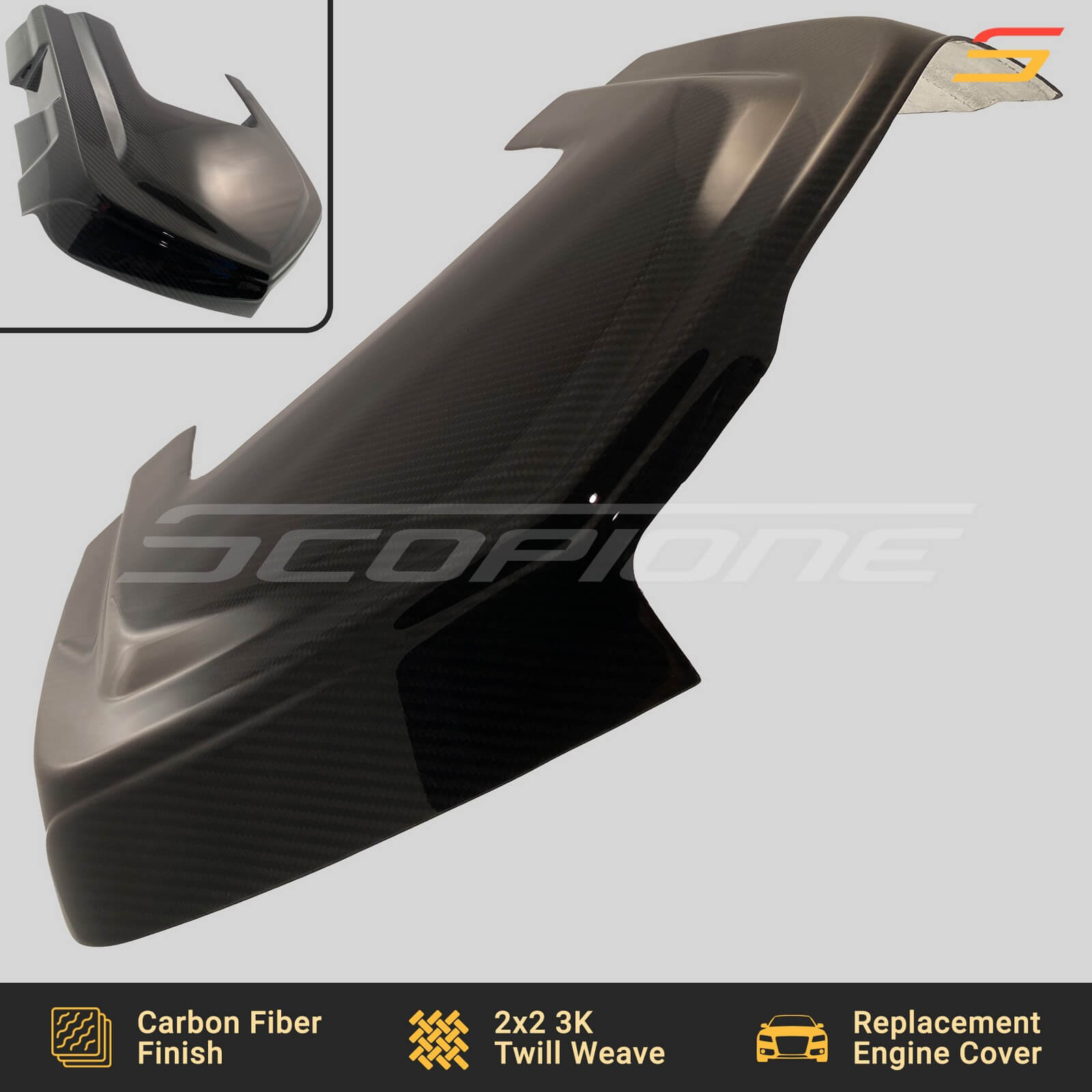
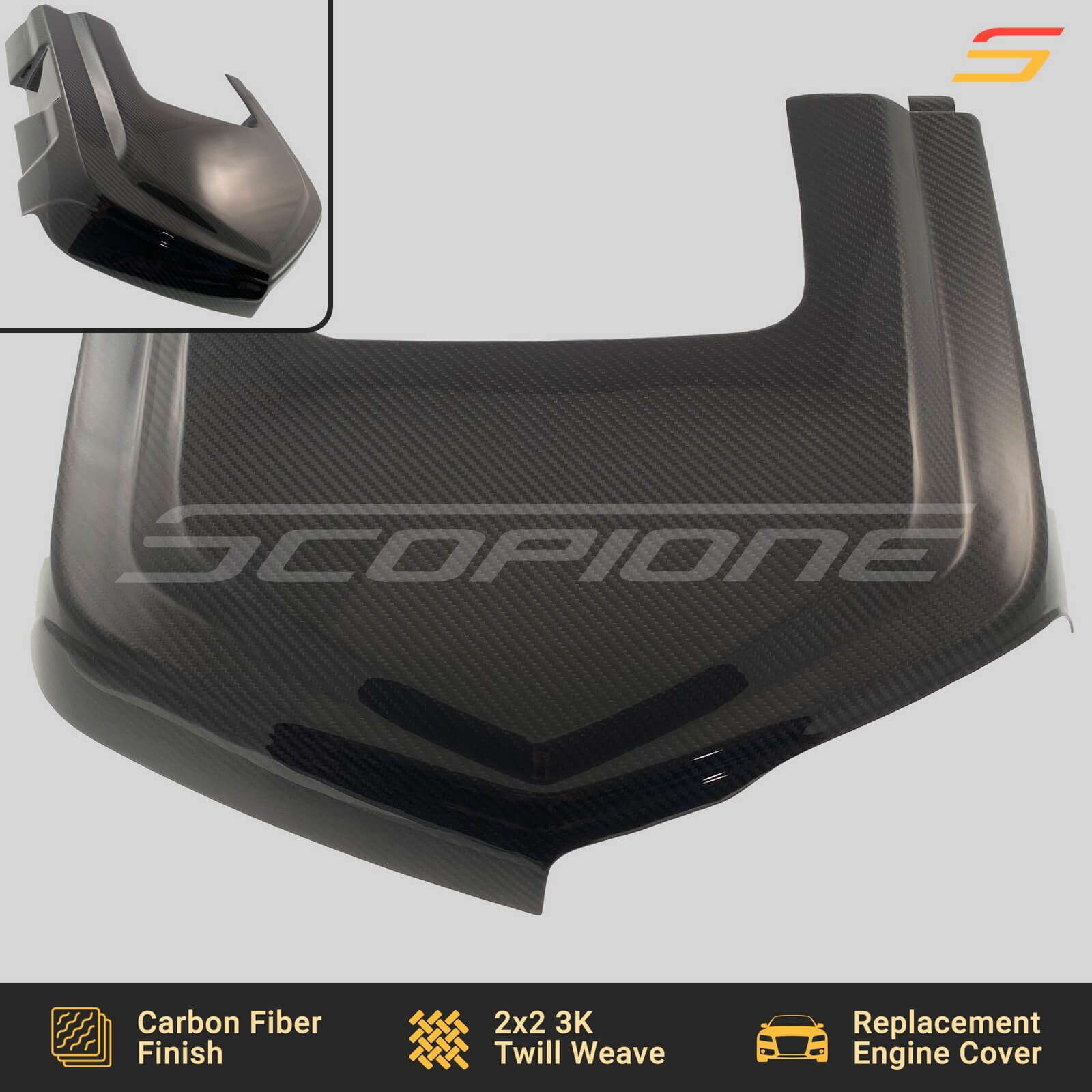
Scopione offers one Cadillac part: a replacement carbon-fiber engine cover for the 2009–2015 CTS-V, moulded in 2×2 3K twill weave under a glossy, UV-resistant clear coat. It is precision-fitted to the factory engine cover it replaces and fits the 6.2L supercharged V8 only — it will not fit the regular I4 or V6 engines, and it does not fit the 2016–2019 third-generation CTS-V. Cadillac’s expanding V-Series and CELESTIQ programs continue to grow the aftermarket opportunity for CF accessories across the brand’s performance lineup – explore the Scopione catalog.
Which Cadillac models currently feature carbon fiber?
The CT5-V Blackwing and CT4-V Blackwing offer factory CF aerodynamic packages including splitters, spoilers, and diffusers. The CELESTIQ features CF body panels as part of its hand-built construction. The XT5 offers carbon-fiber interior trim in Platinum and Sport packages (Bronze CF and V-Line high-gloss CF, respectively). The Escalade-V includes CF interior trim elements as standard. Aftermarket CF components, including the Scopione engine cover, are also available for the 2009–2015 CTS-V.
Experience the elegance and performance of the Cadillac with Scopione. Browse our gallery and get inspired to elevate your supercar with our top-of-the-line carbon fiber upgrades.
Shop now for premium ScopioneCarbon carbon fiber upgrades and experience the ultimate in performance and aesthetics for your Cadillac!
Back to Top ↑Disclaimer: Technical specifications, production figures, and historical details presented in this article are editorial in nature and may differ from official manufacturer data. Photographs show the Scopione carbon fiber engine cover for the 2009–2015 Cadillac CTS-V.