

 Shop
ShopMcLaren did not adopt carbon fiber. It introduced the material to motorsport, proved it could save lives, and then built an entire road car company on it. In 1981, John Barnard designed the MP4/1 – the first Formula 1 car with a carbon fiber monocoque. When John Watson crashed that car at Monza at 140 mph and walked away uninjured, the argument for CF construction ended. Twelve years later, Gordon Murray designed the McLaren F1 – the first production car with a CF monocoque – and set a template that every subsequent McLaren road car has followed. From the 75 kg MonoCell tub in the 2011 MP4-12C to the pre-preg Aerocell in the 2024 W1, every McLaren sits on carbon fiber. No other manufacturer carries an unbroken CF chassis lineage spanning four decades of both racing and road cars. Scopione stocks carbon-fiber components for McLaren’s Sports Series and Super Series models – browse the full McLaren catalog.
McLaren Carbon Fiber Chassis Timeline
| Year | Chassis Technology | Model | Weight |
|---|---|---|---|
| 1981 | First CF monocoque in F1 | MP4/1 | N/A |
| 1993 | First CF monocoque in a production car | F1 | ~4,000 hrs build time |
| 2011 | MonoCell | MP4-12C | 75 kg |
| 2013 | MonoCage | P1 | 90 kg |
| 2015 | MonoCell II | 570S (Sports Series) | ~75 kg |
| 2017 | MonoCage II | 720S | ~80 kg |
| 2022 | MCLA | Artura | 82 kg |
| 2024 | Aerocell | W1 | Pre-preg motorsport grade |
1963–1980: Racing Origins and the Pursuit of Speed
Bruce McLaren was still in his mid-twenties when he founded Bruce McLaren Motor Racing in 1963. He had already won a Grand Prix – the 1959 United States Grand Prix at Sebring, at age 22, the youngest F1 winner at the time – and had survived Perthes Disease as a child, spending two years in traction with one leg left shorter than the other. That background shaped an engineer who understood physical limitation and refused to accept unnecessary weight in anything he built. The company started by building sports cars for Can-Am and Le Mans, not grand prix single-seaters, and Bruce himself was as much a mechanic and test driver as he was a team principal. That hands-on culture shaped everything McLaren produced. When a component could be lighter, Bruce made it lighter. When a design could be simpler, he simplified it. Carbon fiber was decades from commercial viability, but the engineering culture that would embrace it was already in place.
McLaren M1A (1964): The First McLaren
The M1A was the first car to carry the McLaren name. Bruce designed it for Can-Am sports car racing with a 4.5-liter Oldsmobile V8 producing 310-350 hp. Twenty-four examples were built. The construction was typical of the era – aluminum monocoque with fiberglass bodywork – but the engineering priority was weight. Bruce’s approach was brutally pragmatic: if a component did not serve a function, it was removed.
- Engine: 4.5L Oldsmobile V8, 310-350 hp
- Production: 24 units
- Construction: Aluminum monocoque, fiberglass bodywork
The M1A launched a dynasty. From 1967 to 1971, McLaren won five consecutive Can-Am championships. Bruce and teammate Denny Hulme were so dominant that the era became known as the “Bruce and Denny Show.” The M6A introduced the trademark papaya orange livery in 1967. The M8 series that followed pushed power outputs toward 700 hp with aluminum-block Chevrolet V8s – numbers that demanded light chassis construction to be controllable. Can-Am’s unrestricted regulations rewarded exactly the kind of engineering McLaren excelled at: find the weight, remove it, go faster.
Bruce died on June 2, 1970, at Goodwood, testing the M8D Can-Am prototype. He was 32. The rear bodywork detached at high speed and the car became uncontrollable. Teddy Mayer, an American lawyer from Scranton, Pennsylvania, who had helped finance the team from the beginning and joined after his brother Timmy’s death driving for the team in 1964, took control.
McLaren M23 (1973-1978): The First F1 Champion
Gordon Coppuck designed the M23, and it delivered McLaren’s first Constructors’ Championship in 1974. Emerson Fittipaldi won the Drivers’ title that year; James Hunt won in 1976 in one of F1’s defining championship battles against Niki Lauda. The M23 was a conventional aluminum monocoque – the last generation of that construction method at McLaren. A young engineer named John Barnard assisted on the project. Within five years, Barnard would make aluminum monocoques obsolete.
- Engine: 3.0L Ford Cosworth DFV V8, ~480 hp
- Titles: 1974 Constructors’, 1974 and 1976 Drivers’
- Designer: Gordon Coppuck
McLaren also won the Indianapolis 500 twice during this era – Johnny Rutherford in 1974 and 1976 – demonstrating that the team’s engineering capability extended beyond F1. By the late 1970s, however, McLaren had fallen behind in F1. The team failed to master ground-effect aerodynamics, and the M28 was described by Mayer himself as “ghastly.” In 1980, Marlboro forced a merger with Ron Dennis’s Project 4 Racing. Dennis brought organizational discipline and an obsession with presentation – the McLaren Technology Centre he later commissioned was designed by Norman Foster. He also brought John Barnard.
Scopione Perspective: The Pre-Carbon Fiber Era
McLaren’s earliest cars were built from aluminum and fiberglass – materials that prioritized low weight within the technological constraints of the 1960s and 1970s. The same engineering impulse that drove Bruce McLaren to strip grams from Can-Am cars drives today’s carbon-fiber aftermarket. Scopione carries 2×2 3K twill-weave CF components for McLaren models spanning the Sports Series through Super Series, finished with UV-resistant clear coat for long-term durability. McLaren owners exploring CF upgrades should note that the company’s all-carbon chassis means exterior CF parts integrate visually with the existing material language – the weave pattern on a Scopione mirror cap or side vent surround matches what’s already visible on the car’s exposed structural elements.
1981–1998: The Carbon Fiber Revolution
Two engineers define this era. John Barnard, working with a small team and a composite manufacturer 5,000 miles from the factory, designed the MP4/1 – the car that brought carbon fiber to motorsport. Gordon Murray, sketching on a notepad while waiting for a flight after the 1988 Italian Grand Prix, conceived the McLaren F1 – the car that brought it to the road. Between these two machines, McLaren did something no other company has matched: it introduced CF construction to both racing and production cars, and maintained an unbroken CF lineage from one to the other.
McLaren MP4/1 (1981-1983): The Car That Changed Everything
John Barnard needed a narrow monocoque. Ground-effect F1 demanded wider Venturi tunnels under the car, which meant the chassis had to shrink. Aluminum was too flexible for the dimensions he needed. Steel was too heavy. Carbon fiber – a material that aerospace companies were just beginning to adopt – offered both the stiffness and the low density that aluminum and steel could not provide simultaneously.
Barnard partnered with Hercules Aerospace in Salt Lake City. Steve Nichols, who had worked at Hercules, made the introduction. Barnard flew to Utah with a quarter-scale model. Hercules laid carbon fiber over aluminum honeycomb, autoclaved the structure, and shipped it to the UK. The resulting monocoque was assembled from five major CF components with flat faces – Hercules lacked the technology for curved pieces at the time. Where a conventional F1 car used approximately 50 major aluminum components, the MP4/1 used a single aluminum part.
- Race debut: 1981 Argentine Grand Prix, April 12
- First win: 1981 British Grand Prix, Silverstone – John Watson
- Career totals: 6 wins, 11 podiums, 131 points (1981-1983)
- Construction: Carbon fiber over aluminum honeycomb, five major CF components
Watson’s victory at Silverstone was the first for a CF monocoque F1 car. But it was his crash at Monza two months later that transformed the industry. On lap 20, Watson lost control exiting the second Lesmo corner at approximately 140 mph. The car spun backwards into the barrier. The impact ripped the engine and gearbox away, tearing the car in half. The monocoque remained intact. Watson climbed out uninjured. He was testing at Donington within four days and finished second at the Canadian Grand Prix two weeks later. Hercules kept the damaged car as a demonstration piece for visitors. Critics who had predicted the CF chassis would “crack like an egg” went silent.
Watson later won at Long Beach in 1983 from 22nd on the grid – a comeback that has rarely been matched in F1 history.
McLaren MP4/2 (1984-1986): Carbon Fiber Proves Its Dominance
The MP4/1’s success was dramatic but limited – six wins across three seasons. The MP4/2 removed any remaining doubt. Barnard’s design, still built on CF construction, paired with a Porsche-built TAG turbo V6, won 12 of 16 races in 1984. Niki Lauda beat Alain Prost to the Drivers’ Championship by half a point – the narrowest margin in F1 history. Prost won his own title the following year in the MP4/2B. Over three seasons, the MP4/2 family won 22 races. The CF monocoque had proved its reliability over sustained championship campaigns, not just individual events.
- 1984 wins: 12 of 16 races
- Title margin: Lauda beat Prost by 0.5 points – closest in F1 history
- Total wins (1984-1986): 22 across MP4/2, MP4/2B, MP4/2C
McLaren MP4/4 (1988): 15 Wins From 16 Races
By 1988, McLaren’s CF technology had matured from flat-panel construction to sophisticated curved structures. Six MP4/4 chassis were moulded with Hercules Aerospace assistance. The car carried a 1.5-liter Honda turbo V6 producing approximately 685 hp in race trim. Ayrton Senna and Alain Prost drove – arguably the strongest driver pairing in F1 history.
The numbers are staggering. Fifteen wins from 16 races. Ten one-two finishes. Fifteen of 16 pole positions (Senna took 13). The only loss came at Monza, where Jean-Louis Schlesser collided with Senna while being lapped. Senna won the Drivers’ Championship. The MP4/4 is widely regarded as the single greatest F1 car ever built.
- Wins: 15 of 16 races
- Pole positions: 15 of 16
- One-two finishes: 10
- Drivers: Ayrton Senna (champion), Alain Prost
McLaren F1 (1992-1998): The First Production CF Monocoque
Gordon Murray’s sketch became the most consequential road car of the 1990s. The brief was uncompromising: a three-seat layout with a central driving position, a naturally aspirated engine (Murray refused turbocharging for throttle response reasons), and a carbon fiber monocoque – the first in a production car. Development began in 1990 after Murray proposed the concept to Ron Dennis.
Paul Rosche at BMW Motorsport designed the S70/2 – a 6.1-liter V12 that ended up 14% more powerful and 16 kg heavier than Murray’s original specification. Murray solved the resulting heat management challenge by lining the engine bay with gold foil. Each CF monocoque took approximately 4,000 hours to produce. The chassis used carbon fiber, Kevlar, titanium, and magnesium. Butterfly doors – inspired by the Toyota Sera – kept the roofline low.
- Engine: 6.1L BMW S70/2 V12, 618 hp (627 PS)
- Top speed: 240.1 mph (set at Ehra-Lessien, Germany)
- Weight: 1,138 kg
- Production: 106 units (all variants)
- 0-60 mph: 3.2 seconds
The F1 won the 24 Hours of Le Mans outright in 1995. The F1 GTR that won at La Sarthe was a lightly modified road car – the CF monocoque was identical to the production version. No purpose-built prototype could match it. It remains the last production-derived car to win Le Mans overall. The top speed of 240.1 mph, set at the Volkswagen Group’s Ehra-Lessien test facility in Germany, held the production-car record until 2005.
Murray’s deliberate analog philosophy – no driver aids, manual gearbox, center-mounted seat – made the F1 as much a philosophical statement as an engineering one. But its lasting contribution was structural: the carbon fiber monocoque that made 1,138 kg possible with a 6.1-liter V12. Every hypercar manufacturer that followed – Bugatti, Pagani, Koenigsegg – adopted the same CF structural foundation. Murray himself would eventually revisit the concept with the Gordon Murray Automotive T.50 in 2022, incorporating a fan-car aerodynamic system that he had first used on the Brabham BT46B F1 car in 1978.
McLaren MP4/13 (1998): Newey and the CF Aerodynamic Era
Adrian Newey’s arrival brought a shift in how McLaren used carbon fiber. The MP4/13 exploited CF not just for structural stiffness but for aerodynamic complexity – shapes and surfaces that aluminum could not replicate. By 1998, over 60% of a McLaren F1 car was constructed from carbon fiber, extending into suspension components and the gearbox casing. The car also featured a controversial brake-steer system that allowed independent braking of individual wheels to aid cornering.
- Wins: 9 of 16 races
- Pole positions: 12
- Champion: Mika Häkkinen (Drivers’); McLaren (Constructors’)
The MP4/13 delivered McLaren’s last Constructors’ Championship for 26 years – Mika Häkkinen repeated as Drivers’ champion in 1999 and Lewis Hamilton took the 2008 Drivers’ crown, but the Constructors’ title did not return to Woking until 2024. But its engineering legacy was significant: CF had evolved from a chassis material into the enabling technology for the entire aerodynamic package. The MP4/2 proved CF could win championships. The MP4/4 proved it could dominate a season. The MP4/13 proved it could enable an entirely new category of aerodynamic design. Each generation asked more of the material, and each generation received it.
Scopione Perspective: From Racing CF to Road Car CF
The MP4/1’s CF monocoque took weeks to produce and reportedly cost more than any other single component on the car. The F1 road car’s tub required 4,000 man-hours. Making carbon fiber accessible beyond racing and hypercars is exactly where the aftermarket fits. Scopione’s 2×2 3K twill-weave CF parts for McLaren models deliver the same material in a form that can be installed by a qualified technician – no autoclave required.
2011–2019: The Road Car Company Emerges
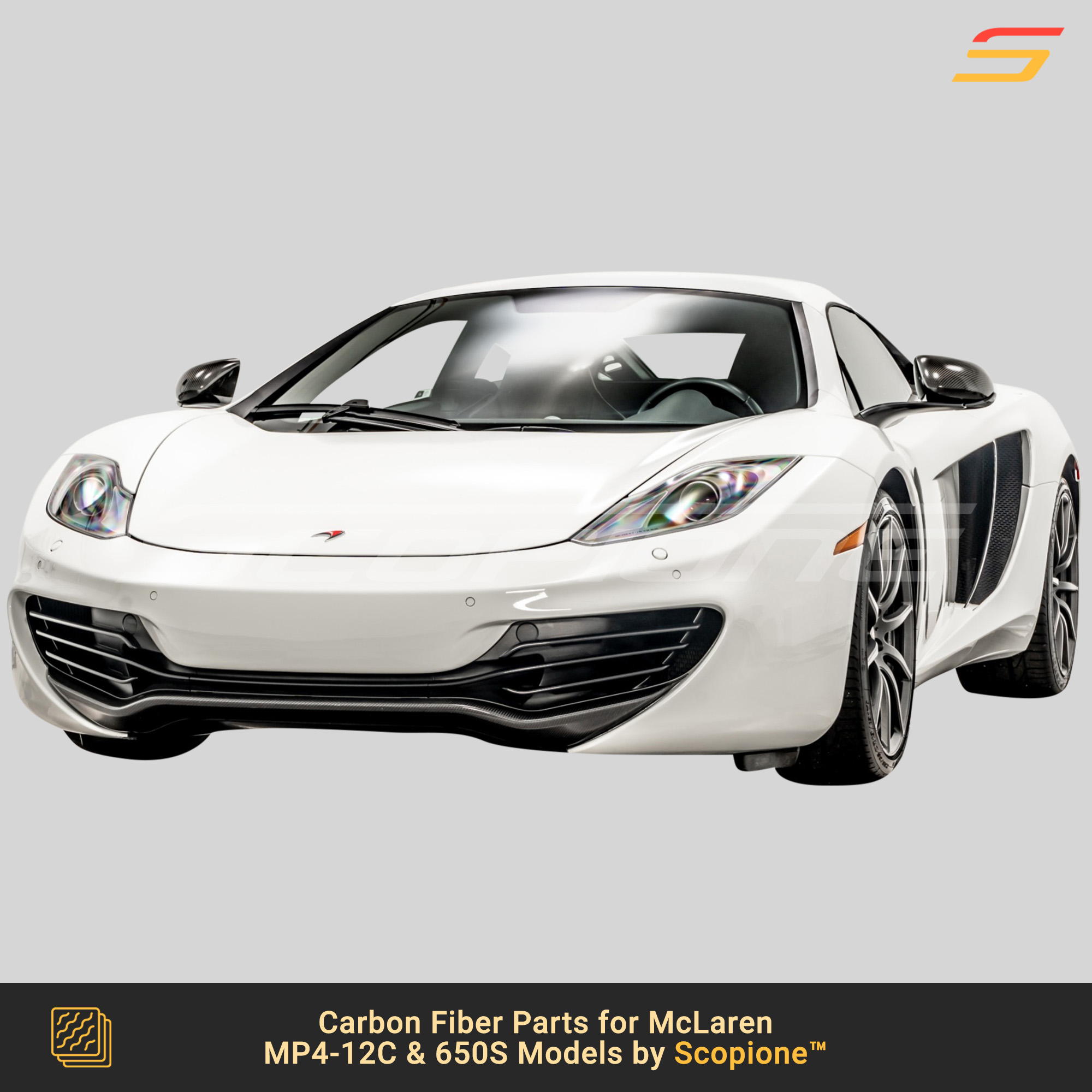
McLaren spent 13 years without a road car after the F1. The MP4-12C, launched in 2011, changed that – and it changed it on a carbon fiber chassis. Ron Dennis insisted on a clean-sheet design: bespoke engine, bespoke chassis, bespoke suspension. No shared platforms, no borrowed components. The result was a car built around a CF tub called MonoCell that could be produced in hours rather than months. McLaren had industrialized carbon fiber construction.
What followed was a rapid expansion. The P1 hypercar in 2013. The Sports Series (570S, 540C) in 2015, bringing a CF chassis to a lower price point. The 720S in 2017 with an all-carbon-fiber upper structure. And a string of limited-run models – Senna, Speedtail, Elva – each pushing CF design in a different direction. By 2019, McLaren was producing more road cars annually than at any point in its history. Every single one sat on carbon fiber.
McLaren MP4-12C (2011-2014): Industrializing Carbon Fiber
The 12C was McLaren’s proof of concept. Frank Stephenson designed the exterior. The 3.8-liter twin-turbo V8 (M838T) was developed specifically for McLaren – the company refused to buy an off-the-shelf engine. But the real story was underneath: the MonoCell, a single-piece carbon fiber tub that weighed 75 kg and could be manufactured in approximately four hours. Carbo Tech in Salzburg produced it using bi-axial and tri-axial CF fabric from Formax UK.
- Engine: 3.8L twin-turbo V8, 616 PS (607 hp)
- 0-60 mph: 3.1 seconds
- Top speed: 207 mph
- Production: ~3,500 units
- Chassis: MonoCell, 75 kg, 4-hour production time
Approximately 3,500 units were produced – small by Ferrari or Porsche standards, but enough to sustain a road car business. The MonoCell proved durable enough to carry over unchanged into the 650S three years later – a car that shared 75% of its components with the 12C, including the same 75 kg CF tub. That platform longevity was critical to McLaren’s business model: invest heavily in the CF chassis, then amortize it across multiple derivatives and generations.
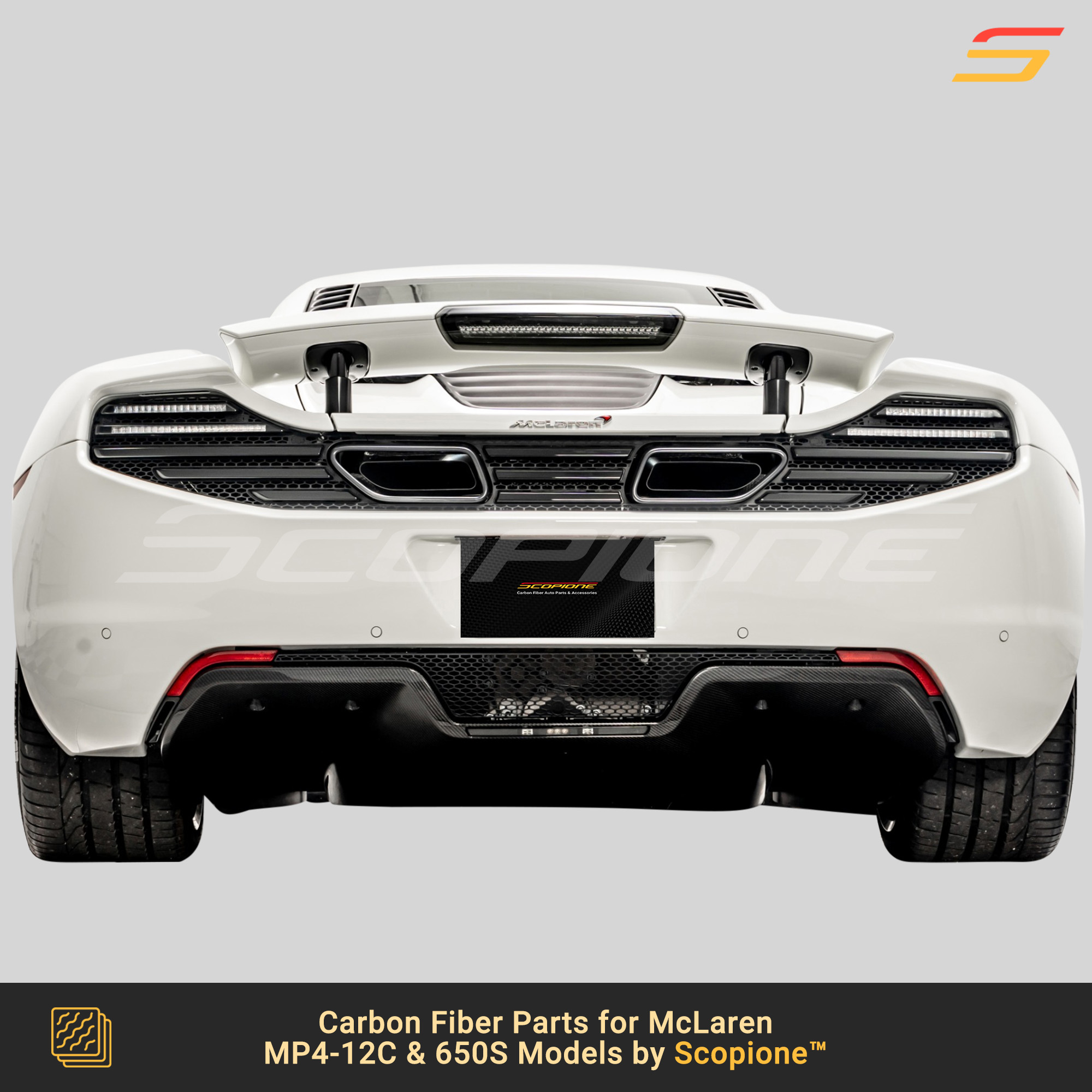
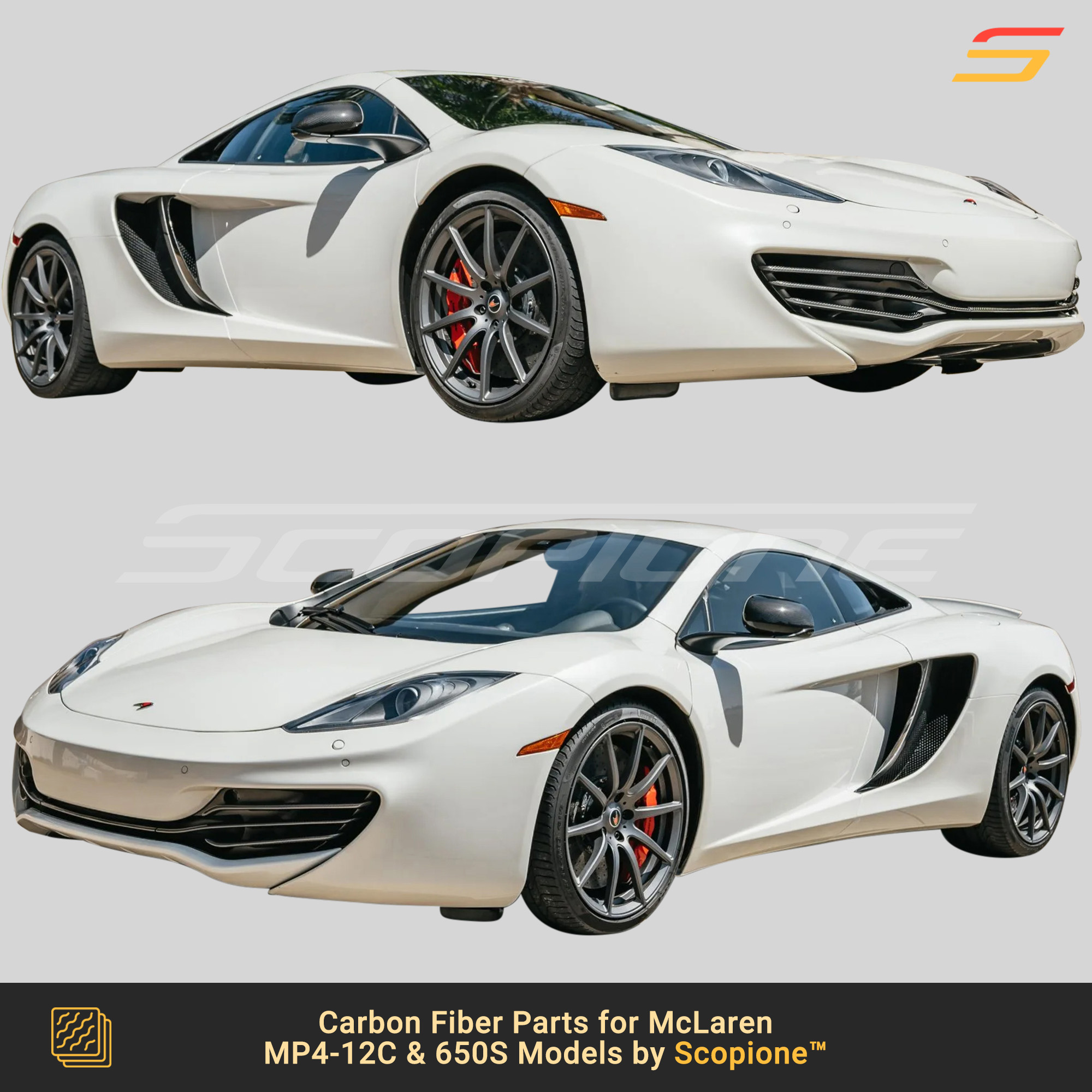
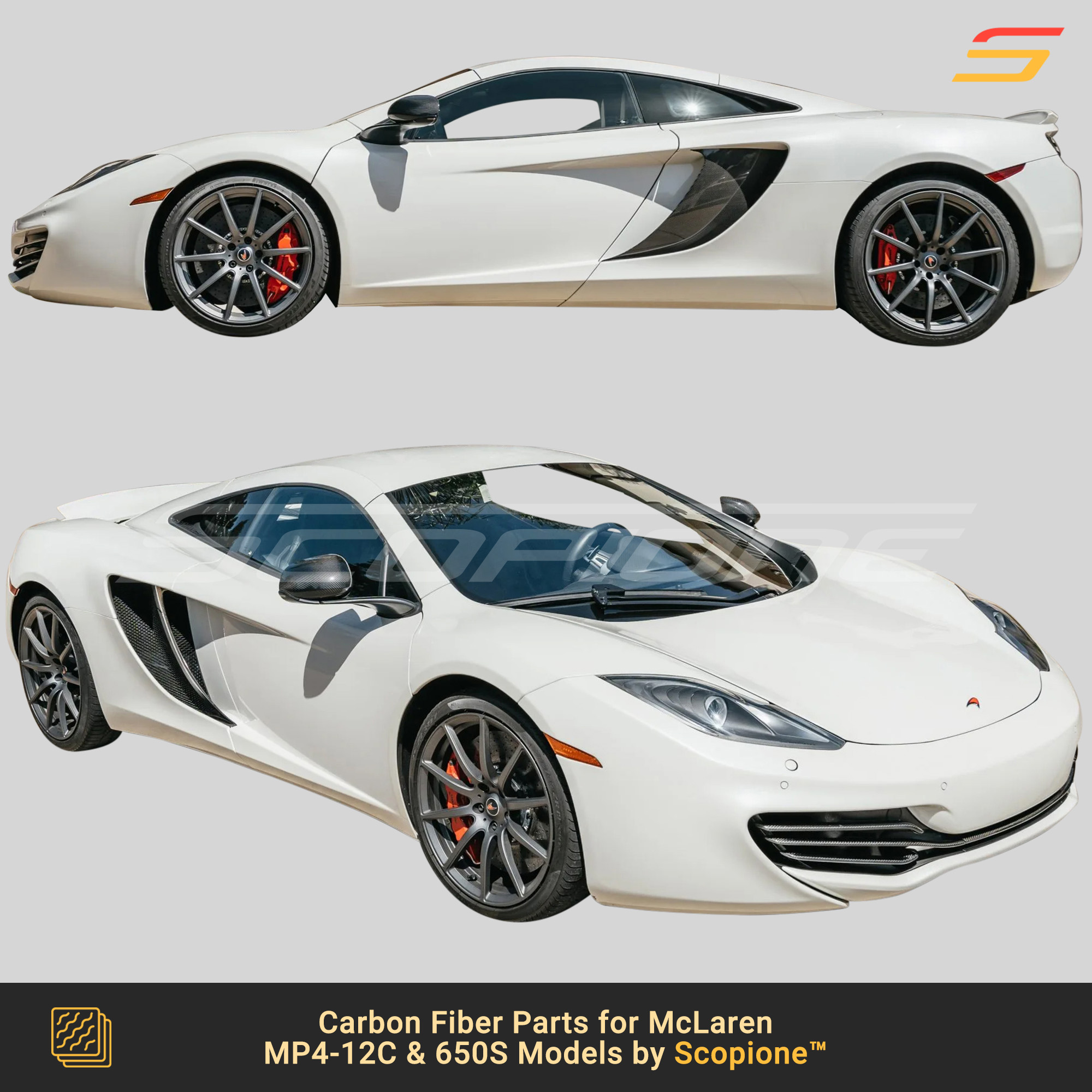
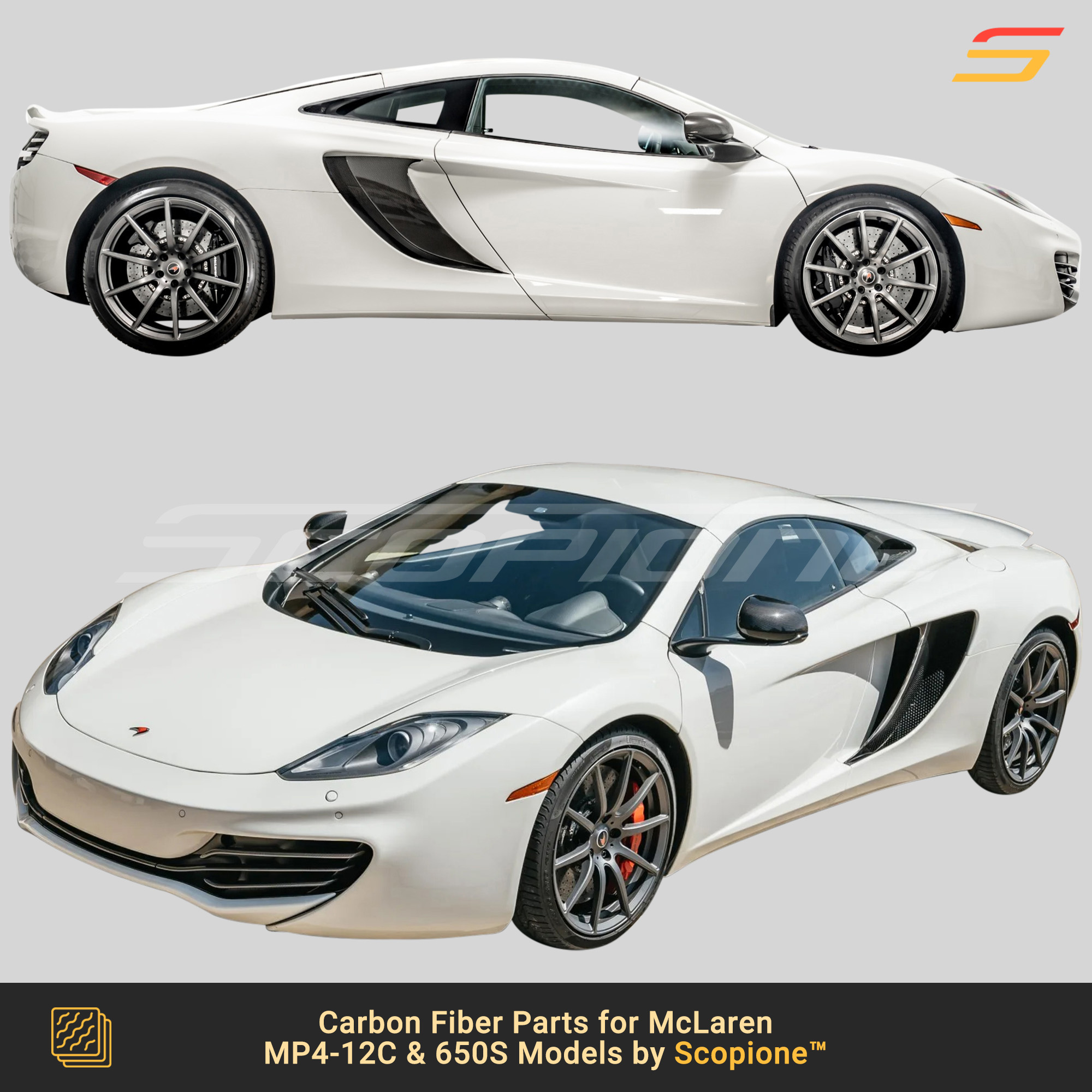
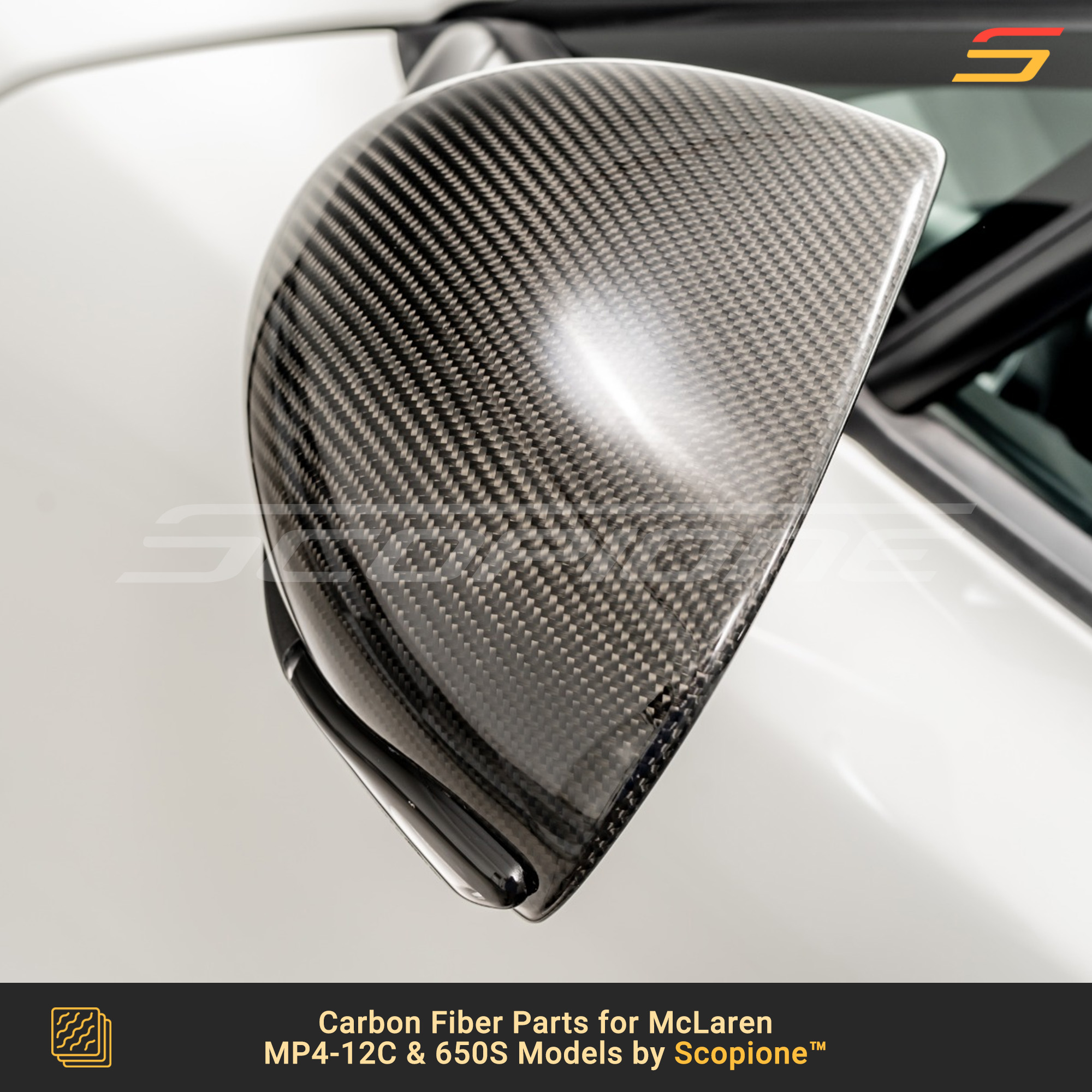
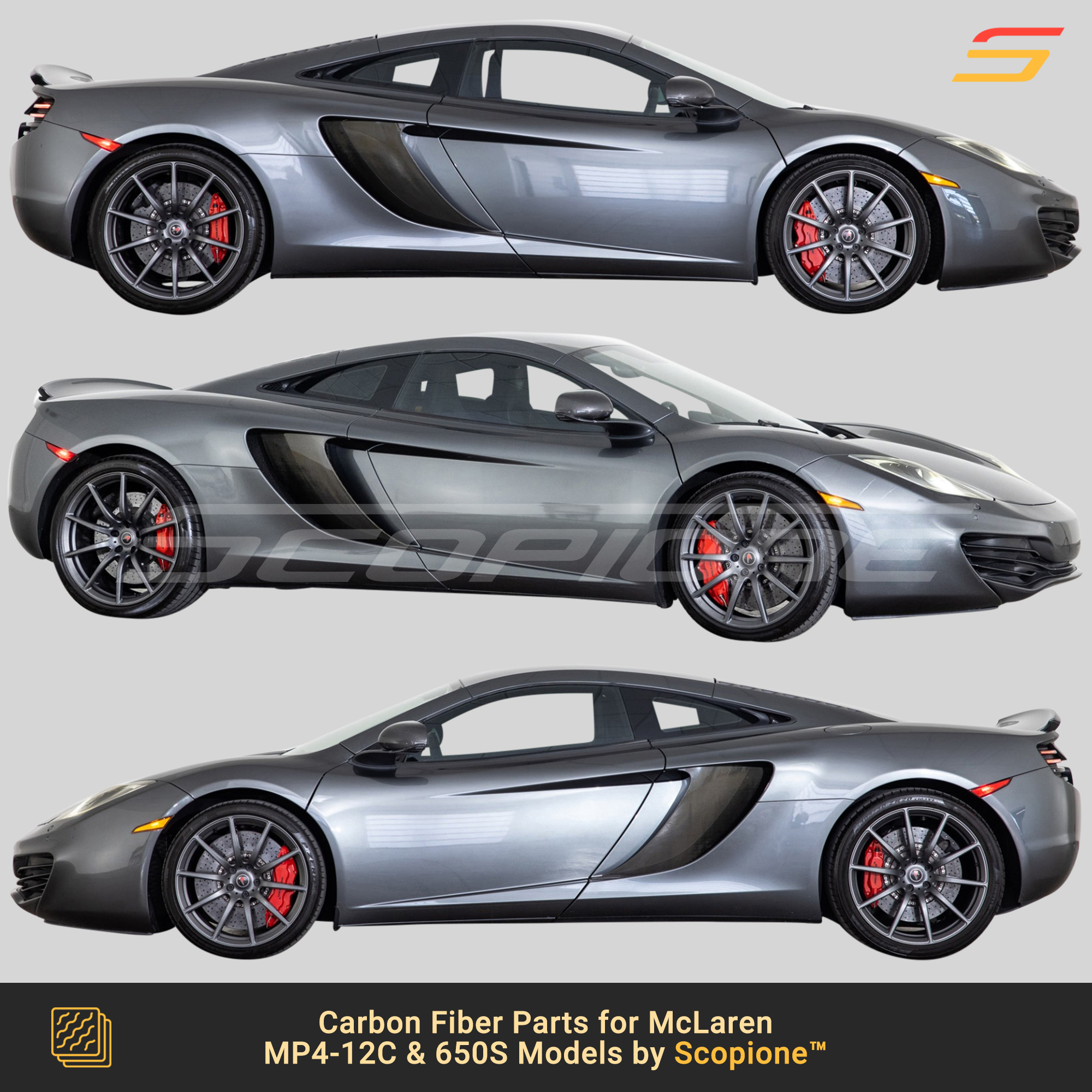
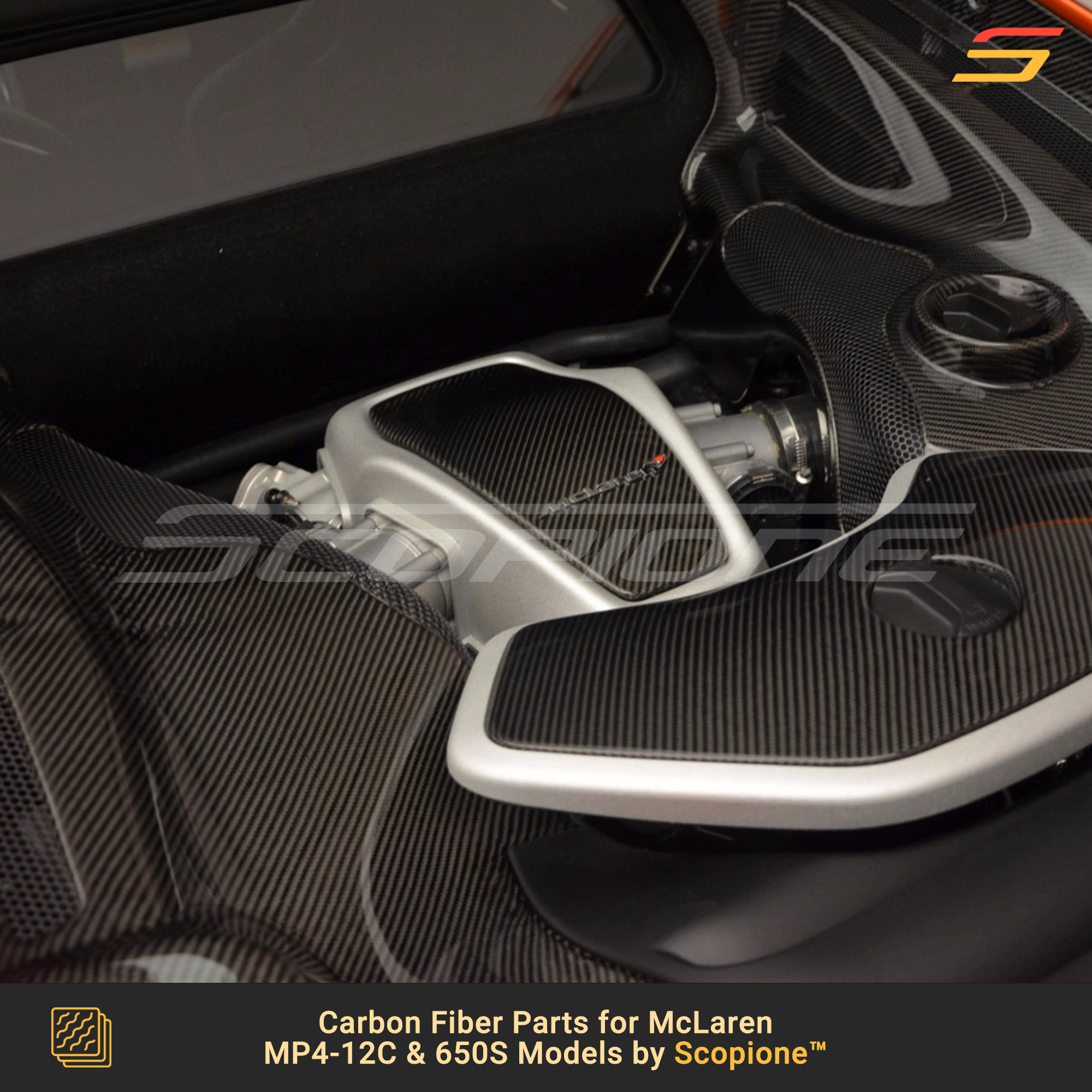
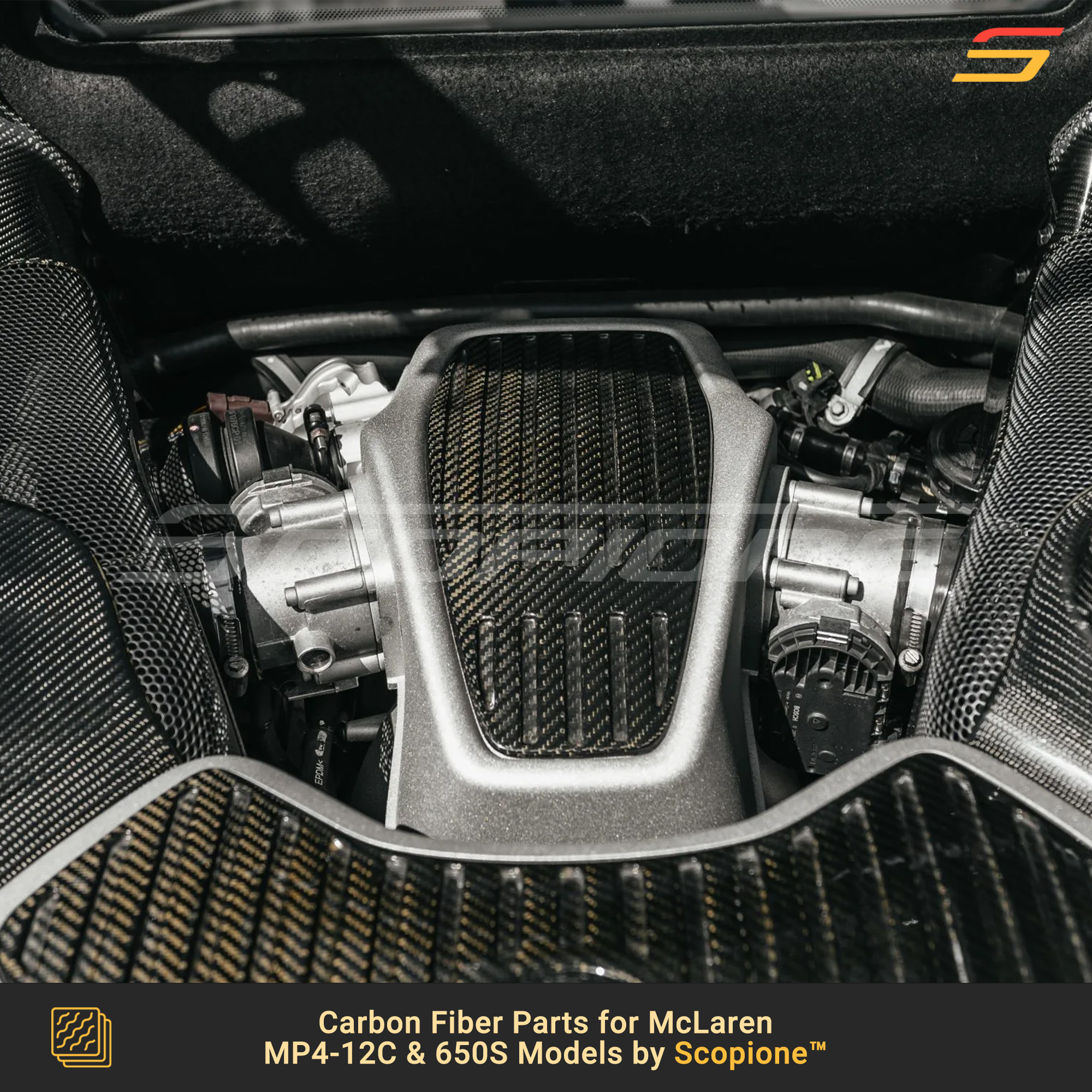
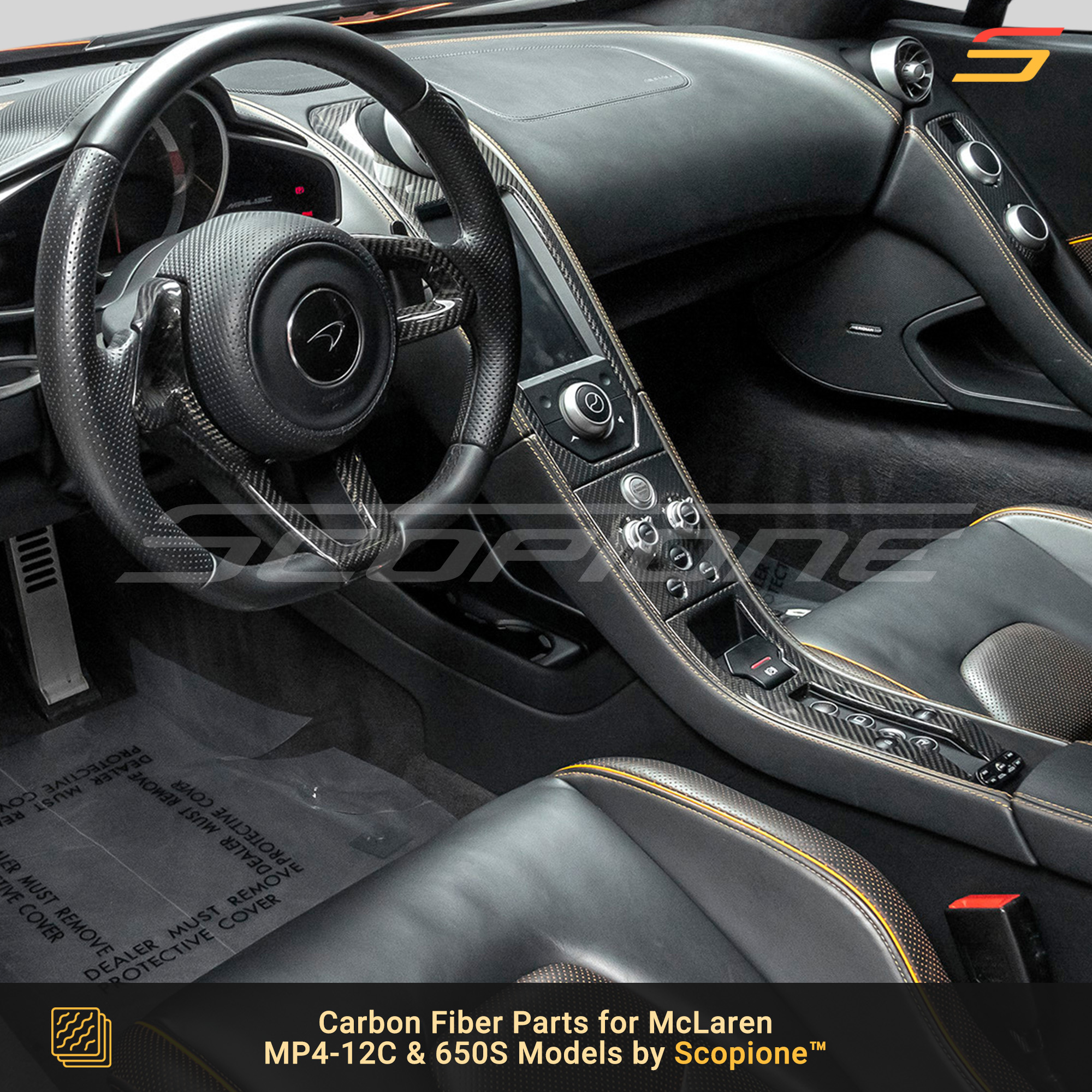
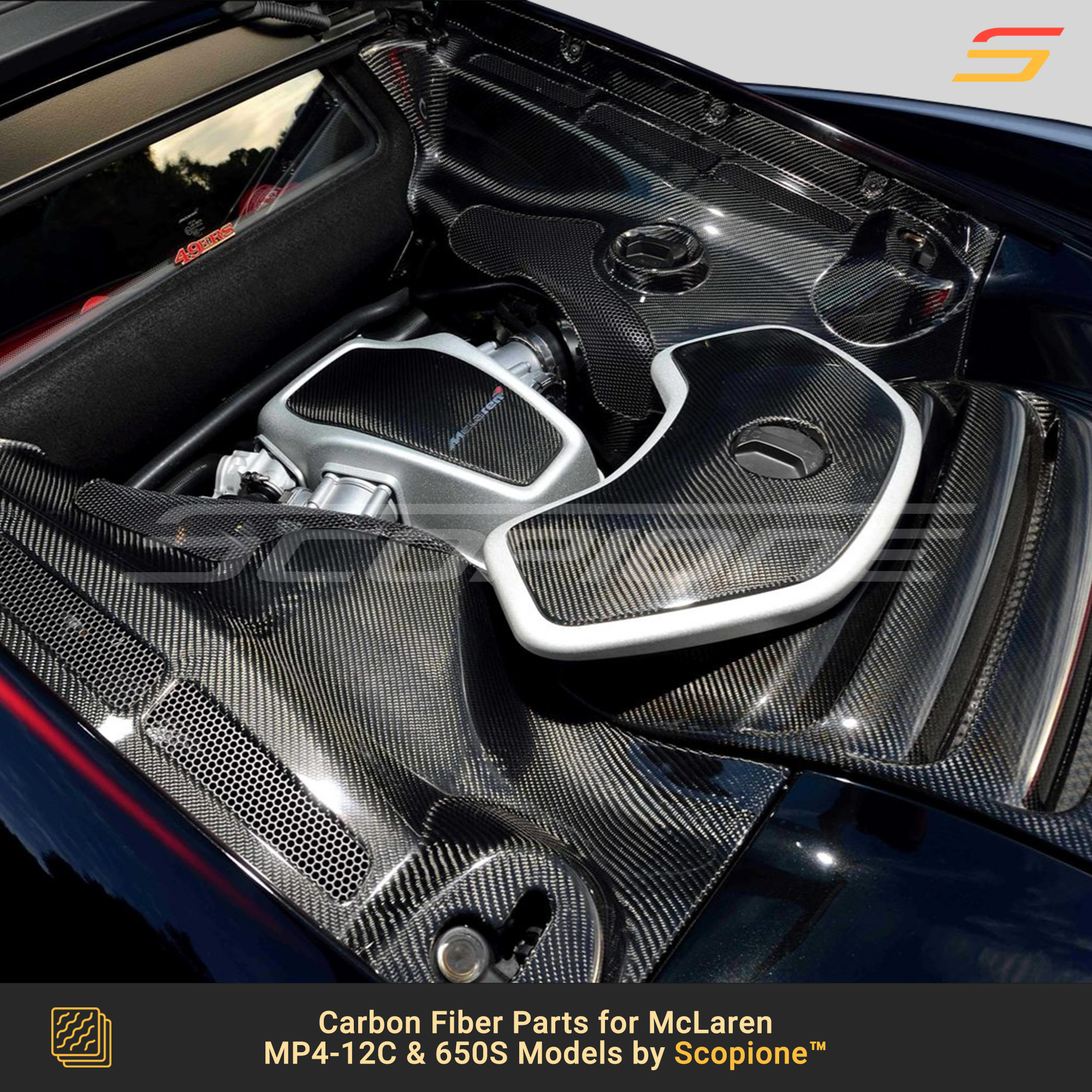
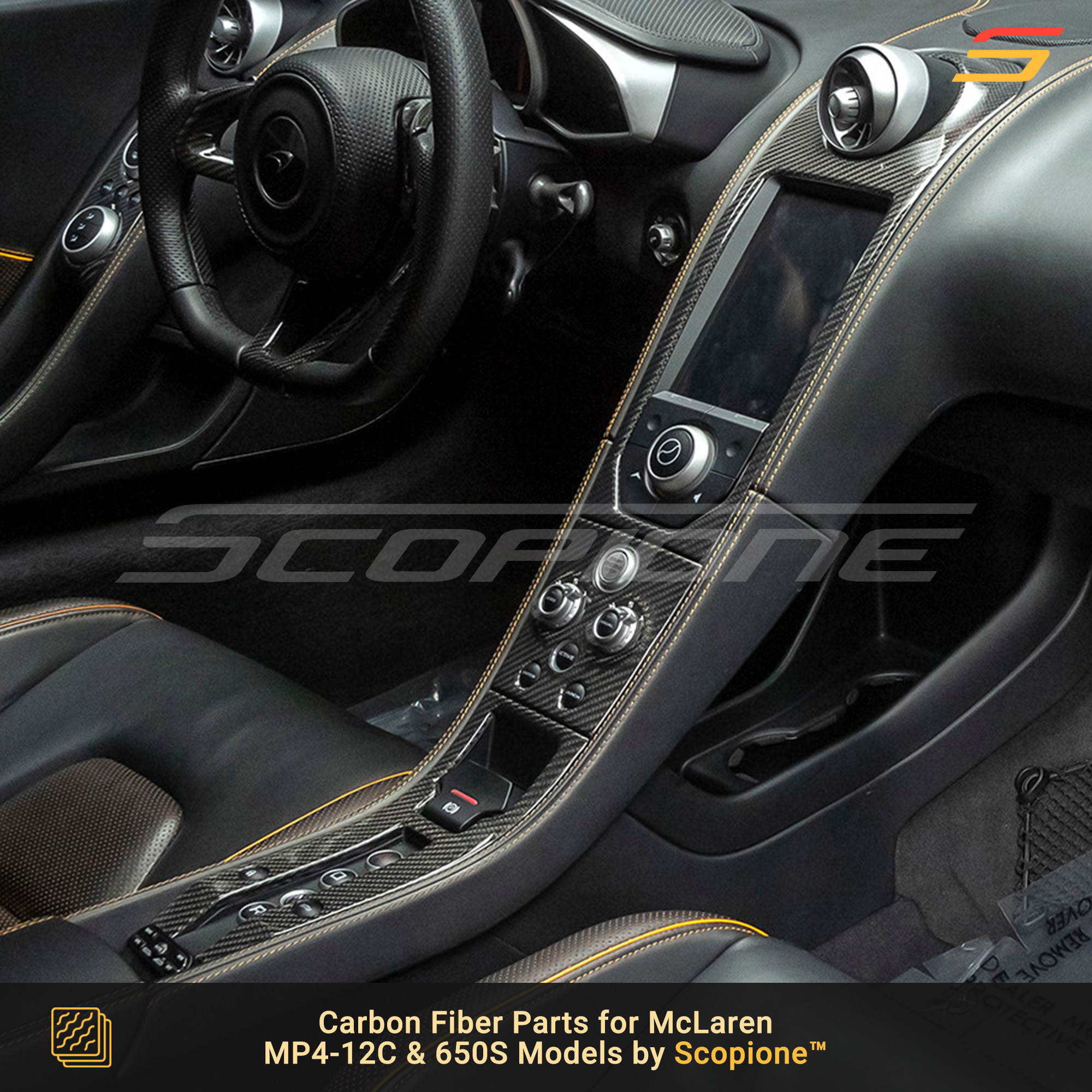
The 675LT – the first modern Longtail, named after the 1997 F1 GTR Le Mans racer – took the MonoCell formula further. Extensive CF body panels replaced heavier materials, cutting 100 kg from the 650S. Production was limited to 500 coupes and 500 spiders, plus 25 MSO Carbon Series cars with 40% more visible CF content than standard. The Longtail philosophy – lighter, more powerful, more aerodynamically aggressive – became a recurring thread through the 600LT, 765LT, and eventually the W1’s Active Long Tail. For a deeper look at the MP4-12C and 650S, see the McLaren MP4-12C & 650S Picture Gallery.



McLaren P1 (2013-2015): The MonoCage and the Holy Trinity
The P1 was McLaren’s F1 successor in spirit, if not in philosophy. Where Murray rejected hybrid powertrains, the P1 embraced one: a 3.8-liter twin-turbo V8 paired with an electric motor for a combined 903 hp. All 375 units were sold before production ended. The car was part of the “Holy Trinity” alongside the Ferrari LaFerrari and Porsche 918 Spyder – three hypercars that collectively defined the hybrid supercar era.
The CF advance was the MonoCage. Where the MonoCell was a tub with metal above, the MonoCage integrated the roof, roof snorkel, engine air intake cavity, and battery housing into a single 90 kg structure. Eliminating the metal upper structure reduced mass while increasing torsional rigidity. The P1 GTR track variant pushed the aerodynamic CF development further.
- Engine: 3.8L twin-turbo V8 + electric motor, 903 hp combined
- 0-62 mph: 2.8 seconds
- Top speed: 217 mph (electronically limited)
- Production: 375 units
- Chassis: MonoCage, 90 kg
McLaren 570S / 570GT / 540C (2015-2021): Carbon Fiber for Entry-Level Supercars
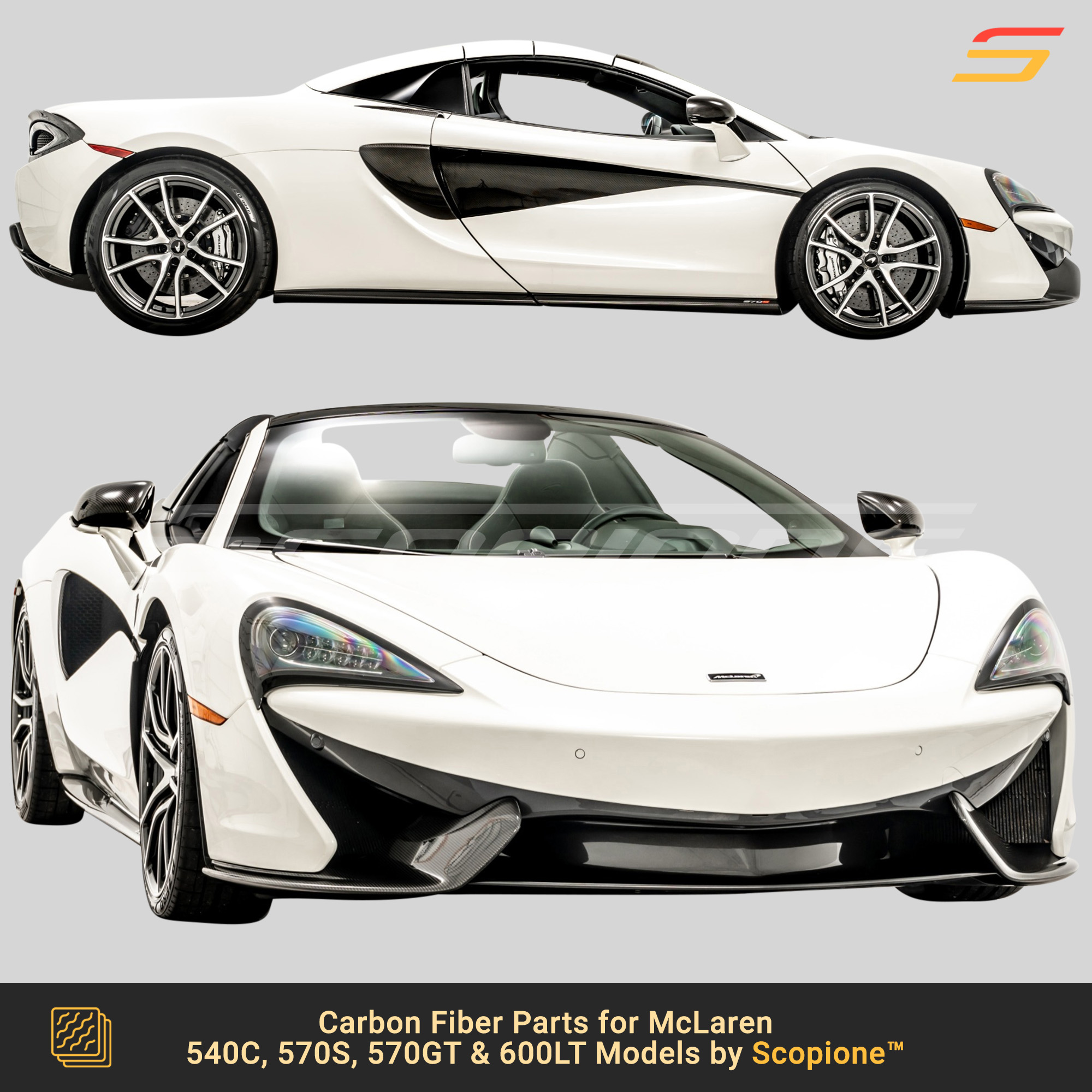
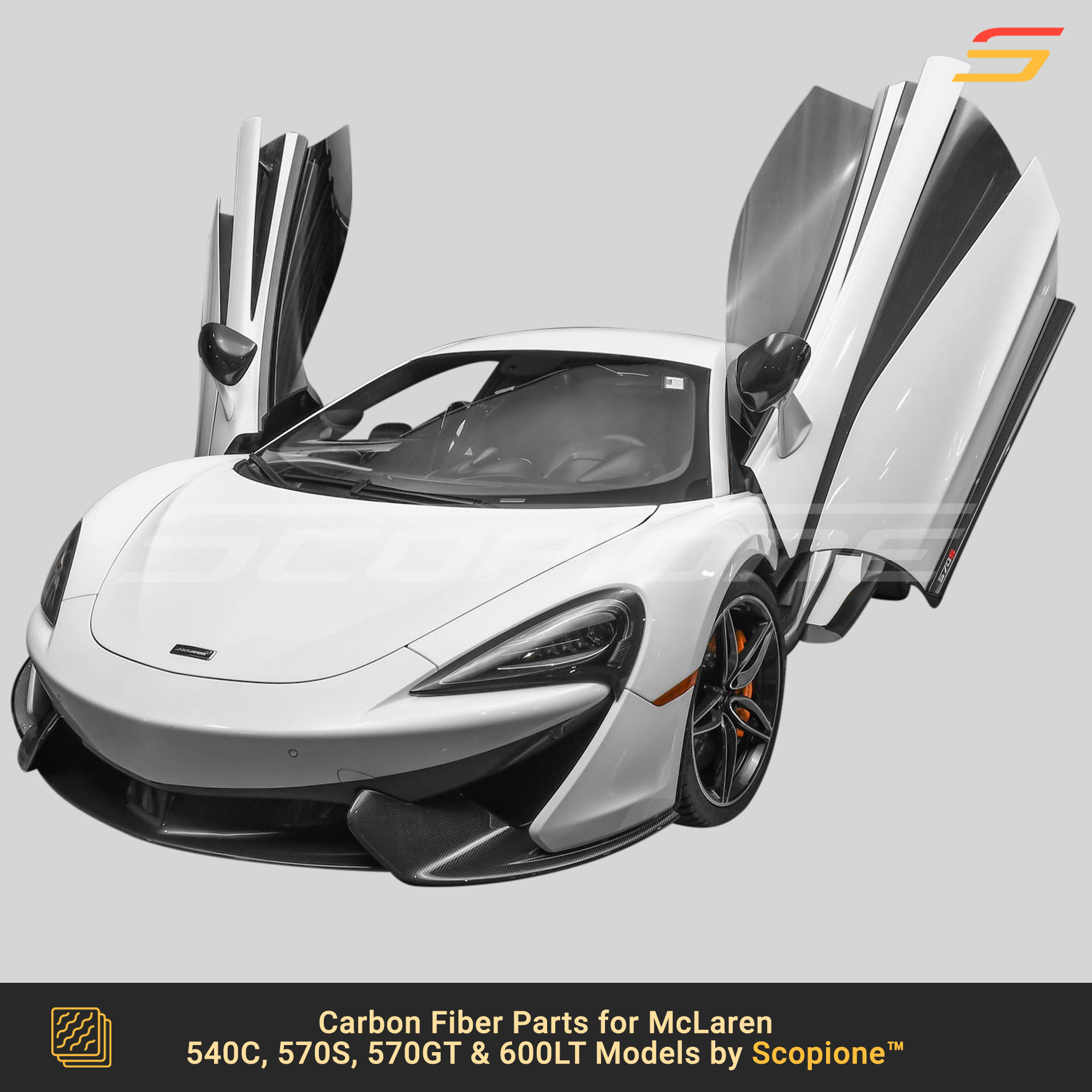
The Sports Series tackled a segment McLaren had never entered: sub-$200,000 supercars competing against the Porsche 911 Turbo and Audi R8. The answer was the MonoCell II – a redesigned tub with lower sill heights for easier entry and exit. One of the 12C’s persistent complaints was that climbing over the high sills required a specific technique; the MonoCell II fixed this while maintaining structural integrity.
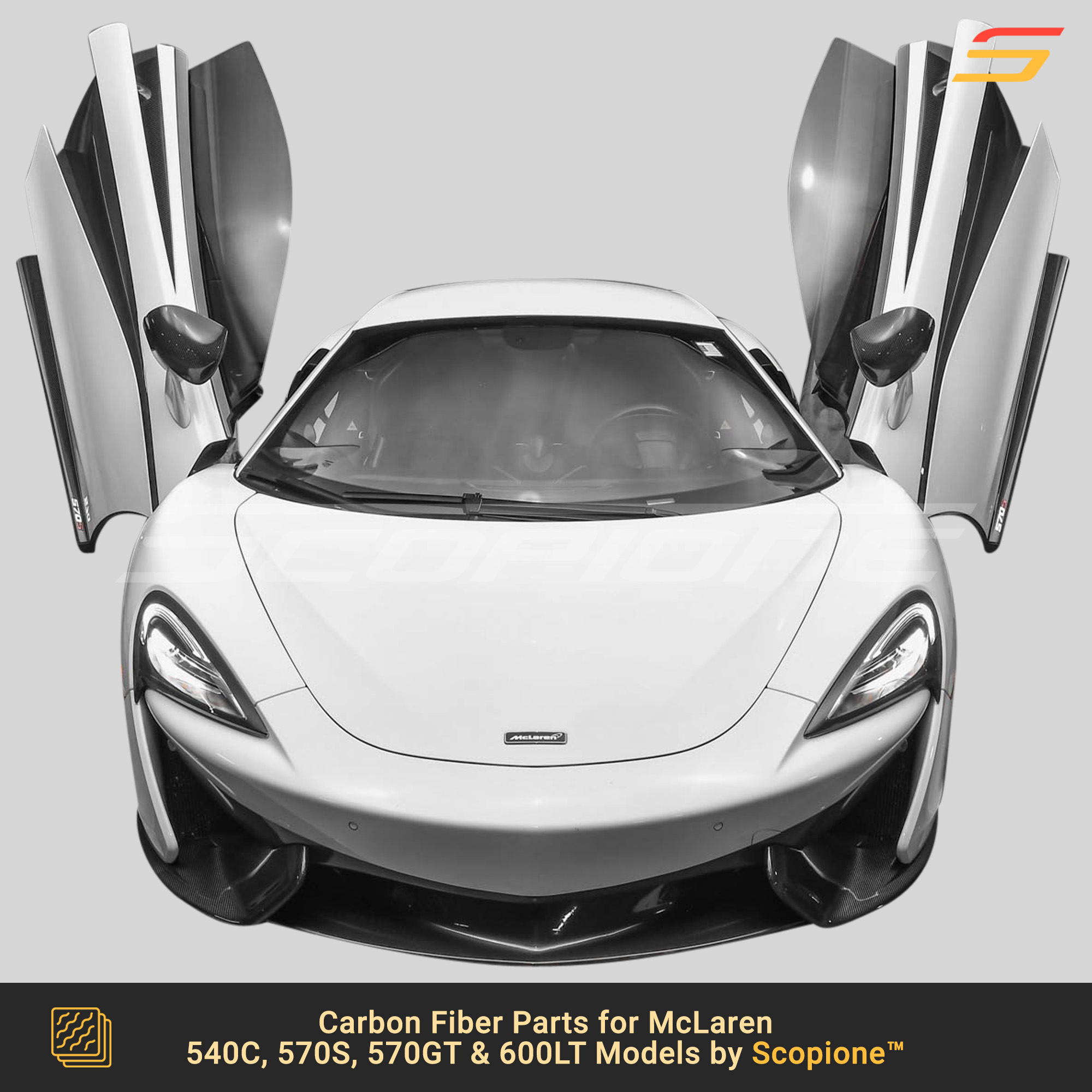
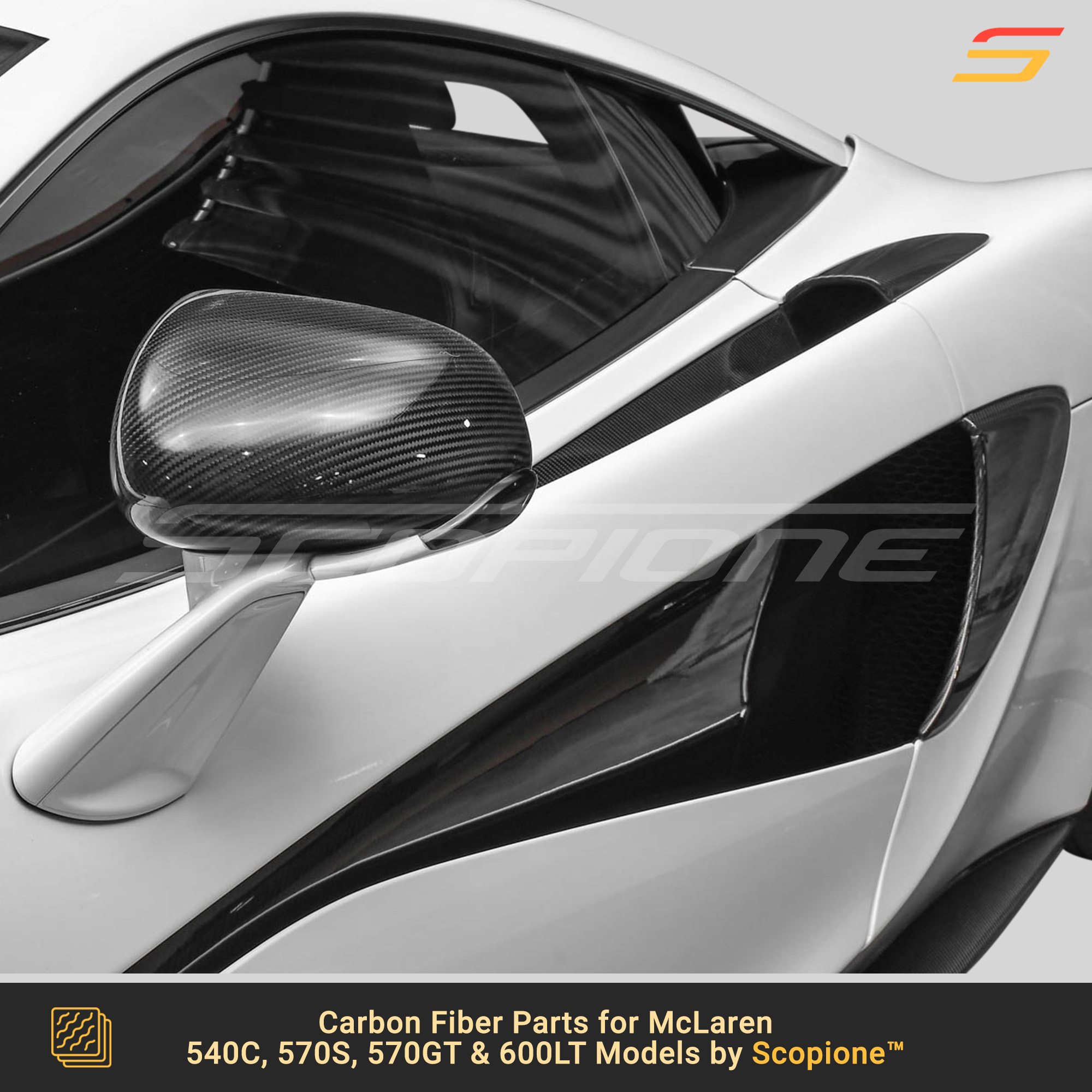
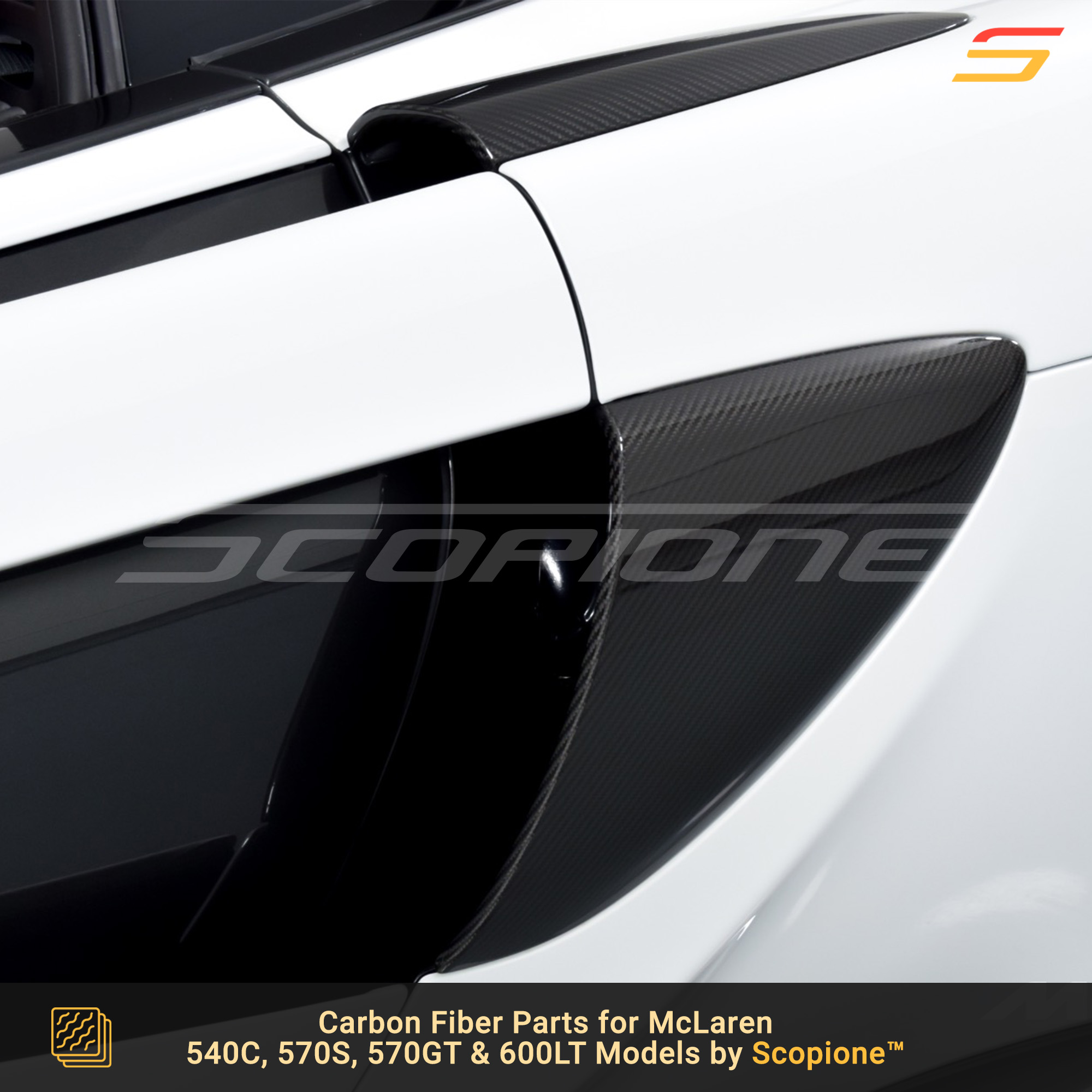
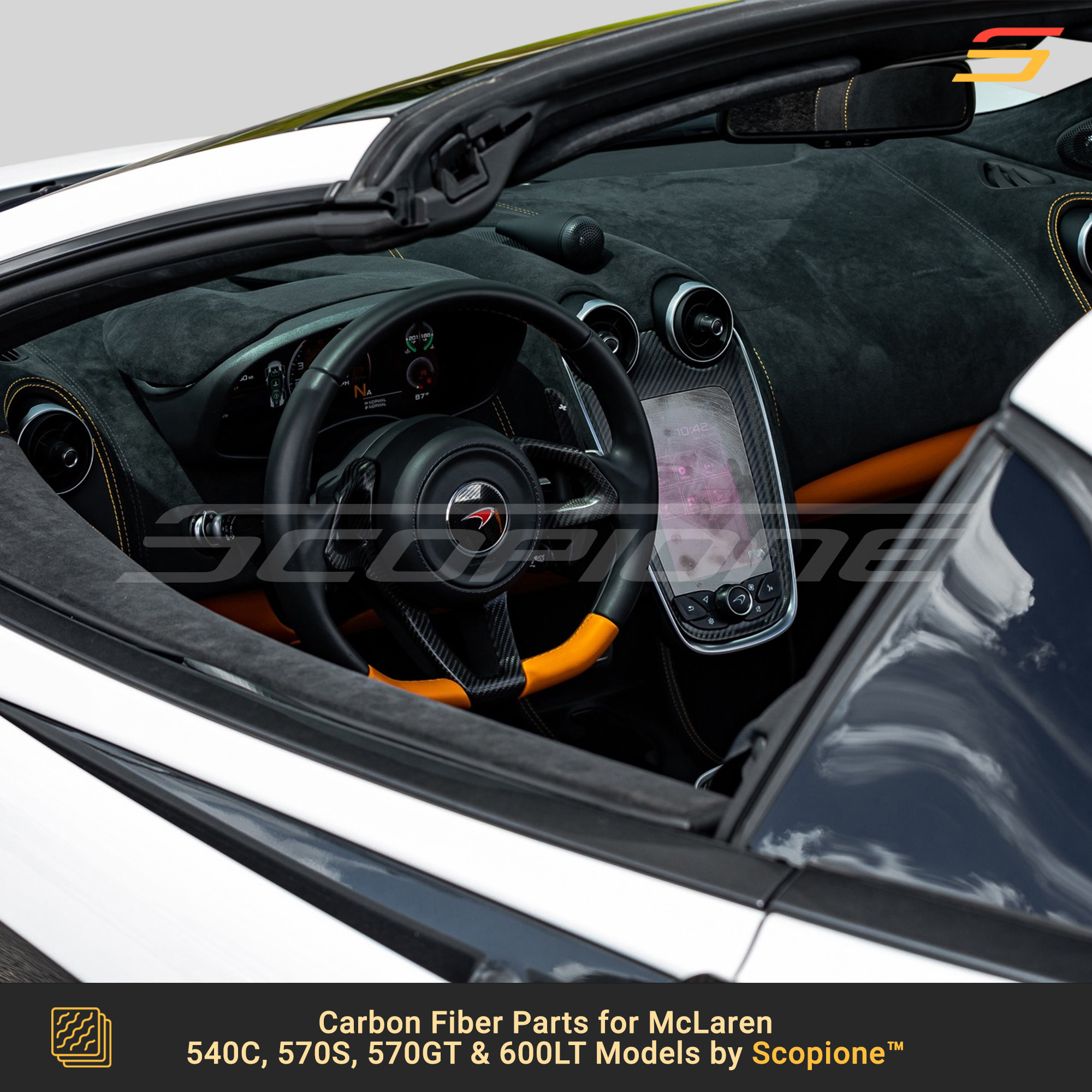
The 570S delivered 562 hp from the 3.8-liter twin-turbo V8, hit 60 mph in 3.2 seconds, and weighed less than most of its aluminum-bodied competitors. The 570GT added a glassback and 220 liters of luggage space for touring. The 540C served as an entry point in markets outside the United States. Combined production across the Sports Series range reached approximately 15,000 units – a figure that justified the CF chassis investment. Scopione offers carbon-fiber exterior and interior components for the Sports Series – view the 540C/570S/570GT/600LT Picture Gallery for fitment reference.
- Engine: 3.8L twin-turbo V8, 533-562 hp
- 0-62 mph: 3.2 seconds (570S)
- Top speed: 204 mph (570S)
- Chassis: MonoCell II
- Combined production: ~15,000 units
The 600LT brought the Longtail philosophy to the Sports Series – 74 mm longer at the rear with a top-exit exhaust, 592 hp from the twin-turbo V8, and a dry weight of just 1,247 kg. P1 carbon racing seats came standard, saving several kilograms per seat over the 570S’s conventional units. The 620R went further, essentially homologating McLaren’s GT4 racing car for road use. Both demonstrated that the MonoCell II platform could support serious track-focused engineering, not just entry-level supercar comfort.


McLaren 720S (2017-2022): The All-Carbon-Fiber Structure
The MonoCage II eliminated every metallic upper structure component. Where previous MonoCell and MonoCell II designs used aluminum for the windshield surround and roof structure, the MonoCage II was carbon fiber throughout. Slim A-pillars improved visibility. Dihedral doors opened to 80 degrees with larger apertures. The dry weight – approximately 1,283 kg – undercut the 650S despite the 720S being a larger, more powerful car (18 kg lighter in like-for-like DIN trim).
- Engine: 4.0L twin-turbo V8 (M840T), 710 hp
- 0-60 mph: 2.8 seconds
- Top speed: 212 mph
- Weight: ~1,283 kg dry
- Chassis: MonoCage II – all CF, no metal upper structure
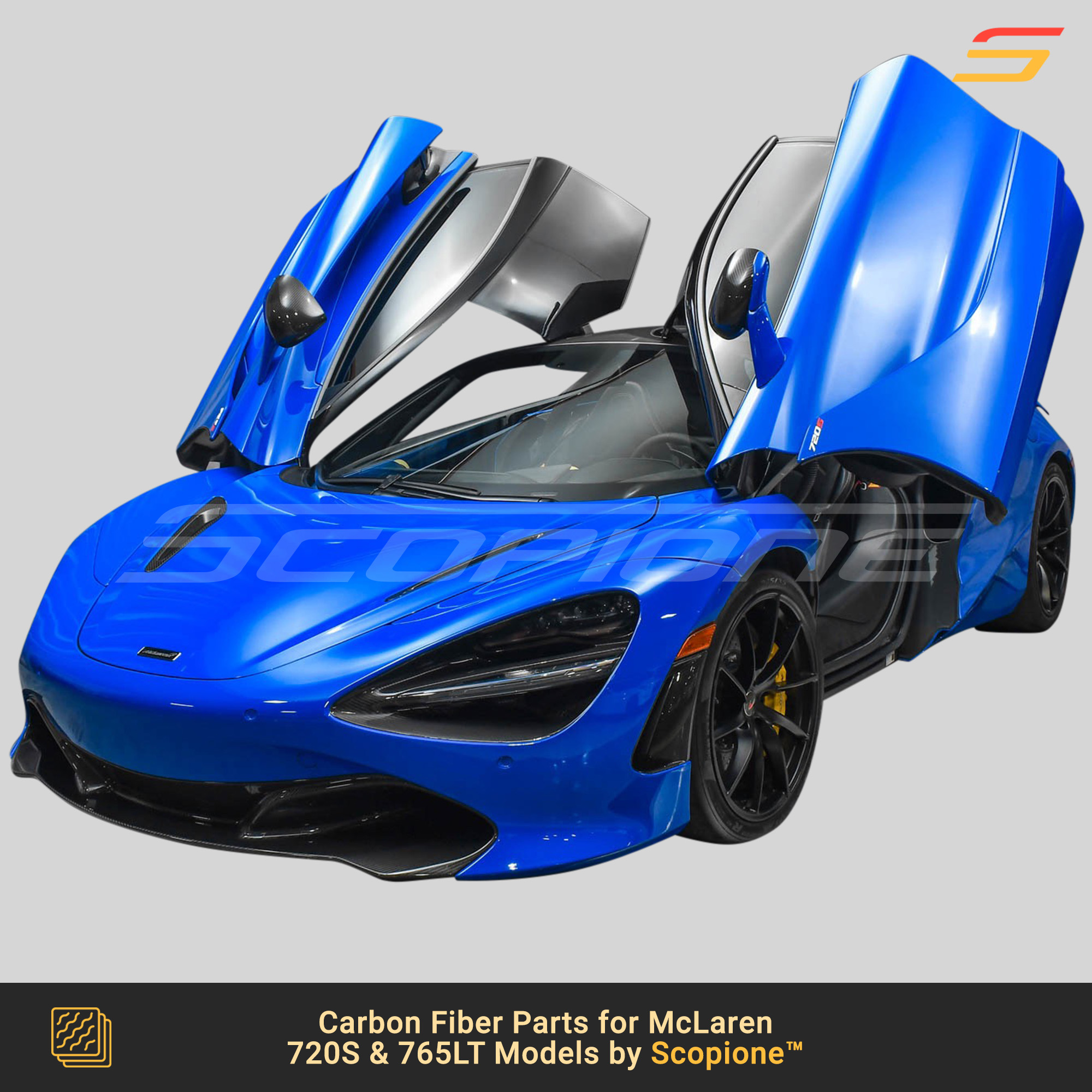
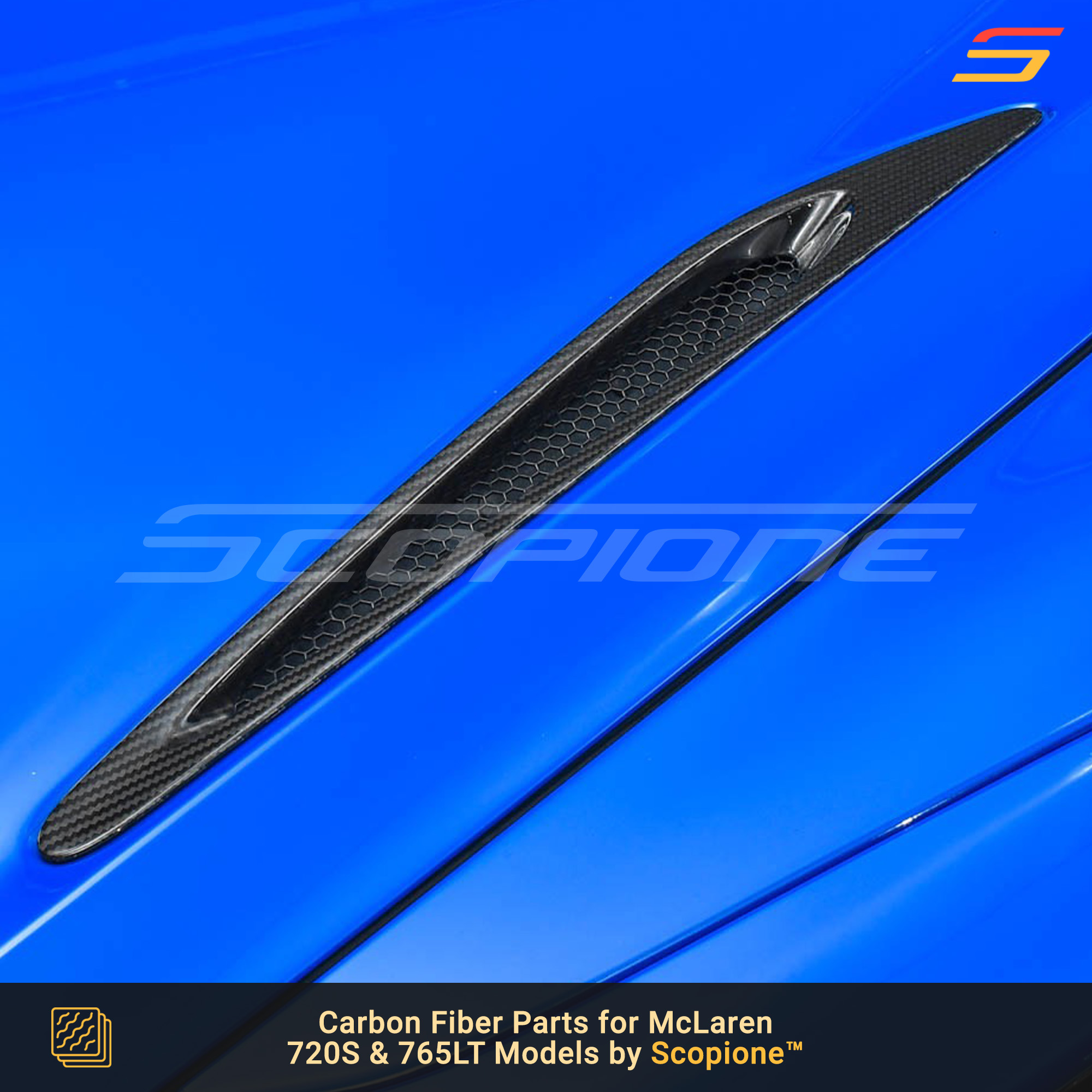
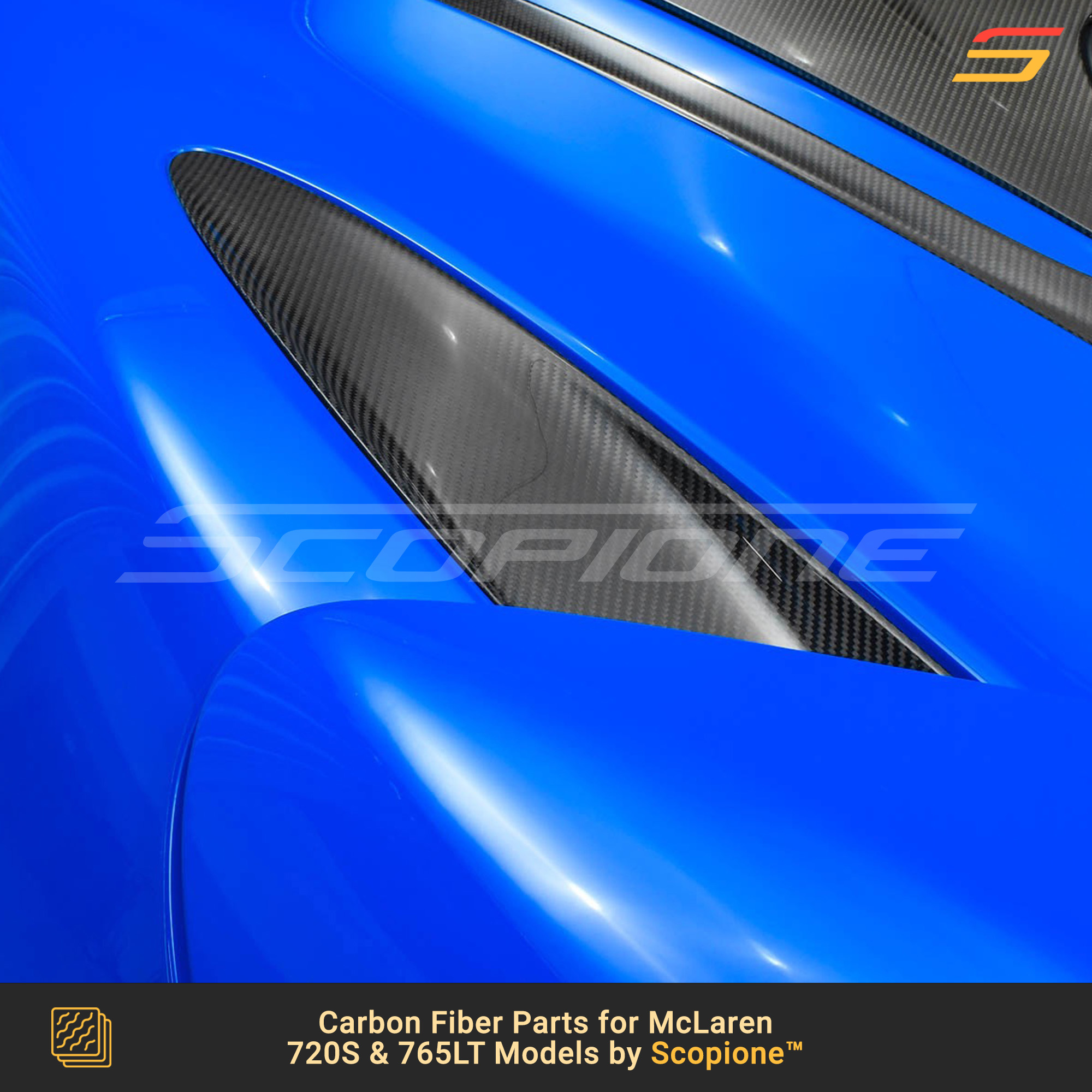
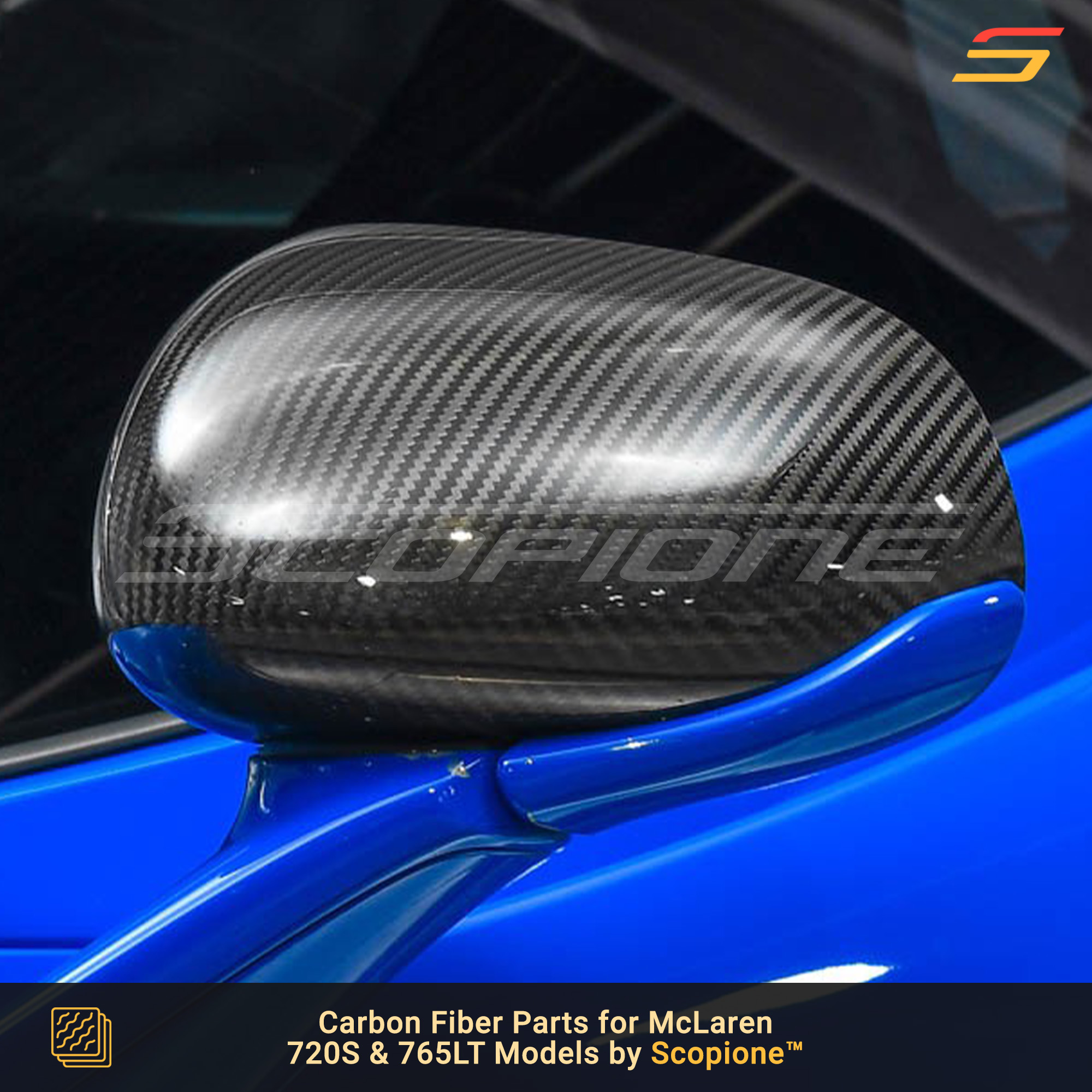
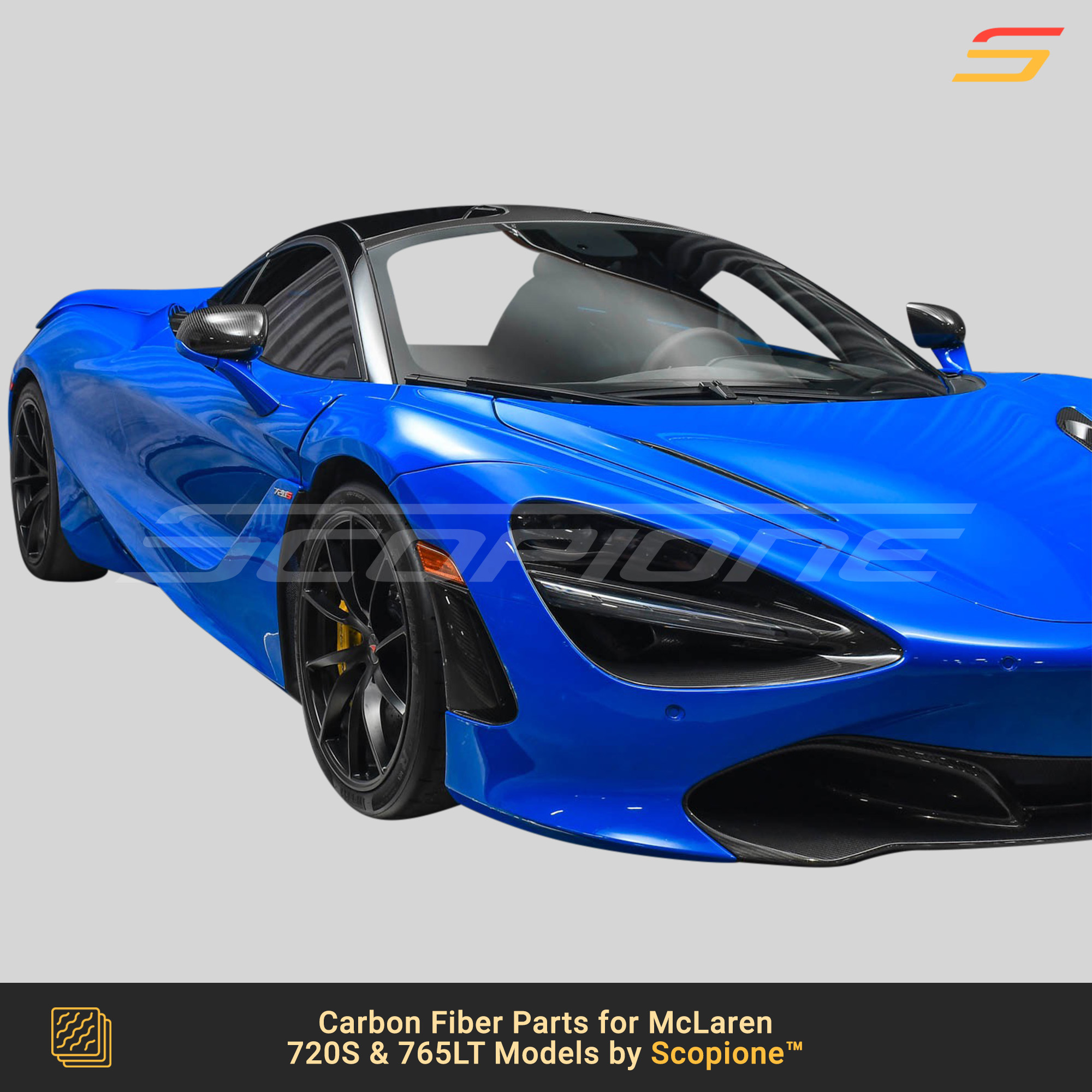
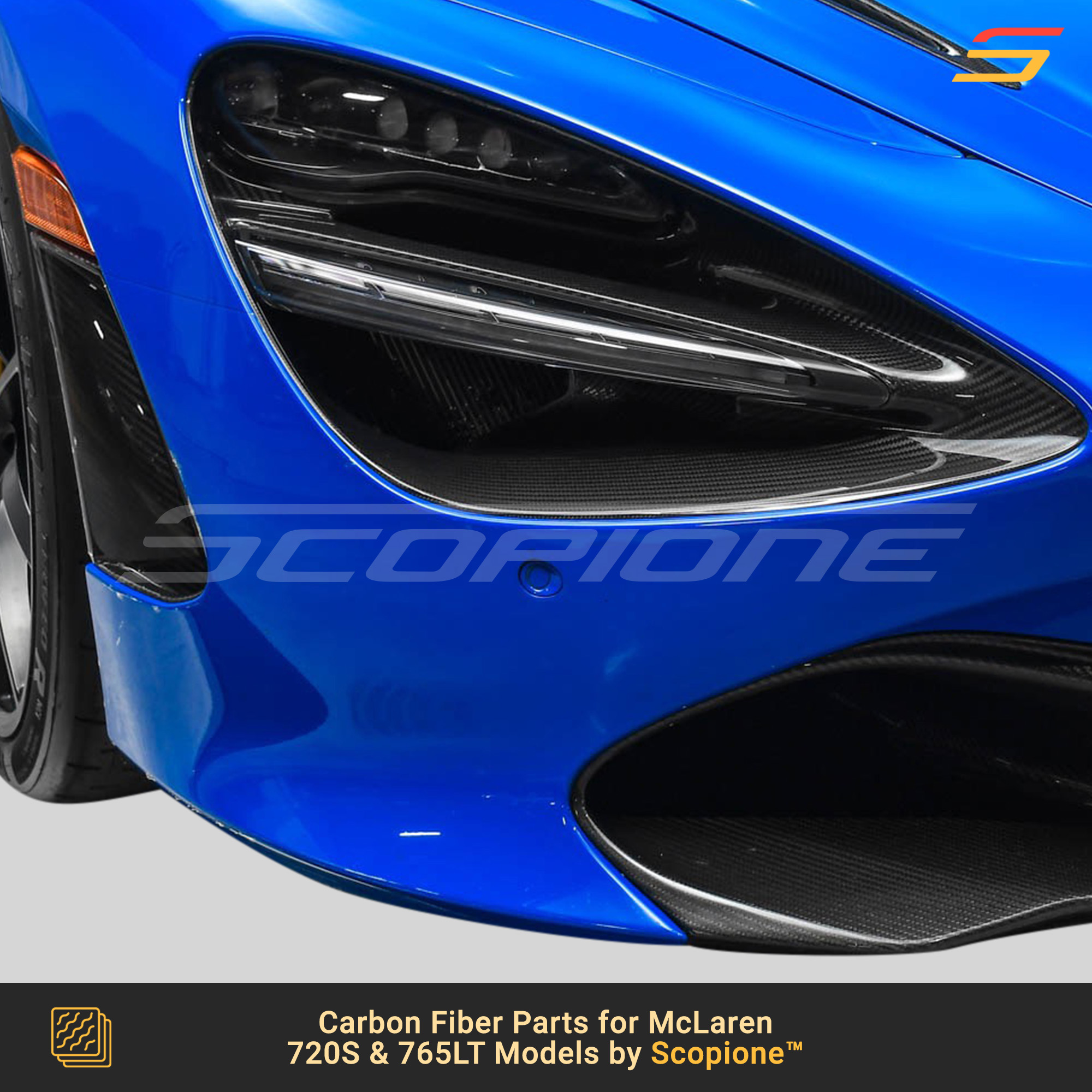
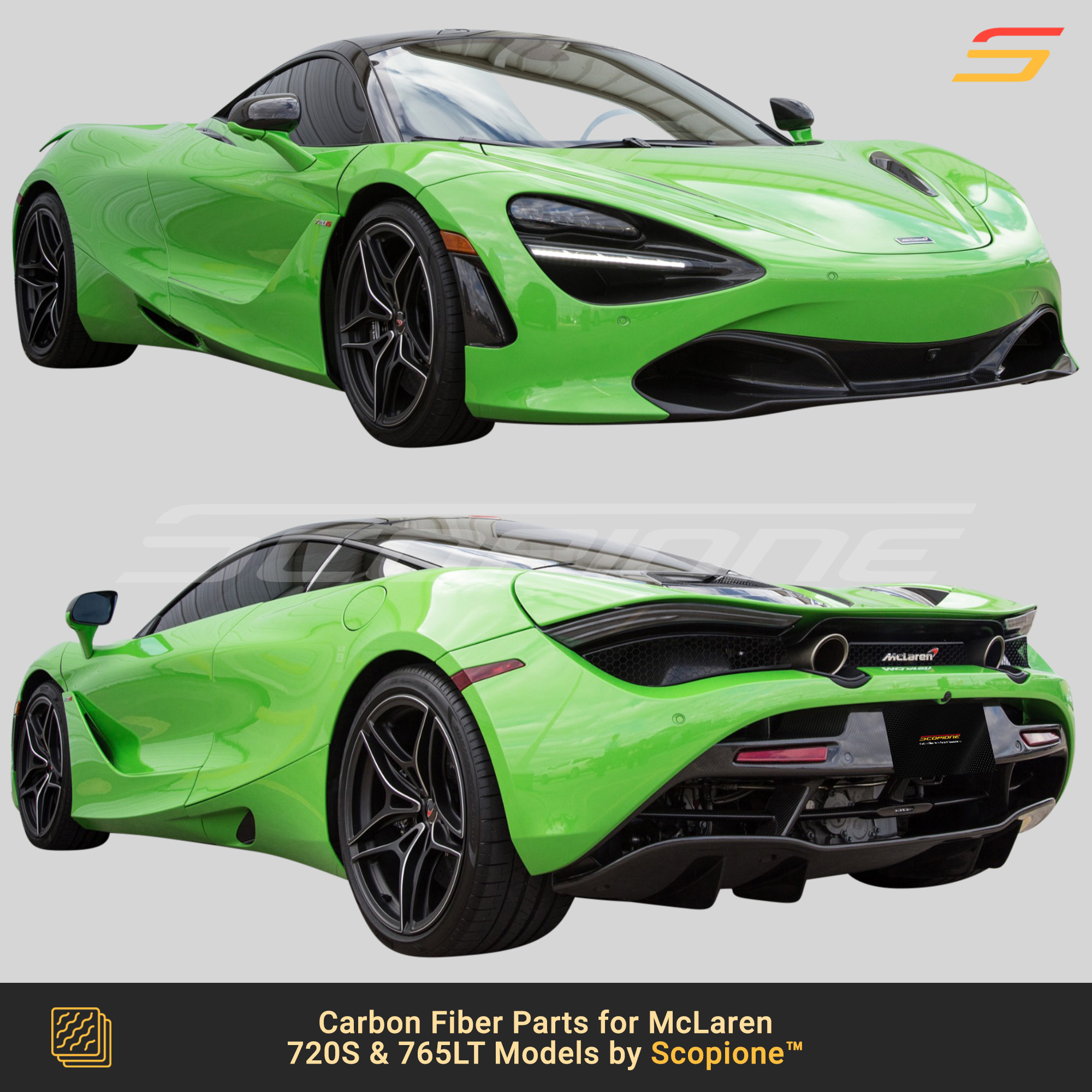
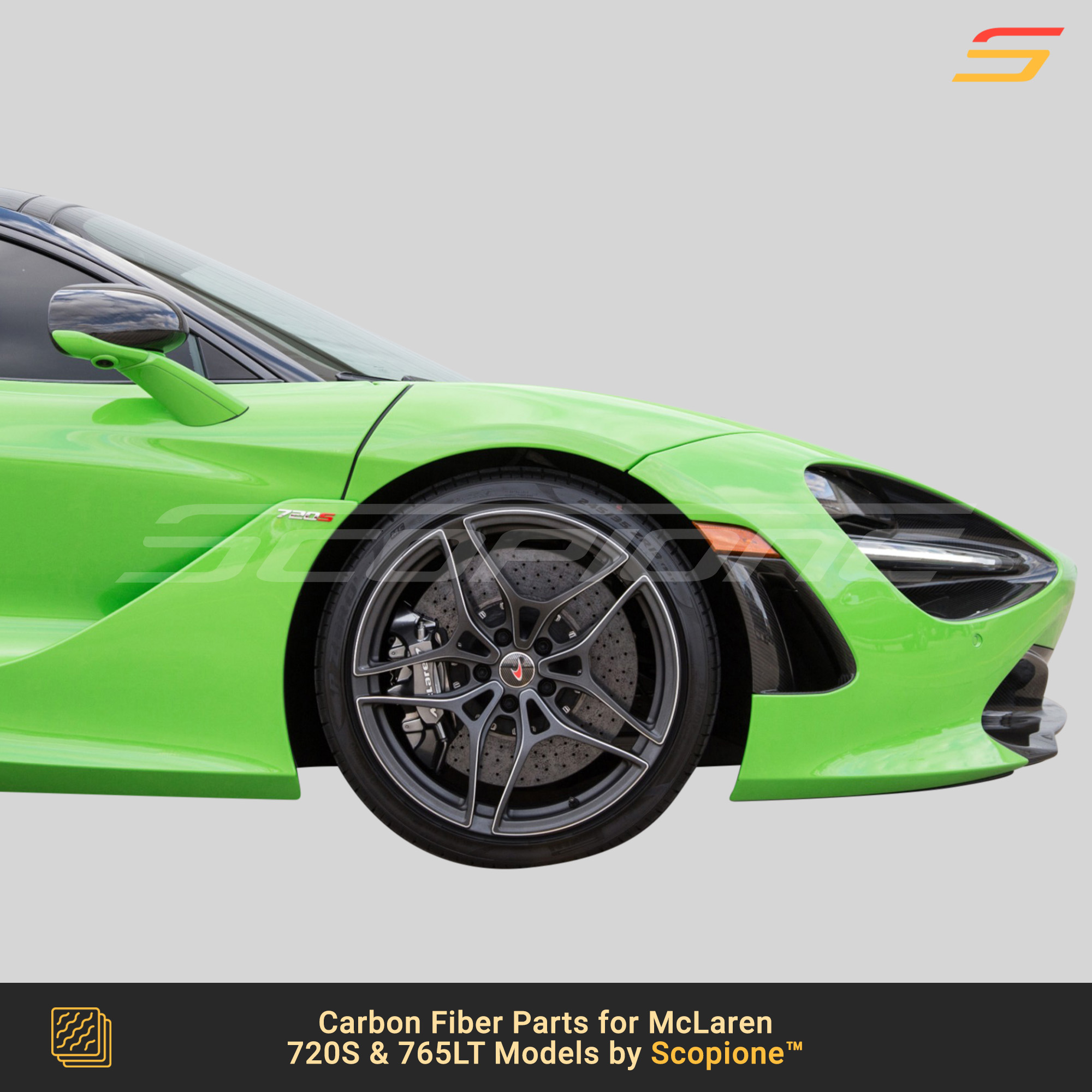
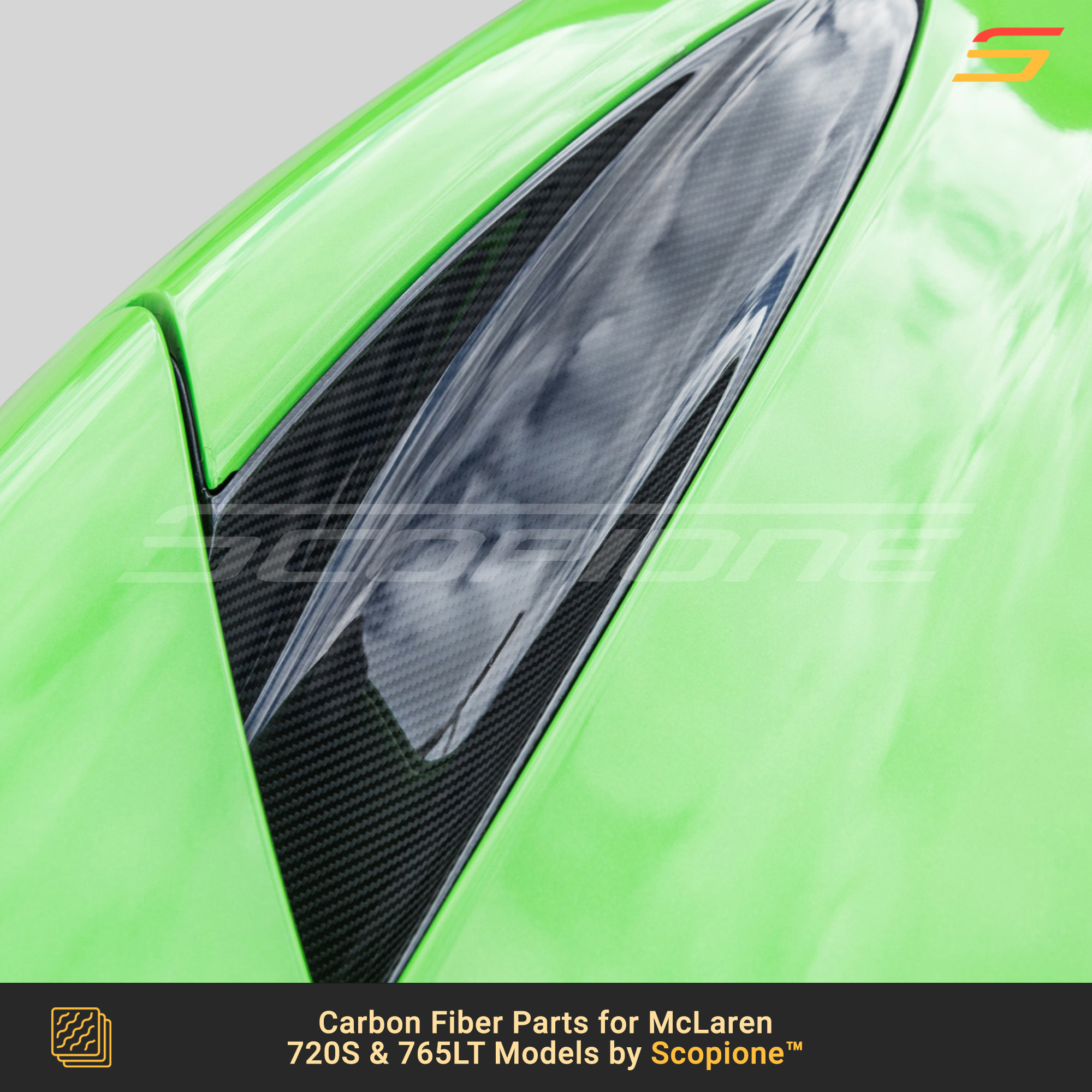
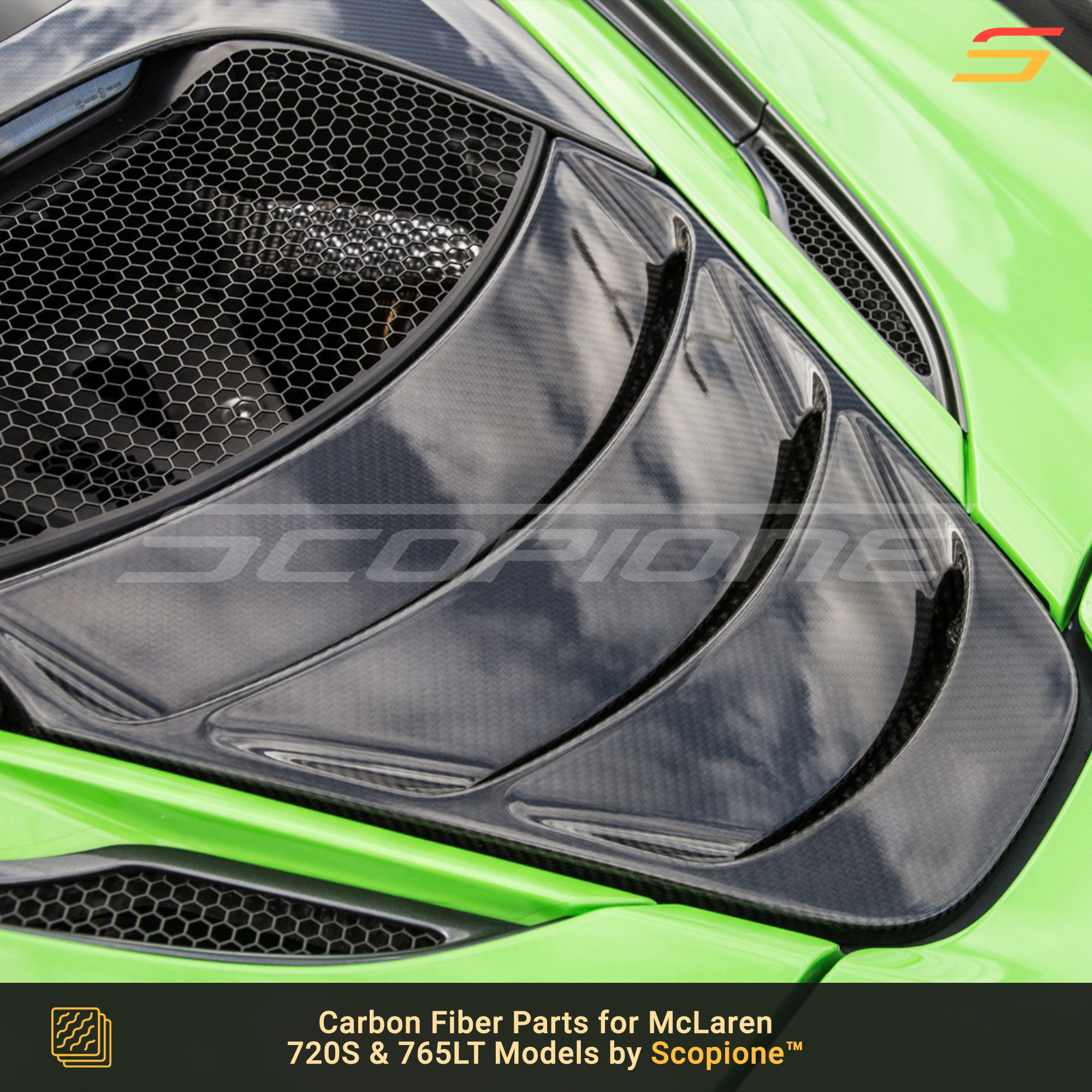
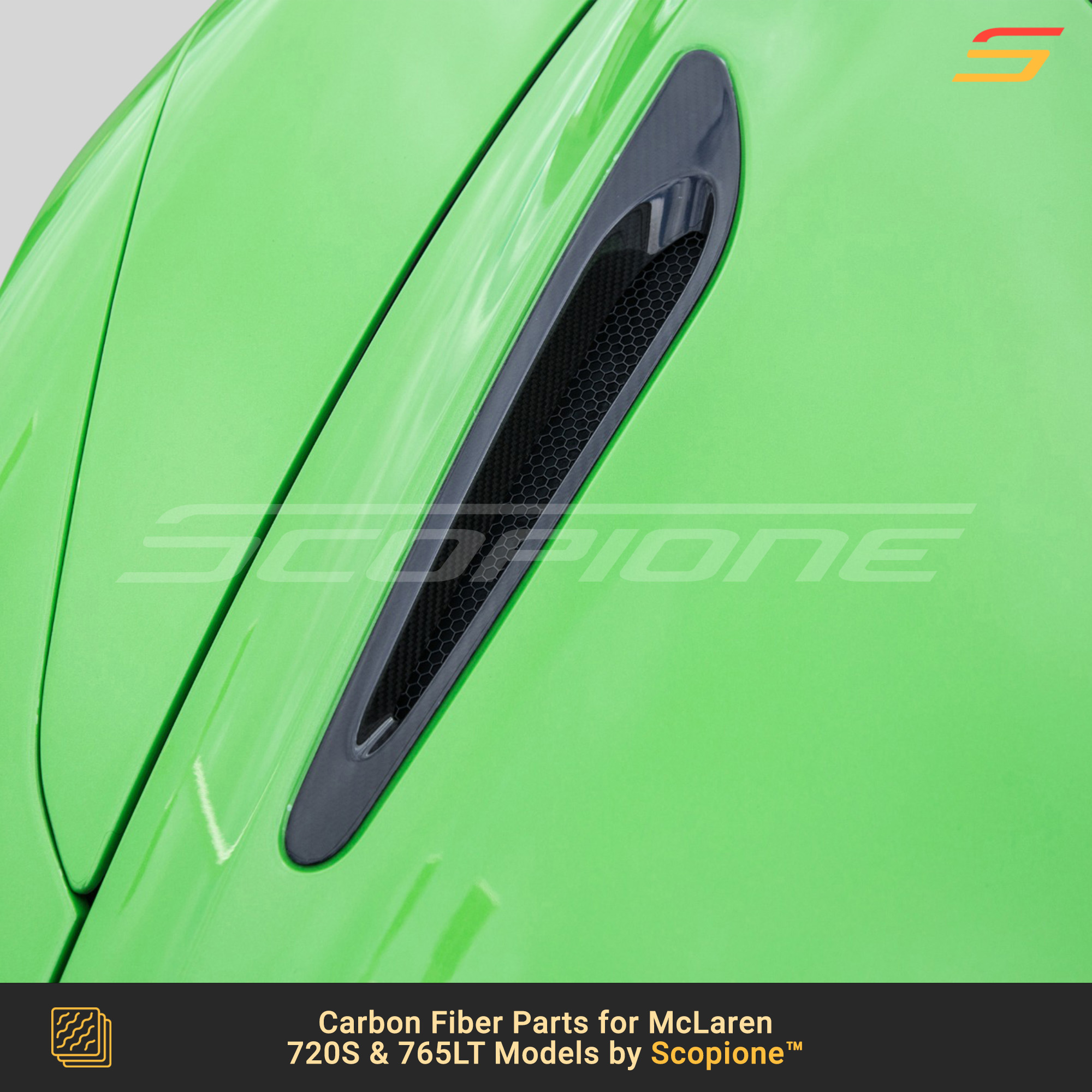
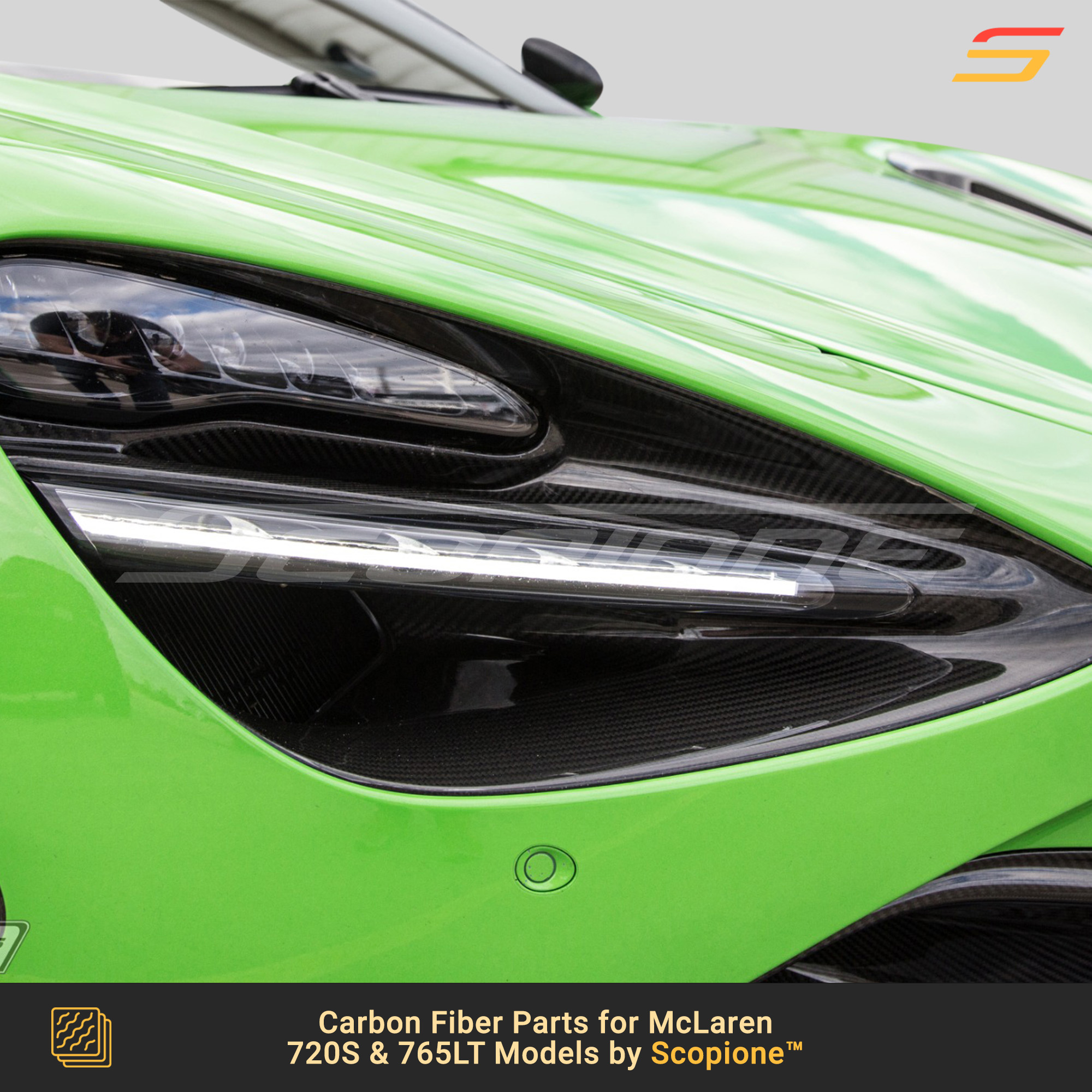
The 720S became the benchmark Super Series car and the basis for the 765LT and 750S. The MonoCage II proved durable across three derivatives and five production years. Against competitors, the 720S weighed less than the Ferrari 488 GTB despite carrying a larger engine and offering better ingress – a direct advantage of the all-CF body structure. The Lamborghini Huracán Performante, which used forged composite material in select structural elements, still relied on an aluminum chassis for primary structure. McLaren’s full-CF approach gave a measurable weight advantage across the segment. For the full 720S and 765LT range, see the McLaren 720S & 765LT Picture Gallery.



McLaren Senna (2018-2019): The Lightest McLaren Since the F1
Named after Ayrton Senna with his family’s approval, this car prioritized one metric above all others: power-to-weight ratio. The 4.0-liter twin-turbo V8 produced 789 hp. Dry weight was 1,198 kg. Nearly every body panel was carbon fiber. Active aerodynamic elements – rear wing, double diffuser – generated 800 kg of downforce at speed. All 500 units were sold before the car was officially unveiled.
At 1,198 kg, the Senna sat within 60 kg of the 1,138 kg F1 that pioneered CF road car construction 25 years earlier – while producing 171 hp more and generating downforce the F1 never attempted. That comparison captures the trajectory of McLaren’s CF development: same material, fundamentally different capability. Where the F1’s monocoque required weeks of hand layup, the Senna’s chassis was produced in a fraction of that time using techniques refined over two decades of road car production. Aerodynamic CF components – the double-element rear wing, front splitter, and floor – generated more downforce than any previous McLaren road car. The Senna GTR track variant that followed (75 units) pushed CF aero development further, removing road-legal constraints entirely.
- Engine: 4.0L twin-turbo V8, 800 PS (789 hp)
- Dry weight: 1,198 kg
- Downforce: 800 kg
- Production: 500 units
McLaren Speedtail (2019-2020): The Spiritual F1 Successor
Where the Senna maximized downforce, the Speedtail minimized drag. Three seats, center driving position, teardrop body. Retractable digital cameras replaced side mirrors. Static carbon-fiber aero covers over the front wheels – a McLaren first – smoothed airflow across an otherwise turbulent zone. Top speed reached 250.4 mph. Production of 106 units deliberately matched the F1’s total.
The Speedtail’s hybrid powertrain (4.0-liter V8 plus electric motor, 1,036 hp combined) made it McLaren’s second hybrid after the P1. The car was not road-legal in the United States – digital cameras replacing side mirrors and the absence of side airbags put it outside FMVSS compliance. Buyers accepted these limitations for the engineering purity of the design. The CF story was about aerodynamic efficiency, not weight savings: the full-carbon body was shaped for minimum drag coefficient rather than maximum downforce. Where the Senna used CF for aero-generating surfaces, the Speedtail used it for aero-reducing ones – a seamless teardrop silhouette that prioritized laminar airflow above all else.
- Top speed: 250.4 mph
- Layout: Center driving position, three seats
- Production: 106 units
- CF firsts: Static front-wheel aero covers, digital camera mirrors
McLaren GT (2019-Present): The Touring Approach to CF
The GT was McLaren’s first grand tourer – a category defined by long-distance comfort rather than lap times. The bespoke MonoCell II-T chassis incorporated a carbon fiber rear upper structure to create a 420-liter rear luggage bay large enough for golf clubs. Combined with 150 liters of front storage, the GT offered 570 liters of luggage capacity – unheard of in a mid-engine car built on a carbon fiber chassis. At 612 hp from the 4.0-liter V8 and a curb weight of 1,530 kg, the GT proved McLaren’s CF platform architecture could serve touring purposes without compromising the structural identity.
- Engine: 4.0L twin-turbo V8, 620 PS (612 hp)
- Luggage capacity: 570 liters (420 rear + 150 front)
- Curb weight: 1,530 kg
- Chassis: MonoCell II-T (bespoke CF variant for GT)
McLaren Special Operations (MSO)
McLaren Special Operations grew out of the early-1990s Customer Care Programme for F1 road car owners. By the 2010s, MSO offered five tiers of personalization, from MSO Defined options to fully bespoke one-off commissions. Carbon fiber was central to the program. The MSO Carbon Series 675LT Spider (25 units) covered 40% more exterior surface area in visible CF than the standard car. The MSO HS (25 units) wrapped nearly every exterior panel in carbon fiber and added a P1 GTR-inspired rear wing. Approximately 95% of all P1 hypercars were personalized through MSO, and 20% of all McLarens built after the 650S launch featured MSO Bespoke content. The division demonstrated that CF was not just a structural material at McLaren – it was a customization medium.


Scopione Perspective: The Sports Series and Super Series
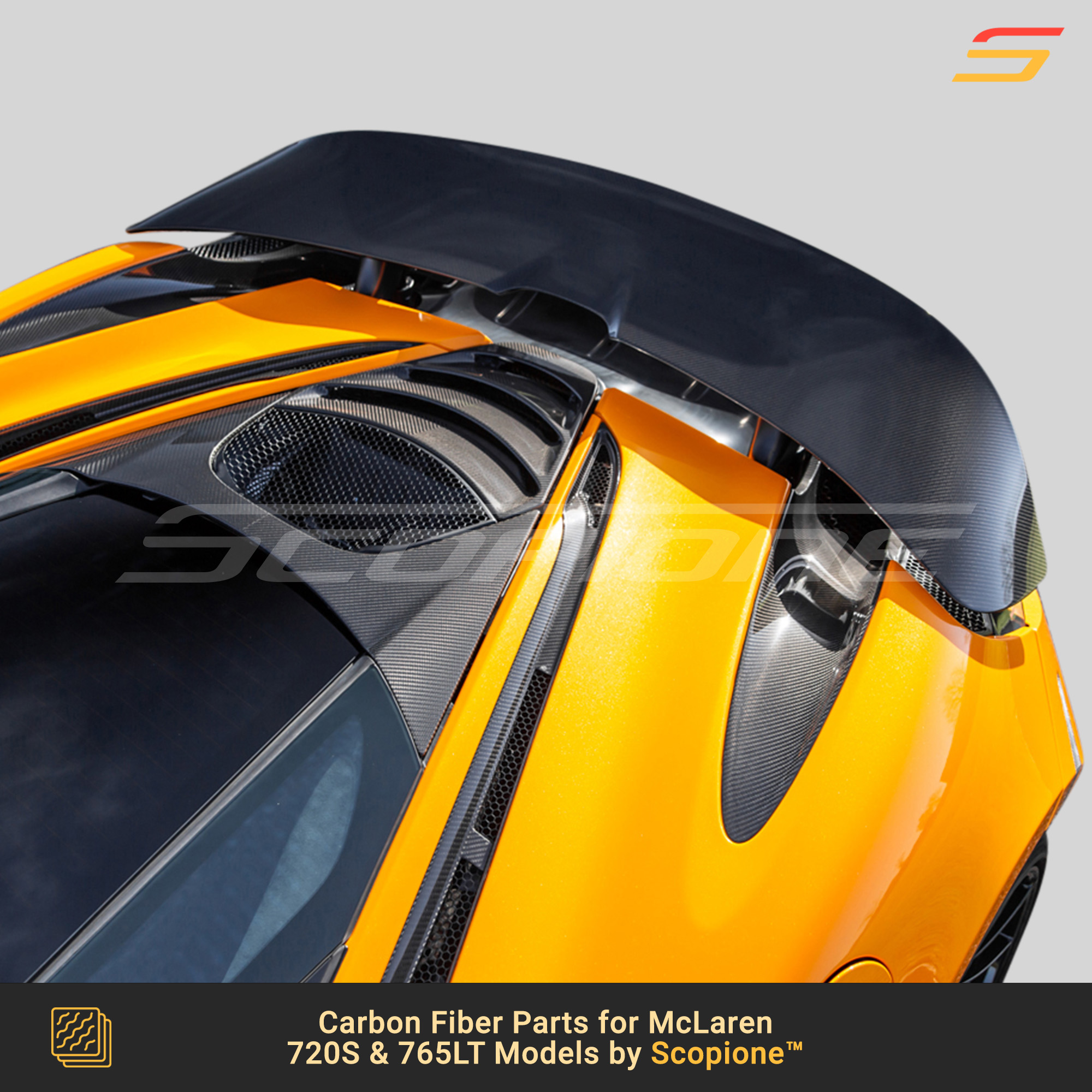
MSO proved the demand for visible carbon fiber beyond the chassis – a demand that extends to the aftermarket. McLaren’s Sports Series – the 540C, 570S, 570GT, and 600LT – brought carbon-fiber chassis technology to a segment where competitors used aluminum. That same CF consciousness makes these cars ideal candidates for aftermarket CF components. A carbon-fiber mirror cap, side vent cover, or extended shift paddle set on a 570S reinforces the material story that starts with the MonoCell II underneath. Scopione’s McLaren selection includes parts for the MP4-12C/650S, Sports Series, and 720S/765LT/750S – all finished in twill-weave carbon fiber with UV-protective clear coat for long-term durability.
2020s–Present: Electrification and the Next Generation
McLaren entered the 2020s in financial crisis. COVID-19 forced the company to cut 25% of its workforce in 2020 – approximately 1,000 jobs. The company took out a £150 million loan from the National Bank of Bahrain and sold a minority stake in the F1 team to MSP Sports Capital. In 2021, McLaren sold its Woking headquarters for $240 million and leased it back for 20 years. The Artura hybrid suffered production suspensions due to supply chain disruptions. By 2022-2023, cumulative losses ran into hundreds of millions of dollars. In late 2023, shareholders approved a full recapitalization. Bahrain’s Mumtalakat sovereign wealth fund, an investor since 2007 when it originally purchased a 30% stake from Ron Dennis and Mansour Ojjeh, took full ownership of McLaren Group’s share capital. The structure changed again in April 2025, when Abu Dhabi’s CYVN Holdings completed its acquisition of McLaren Automotive – together with a non-controlling stake in McLaren Racing – forming McLaren Group Holdings.
Through the financial turbulence, McLaren preserved the engineering capability that defines the company. The MCTC in Sheffield took over monocoque production from Carbo Tech. The Artura launched on a new-generation MCLA chassis weighing 82 kg. And the W1 – McLaren’s P1 successor – debuted with the Aerocell, the brand’s most advanced CF structure.
McLaren Composites Technology Centre (MCTC): Sheffield
The MCTC opened in November 2018 at the Advanced Manufacturing Park on the border of Sheffield and Rotherham. The £50 million facility spans 7,000 square meters and represented McLaren’s first purpose-built facility outside the Woking headquarters. Its mission: produce every carbon fiber monocoque for McLaren Automotive in-house.
Before Sheffield, McLaren outsourced monocoque production to Carbo Tech in Salzburg, Austria. The MCTC transferred that capability to the UK, giving McLaren control over the entire CF supply chain from raw material to finished chassis. Target production time for a core tub: 30-40 minutes, compared to four hours for the original MonoCell. The facility was expected to create over 200 jobs and generate an estimated £100 million in gross value added to the local economy by 2028. The MCTC was part of McLaren’s “Track25” business plan – a £1.2 billion R&D investment that anchored the company’s expansion through the mid-2020s.
Vertical integration over CF production set McLaren apart from competitors. Ferrari outsources much of its carbon fiber work. Lamborghini operates the Advanced Composite Structures Laboratory with Boeing but does not manufacture monocoques in-house at the same scale. McLaren’s Sheffield facility gave the company direct control over material selection, layup processes, and quality standards – advantages visible in the Artura’s MCLA, which uses four new types of carbon fiber that would be difficult to source and quality-control through a third party.
McLaren Elva (2020-2021): Open-Cockpit CF
The Elva – from the French “elle va,” meaning “she goes” – was originally planned as a 399-unit production run. COVID and market conditions reduced that to 149. The design had no windshield, roof, or side windows (a windscreen version was later offered). McLaren’s Active Air Management System used a carbon-fiber front deck channel to deflect air over the open cockpit, creating a relative calm zone for occupants at speed. Power came from a 4.0-liter V8 producing 804 hp.
An open-cockpit car demands exceptional CF structural rigidity. Without a roof to contribute to torsional stiffness, the chassis must compensate entirely through the lower tub structure – a challenge that aluminum-based chassis designs would struggle to meet without significant weight penalties. At approximately 1,270 kg dry, the Elva demonstrated that McLaren’s CF tub design had advanced enough to provide a rigid, safe structure without any upper body enclosure whatsoever.
- Engine: 4.0L twin-turbo V8, 815 PS (804 hp)
- Dry weight: ~1,270 kg (screenless)
- Production: 149 units (reduced from 399)
McLaren Artura (2022-Present): The MCLA Platform
The Artura marked a clean break with everything that came before it. New engine – a 3.0-liter 120-degree twin-turbo V6 that was 50 kg lighter, 190 mm shorter, and 220 mm narrower than the outgoing V8. New gearbox – an 8-speed dual-clutch replacing the 7-speed, with the electric motor eliminating the need for a mechanical reverse gear. And a new chassis: the MCLA (McLaren Carbon Lightweight Architecture), weighing 82 kg and incorporating four new types of carbon fiber with a new resin system and new core material.
The MCLA was the first McLaren monocoque produced at the Sheffield MCTC rather than outsourced to Austria. It integrates a hybrid battery safety cell directly into the CF structure – over 500 individual CF pieces compose the final assembly. The Artura combined output of 671 hp (V6: 577 hp, electric motor: 94 hp) with a curb weight of 1,498 kg.
- Engine: 3.0L twin-turbo V6 + electric motor, 680 PS (671 hp) combined
- 0-60 mph: 2.9 seconds
- Top speed: 205 mph
- Chassis: MCLA, 82 kg, produced at Sheffield MCTC
- Electric range: 19 miles on 7.4 kWh battery
McLaren 750S (2023-Present): Final Evolution of the V8
The 750S succeeded the 720S with 30 PS more power and 30 kg less weight. Carbon-fiber racing seats saved 17.5 kg over the 720S’s standard units. New 10-spoke forged wheels saved 13.8 kg – the lightest fitted to any McLaren series production car. The MonoCage II chassis carried over from the 720S, proving the platform’s durability across another generation.
The 750S is likely the last non-electrified mainstream McLaren. Future models will adopt hybrid powertrains on MCLA-derived platforms. That makes the 750S a bookend: the final expression of the pure-combustion, MonoCage II-based formula that began with the 720S in 2017. For McLaren owners, it represents the last opportunity to buy a new McLaren without a battery pack or electric motor – though the CF chassis underneath remains the same material and engineering philosophy that has underpinned every road car the company has built since 1993.
- Engine: 4.0L twin-turbo V8, 750 PS (740 hp)
- 0-60 mph: 2.7 seconds
- Top speed: 206 mph
- Weight savings vs 720S: 30 kg (CF seats, lighter wheels, revised body panels)



McLaren W1 (2024): The Aerocell
McLaren’s P1 successor uses the Aerocell – a pre-preg motorsport-grade carbon fiber monocoque. Pre-preg CF uses pre-impregnated resin systems cured under pressure, the same manufacturing method used for F1 cars. The Aerocell eliminates the front subframe entirely and mounts seats directly to the tub – the closest any McLaren road car has come to F1 chassis philosophy. A deliberately narrowed front section, raised footbox, and reduced wheelbase all exploit CF’s formability for aerodynamic gain.
The W1 produces 1,275 PS (1,258 hp) from a 4.0-liter flat-plane V8 and E-module. Dry weight is 1,399 kg. An Active Long Tail extends 300 mm in race mode, and the full aerodynamic package generates 1,000 kg of downforce in race mode. All 399 units were allocated before delivery began.
- Engine: 4.0L flat-plane V8 + E-module, 1,275 PS (1,258 hp) combined
- 0-62 mph: 2.7 seconds; 0-186 mph: 12.7 seconds
- Top speed: 220 mph
- Dry weight: 1,399 kg
- Downforce: 1,000 kg
- Production: 399 units
- Chassis: Aerocell – pre-preg motorsport-grade CF monocoque
The W1 sits alongside the Ferrari F80 in the new hypercar generation. Both use pre-preg carbon fiber and hybrid powertrains exceeding 1,200 hp. But the engineering philosophies differ. Ferrari reserves CF monocoques for limited-production flagships; every other Ferrari sits on aluminum. McLaren builds every car – from the $200,000 Artura to the $2.1 million W1 – on carbon fiber. The Aerocell is not an exception to McLaren’s engineering practice. It is the continuation of a 43-year trajectory that started with five flat CF panels bolted together in Salt Lake City.
McLaren Hypercar Comparison
| Specification | F1 (1993) | P1 (2013) | W1 (2024) |
|---|---|---|---|
| Power | 618 hp (NA V12) | 903 hp (hybrid V8) | 1,258 hp (hybrid V8) |
| Dry weight | 1,138 kg | 1,395 kg | 1,399 kg |
| Top speed | 240.1 mph | 217 mph (limited) | 220 mph |
| CF chassis | 4,000-hr monocoque | MonoCage (90 kg) | Aerocell (pre-preg) |
| Production | 106 units | 375 units | 399 units |



Scopione Perspective: Carbon Fiber Care for McLaren Owners
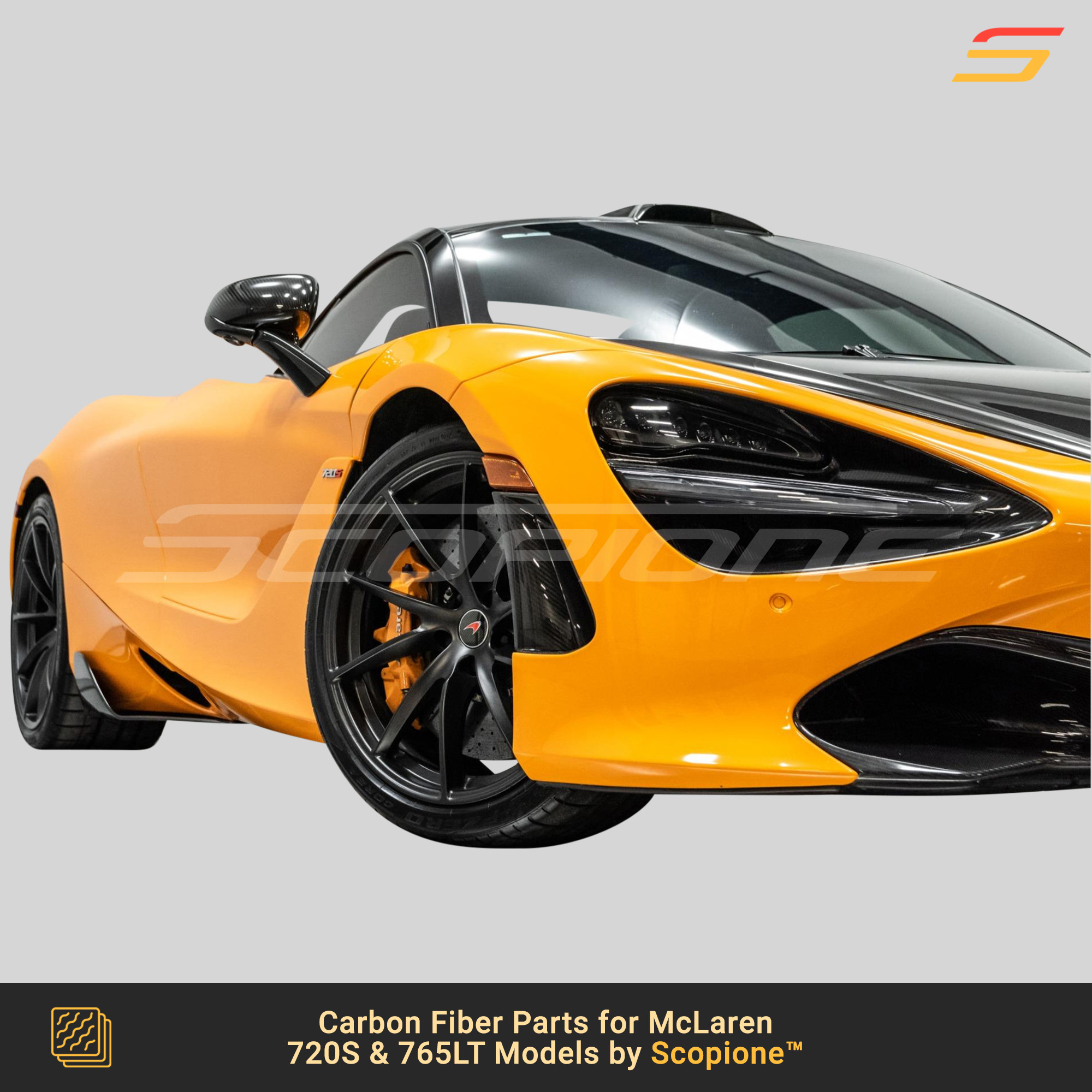
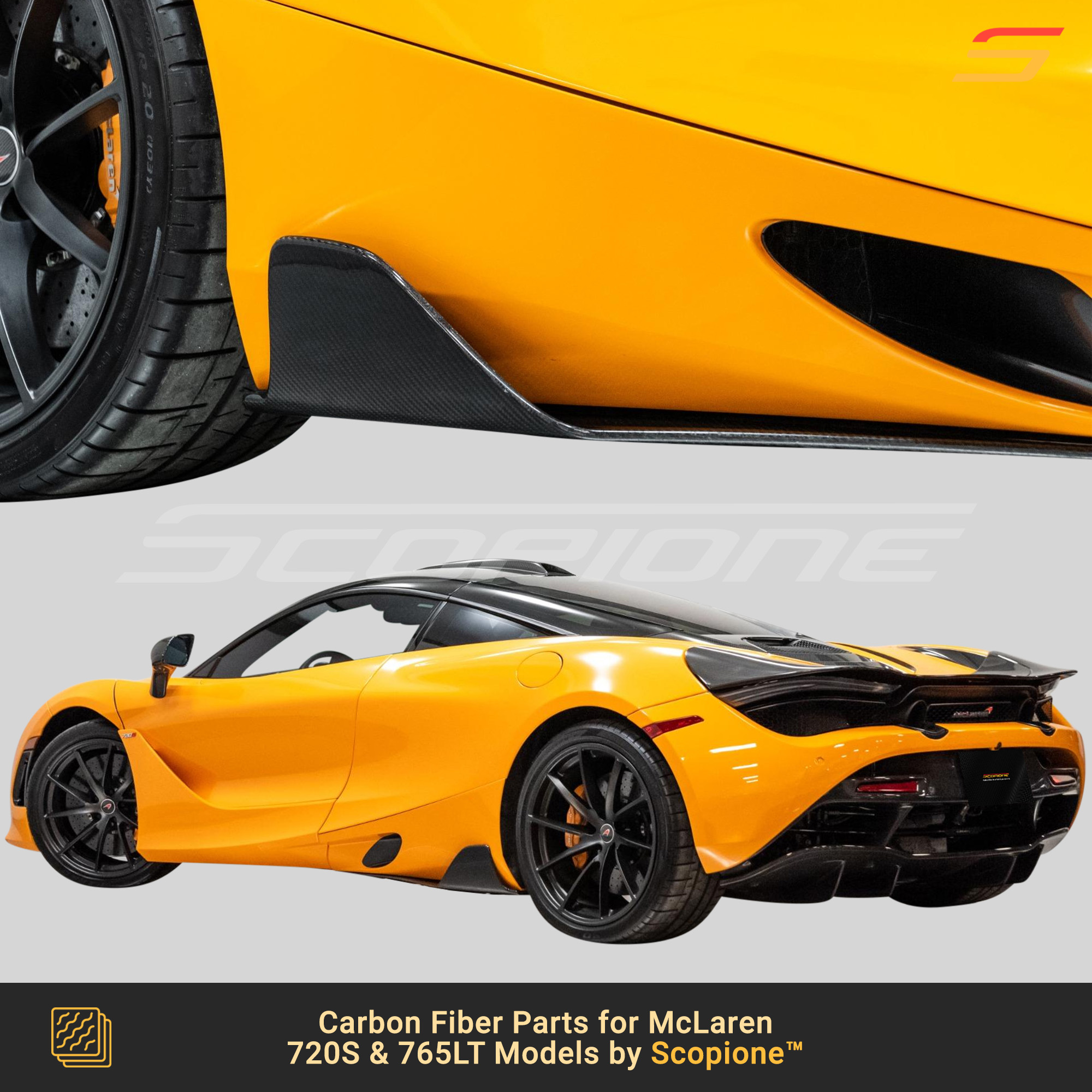
McLaren’s all-CF chassis philosophy means that even routine ownership intersects with carbon fiber. Front lip spoilers are vulnerable to parking-lot curbs and speed bumps – particularly on the low-riding 720S and Senna, where ground clearance prioritizes aerodynamics over urban practicality. Side skirt extensions collect stone chips at highway speeds. Interior CF trim panels accumulate fingerprints and UV damage over time without proper care. McLaren’s recommended maintenance includes periodic inspection of visible CF surfaces for clear coat deterioration, especially on cars that spend extended periods in direct sunlight.
Scopione’s McLaren components ship with a clear coat engineered to resist UV degradation over years of sun exposure – the same type of protective layer that factory CF parts receive. The twill-weave pattern matches the exposed carbon fiber visible on McLaren’s structural elements, creating visual continuity between aftermarket and OEM components. For owners replacing damaged front lips or mirror caps, or adding visual carbon-fiber coverage to a car that currently has painted body panels, the finish integrates with existing factory parts without visible mismatch.
Frequently Asked Questions
McLaren and Carbon Fiber: Common Questions
When did McLaren first use carbon fiber?
McLaren introduced the first carbon fiber monocoque in Formula 1 with the MP4/1 in 1981, designed by John Barnard and manufactured with Hercules Aerospace in Salt Lake City. The McLaren F1 road car then became the first production vehicle with a CF monocoque in 1993. Every McLaren road car since has been built on a carbon fiber chassis.
What is McLaren’s MonoCell technology?
MonoCell is McLaren’s single-piece carbon fiber chassis tub, first used in the MP4-12C in 2011. Weighing 75 kg and produced in approximately four hours, it replaced the F1’s labor-intensive hand-laid monocoque with an industrialized process. The technology evolved through MonoCage (P1, 2013), MonoCell II (Sports Series, 2015), MonoCage II (720S, 2017), MCLA (Artura, 2022), and Aerocell (W1, 2024) – each generation advancing structural integration and reducing production time.
Does every McLaren have a carbon fiber chassis?
Yes. Every McLaren road car since the F1 in 1993 has been built on a carbon fiber monocoque chassis. This includes the entry-level Sports Series (570S, 540C), the Super Series (720S, 750S), and the limited-production flagship range (P1, Senna, Speedtail, Elva, W1). McLaren is the only manufacturer with an unbroken CF chassis lineage spanning over 30 years of production.
What carbon fiber parts does Scopione offer for McLaren?
Scopione stocks twill-weave CF components across multiple McLaren platforms: Sports Series (540C, 570S, 570GT, 600LT), MP4-12C/650S, and Super Series (720S, 765LT, 750S) — and the mirror shells and extended shift paddles also fit the P1. The catalog includes exterior aero components (front lips, side skirts, mirror caps), extended shift paddles and door sill panels, and engine bay covers – all clear-coated for durability and finished to match OEM-exposed CF surfaces.
Where does McLaren manufacture its carbon fiber chassis?
Since 2019, McLaren has produced its carbon fiber monocoques at the McLaren Composites Technology Centre (MCTC) in Sheffield, UK – a £50 million facility that opened in November 2018. Before Sheffield, production was outsourced to Carbo Tech in Salzburg, Austria. The MCTC gave McLaren vertical integration over its CF supply chain for the first time.
Disclaimer: Technical specifications, production figures, and historical details presented in this article are editorial in nature and may differ from official manufacturer data.