

 Shop
ShopLand Rover has built vehicles with aluminum body panels since 1948, not because aluminum was the ideal material, but because post-war Britain rationed steel while surplus aircraft-grade aluminum cost almost nothing. That pragmatic decision by Maurice Wilks launched a 75-year lightweight construction tradition that stretches from the original Series I farm vehicle through the all-aluminum monocoque Range Rover L405 and into the carbon-fiber-equipped Range Rover Sport SV. Land Rover carbon fiber evolution follows a path unlike any other manufacturer in this series: aluminum first, composites second, and performance luxury (not racing) as the catalyst. In 2022, the SVR Carbon Edition became the first Land Rover to carry factory CFRP. A year later, the Range Rover Sport SV arrived with 23-inch carbon-fiber wheels from Carbon Revolution, carbon ceramic brakes saving 34 kg, and forged CF seat backs, making it an SUV carrying more factory CFRP than any competitor. Scopione stocks 2×2 3K twill-weave carbon-fiber components for the Range Rover and Range Rover Sport across multiple generations, with mirror covers that also fit the Discovery and LR4 – browse the full Land Rover catalog.
Land Rover Carbon Fiber Timeline
| Year | Milestone | Model / Program |
|---|---|---|
| 1948 | Aluminum body panels on first production vehicle | Series I |
| 1970 | Luxury SUV segment created with aluminum body | Range Rover Classic |
| 2002 | Full aluminum monocoque body on Range Rover | Range Rover (L322) |
| 2013 | First all-aluminum monocoque SUV body | Range Rover (L405) |
| 2014 | SVO performance division launches | Range Rover Sport SVR |
| 2022 | First factory carbon-fiber components on a Land Rover | SVR Carbon Edition |
| 2023 | World-first 23-inch CF wheels on an SUV | Range Rover Sport SV |
| 2025 | CF becomes standard on SV flagship | Range Rover Sport SV Carbon |
| 2025 | CF detailing arrives on the off-road icon | Defender OCTA |
| Future | CFRP composites research for electric vehicles | JLR Project Tucana |
1948–2002: The Aluminum Imperative — Post-War Innovation to Modern Luxury
Land Rover’s aluminum body tradition began not by choice but by circumstance. Post-war Britain rationed steel for reconstruction. Surplus aircraft-grade aluminum, on the other hand, was abundant and cheap, available from decommissioned warplanes and factory overstock at prices far below its peacetime value. Maurice Wilks used it to build the Series I in 1948, fully intending to switch to steel once supplies normalized. The aluminum worked so well that Land Rover never switched back. Light, resistant to corrosion in tropical humidity and salt spray, easy to form with simple press tools. The material proved ideal for a vehicle that would serve in deserts, jungles, and arctic environments across six continents.
When the Range Rover arrived in 1970 as the segment’s first luxury SUV, it carried aluminum body panels over a steel ladder-frame chassis. That material combination persisted through four decades of Range Rover development. No carbon fiber appeared on any Land Rover during this era. But the institutional knowledge built around non-ferrous body construction (forming techniques, corrosion management, paint adhesion on aluminum, repair procedures for alloy panels) created exactly the engineering culture that would later accommodate CFRP.
Land Rover Series I (1948–1958)
Maurice Wilks sketched the original Land Rover on a beach at Red Wharf Bay, Anglesey, in 1947. He owned a Willys Jeep that he used on his Warwickshire farm, and the sketch drew heavily on the Jeep’s proportions: short overhangs, flat panels, permanent four-wheel drive. The aluminum body sat on a steel box-section chassis. A power take-off allowed farmers to connect plows, generators, and saws directly to the drivetrain. The British Army adopted it within two years.
The 1.6-liter petrol inline-four produced 50 hp. Top speed was 55 mph. Nobody cared. The Series I was a tool, not a vehicle. Farmers drove it across fields. Militaries drove it across continents. Expeditions drove it from London to Singapore and from Cape Town to Cairo. The aluminum body was chosen because it was available, not because it was optimal. But that pragmatic decision set a precedent no other manufacturer in this series can match: every Land Rover and Range Rover since 1948 has used aluminum body panels. Seventy-four years of continuous aluminum construction preceded the first carbon-fiber component.
- Engine: 1.6L petrol inline-four, 50 hp (later 2.0L, 52 hp)
- Body: Aluminum panels over steel box-section chassis
- Designer: Maurice Wilks / Gordon Bashford
- Production: ~200,000 units (Series I alone)
- Top speed: 55 mph
Over two million Series vehicles (I, II, and III) rolled off production lines between 1948 and 1985. The aluminum body proved remarkably durable in conditions that would destroy steel panels within years. Desert heat, tropical humidity, arctic cold, salt water crossings. Aluminum does not rust. That durability validated the material choice Wilks had made out of wartime necessity and guaranteed that aluminum remained the default body material for every subsequent Land Rover model.
The repair characteristics mattered too. In remote locations like central Africa, the Australian outback, and the Himalayas, aluminum panels could be straightened with basic hand tools and didn’t require the anti-corrosion treatments that steel demanded after even minor damage. The British military relied on this advantage for decades, deploying Series Land Rovers in theaters where supply chains for replacement parts were minimal. The material choice that began as wartime pragmatism became a defining operational advantage, one that no other manufacturer in this series can claim over a comparable timespan. When carbon fiber eventually entered the brand’s vocabulary in 2022, it joined an aluminum tradition that predated many car manufacturers entirely.
Range Rover Classic (1970–1996)
The Range Rover did something no vehicle had done before: it combined genuine off-road capability with luxury car refinement and upmarket positioning. Before 1970, SUVs were work trucks. After the Range Rover, they were objects of desire. Spen King’s engineering achieved the combination through long-travel coil-sprung suspension (replacing the leaf springs common to 4x4s), permanent four-wheel drive with a lockable center differential, and a lightweight aluminum V8 derived from a Buick design that General Motors had sold to Rover.
David Bache’s clean exterior used aluminum body panels over a steel box-section ladder frame. Only a two-door configuration was available at launch. A four-door version followed in 1981, transforming the Range Rover from an enthusiast’s vehicle into a genuine luxury conveyance. The Louvre exhibited a Range Rover Classic as a design object in 1971, making it the first automobile displayed as art in the museum. Production ran for 26 years and 317,615 units, establishing the commercial viability of a concept that every major manufacturer now competes in.
- Engine: 3.5L–4.2L Rover V8 petrol / 2.4–2.5L VM diesel, 112–200 hp
- Body: Aluminum panels over steel ladder frame
- 0–60 mph: 9.8 seconds (3.9L V8 Vogue SE)
- Production: 317,615 units (1970–1996)
No carbon fiber. The Range Rover Classic maintained the aluminum body panel tradition established by the Series I twenty-two years earlier. But the all-aluminum V8 engine (originally a Buick design, purchased and re-engineered by Rover) added another layer to the lightweight story. The aluminum block weighed significantly less than contemporary cast-iron V8s. Combined with aluminum body panels, the Range Rover Classic was lighter than many luxury sedans of its era despite being a full-size 4×4 with a steel ladder frame.
The weight consciousness was driven by necessity. Early Range Rovers used relatively modest engines, with the 3.5-liter V8 producing just 130 hp in initial form. Acceptable on-road performance from that output required keeping curb weight in check. Aluminum body panels provided that advantage without adding cost over steel at the volumes Rover was producing. The 26-year production run validated not just the luxury SUV concept but the specific material choice underpinning it. Every Range Rover generation since (the P38, L322, L405, and current L460) has refined the aluminum body construction that Spen King specified in 1970. And it created the context in which CFRP weight reduction programs would eventually make engineering sense.
Scopione Perspective: The Aluminum Foundation
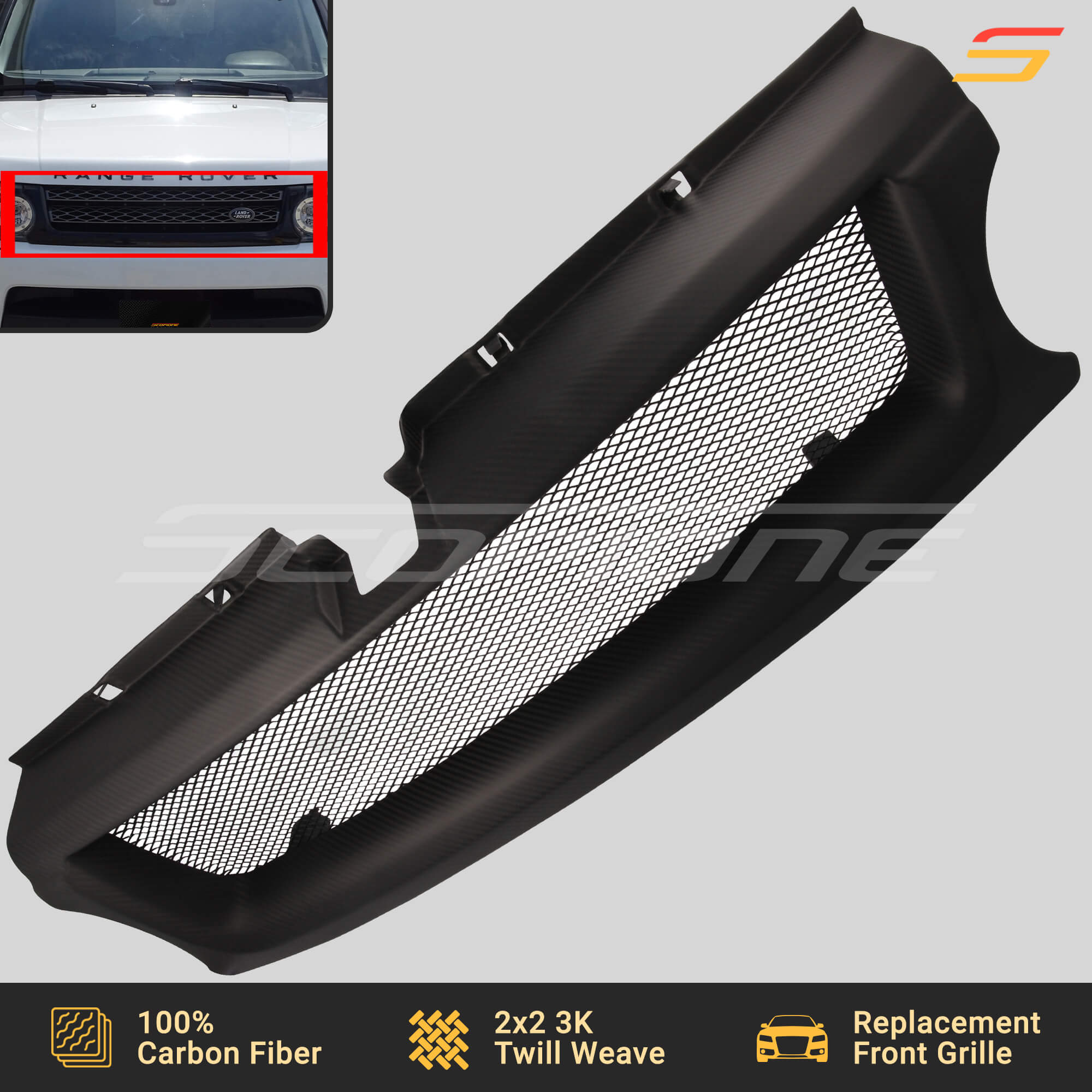
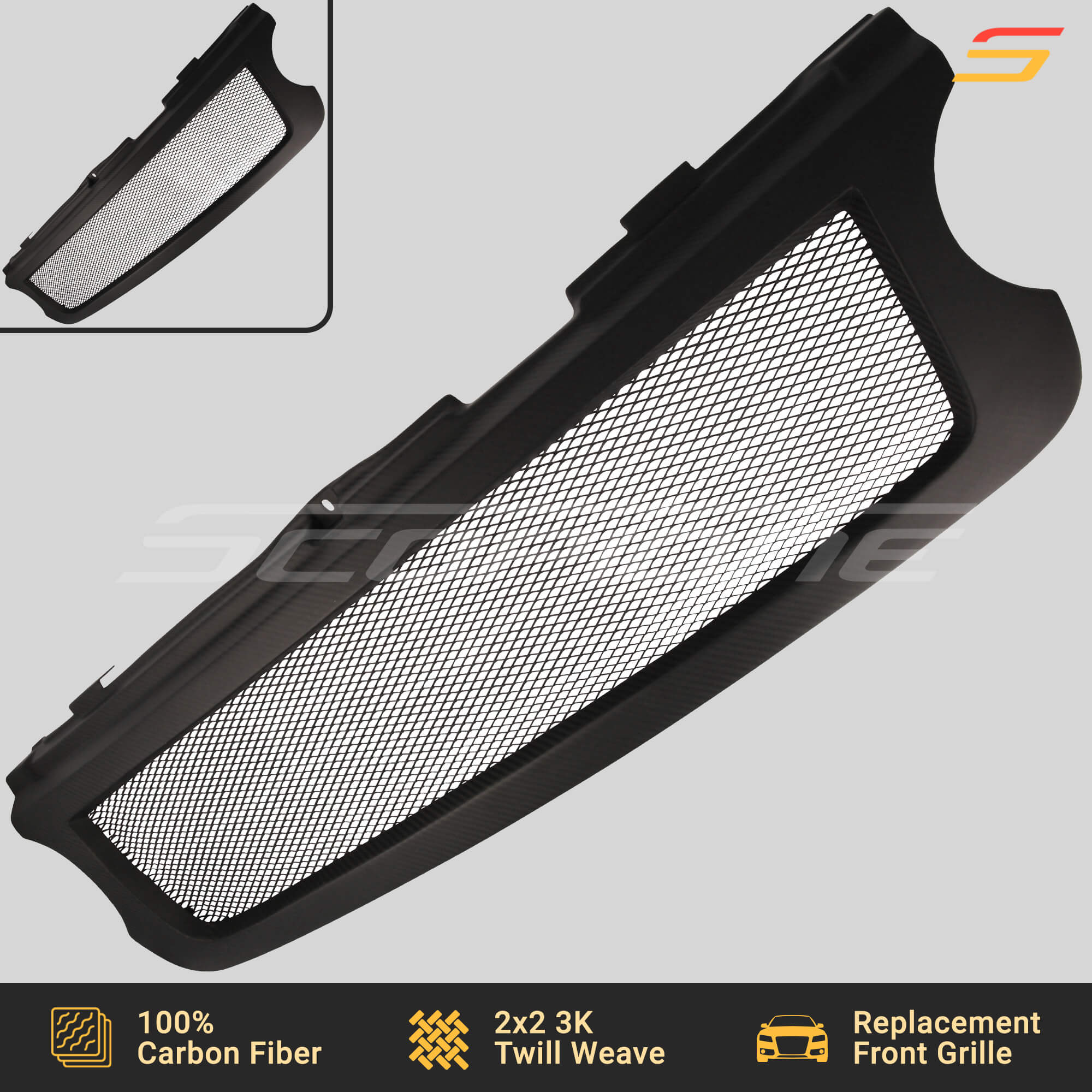
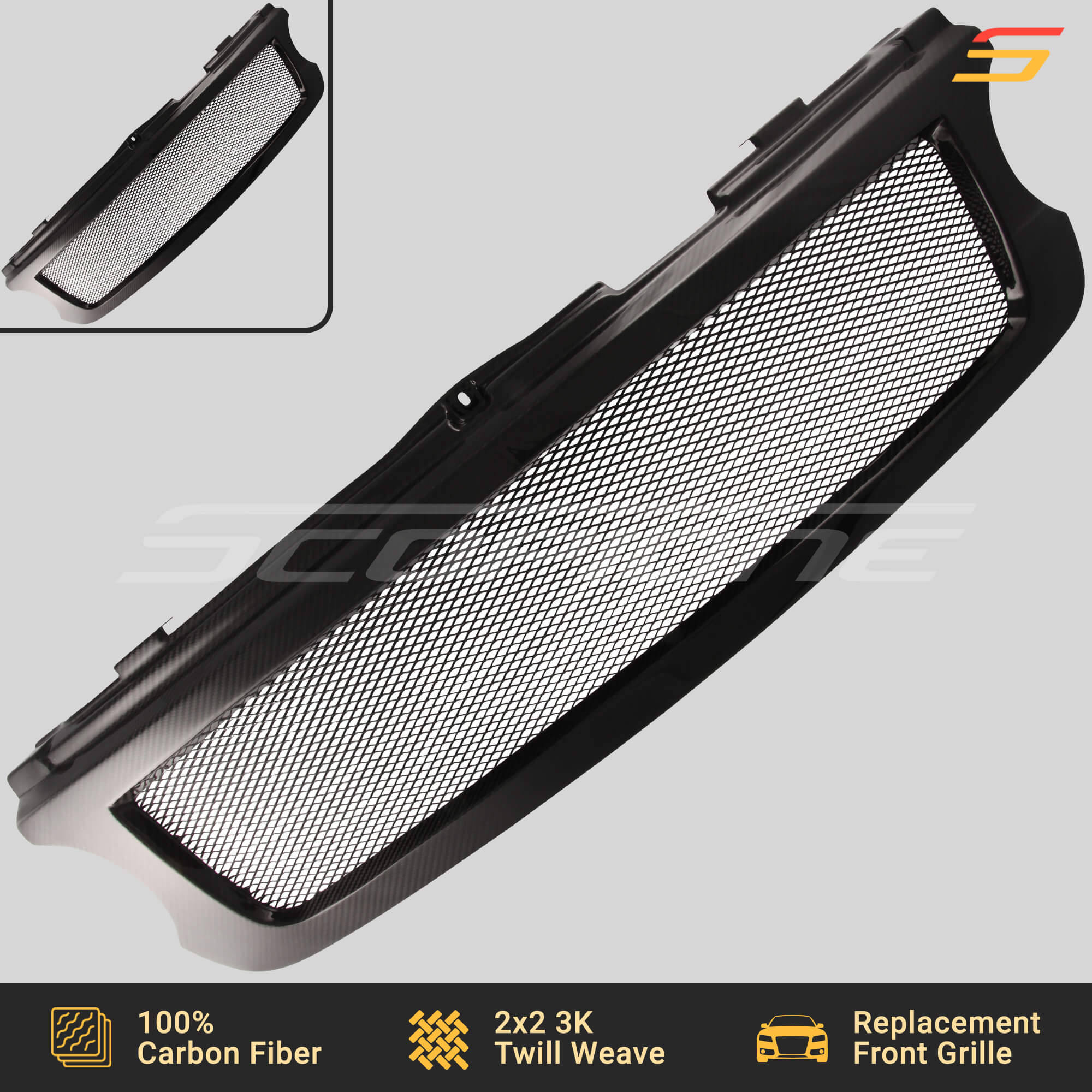
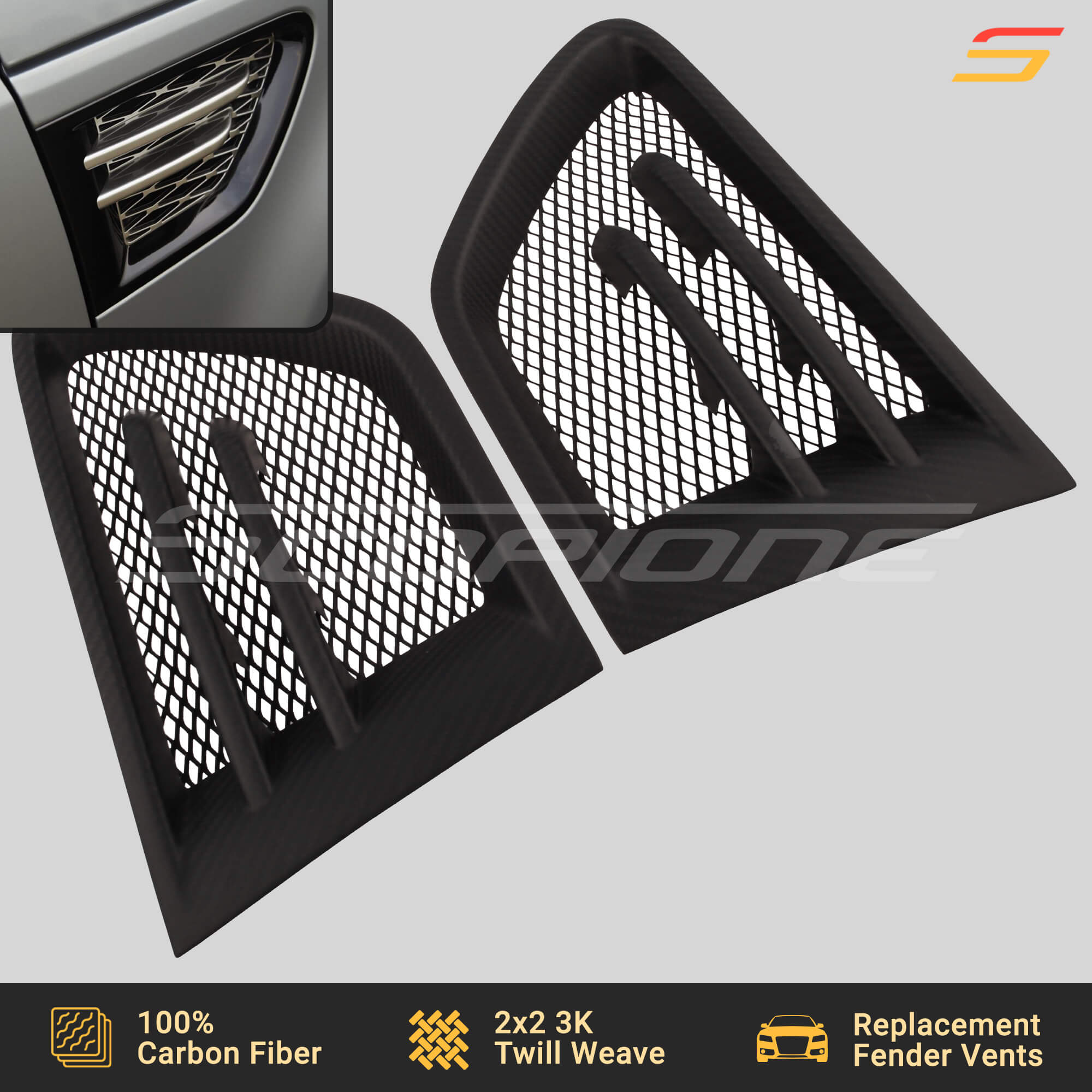
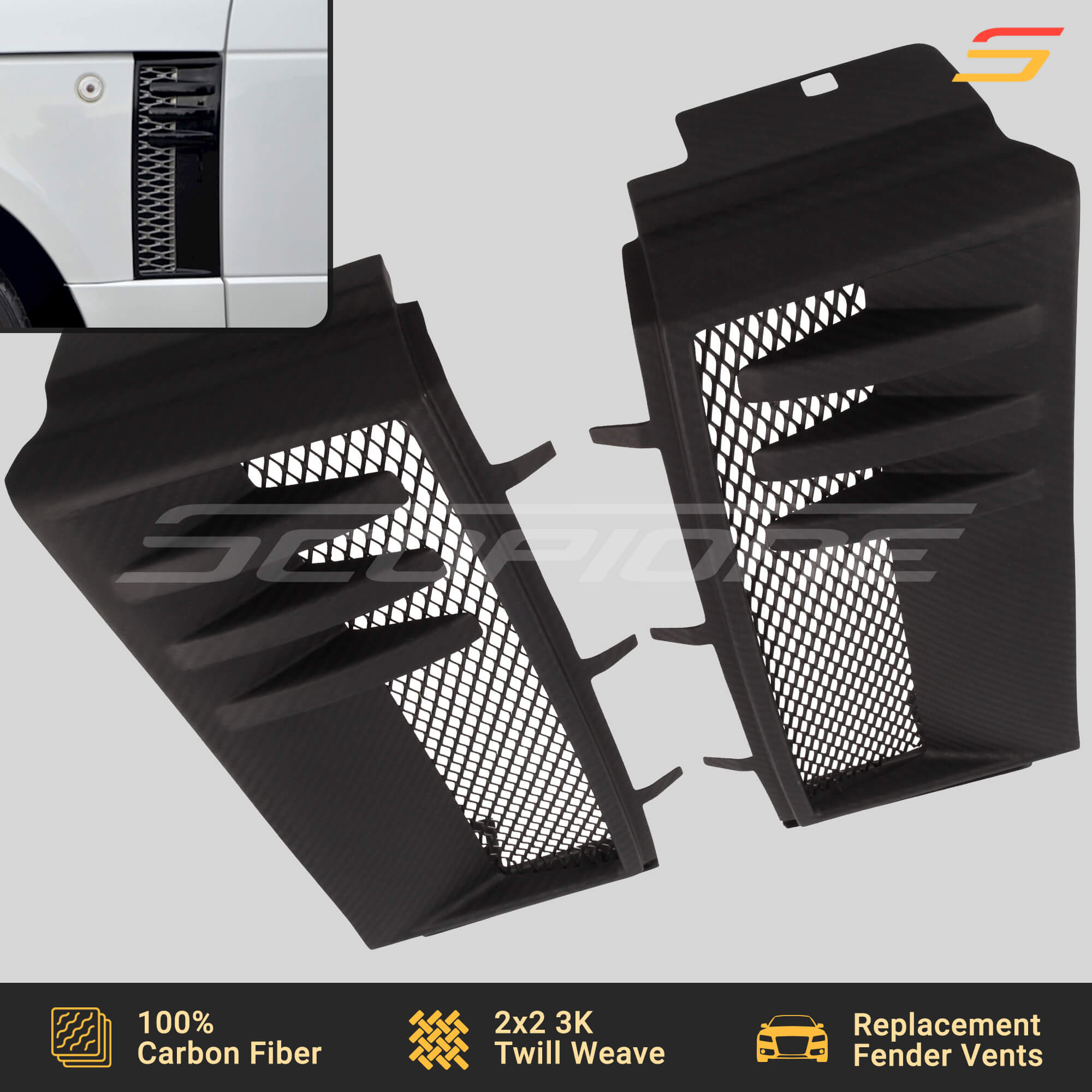
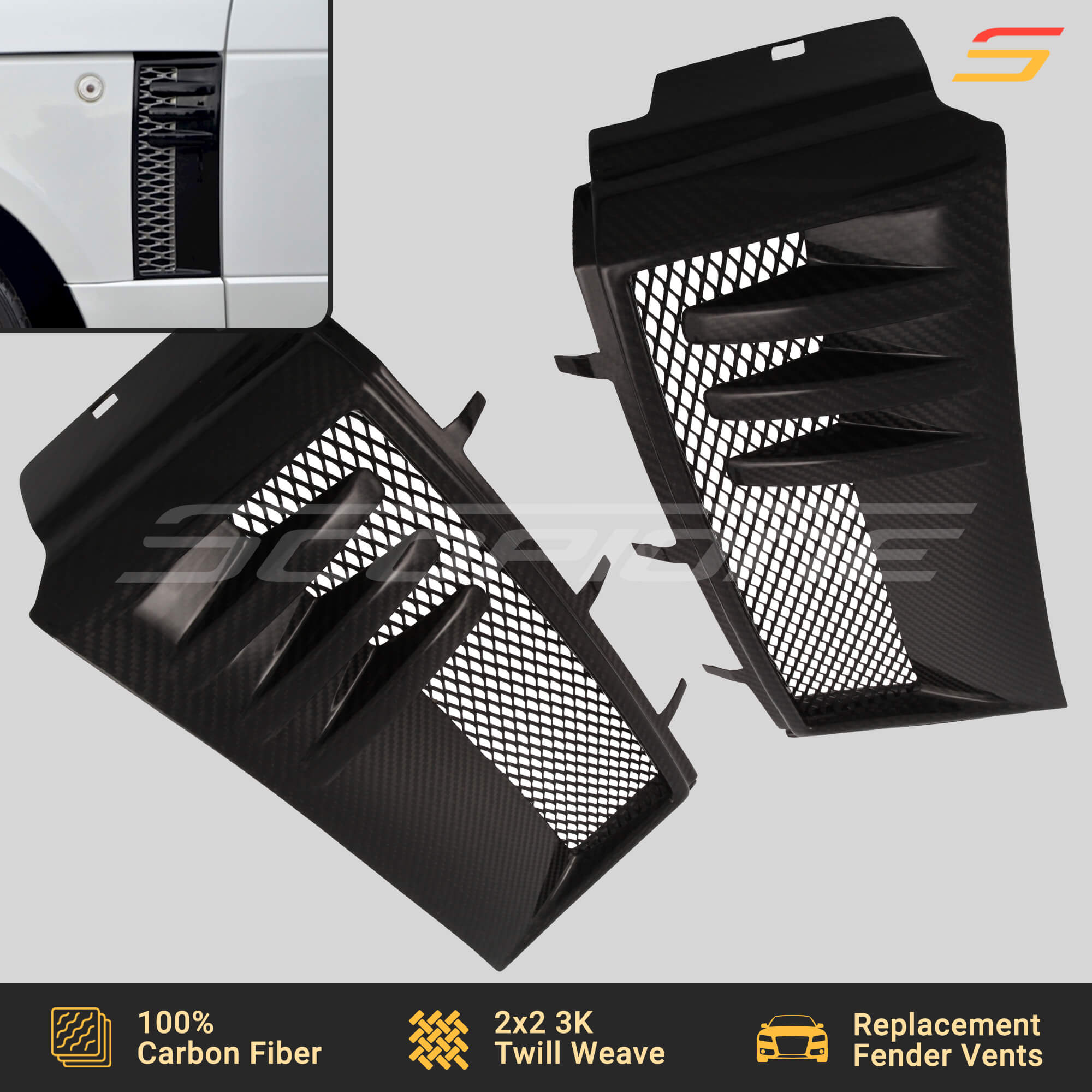
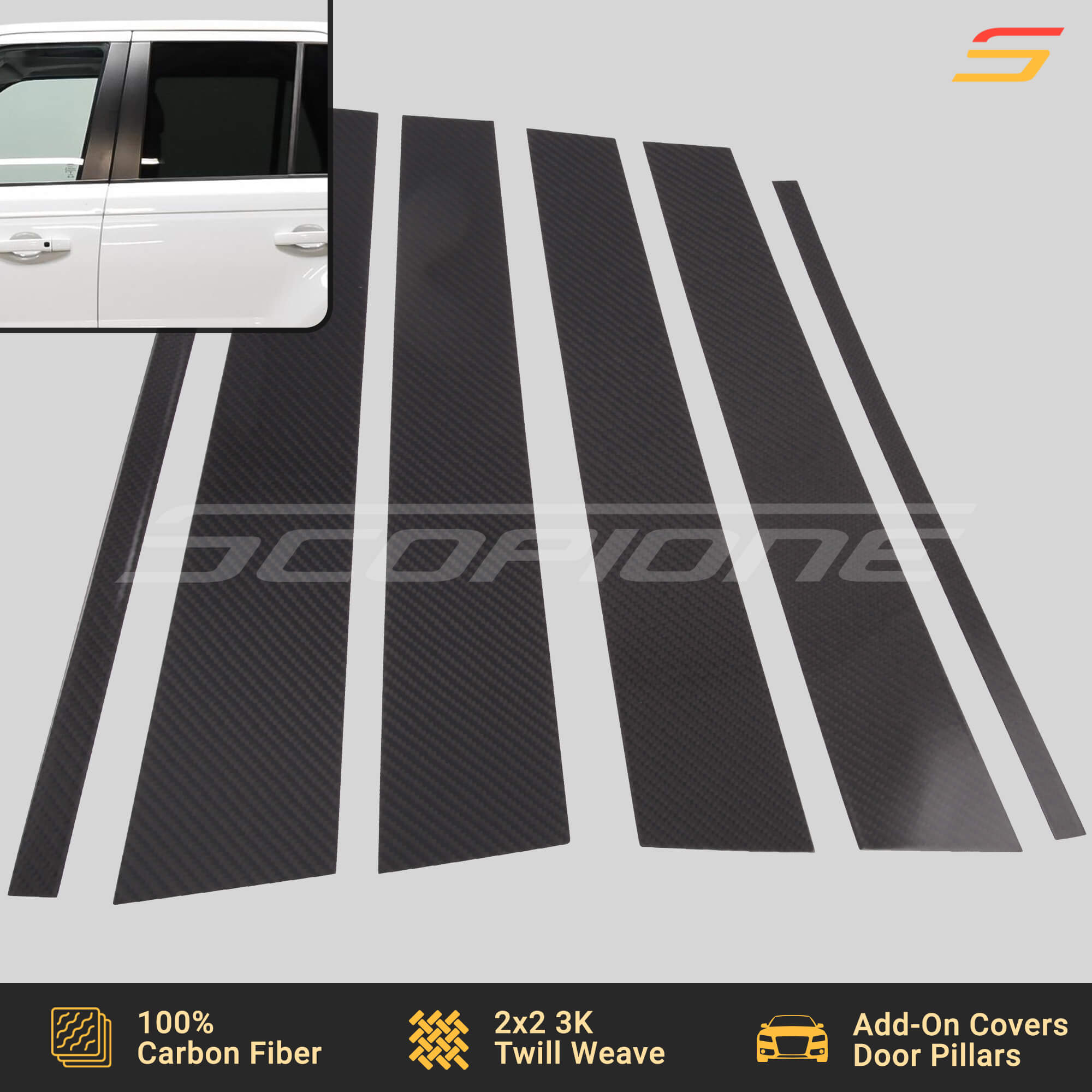
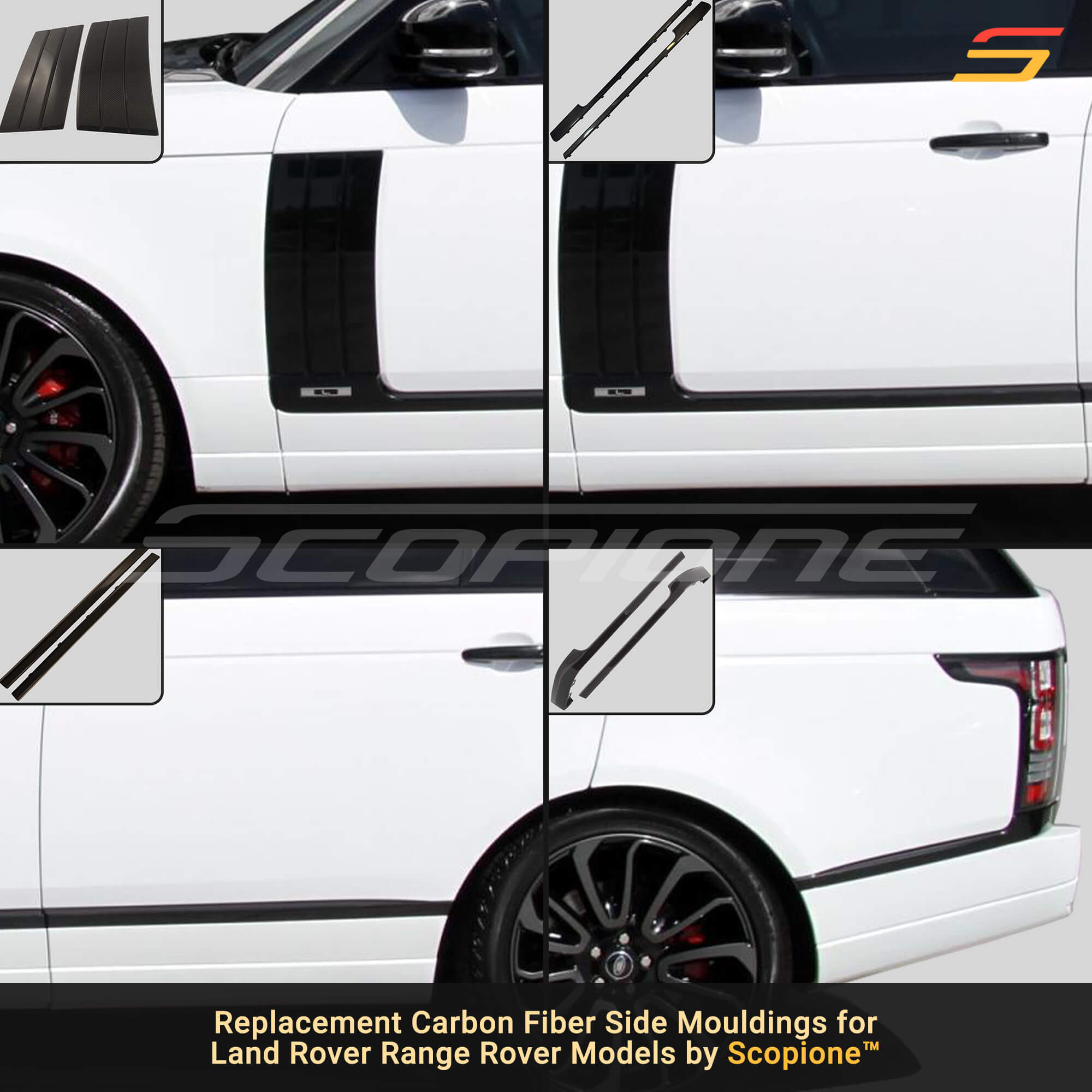
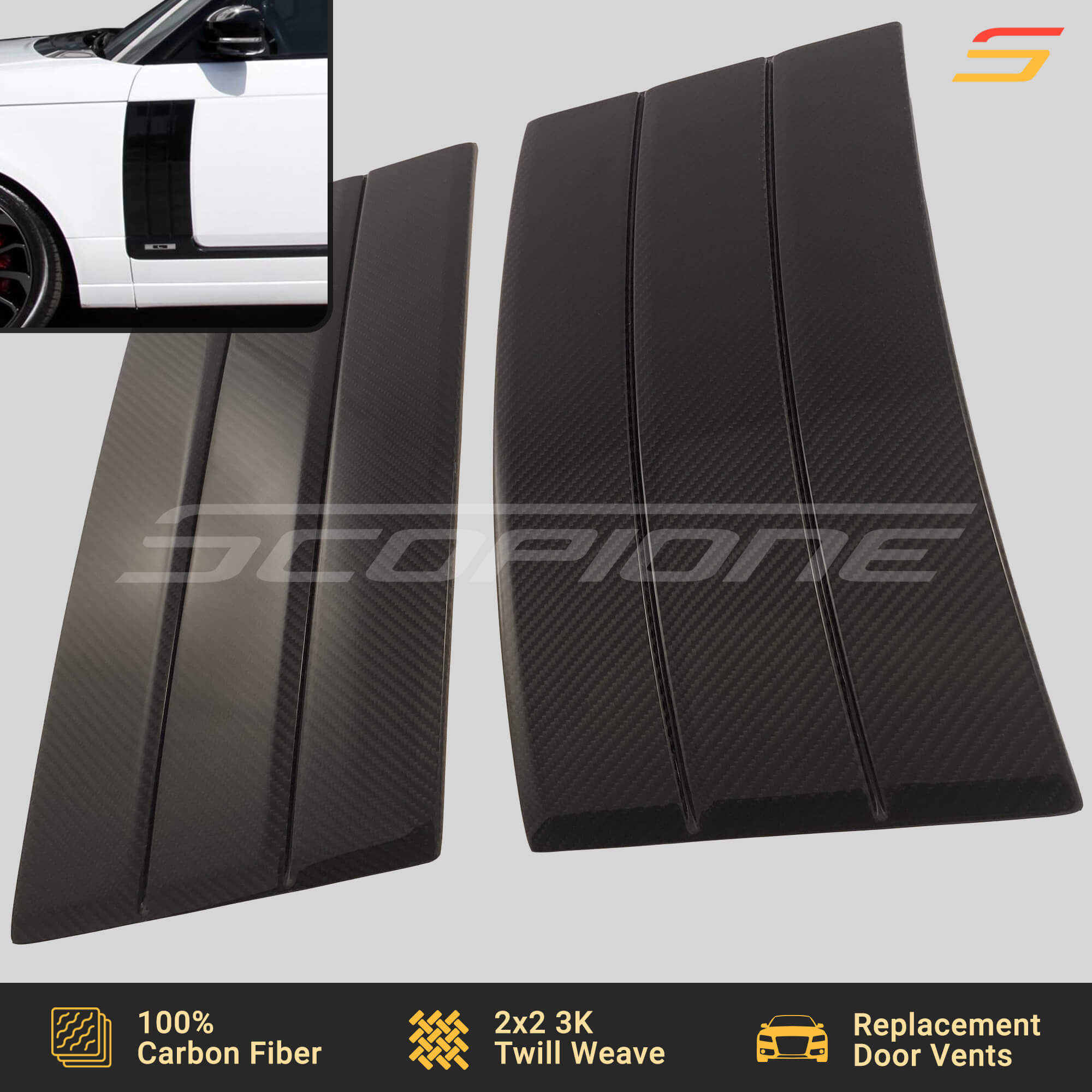
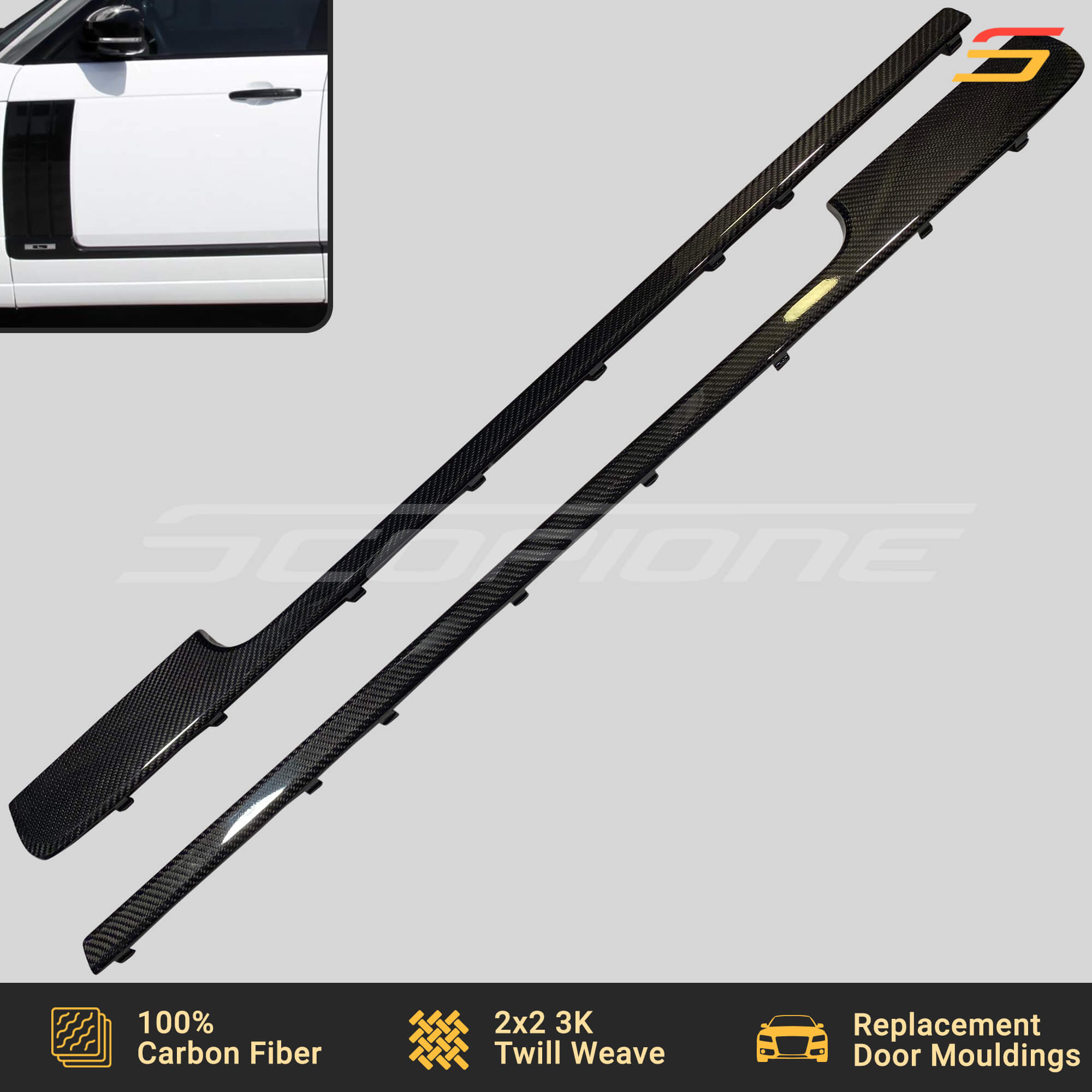
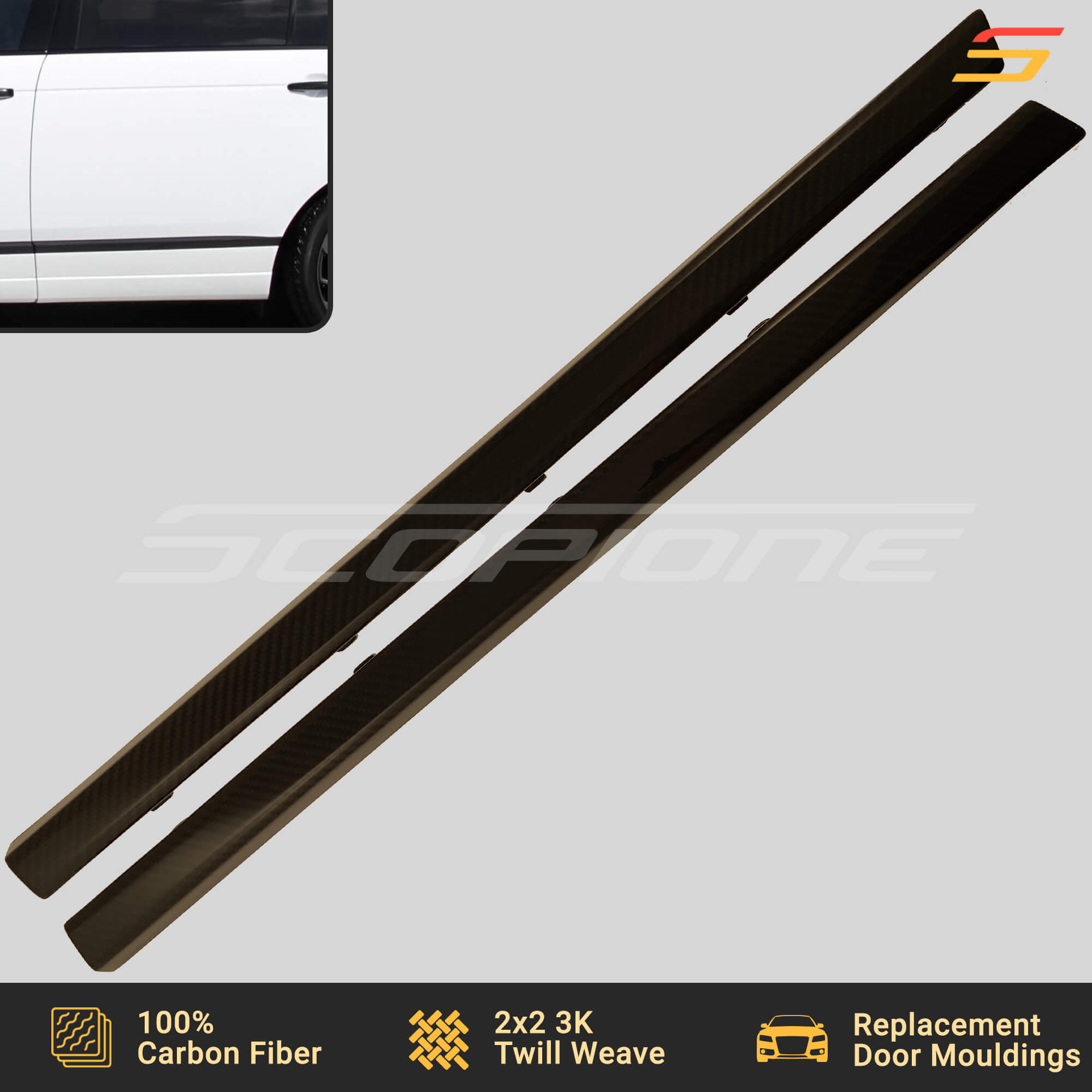
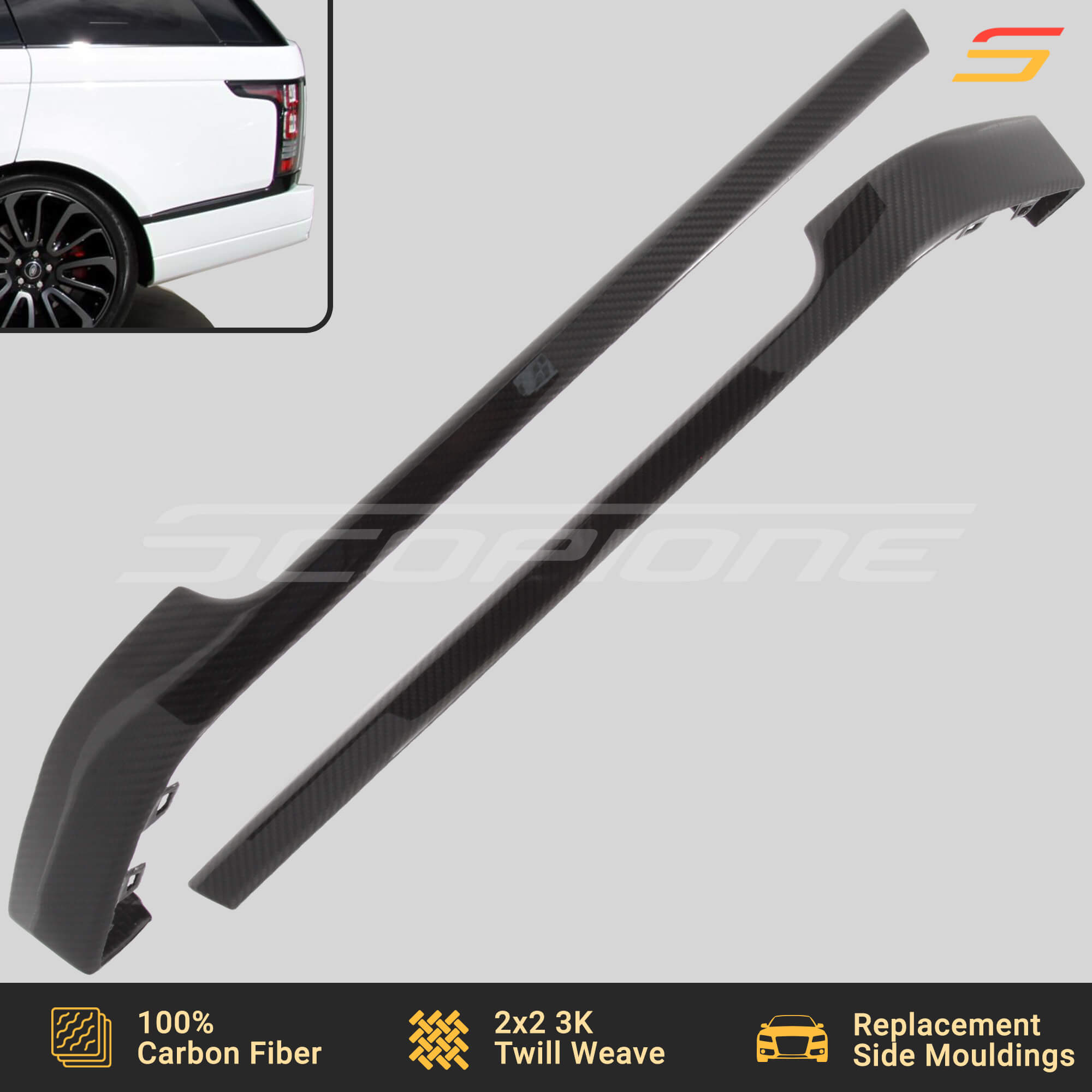
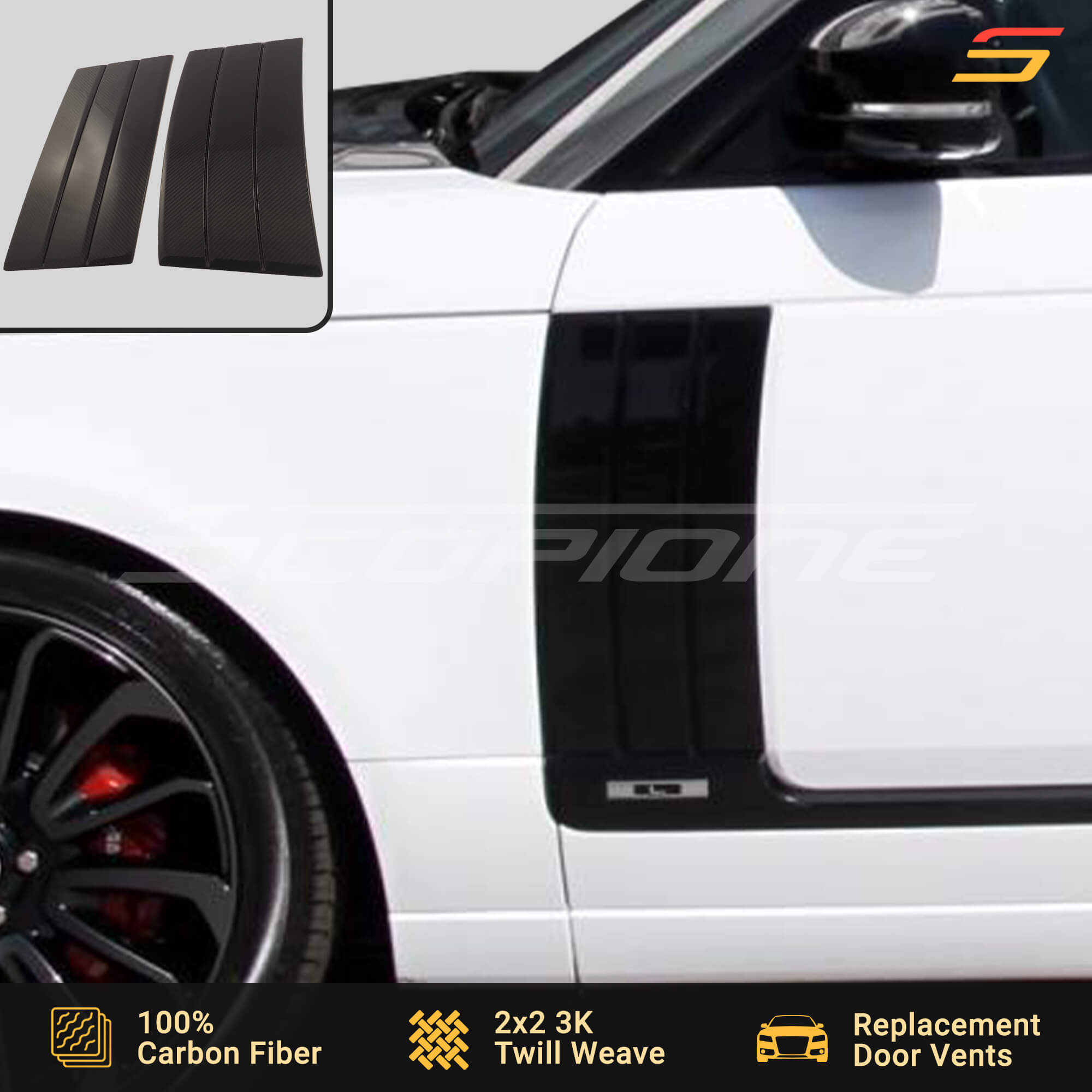
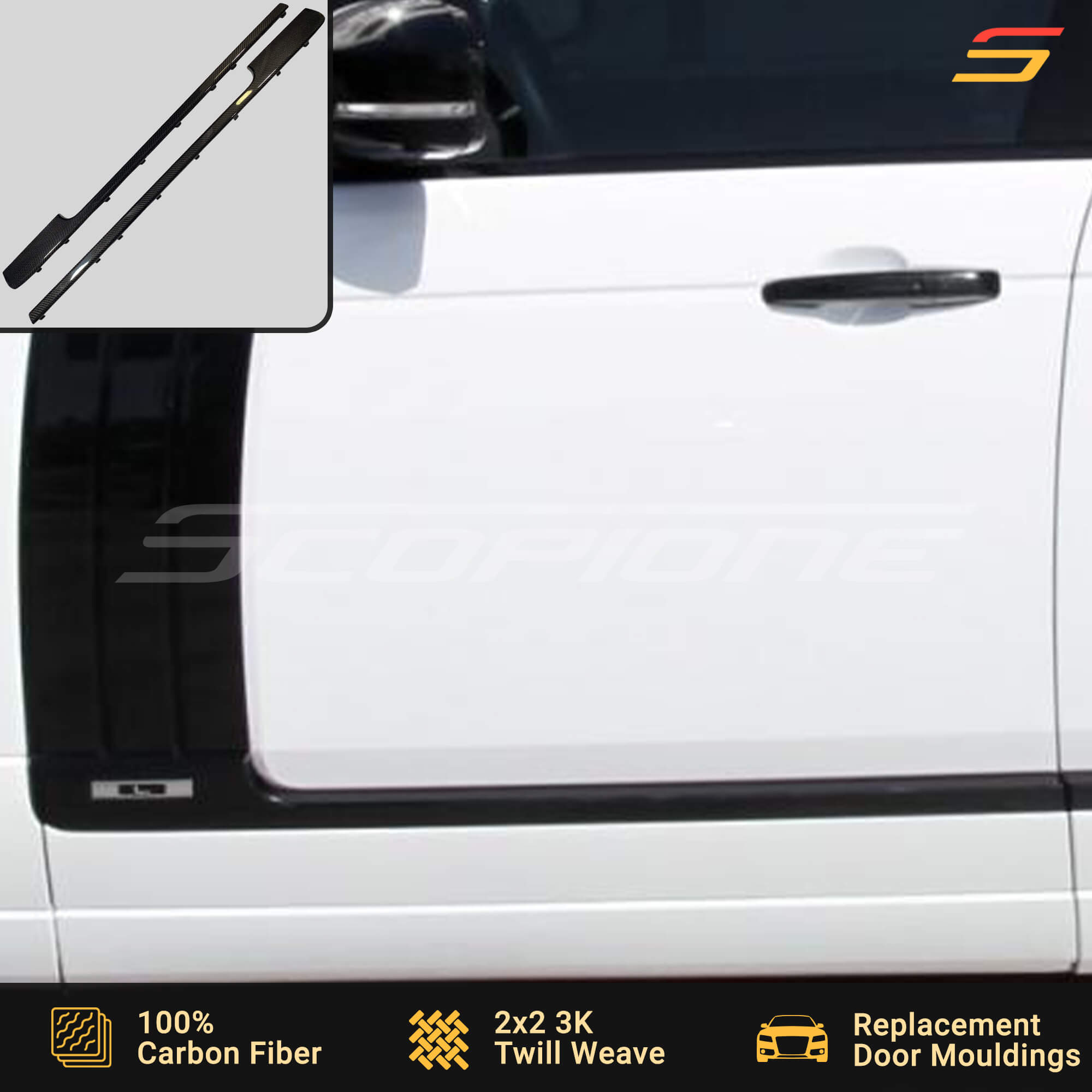
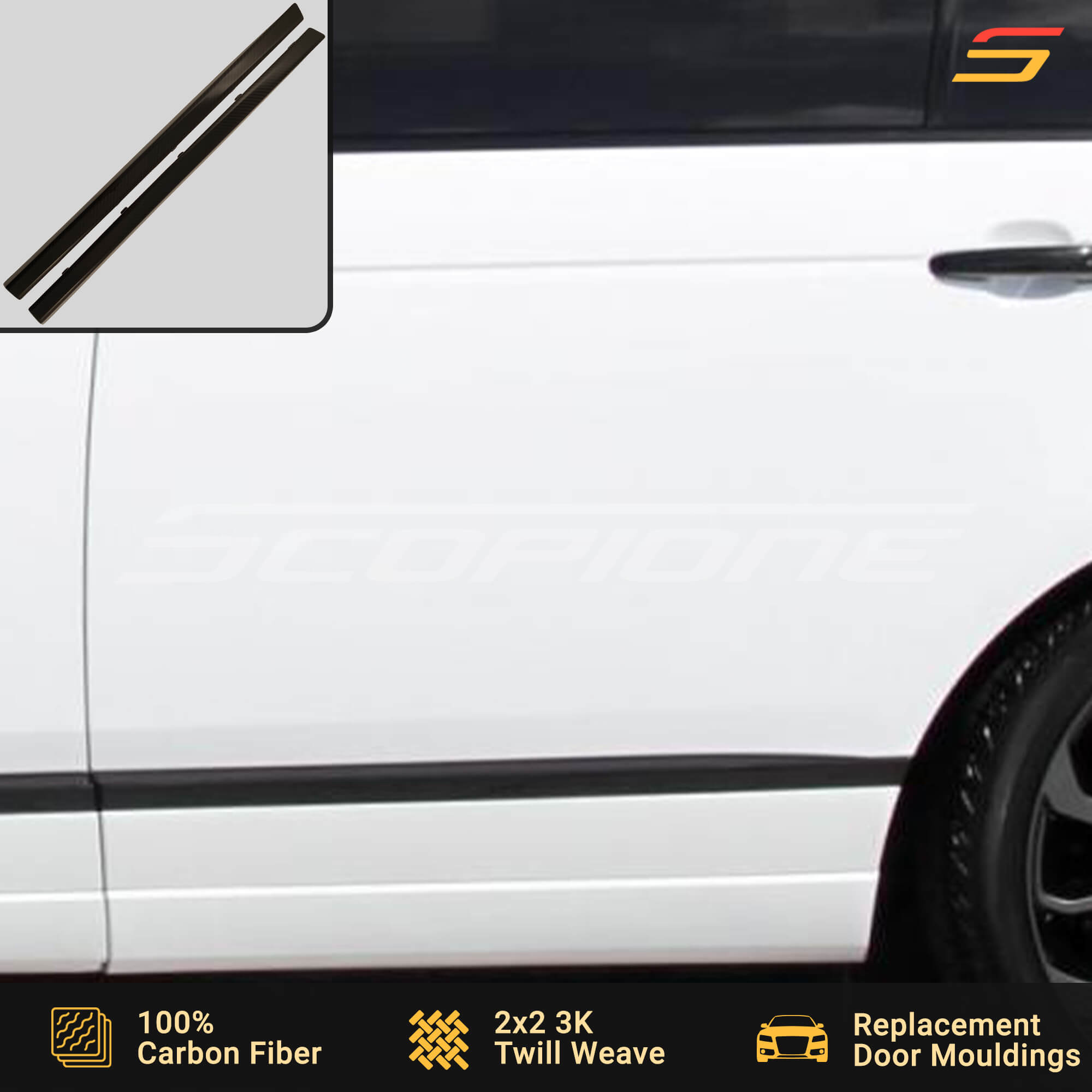
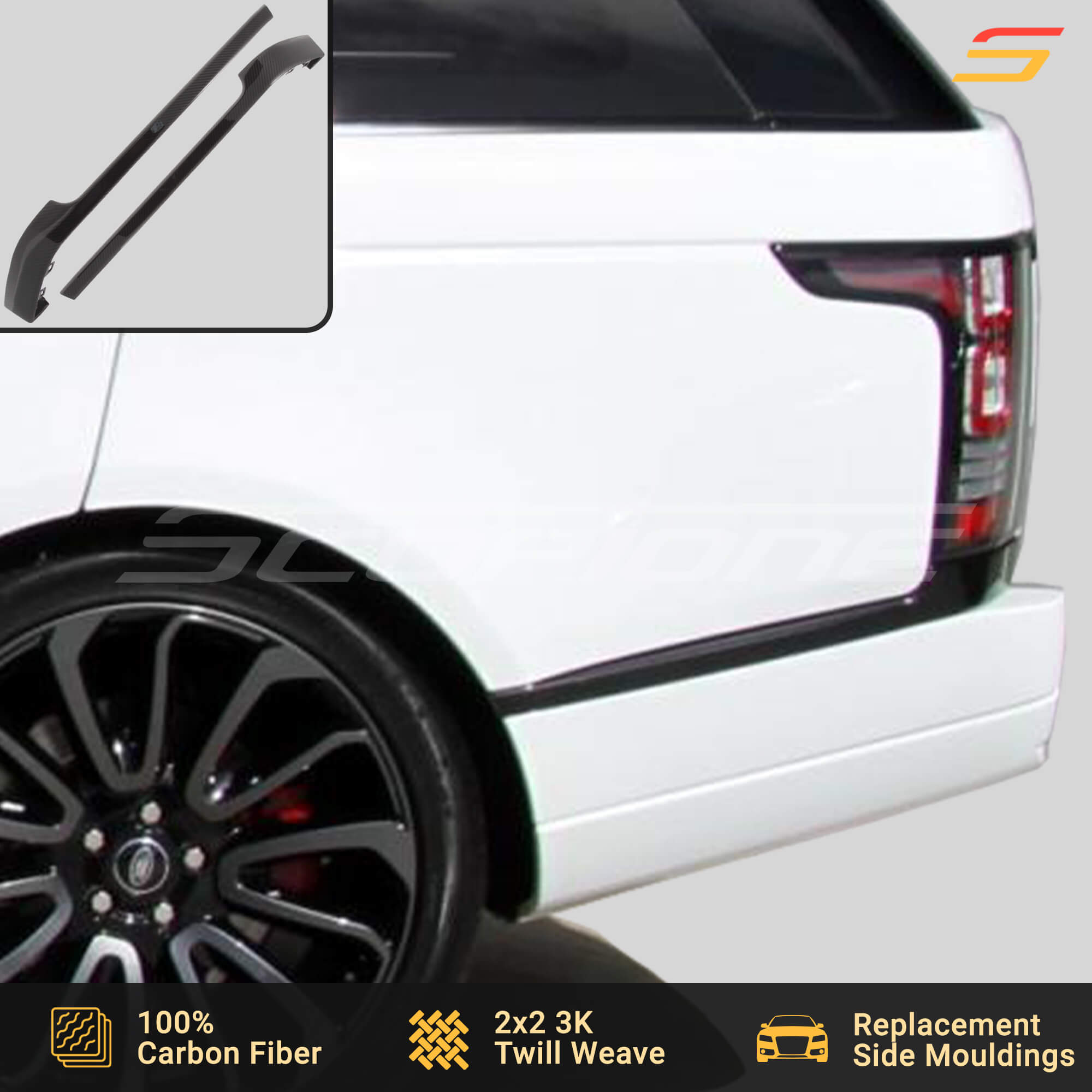
Land Rover’s 54-year aluminum tradition, from the 1948 Series I through the Range Rover P38, established a body construction heritage that parallels Audi’s Aluminum Space Frame development in its significance. Scopione’s Land Rover catalog includes carbon-fiber side fender vents, body molding strips, and door panel accents for the Range Rover L322 and L405. These parts integrate with aluminum body surfaces using precision fitment and UV-resistant clear coat. The foundation for aftermarket CF components on any vehicle starts with a manufacturer that understands non-ferrous body construction. Land Rover has understood it longer than almost anyone.
2003–2019: Premium Lightweight Architecture — Aluminum at Industrial Scale
Ownership changed hands three times in fourteen years, and each transition reshaped the brand’s direction. BMW held the brand from 1994 to 2000, contributing the initial L322 Range Rover development. Ford took over from 2000 to 2008, funding the Premium Lightweight Architecture research that would define the next decade. Tata Motors acquired it in 2008 and has held it since, investing heavily in aluminum manufacturing infrastructure at the Solihull and Castle Bromwich plants. Through each transition, one engineering priority remained constant: aluminum. The Range Rover L322 introduced a fully aluminum monocoque body structure, replacing the steel ladder frame of the P38. The Range Rover L405, launched in 2013, became the first SUV in the world with an all-aluminum monocoque body, not just aluminum panels over a steel frame but an entirely aluminum load-bearing structure that saved 420 kg compared to a steel equivalent.
JLR’s Premium Lightweight Architecture became the foundation for the Range Rover, Range Rover Sport, Discovery, and Velar. Carbon fiber was absent from production vehicles during this era. But two developments were quietly laying the groundwork. The Jaguar CX75 hybrid hypercar project (2010–2012, cancelled for production but driven by a Bond villain in Spectre) produced a full CFRP tub weighing just 83 kg, demonstrating that JLR’s engineers could work with carbon fiber at a structural level. And the L405’s all-aluminum monocoque generated expertise in advanced materials joining, crash energy management in non-ferrous structures, and mixed-material body construction. All of those skills transferred directly to CFRP integration when the time came.
Range Rover (L322, 2002–2012)
The L322 was developed during BMW’s ownership and introduced the first fully aluminum body structure on a Range Rover. Gone was the steel ladder-frame chassis of the P38. In its place: an integrated aluminum monocoque that dropped body-in-white weight significantly compared to a steel equivalent. The car also introduced air suspension as standard, a dual-mode terrain response system, and rear-seat entertainment. These features would become Land Rover signatures across the lineup.
Under JLR ownership from 2008, the L322 received the Jaguar-derived 5.0-liter supercharged V8 producing 510 hp. The combination of a 510 hp supercharged V8 and permanent four-wheel drive in a vehicle that could also wade through 700 mm of water was unlike anything else available from any manufacturer at any price point. Power ranged from 282 hp (4.4L BMW V8) to 510 hp depending on engine and model year.
- Engine: 4.4L BMW V8 / 5.0L Jaguar V8 supercharged / 3.6L TDV8, 282–510 hp
- Body: Aluminum monocoque (first Range Rover without a steel ladder frame)
- 0–60 mph: 5.4 seconds (5.0 Supercharged)
- Top speed: 140 mph (5.0 Supercharged)
No carbon fiber. The L322’s importance is architectural. It proved that an aluminum monocoque could serve as the primary structure of a large luxury SUV, not merely as panels over a steel skeleton. The engineering challenges were substantial: aluminum cannot be welded using the same resistance spot-welding techniques as steel. Rivet-bonding, structural adhesive, and specialized aluminum welding processes had to be developed for volume production. Crash management required entirely different energy-absorption strategies because aluminum crumples differently than steel, absorbing energy through controlled folding rather than progressive deformation.
JLR’s engineers solved each challenge. And that institutional knowledge transferred directly when the time came to integrate CFRP elements into aluminum body structures on the Range Rover Sport SV platform. The parallel with Audi’s A8 Space Frame development is notable. Both brands built deep institutional knowledge in aluminum before later adding carbon fiber to the mix. Both arrived at CFRP through material science progression rather than motorsport necessity.
Range Rover (L405, 2013–2022)
The L405 set a record that stood for nearly a decade: first SUV in the world with an all-aluminum monocoque body. The riveted and bonded aluminum body-in-white weighed 39% less than a steel equivalent, a saving of approximately 420 kg in body structure alone. Gerry McGovern’s design maintained the Range Rover’s signature proportions (clamshell hood, floating roof, continuous waistline) while achieving a dramatically lower curb weight than the L322 predecessor. The 420 kg saving improved fuel efficiency, acceleration, braking, and off-road capability simultaneously.
Engine options ranged from 258 hp to 565 hp across petrol and diesel variants. The SVAutobiography Dynamic sat at the top of the range, powered by the 5.0-liter supercharged V8 producing 565 hp. It reached 60 mph in 5.0 seconds and topped out at 155 mph. A full-size luxury SUV that weighed less than many mid-size sedans and could accelerate harder than some sports cars of the previous decade. Aluminum made that performance envelope possible. Without the 420 kg body weight saving, the same engine would have produced noticeably slower acceleration and higher fuel consumption.
- Engine: 3.0L–5.0L V6/V8 petrol and diesel, 258–565 hp
- Body: All-aluminum monocoque (39% lighter than steel equivalent)
- Weight savings: ~420 kg in body structure vs. steel
- 0–60 mph: 5.0 seconds (SVAutobiography Dynamic)
No factory carbon fiber on production L405 models. The entire weight savings story was aluminum. But aftermarket CF trim (side vents, body molding strips, door panels) was available from suppliers including Scopione, giving owners the option to add carbon-fiber accents to the aluminum body. The L405’s significance for the CF story is foundational: its all-aluminum monocoque represented the peak of Land Rover’s aluminum-only lightweight strategy. When carbon fiber arrived on the Range Rover Sport SV in 2023, it joined a body structure that had already been optimized through six decades of aluminum refinement. The L405 demonstrated that aluminum alone could achieve dramatic weight savings. But it also established the baseline against which CFRP additions would be measured. The body construction used self-piercing rivets, structural adhesive, and spot welding in a mixed-joining process derived from aerospace manufacturing, the same type of sophisticated joining that enables CFRP integration on later platforms.
Range Rover Sport SVR (L494, 2014–2022)
The Range Rover Sport SVR was the first vehicle from JLR’s Special Vehicle Operations division. SVO was the performance arm that would eventually bring carbon fiber to the Land Rover lineup, but not yet. The supercharged 5.0-liter V8 produced 550 hp initially and 575 hp from 2018. The SVR set the production SUV lap record at the Nürburgring Nordschleife (8:14) upon launch and held it until the Alfa Romeo Stelvio Quadrifoglio claimed the title.
SVO tuned the chassis, exhaust, transmission calibration, and cooling systems for sustained high-speed driving. Unusual priorities for a vehicle also expected to ford rivers and cross sand dunes. But that duality defined the SVR’s identity. Track capability and off-road competence in the same package attracted a buyer profile willing to pay for performance materials. The SVR created the customer base, the brand credibility, and the engineering infrastructure that the CF-equipped SV inherited four years later.
- Engine: 5.0L supercharged V8, 550–575 hp
- 0–60 mph: 4.3 seconds
- Top speed: 176 mph
- Nürburgring: 8:14 (production SUV record at launch)
The base SVR had no factory carbon fiber. However, the SVR Carbon Edition (2022) marked the first time Land Rover offered factory CFRP components: a carbon-fiber hood option (available in body color or exposed gloss black CF), carbon-fiber interior trim accents, and model-specific styling elements. The Carbon Edition bridged the aluminum-only SVR and the fully CF-equipped SV that replaced it. It was the proof of concept, confirmation that carbon fiber could be marketed within the Land Rover brand identity without conflicting with the utilitarian, go-anywhere positioning. The market response confirmed what BMW, Bentley, and other premium manufacturers had already learned: buyers would pay a premium for CFRP on luxury performance vehicles.
Scopione Perspective: The Range Rover Catalog
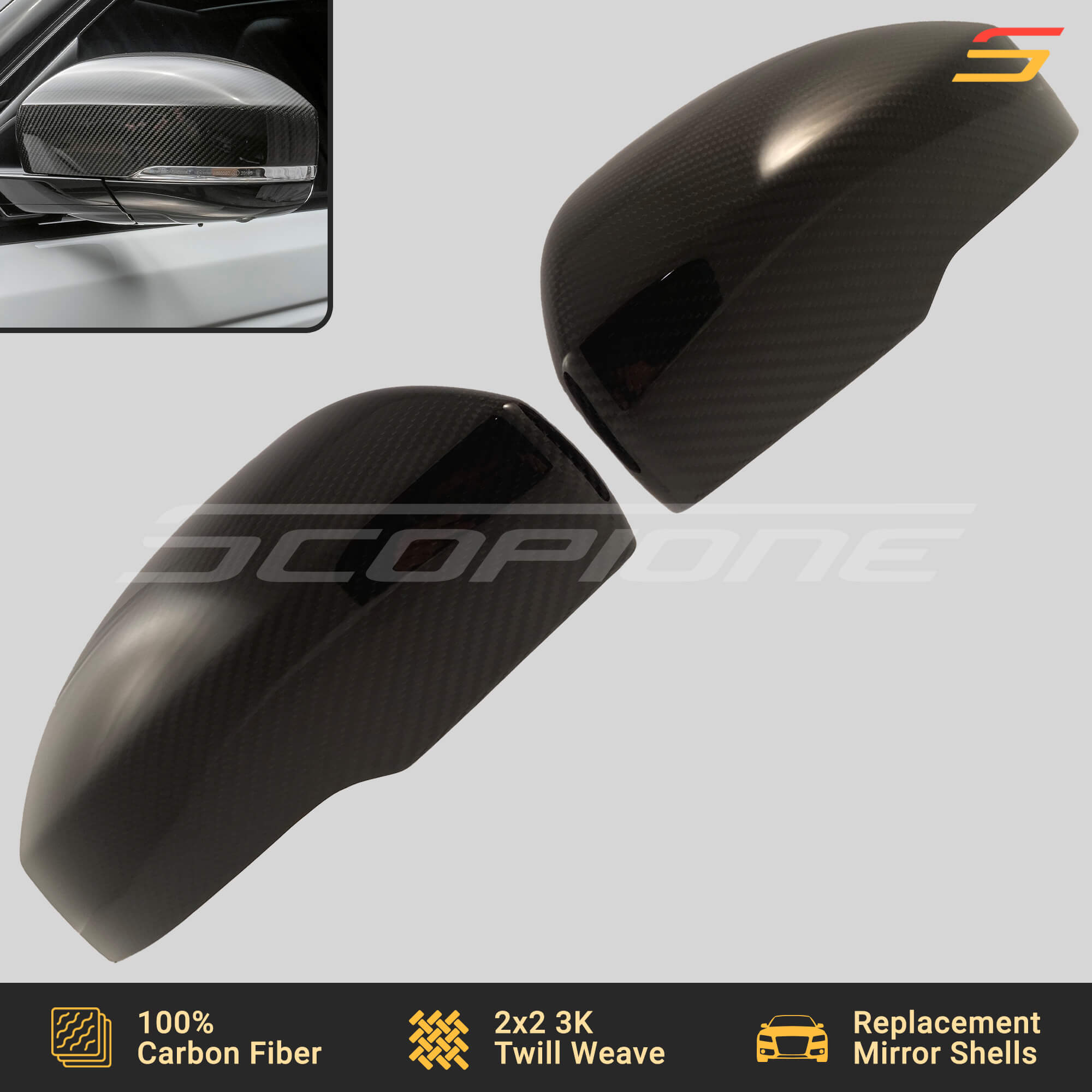
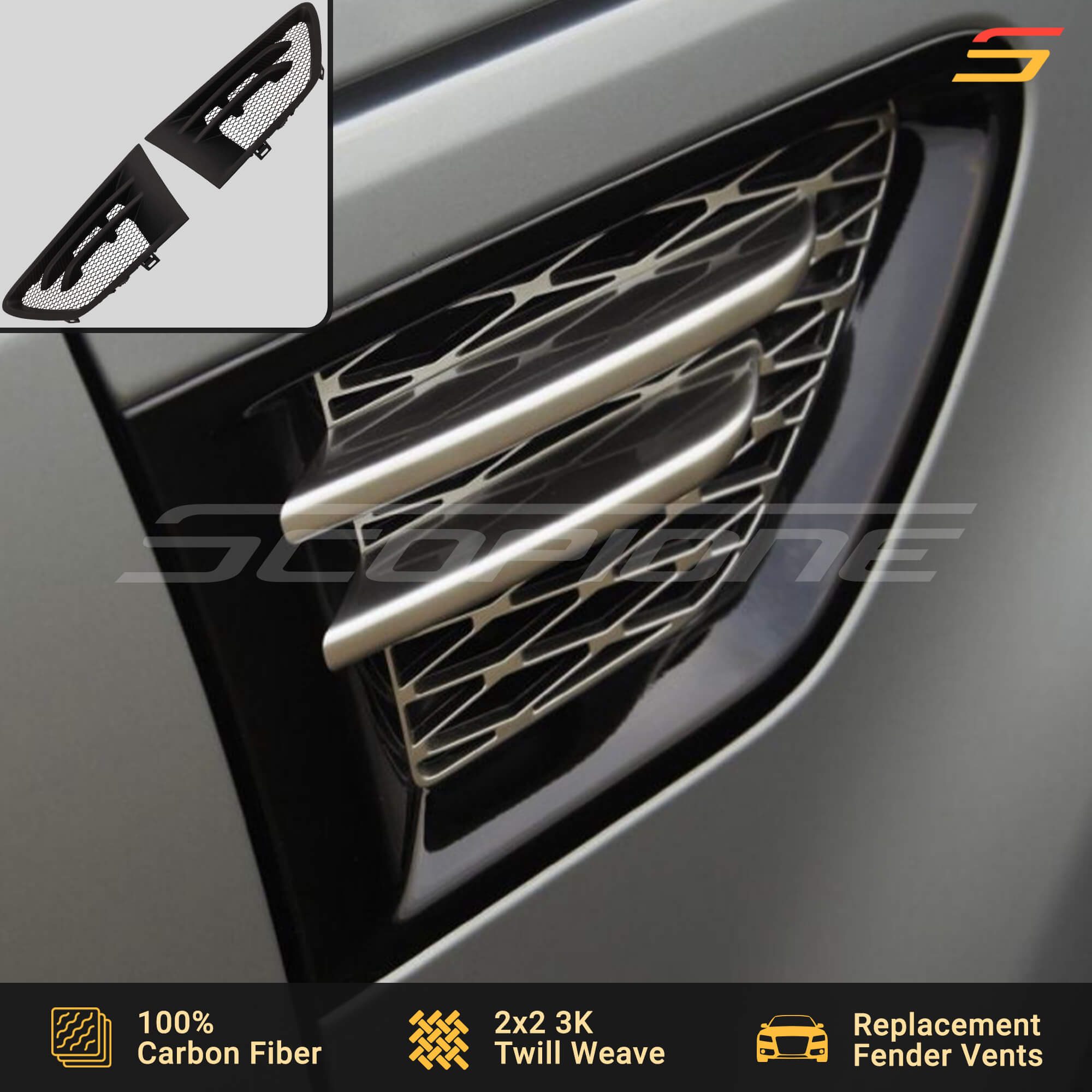
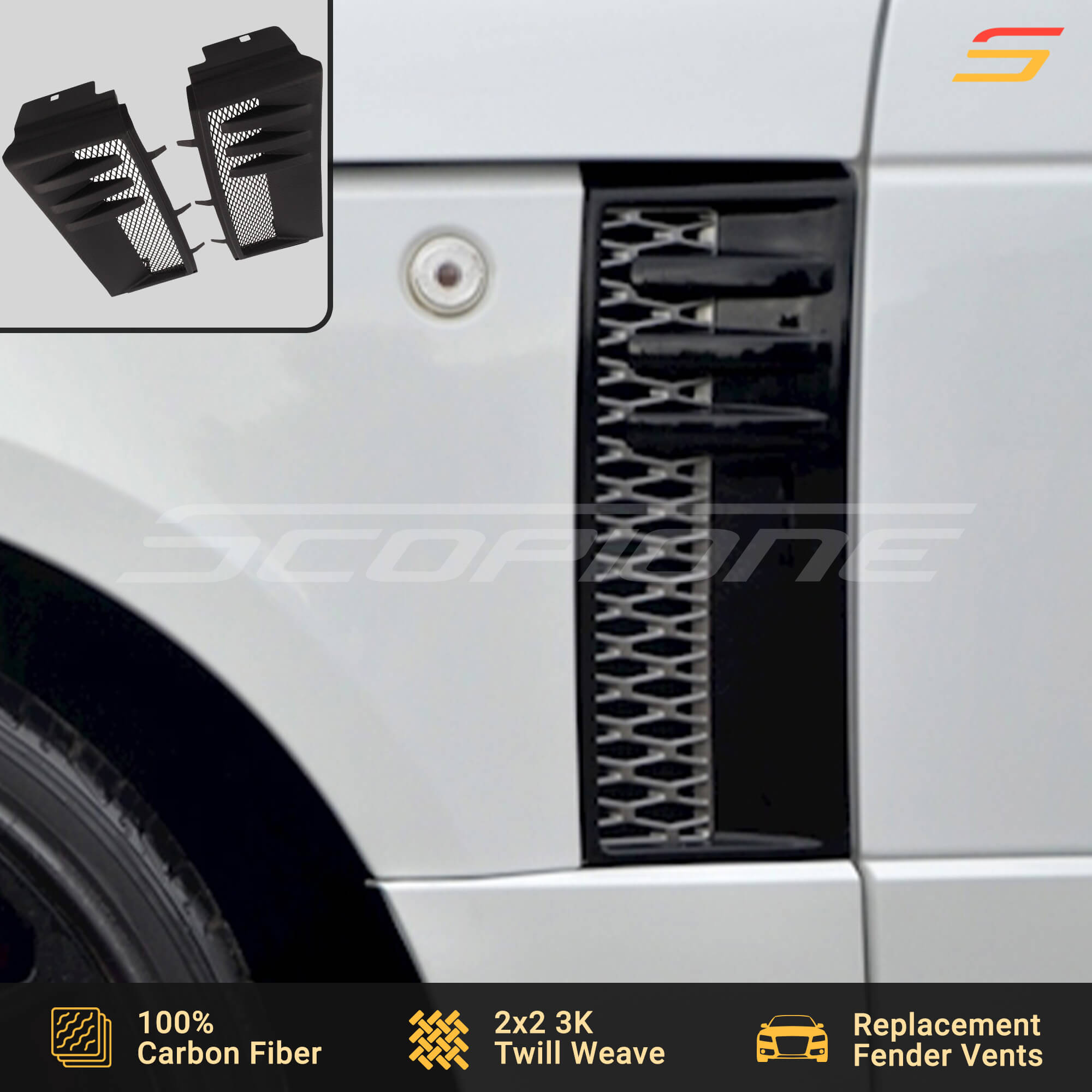
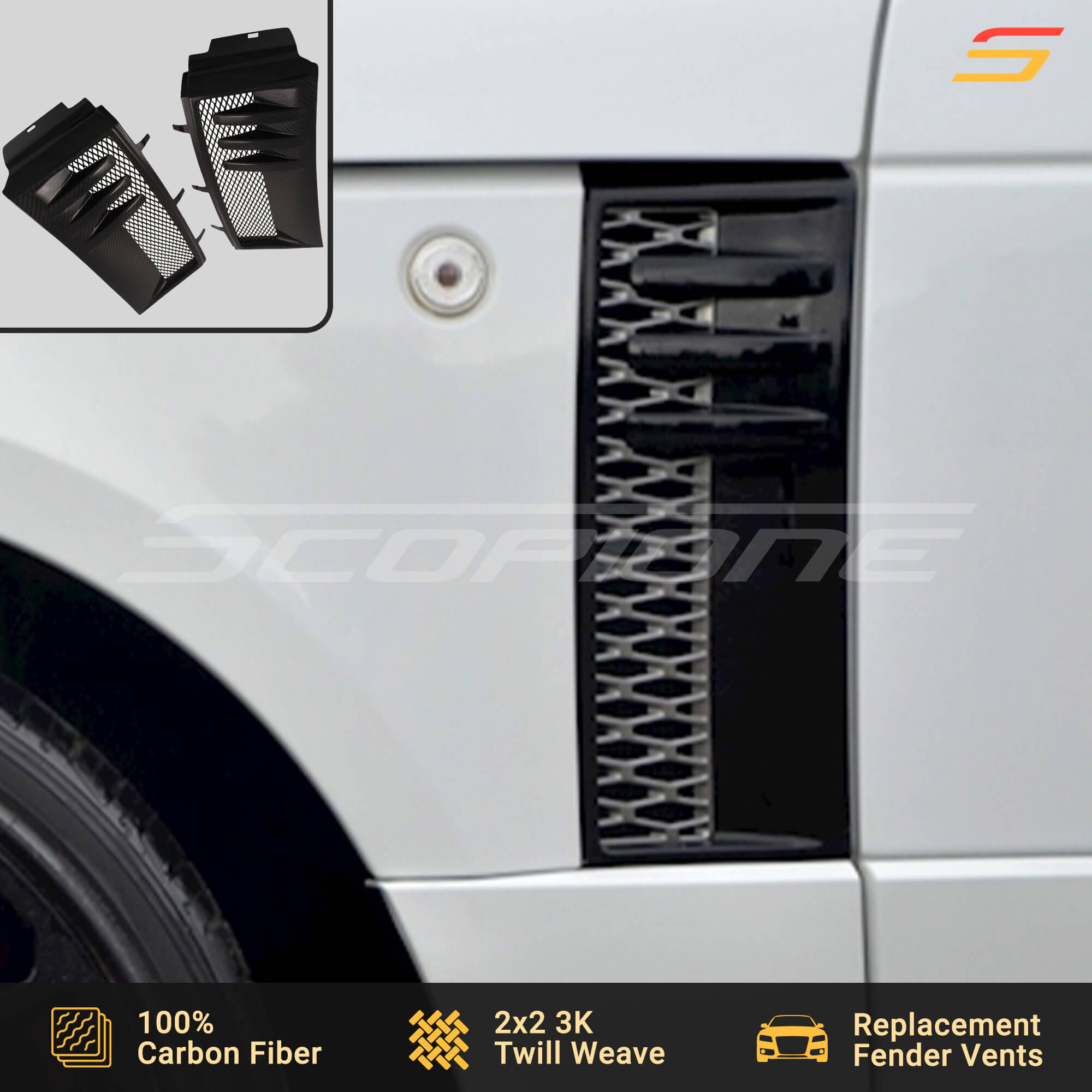
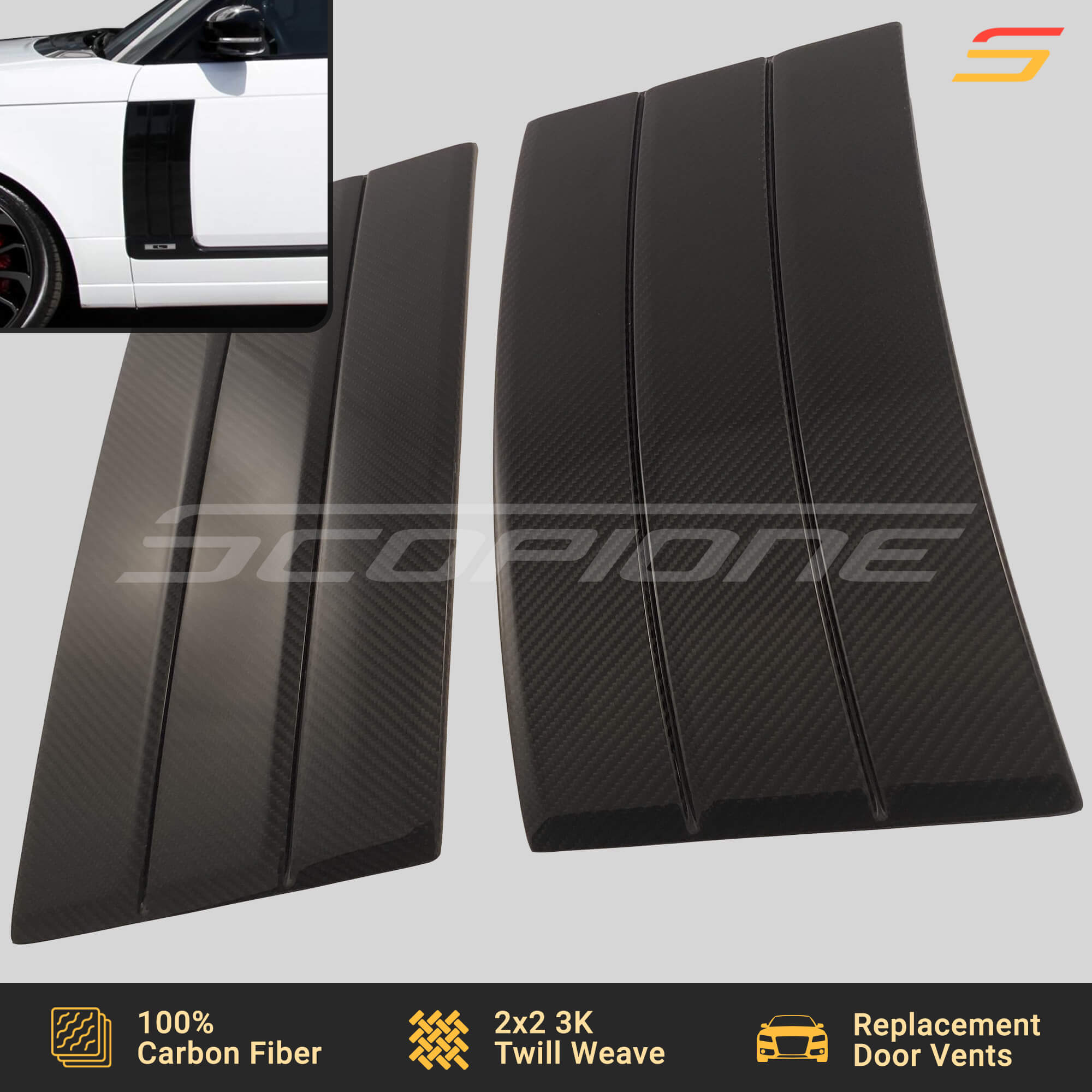
The Range Rover and Range Rover Sport represent the core of Scopione’s Land Rover parts coverage. The catalog includes 2×2 3K twill-weave carbon-fiber side fender vents, body molding strips, door panel accents, rear bumper trim, and front door side vent panels for the Range Rover L322, L405, and Range Rover Sport L320 and L494. Each part is precision-fitted for specific model years and finished with UV-resistant clear coat to protect against fading from prolonged sun exposure.
2020–2024: Carbon Fiber Enters — From Defender to SV Performance
Carbon fiber entered Land Rover’s production vocabulary during this era, arriving through the SV performance division rather than through racing programs or structural engineering. The approach differed from Lamborghini’s racing-derived CFRP and from BMW’s industrial-scale carbon fiber plant. Land Rover reached CF through luxury performance, through SVO’s mission to build quicker, more capable Range Rovers. The Range Rover Sport SV (2023) represented the breakthrough: a 635 PS twin-turbo V8 with world-first 23-inch carbon-fiber SUV wheels from Carbon Revolution, carbon ceramic brakes with F1-derived technology, forged carbon-fiber seat backs, and a comprehensive CFRP exterior package. Simultaneously, the new Defender, built on the D7x aluminum platform, proved that Land Rover’s aluminum engineering had reached a level of sophistication where the next material frontier had to be composites.
Land Rover Defender (L663, 2020–Present)
The new Defender replaced an icon. The original had been in production for 67 years (1948 to 2016) and had earned a reputation as one of the few vehicles equally at home in the Sahara and the Arctic. Replacing it required nerve. Gerry McGovern’s design built on the D7x aluminum platform, the stiffest body structure in Land Rover’s history. Three times the torsional rigidity of a traditional body-on-frame 4×4. Available in 90 (short wheelbase), 110 (standard), and 130 (long wheelbase) configurations.
The V8 variant (2021) dropped a 5.0-liter supercharged V8 producing 518 hp into the Defender for the first time. Zero to sixty in 5.0 seconds flat. A figure that would have been respectable for a sports car ten years earlier, now achieved by a vehicle designed to wade through 900 mm of water and crawl over boulders at walking pace.
- Engine: 2.0L–5.0L petrol and diesel, 200–518 hp (V8: 518 hp)
- Platform: D7x aluminum (3x torsional rigidity of traditional body-on-frame)
- Configurations: 90, 110, 130 wheelbase
- Top speed: 149 mph (V8)
The production Defender has minimal factory carbon fiber content. The D7x platform is aluminum throughout. But the Defender’s significance for the CF story is structural: the D7x platform represents the peak of Land Rover’s aluminum-only engineering. Three times the torsional rigidity of a traditional body-on-frame design means the aluminum structure has been optimized to its practical limit. Further stiffness and weight improvements will likely require composite reinforcement, exactly the approach JLR’s Project Tucana is now researching.
The Defender’s commercial success also matters for the carbon-fiber trajectory. It outsells the previous Defender by a wide margin, generating the revenue that funds JLR’s advanced materials research. The D7x’s aluminum monocoque construction uses self-piercing rivets and structural adhesive, the same mixed-joining techniques that enable CFRP integration on later platforms. When the Defender OCTA arrived with chopped carbon-fiber detailing in 2025, the manufacturing infrastructure to bond CF elements to an aluminum body was already in place. Aftermarket CF options, including hoods and trim panels, are available from multiple suppliers for owners looking to add carbon-fiber elements to the Defender’s aluminum body.
Range Rover Sport SVR Carbon Edition (2022)
A bridge vehicle. The SVR Carbon Edition was the final iteration of the first-generation Range Rover Sport SVR and the first Land Rover production vehicle to offer factory CFRP. The 5.0-liter supercharged V8 carried over at 575 hp, unchanged from the late-model SVR. Chassis tuning, suspension calibration, and the active exhaust system were identical to the standard SVR. What changed was the material palette. And that change, while visually subtle, was commercially significant.
An exposed carbon-fiber hood, available in Gloss Black Carbon Fiber finish, was the primary visual statement. CF interior accents were also available. The Carbon Edition was modest in its CFRP content compared to the SV that followed, but its commercial role was significant. It tested customer appetite for carbon fiber within the Land Rover brand. The positive response informed the dramatically expanded CF program on the successor Range Rover Sport SV.
- Engine: 5.0L supercharged V8, 575 hp
- 0–60 mph: 4.3 seconds
- CFRP: Exposed CF hood (Gloss Black CF finish), CF interior accents
- Significance: First Land Rover with factory carbon-fiber components
Historically significant as the first Land Rover with factory CFRP, but intentionally restrained in its CF content. The Carbon Edition carried no carbon-fiber wheels, no carbon ceramic brakes, no forged CF seat backs. Those came with the SV a year later. Land Rover used the Carbon Edition to validate market demand before committing to the SV’s comprehensive carbon-fiber program. The approach mirrors how the Aston Martin DBX707 and other luxury SUVs introduced CF elements gradually rather than all at once, confirming buyer appetite at each step before expanding the CFRP specification further.
Range Rover Sport SV (L461, 2023–Present)
No production SUV carries more factory CFRP. The Range Rover Sport SV replaced the SVR as SVO’s flagship and introduced CFRP to the Land Rover lineup at a scale no luxury SUV had previously attempted. The 4.4-liter twin-turbo V8 with 48V mild hybrid produces 635 PS (626 hp) and 800 Nm of torque. Zero to sixty in 3.6 seconds. Top speed: 180 mph. A luxury SUV with performance figures that match dedicated sports cars.
The headline innovation: 23-inch carbon-fiber wheels from Carbon Revolution. A world first for any SUV. The wheels use a split five-spoke design made possible by intricate carbon-fiber weave layering, saving 46.3 lbs (21 kg) over forged aluminum equivalents. Carbon Revolution is the same supplier working with Lamborghini and Ford GT, bringing technology proven on supercars to the luxury SUV segment. Unsprung mass reduction at all four corners improves ride quality, acceleration, and braking simultaneously. The physics are straightforward: lighter wheels respond faster to suspension inputs, reduce rotational inertia during acceleration, and decrease the energy the brakes need to absorb during deceleration.
Carbon ceramic brakes with 17.3-inch discs save 75 lbs (34 kg) across all four corners. The discs resist fade under repeated hard braking and last significantly longer than cast-iron equivalents. F1-derived technology applied to a vehicle that also fords rivers. Forged carbon-fiber performance seat backs with integrated headrests and illuminated SV logos. A carbon-fiber SV engine cover. The Forged Carbon Fibre Exterior Pack with stealth CF around the active quad exhausts. An optional exposed carbon-fiber hood. Interior woven CF accents across the dashboard. Combined, these options deliver up to 76 kg (168 lbs) of weight savings over the nearest equivalent specification.
- Engine: 4.4L twin-turbo V8 mild hybrid, 635 PS (626 hp) / 800 Nm
- 0–60 mph: 3.6 seconds (with CF wheels and carbon ceramic brakes)
- CF wheels: 23-inch Carbon Revolution (world-first SUV application)
- Weight savings: Up to 76 kg (168 lbs) via CFRP package
- Top speed: 180 mph
The SV’s CF content positions Land Rover alongside BMW, Porsche, and Lamborghini in the group of manufacturers offering factory carbon-fiber wheels. The Carbon Revolution partnership signals that JLR is sourcing CFRP from established composites specialists with supercar credentials. And the 76 kg weight savings program demonstrates that carbon fiber can meaningfully reduce the mass of a luxury SUV weighing over 2,300 kg, a proof point for the electric vehicles that will need every kilogram of savings to offset battery weight.
Scopione Perspective: SV-Level Carbon Fiber
The Range Rover Sport SV’s comprehensive CFRP program signals expanding aftermarket demand for carbon-fiber components across the Land Rover lineup. As factory CF options demonstrate the material’s visual and performance benefits on SV-grade vehicles, owners of standard Range Rover and Range Rover Sport models increasingly seek aftermarket alternatives. Scopione’s 2×2 3K twill-weave parts for the Range Rover and Range Rover Sport provide that option, matching the material quality and finish standard that SV buyers expect, at price points accessible to a broader audience.

2025–Present: SV Carbon, Defender OCTA, and the Electric Horizon
Three forces define Land Rover’s current chapter. The SV Carbon variant pushes carbon-fiber content to its peak on the Range Rover Sport platform. The Defender OCTA brings performance and CF detailing to the brand’s most iconic nameplate. And Project Tucana, JLR’s advanced composites consortium, prepares the engineering foundation for CFRP in the brand’s forthcoming electric vehicles. Carbon fiber is no longer an option on a single variant. It appears across multiple model lines and in multiple forms, from the luxury-performance Range Rover Sport SV Carbon with its woven 2×2 twill accents to the hardcore Defender OCTA with its chopped CF detailing. JLR’s broader strategy positions composites as essential to managing the weight of electric luxury SUVs while maintaining the ride quality and structural integrity that Land Rover buyers demand.
Range Rover Sport SV Carbon (2025)
The SV Carbon completes the Range Rover Sport SV lineup as the lightweight-focused flagship. Standard equipment includes the Forged Carbon Fibre Exterior Pack — stealth carbon fiber around the active quad exhausts, along with forged carbon-fiber-backed performance seats. No options required for CF content. It is built into the specification from the factory floor.
The standard 23-inch forged alloy wheels can be upgraded to carbon-fiber wheels with carbon ceramic brakes. Caliper finishes are available in blue, yellow, carbon bronze, or black. The optional CF wheels (23-inch Carbon Revolution units) combined with carbon ceramic brakes and the CF engine cover deliver a total weight savings of up to 76 kg (168 lbs) compared to the P530 in nearest equivalent specification. The interior features woven carbon-fiber dashboard accents throughout.
- Engine: 4.4L twin-turbo V8 mild hybrid, 635 PS (626 hp) / 800 Nm
- 0–60 mph: 3.6 seconds
- Standard CF: Forged Carbon Exterior Pack, CF-backed performance seats
- Optional CF: 23-inch CF wheels, carbon ceramic brakes, CF engine cover
- Top speed: 180 mph
The SV Carbon treats CFRP not as an occasional accent but as a defining material throughout the vehicle: exterior, interior, powertrain cover, wheels, and brakes all incorporate carbon-fiber technology. The SV Bespoke program adds further personalization options, including the Celestial Collection limited editions with unique paint-to-sample colors and interior configurations. Each SV Carbon leaves the factory with a level of CF integration that required no options checkbox. The Forged Carbon Exterior Pack and CF seat backs are standard, not upgrades.
The SV Carbon establishes the material benchmark for future Land Rover performance variants. If the forthcoming electric Range Rover needs to offset 500+ kg of battery weight, the SV Carbon’s CFRP technologies provide a proven toolkit. The 76 kg weight savings on a vehicle weighing over 2,300 kg is meaningful but also a starting point. The current savings come from cosmetic and decorative panels, rotating mass reduction through CF wheels, and unsprung mass reduction through carbon ceramic brakes. Structural CFRP applications, including body panels, pillars, and floor reinforcements, would multiply that figure considerably. The engineering knowledge exists within JLR to make that transition. The Jaguar CX75 hypercar project (2010-2012) produced a full CFRP tub weighing just 83 kg, demonstrating that JLR’s composites team can engineer structural carbon fiber at the highest level. Project Tucana is now translating that capability toward production-viable EV applications.
Land Rover Defender OCTA (2025–Present)
No Defender has ever been this powerful. The same 4.4-liter twin-turbo V8 mild hybrid from the Range Rover Sport SV produces 626 hp, paired with an 8-speed automatic and permanent AWD with a twin-speed transfer case. Zero to sixty in 3.8 seconds. A figure that would have been extraordinary for a sports car a decade ago, achieved by a vehicle wearing mud flaps and a roof rack.
The Edition One variant adds exclusive Faroe Green paint, unique interior upholstery, and chopped carbon-fiber detailing throughout. The chopped CF aesthetic is visually distinct from the woven 2×2 twill used on the Range Rover Sport SV. Land Rover has established a deliberate visual differentiation between its performance and off-road CF applications: woven twill for the Range Rover Sport SV’s precision-focused identity, chopped carbon for the Defender’s rugged character. Carbon-fiber interior trim throughout the cabin complements the performance seats.
- Engine: 4.4L twin-turbo V8 mild hybrid, 626 hp
- 0–60 mph: 3.8 seconds
- Top speed: 155 mph
- CF content: Chopped carbon-fiber detailing (Edition One), CF interior trim
The OCTA represents CF’s arrival on the Defender nameplate, a vehicle whose identity is rooted in utilitarian durability rather than luxury or performance. That carbon fiber appears on the Defender at all signals a broadening of the material’s role within Land Rover. It has moved from the SV performance division into the brand’s rugged off-road model line. The Defender OCTA is the second Land Rover model line, after Range Rover Sport, to receive factory carbon-fiber content. The pattern is clear: CFRP is expanding across the brand rather than remaining confined to a single flagship variant. And the 626 hp output, shared with the Range Rover Sport SV, creates a mechanical link between Land Rover’s two CF-equipped models that goes deeper than shared trim materials. The same powertrain. The same engineering team. Carbon fiber in both vehicles.
JLR Project Tucana and the Electric Future
Project Tucana is a JLR-led advanced composites consortium targeting the use of carbon fiber and glass fiber composites in future electric vehicles. The project aims to reduce body weight by 35 kg and increase stiffness by 30% through strategic composite reinforcement, replacing aluminum and steel in specific high-stress areas with tailored CFRP and GRP components. The consortium includes composites specialists from across the UK supply chain and was partly funded by UK government innovation grants through the Advanced Propulsion Centre. The research targets practical manufacturing solutions rather than laboratory demonstrations, focusing on processes that can scale to the volumes JLR requires for its Range Rover, Range Rover Sport, Defender, and Discovery platforms.
Two goals drive the research. Weight reduction extends EV range without increasing battery size, which is critical for luxury SUVs that carry 100+ kWh battery packs and weigh well over 2,500 kg before passengers climb aboard. Every kilogram saved translates directly to additional miles of electric range. Stiffness improvement refines NVH (noise, vibration, harshness) in vehicles that lack engine noise to mask structural vibrations. In a combustion vehicle, the engine provides a baseline acoustic floor that conceals body creaks and road noise. Remove the engine, and those structural sounds become noticeable, sometimes objectionable. Electric luxury SUVs need quieter, more rigid body structures than their combustion counterparts. Composites deliver both properties simultaneously, which is why JLR is investing in them rather than pursuing further aluminum optimization alone.
- Weight target: 35 kg body weight reduction
- Stiffness target: 30% improvement through composite reinforcement
- Materials: Carbon fiber and glass fiber composites
- Application: Future electric Land Rover and Range Rover platforms
Project Tucana bridges Land Rover’s aluminum heritage and its electric future. The research targets a practical middle ground: not full CFRP monocoques (too expensive for SUV production volumes) but strategic composite reinforcement within an aluminum body structure. The approach mirrors what Audi accomplished with the R8’s aluminum-CFRP hybrid ASF: targeted CFRP where the weight and stiffness gains justify the cost, aluminum everywhere else. JLR has noted that while CFRP is energy-intensive to produce and currently has limited recycling potential, the weight savings in electric vehicles translate directly to extended range, making the lifecycle CO2 equation more favorable than the production energy alone would suggest.
Scopione Perspective: The Electric Frontier
As Land Rover expands its CF applications from the SV performance division to the Defender OCTA and into future electric vehicles, the aftermarket demand for carbon-fiber components will grow in proportion. Each new model that leaves the factory with CF accents normalizes the material within the Land Rover ownership community. Scopione’s existing catalog of precision-fitted 2×2 3K twill-weave parts for the Range Rover and Range Rover Sport positions the brand to serve this expanding market by providing CF upgrades for models that receive less factory CFRP than the SV flagship, and matching the weave quality and clear-coat finish that current Land Rover buyers associate with the material.
Frequently Asked Questions
Land Rover and Carbon Fiber: Common Questions
When did Land Rover first use carbon fiber?
The Range Rover Sport SVR Carbon Edition (2022) was the first Land Rover to offer factory carbon-fiber components, including an optional exposed carbon-fiber hood in Gloss Black CF finish. The successor Range Rover Sport SV (2023) expanded the program dramatically with 23-inch CF wheels from Carbon Revolution (the first application of carbon-fiber wheels on any SUV), along with carbon ceramic brakes, forged CF seat backs, and a comprehensive CFRP exterior package.
What is the Range Rover Sport SV Carbon?
The SV Carbon (2025) is the lightweight-focused flagship of the Range Rover Sport SV lineup. It offers up to 76 kg (168 lbs) of weight savings through carbon-fiber wheels, carbon ceramic brakes, a Forged Carbon Fibre Exterior Pack (standard), CF-backed performance seats (standard), and an optional exposed CF hood. The 4.4-liter twin-turbo V8 produces 635 PS (626 hp) and reaches 180 mph.
Which Land Rover models feature carbon fiber?
The Range Rover Sport SV and SV Carbon carry extensive factory CF: CF wheels, carbon ceramic brakes, forged CF seats, CF engine cover, and CF exterior pack. The Defender OCTA Edition One features chopped carbon-fiber detailing and CF interior trim. The earlier SVR Carbon Edition (2022) offered an optional CF hood. Aftermarket CF components from suppliers like Scopione cover the Range Rover L322, L405, and Range Rover Sport L320 and L494.
How does Land Rover’s aluminum heritage relate to carbon fiber?
Land Rover has used aluminum body panels since the Series I in 1948, a 75-year tradition born from post-war steel rationing. The Range Rover L405 (2013) introduced the first all-aluminum monocoque SUV body, saving 420 kg over a steel equivalent. This decades-long experience with non-ferrous body construction (advanced joining techniques, crash management, mixed-material engineering) built the institutional knowledge that enabled CFRP integration on the Range Rover Sport SV platform.
What carbon fiber parts does Scopione offer for Land Rover?
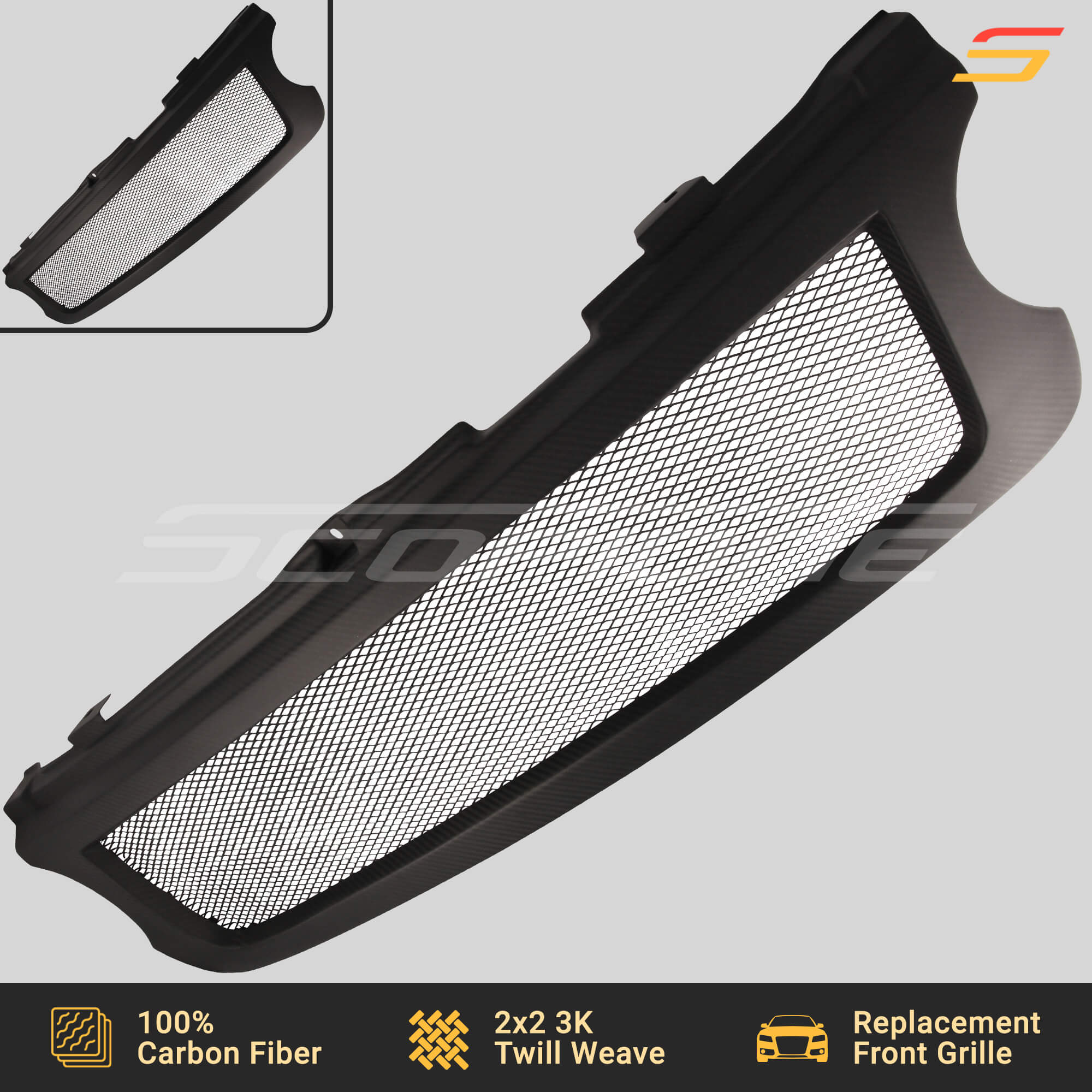
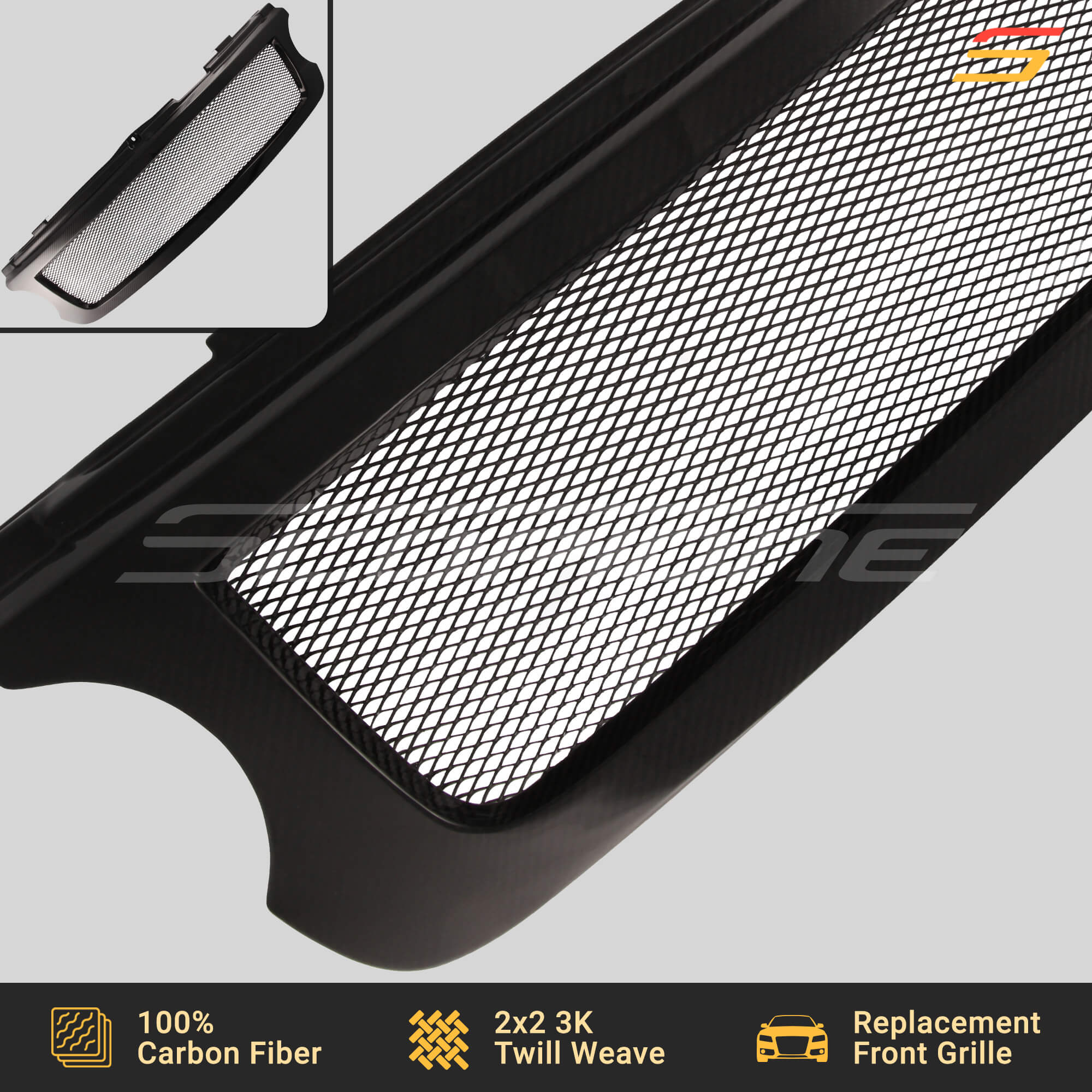
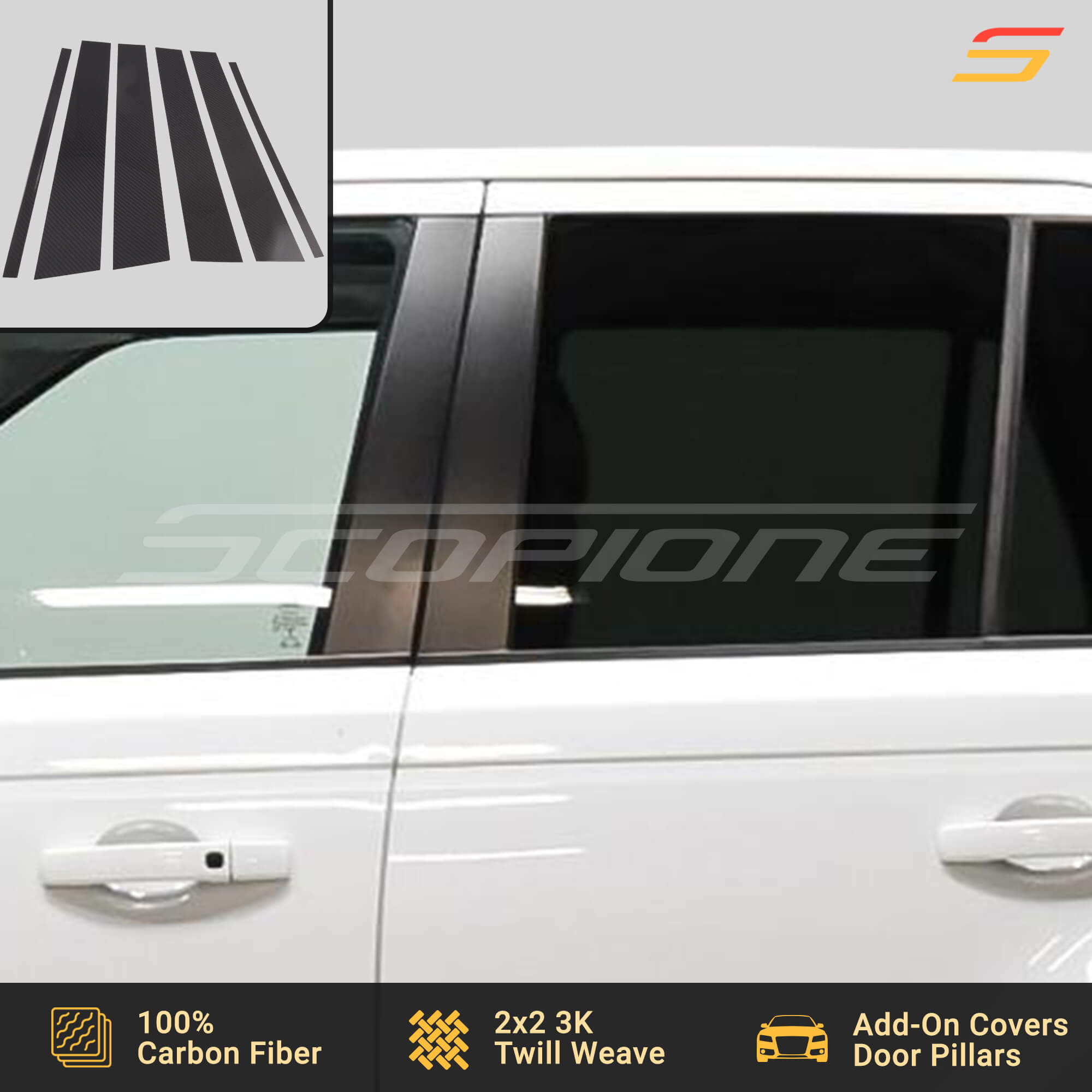
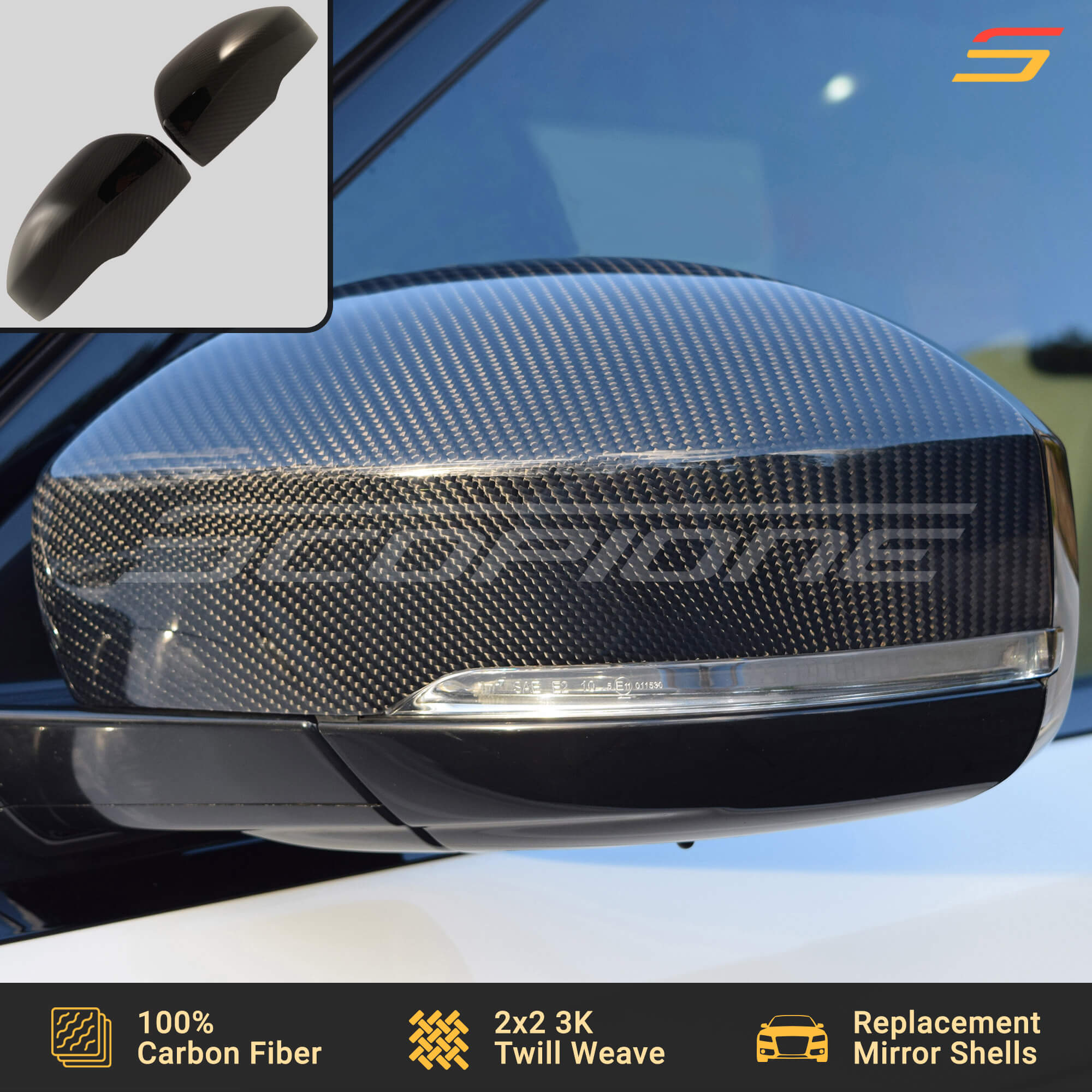
Scopione stocks 2×2 3K twill-weave carbon-fiber components for the Range Rover (L322, L405) and Range Rover Sport (L320, L494), and the mirror covers additionally fit the Discovery (2017–2022) and LR4 (2014–2016). The catalog covers front contour grilles, side fender vents, door pillars, front and rear door molding strips, rear bumper molding strips, front door molding panels with side vents, and replacement side mirror covers — several offered in both gloss and matte carbon. All parts are precision-fitted for specific model years and finished with UV-resistant clear coat – see the full Land Rover parts range at Scopione.
Experience the elegance and performance of the Land Rover with Scopione. Browse our gallery and get inspired to elevate your supercar with our top-of-the-line carbon fiber upgrades.
Shop now for premium ScopioneCarbon carbon fiber upgrades and experience the ultimate in performance and aesthetics for your Land Rover!
Back to Top ↑Disclaimer: Technical specifications, production figures, and historical details presented in this article are editorial in nature and may differ from official manufacturer data. Photographs show Scopione carbon fiber parts for the Land Rover Range Rover, Range Rover Sport, Discovery and LR4.